
Some rooms feel decorated. Others feel like they belong to someone — every textile, basket, and carved piece carrying a story you can almost hear. That is the pull of afrohemian decor ideas, the warm fusion of African craft and bohemian ease that Pinterest named its number one home prediction for 2026. Searches for afrobohemian home decor are up 220 percent year over year, and adire fabric alone is up 130 percent.
You do not need a big budget or a design degree to get the look. A mudcloth pillow, a handwoven basket wall, a terracotta pot, and a warm earthy wall color can shift a plain room into something layered and soulful in a single weekend. That is the beauty of afrohemian decor ideas — they build slowly, one handmade piece at a time, and every piece you add makes the room feel more like you.
This guide moves from the living room to the bedroom, dining table, and front porch. Each idea explains what creates the afrohemian effect, where to find the piece, and what to avoid.
1. Lead With a Mudcloth Hero Textile
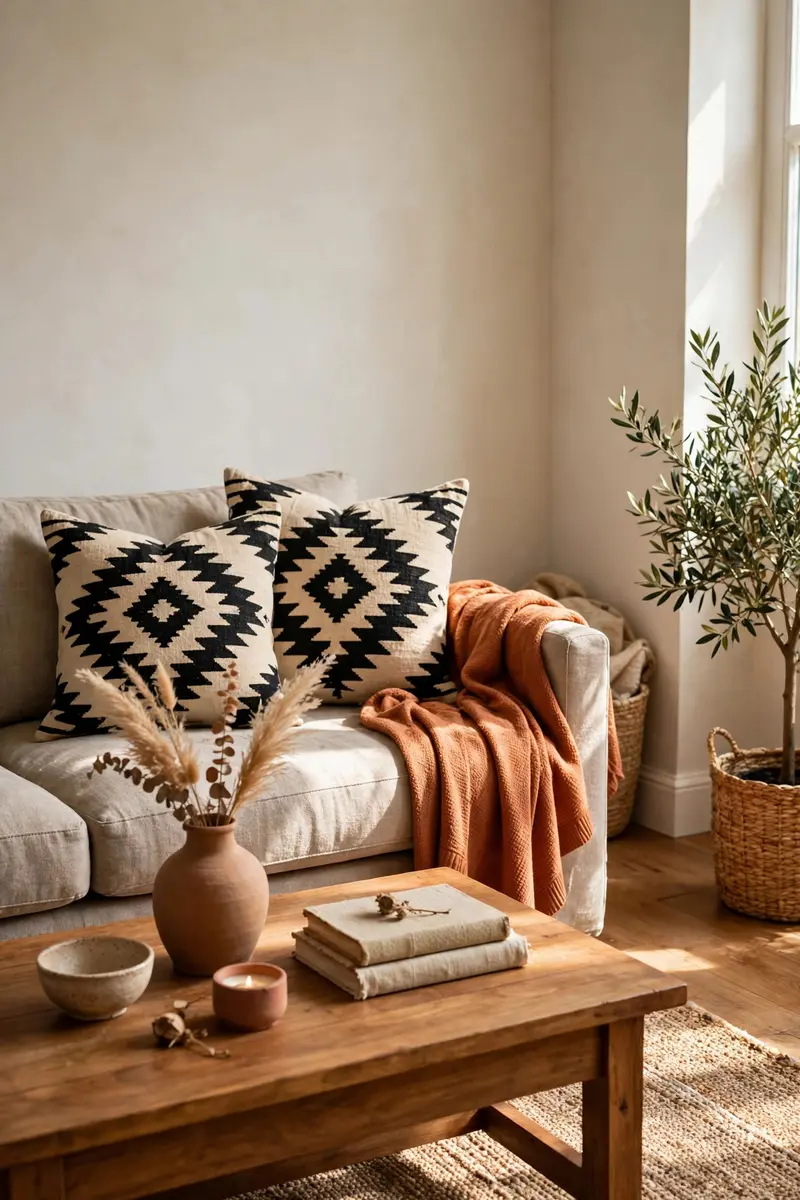
Every strong afrohemian room starts with one big, culturally grounded piece, and mudcloth is the right place to begin. Bogolanfini, handwoven cotton from Mali dyed with fermented mud, carries bold geometric symbols in cream, rust, and black that instantly anchor a space. Drape it over a sofa back, frame a large panel, or cluster three mudcloth pillows on a neutral couch.
Materials + cost: mudcloth pillow covers ($18–$35 each), a framed mudcloth panel ($40–$90), or a mudcloth throw ($45–$80). Total: about $55–$150 for a strong start, or under $40 with one pillow pair and a thrifted frame.
Tip: If you buy only one thing this month, make it a mudcloth pillow pair — it is the fastest of all afrohemian decor ideas to transform a plain sofa.
Variation: Try mudcloth in a deep rust colorway instead of classic black and cream for a softer, sun-warmed take on the same look.
2. Layer an Adire Indigo Throw
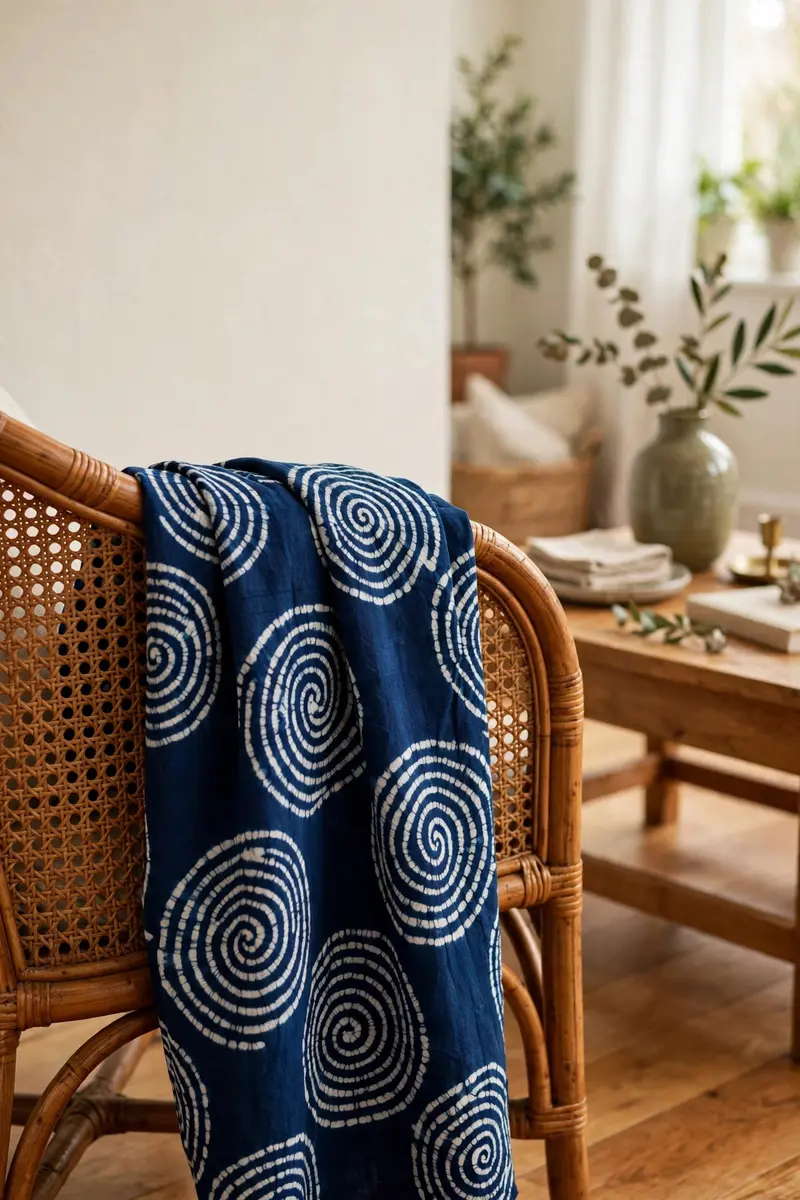
Adire is the indigo-dyed cloth of the Yoruba people of Nigeria, and its deep blue swirls are one of the most recognizable afrohemian decor ideas. The resist-dyeing technique leaves white dots and spirals on saturated indigo, a pattern that reads handmade from across the room.
Materials + cost: adire throw or table runner ($30–$70), adire pillow covers ($20–$40 each). Total: about $50–$110, or under $30 for a single runner used as a wall hanging.
Indigo is a natural balancer for the warm earth tones of this style. Pair it with espresso-stained wood, brass accents, and a cream wall so the blue feels rich instead of cold.
Tip: Hang a small adire panel in a plain wood frame — it is one of the simplest afrohemian decor ideas and costs far less than a painting.
Variation: Use adire as a table runner in the dining room, layered over a natural linen cloth, for a look that feels both dressed up and relaxed.
3. Hang a Kuba Cloth Wall Panel
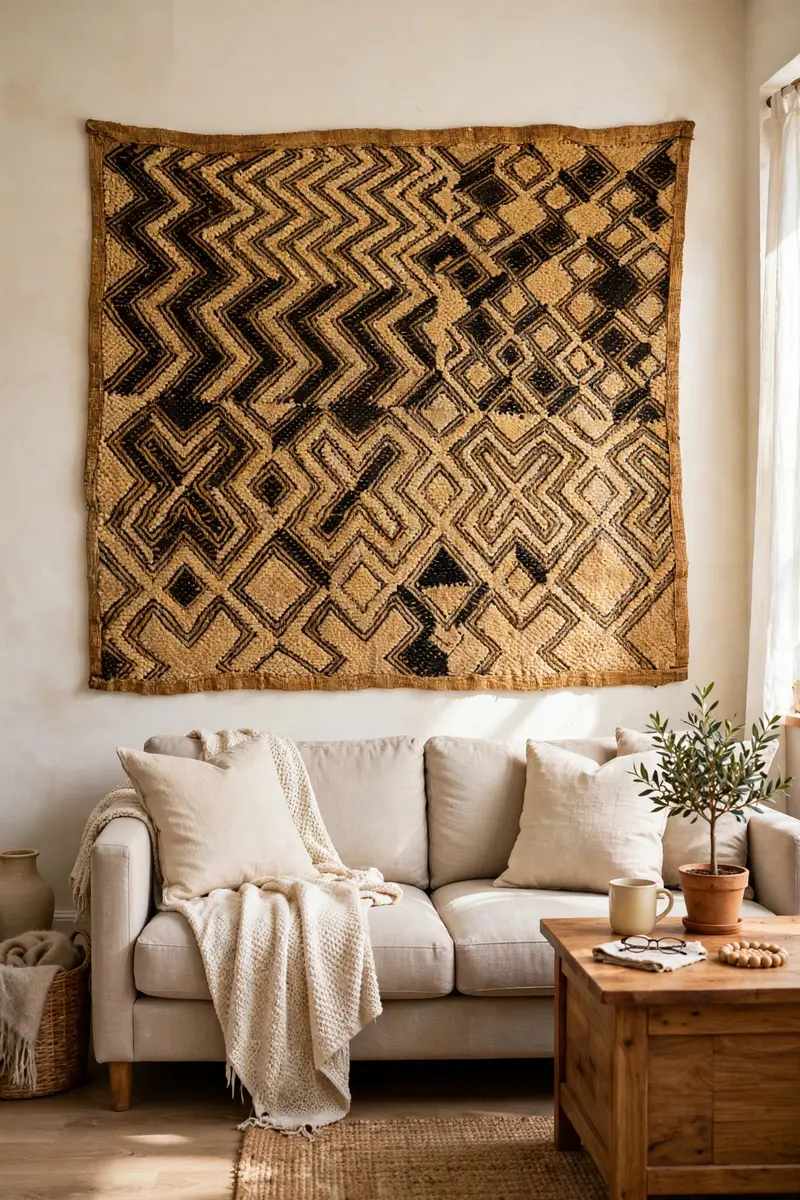
Kuba cloth is handwoven from raffia palm fibers by artisans in the Congo, and its bold geometric patterns in ochre, cream, and black make it a defining feature of afrohemian decor ideas. A single large panel above a sofa or bed creates instant impact without a single nail hole in a gallery wall.
Materials + cost: kuba cloth panel ($35–$90), wooden dowel and cord ($8–$15), or a ready-made framed piece ($60–$120). Total: about $45–$135.
The graphic geometry of kuba cloth anchors a space the way a rug does, so treat it as your wall’s main event. If your sofa is plain, the cloth becomes the room’s personality.
Tip: Match your throw pillows to one color pulled from the kuba panel — ochre or cream — so the whole room feels intentionally connected, the way the best afrohemian decor ideas do.
Variation: Layer two smaller kuba panels side by side in a hallway for a gallery effect that costs less than one large framed print.
4. Build a Basket Wall Cluster
Handwoven baskets are a staple of afrohemian decor ideas, lending the textured, layered feel the style needs. A wall cluster of seagrass, sisal, and elephant-grass baskets in different sizes creates a sculptural focal point that costs far less than framed art.
Materials + cost: woven wall baskets ($12–$35 each), picture-hanging nails or adhesive hooks ($5–$10). Total: about $45–$120 for a cluster of five, or under $50 with three thrifted baskets.
Vary basket sizes dramatically and use odd numbers — three, five, or seven — for the organic, collected-over-time feeling this style requires. Hang the largest basket slightly off-center for a relaxed, unstudied look.
Tip: Lay the cluster out on the floor first and photograph it, then copy that arrangement on the wall — it saves you a dozen extra nail holes and keeps your afrohemian decor ideas tidy.
Variation: Add one painted or beaded basket in a bold color as the cluster’s surprise, echoing a pillow or throw elsewhere in the room.

5. Ground It With a Natural Fiber Rug
A jute or sisal rug is the quiet foundation that makes every other afrohemian decor idea feel grounded. The warm, sandy texture softens hard floors and gives patterned textiles something calm to sit on. Layer a smaller geometric African-pattern kilim on top of the jute base for depth that a single rug never achieves.
Materials + cost: jute area rug 5×7 ft ($60–$120), patterned kilim or flatweave top layer ($40–$90). Total: about $100–$210, or under $50 if you start with just the jute base.
The natural fiber base should read warm, not yellow, so look for undyed jute or sisal in a honey tone.
Tip: A jute base under $50 topped with a thrifted kilim is the cheapest of all afrohemian decor ideas for a living room that feels intentionally layered.
Variation: Try a round jute rug under a reading chair to define a small nook without committing to a full-size rug.

6. Add a Rattan Accent Chair
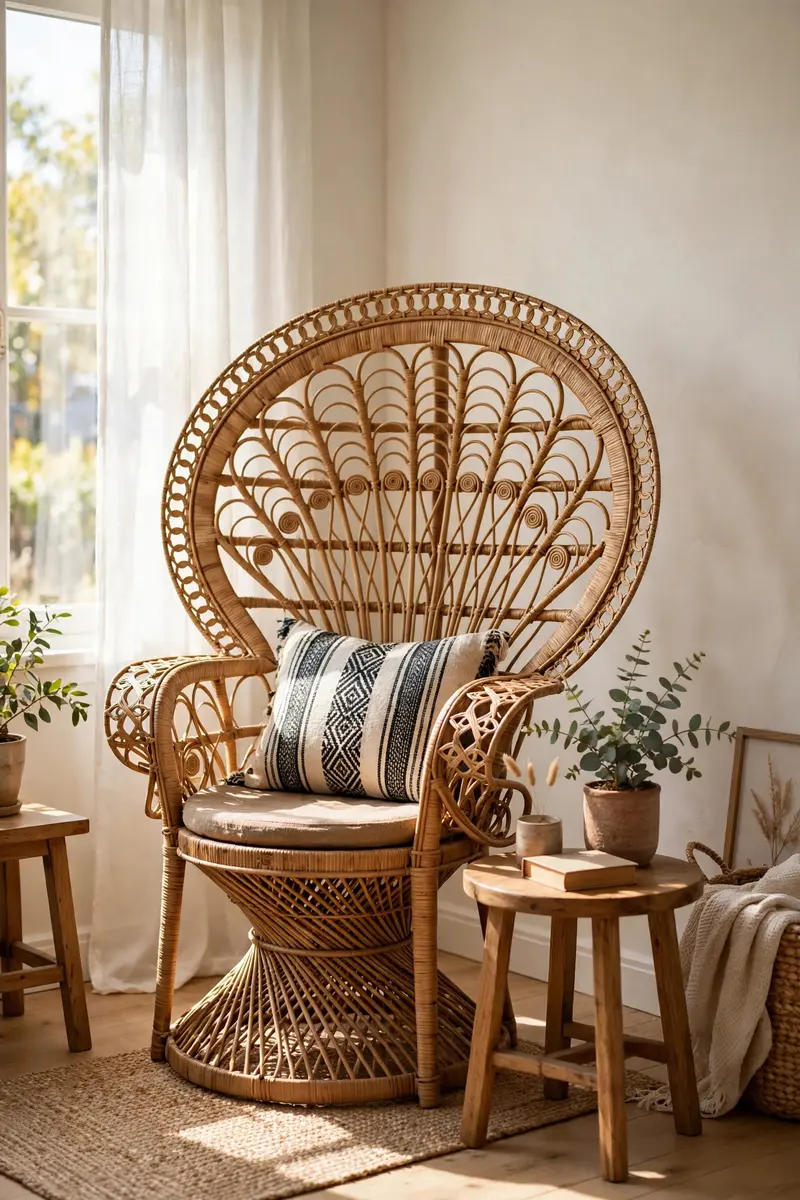
The rattan accent chair is this trend’s anchor piece, with Pinterest searches up 50 percent this year. Its curved cane frame and open weave bring the airy bohemian half of afrohemian decor ideas into the room, while a mudcloth or kente cushion gives it the African craft half. Place it by a window, beside the sofa, or at the head of a reading nook.
Materials + cost: rattan peacock or egg chair ($120–$250 new, $40–$90 thrifted), cushion in mudcloth or kente ($25–$45). Total: about $65–$295 depending on how you source it.
If the cane feels too pale, a darker cushion warms it up instantly.
Tip: Check thrift stores and marketplace listings first — rattan chairs are one of the most common secondhand scores in afrohemian decor ideas, and a fresh cushion makes them look brand new.
Variation: Use a pair of small rattan chairs flanking a fireplace instead of one large chair for a balanced, symmetrical look.
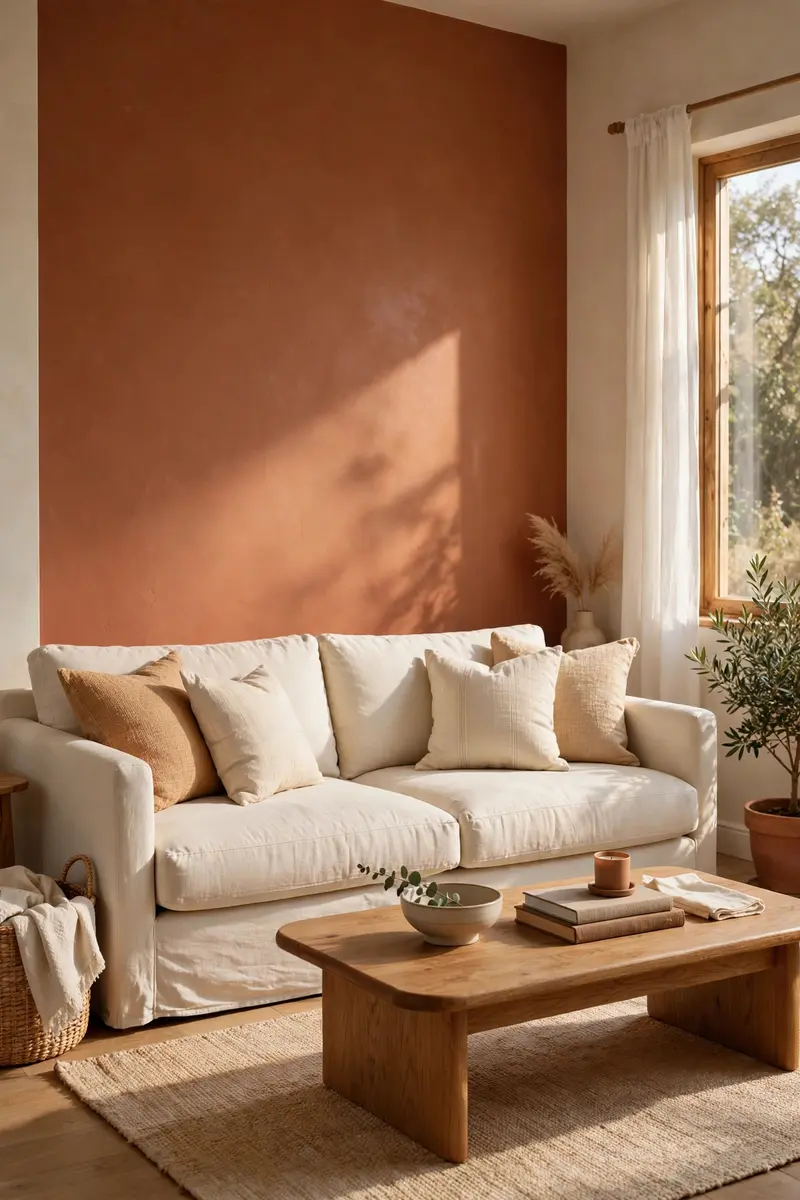
7. Paint a Warm Terracotta Accent Wall
Afrohemian rooms start with warm earthy walls, and a single terracotta accent wall is the fastest way to get there. The sunbaked clay tone makes every textile in the room look richer, from mudcloth cream to indigo blue. Paint the wall behind your sofa or bed, and keep the other walls a warm cream or sand.
Materials + cost: one gallon of terracotta paint ($30–$45), painter’s tape and roller ($15–$25). Total: about $45–$70, or under $30 if you already own the tools.
A clay or burnt sienna tone with a brown undertone is the safest choice.
Tip: If you rent, a peel-and-stick terracotta wallpaper on one wall gives you the same warmth with zero paint and no landlord trouble — a genuinely renter-friendly afrohemian decor idea.
Variation: Try limewash in a warm ochre instead of flat paint for a soft, chalky texture that feels handmade and old-world.
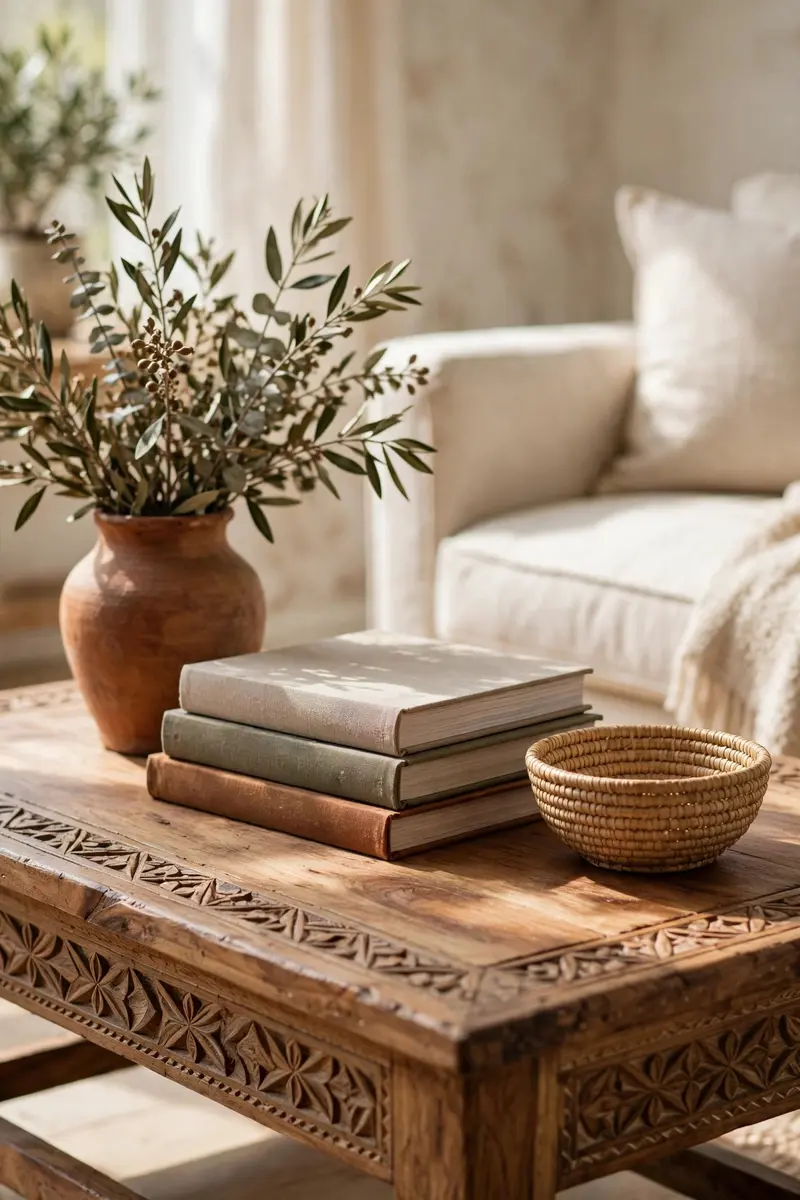
8. Style a Carved Wood Coffee Table
Carved wood brings the three-dimensionality that keeps a textile-heavy room from feeling flat, and a carved coffee table is the workhorse of afrohemian decor ideas. Look for a low acacia or mango-wood table with hand-carved legs or a live edge — the imperfect finish is the point. Style it with a stack of books, a terracotta vase, and one small woven bowl.
Materials + cost: carved wood coffee table ($90–$220 new, $30–$80 thrifted), styling pieces ($20–$40). Total: about $50–$260 depending on sourcing.
Keep the tabletop styling simple: three objects at different heights, one of them living, like a small plant.
Tip: Run your hand over the carving before you buy — deep, uneven hand carving feels alive, which is exactly what afrohemian decor ideas celebrate, while shallow machine carving looks stamped and flat.
Variation: Use a carved wooden stool as a side table instead, and move it around the room as an extra seat when guests arrive.
9. Hang Oversized African Art
Oversized art is a key feature of the afrohemian look. Large-scale framed pieces or wall hangings create instant impact and serve as a powerful focal point, especially when the imagery tells a story — a portrait, a market scene, or bold abstract patterns inspired by African textiles.
Materials + cost: large canvas print or framed textile ($60–$180), or a commissioned piece from a Black artist ($150–$400). Total: about $60–$400.
Art by Black artists and makers adds authenticity and story to the room — seek out local galleries, online maker marketplaces, and art fairs rather than mass-produced prints.
Tip: A single oversized piece is one of the boldest afrohemian decor ideas for a blank wall, and it costs less than a gallery wall of six small frames.
Variation: Lean a tall unframed canvas against the wall on a console for a relaxed, studio-like feel that needs no hanging hardware.

10. Drape a Kente Cloth Throw
Kente cloth, with its bright woven strips of gold, red, green, and black, is the most joyful textile in the afrohemian palette. A kente throw draped over a sofa arm or folded at the foot of a bed adds a burst of celebratory color that balances the earthier mudcloth and jute layers. Use it sparingly — one kente piece per room is plenty.
Materials + cost: kente throw or table cloth ($35–$85), kente pillow covers ($22–$40 each). Total: about $35–$125.
Pair it with solid terracotta, cream, or charcoal pieces so the woven strips stay the star.
Tip: Fold a kente throw into a long runner down the center of a console table for a festive touch that costs nothing extra — the simplest of all afrohemian decor ideas.
Variation: Try a kente cloth in a muted, earthy colorway — rust, ochre, and cream — if the classic bright version feels too bold for your room.

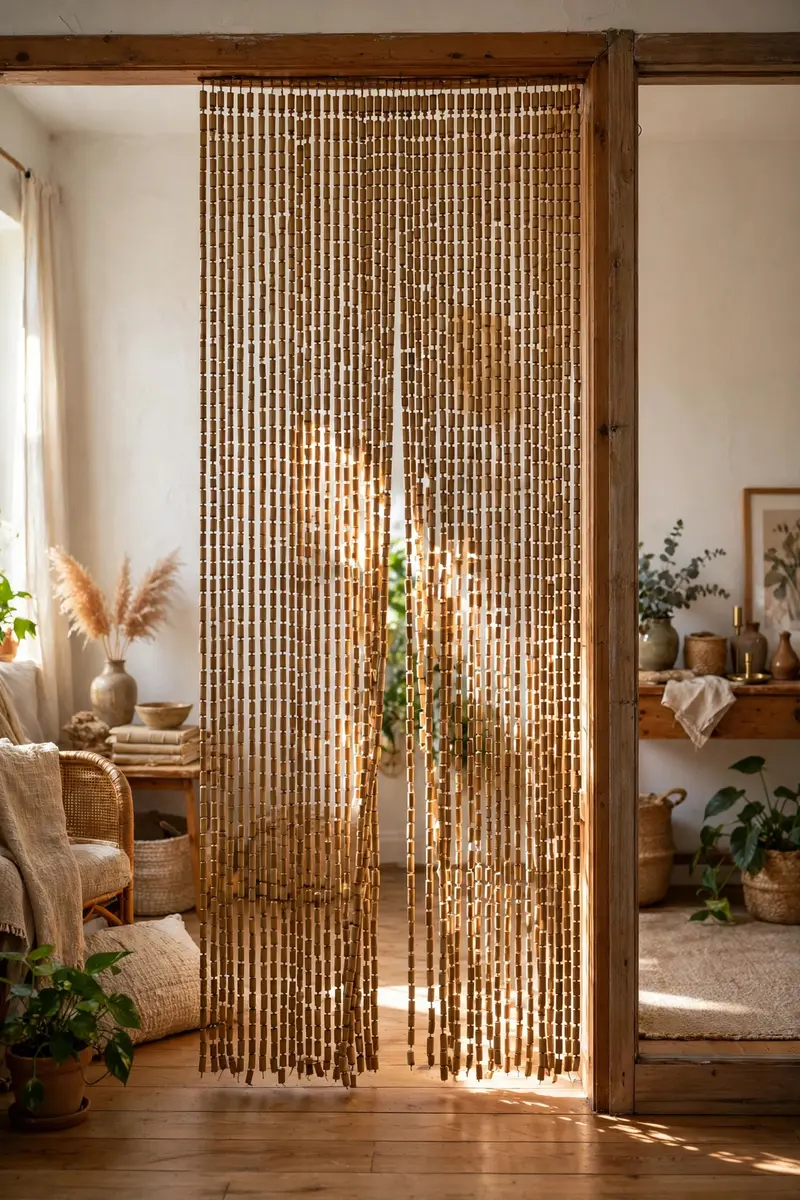
11. Hang Bamboo Beaded Curtains
Bamboo beaded curtains are having a significant moment, with Pinterest searches up 60 percent this year, and they are a signature afrohemian decor idea because they blend function and art. Hang them in a doorway between rooms, across an open closet, or as a window treatment that filters light into warm, dappled patterns. The gentle click of the beads adds a sensory layer no curtain can match.
Materials + cost: bamboo beaded curtain panel ($25–$60), a tension rod or hooks ($8–$15). Total: about $33–$75.
Measure your doorway before ordering — beaded curtains should just brush the floor, not pool on it.
Tip: Use a beaded curtain to hide open shelving or a cluttered closet — it turns storage into decoration for under $60, one of the most practical afrohemian decor ideas for renters.
Variation: Hang two short beaded panels as a window valance for the same texture in a kitchen or bathroom where a full curtain would be too much.
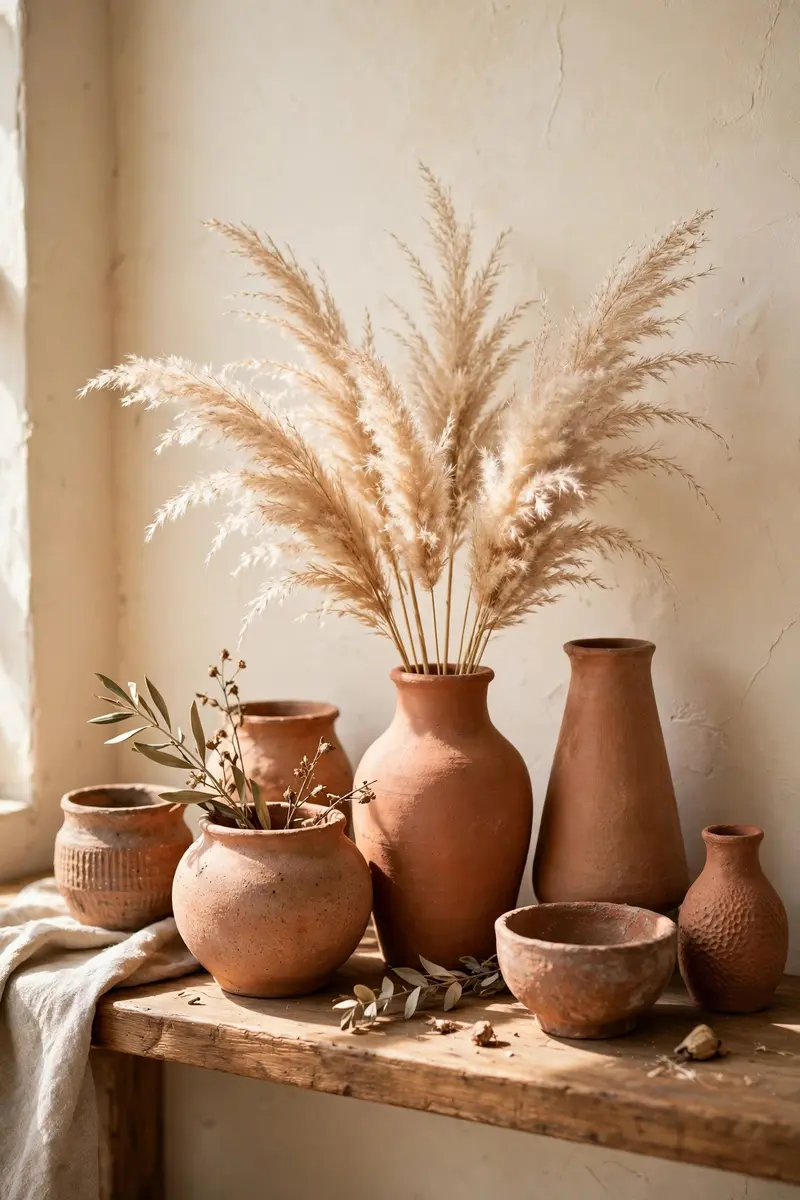
12. Style Terracotta Pottery Clusters
Handmade ceramics in terracotta, ash glaze, or deep ochre slot naturally into the afrohemian palette. A cluster of terracotta pots and vases on a shelf, mantel, or windowsill adds warmth and the human hand to a room. Mix tall amphora shapes with squat bowls and one piece with a visible throwing ring or fingerprint.
Materials + cost: terracotta pots and vases ($8–$30 each), a tray or woven mat to group them ($10–$20). Total: about $35–$110 for a cluster of four or five.
Group pottery in odd numbers and vary the heights by at least a few inches so the cluster reads as collected, not matched.
Tip: Thrift stores are full of terracotta for $4–$6 a piece, making this one of the cheapest afrohemian decor ideas with the biggest visual payoff.
Variation: Paint the inside rim of one pot with a thin gold line for a subtle metallic accent that ties into brass pieces elsewhere in the room.
13. Add a Bold Patterned Rug Layer
Once your jute base is down, the second rug is where the pattern lives. A bold geometric kilim or a Moroccan-style flatweave in terracotta, black, and cream brings the energy of afrohemian decor ideas straight to the floor.
Materials + cost: patterned kilim or flatweave rug 4×6 ft ($50–$140), rug pad ($15–$25). Total: about $65–$165.
Follow the three-pattern rule: one large pattern on the rug, one medium on the cushions, and one small on a throw, all sharing one color — usually black, terracotta, or ochre. That shared color is what keeps bold pattern from turning chaotic.
Tip: Vintage kilims from online marketplaces often cost less than new ones and come with a patina that new rugs cannot fake — a thrifty afrohemian decor idea worth trying.
Variation: Use a patterned runner in a hallway instead of a full rug to carry the afrohemian pattern through the whole home.

14. Create a Brass and Copper Glow
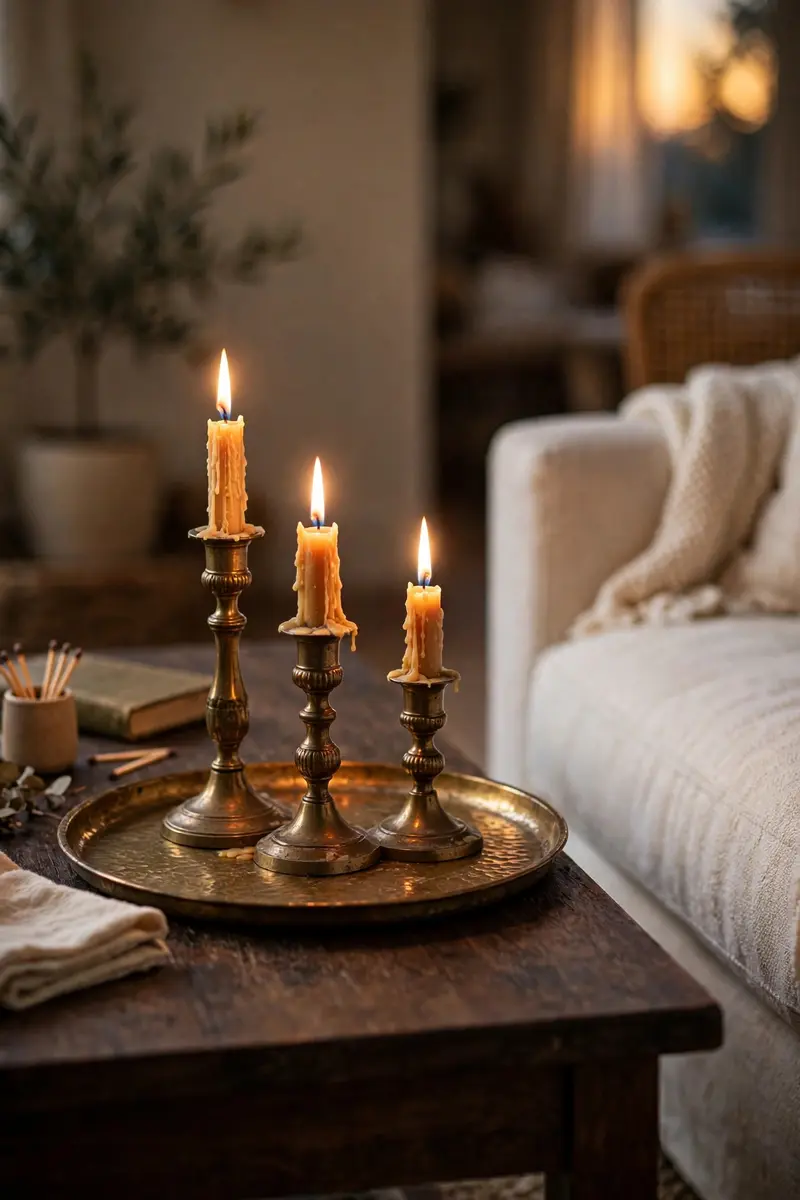
Antique brass and copper metallics close the loop on the afrohemian palette, adding a warm glow that bounces light around the room. A brass floor lamp, copper trays, or a cluster of brass candle holders on the coffee table brings the metallic layer the style needs. Keep the finish warm and aged rather than bright and polished.
Materials + cost: brass candle holders ($10–$25 each), a brass tray ($20–$40), or a brass floor lamp ($60–$120). Total: about $30–$145.
Mix brass and copper together rather than matching one metal perfectly — the slight variation feels collected and old-world.
Tip: Rub a little lemon and salt on tarnished thrift-store brass to bring back the glow, then leave it slightly imperfect — aged brass suits afrohemian decor ideas better than mirror polish.
Variation: Hang a brass-framed mirror opposite a window to double the natural light and make a small room feel twice as big.
15. Master the Three-Pattern Rule
The rule that makes bold pattern work is simple, and it is the only pattern rule you need: three patterns, three scales, one shared color. A large pattern on the rug, a medium one on the cushions, and a small one on a throw — all sharing one color, usually black, terracotta, or ochre. This is how afrohemian decor ideas stay layered instead of chaotic.
Materials + cost: no new purchase needed — audit what you own first, then add one missing scale ($20–$50). Total: about $0–$50.
Start by naming your shared color, then check every patterned piece against it. If a pillow has no black, terracotta, or ochre in it, it does not belong in this room — move it to another space.
Tip: Photograph your room, then look at the photo instead of the room — pattern mistakes you miss in person jump out on a screen, and it is the fastest way to check your afrohemian decor ideas.
Variation: Apply the same rule to a bedroom by scaling down: a patterned duvet, a medium-pattern pillow, and a small-pattern throw at the foot of the bed.

16. Bring in a Woven Pendant Light
A woven rattan or seagrass pendant light changes the whole feeling of a room after dark. The open weave throws patterned shadows on the ceiling, and the warm bulb inside glows like a lantern.
Materials + cost: woven pendant shade ($35–$90), cord kit and bulb ($15–$30). Total: about $50–$120, or under $40 for a plug-in swag version that needs no electrician.
Hang the pendant so its bottom sits about 30 inches above a dining table or 60 inches above the floor in a walkway. If you rent, a plug-in swag pendant hooks to the ceiling and plugs into a wall outlet — no wiring needed.
Tip: A woven pendant is one of the fastest afrohemian decor ideas for a plain ceiling, and it costs less than most floor lamps.
Variation: Try a black woven pendant in a room with pale walls for a bold graphic contrast that still reads natural and warm.

17. Style a Low Wooden Bench
A low wooden bench is one of the most useful pieces in an afrohemian home. Place it at the foot of a bed, against an entryway wall, or under a window with a folded kente throw and a woven basket underneath. Its clean horizontal line balances all the pattern and texture around it, and it gives guests a place to sit while they put on shoes.
Materials + cost: low wooden bench ($60–$150 new, $25–$60 thrifted), a folded throw and basket ($20–$40). Total: about $45–$190.
Keep the top mostly clear — a folded throw and one small object is enough.
Tip: A bench at the foot of the bed instantly makes a bedroom feel styled — a quiet afrohemian decor idea that doubles as a luggage rack when guests stay over.
Variation: Use two short benches as a coffee table alternative in a small living room, pulling them apart for extra seating when friends visit.

18. Add Ethiopian Cross Wall Art
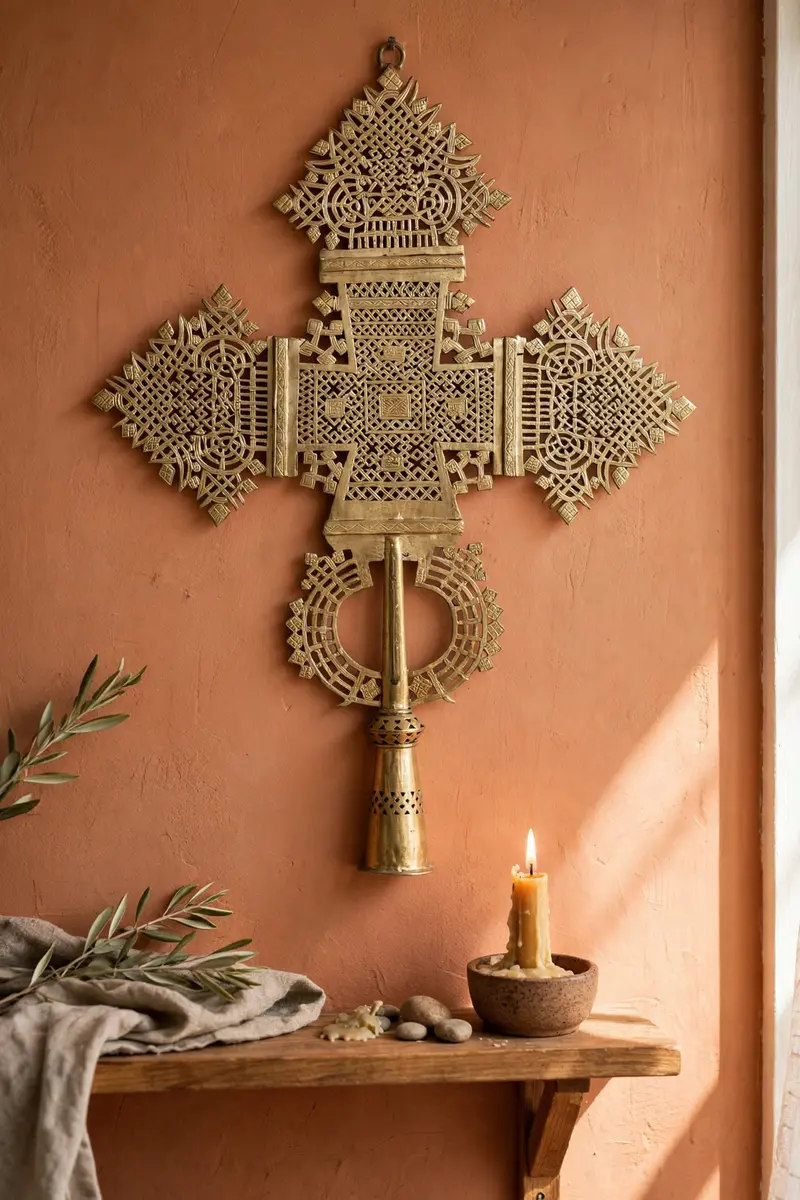
Ethiopian crosses, with their intricate latticework in brass or wood, are small pieces with enormous presence. A single cross hung on a terracotta wall, or a trio of different sizes grouped together, adds a layer of heritage and craftsmanship that mass-produced wall decor cannot match. Look for hand-cast brass or hand-carved wood versions from artisan makers.
Materials + cost: Ethiopian cross wall hanging ($20–$60 each), small picture hook ($3–$5). Total: about $23–$125 for one to three pieces.
Source from Ethiopian makers or fair-trade shops when you can, and learn the story behind the design you choose.
Tip: A small Ethiopian cross is a perfect housewarming gift for a friend starting their own afrohemian decor ideas journey — meaningful, affordable, and easy to hang.
Variation: Display a cross on a bookshelf, leaning against the wall behind a stack of books, for a layered look that needs no nails.
19. Layer a Jute Base Rug
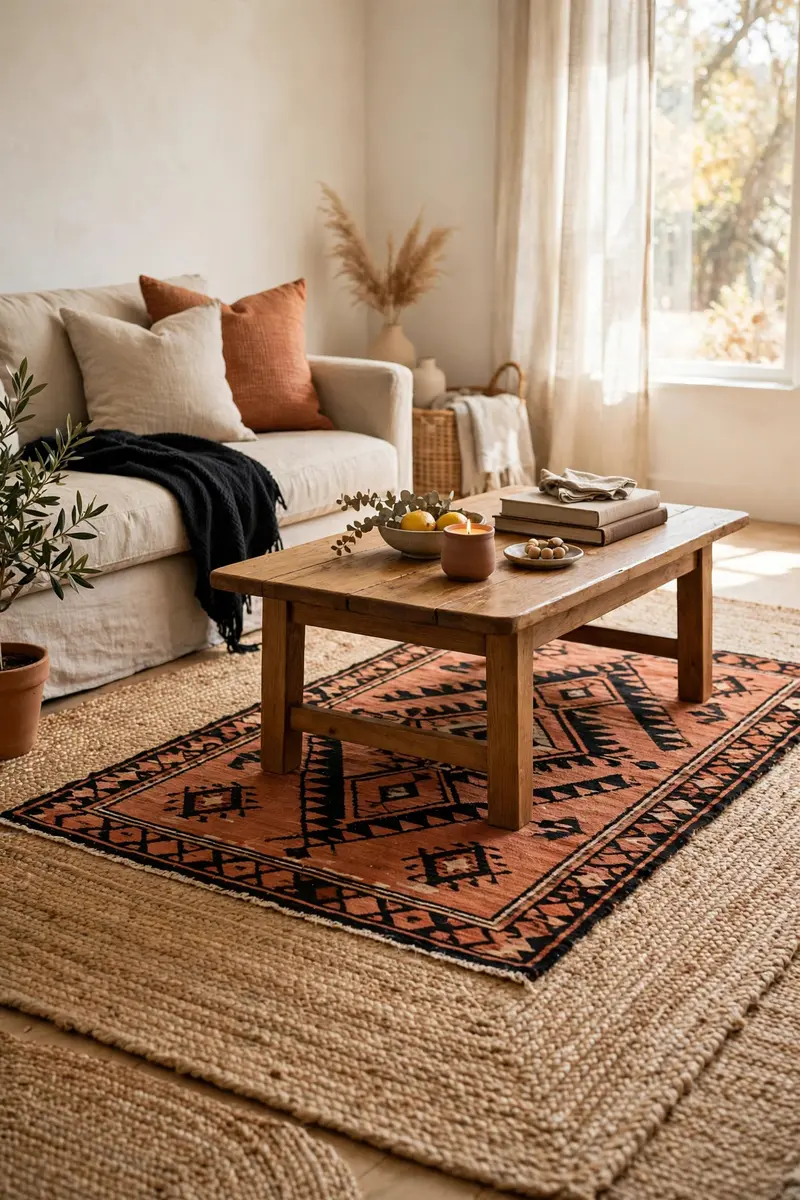
If your room already has a patterned rug, flip the layering: start with a larger jute base underneath it. The jute peeks out around the edges like a natural frame, softens the transition to hard floors, and protects the patterned rug from wear. This is one of the most practical afrohemian decor ideas because it works in every room, from the living room to the nursery.
Materials + cost: jute rug sized 1–2 feet larger than your top rug ($50–$110), rug pad ($15–$25). Total: about $65–$135.
Size matters more than pattern here — the jute base should extend 6 to 12 inches beyond the top rug on every side. A round jute base under a rectangular top rug adds an unexpected shape contrast that feels intentional.
Tip: Buy the jute base first and the patterned rug second — it is easier to match a pattern to a neutral base than the other way around, a simple rule for layering afrohemian decor ideas.
Variation: Layer a jute runner over a sisal wall-to-wall carpet in a rental to add texture without replacing the flooring.
20. Create a Reading Nook With Pattern
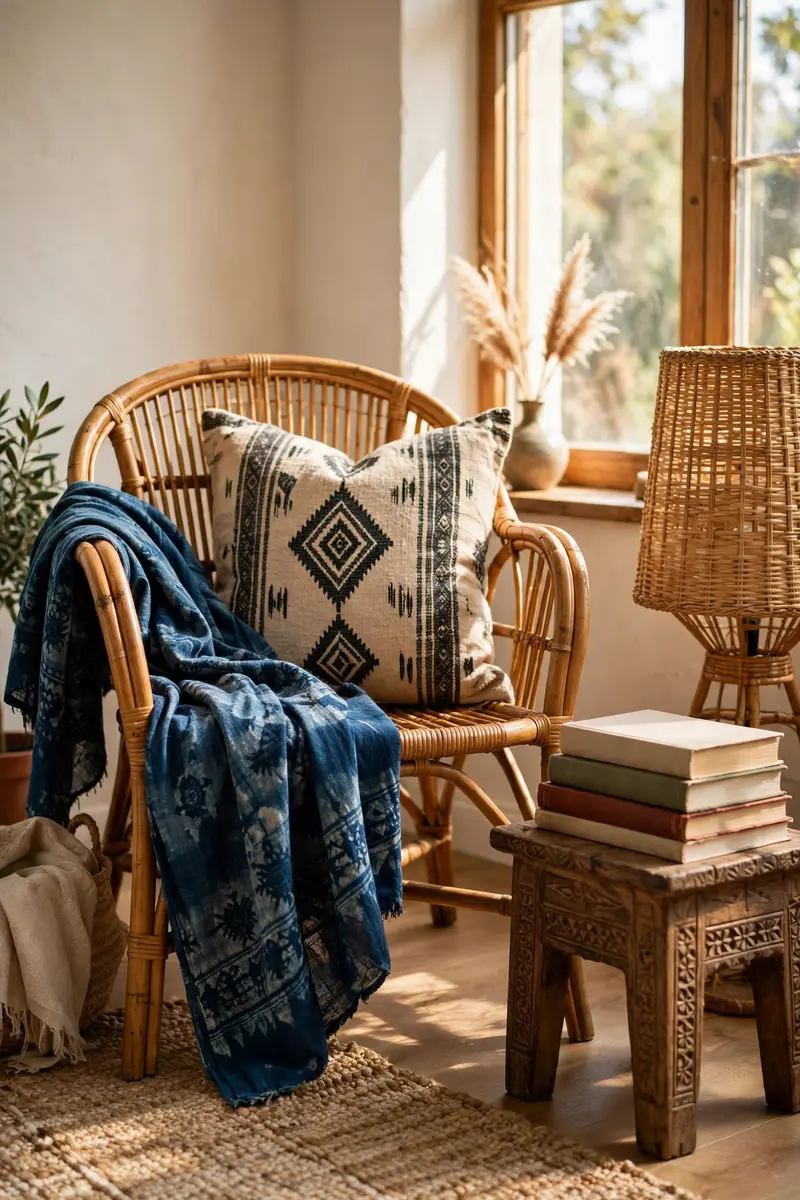
A reading nook is the smallest room-within-a-room you can build, and afrohemian pattern makes it irresistible. Tuck a rattan chair into a corner, add a mudcloth cushion, drape an adire throw over the arm, and place a small carved stool beside it for a book and a cup of tea. A floor lamp with a woven shade finishes the corner.
Materials + cost: rattan chair ($40–$120 thrifted), cushion and throw ($40–$70), small stool ($20–$45), floor lamp ($40–$80). Total: about $140–$315, or under $100 if you repurpose a chair you own.
Keep a basket beside the chair for the books you are reading now.
Tip: The best reading nooks use pieces you already own — a chair, a throw, and a lamp are enough to start your afrohemian decor ideas, and you can add pattern gradually.
Variation: Build a window-seat nook instead, with a thick cushion in a bold African print and a row of small pillows in the room’s shared color.
21. Add Leopard as a Bold Accent
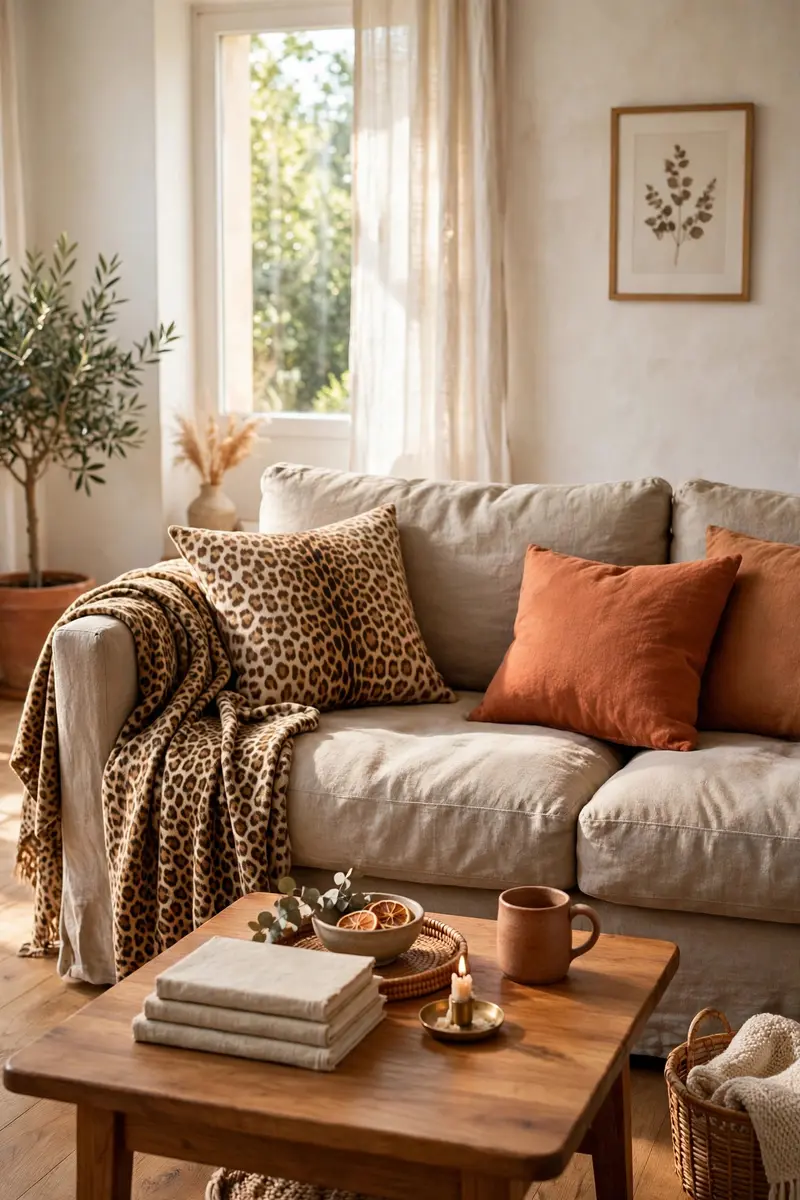
Leopard print is the boldest accent in the afrohemian toolkit, and the rule is simple: leopard is an accent, never a room. One leopard throw or a pair of leopard pillows is bold and beautiful; a leopard sofa, leopard rug, and leopard curtains together are a costume. Let one piece do the work.
Materials + cost: leopard throw pillow covers ($15–$30 each), a leopard throw blanket ($25–$50). Total: about $15–$80.
Place your leopard piece where the eye naturally lands — on the sofa’s corner, or draped over the rattan chair — and keep everything around it calm and earthy. Leopard pairs surprisingly well with terracotta and brass, because its warm brown spots echo the room’s palette.
Tip: If leopard feels too bold, start with a small leopard-print lumbar pillow — it adds the edge without committing the whole sofa to your afrohemian decor ideas.
Variation: Try a leopard-print tray or a small ottoman instead of textiles for the same bold accent in a room that already has plenty of fabric.
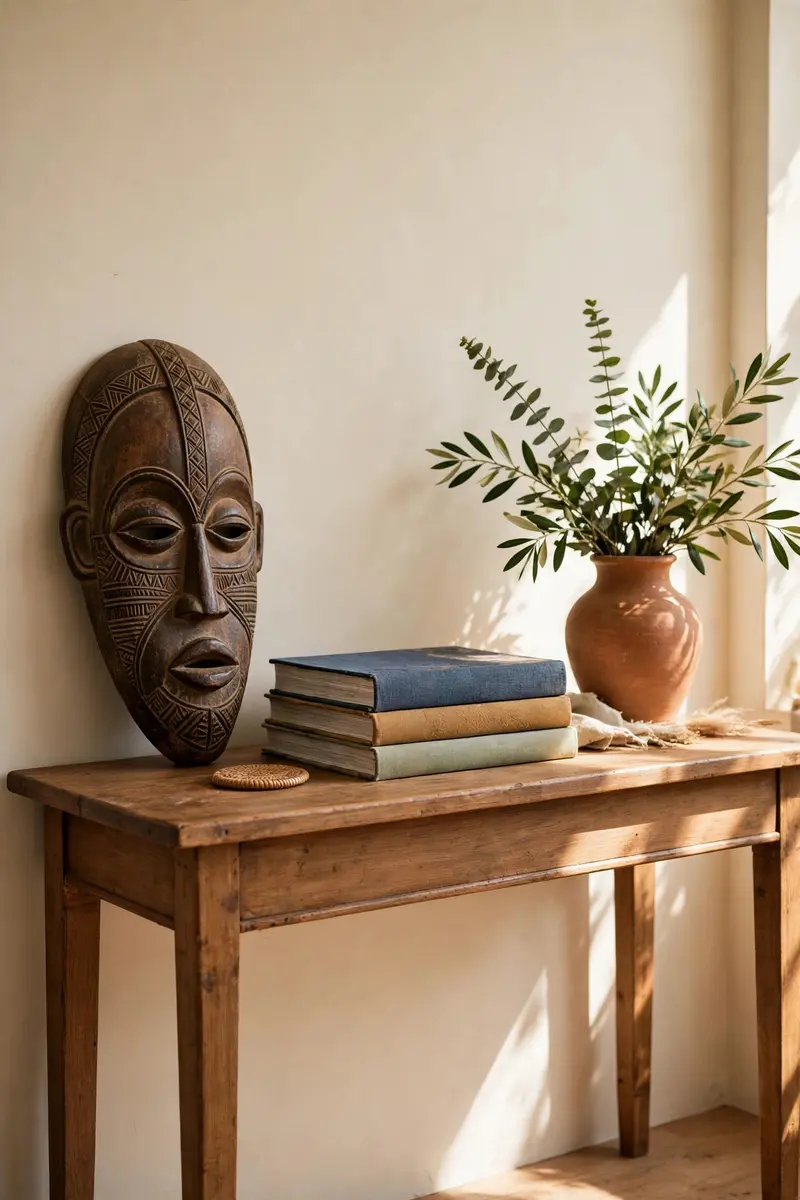
22. Style a Console With Masks and Books
A console table is the perfect stage for the cultural pieces that make an afrohemian home feel collected rather than decorated. African masks, carved figures, and handmade ceramics work because they are real craft, made by real hands, and because they sit next to ordinary things — a stack of books, a plant, a candle. Arrange them in a loose triangle, tallest at the back.
Materials + cost: console table ($80–$200), carved mask or figure ($30–$90), books and ceramics ($20–$40). Total: about $130–$330, or under $80 with a thrifted table.
Choose masks and figures with a story you can tell — where they came from, who made them, what they mean — and avoid cheap resin copies that flatten the craft.
Tip: Learn the origin of each piece before you display it — knowing the story is what separates a collected home from a themed one, and that is the heart of afrohemian decor ideas.
Variation: Style the same pieces on a fireplace mantel instead, with the tallest mask centered and books stacked on either side.
23. Bring in Lush Green Plants
Plants are the living layer that afrohemian rooms need. A tall fiddle-leaf fig in a terracotta pot, a trailing pothos on a shelf, and a snake plant in a woven basket bring the green that balances all the warm earth tones. The contrast of deep green leaves against terracotta and ochre is one of the most satisfying color combinations in the style.
Materials + cost: fiddle-leaf fig ($30–$60), pothos and snake plant ($10–$25 each), terracotta and woven pots ($8–$25 each). Total: about $60–$135.
Terracotta pots suit the palette perfectly, while woven baskets as cachepots add texture.
Tip: If you struggle to keep plants alive, start with a snake plant and a pothos — both forgive missed waterings and low light, and they look great in afrohemian decor ideas from day one.
Variation: Hang a macramé plant holder with a trailing plant in a sunny window for a bohemian touch that draws the eye upward.

24. Add a Patterned Curtain Moment
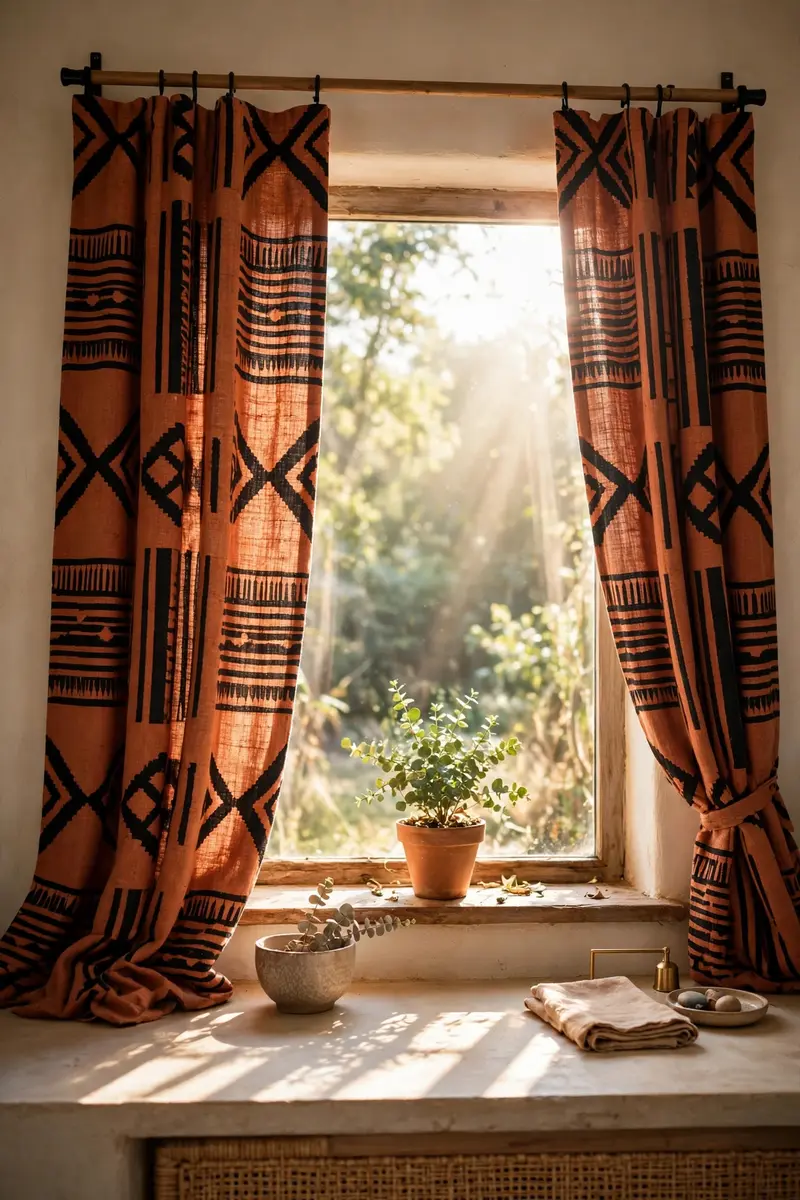
Curtains are the largest textile surface in most rooms, so a patterned curtain changes everything. Kuba cloth panels, mudcloth-inspired prints, or bold African geometric curtains frame a window and pull the whole palette together. Hang them high and wide so the window looks bigger and the pattern gets room to breathe.
Materials + cost: patterned curtain panels ($30–$70 each), curtain rod ($15–$30). Total: about $75–$170 for a pair.
Mount the rod 4 to 6 inches above the window frame and extend it 6 to 8 inches past each side so the curtains stack on the wall, not over the glass.
Tip: If full patterned curtains feel like too much, use solid linen curtains with a patterned trim or tieback for the same connection at half the visual weight — a gentler entry into afrohemian decor ideas.
Variation: Use a single patterned panel as a room divider in a studio apartment, hung from a ceiling track to separate the sleeping area from the living area.
25. Create a Bedroom Afrohemian Retreat
The bedroom is where afrohemian warmth pays off most, because you wake up inside it. Start with warm cream or terracotta walls, layer a mudcloth or kente throw across the foot of the bed, and add adire pillow shams against crisp white sheets. A woven pendant light and a basket on the nightstand finish the retreat.
Materials + cost: throw and pillow shams ($50–$110), woven pendant ($35–$90), basket and candle ($15–$30). Total: about $100–$230.
Keep the bedding itself calm — white or cream sheets let the patterned layers shine without competing.
Tip: A bedroom is the easiest place to test afrohemian decor ideas, because one throw and two pillow shams transform the whole room in five minutes.
Variation: Try a bold patterned headboard — a kuba cloth panel mounted behind the bed — for a dramatic focal point that costs less than a new bed frame.

26. Style a Dining Table With an Adire Runner
The dining table is often the most overlooked surface in afrohemian homes, and an adire runner is the simplest fix. Lay the deep indigo runner down the center of a natural wood table, add terracotta plates or woven placemats, and finish with a low bowl of greenery or dried grasses. The table instantly feels dressed for a gathering.
Materials + cost: adire table runner ($25–$55), woven placemats ($8–$15 each), terracotta serving bowl ($15–$30). Total: about $50–$130 for a four-person setting.
A runner is also easier to store and wash than a full tablecloth.
Tip: An adire runner works for everyday meals too, not just dinner parties — it protects the table and makes Tuesday dinner feel intentional, a small afrohemian decor idea with daily payoff.
Variation: Layer the adire runner over a natural linen tablecloth for a formal look, or use it alone on bare wood for a casual, everyday feel.

27. Add a Handwoven Throw Basket
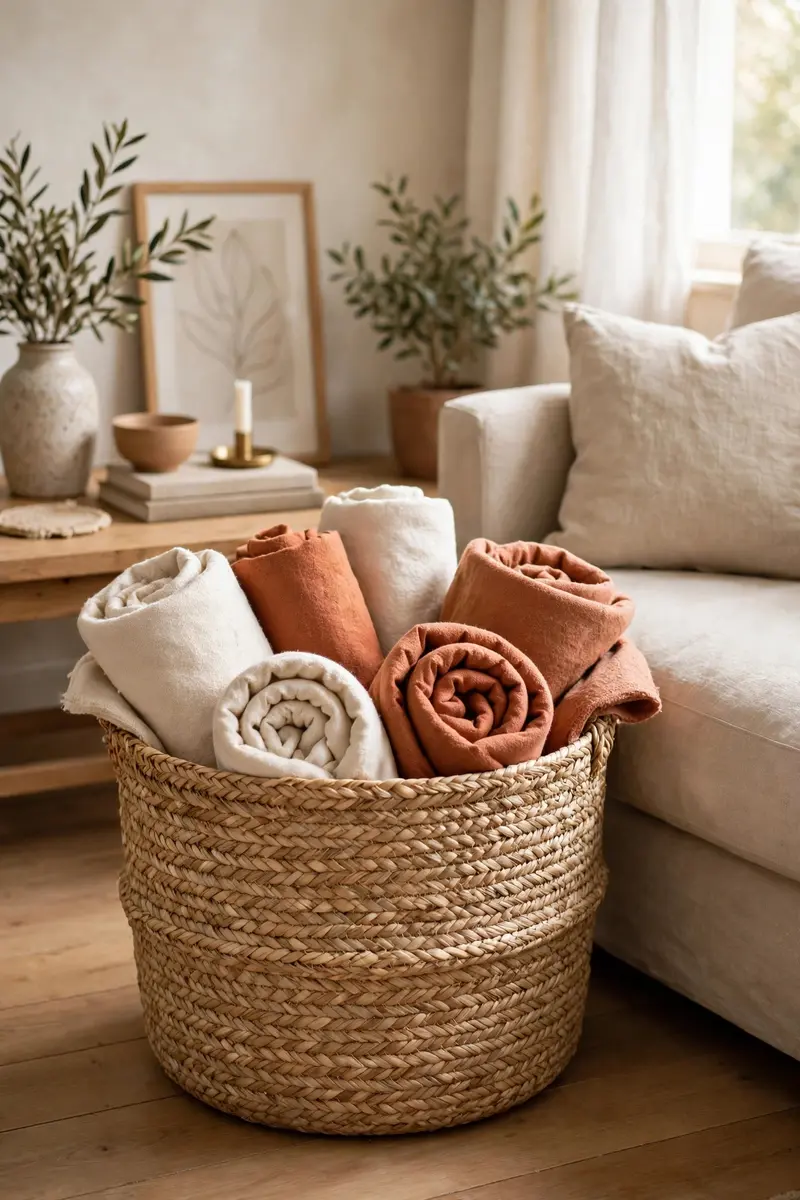
A handwoven throw basket is the hardest-working storage piece in an afrohemian home. Park one beside the sofa for throws, one by the front door for shoes, and one in the bathroom for rolled towels. The woven texture repeats the basket-wall and rug story at floor level, and it hides clutter beautifully.
Materials + cost: seagrass or sisal baskets ($15–$40 each), depending on size. Total: about $15–$120 for one to three baskets.
Choose baskets with handles if you move them often, and with lids if they hold things you want hidden. A basket that is slightly too big is better than one too small — throws need room to breathe, and a stuffed basket looks messy.
Tip: Roll your throws instead of folding them when you store them in a basket — rolled throws look fuller and you can fit more of them in, a small storage win among your afrohemian decor ideas.
Variation: Use a shallow woven tray basket on the coffee table as a corral for remotes, candles, and a small plant.
28. Mix Antique Brass Mirrors
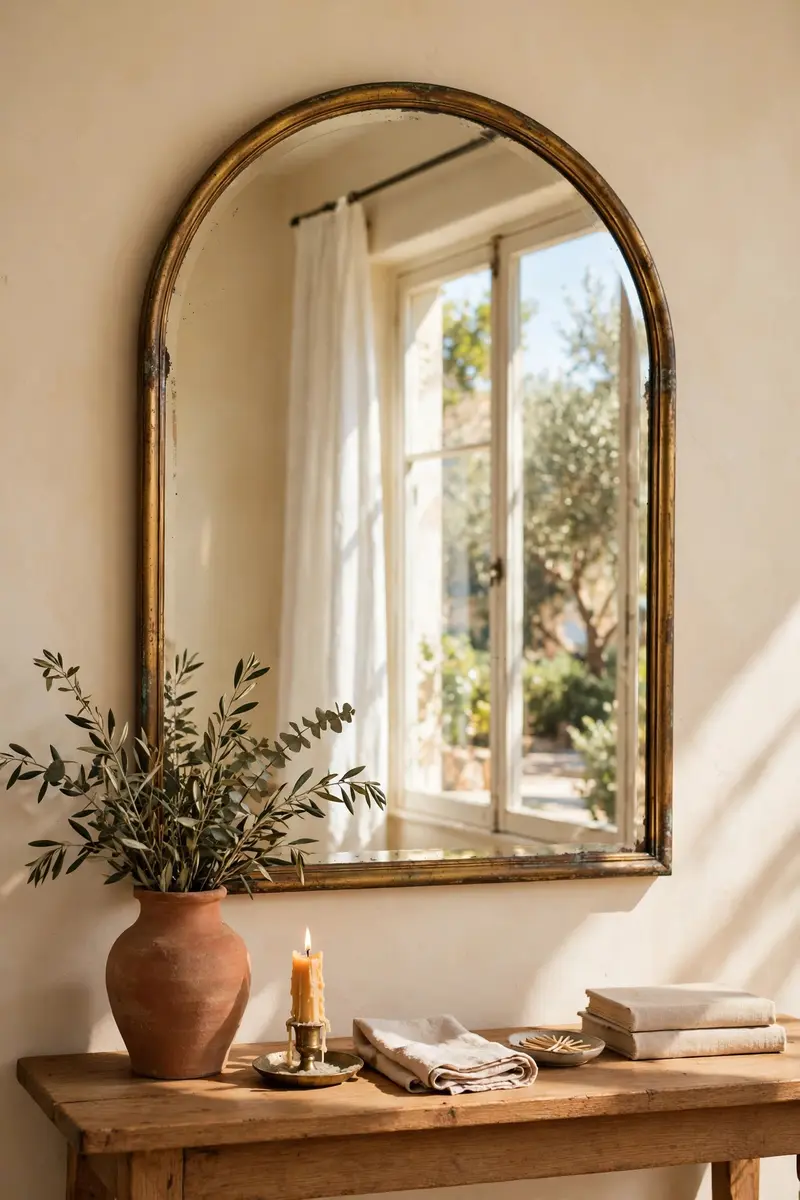
Mirrors in antique brass frames do double duty in an afrohemian room: they bounce warm light around and add the metallic glow the palette needs. Hang one large arched mirror opposite a window, or group three small round brass mirrors on a hallway wall. The aged brass suits the style far better than shiny chrome.
Materials + cost: large arched brass mirror ($70–$150), or a set of three small round mirrors ($30–$60). Total: about $30–$150.
Check thrift stores first, since brass-framed mirrors are a common secondhand find.
Tip: A brass mirror above a console table, paired with a vase and a candle, is the classic entryway formula in afrohemian decor ideas, welcoming guests with warmth.
Variation: Try a sunburst brass mirror above a fireplace for a bold focal point that echoes the round shapes of baskets and pottery elsewhere in the room.
29. Create a Gallery Wall of Black Artists
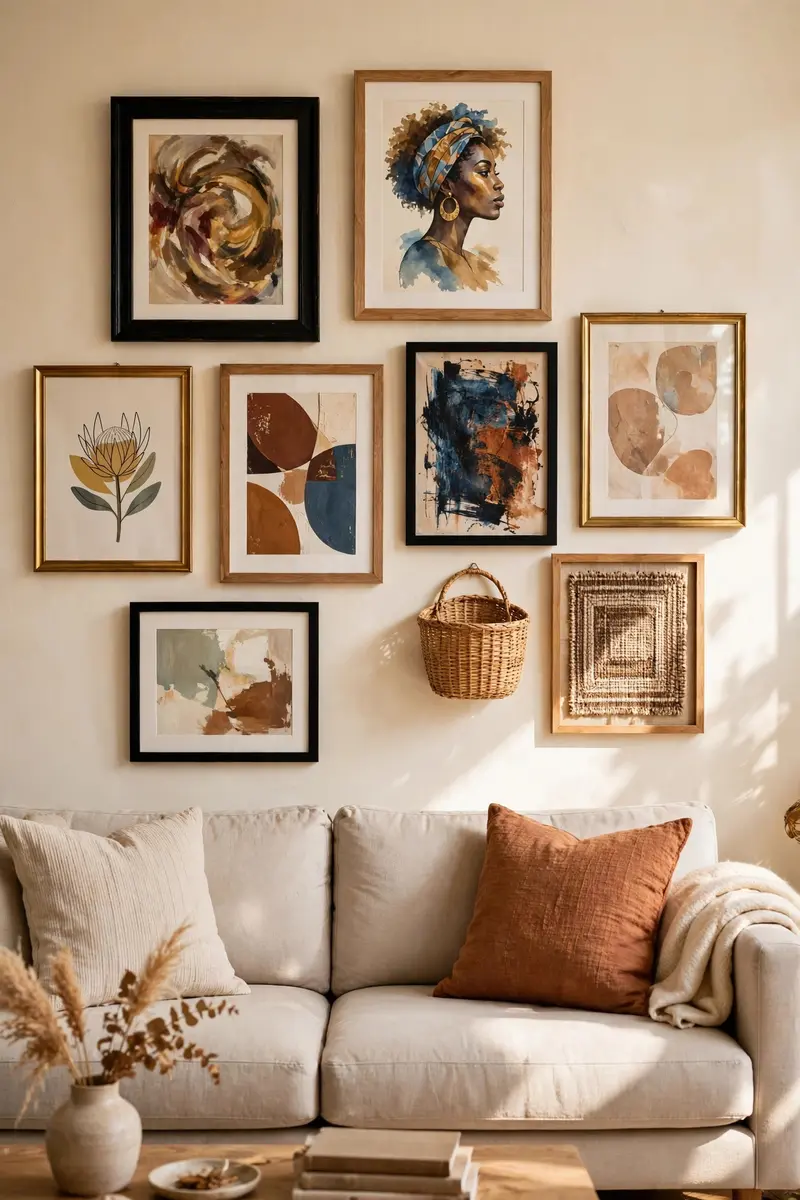
A gallery wall is the most personal statement in an afrohemian home, and filling it with work by Black artists makes it a true celebration of the culture the style draws from. Mix photography, textile art, and prints in different sizes, and include one piece with a story you love — a portrait, a landscape, or an abstract that reminds you of home. For more ideas on styling walls with handmade pieces, see our handmade boho wall decor ideas.
Materials + cost: four to six framed prints ($25–$80 each), picture-hanging hardware ($10–$15). Total: about $110–$495 depending on the art you choose.
Lay the arrangement on the floor first and photograph it before you hang anything. Start with the largest piece slightly off-center, then build outward.
Tip: A gallery wall grows best over time — start with three pieces you love and add one each season, the slowest and most rewarding of these afrohemian decor ideas.
Variation: Mix a small woven basket or a carved mask into the gallery wall for a three-dimensional surprise among the flat frames.
30. Finish With Scent and Sound
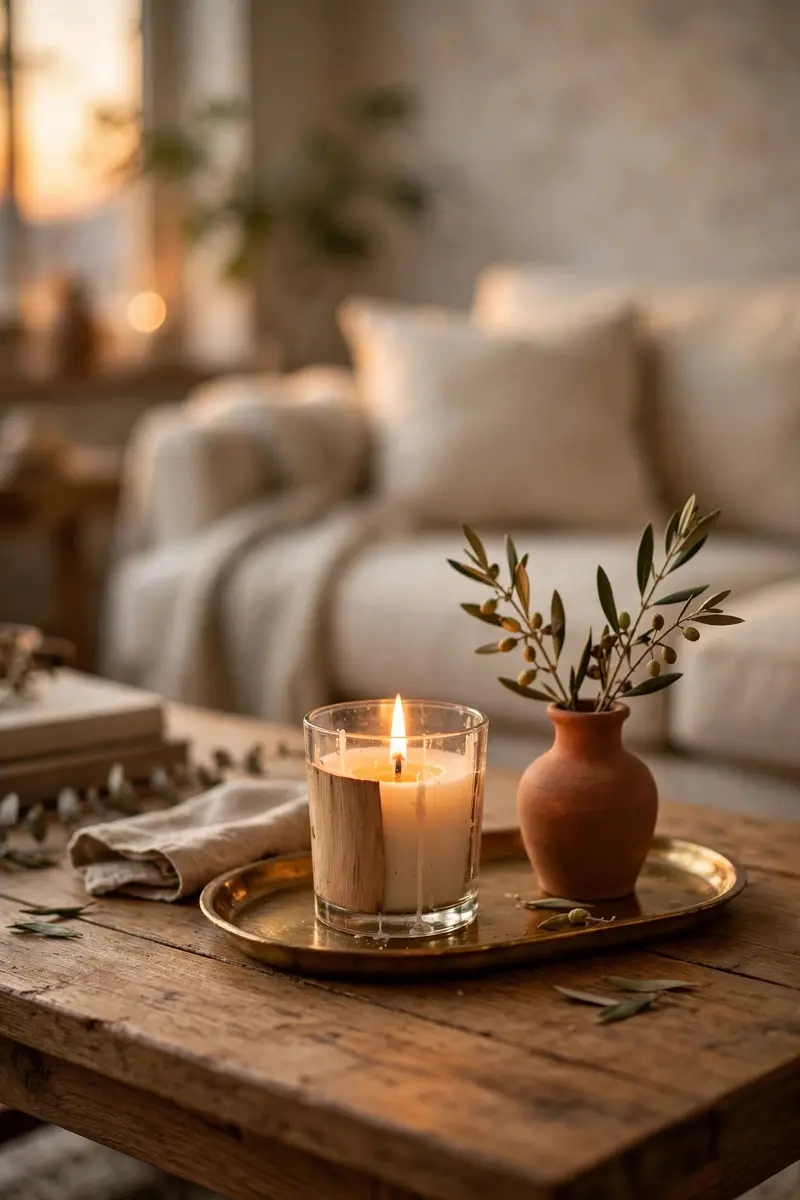
The last layer of an afrohemian room is invisible: scent and sound. A sandalwood or amber candle, a stick of incense, or a diffuser with warm cedar oil makes the room smell as layered as it looks. This is the finishing touch that turns a decorated room into a home.
Materials + cost: candle or diffuser ($12–$30), a small speaker if you need one ($25–$60). Total: about $12–$90.
Place the candle on a brass tray on the coffee table or console, where its flame reflects in the metal and adds a second warm glow. Choose scents that match the room’s warmth — sandalwood, amber, cedar, or frankincense — rather than sharp citrus or floral notes.
Tip: Scent is the cheapest of all afrohemian decor ideas, and it changes how a room feels the moment you walk in — start here if your budget is tight.
Variation: Try a small tabletop fountain for the sound of running water in a reading nook, adding a calm layer that pairs beautifully with the woven textures.
Frequently Asked Questions
What is afrohemian decor?
Afrohemian decor is a fusion of African design heritage and relaxed bohemian warmth. The African half brings craftsmanship with deep roots — mudcloth from Mali, adire indigo dyeing from Nigeria, kuba cloth from the Congo, handwoven baskets, carved wood, and terracotta made by real hands. The bohemian half brings layering, natural materials, and an easy, lived-in feeling.
Is afrohemian a 2026 trend?
Yes. Afrohemian is one of the named home trends in Pinterest Predicts 2026, where it was the number one home prediction. Pinterest search data going into 2026 shows searches for afrobohemian home decor up around 220 percent and adire fabric up around 130 percent, which is why the look is spreading fast.
How do you layer bold pattern without chaos?
Follow the three-pattern rule: one large pattern, one medium pattern, and one small pattern, all sharing one color — usually black, terracotta, or ochre. Put the large pattern on the rug, the medium one on the cushions, and the small one on a throw. That shared color is what keeps the room calm. If a piece has none of your shared color in it, move it to another room.
What colors define afrohemian decor?
The palette is warm and sunbaked: terracotta, ochre, clay, burnt sienna, deep browns, olive, and sand as the base, balanced with black for contrast. Accent colors include indigo blue, mustard yellow, forest green, and burnt orange, with antique brass and copper metallics to finish. Avoid the pastel tones of generic boho — afrohemian color is earthy, rich, and grounded.
How do you do afrohemian decor on a budget?
Start with textiles, because they deliver the most impact for the least money. Two mudcloth pillow covers, a thrifted jute rug, and a $4–$6 terracotta pot can transform a corner for under $100. Shop thrift stores for rattan chairs, brass pieces, and baskets, and buy one handmade piece at a time from artisan makers rather than filling the room with matching sets. The style is supposed to look collected over time, so building slowly is actually more authentic.
Conclusion
Afrohemian decor is not about buying a matching set or copying a showroom. It is about choosing pieces with stories — a mudcloth pillow from Mali, an adire runner dyed by hand, a basket woven from elephant grass — and layering them until your room feels like it belongs to you.
Start this weekend with the easiest win: a mudcloth pillow pair, a basket cluster, or a single terracotta pot. Then add a pattern, a plant, and a warm wall color as your budget allows. If you love small-space styling too, our small living room decor ideas on a budget show how the same layering works in tight rooms, and our olive green bedroom ideas pair beautifully with this warm palette. For more expert takes on the trend, see Apartment Therapy’s guide to 10 afrohemian decor ideas, according to experts and the textile deep dive at Artfasad.
Save this guide to Pinterest so you can find it when you are ready to shop, and pin your favorite idea to your 2026 home decor board. Your warmest, most personal room is one handmade piece away.




Leave a Reply