

Greenery Bedroom Ideas: 40 Lush Looks That Wow
If your bedroom feels flat, a little greenery is the fastest fix you can make. These greenery bedroom ideas use real plants — trailing vines, tall floor plants, tiny terrariums and everything in between — to turn a plain room into a calm, fresh retreat you actually look forward to sleeping in. You do not need a green thumb, a big budget or a sunny room to start. Pick one idea, add one plant, and let the room grow from there.
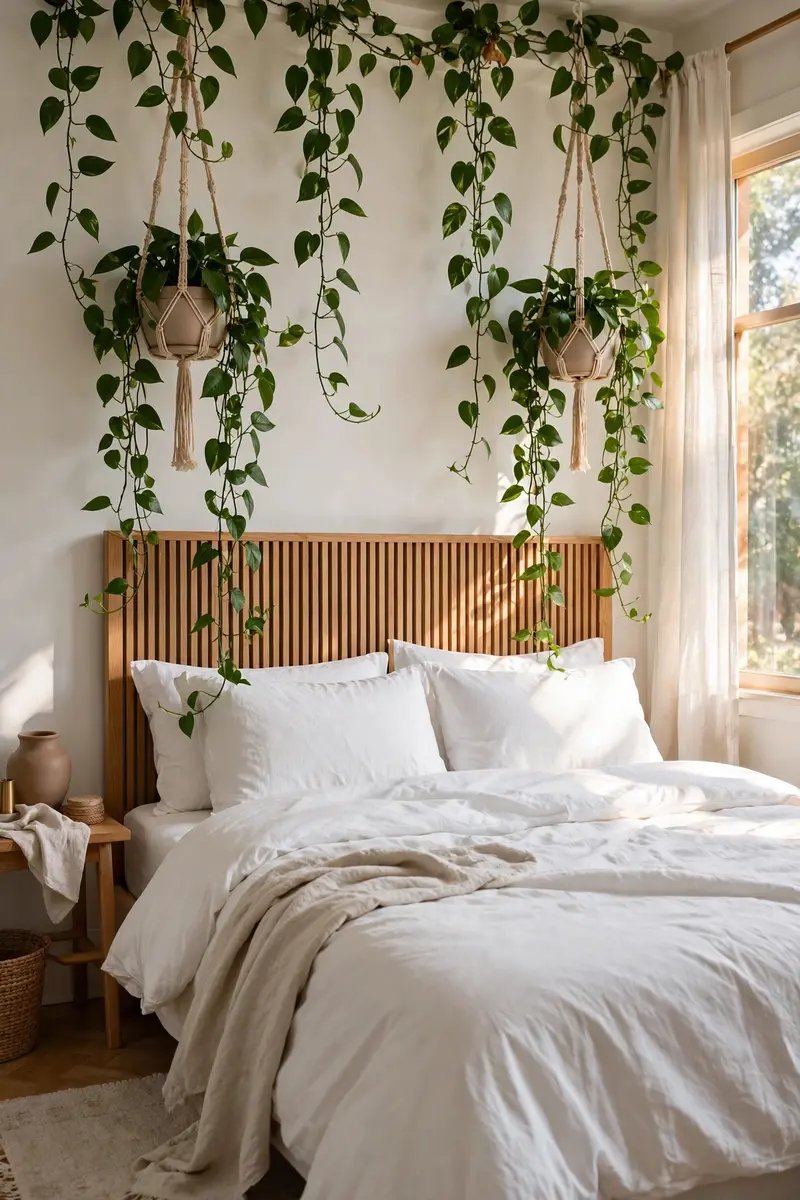
1. A Trailing Pothos Canopy Above Your Bed
Nothing says bedroom jungle quite like vines spilling over your headboard. Hang two or three pothos in planters above the bed and let the trails frame the wall like a living curtain. Pothos is forgiving, fast-growing and happy in low to bright indirect light, which is why it tops almost every list of bedroom plants.
Materials: 2–3 pothos plants, ceiling hooks or a shelf, hanging planters. Realistic cost: $25–$60.
To style it, hang the planters slightly behind the headboard, not directly over your pillow, so vines fall beside you rather than onto your face. Trim the trails every few weeks to keep them full, and pop the cuttings in water to grow new plants for free. Tip: Anchor every hook into a ceiling joist, not just drywall, so a heavy watered pot never falls. Variation: Swap one pothos for a string of hearts for finer, more delicate trails.
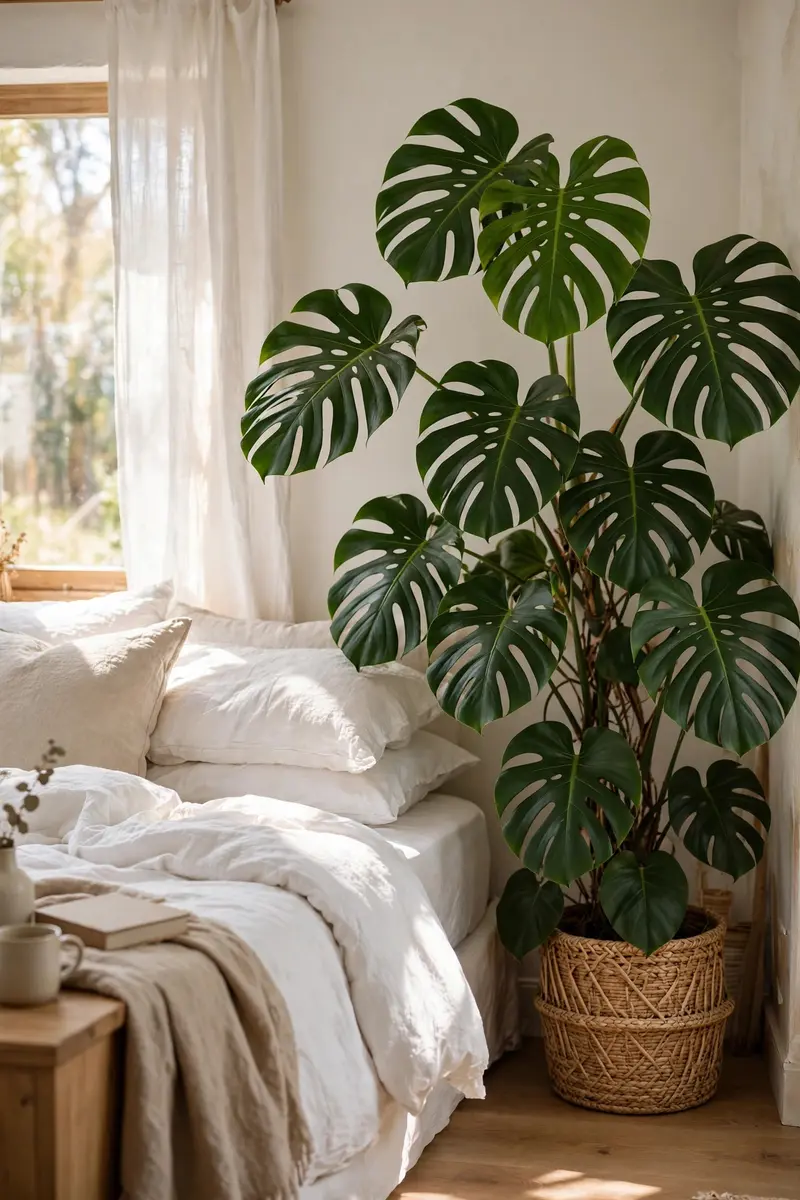
2. One Big Monstera as Your Statement Corner
If you only buy one plant, make it a monstera. Its huge split leaves fill an empty corner instantly and give the whole room a tropical, collected feel without any other decor. A monstera in a woven basket looks intentional even when the rest of the room is simple.
Materials: 1 monstera, large basket or ceramic pot, saucer. Realistic cost: $30–$70.
Place it where it gets bright indirect light, a few feet from a window, and rotate the pot a quarter turn each week so it grows evenly. Water only when the top two inches of soil feel dry. Tip: Wipe the leaves with a damp cloth once a month — dusty leaves photosynthesize poorly and look dull. Variation: Try a smaller monstera deliciosa on a plant stand if floor space is tight.
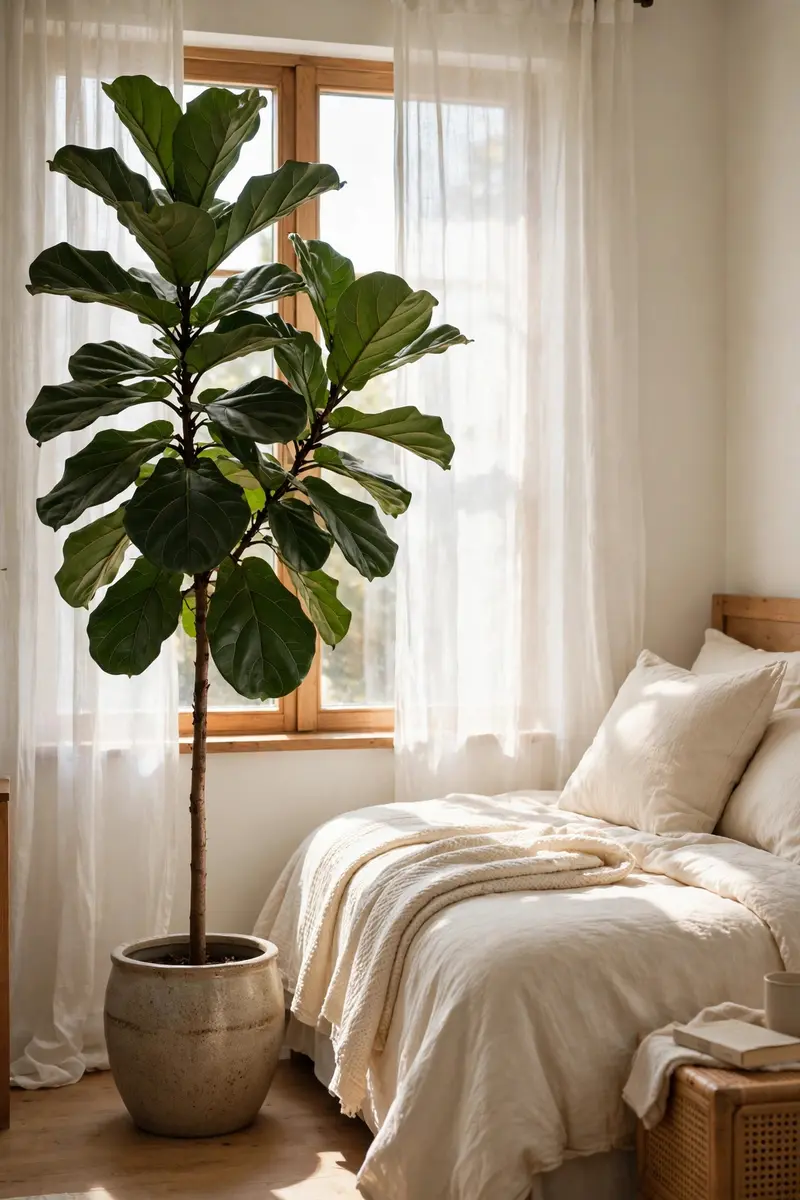
3. A Fiddle-Leaf Fig by the Window
A fiddle-leaf fig is the classic designer move for a bedroom corner: tall, sculptural and instantly elegant. It loves a bright spot near a window and rewards steady care with dramatic height that draws the eye upward.
Materials: 1 fiddle-leaf fig, tall pot, pebble tray. Realistic cost: $40–$90.
Keep its routine boring on purpose — same spot, same watering day, no cold drafts. Fiddle-leafs drop leaves when moved around, so choose its home once and leave it there. Tip: Set the pot on a pebble tray with water to raise humidity around the leaves without waterlogging the roots. Variation: If your room is dim, use a faux fiddle-leaf for the look and save real-plant effort for easier species.
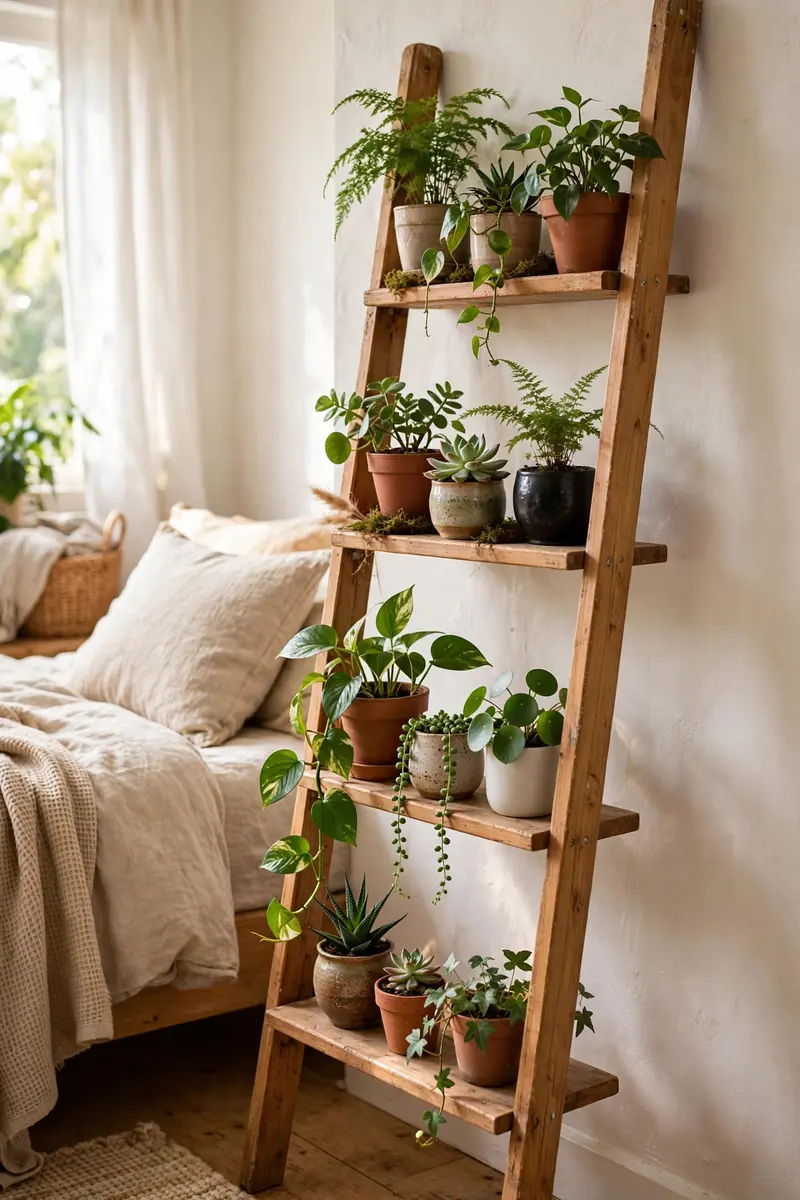
4. A Ladder Shelf Full of Small Plants
A leaning ladder shelf is the easiest way to display a whole collection without drilling a dozen holes. Each rung holds a different plant, so the display looks layered and lush from across the room.
Materials: leaning ladder shelf, 5–7 small potted plants, small saucers. Realistic cost: $60–$120.
Put the thirstiest plants on the bottom rungs where watering drips will not stain anything below, and the trailing plants up top where they can spill down. Mix leaf shapes — round, spiky, trailing — so no two rungs look alike. Tip: Keep a small watering can on the shelf itself so care becomes a habit, not a chore. Variation: Style every other rung with a book or candle so the shelf reads as decor, not a plant shop.
5. A Bedside Plant Instead of a Second Lamp
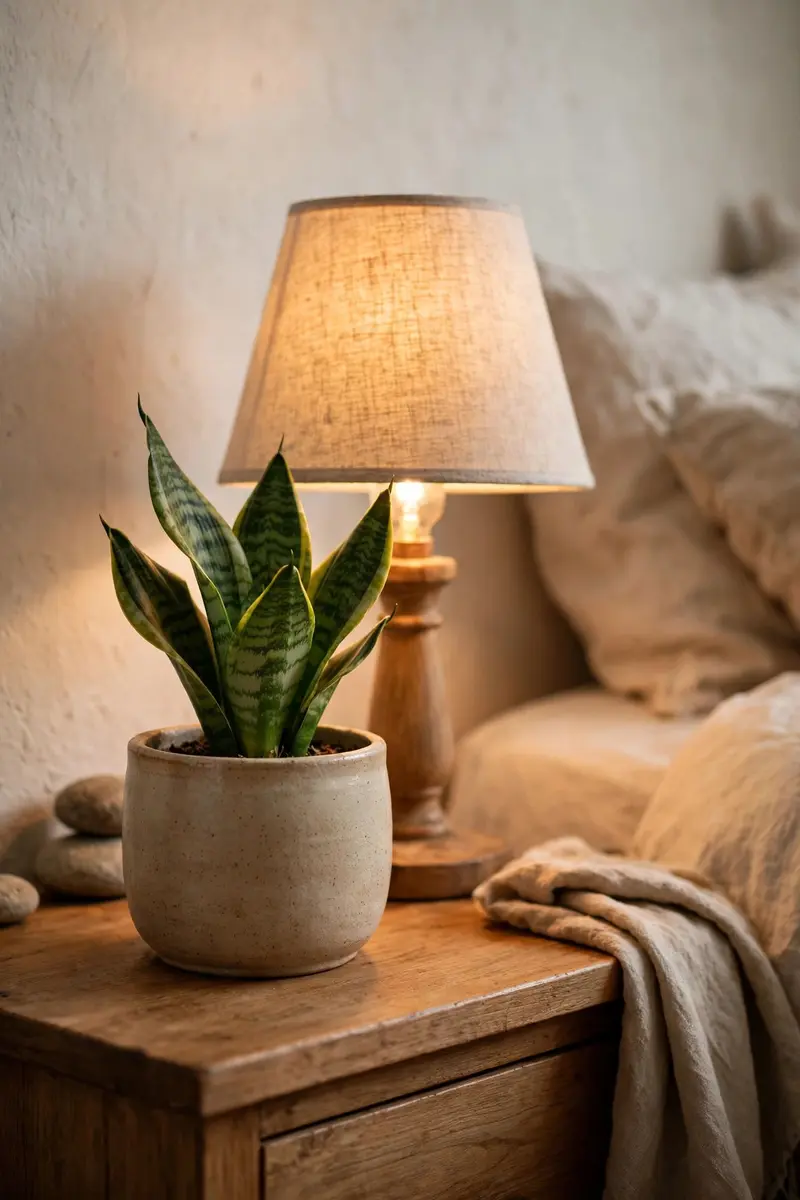
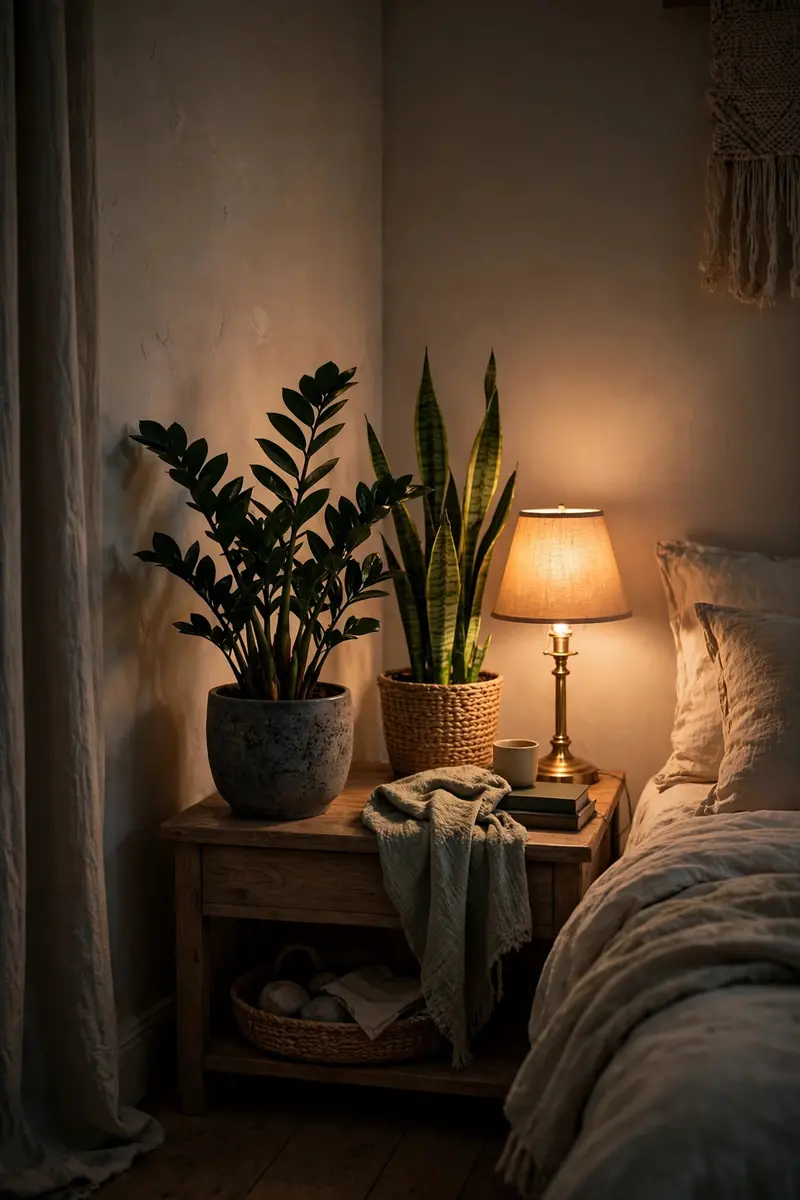
Swap one bedside object for a plant and the whole nightstand feels alive. A small snake plant or ZZ plant on the nightstand is the first green thing you see in the morning, and both survive low light and forgetful watering.
Materials: 1 small snake plant or ZZ plant, small pot, coaster. Realistic cost: $12–$30.
Choose a pot that matches your lamp or bedding so the plant looks styled, not random. Snake plants and ZZ plants want very little water — once every two to three weeks is plenty. Tip: Always use a pot with a drainage hole, and empty the saucer after watering so roots never sit in water. Variation: Use a tiny trailing spider plant if you want softness instead of upright structure.
6. A Sunny Windowsill Garden
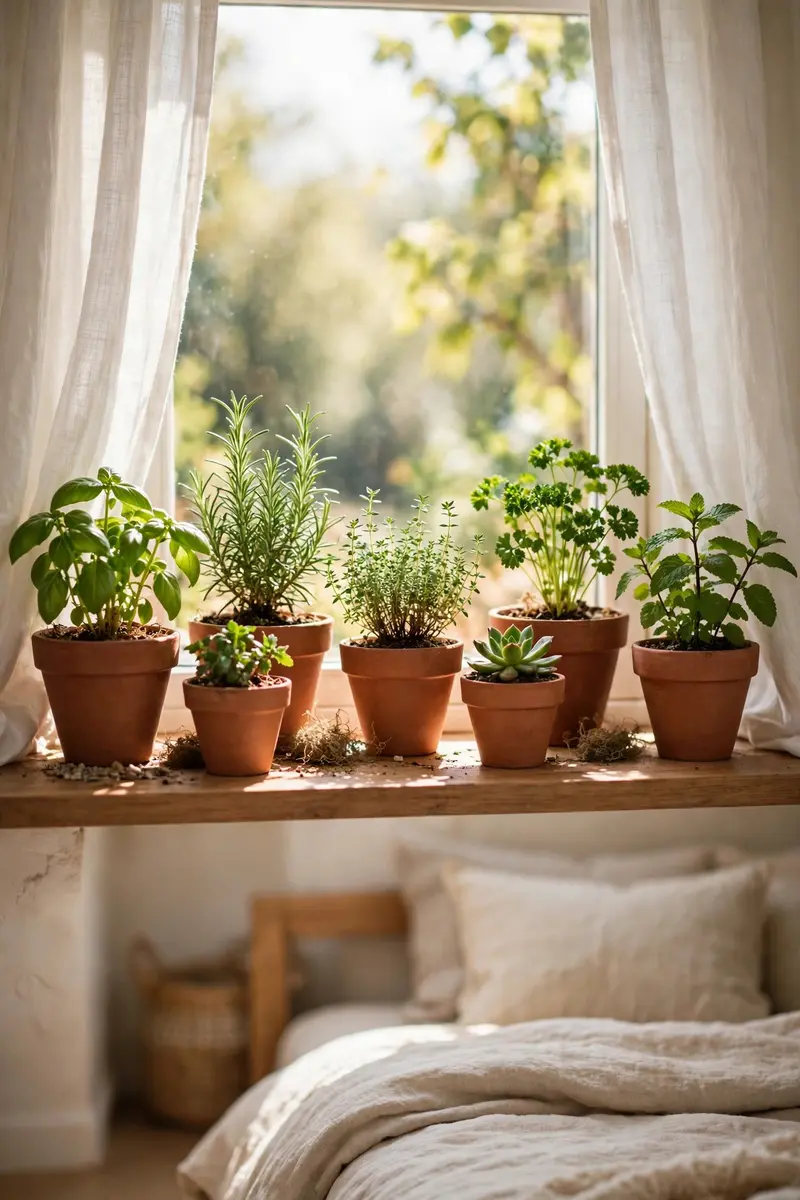
Your windowsill is free real estate for greenery. A row of small pots — herbs, succulents and trailing plants mixed together — turns the brightest spot in the room into a living display you see every morning.
Materials: 4–6 small pots, potting mix, small plants. Realistic cost: $20–$45.
Group plants with similar light needs together, and put the tallest at the ends to frame the window. Rotate the pots weekly so plants do not lean toward the glass. Tip: In summer, sheer curtains protect leaves from scorching midday sun while still letting light through. Variation: Use matching terracotta pots for a warm, cottage feel, or white ceramic for a clean modern look.
7. A Grid Plant Wall That Acts Like Art
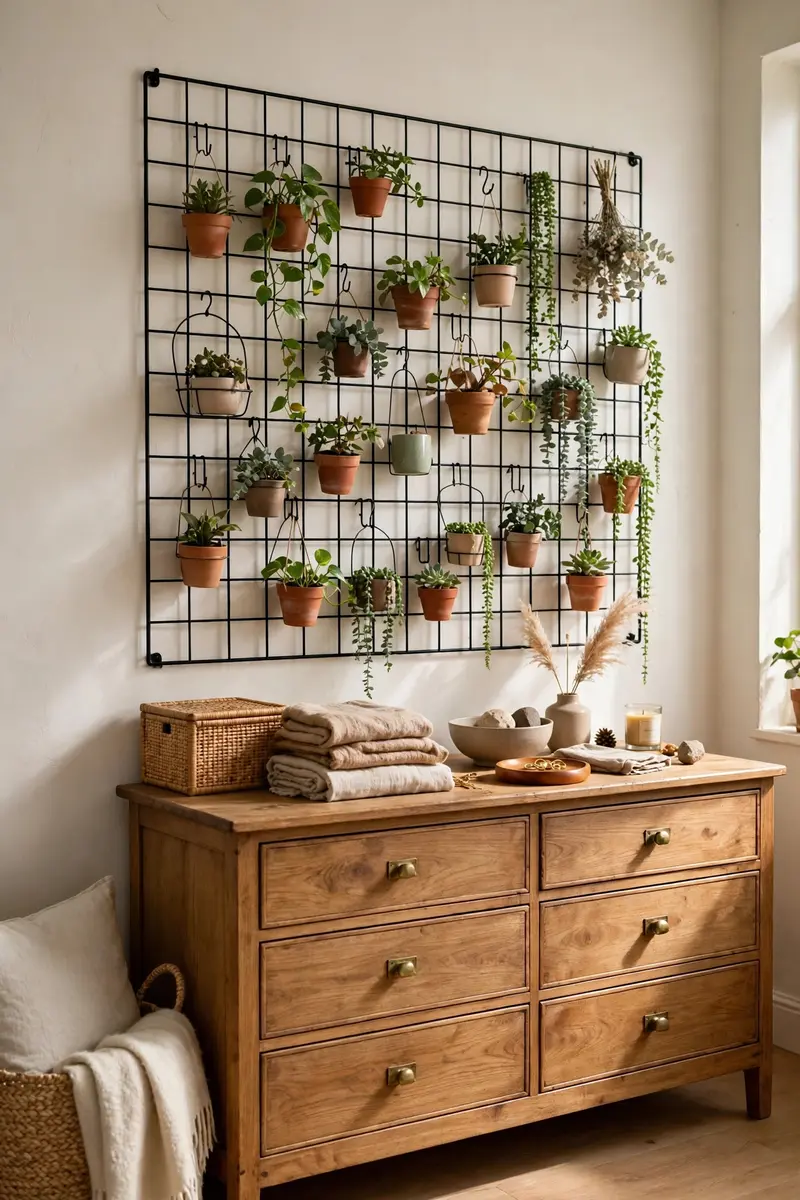
A wall grid or trellis panel covered in small potted plants works like living artwork. It fills a blank wall without paint or wallpaper, and you can rearrange the pots whenever you want a new look.
Materials: wall grid panel, S-hooks, 6–8 small pots. Realistic cost: $40–$85.
Mount the grid into wall studs, then hang pots at different heights so the arrangement feels organic. Keep the heaviest pots low and the trailing plants high. Tip: Line the grid with a mix of leaf textures — fern fronds, round pilea leaves and trailing vines — for a full, layered effect. Variation: Use a pegboard panel painted to match your wall for a softer, more custom look.
8. A Trio of Macrame Hanging Planters
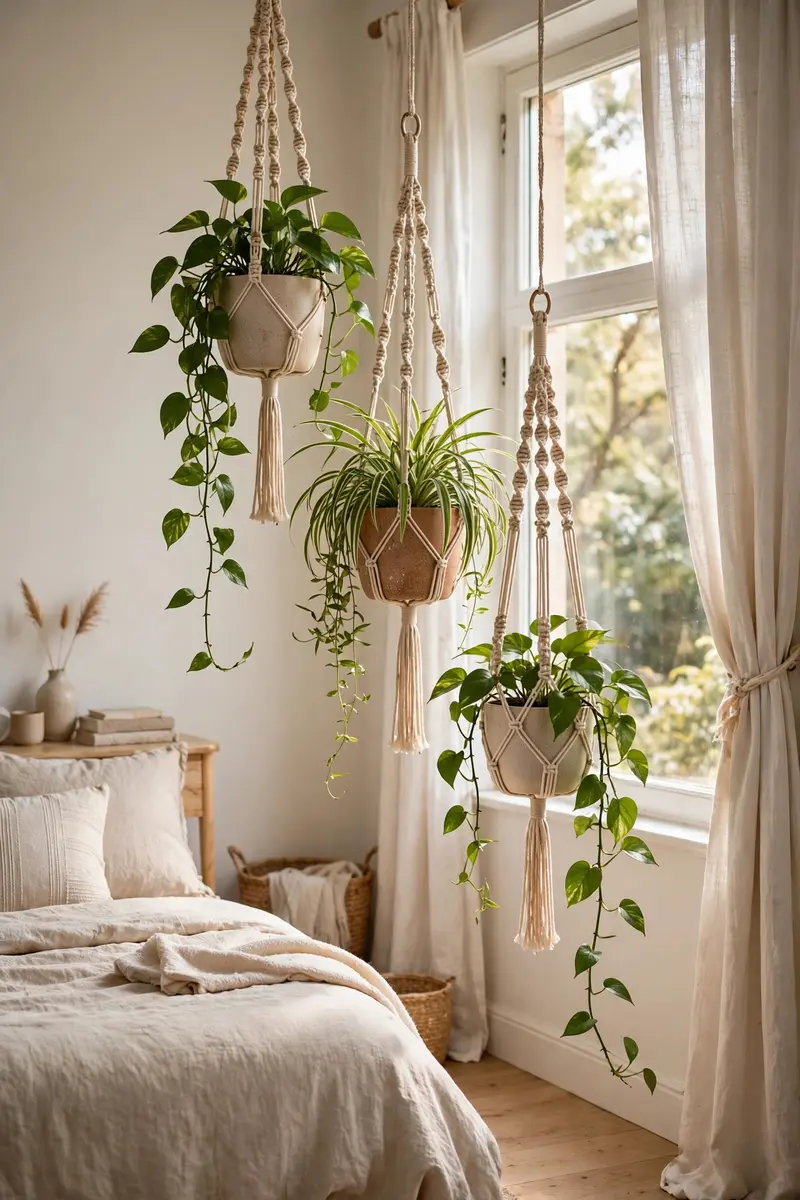
Macrame hangers add softness that plain pots cannot. Three hangers at staggered heights beside a window or in a corner create a boho focal point that moves gently and catches the light beautifully.
Materials: 3 macrame hangers, 3 trailing plants, ceiling hooks. Realistic cost: $35–$75.
Hang them at different lengths — high, medium and low — so the eye travels down the display. Spider plants, pothos and string of pearls all trail beautifully from hangers. Tip: Water hanging plants over the sink or bathtub, then hang them back once they stop dripping. Variation: Use cotton hangers in cream for a soft look, or black for a modern contrast against white walls.
9. A Tall Palm in a Woven Basket
A tall palm, like a parlor palm or areca palm, brings instant height and a resort feel to a bedroom corner. Dropped into a woven basket, it looks finished with zero extra styling effort.
Materials: 1 tall palm, woven basket, saucer. Realistic cost: $35–$80.
Parlor palms are a great pick because they tolerate low to medium light and are safe around pets. Keep the soil lightly moist and mist the fronds occasionally in dry rooms. Tip: Choose a basket slightly wider than the nursery pot so the plant sits stable and the basket hides the plastic. Variation: Try a bamboo palm if you want a fuller, denser silhouette.

10. A Fern-Filled Reading Nook
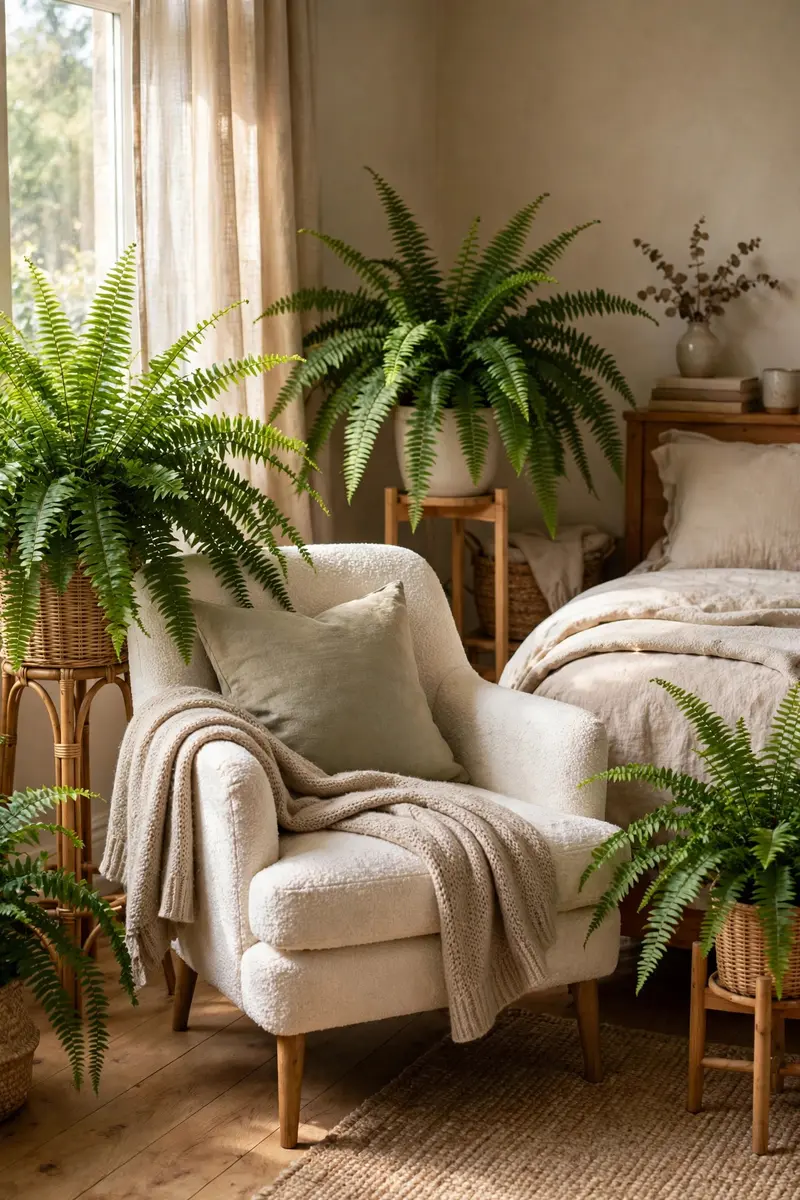
Turn your reading chair into a retreat by surrounding it with ferns. Boston ferns love humidity and indirect light, and their soft fronds make a corner feel private and cocooning.
Materials: 2–3 ferns, plant stands, small side table. Realistic cost: $30–$65.
Place one fern on a stand beside the chair and one on the floor, so greenery wraps the seat at two heights. Ferns like consistently moist soil, so check them twice a week. Tip: Mist fern fronds regularly, especially in winter when heating dries the air. Variation: Use a maidenhair fern on the side table for delicate texture if you enjoy hands-on plant care.
11. Fresh Eucalyptus in a Simple Vase
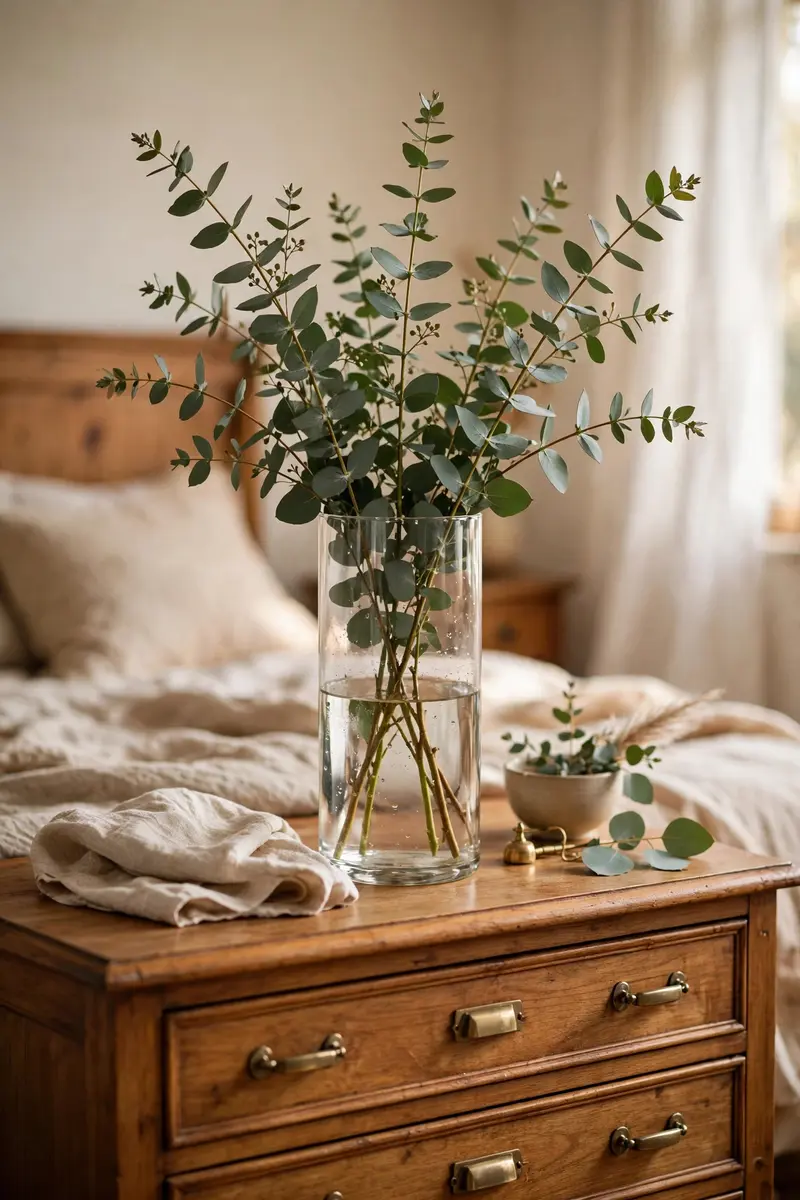
If live plants feel like a commitment, start with cut eucalyptus. A bunch in a tall vase on your dresser adds scent, color and softness for weeks, and it needs nothing but fresh water now and then.
Materials: 1 bunch of eucalyptus, tall vase. Realistic cost: $8–$20.
Trim the stems at an angle and change the water every few days to keep the bunch fresh. Eucalyptus dries gracefully too, so you can keep the dried stems as decor long after. Tip: Hang a small bunch from your showerhead for a spa-like scent that releases with steam. Variation: Mix in a few dried lavender stems for a calming, bedroom-friendly fragrance.
12. An Olive Tree in a Terracotta Pot
An olive tree gives a bedroom a Mediterranean, sun-warmed feel that no other plant quite matches. Its silvery-green leaves pair beautifully with white bedding, wood furniture and linen textures.
Materials: 1 small olive tree, terracotta pot, well-draining mix. Realistic cost: $35–$75.
Give it your brightest window and let the soil dry between waterings — olive trees hate wet feet. A terracotta pot helps the soil dry out evenly. Tip: Take the tree outside for a few hours on mild days; fresh air and direct sun keep its growth compact and healthy. Variation: Use a faux olive branch arrangement in a vase if your room gets almost no direct light.

13. Snake Plants for Dark Corners
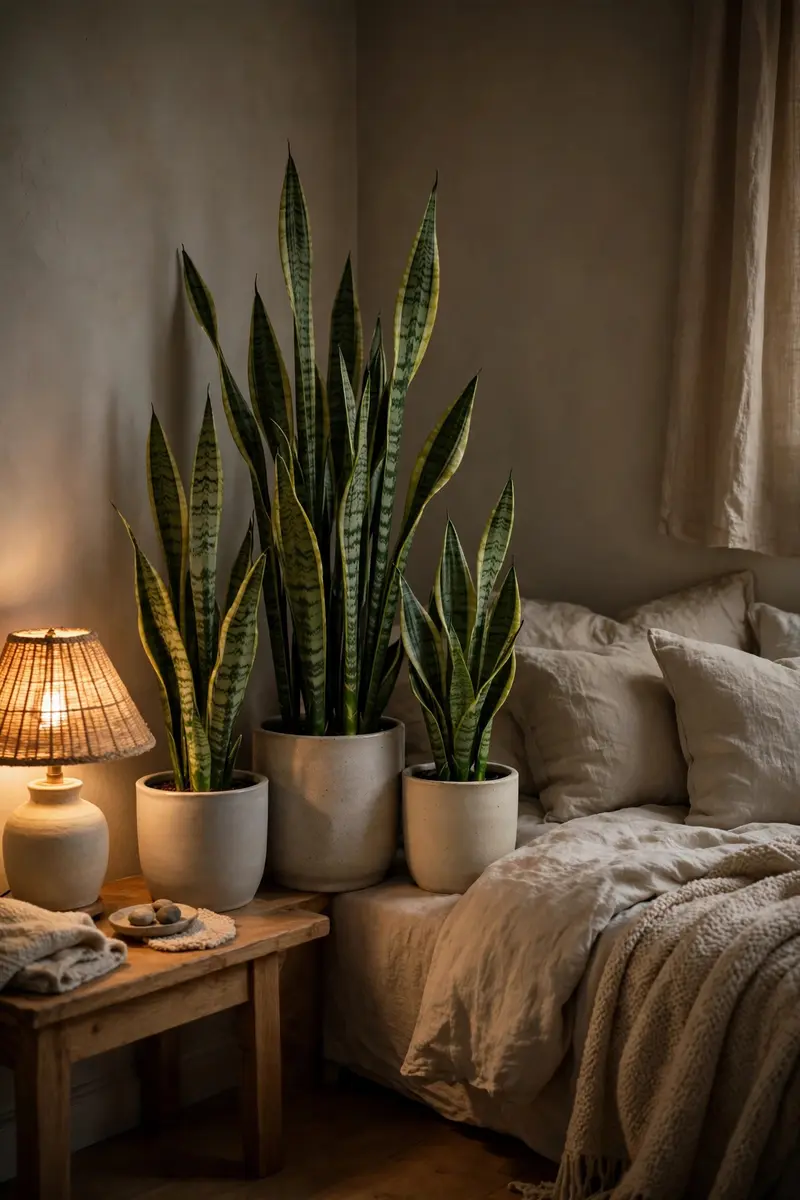
Every bedroom has a dark corner where nothing seems to grow. Snake plants are the answer: they tolerate low light, survive neglect and add tall, architectural lines that balance soft bedding.
Materials: 2 snake plants, simple pots. Realistic cost: $20–$45.
Water sparingly — overwatering is the only reliable way to kill a snake plant. In a dim corner, once a month may be enough. Their upright leaves also make a small room feel taller. Tip: If leaves turn yellow and soft, you are watering too often; let the soil dry completely before watering again. Variation: Choose a dwarf snake plant variety for a nightstand or shelf where a tall one would overwhelm.
14. A Calathea Collection on Your Dresser
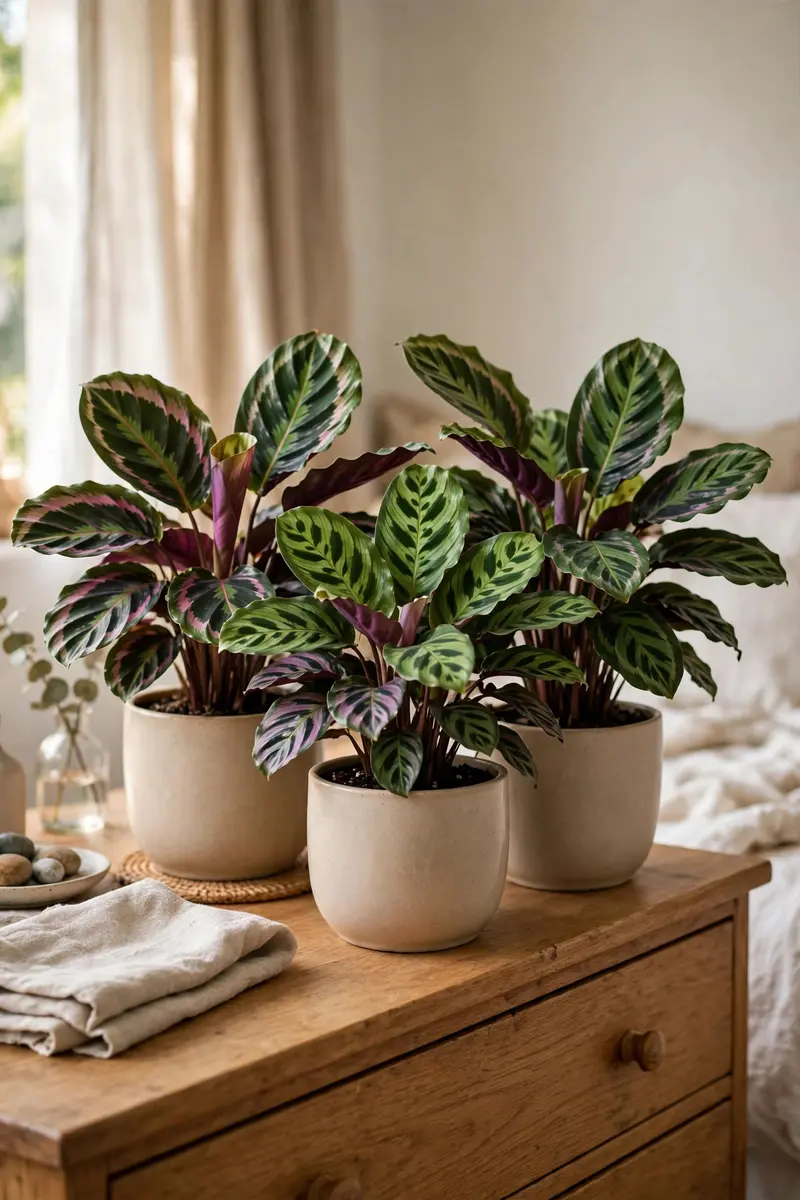
Calatheas are the jewel box of bedroom plants: patterned leaves in greens, purples and creams that look almost painted. A small collection on a dresser turns an ordinary surface into a display.
Materials: 3 calatheas in different varieties, matching pots, tray. Realistic cost: $35–$70.
Calatheas like medium indirect light and steady moisture, and they fold their leaves up at night, which feels almost magical in a bedroom. Keep them away from cold drafts and direct sun. Tip: Water calatheas with filtered or room-temperature rainwater if your tap water leaves brown leaf tips. Variation: Add one prayer plant to the group for leaves that move visibly through the day.
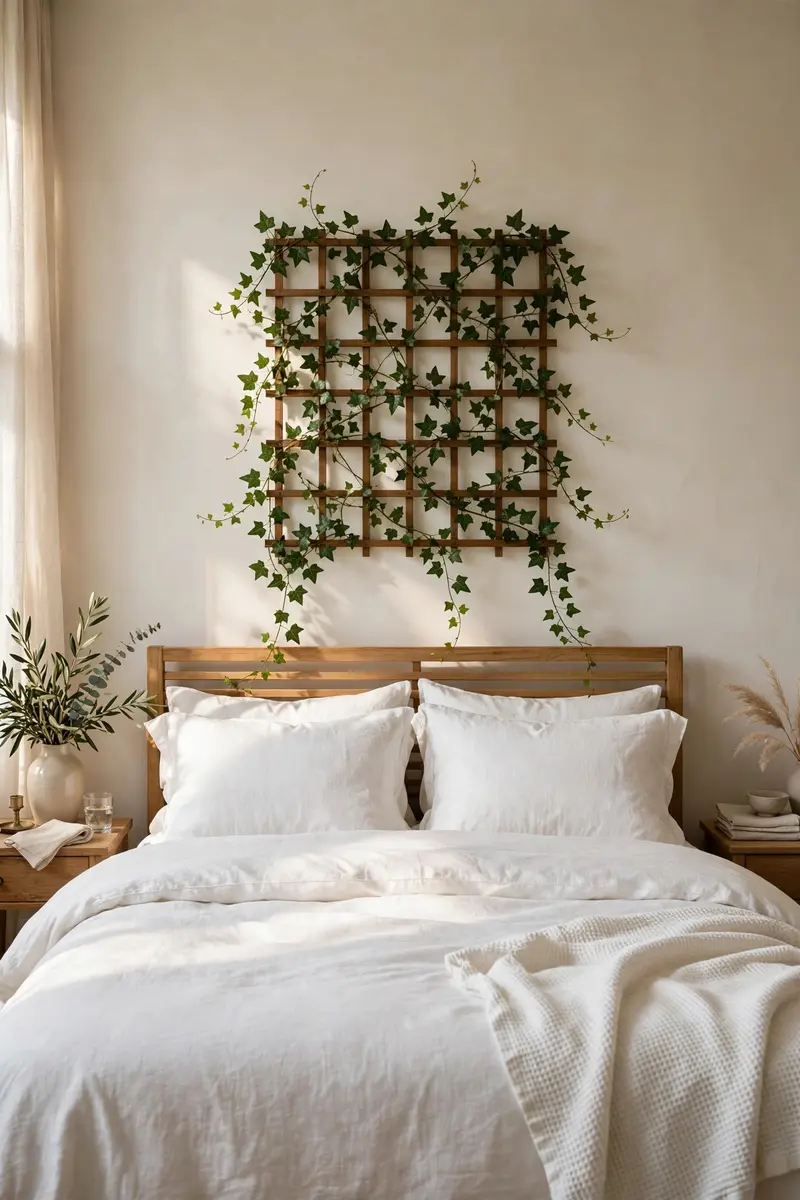
15. Ivy Trained Along a Headboard Trellis
Train ivy up a small trellis behind your bed and the headboard becomes a living frame. English ivy grows steadily, trails gracefully and fills in a trellis faster than most people expect.
Materials: small trellis or wall clips, 1–2 ivy plants, ties. Realistic cost: $20–$40.
Attach the trellis securely to the wall, then gently weave new growth through it as it lengthens. Ivy tolerates low to bright indirect light and forgiving watering. Tip: Keep ivy away from painted walls you care about — it can cling and mark paint, so a trellis is safer than bare wall. Variation: Use faux ivy garland on the trellis for the same look in a room with no natural light.
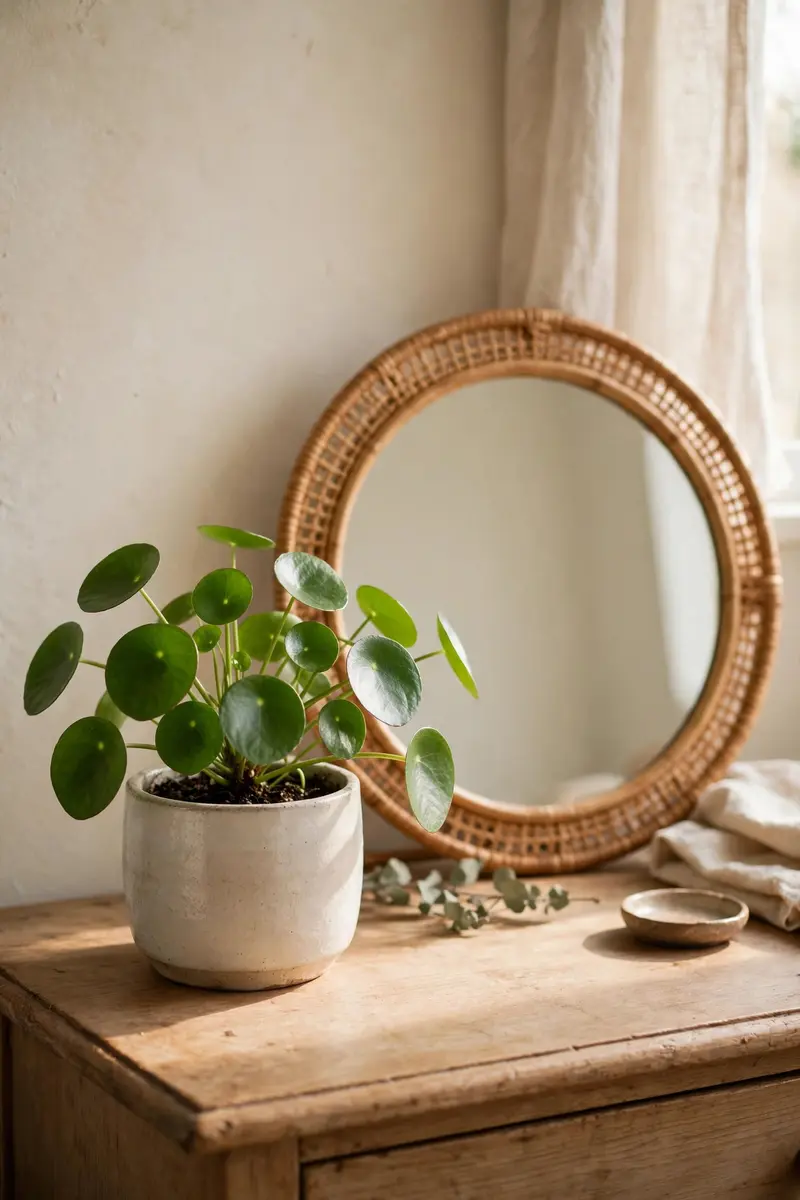
16. A Plant-Filled Vanity Corner
If you have a vanity or dressing table, give it a green companion. A small plant beside the mirror softens the vanity’s hard edges and makes getting ready feel calmer and more pleasant.
Materials: 1 small plant, small pot, tiny tray. Realistic cost: $10–$25.
Pick a plant that stays compact, like a pilea or small fern, so it never crowds your mirror or makeup. A tray under the pot protects the tabletop from water marks. Tip: Choose a plant with round leaves to contrast the straight lines of a mirror and table. Variation: Hang a tiny planter from the mirror frame for a trailing accent that uses no table space at all.
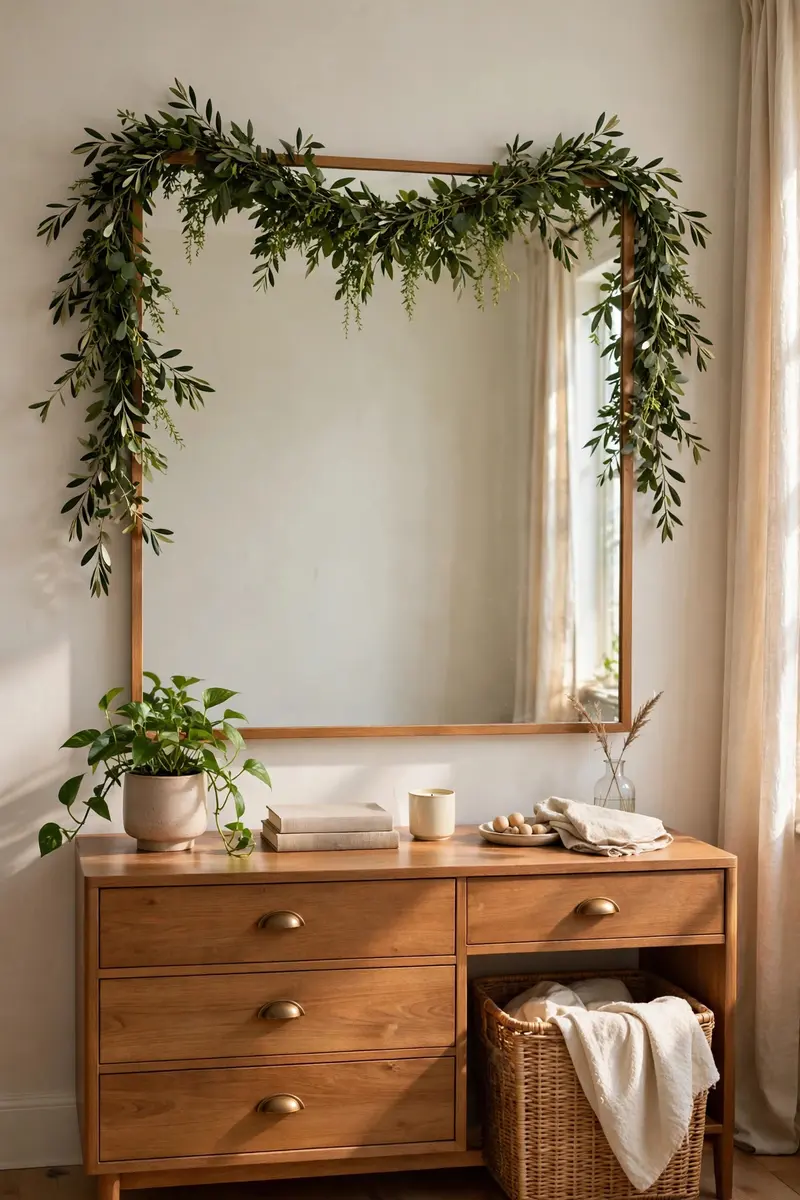
17. A Greenery Garland Over Your Mirror
Drape a greenery garland across the top of a mirror and the whole wall feels styled. Real or faux garlands both work here, and the garland frames your reflection in soft green.
Materials: 1 greenery garland, small hooks or clips. Realistic cost: $12–$30.
Let the garland dip slightly in the middle for a natural swag, and tuck in a few eucalyptus sprigs for texture. If you use a real garland, mist it lightly to keep it fresh. Tip: Use removable hooks so you can change the garland with the seasons without damaging the wall. Variation: Weave warm fairy lights through the garland for a soft evening glow.
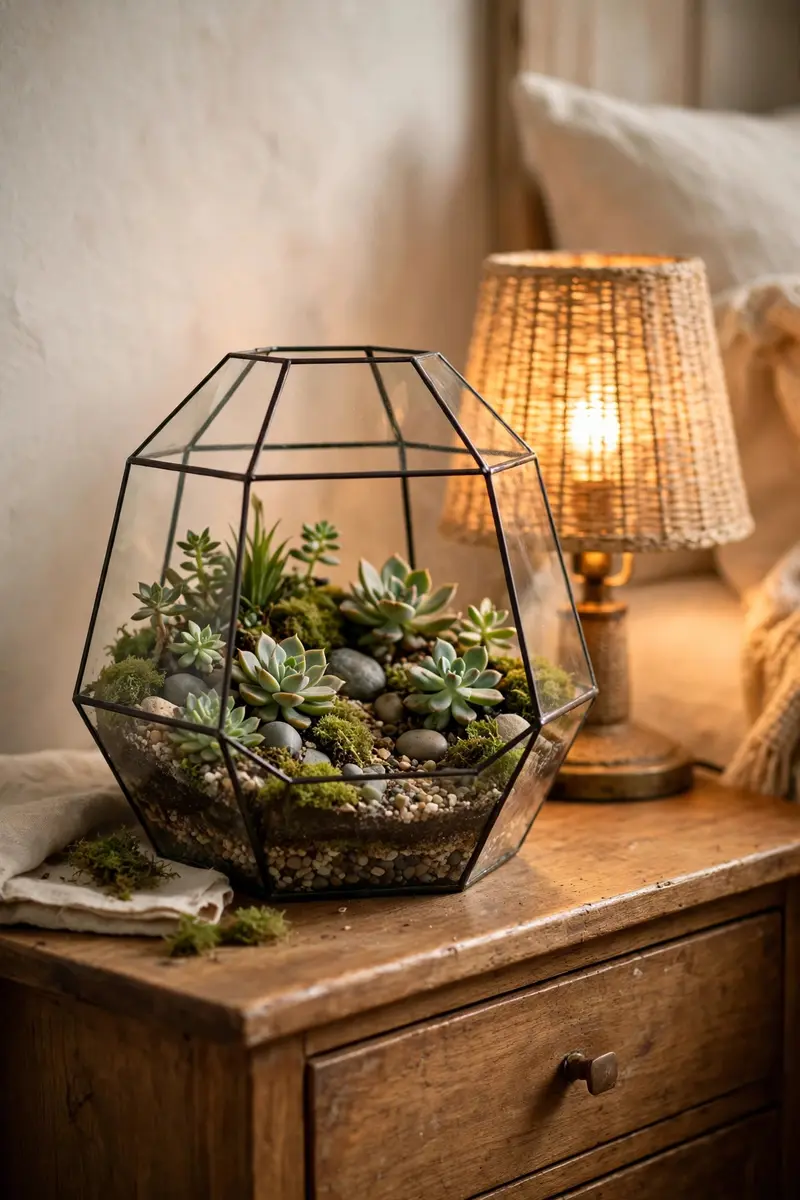
18. A Terrarium on Your Nightstand
A terrarium is a tiny world on your nightstand: succulents or air plants arranged in glass, with pebbles and moss for texture. It adds greenery without taking much space or attention.
Materials: glass terrarium, 2–3 small succulents or air plants, pebbles, moss. Realistic cost: $20–$45.
Use a layer of pebbles at the bottom for drainage, then soil, then plants, finishing with moss for a polished look. Open terrariums suit succulents; closed ones suit moisture-loving plants. Tip: Water terrarium succulents very lightly — a tablespoon or two is plenty, since there is no drainage hole. Variation: Build a terrarium with air plants only, so you never deal with soil at all.
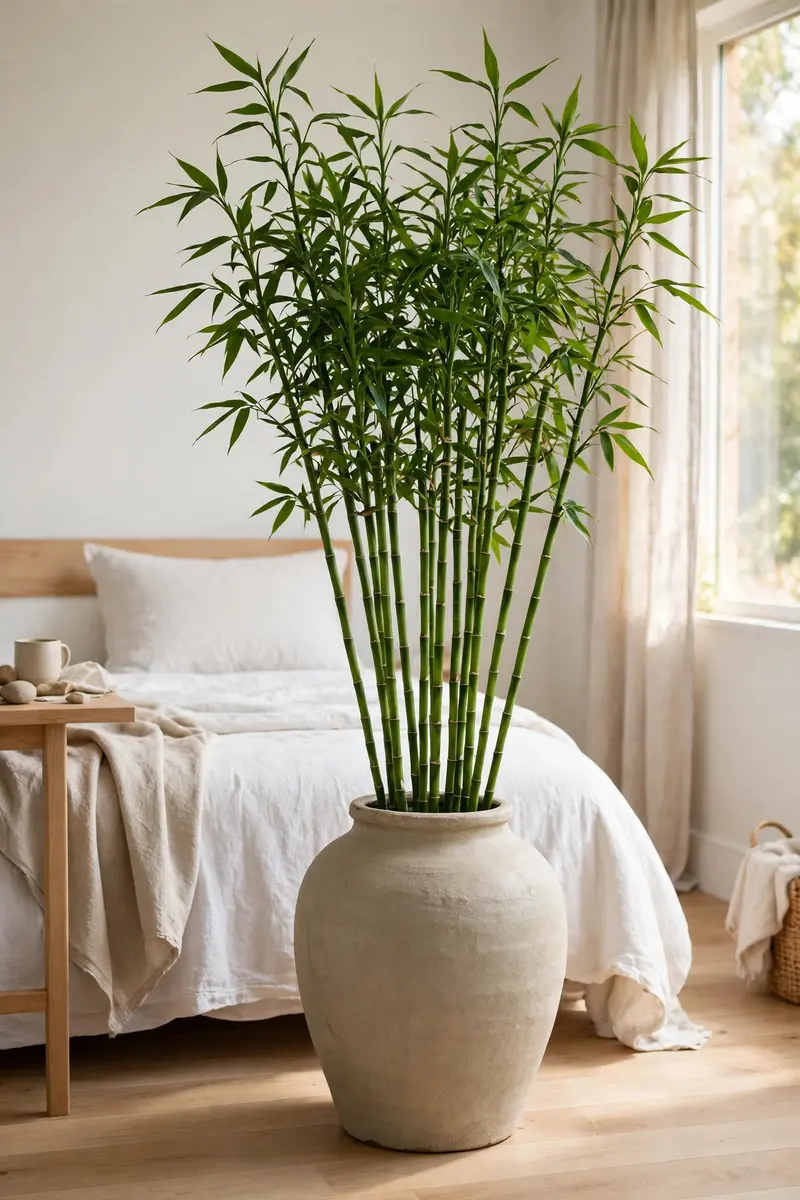
19. Bamboo Stems in a Tall Floor Vase
Tall bamboo stems in a floor vase add height and calm with almost no maintenance. They suit modern and minimal bedrooms where a leafy plant might feel too busy.
Materials: bamboo stems, tall vase, decorative stones. Realistic cost: $15–$35.
Stand the stems upright and fan them slightly so they fill the vase naturally. Change the water weekly and rinse the vase to prevent algae. Tip: Keep bamboo out of direct sun, which can yellow the leaves and cloud the water faster. Variation: Use lucky bamboo in a small glass on a shelf for the same idea at a smaller scale.
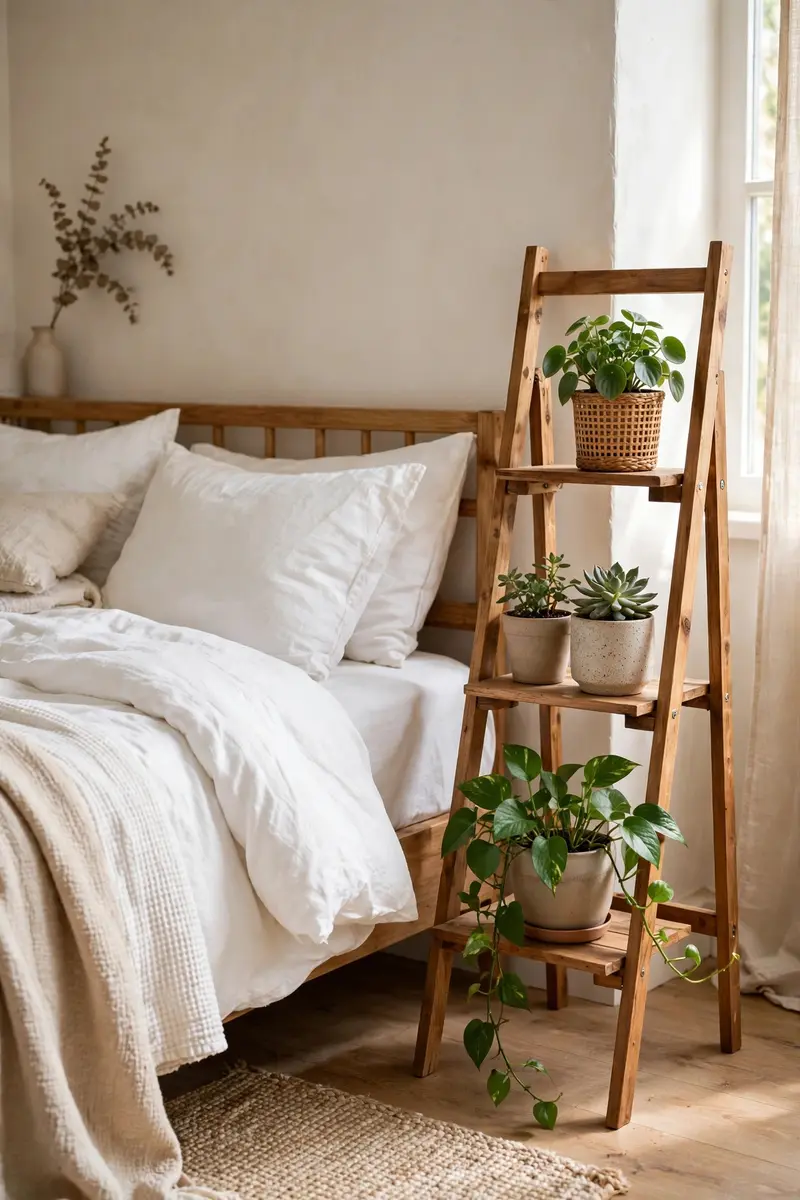
20. A Plant Ladder by the Bed
A small plant ladder beside the bed holds plants at three heights and doubles as a bedside display. It is perfect for renters because it leans against the wall without any drilling.
Materials: small plant ladder, 4–5 small plants. Realistic cost: $40–$80.
Put a trailing plant on the top rung so vines soften the ladder’s lines, and a sturdy plant on the bottom for balance. Keep the ladder’s footprint clear of walkways. Tip: Match the ladder’s wood tone to your bed frame or nightstand so the whole corner reads as one intentional grouping. Variation: Use a metal ladder in black for a modern bedroom, or whitewashed wood for a coastal feel.
21. A Greenery Shelf Running Above the Headboard
A long floating shelf above the headboard is made for plants. Line it with a row of small pots and trailing vines, and the wall above your bed becomes a green horizon you see every time you lie down.
Materials: floating shelf, brackets, 5–7 small plants. Realistic cost: $45–$90.
Mount the shelf into studs, since watered plants get heavy. Place trailing plants at the ends so vines spill down both sides of the bed symmetrically. Tip: Put a thin drip tray or cork mat under each pot to protect the shelf from water stains. Variation: Run the shelf the full width of the wall for a dramatic ledge, or keep it just bed-width for a tidier look.

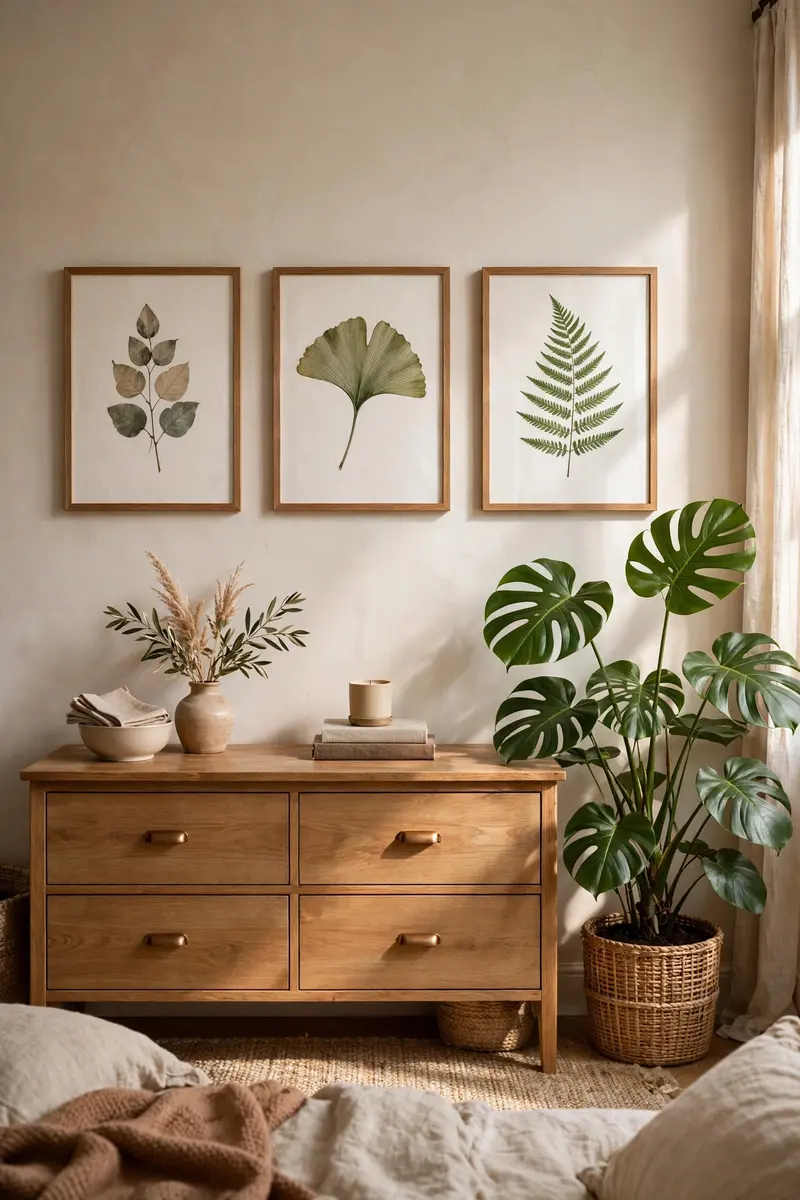
22. Botanical Prints Paired With Real Plants
Pair a framed botanical print with a real plant of the same shape and the room gains a clever, layered look. The print gives structure; the live plant gives life, and together they make a small wall feel curated.
Materials: framed botanical prints, 1–2 matching plants. Realistic cost: $25–$60.
Hang the print above a dresser, then set a plant with similar leaf shapes beside it — a monstera print with a real monstera is the classic pairing. Keep the frames simple so the leaves stay the star. Tip: Use the same frame color as your bed frame or hardware for a pulled-together gallery feel. Variation: Create a trio of prints in different sizes above a bench, with one plant anchoring the end.
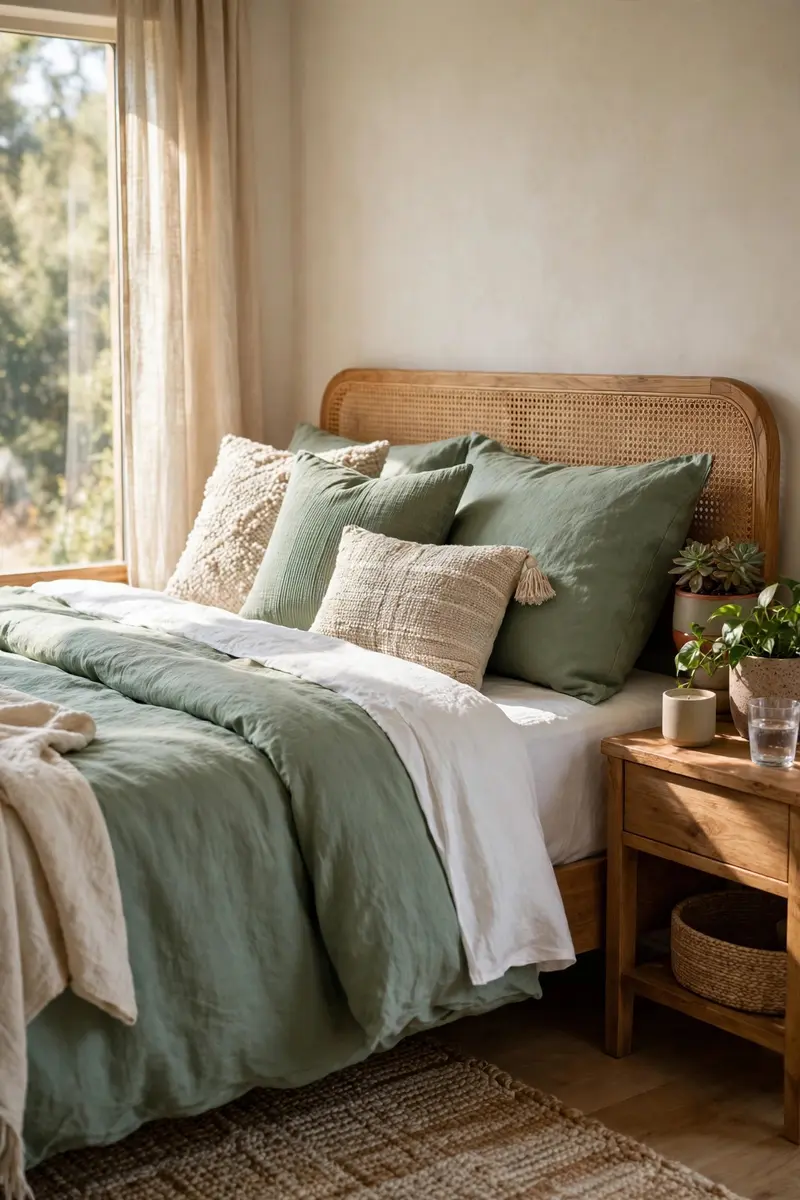
23. Green Bedding Layered With Live Plants
Greenery does not have to be only plants. Layer sage or olive bedding with your live plants and the whole room reads as one green story, from the bed to the windowsill.
Materials: sage or olive duvet cover, green throw pillows, existing plants. Realistic cost: $30–$70.
Keep the bedding in soft, muted greens so it complements rather than competes with the plants. White sheets underneath keep the look fresh and prevent the room from feeling dark. Tip: Add one textured throw — linen or waffle weave — so the green bedding feels cozy, not flat. Variation: Use botanical-print pillowcases for a subtle leaf pattern that echoes your plants.
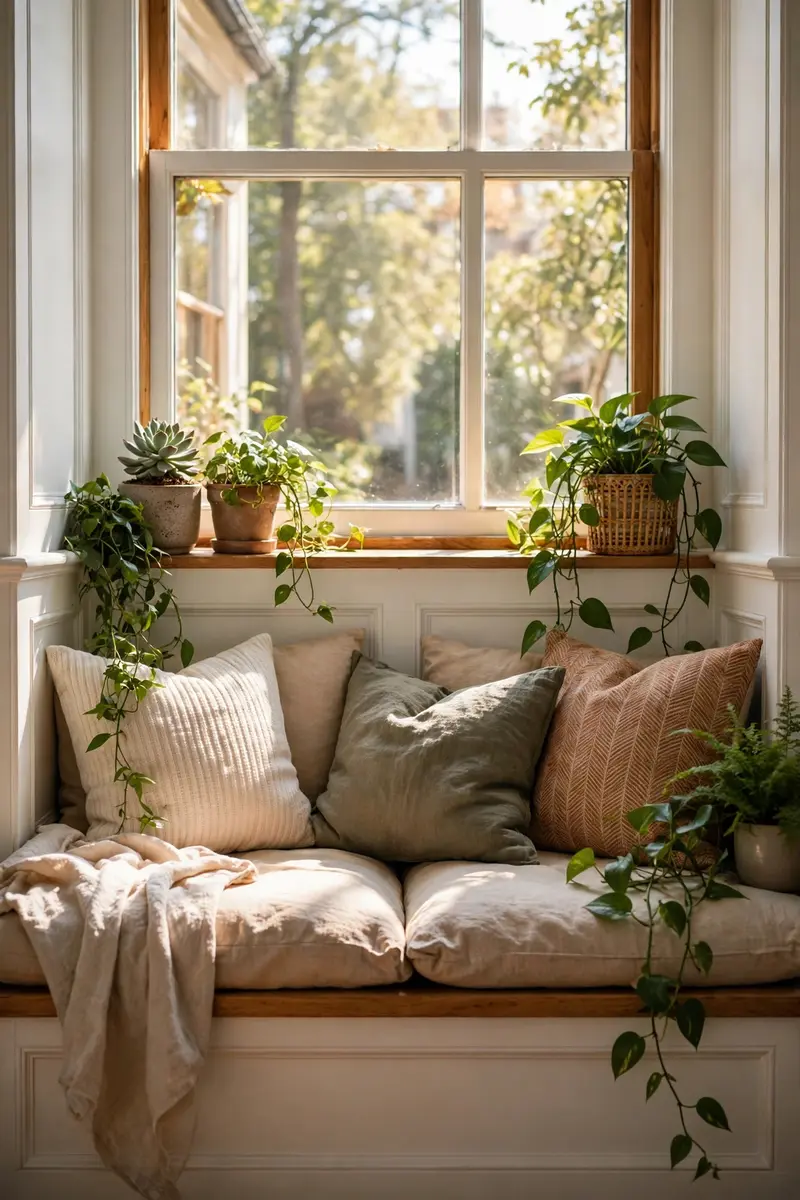
24. A Plant-Filled Window Seat
If you have a window seat, fill its edges with plants and it becomes the room’s favorite spot. Trailing plants on the sill, a tall plant beside the seat and a small pot on the cushion’s edge turn a seat into a garden nook.
Materials: window seat cushions, 3–5 plants in varied sizes. Realistic cost: $30–$65.
Keep the plants at the seat’s edges so you still have room to sit, and choose varieties that enjoy the window’s light level. A watering tray under each pot protects the seat fabric. Tip: Add a small basket beside the seat to hold a watering can and pruning shears, so care stays easy. Variation: Hang a planter from the window frame above the seat for a trailing accent that uses no seat space.
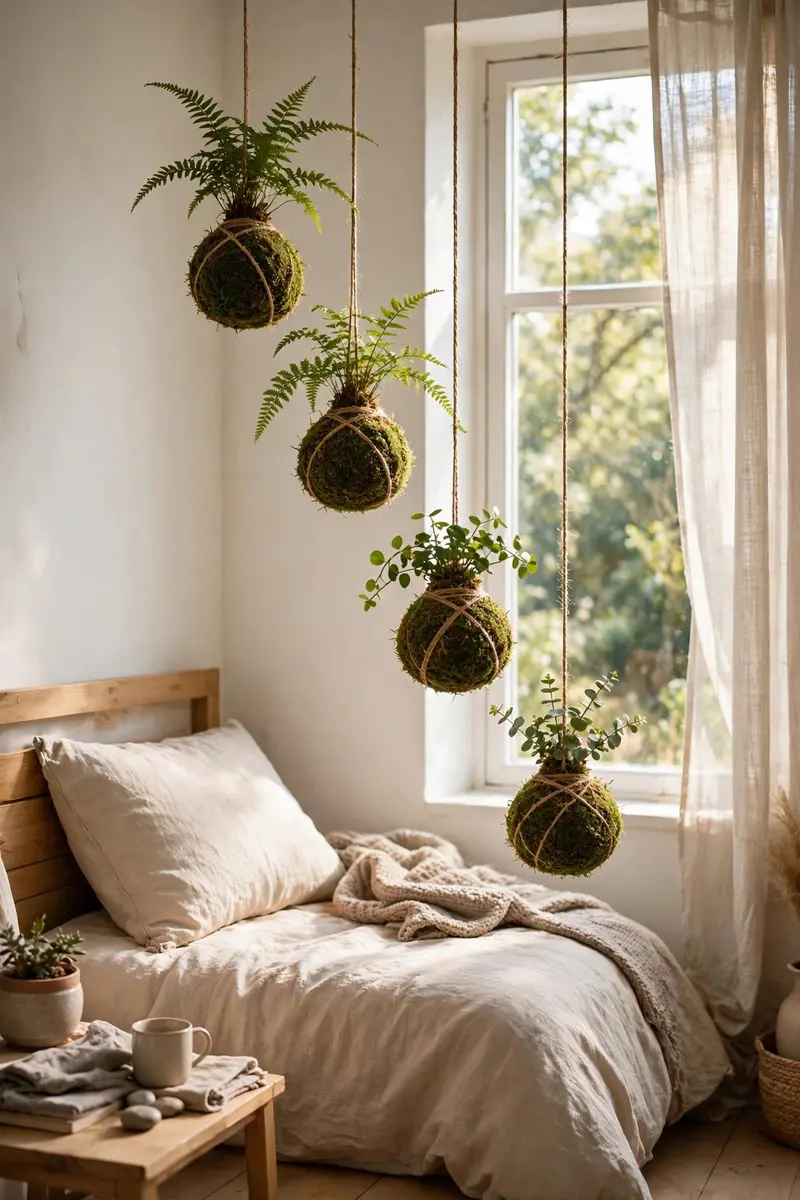
25. Hanging Kokedama Moss Balls
Kokedama — plants wrapped in moss balls and hung from the ceiling — look like floating gardens. A few at different heights near a window create a magical, airy display unlike any ordinary pot.
Materials: kokedama moss balls (or DIY kit), string or cord, hooks. Realistic cost: $30–$60.
Hang them where they get indirect light and soak the moss balls in water every week or two, letting them drip dry before rehanging. Ferns and pothos work beautifully as kokedama. Tip: Hang kokedama away from walkways and the bed so dripping water never lands where you sleep. Variation: Set one kokedama in a shallow ceramic dish on a dresser if hanging feels too adventurous.
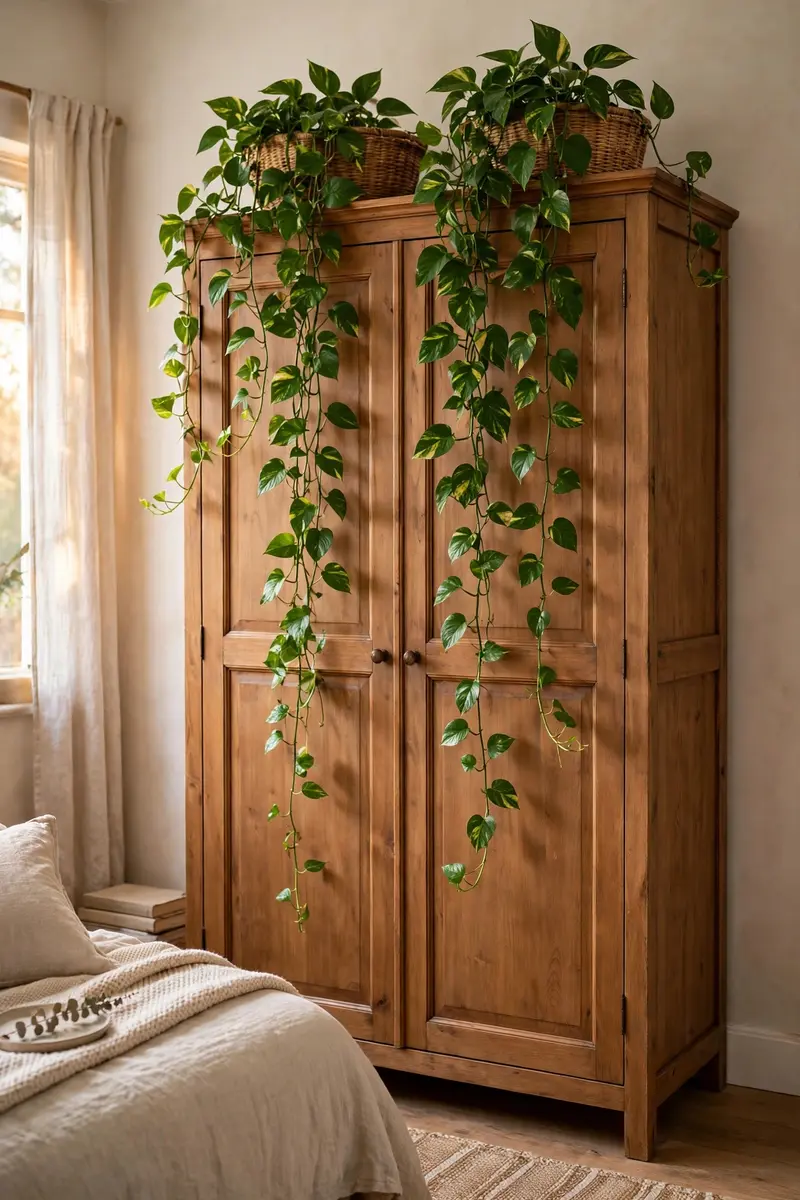
26. Greenery on Top of the Wardrobe
The top of a wardrobe is usually wasted space. Line it with trailing plants and the room gains a green crown that softens the furniture’s hard top edge.
Materials: 3–4 trailing plants, saucers, small step stool for care. Realistic cost: $25–$55.
Place the plants near the front edge so vines spill down the wardrobe doors, and keep a step stool nearby because watering up high is easy to skip. Pothos and philodendron both trail well from height. Tip: Use lightweight plastic pots inside decorative baskets up high, so lifting them for watering stays safe and easy. Variation: Add a string of warm fairy lights along the wardrobe top for a soft evening glow behind the vines.
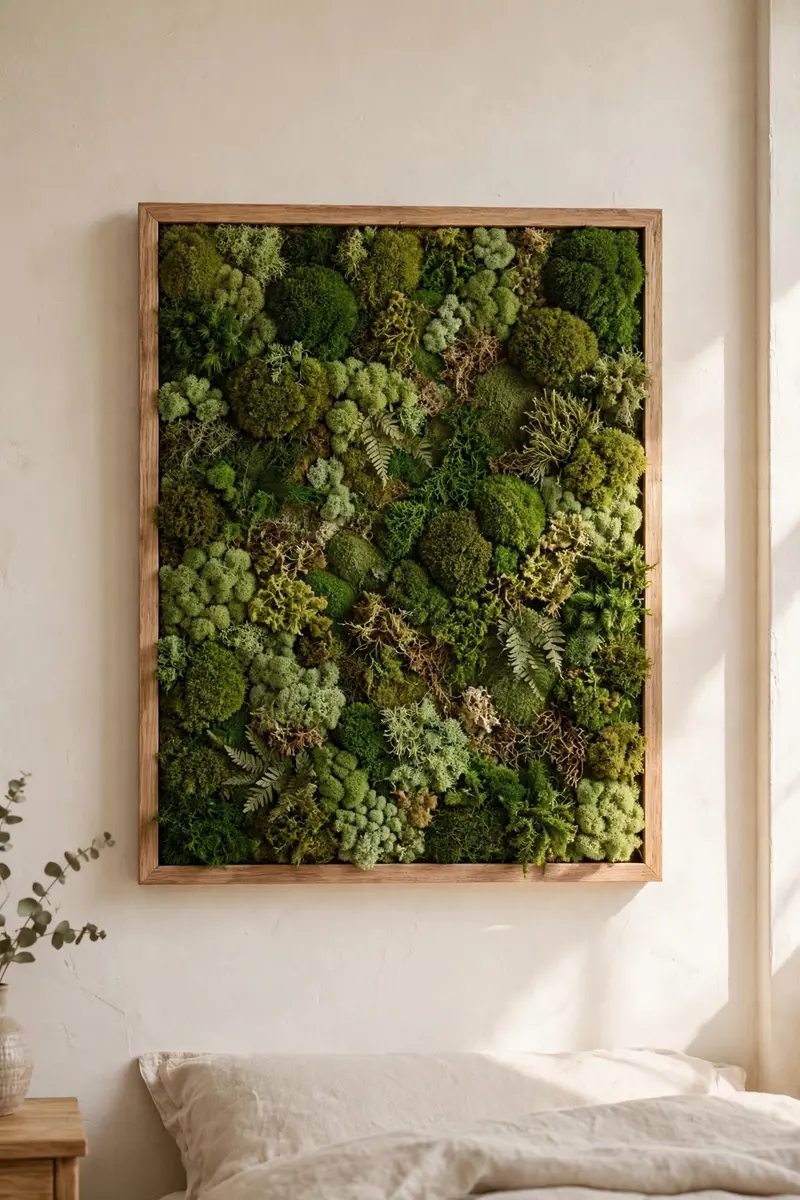
27. Preserved Moss Wall Art
Preserved moss art gives you a lush green wall with zero watering. Framed moss panels add texture and color to a bedroom wall, and they never fade if kept out of direct sun.
Materials: preserved moss frame or DIY moss panel, wall hooks. Realistic cost: $30–$80.
Hang the moss art where it gets no direct sunlight and no humidity extremes — a bedroom wall opposite the window is ideal. Mix moss types for texture: flat moss, reindeer moss and fern fronds. Tip: Never water preserved moss; misting or watering will damage it and cause shedding. Variation: Make a small moss monogram or shape for a personalized piece above a dresser.
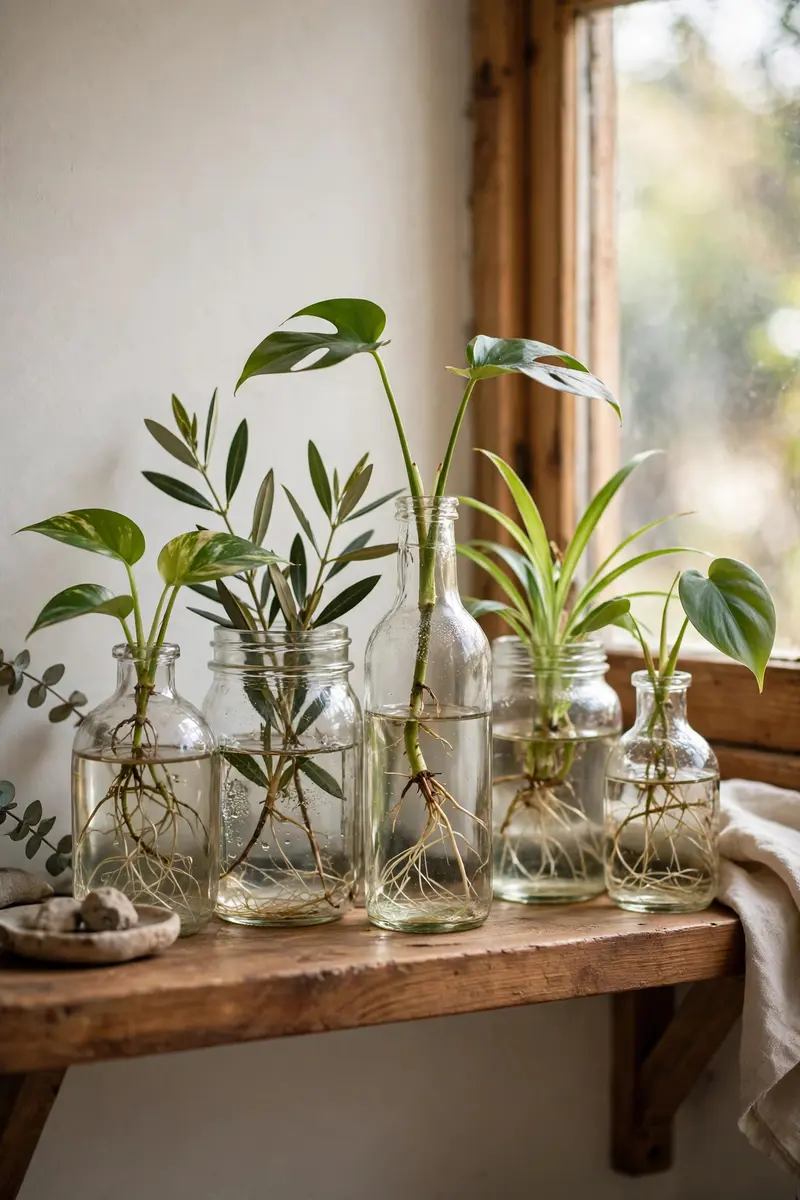
28. A Plant Propagation Station
A propagation station — glass jars and bottles of cuttings on a shelf or windowsill — is decor and hobby in one. Watching roots grow in water is satisfying, and the station keeps greenery multiplying for free.
Materials: glass jars or test-tube stand, cuttings, water. Realistic cost: $10–$30.
Start with pothos, philodendron or spider plant cuttings, which root reliably in water. Change the water weekly and move rooted cuttings to soil when roots reach a few inches. Tip: Keep the station near bright indirect light, but not in harsh direct sun, which heats the water and encourages algae. Variation: Use amber glass bottles for a vintage apothecary look that suits a cozy bedroom.
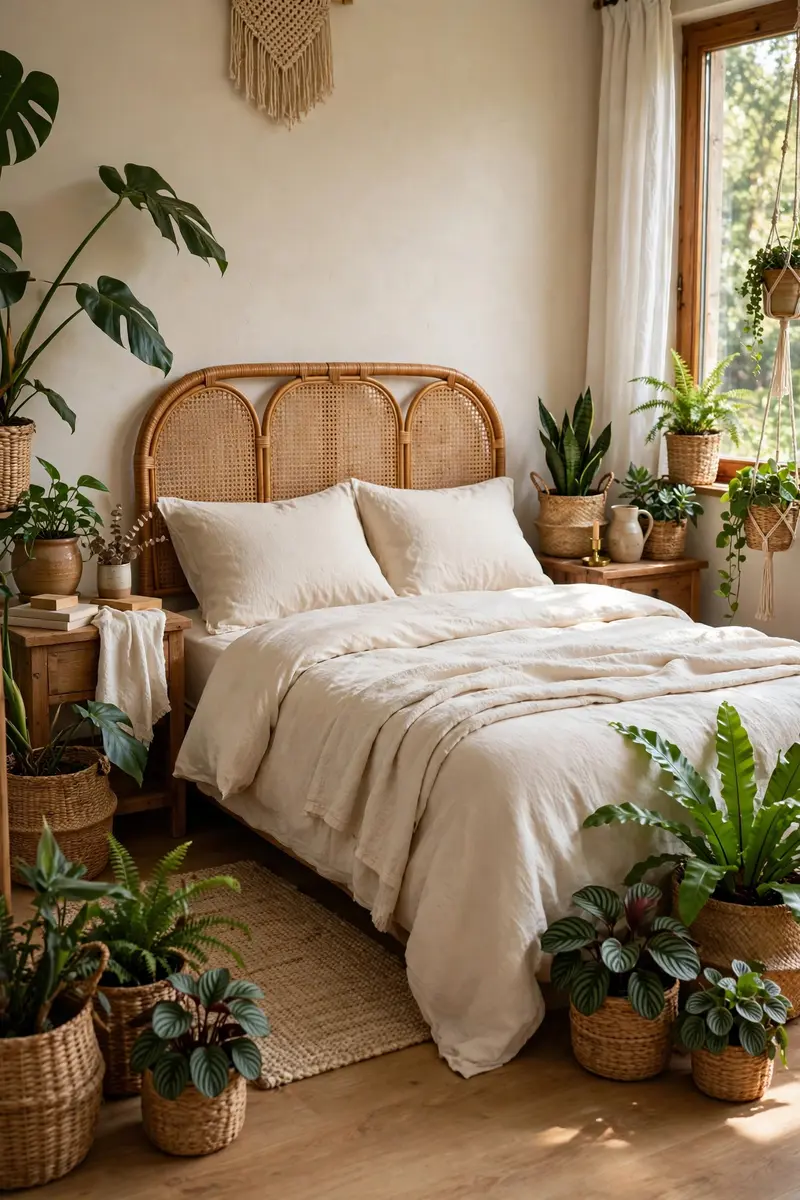
29. Greenery With Rattan for a Boho Bedroom
Rattan furniture and greenery are a natural pair. A rattan headboard, rattan baskets and woven planters make plants look right at home, and the warm wood tones keep a leafy room from feeling cold.
Materials: rattan headboard or baskets, 4–6 plants. Realistic cost: $40–$100.
Let the rattan set the warm tone, then add plants in woven baskets that echo its texture. Keep bedding in cream or white so the rattan and greenery stay the focus. Tip: Mix basket weaves — one chunky, one fine — so the plant display does not look like a matched set. Variation: Add a rattan pendant light above the bed for a warm glow that complements the plants.
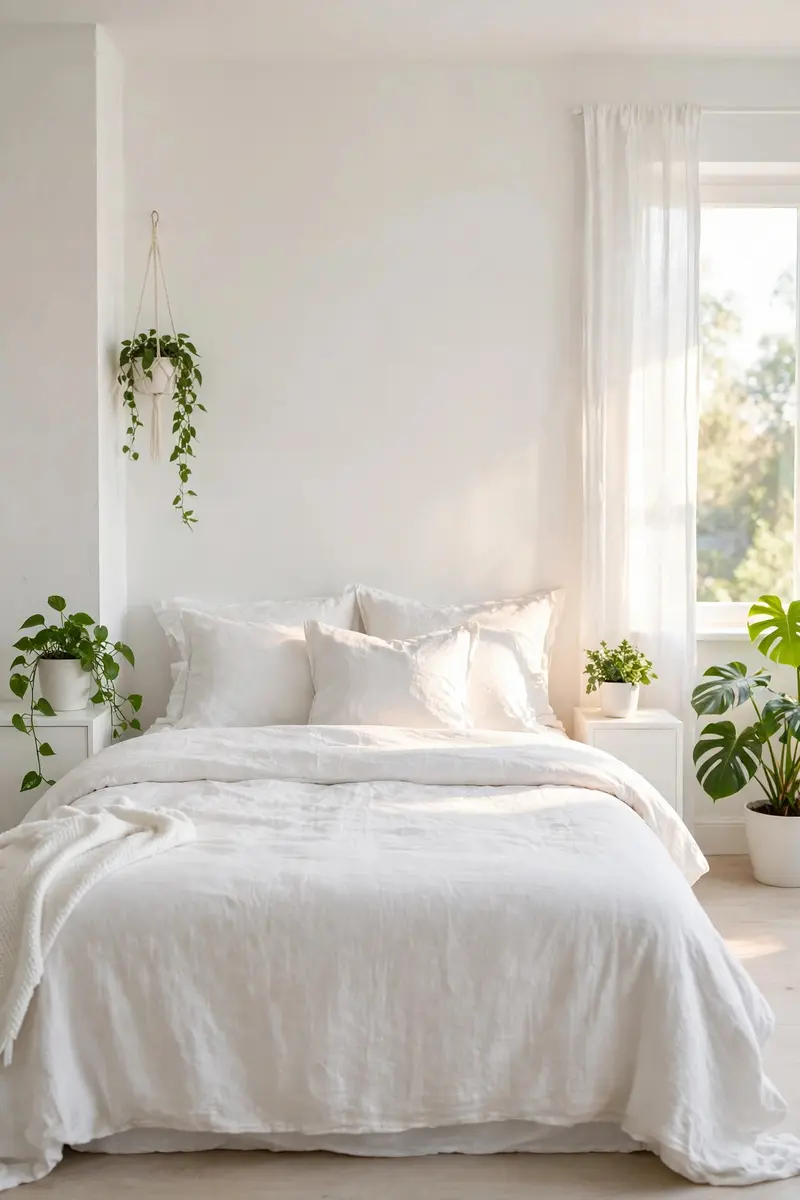
30. Greenery in a Crisp White Bedroom
White walls and white bedding make greenery pop like nothing else. In an all-white bedroom, even a few plants become the room’s color story, and the contrast keeps the space feeling fresh rather than sterile.
Materials: white bedding, white walls, 4–6 green plants. Realistic cost: $30–$70.
Use plants with different leaf shapes so the green does not read as one flat block — pair a palm’s fronds with a monstera’s bold leaves. White pots keep the look clean. Tip: Add one natural wood accent, like a nightstand or frame, so the white-and-green palette feels warm. Variation: Use black pots for a graphic, modern contrast in a white room.
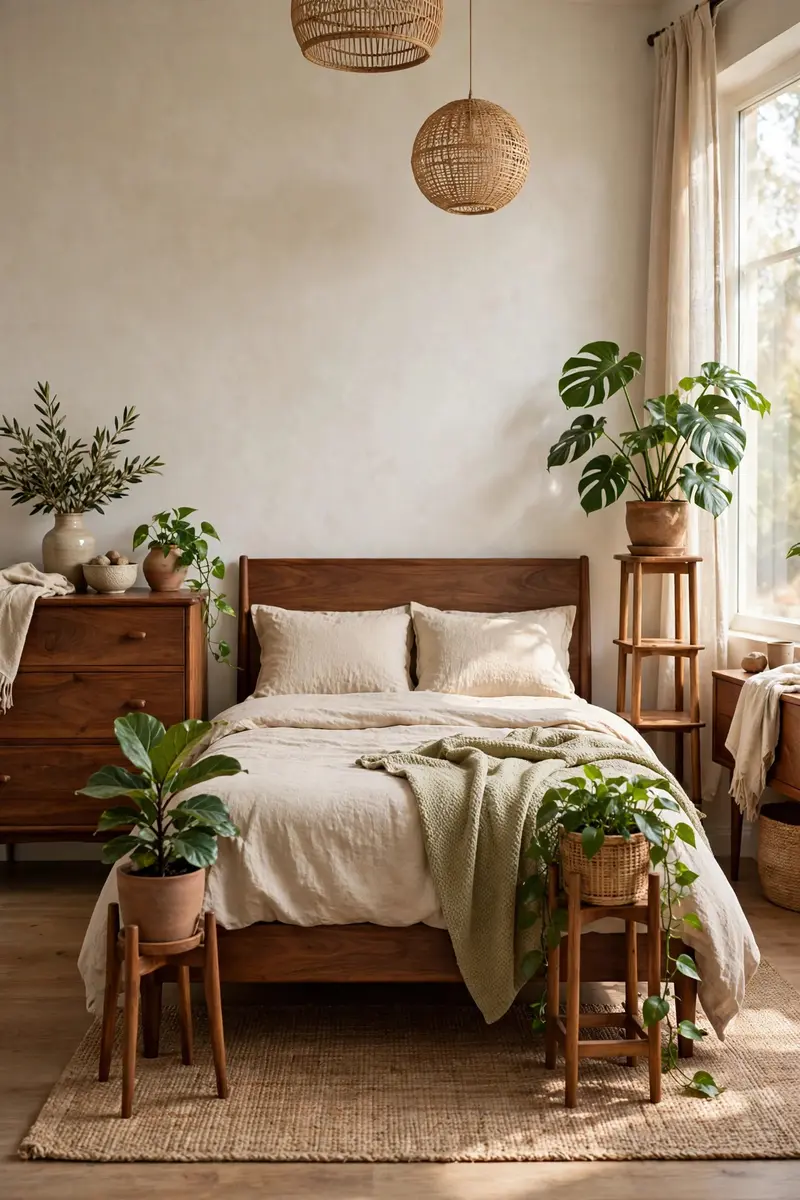
31. Greenery With Warm Wood Tones
Wood furniture and green plants are the oldest pairing in decorating, and they still work beautifully. Warm walnut or oak tones make leaves look richer, and plants soften wood’s hard lines.
Materials: wood furniture (existing), 4–6 plants, wood plant stands. Realistic cost: $25–$60.
Place plants on wood stands at different heights so the greenery rises through the room like a forest floor. Avoid matching every pot; let the wood be the unifying element. Tip: Oil wooden plant stands occasionally so water rings do not stain them. Variation: Use a live-edge wood shelf for plants for a rustic, organic display.
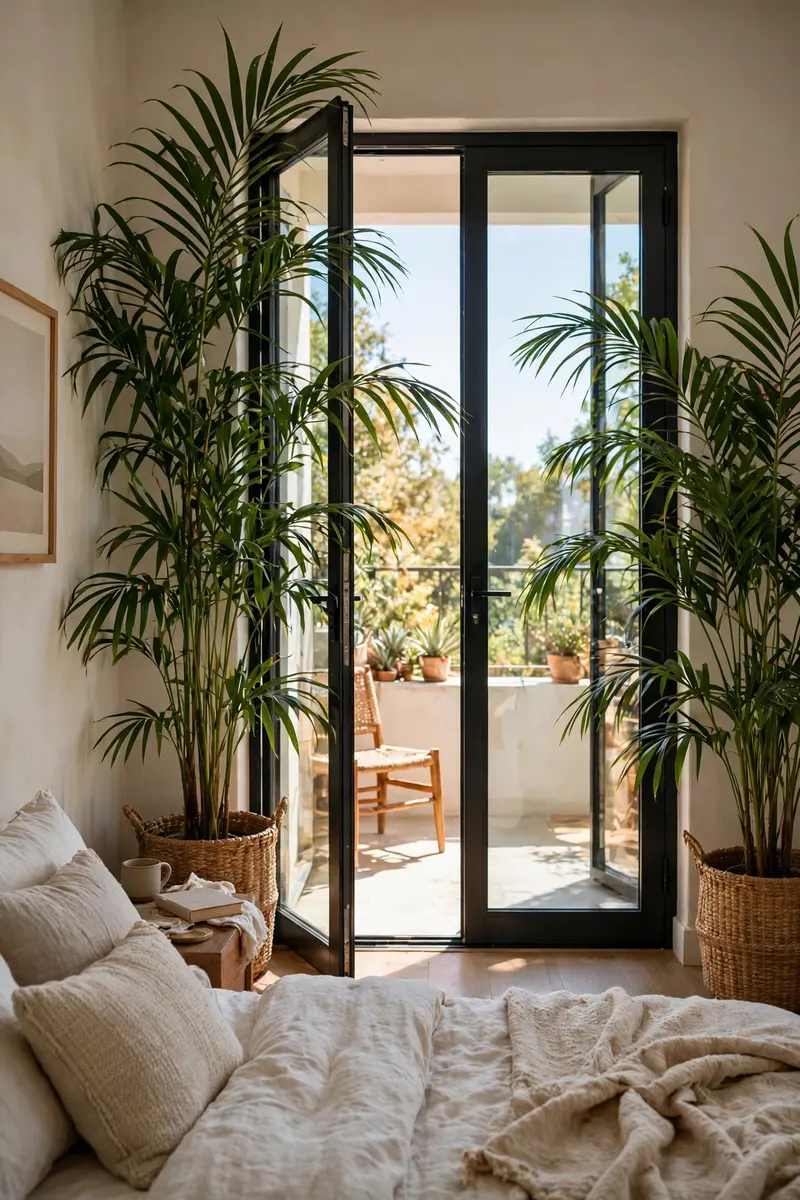
32. A Jungle Transition by the Balcony Door
If your bedroom opens onto a balcony, use plants to blur the line between inside and out. Tall plants on both sides of the door create a green gateway that makes the room feel larger.
Materials: 2 tall plants, 2 medium plants, baskets. Realistic cost: $40–$85.
Put the tallest plants closest to the door frame and medium plants slightly inside the room, so the greenery steps down into the bedroom. Choose plants that tolerate the door’s drafts. Tip: Keep the path through the door clear — plants should frame the doorway, never block it. Variation: Hang a trailing plant above the door frame for a green arch effect.
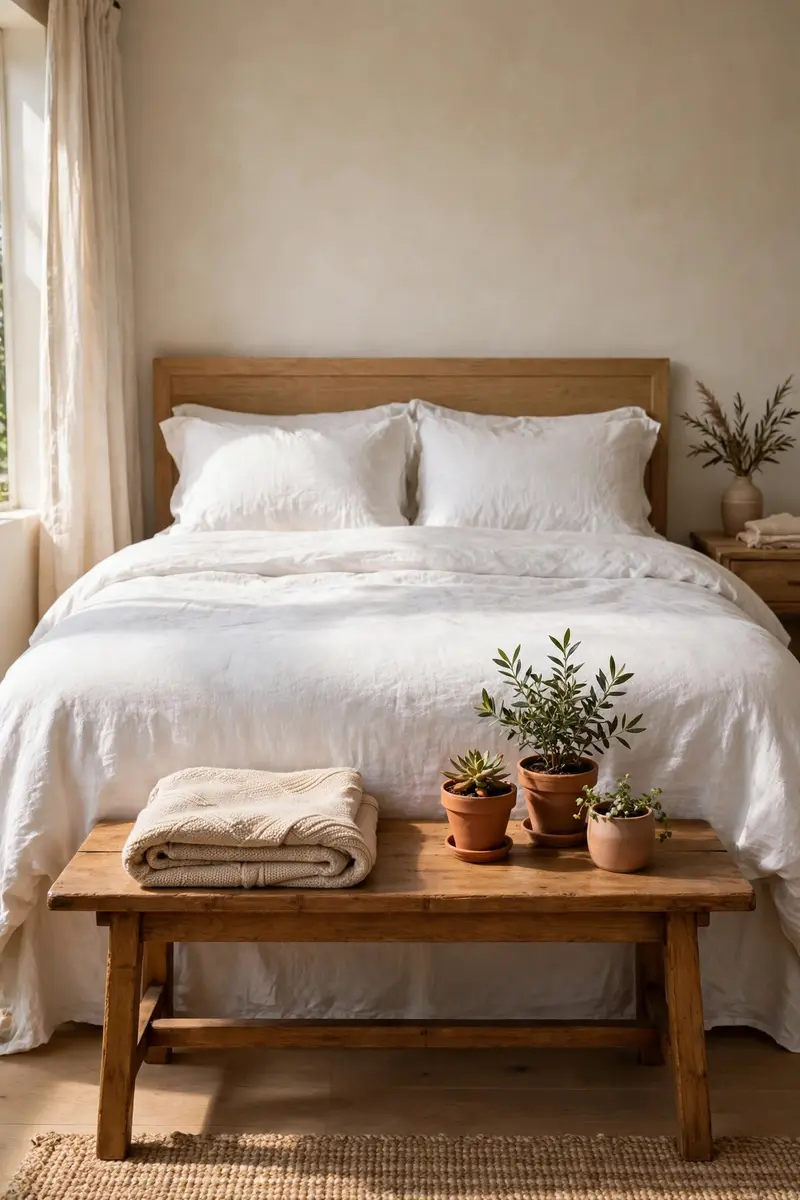
33. A Plant-Filled Bench at the Foot of the Bed
A bench at the foot of the bed is a perfect plant perch. It holds plants at sitting height, where you see them every morning, and it keeps floor space free for walking.
Materials: bench, 3–4 small to medium plants, tray. Realistic cost: $35–$75.
Use a tray under the plants to protect the bench, and vary the plant heights so the display does not look flat. Trailing plants at the bench ends soften its corners. Tip: Keep the center of the bench clear for a folded throw or book, so the bench still works as a bench. Variation: Use a storage bench and keep plant care supplies inside it for easy access.
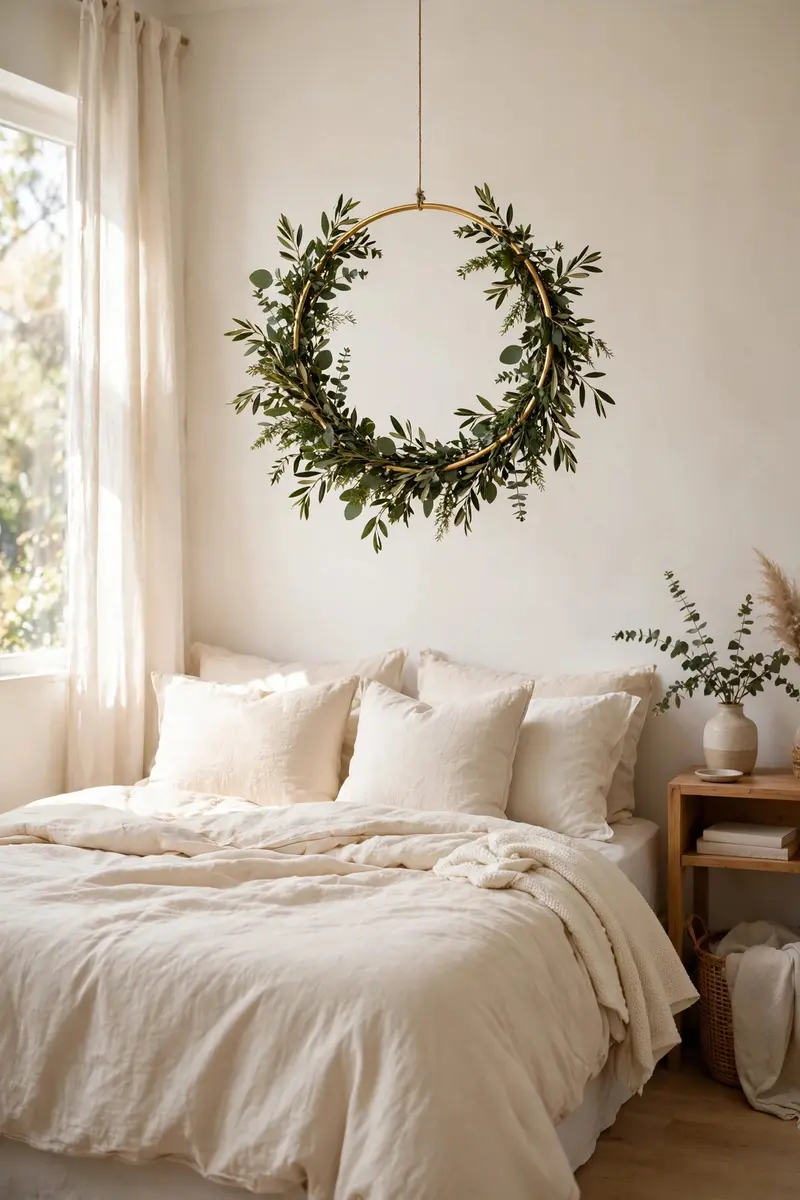
34. A Hanging Greenery Hoop Above the Bed
A metal hoop wrapped in greenery and hung above the bed is a showstopper. It frames the bed like a halo and adds a sculptural, modern touch that ordinary wall art cannot match.
Materials: metal hoop, faux or real greenery, wire, ceiling hooks. Realistic cost: $20–$50.
Wrap the hoop evenly with greenery, securing it with floral wire, then hang it from two ceiling points so it stays level. Faux greenery works well here because watering a hoop is awkward. Tip: Hang the hoop high enough that you can sit up in bed without bumping it. Variation: Add a few dried flowers to the hoop for a softer, romantic version.
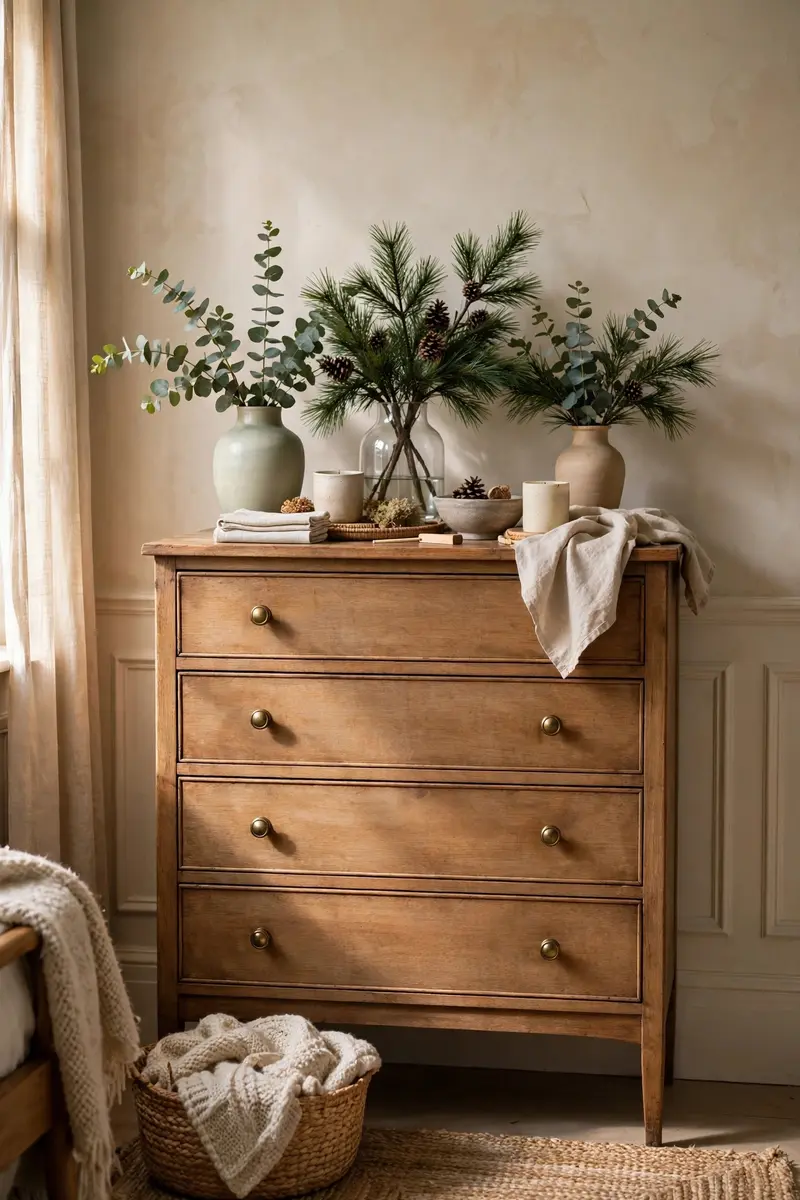
35. A Seasonal Greenery Rotation
You do not have to keep the same plants all year. Rotate greenery with the seasons — lush ferns in summer, eucalyptus and pine sprigs in winter — and the bedroom always feels current.
Materials: seasonal cuttings and plants, vases, baskets. Realistic cost: $10–$30 per season.
Keep a core of easy evergreen plants year-round, then swap accent plants and cuttings seasonally. Store out-of-season pots in another room rather than discarding them. Tip: Label your seasonal pots so you remember which plant goes where when you rotate them back. Variation: Use only cut foliage for seasonal swaps, keeping your potted plants constant and low-maintenance.
36. Pet-Safe Greenery Picks for Animal Lovers
If pets sleep in your bedroom, choose plants they can safely live with. Spider plants, parlor palms, Boston ferns and calatheas are all pet-friendly, so you never have to choose between greenery and your animals.
Materials: pet-safe plants (spider plant, parlor palm, fern, calathea). Realistic cost: $25–$60.
Check every new plant against a pet-safety list before bringing it home, and keep even safe plants out of constant chewing reach. A hanging planter is a good trick for plants cats love to bat. Tip: Keep toxic plants like pothos and peace lilies on high shelves or out of the bedroom entirely if pets roam freely. Variation: Grow a small pot of cat grass for your cat to nibble, so they leave your decorative plants alone.
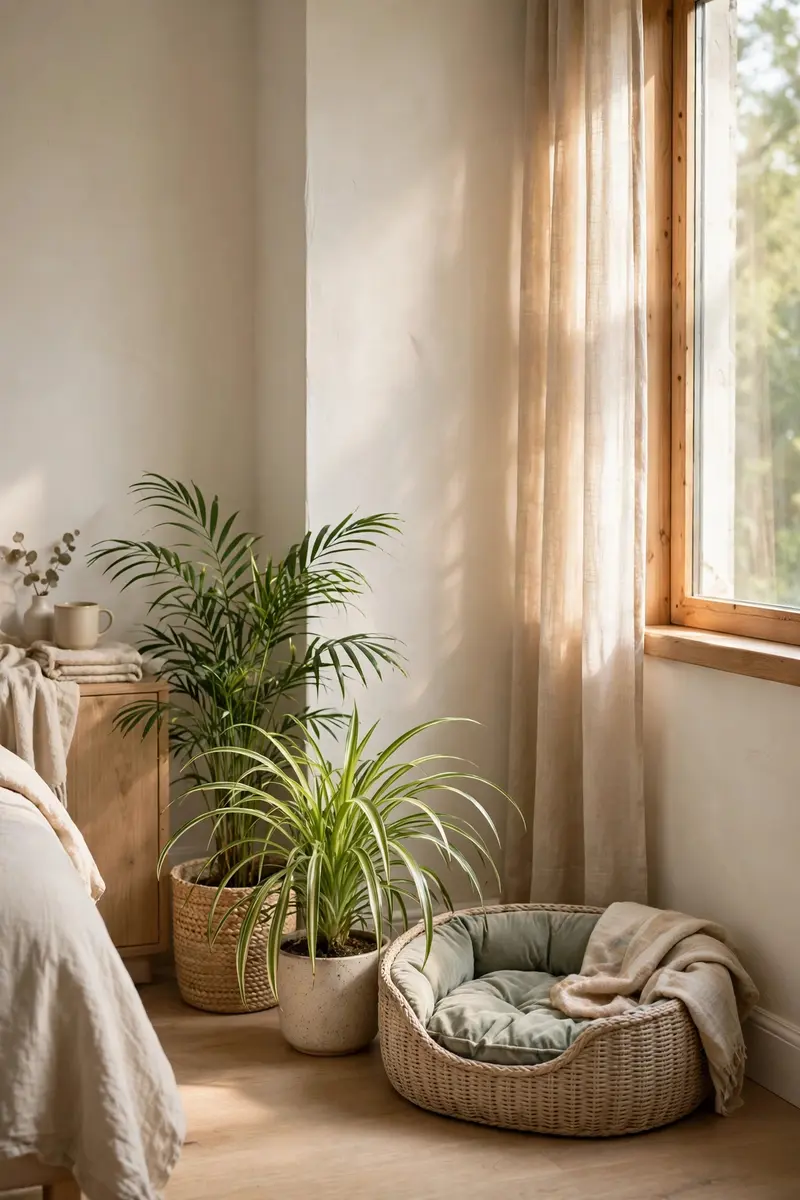
37. Low-Light Greenery for Dark Bedrooms
A north-facing or basement bedroom can still be green. ZZ plants, snake plants, pothos and cast iron plants all tolerate low light, so a dim room is no excuse for a plant-free bedroom.
Materials: low-light plants (ZZ, snake plant, pothos, cast iron plant). Realistic cost: $25–$55.
In low light, water even less than usual — plants grow slowly in dim rooms and use less water. Wipe leaves regularly so they capture every bit of available light. Tip: If a low-light plant starts stretching toward the window with long, sparse stems, move it a little closer to the light. Variation: Add a small grow light on a timer for one display shelf, so even a dark corner can host light-loving plants.
38. A Vertical Pocket Wall for Small Spaces
A fabric pocket planter on the wall turns a tiny bedroom into a vertical garden. Each pocket holds a small plant, so you get a whole garden’s worth of greenery using zero floor space.
Materials: fabric pocket planter, 8–12 small plants, wall hooks. Realistic cost: $30–$65.
Mount the planter on a wall that can handle occasional moisture, and water each pocket slowly so water does not run down the wall. Small ferns, pothos cuttings and spider plants all work in pockets. Tip: Line the back of the pocket planter with a waterproof sheet to protect your wall from damp. Variation: Use a pocket planter on the back of the bedroom door for a hidden garden that surprises guests.

39. Greenery and Fairy Lights for Evening Glow
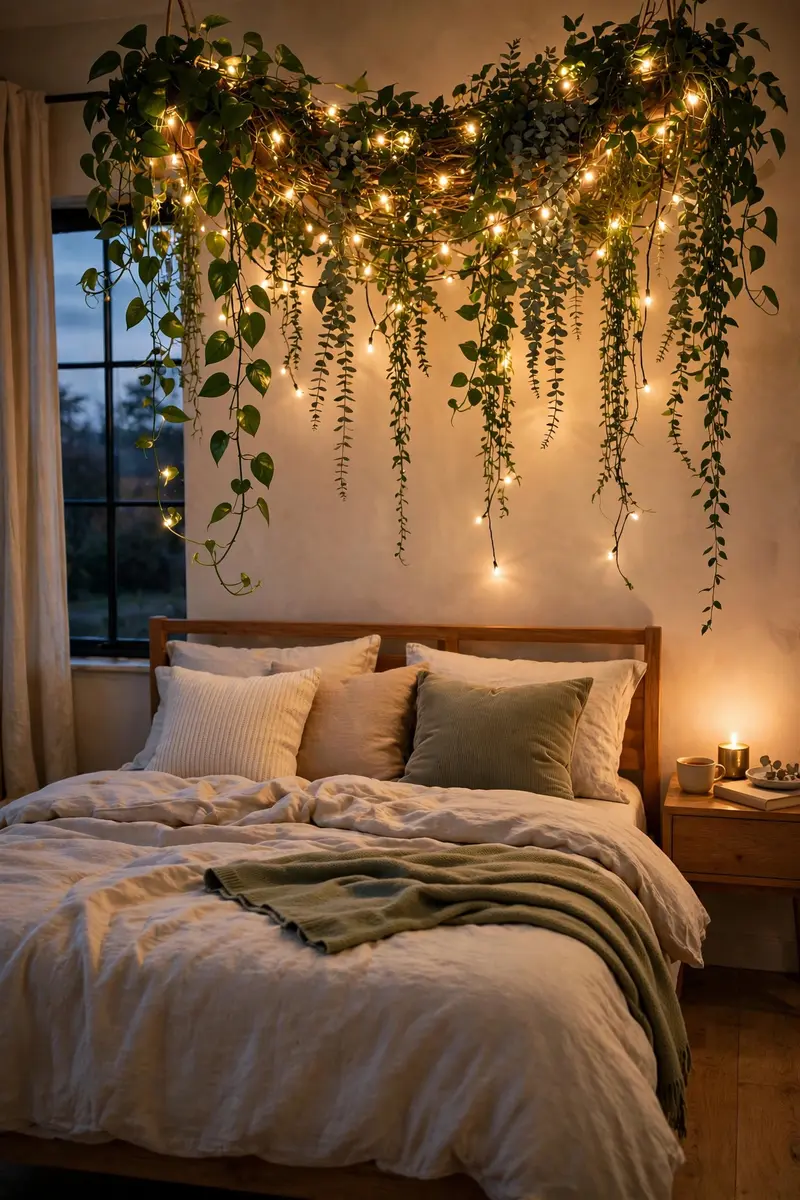
Greenery and fairy lights together turn a bedroom into a magical evening retreat. Warm lights woven through vines make leaves glow softly and create the coziest wind-down atmosphere.
Materials: string fairy lights, trailing plants or garland. Realistic cost: $15–$35.
Weave battery-operated fairy lights through trailing vines on a shelf or headboard, keeping the battery pack hidden behind a pot. Use warm white lights, not colored ones, for a calm glow. Tip: Put the lights on a timer so they switch off automatically after you fall asleep. Variation: Use copper-wire fairy lights inside a glass terrarium for a glowing centerpiece on a dresser.
40. A Morning Care Corner That Keeps Plants Alive
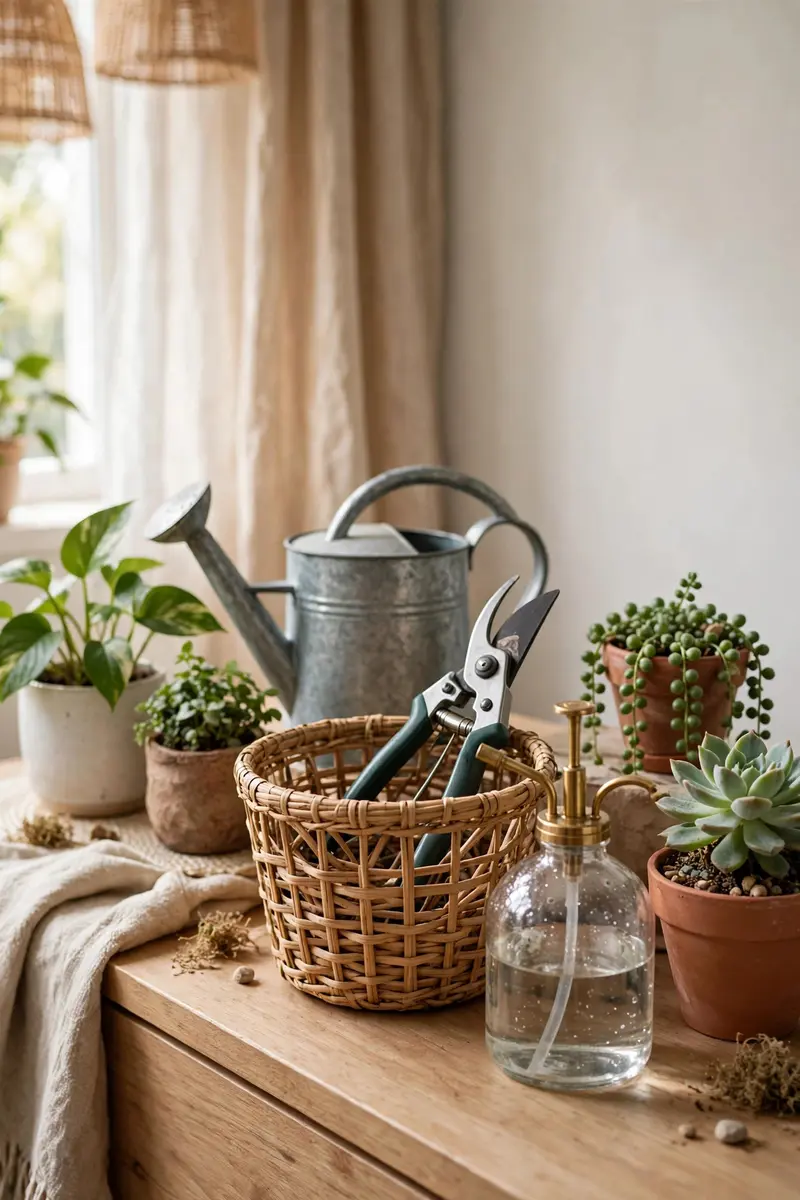
The secret to a green bedroom is not buying plants — it is keeping them alive. Set up a small care corner with a watering can, mister, pruning shears and a care chart, and plant care becomes a pleasant morning ritual.
Materials: watering can, mister, shears, small basket or tray. Realistic cost: $15–$35.
Keep the supplies together in one pretty basket near your plants, so you never hunt for them. Check soil moisture with your finger each morning, and water only the plants that need it. Tip: Write each plant’s watering needs on a small tag in its pot, so anyone can care for them when you are away. Variation: Add a small notebook to track watering days and new growth — watching plants thrive is part of the joy.
Frequently Asked Questions About Greenery Bedroom Ideas
What are the best plants for a bedroom?
The best bedroom plants are easy-care varieties like snake plants, pothos, ZZ plants, spider plants and parlor palms. They tolerate typical bedroom light and need little water, so they suit beginners and busy schedules alike.
Are plants safe to keep in a bedroom overnight?
Yes, plants are safe in a bedroom overnight. The amount of oxygen plants use at night is tiny, and their calming presence often helps people wind down. Just keep toxic plants away from pets and small children.
How many plants should I put in my bedroom?
Start with three to five plants in different sizes and spots — a tall floor plant, a trailing plant and a small tabletop plant. You can always add more once you see how much light and care your room allows.
Can I have greenery in a bedroom with very little light?
Absolutely. ZZ plants, snake plants, pothos and cast iron plants all grow in low light. Choose those species, water sparingly, and keep leaves clean so they make the most of the light available.
How do I keep bedroom plants alive if I travel often?
Choose drought-tolerant plants like snake plants and ZZ plants, water deeply before you leave, and move plants away from hot windows. For longer trips, a simple self-watering pot or a trusted friend with your care tags will keep them thriving.
Conclusion: Start With One Plant
You do not need forty plants to enjoy these greenery bedroom ideas — you need one. Pick the idea that made you smile, bring home one plant this week, and watch how a single touch of green changes the way your bedroom feels. As your confidence grows, add another plant, then another, until your room becomes the leafy retreat you have been picturing.
If you loved these ideas, save this post to Pinterest so you can find your favorite look again when you are plant shopping. For more bedroom inspiration, explore our olive green bedroom ideas, green aesthetic bedroom ideas and boho teen bedroom ideas. For plant care basics, see The Spruce’s guides to dark green bedroom ideas and earthy bedroom ideas.
Happy planting — your greener bedroom is waiting.






One Comment