

20 Sage Green and Grey Bedroom Ideas That Wow
There’s something about sage green and grey bedroom ideas that just makes a room exhale. Sage brings in that soft, garden-calm feeling — like early morning light through leaves — while grey grounds everything with quiet sophistication. Together, they’re one of the most liveable color pairings you can choose: never loud, never boring, and endlessly flexible as your style changes. Whether you’re repainting walls, swapping bedding, or just hunting for one small upgrade, these 20 ideas will help you build a bedroom that feels like a deep breath at the end of a long day.
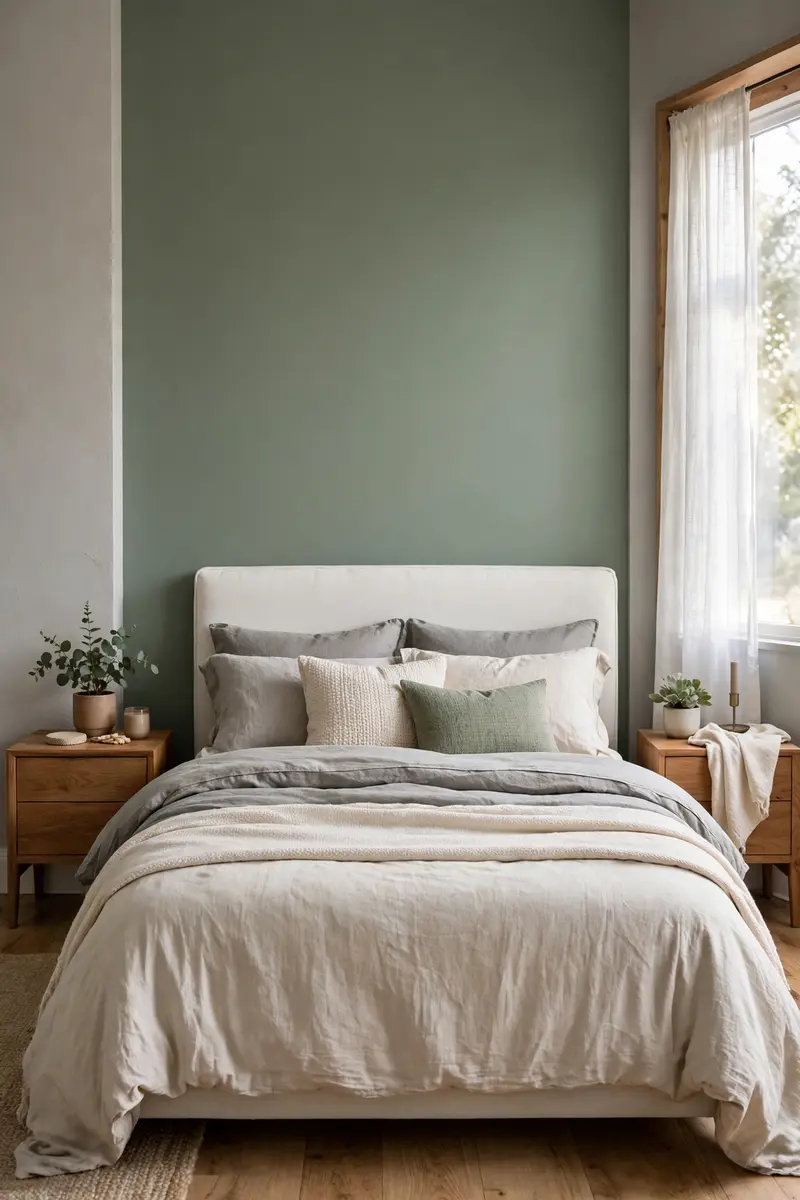
1. Paint a Sage Feature Wall Behind the Bed
A single sage green wall behind your headboard is the fastest way to get that calm, pulled-together look. The wall becomes a natural backdrop that makes your bed feel intentional — almost like a built-in feature — while the other three walls stay soft grey or white to keep the room bright. Sage sits beautifully in both natural daylight and warm lamplight, so it shifts mood gently through the day instead of glaring back at you.
What you’ll need and what it costs: a gallon of quality eggshell paint in a muted sage (about $35–55), painter’s tape, and a roller kit. Most feature walls take under two hours of actual painting.
Choose a sage with grey undertones rather than yellow ones — it will harmonize with grey bedding instead of clashing. Paint two coats, let it cure overnight, then live with it for a day before styling the rest of the room around it.
Tip: Test your sage on a big piece of poster board and move it around the room for 24 hours — sage can look very different at noon versus lamplight.
Variation: Short on painting energy? Hang a large sage-toned tapestry or fabric panel behind the bed for the same focal effect with zero commitment.
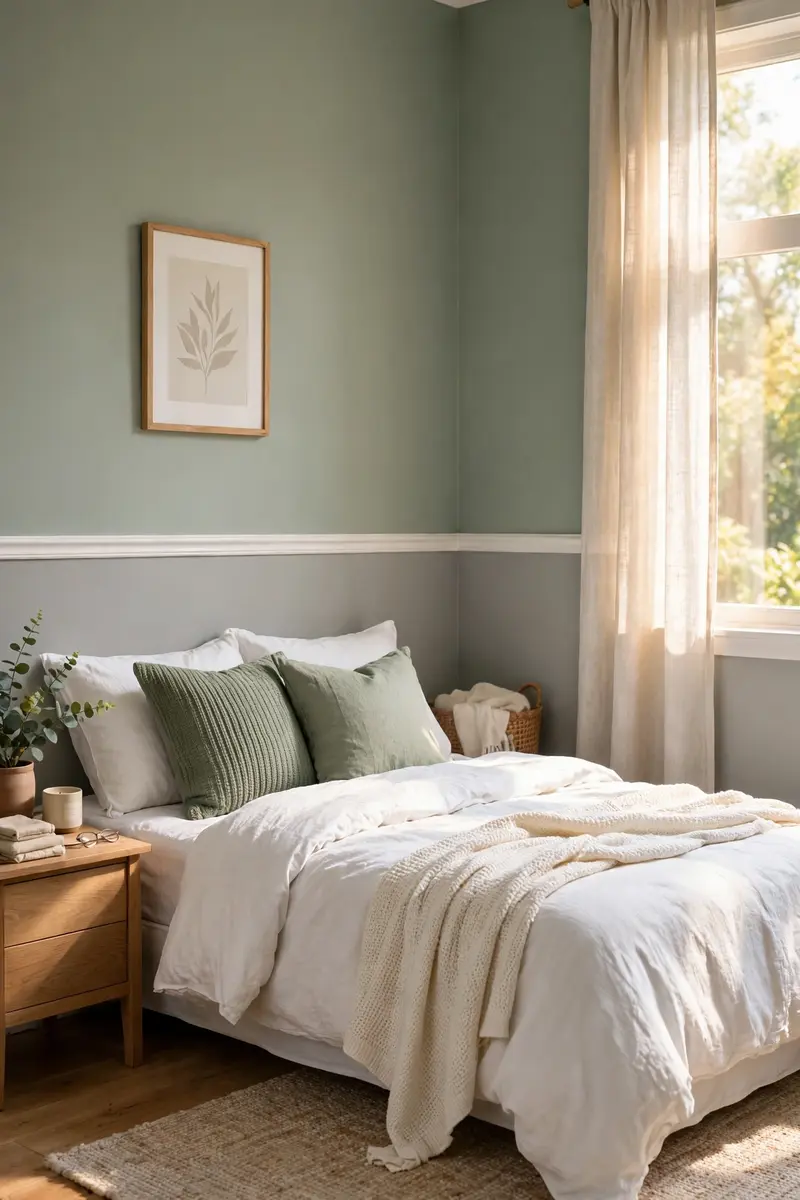
2. Go Two-Tone with Sage Above and Grey Below
For a designer look that costs no more than a regular paint job, split your walls horizontally: soft grey on the lower half, sage green above, divided by a crisp white chair rail. The two-tone treatment adds architectural interest to plain walls, makes ceilings feel higher, and balances the coolness of grey with the warmth of green in exactly the right proportions.
What you’ll need and what it costs: two gallons of paint ($70–110 total), chair rail molding ($1–3 per foot at a home store), caulk, and a nail gun or construction adhesive. It’s a weekend project for a single wall, two for a whole room.
Install the chair rail at about 36 inches from the floor, paint the lower section first, then mask the rail before painting the sage above. A warm grey (greige-leaning) below and a cool sage above gives the most balanced contrast.
Tip: Keep bedding mostly white or cream with two-tone walls — patterned bedding competes with the wall division and makes the room feel busy.
Variation: In a rental, fake the effect with sage green peel-and-stick wallpaper on the upper wall only, separated by a simple floating picture ledge painted white.
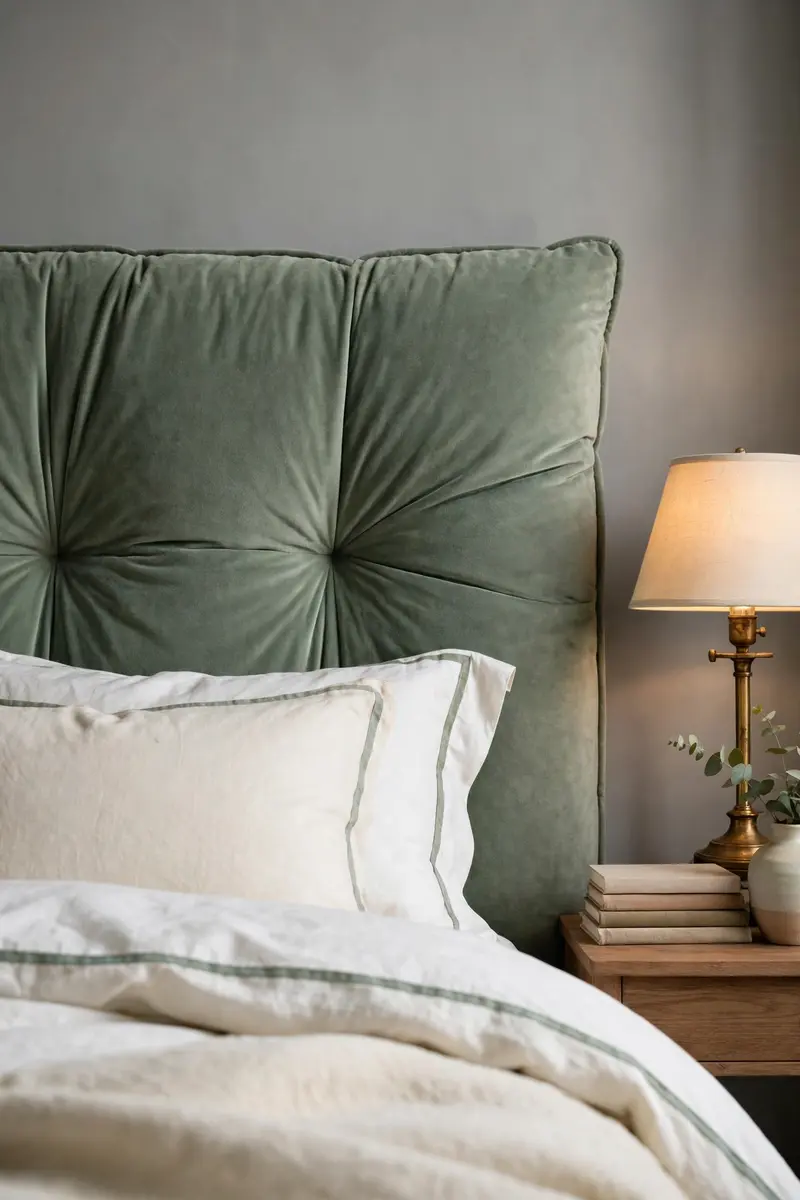
3. Anchor the Room with a Sage Upholstered Headboard
If painting feels like too much, let your furniture do the color work. A plush sage green upholstered headboard against soft grey walls gives you the same serene palette with zero paint fumes. The fabric texture adds softness that hard furniture can’t, and because the headboard is the tallest thing in most bedrooms, it reads as the room’s color anchor instantly.
What you’ll need and what it costs: a sage upholstered headboard runs $150–400 depending on size and fabric; a DIY version using plywood, foam, batting, and sage fabric costs $60–100.
Mount it so it sits 2–3 inches above the mattress top for the cleanest look. Layer white and cream bedding with subtle sage piping to echo the color, and keep nightstands in warm wood to stop the palette from feeling cold.
Tip: Choose a performance fabric or velvet in a stain-resistant weave — headboards collect hair oil and dust, and a wipeable fabric keeps the sage looking fresh for years.
Variation: Already own a wooden headboard? Reupholster just the inner panel in sage fabric for a custom look at a fraction of the cost.
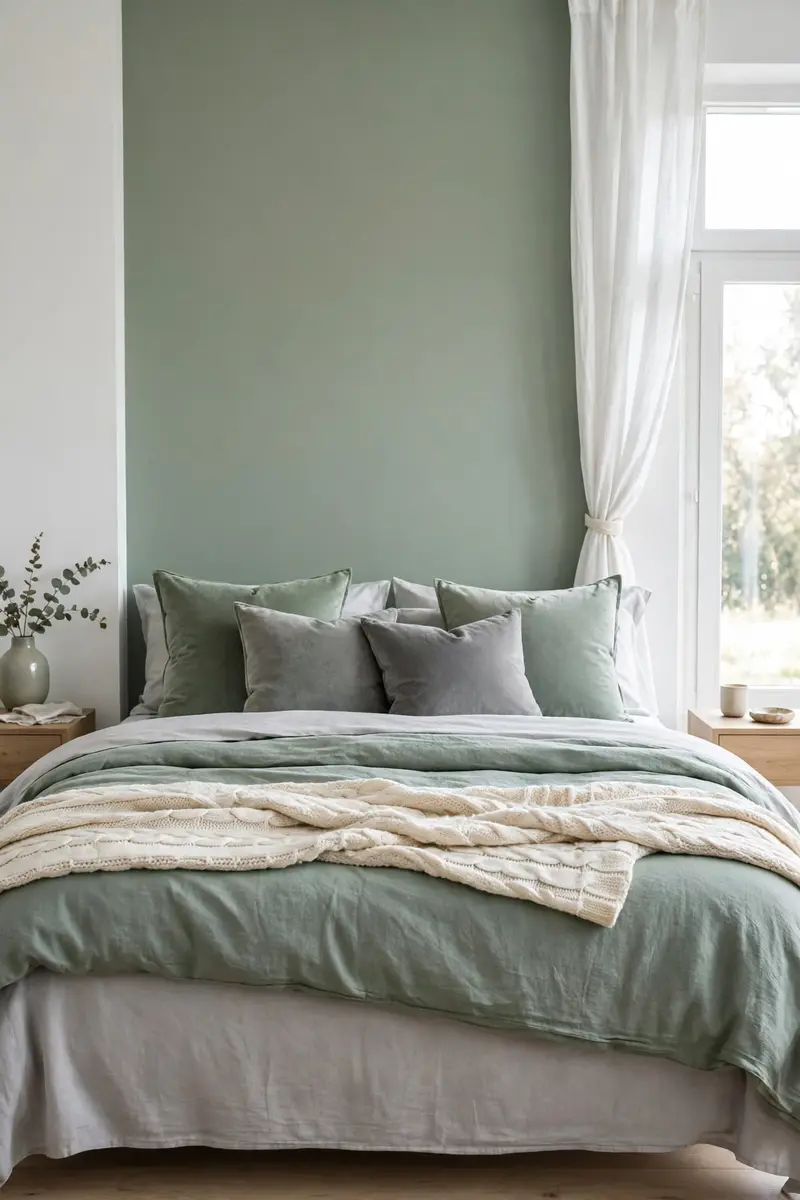
4. Layer Sage and Grey Bedding Like a Stylist
The easiest refresh on this list: keep your walls neutral and build the whole color story on the bed. Start with light grey sheets, add a sage green duvet or quilt as the middle layer, then finish with a textured throw in charcoal or cream folded across the foot. That layering — light to dark, smooth to nubby — is what makes a bed look styled rather than just made.
What you’ll need and what it costs: a sage duvet cover set ($40–90), a chunky knit throw ($25–60), and two or three accent cushions ($30–60 total). No tools, no paint, done in twenty minutes.
Mix textures deliberately: linen sheets, a cotton duvet, a waffle or knit throw. When everything is the same fabric, sage and grey can look flat — texture is what gives the pairing its richness. Tuck the top sheet over the duvet for that hotel finish.
Tip: Iron or steam your duvet cover before styling the bed — wrinkled bedding is the number-one reason a beautiful color combo photographs and feels “off.”
Variation: Flip the ratio in summer — white or cream duvet with sage and grey throws — for a lighter, airier version of the same palette.
5. Add Velvet Pillows for Instant Luxury
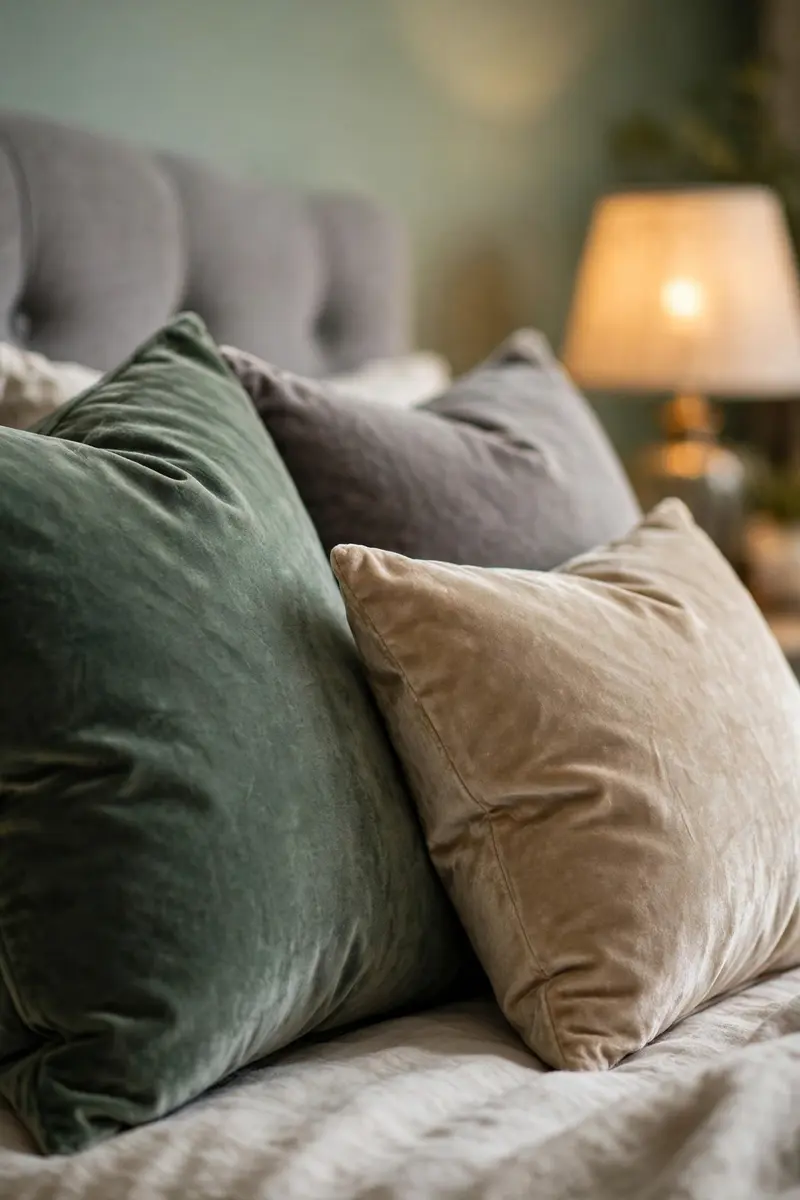
Velvet is the texture that makes sage green and grey bedroom ideas feel expensive instead of just pretty. A few velvet cushions — deep sage, dove grey, maybe one in champagne — catch the light differently than cotton or linen, giving the bed depth and a soft glow. It’s the smallest investment on this list with one of the biggest visual payoffs.
What you’ll need and what it costs: velvet cushion covers run $8–20 each; fill them with good inserts ($6–12 each) rather than the flat ones that come in sets.
Use odd numbers and vary the sizes: two large 20-inch squares in sage, two medium in grey, one small lumbar in a metallic or cream. Karate-chop the tops for that styled look, and rotate them seasonally — deeper tones for winter, paler for spring.
Tip: Velvet shows every crease, so steam covers inside-out on low heat before putting them on the bed — five minutes of steaming makes them look triple the price.
Variation: Extend the velvet to a small bench or ottoman at the foot of the bed in charcoal grey for a cohesive, high-end finish.
6. Warm It Up with Natural Wood Furniture
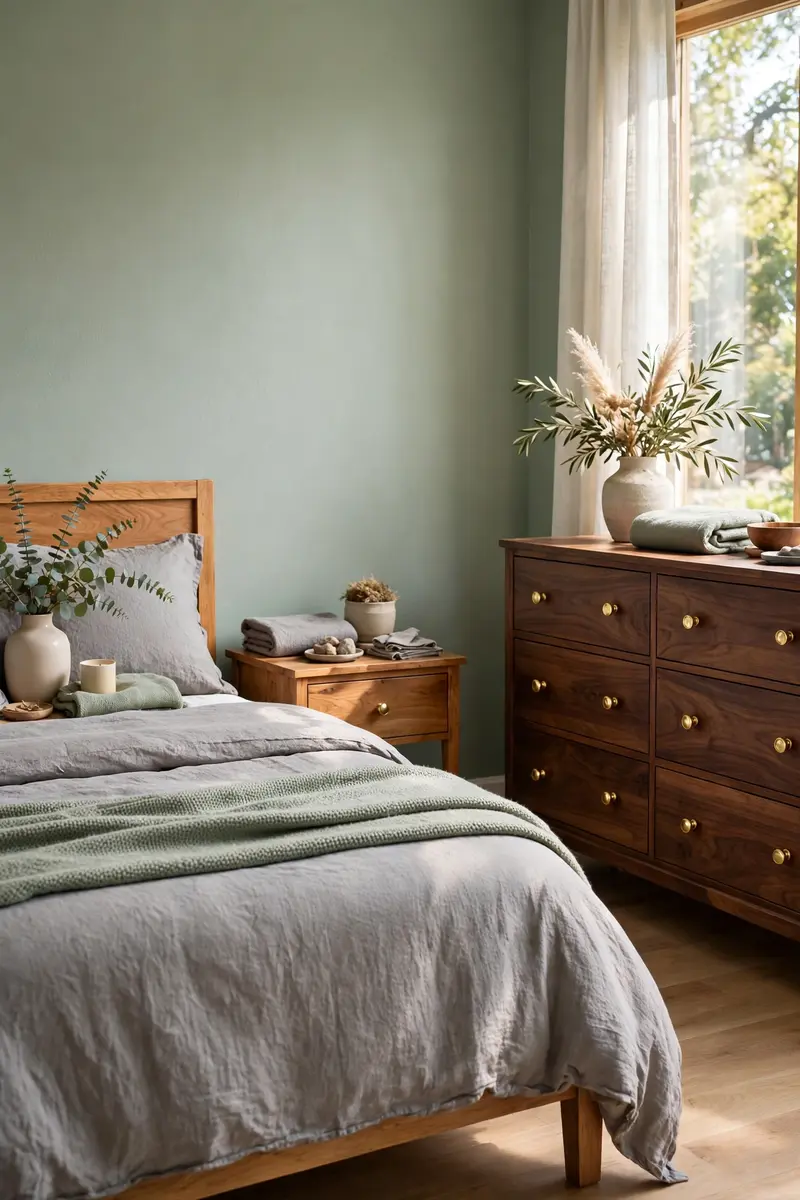
Sage and grey can drift chilly if everything is painted or upholstered, so bring in natural wood to warm the palette. Oak nightstands, a walnut dresser, or even a simple pine bench adds honey-toned warmth that makes the green feel earthy and the grey feel soft instead of stark. Wood is the bridge material that keeps this cool-leaning combo feeling like home.
What you’ll need and what it costs: you probably own wood pieces already — restyle what you have first. If buying, solid wood nightstands run $80–200 each; a thrifted dresser plus chalk paint in a wood-tone stain costs under $60.
Aim for medium wood tones — honey oak, warm walnut — rather than very dark espresso or pale Scandi pine. Medium tones sit right between sage and grey on the warmth scale. Keep the wood’s finish matte or satin, not glossy.
Tip: If your wood pieces don’t match, unify them with the same hardware — swap all knobs for simple brass pulls and suddenly mismatched furniture looks like a curated set.
Variation: No new furniture? Add a wood tray on the dresser, a wooden-framed mirror, or woven wood baskets to get the warmth in small doses.
7. Hang Botanical Prints in Grey Frames
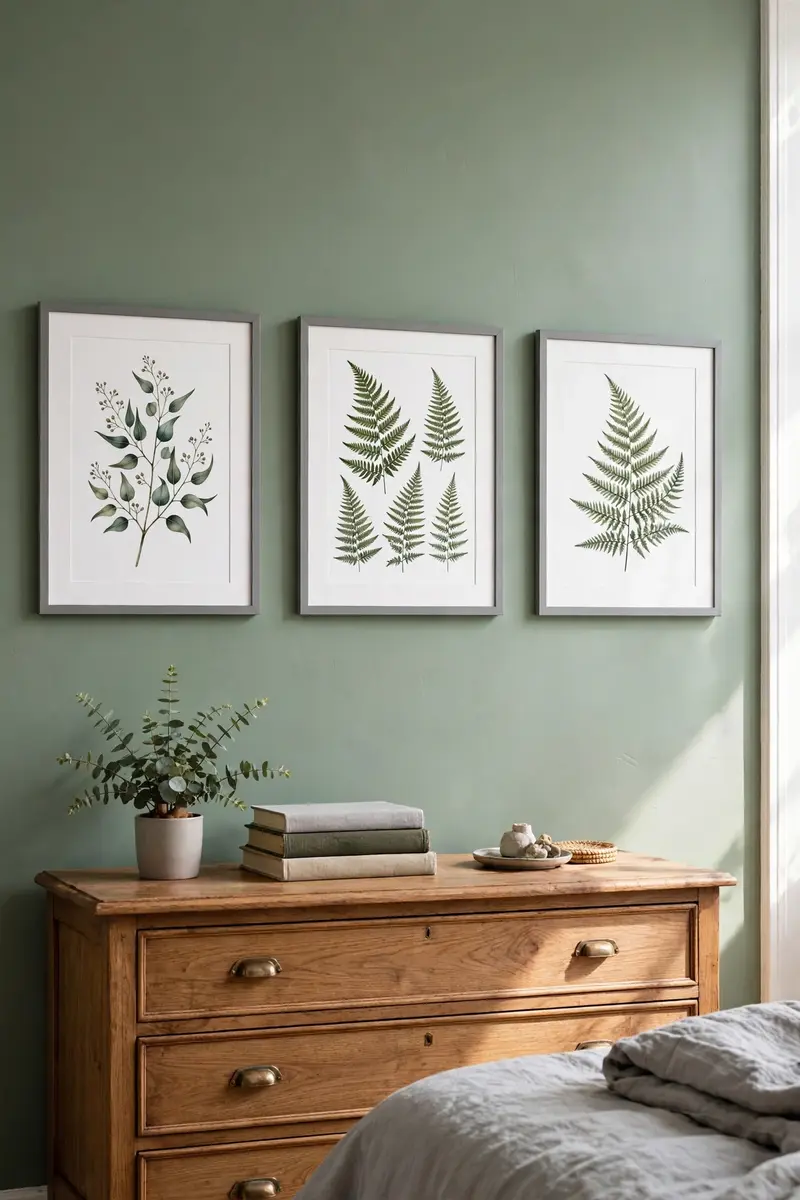
Wall art is where you lock in the palette. Botanical prints — eucalyptus sprigs, fern studies, soft landscape sketches — in slim grey or matte black frames echo the sage walls while adding the “finished” feeling bare walls lack. A set of three or four prints above the dresser or in a grid over the bed reads calm and collected.
What you’ll need and what it costs: printable botanical art costs $5–15 for a set of digital files; print at a local shop for $3–8 each; simple grey frames run $10–25 each.
Keep frames identical in color and slim in profile — chunky frames fight the softness of this palette. Hang the center of the grouping at eye level (about 57 inches from the floor), and leave generous white mat borders so the prints breathe.
Tip: Lay your frame arrangement on the floor first and photograph it from above — you’ll spot spacing mistakes in seconds that are invisible while you’re holding a hammer.
Variation: Swap prints for pressed real leaves or ferns in floating glass frames for an organic, one-of-a-kind version of the same idea.
8. Layer Window Treatments in Sage and Grey
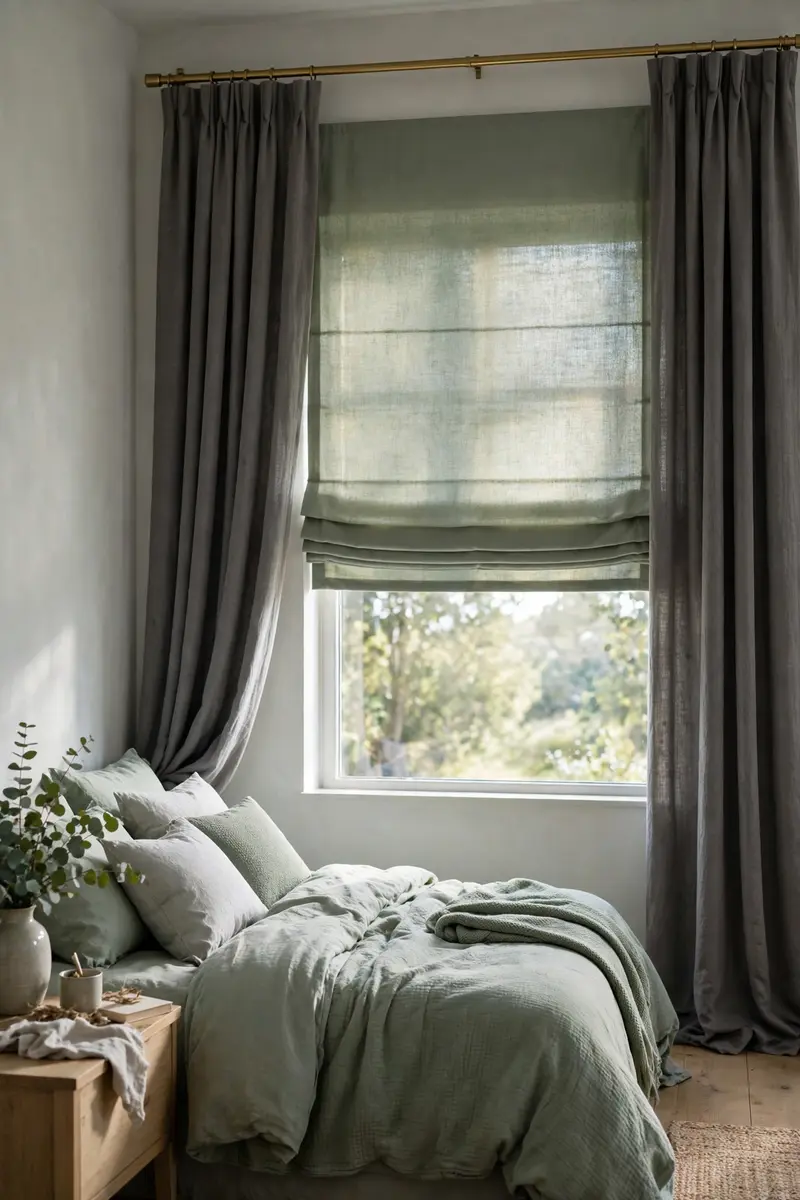
Windows are often the forgotten surface in bedroom decorating, but layered treatments pull the whole palette together. Try soft grey blackout curtains as the outer layer with sage green roman shades or sheer linen panels inside. You get the light control you need for sleep, plus a soft color gradient that frames the view.
What you’ll need and what it costs: ready-made grey blackout curtains ($25–60 per pair), sage roman shades ($40–90 per window), and a double curtain rod ($20–35).
Hang curtains high and wide — rod 4–6 inches above the frame and 3–4 inches wider on each side — so windows look bigger and the fabric frames the wall color beautifully. Let curtains kiss the floor rather than pooling or hovering.
Tip: If your sage walls and sage shades are the same tone, the window disappears into the wall — choose a shade two tones lighter or darker than the wall for definition.
Variation: In a rental, tension-rod sage café curtains over the lower window half give privacy and color with zero drilling.
9. Create a Sage Reading Corner
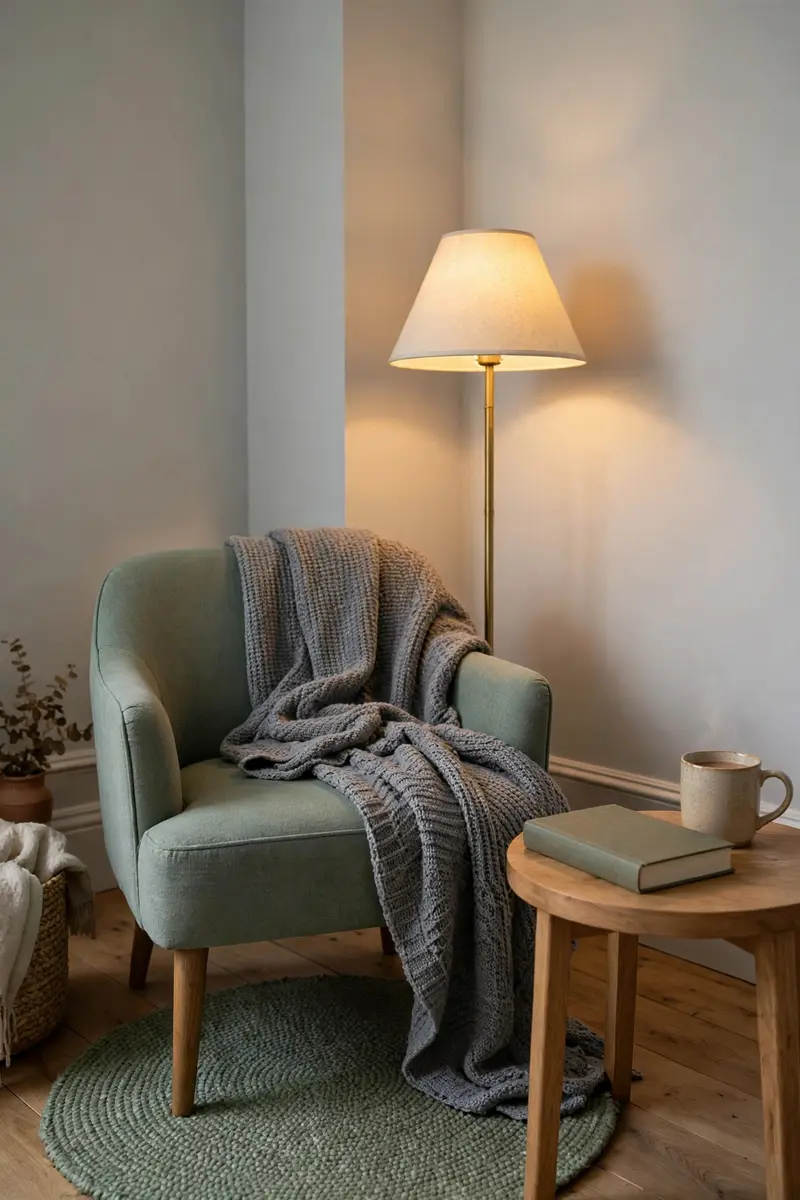
Give one corner of the bedroom a job: a small sage green accent chair, a grey throw, a floor lamp, and a side table becomes a reading nook that makes the whole room feel bigger and more intentional. It breaks up the “bed plus dresser” boxiness of most bedrooms and gives the sage-and-grey story a second scene to play out in.
What you’ll need and what it costs: a small accent chair in sage ($120–300), a grey throw you already own, a simple floor lamp ($40–80), and a side table or stool ($20–50).
Tuck the chair at a slight angle — never flat against the wall — with the lamp behind it for reading light. A small round rug under the chair defines the zone even in a carpeted room.
Tip: The chair doesn’t have to be new — a thrifted wooden armchair painted sage with a grey seat cushion gives you the exact look for under $50.
Variation: No corner space? A sage upholstered bench at the foot of the bed with a grey throw achieves the same accent moment in half the footprint.
10. Do the Renter-Friendly Textile Swap
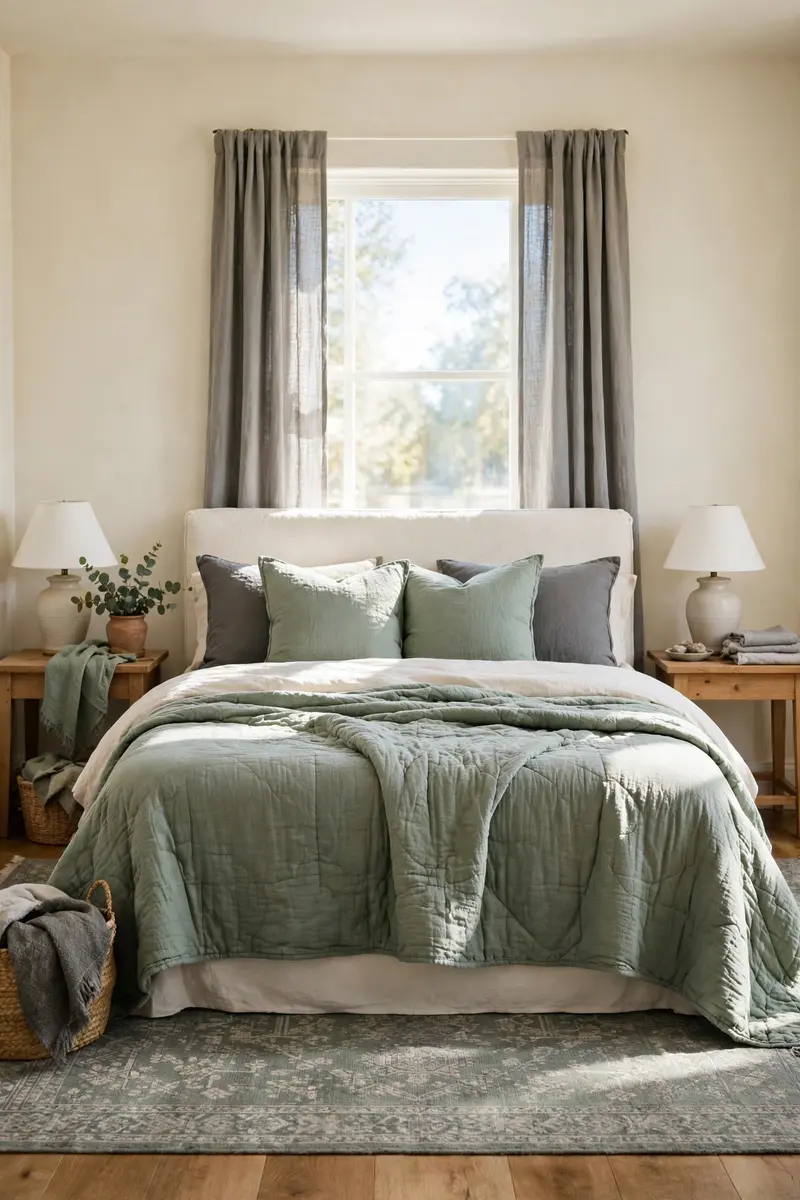
Renting, or just commitment-shy? You can build an entire sage green and grey bedroom without touching a wall. Grey linen-look curtains, a sage quilt, charcoal cushions, a sage-and-grey patterned rug — textiles carry the full palette, and every piece moves with you. It’s the lowest-risk way to test whether you love the combo before painting.
What you’ll need and what it costs: curtains ($30–70), a sage quilt or coverlet ($50–100), cushions ($30–60), and a 5×7 rug ($80–150). Total refresh: $200–400, all portable.
Start with the biggest surface — the bed — then the rug, then curtains. Three textile moves establish the palette; everything smaller (throws, cushions) just reinforces it. Keep lampshades white or cream so the light stays warm.
Tip: Photograph your room before you start, then compare after each textile swap — you’ll see the palette click into place and know exactly when to stop adding.
Variation: Add peel-and-stick sage wallpaper inside open bookshelves or behind a dresser for a painted look that’s fully reversible.
11. Paint Your Nightstands Sage
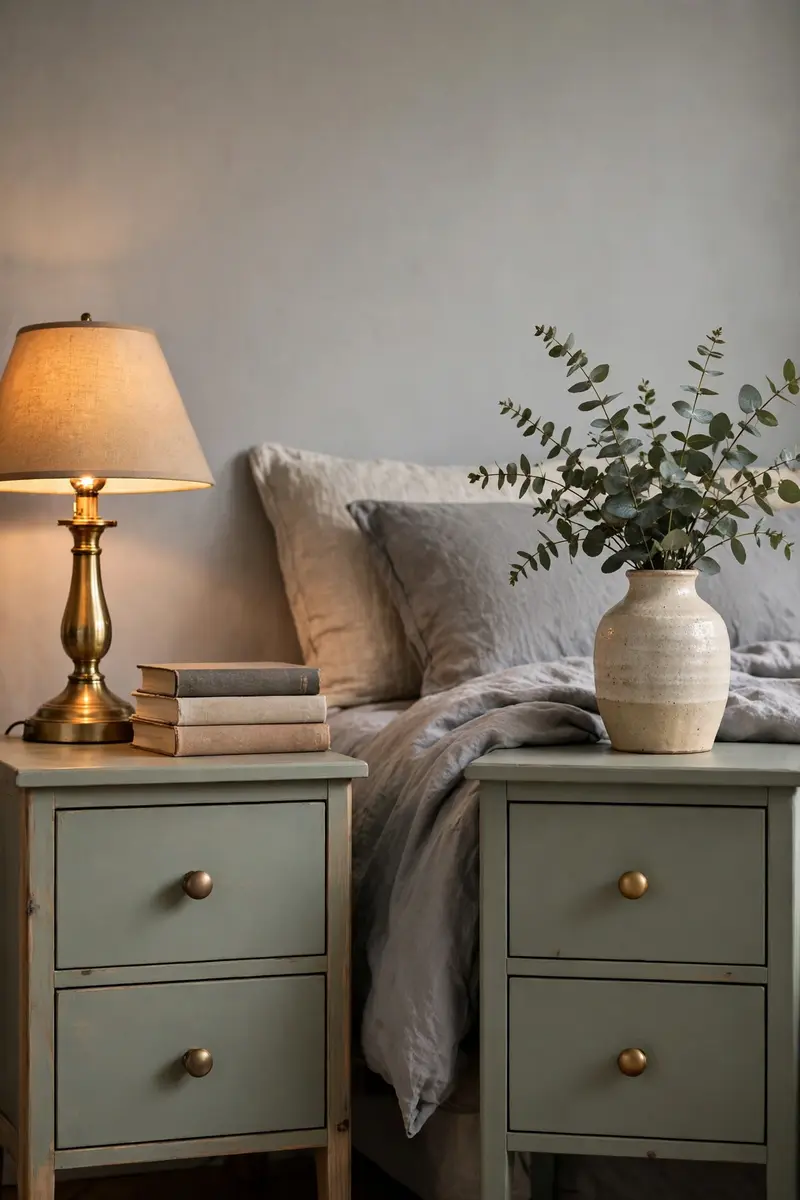
Here’s a weekend project with outsized impact: paint both nightstands sage green and let them pop against grey walls or grey bedding. Painted furniture reads as custom and intentional, and because nightstands are small, you can be braver with the shade than you’d dare on four walls. It’s also the perfect way to rescue mismatched secondhand finds.
What you’ll need and what it costs: a quart of sage furniture paint ($15–25), primer, fine sandpaper, and a good brush or small foam roller. Under $40 total if you already own the nightstands.
Sand lightly, prime, then apply two thin coats rather than one thick one — thin coats self-level and don’t show brush marks. Finish with a clear matte topcoat on the tops so water rings and book scratches don’t ruin your work.
Tip: Remove all hardware before painting and spray the knobs separately in matte brass or black — new-looking hardware is what makes a painted piece read “designer” instead of “DIY.”
Variation: Paint only the drawer fronts sage and leave the frames wood or grey for a two-tone furniture look that’s very current.
12. Build a Sage and Grey Gallery Wall
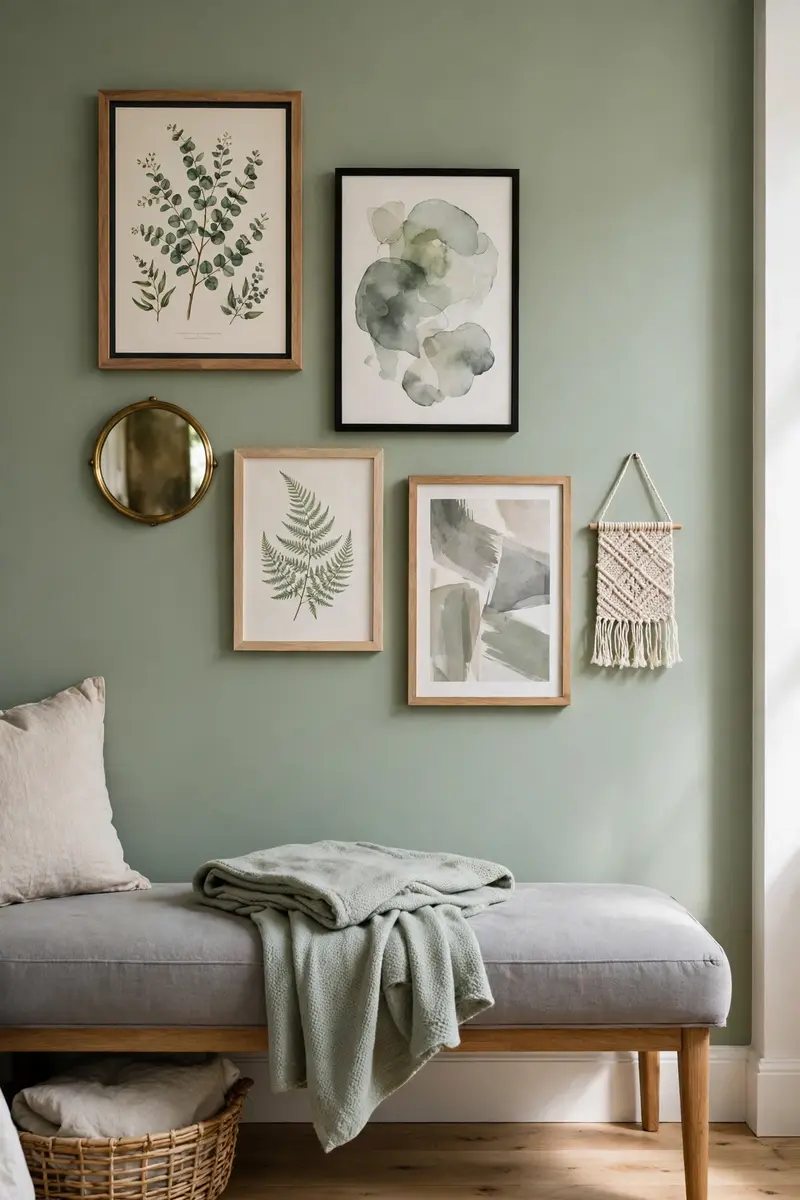
A gallery wall is your chance to tell a story in the palette. Mix botanical prints, abstract sage-and-grey art, a small round mirror, and maybe a woven wall hanging on one wall — the variety of textures keeps two quiet colors from feeling flat. Above a dresser or along a hallway-facing wall, it becomes the room’s personality piece.
What you’ll need and what it costs: 5–8 frames in mixed sizes ($60–120 total), printable art or your own photos ($10–30), and picture-hanging strips if you’re avoiding nails ($15).
Unify the chaos with one rule: every piece must contain sage, grey, white, or natural wood — nothing else. That single constraint keeps a mixed gallery cohesive. Space frames 2–3 inches apart and keep the outer edges roughly aligned for a collected-not-cluttered feel.
Tip: Cut kraft paper templates of each frame, tape them to the wall, and live with the layout for a day before hammering a single nail.
Variation: For a softer take, do a single horizontal row of three matching sage prints above the bed — gallery impact with minimalist effort.
13. Add Brass and Gold Accents for Warmth
Cool palettes need a warm metal the way a sentence needs punctuation. Brushed brass table lamps, gold picture frames, a brass mirror, or even gold-toned drawer pulls add tiny glints of warmth that keep sage and grey from feeling flat or cold. Metallics reflect light too, which brightens rooms that lean grey-heavy.
What you’ll need and what it costs: brass table lamps ($40–90 each), gold frames ($10–20), or a set of brass knobs ($15–30). Start with lighting — lamps give you warmth and glow in one purchase.
Stick to one metal finish throughout the room — mixing brass, chrome, and nickel in a quiet palette reads as indecision. Brushed or satin brass suits sage and grey best; shiny gold can look harsh against the softness.
Tip: The 3-point rule works for metals too — repeat your brass in at least three spots (lamp, frame, knob) so it looks like a choice, not an accident.
Variation: If brass feels too classic, try matte black metal accents instead — equally warm in effect, more modern in feel.
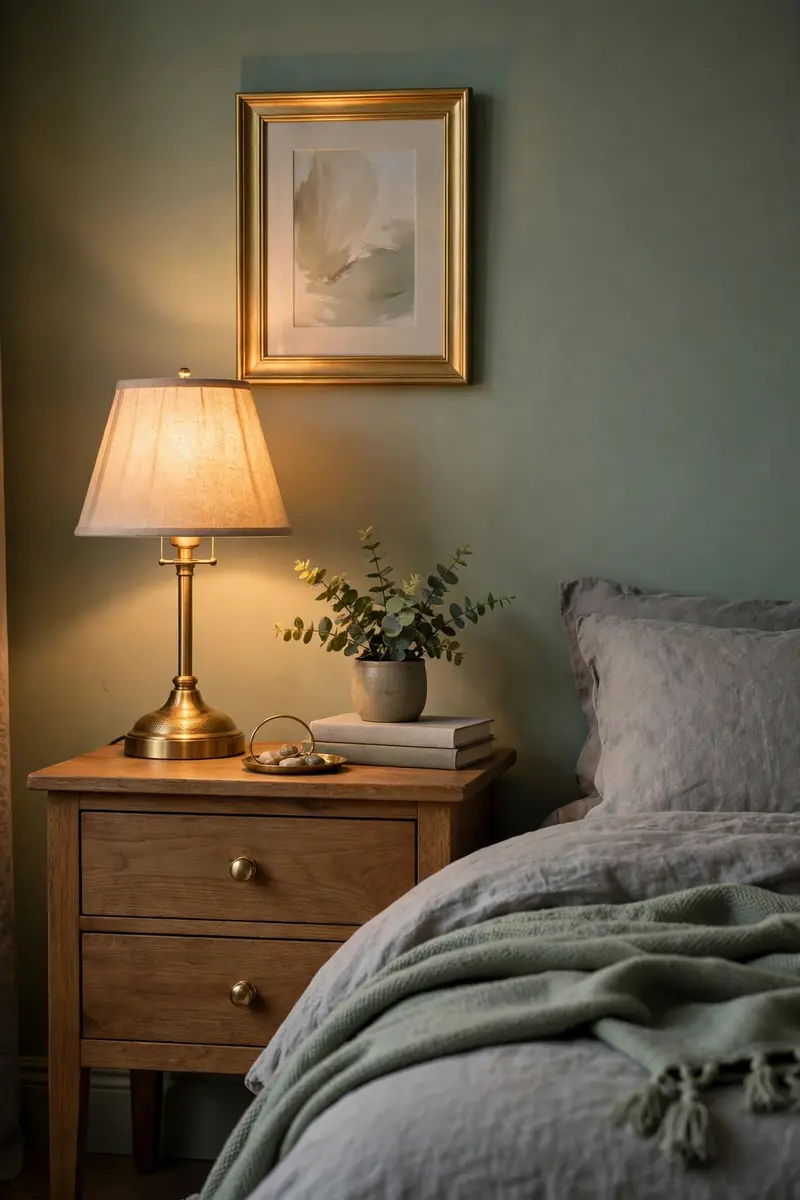
14. Ground the Room with a Sage Area Rug
A rug does more for a bedroom than almost any other single item: it softens footsteps, defines the bed zone, and adds a huge wash of color at floor level. A sage green rug — flatweave, low-pile, or a soft shag — under and around the bed balances grey walls above and ties the whole palette together from the ground up.
What you’ll need and what it costs: an 8×10 rug for a queen bed runs $120–300; a 5×7 for a smaller room runs $70–150. Washable rugs cost a bit more but are worth it in bedrooms.
Size it so at least two feet of rug extends beyond each side of the bed — a too-small rug makes the whole room feel off-balance. Low-pile weaves show the sage color most truly; deep shags read darker and moodier.
Tip: Layer a smaller vintage-style rug over a large plain jute rug for a designer look — the jute adds texture and the patterned top rug adds the sage color story.
Variation: In a small room, a round sage rug beside the bed gives you the color pop without the commitment (or cost) of a full-size rug.
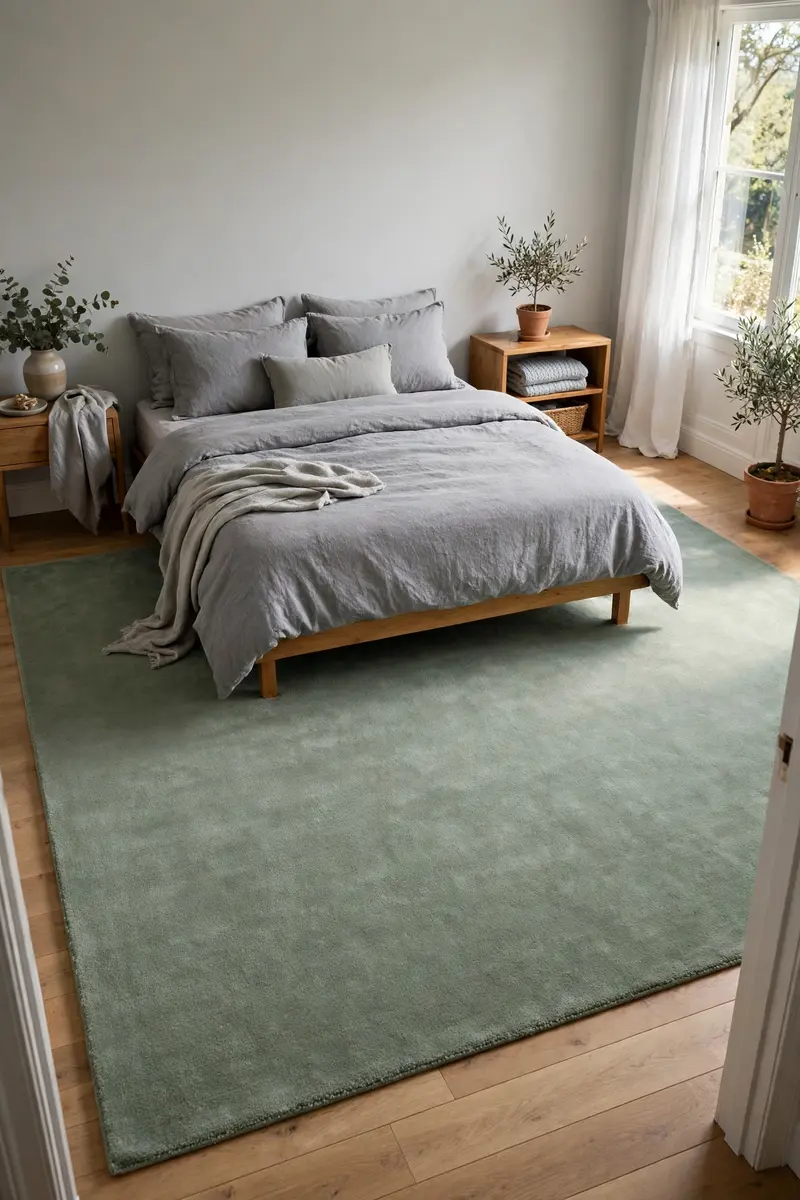
15. Fix the Lighting to Keep Grey Cozy
Grey’s biggest risk is feeling cold, and the fix is almost always lighting, not more decor. Swap cool-white bulbs for warm 2700K ones, add a second light source at a different height (table lamp plus floor lamp), and put the main light on a dimmer. Warm, layered light makes grey walls glow and sage textiles look richer — the same room can feel like a different space after dark.
What you’ll need and what it costs: warm LED bulbs ($3–6 each), a dimmer switch ($15–25, or a plug-in dimmer for lamps at $12), and possibly one extra lamp ($40–80).
Aim for three light sources at three heights: overhead, table/floor lamp, and something low like a candle-style LED or string lights. Avoid a single harsh ceiling light — it’s the fastest way to make grey feel institutional.
Tip: “Warm” bulbs vary wildly between brands — buy one first, test it at night, then buy the rest. A bulb that’s too orange will turn sage walls muddy.
Variation: Drape warm-white fairy lights along the headboard or inside a glass vase on the dresser for instant cozy glow at almost no cost.
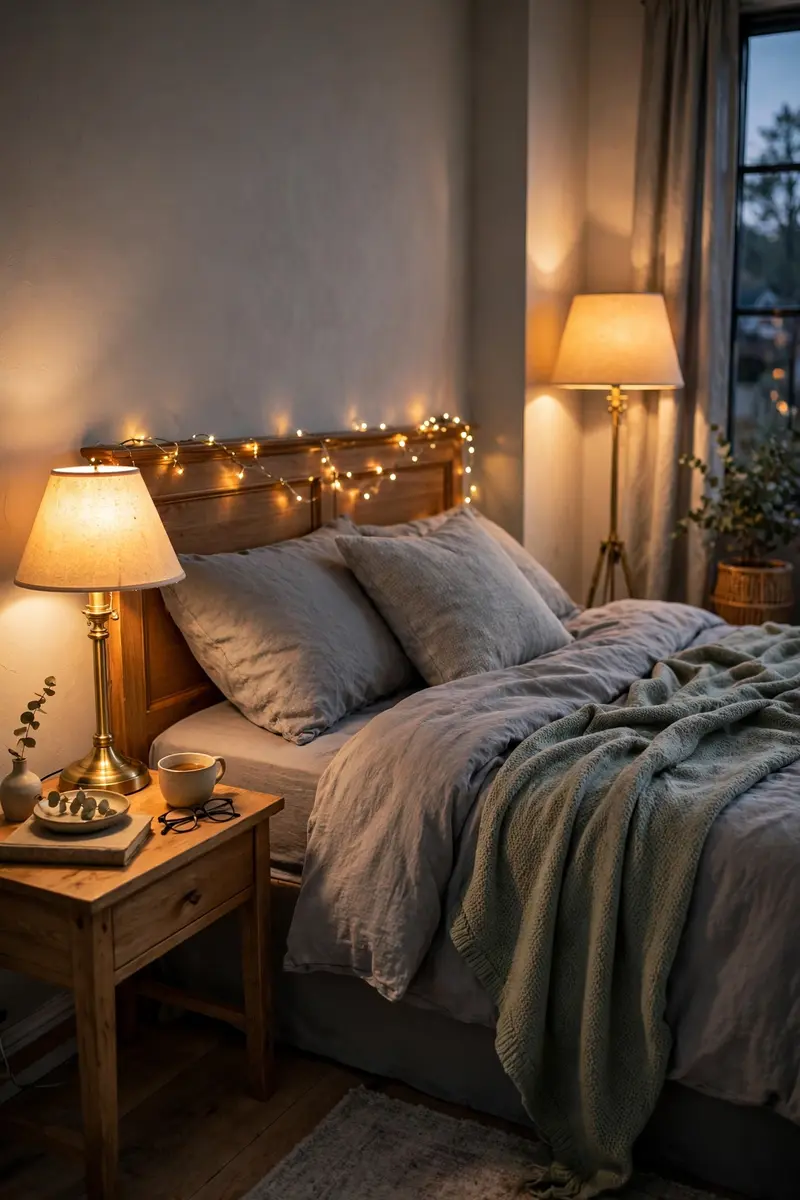
16. Bring in Live Plants to Echo the Sage
Nothing sells a green palette like actual green. A tall fiddle-leaf fig in the corner, trailing pothos on the dresser, or a cluster of small succulents on the nightstand makes the sage in your decor feel like part of nature rather than a paint choice. Plants also add organic shapes that soften all the rectangles of bedroom furniture.
What you’ll need and what it costs: easy-care plants run $10–35 each; ceramic pots in white, grey, or terracotta run $8–20. Start with three plants at different heights.
Match the plant’s green to your sage — silvery eucalyptus and dusty miller echo sage tones beautifully, while very dark tropical greens create contrast. White or light grey pots keep the palette calm; terracotta pots add a warm accent (see idea 17).
Tip: Group plants in odd numbers and vary their heights — a tall floor plant, a medium one on the dresser, and a tiny one on the nightstand reads as styled, not random.
Variation: If you kill plants, high-quality faux eucalyptus stems in a grey vase give you the same color echo with zero watering schedule.
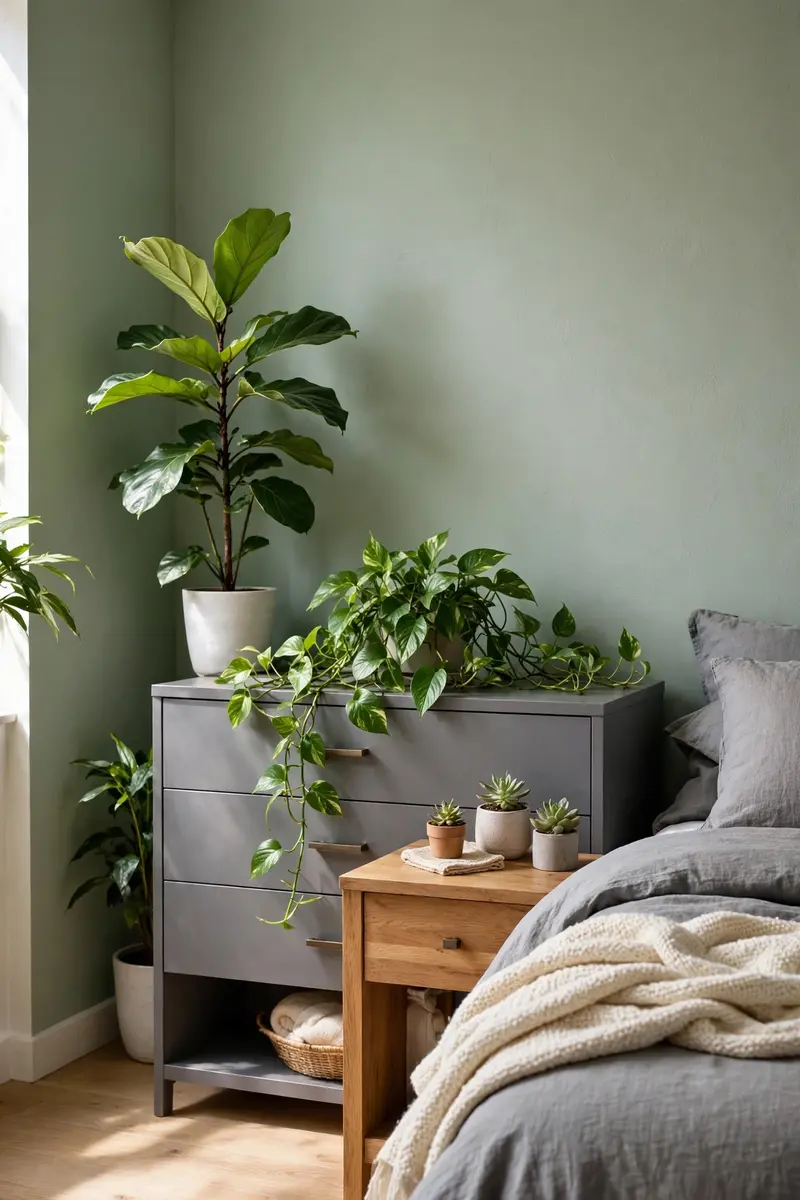
17. Add a Terracotta Accent for Earthy Contrast
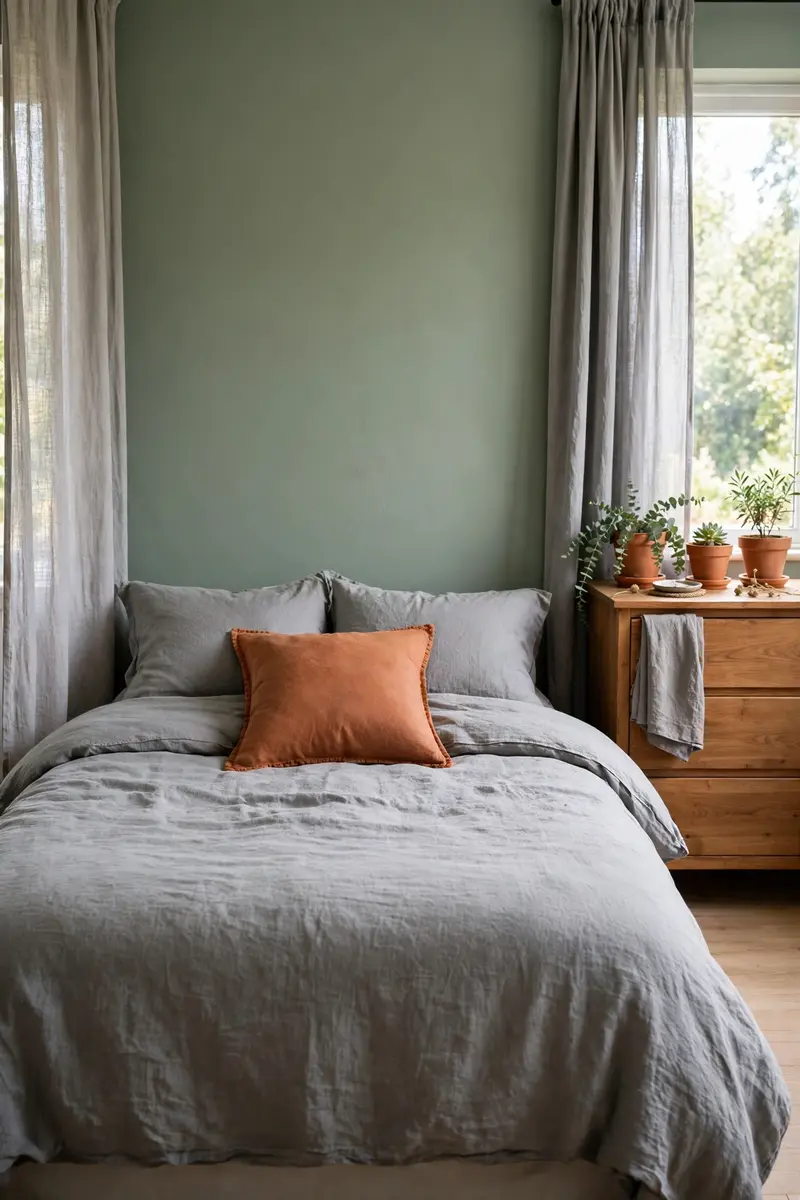
Here’s the Pinterest-favorite twist: one warm terracotta or clay accent — a throw pillow, a vase, a small stool — against sage and grey. The orange-brown warmth makes both cool colors look richer by contrast, and it nods to the earthy, Mediterranean trend that’s everywhere right now. One piece is enough; this is a spice, not a main ingredient.
What you’ll need and what it costs: a terracotta throw pillow ($15–30), a clay vase ($12–25), or a small terracotta pot cluster ($10–20). Keep it under $30 total.
Place the accent where your eye naturally lands — the center of the bed, the dresser top, or the reading corner. Terracotta next to sage is a classic complementary pairing, so even a tiny dose has big impact. Linen or clay textures work better than shiny finishes.
Tip: Take a phone photo of the room with and without the terracotta piece — you’ll be amazed how much warmer the “with” photo feels, which confirms the placement is right.
Variation: Burnt orange, rust, or warm camel textiles give you the same warming effect if terracotta feels too rustic for your style.
18. Go Moody with Charcoal Grey and Deep Sage
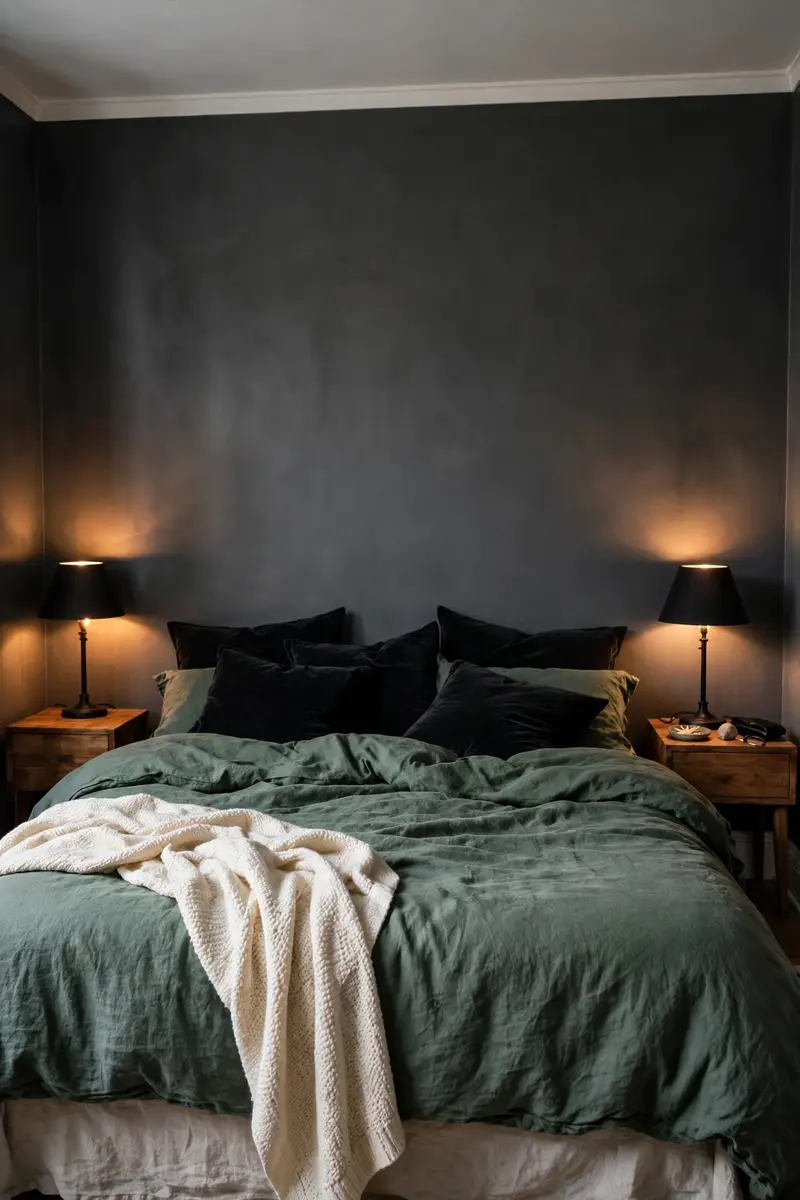
For a cocooning, dramatic bedroom, push both colors darker: charcoal grey walls, deep sage bedding, matte black accents. Dark rooms feel intimate and sleep-friendly, and the sage keeps the darkness from feeling heavy — it’s moody without being gloomy. This version of the palette is very 2026, and it photographs beautifully.
What you’ll need and what it costs: dark paint ($35–55 per gallon, two gallons for a room), charcoal or black bedding ($60–120), matte black lamp bases or frames ($30–60).
Dark walls need more light, not less — this is where idea 15 becomes essential. Keep the ceiling and trim white or very light grey so the room doesn’t close in, and use mirrors to bounce light around. One white or cream textile (a throw, a rug) stops the palette from feeling like a cave.
Tip: Paint a large test swatch and check it at night under your actual lamps — dark sage can read almost black in low light, which may be more (or less) drama than you want.
Variation: Do just one charcoal wall behind the bed with deep sage bedding — all the mood, half the paint, and the room still feels open.
19. Make a Small Bedroom Feel Bigger with Sage and Light Grey
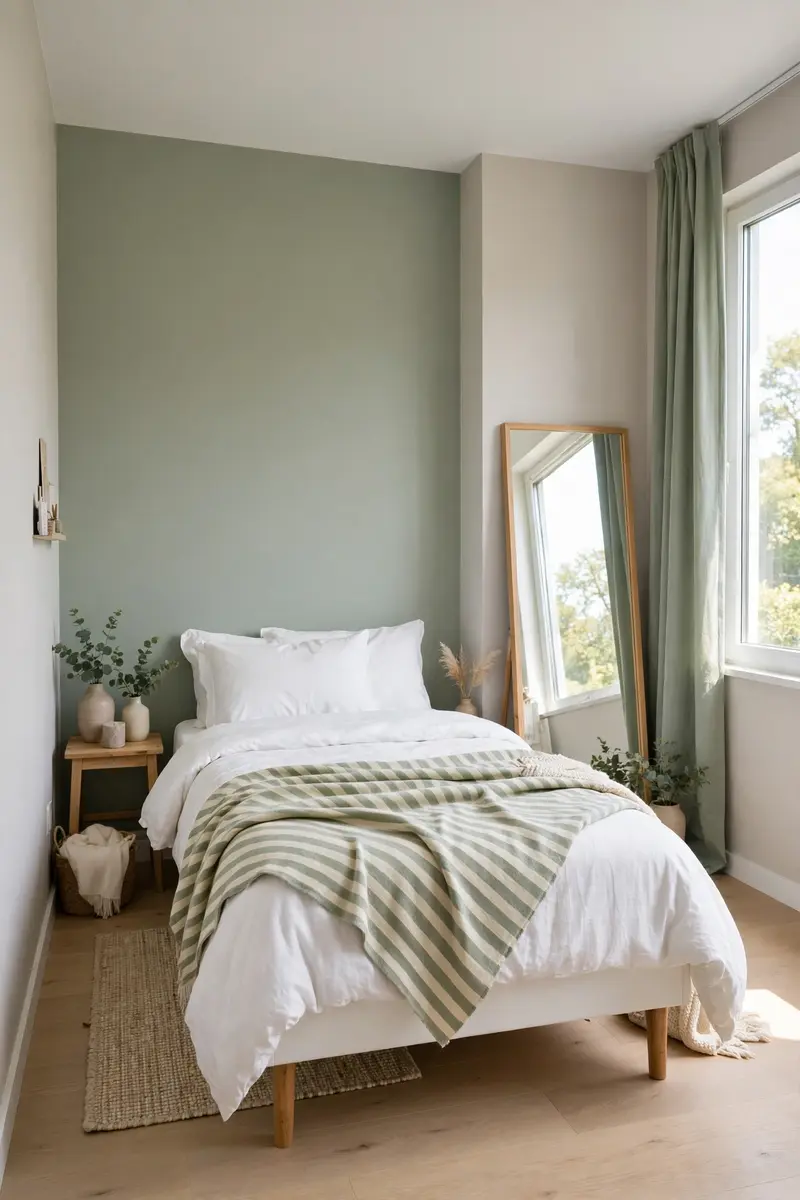
Small bedrooms love this palette because sage and pale grey are both light-reflective without being stark white. Paint three walls the palest warm grey and one wall a soft sage, keep bedding light, and use a mirror opposite the window. The room reads calm and continuous instead of chopped up — and continuous color always feels larger.
What you’ll need and what it costs: pale grey and soft sage paint ($70–110), a large leaning mirror ($60–150), light bedding you may already own.
Keep furniture legs visible — a bed frame on legs, a floating nightstand — so the floor reads as one continuous surface. Avoid heavy dark furniture that visually “stops” the eye. Vertical stripes in your sage-and-grey textiles (a striped throw, tall curtains) draw the eye up and add perceived height.
Tip: Match your curtain color closely to your wall color in a small room — curtains that blend in make walls feel farther away than contrasting ones.
Variation: If even one painted wall feels like too much, use a sage headboard plus pale grey walls — the same space-opening effect with zero wall paint.
20. Design a Color-Drenched Master Retreat
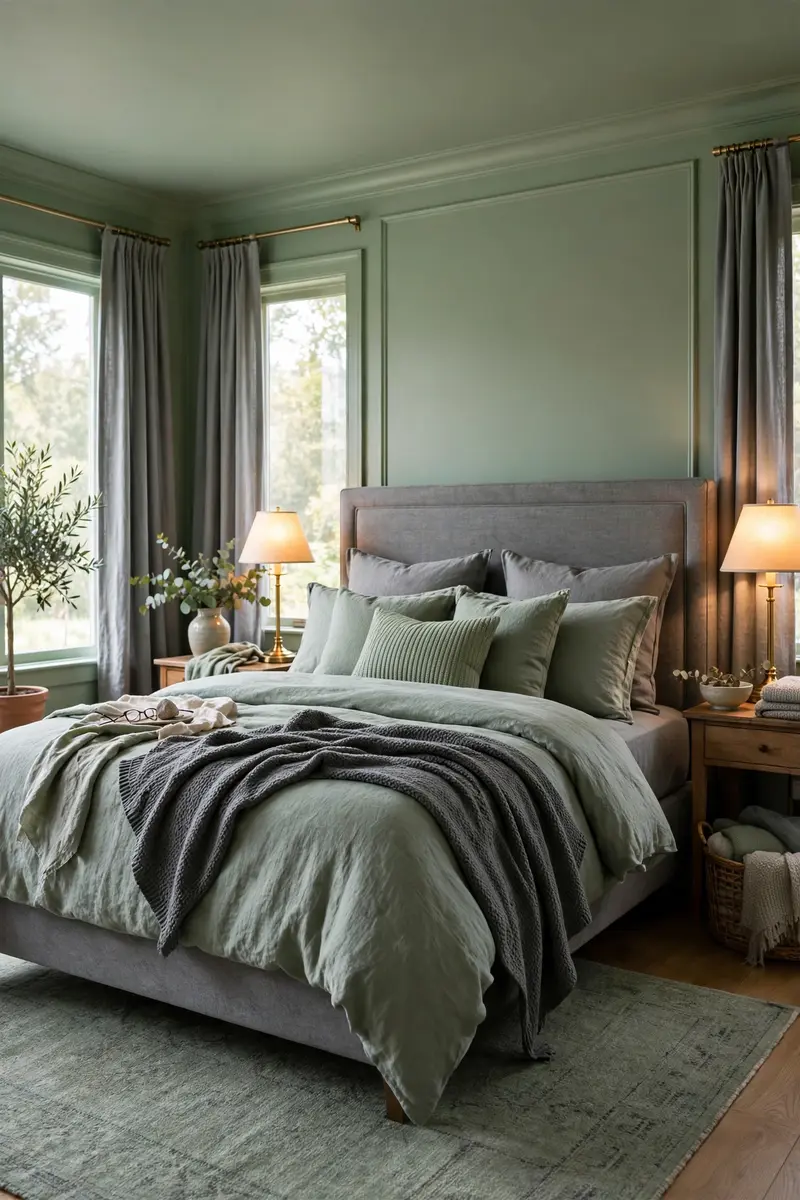
For the full commitment, drench the room: sage walls, sage ceiling in a slightly lighter tint, grey upholstered bed, grey curtains, layered sage-and-grey bedding. Color drenching — carrying one hue across walls, trim, and ceiling — is the defining 2026 paint trend, and sage is the perfect candidate because it’s soft enough to surround you without overwhelming.
What you’ll need and what it costs: 3–4 gallons of paint in two tints of the same sage ($105–200), plus the grey textiles and furniture from the ideas above. It’s a full weekend of painting.
Use the deeper sage on walls and a 50%-lighter tint on the ceiling so the room doesn’t feel like it’s pressing down. Keep trim the same sage rather than white — that’s what makes it true drenching. Then let grey do the grounding work: bed frame, curtains, rug, and one charcoal throw.
Tip: Drenching demands good prep — fill every nail hole and sand the trim, because a single-color room shows every imperfection that white trim would hide.
Variation: Drench just the sleeping zone — the wall behind the bed plus the ceiling above it — for the cocooning effect while the rest of the room stays light.
Frequently Asked Questions
Does sage green go with grey in a bedroom?
Yes — it’s one of the most reliable pairings in interior design. Grey acts as a cool, neutral anchor while sage adds a soft breath of color that keeps the room from feeling sterile. The combination works in both light versions (pale sage with dove grey) and dark versions (deep sage with charcoal), so it suits almost any style from minimalist to traditional.
What colors pair best with sage green and grey?
Warm neutrals are your best friends: cream, warm white, natural wood tones, and brushed brass all keep the palette cozy. For contrast, terracotta, rust, or muted mustard add earthy warmth, while matte black accents give it a modern edge — see The Spruce’s guide to colors that go well with sage green for more pairing ideas. Avoid pairing with cool stark whites or icy blues, which can push the room toward feeling cold.
What bedding goes with sage green walls?
Start with white or cream sheets to keep things fresh, add a grey duvet or quilt as the main layer, then finish with sage accent pillows and a textured throw in charcoal or cream. Mixing textures — linen, cotton, knit, velvet — matters more than exact shade-matching. If your walls are deep sage, keep bedding lighter; if walls are pale sage, you can go moodier with the textiles.
Is sage green a good bedroom color for small rooms?
It’s excellent for small rooms. Sage is light-reflective without the starkness of white, so it keeps a small bedroom feeling open while adding personality. Pair it with pale warm grey on the other walls, keep furniture on visible legs, and hang curtains close to the wall color — the continuous, calm palette makes the space feel larger than it is.
How do you keep a sage green and grey bedroom from feeling cold?
Three fixes: warm lighting (2700K bulbs, layered lamps, dimmers), warm materials (natural wood furniture, brass accents, woven textures), and one warm accent color (terracotta, rust, or camel in small doses). If the room still feels chilly, the grey is probably too cool — swap it for a greige with warm undertones.
Final Thoughts
Sage green and grey might be the easiest color pairing to live with — calm enough for rest, interesting enough to love for years, and flexible enough to restyle with a single new throw pillow. Start with one idea from this list, live with it for a week, and let the room tell you what it wants next. And if you found an idea you love, save this post to Pinterest so it’s waiting when you’re ready to start — your future bedroom will thank you.
Looking for more color inspiration? Explore our olive green bedroom ideas for a deeper green palette, our burgundy bedroom ideas for rich dramatic color, or browse boho bathroom decor ideas to carry the calm vibes into your bathroom.