
Thrift Store Home Decor Flips (Before and After)
There’s a special kind of magic hiding on the dusty shelves of your local thrift store. That chipped lamp with the yellowed shade, the scratched dresser everyone walked past, the chair with the awful floral fabric — these are the raw materials behind the internet’s most addictive trend: thrift store home decor flips before and after transformations that turn $5 finds into pieces that look like they cost $500.
Thrifting isn’t just about saving money anymore. It’s the heart of the “trash to treasure” movement trending on Pinterest right now, and the secret behind the lived-in luxury look that designers charge thousands for. The difference between a sad secondhand piece and a jaw-dropping flip usually comes down to one coat of paint, one clever swap, and about one afternoon of your time.
Below are four thrift store home decor flips before and after makeovers you can actually do this weekend — no workshop or experience needed, each one a beginner-friendly before-and-after that proves the best home decor doesn’t come from a showroom.
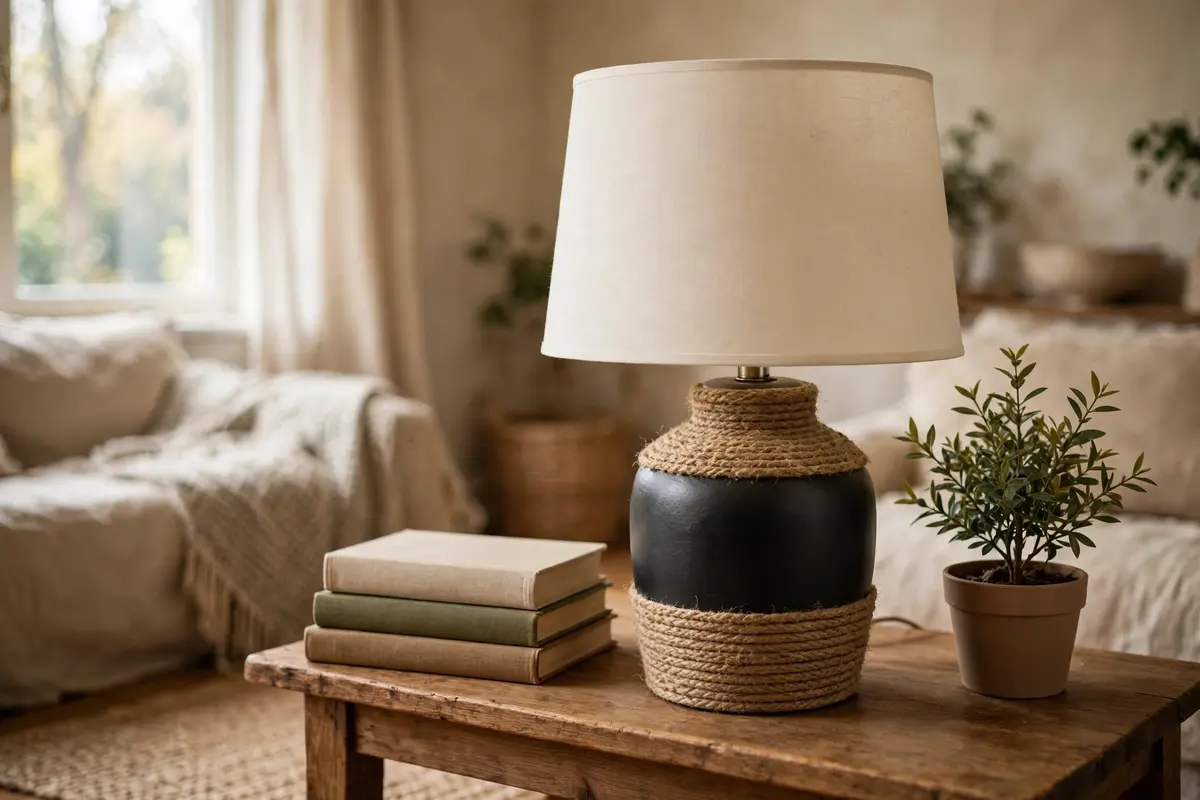
1. Thrift Store Home Decor Flips Before and After: Dated Lamp to Designer Lighting
You know the lamp: heavy ceramic base in a color nobody asked for, yellowed pleated shade, a finial from another decade entirely. Thrift stores are full of them for $5 to $10, and most shoppers walk right past — which is exactly why it’s the perfect first flip. It’s one of the most satisfying thrift store home decor flips before and after projects for beginners.
Matte black or brushed gold spray paint instantly reads “designer.” Wrap the base in jute rope or wooden beads for an organic modern look, and recover the shade with fresh fabric using spray adhesive. Your $8 lamp now looks like the $200 catalog version.
Materials + realistic cost: thrifted lamp ($5–$10), ceramic spray paint ($8), spray adhesive ($7), half-yard of shade fabric ($6–$10), jute twine ($4). Total: roughly $25–$30.
Unplug and disassemble the lamp, then clean every surface — thrift grime ruins paint adhesion. Scuff the ceramic base lightly with fine sandpaper and apply two to three thin coats of spray paint. While it cures, recover the shade: measure, cut fabric with a couple of extra inches, and wrap it around the frame with spray adhesive, folding edges under neatly. For the wrapped look, wind jute rope around the base with hot glue, working top to bottom. Finish with a new finial ($3 at any hardware store) and a warm-white LED bulb.
Practical tip: Test the lamp’s wiring before you buy — plug it in at the store. New paint can’t fix dead wiring, and a rewire kit adds cost you didn’t budget for.
Variation: Found a pair of matching ugly lamps? Flip both for perfect nightstand symmetry, or paint them emerald green for a bold maximalist moment.
2. The Scratched Wooden Dresser → Chalk Paint Showpiece
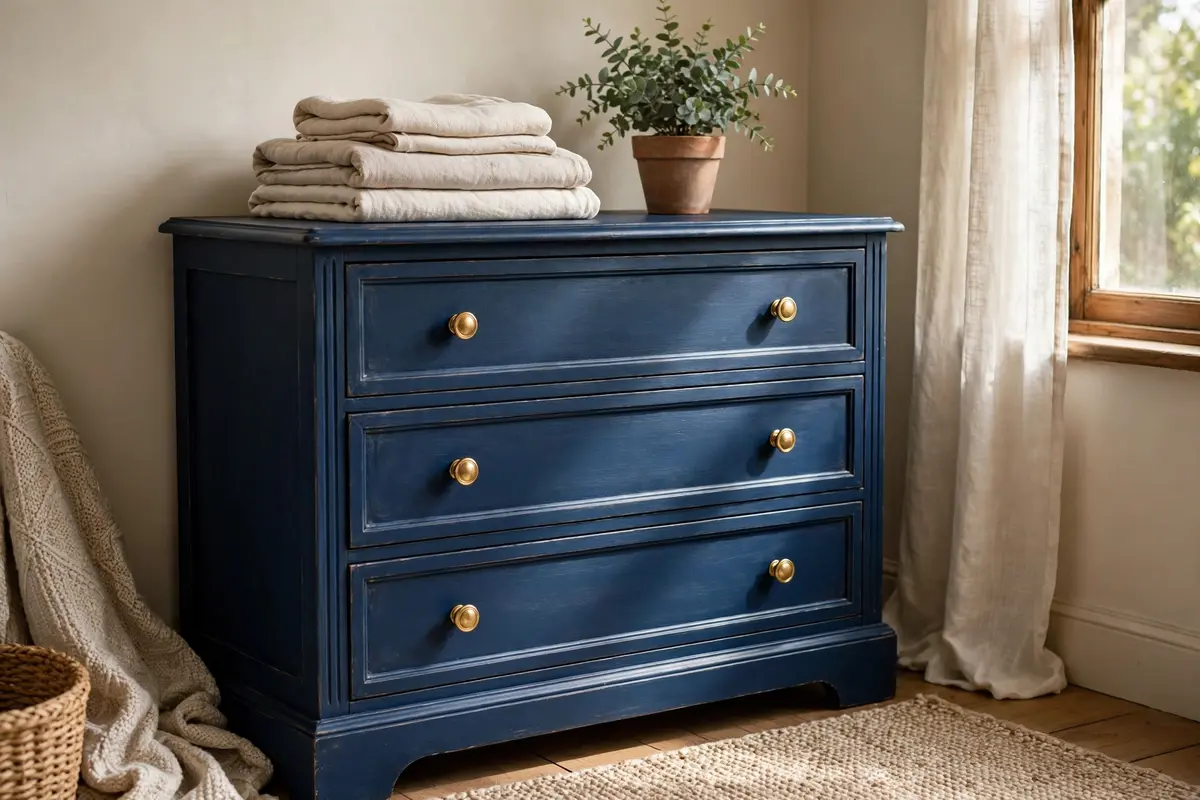
Nothing beats the satisfaction of a good flip. The thrift store dresser is the star of these thrift store home decor flips before and after: solid wood (often real, unlike modern particle-board pieces), great bones, and a finish so worn that nobody wants it — meaning it’s cheap for you, usually under $30.
Chalk paint sticks to almost anything without heavy sanding, and its matte finish hides decades of wear. This is the technique behind those viral Anthropologie-style furniture flips — fill dated carvings with wood filler, paint the whole piece in a rich color like navy or sage green, spray-paint the hardware gold, and seal it.
Materials + realistic cost: thrifted dresser ($15–$35), wood filler ($6), chalk paint quart ($25, covers a full dresser), new knobs or spray paint for hardware ($10–$15), furniture wax or sealer ($10). Total: roughly $55–$90 — still a fraction of a new dresser.
Remove drawers and hardware, fill scratches and dated carvings with wood filler, then sand lightly with 120-grit paper — just a scuff for grip, not a full strip. Wipe away dust and brush on two thin coats of chalk paint (thin coats mean no brush marks). Distress edges lightly if you like the farmhouse look, then seal with clear wax or water-based sealer. New knobs take thirty seconds each and make the biggest visual difference of the whole project.
Practical tip: Paint the insides of drawer fronts too. People always notice the half-painted edge when a drawer opens.
Variation: If the dresser’s top is still decent wood, skip painting it. Paint only the body and stain the top with a walnut gel stain for a two-tone look that screams high-end.
3. Thrift Store Home Decor Flips Before and After: Boring Vase to Stone-Look Statement
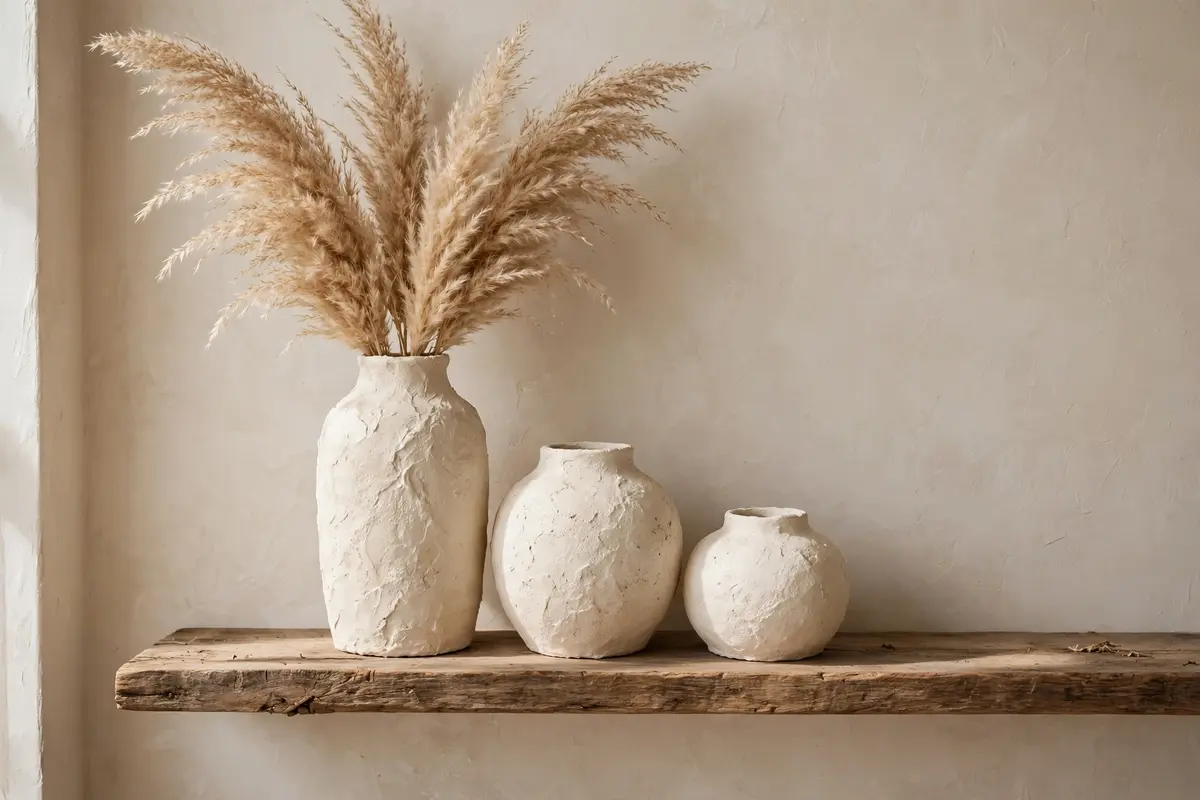
Some thrift store furniture makeovers don’t involve furniture at all. Ugly vases, plain glass bottles, and dated ceramic planters are the cheapest things in any thrift store — often under $3 — and one of the most dramatic transformations on this list. These small-scale thrift store home decor flips before and after projects are perfect weekend wins.
This flip rides one of Pinterest’s biggest DIY texture trends: the baking-soda paint technique. Mixing baking soda into matte paint creates a gritty, plaster-like texture that turns smooth glass or ceramic into something that looks like hand-thrown stone or aged terracotta. A shiny orange glass vase becomes a $40 boutique-style vessel with a $4 investment.
Materials + realistic cost: thrifted vase or glass bottle ($2–$4), sample jar of matte paint in cream or clay tone ($5), baking soda ($1), old sponge or brush ($2). Total: under $12.
Wash and dry the vase, then mix a tablespoon of baking soda into half a cup of matte paint — it should feel thick and slightly gritty. Dab it on with a sponge instead of brushing, building an uneven, organic texture (perfection is the enemy here; the charm is in the imperfection). Let it dry, then add a second coat, dabbing more heavily around the base and neck for a hand-thrown effect. Lightly rub a darker paint wash into the crevices before the final coat dries for extra age.
Practical tip: Seal the finished piece with matte clear spray if it’ll hold water or live near a sink. Unsealed texture paint and constant moisture don’t mix.
Variation: Paint a mismatched set of three thrifted bottles in the same clay tone for an instant curated shelf trio — different heights, one color, very designer.
4. The Ugly-Fabric Chair → Cozy Accent Chair
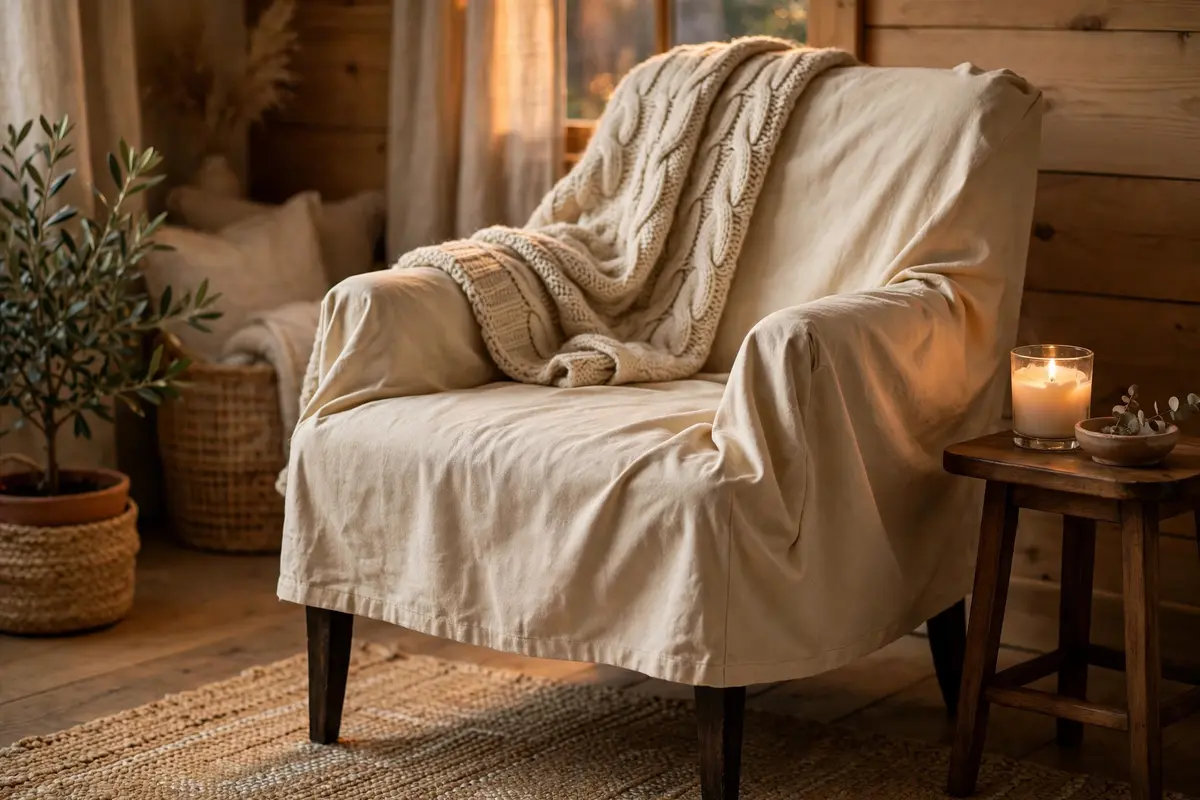
This is the flip that makes jaws drop. Every thrift store has that one chair: rock-solid wooden frame, surprisingly comfortable seat — and fabric so bad you laugh out loud. A simple DIY recover completely transforms a $15 chair in a single afternoon. It’s one of the most dramatic thrift store home decor flips before and after you’ll ever see.
The secret is a minimal-sew cover using painter’s drop cloth or a thrifted curtain. Drop cloth is the cult favorite of the flip community: a few dollars, thick and durable, and it takes chalk paint or fabric dye beautifully.
Materials + realistic cost: thrifted chair ($10–$25), painter’s drop cloth or thrifted fabric ($8–$12), staple gun and staples ($15, or borrow one). Total: roughly $30–$50.
Flip the chair over and remove the seat cushion (usually four screws). Lay fabric face-down, place the cushion on top, pull the fabric tight, and staple it to the underside of the frame, working from the middle of each side outward and folding corners like a present. For upholstered arms or a backrest, wrap and staple in sections, trimming excess as you go. If the wooden legs look scuffed, a quick coat of paint or stain finishes the transformation.
Practical tip: Iron your fabric before stapling. Wrinkles get locked in permanently under staples, and pressed fabric gives a crisp, professional result.
Variation: Paint a design on the drop cloth before stapling — stripes or a simple botanical stencil turns a plain recover into a custom piece.
What should I look for when thrifting furniture to flip?
Look for solid wood, sturdy joints, and good proportions. Ignore bad paint, ugly fabric, and scratches; those are fixable. Walk away from wobbly frames, broken joints, musty upholstery, and anything with damaged wiring you can’t fix cheaply.
What is the easiest furniture to flip for beginners?
Start with lamps, side tables, and small wooden chairs. They need only paint and a few hours, and mistakes are easy to sand away and redo. Skip complex upholstery and anything needing structural repair until you have a few paint flips under your belt. These small pieces make the easiest thrift store home decor flips before and after for first-timers.
How do you update a dated thrift store lamp?
Disassemble it, clean everything, and spray-paint the base in a modern finish like matte black or brushed gold. Recover the shade with fresh fabric and spray adhesive, and swap the finial for an updated one. Always test the wiring in the store before buying. For more ideas, browse Apartment Therapy’s thrifted furniture flips — proof of how dramatic thrift store home decor flips before and after can be.
Do you need to sand before painting thrifted furniture?
A light scuff-sand with 120-grit paper helps most paints grip, but you don’t need to strip the old finish. Chalk paint is designed to stick with minimal prep — just clean thoroughly first, because grease causes more paint failures than anything else. Good prep is the difference between amateur and pro-level thrift store home decor flips before and after.
Can you really make thrifted furniture look expensive?
Yes — that’s the whole point of the before-and-after flip. Color choice, modern hardware, and clean finishes do most of the work. A $20 thrifted dresser in a rich, current color with new knobs will genuinely fool guests, and the total investment usually stays under $100. That’s why thrift store home decor flips before and after photos are so addictive — the proof is right there.
If these thrift store home decor flips before and after makeovers inspired you, save this post to your Pinterest board so you can pull it up the next time you’re standing in the thrift aisle wondering if that sad lamp is worth $8. Happy flipping! Love budget DIYs? Try these dollar store home decor DIY ideas next, or browse our small living room decor ideas on a budget.



3 Comments