
Your hall closet is the first thing you open when you leave the house and the first thing you stuff things into when you come home. When it works, mornings feel calm. When it doesn’t, you are digging past a broken umbrella and three coats you never wear just to find your keys. These hall closet organization ideas fix that without a remodel, a contractor, or a big budget.
Most of the ideas below cost under $40 and take less than an afternoon. Below, each of these hall closet organization ideas includes realistic costs and simple steps, so you can start today with whatever budget you have. You will use simple tools you already own — a tape measure, a drill, and a free Saturday — and the result is a closet where every item has a home. Start with the first idea, work down the list in order, and by Sunday your hall closet will finally earn its keep.
1. Empty It Out: The First Step in Hall Closet Organization Ideas
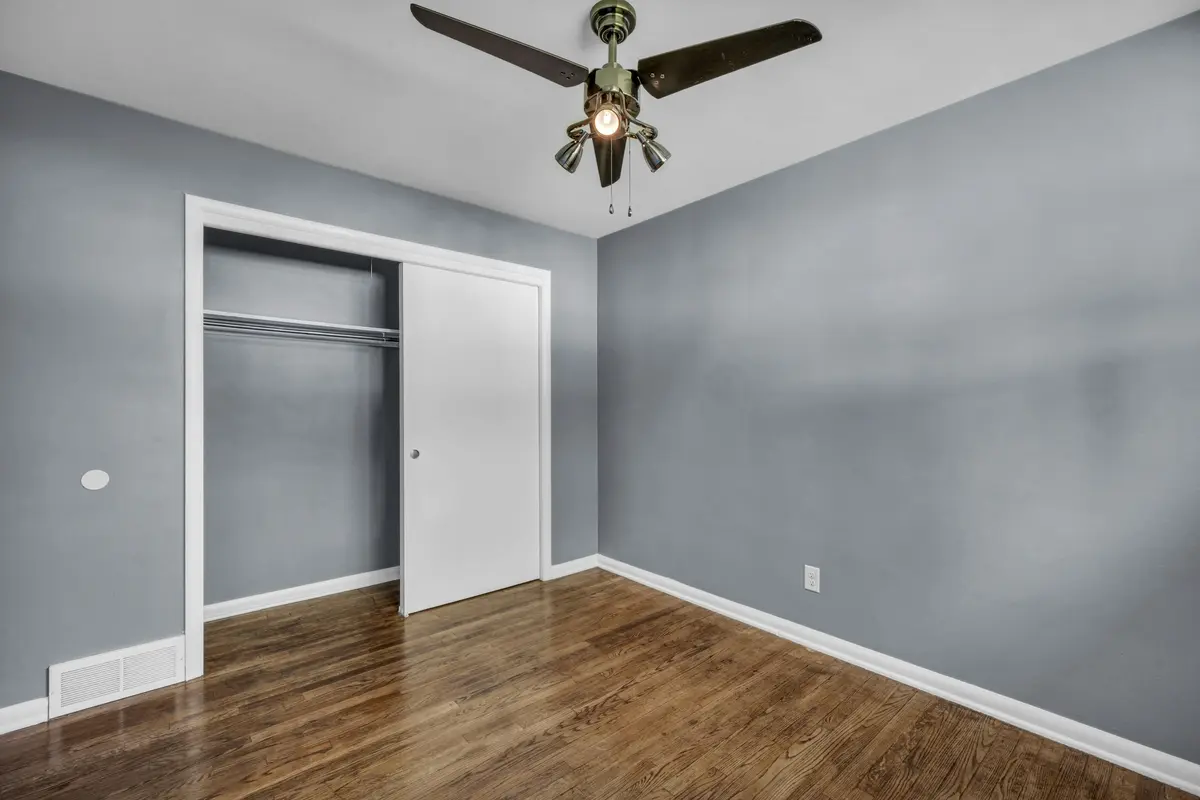
Every good hall closet organization ideas project starts the same way: take absolutely everything out. Yes, everything. Pull out the coats, the board games, the vacuum, and the mystery box you have not opened since you moved in. An empty closet shows you exactly how much space you really have, and it stops you from just shuffling clutter from one shelf to another.
Spread everything on the floor or a bed and sort it into three piles: keep, donate, and toss. Be honest with yourself. If you have not worn a coat in two winters, it goes in the donate pile. Broken umbrellas, expired medicines, and single gloves go straight in the trash. Most people remove a third of what was in there, and that free space is what makes every later idea work.
Materials and cost: three large trash bags or boxes (about $5), a label maker or masking tape and a marker (about $8). Total: under $15.
Once the piles are made, bag the donations immediately and put them by the front door. Do not let them sit in the hallway for a week, or they will drift right back into the closet. Wipe down the empty shelves and floor while you have the chance, since you will not see them bare again for a long time.
Tip: Set a 20-minute timer for the sorting step. Fast decisions beat perfect ones, and a timer keeps you from re-reading old birthday cards when you should be decluttering. A timer is the simplest of all hall closet organization ideas tools, and it costs nothing.
Variation: If emptying the whole closet feels overwhelming, do it in two halves — coats and hanging items first, then shelves and floor. The result is the same, just spread over two evenings.
2. Zone the Closet by Daily Routine
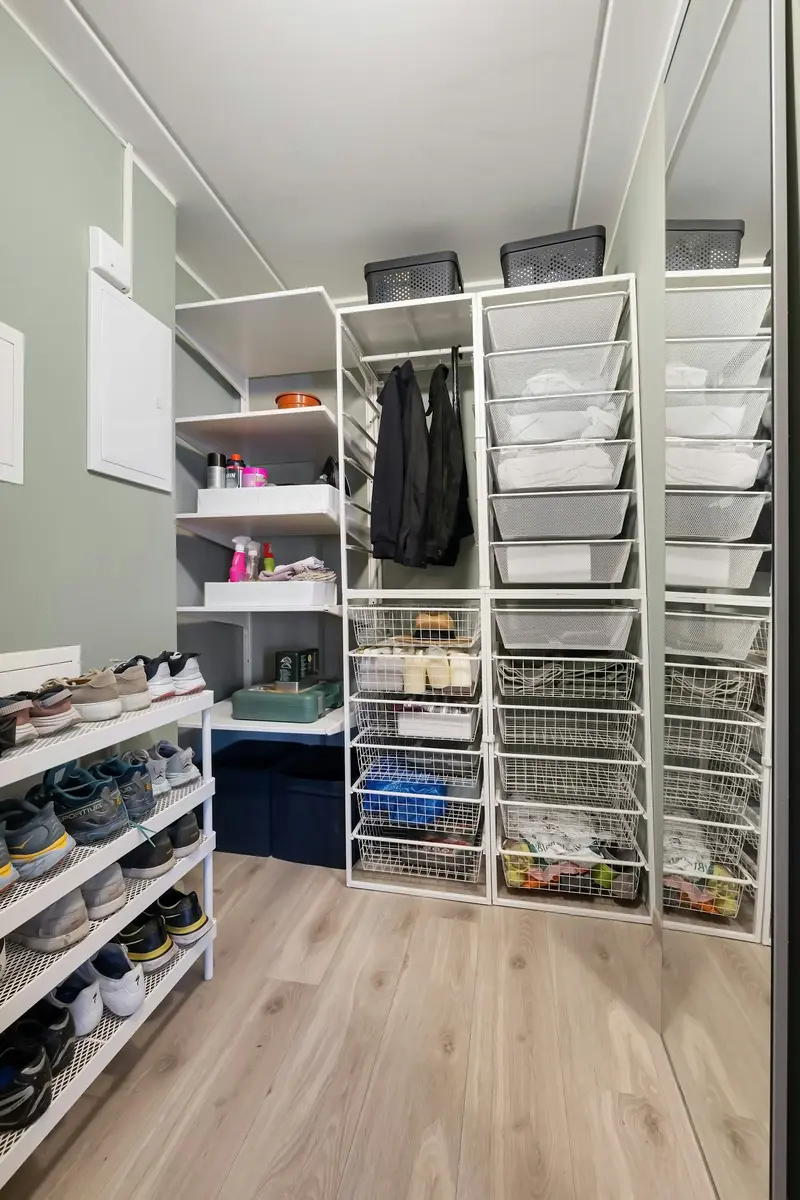
A closet without zones becomes a junk drawer with a door. The fix is to divide the space into zones that match your routines: coats and shoes by the door side, cleaning supplies on one shelf, and seasonal or rarely used items up high. When every zone has one job, you stop hunting and start grabbing.
Put your most-used items between your waist and your shoulders, which is the easiest reach zone. Daily coats, the dog leash, and your go-to cleaning spray live here. The top shelf holds things you touch a few times a year, like spare light bulbs and holiday tablecloths. Heavy items, like a spare vacuum or a box of bottled cleaner, go low so you can slide them out instead of lifting them.
Materials and cost: a few labeled bins or baskets ($20–$35 total), a small step stool if your top shelf is high ($15). Total: about $25–$50.
Sketch your zones on paper before you buy anything. Measure each shelf’s height and depth, then assign one category per shelf or section. A quick sketch is the cheapest of all hall closet organization ideas, and it saves you from buying bins that do not fit.
Tip: Give each zone a one-word label — Coats, Cleaning, Seasonal — and stick it on the shelf edge. Labels make the system survive the whole family, not just you.
Variation: In a shared household, give each person one zone or one bin instead of sorting by item type. Kids keep their own gear in their own bin, and nobody blames anyone else for the mess.
3. Add a Second Hanging Rod Below the First
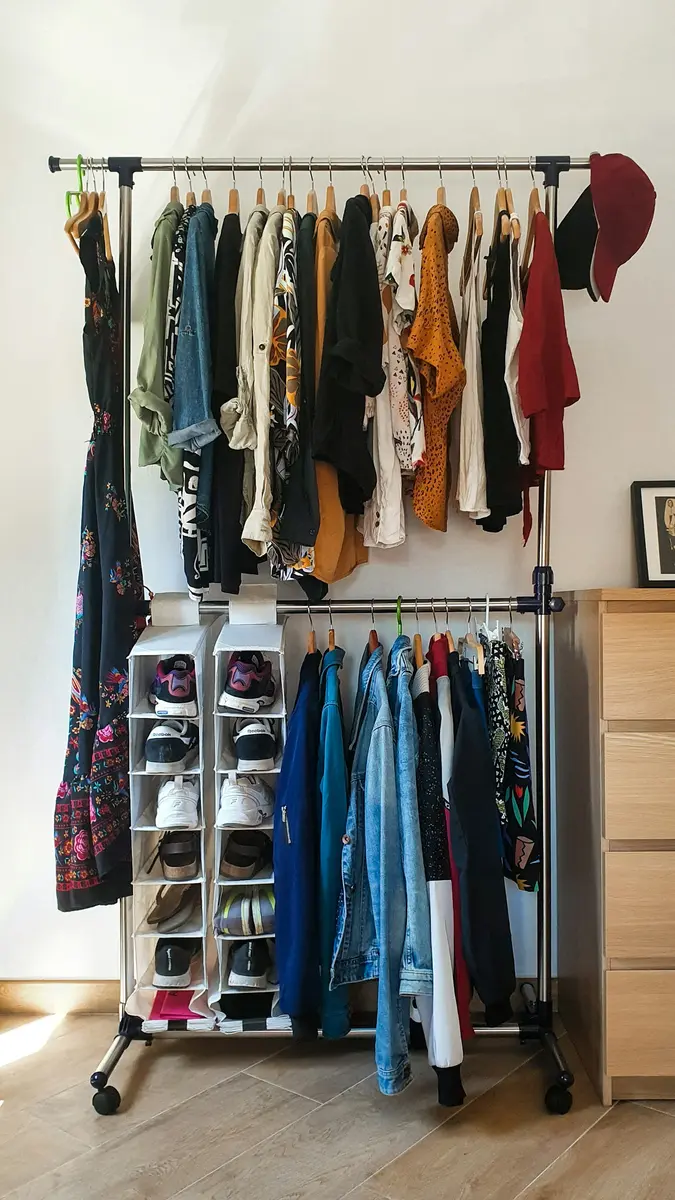
Most hall closets waste the bottom half of their hanging space. One rod holds long coats, and everything below it is dead air. A second rod, mounted about 40 inches below the first, instantly doubles your hanging space for jackets, kids’ coats, and shorter layers.
This is one of the simplest hall closet organization ideas you can do in an afternoon. A basic closet rod costs about $10, and two brackets cost another $5. If you rent, use a tension rod instead — no drilling, no holes, and it comes down cleanly when you move out. Hang shorter items on the lower rod and keep long coats on the top one.
Materials and cost: closet rod ($8–$12), two rod brackets ($4–$6), screws and a drill; or a heavy-duty tension rod ($12–$18). Total: about $15–$25.
Measure twice before you drill. Leave at least 40 inches between rods so jackets do not bunch, and keep the lower rod high enough that coats clear the shoe rack below. Careful measuring is the unglamorous part of hall closet organization ideas, and it is what separates a tidy closet from a second trip to the hardware store. If the closet is narrow, a rod that runs front to back on one side can hold scarves and kids’ coats without crowding the main rod.
Tip: Hang coats by length and color on each rod. Grouping them this way makes the closet look calm and lets you spot the coat you want in seconds.
Variation: Swap the second rod for a hanging shelf organizer with fabric cubbies if you need folded storage more than hanging space. It hooks over the main rod and needs zero tools.
4. Mount an Over-the-Door Track System
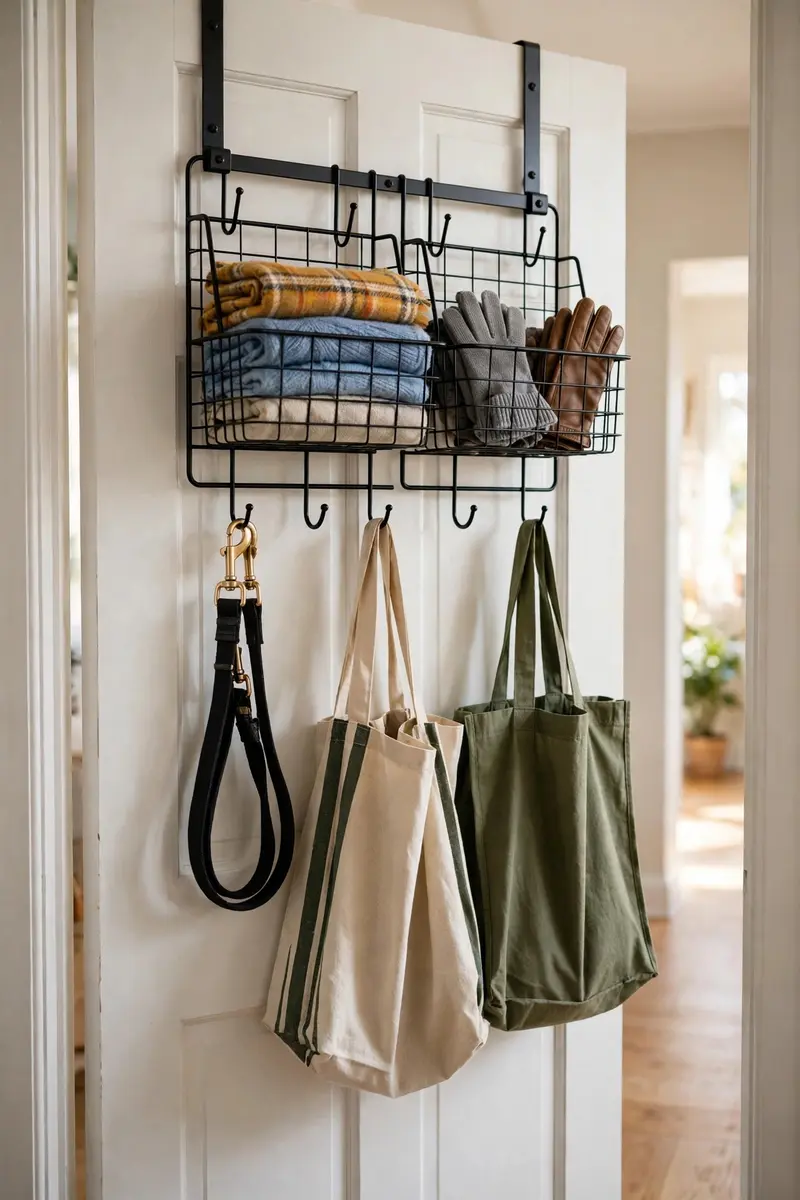
The back of the closet door is the most wasted surface in the whole house. An over-the-door track system turns it into a full storage wall for the small things that usually end up in a pile: gloves, scarves, the dog leash, reusable bags, flashlights, and sunscreen. This is the hall closet organization ideas trick that organizers on Pinterest are sharing most in 2026.
A basic over-the-door rack with hooks costs about $25–$40 and hangs over the door in seconds. A modular track system, like the Elfa utility rack, costs $100–$150 but lets you snap on baskets, hooks, and pegboards exactly where you want them. Either way, you gain storage without giving up a single inch of shelf space inside the closet.
Materials and cost: over-the-door hook rack ($25–$40) or modular track system ($100–$150), plus small baskets or hooks to clip on ($10–$20). Total: about $25–$170 depending on the system.
Check your door clearance before you buy. The rack hooks over the top of the door, so measure the gap between the door and the frame, and make sure the door still closes fully once the rack is loaded. Keep heavy items off the door rack — it is best for light, grab-and-go gear.
Tip: Reserve the door rack for things you grab on the way out. If you reach for it every day, it earns its spot; if you touch it once a month, move that item to a shelf.
Variation: A clear-pocket shoe organizer hung over the door works the same way for a fraction of the price. The pockets hold cleaning sprays, gloves, hats, and small tools, and you can see everything at a glance.
5. Use Labeled Woven Baskets on Every Shelf
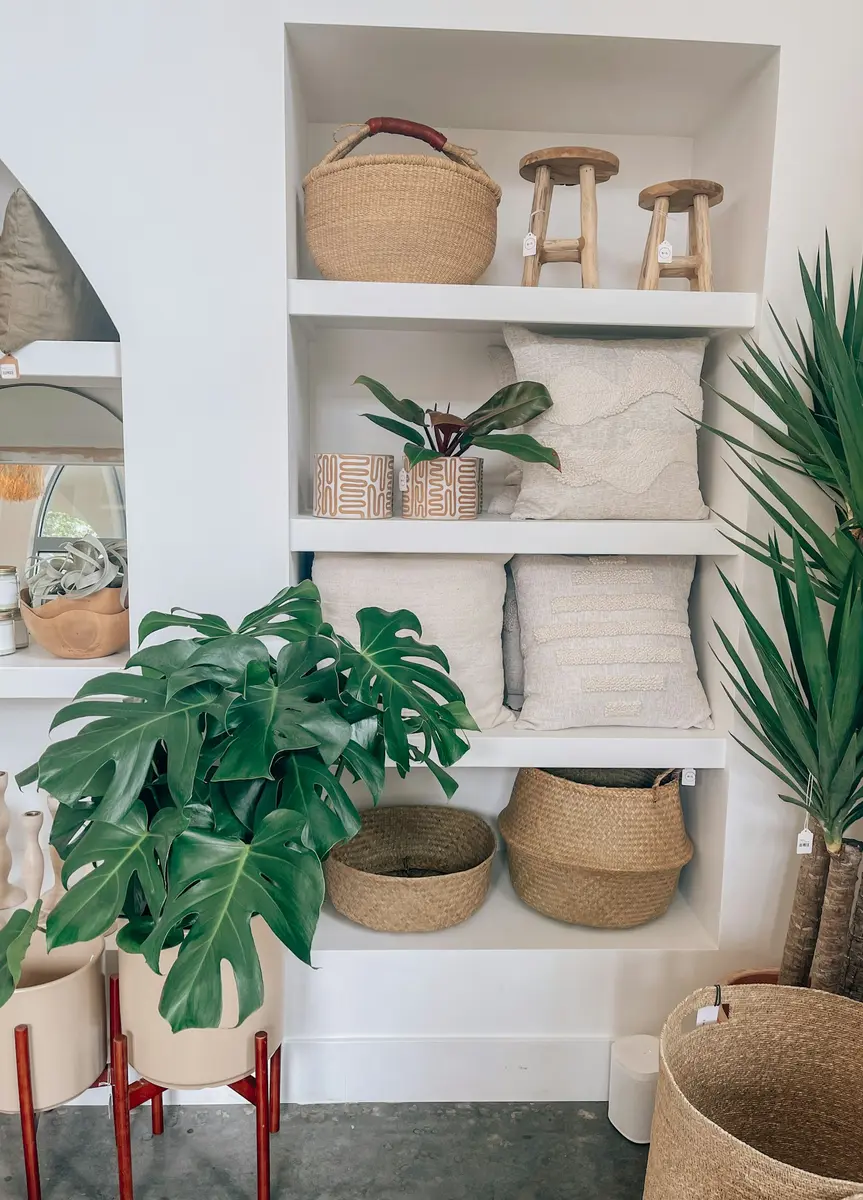
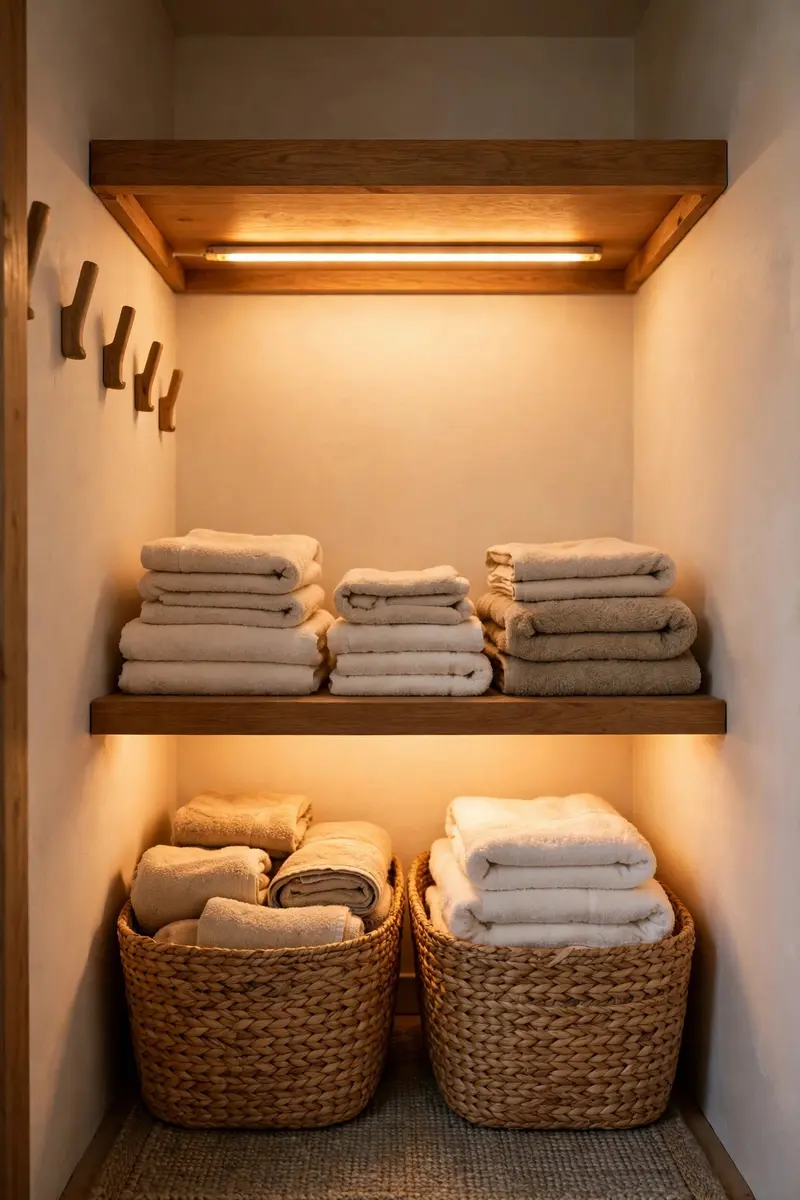
Plastic bins work, but woven baskets look better and are the direction hall closet organization ideas are heading in 2026. Natural materials like water hyacinth, seagrass, and cotton canvas soften a plain closet and make open shelves look styled instead of stuffed. A row of matching baskets turns chaos into calm.
Choose baskets that fit your shelf depth with about an inch to spare, and keep them uniform in size and color. Assign one category per basket — winter hats, scarves, pet supplies, light bulbs — and label each one clearly. Labels are the secret: without them, baskets become mystery boxes within a month.
Materials and cost: 3–5 woven or fabric baskets ($8–$15 each), clip-on labels or a label maker ($8). Total: about $30–$60.
Measure your shelves before shopping, and bring the tape measure to the store. Baskets that are too deep stick out past the shelf edge, and baskets that are too shallow waste space. The right fit is what makes hall closet organization ideas look effortless instead of improvised. If your shelves are wire, add a thin board or a shelf liner first so baskets sit flat and do not tip.
Tip: Use the same label style on every basket — same font, same color, same size. Matching labels make even a budget closet look like a professional organizer designed it.
Variation: If woven baskets stretch your budget, use uniform canvas cubes in a single neutral color. They cost less, fold flat when empty, and still give you that calm, matching look.
6. Shrink Bulky Seasonal Gear with Vacuum Bags
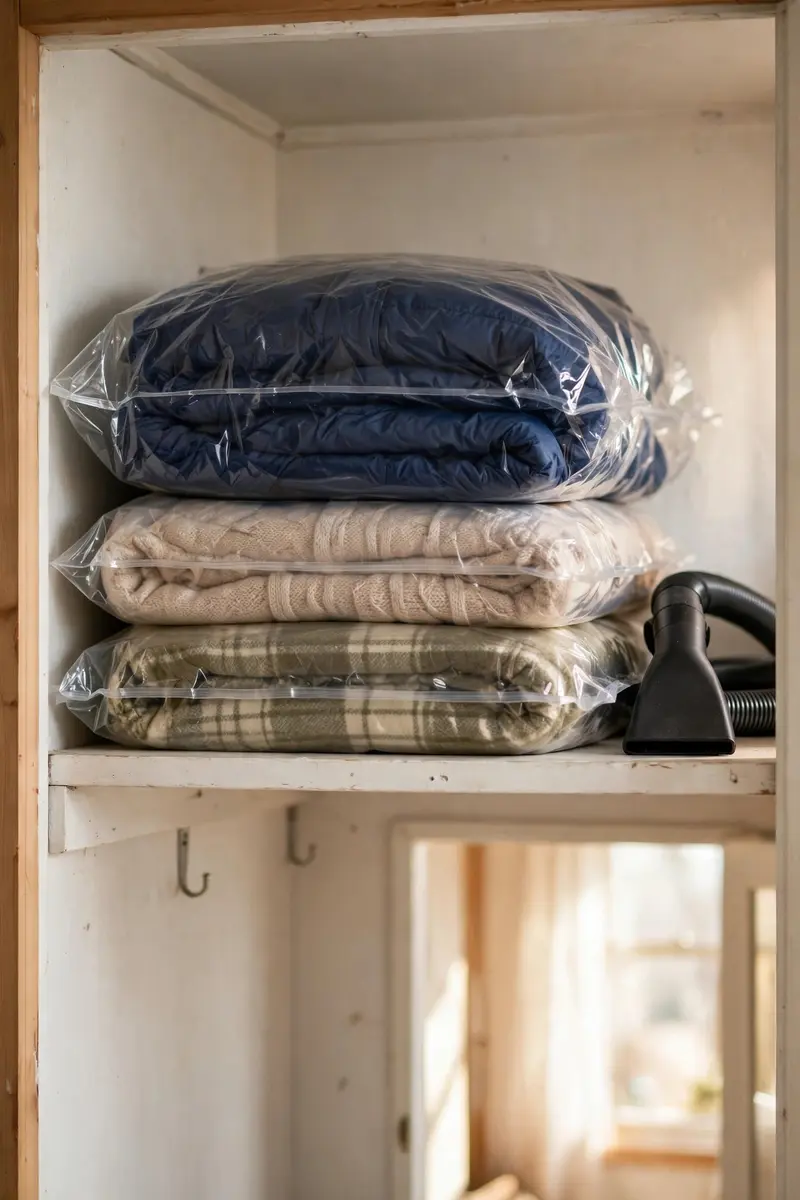
Bulky winter coats and spare duvets eat closet space all year. Vacuum storage bags compress them to a fraction of their size, and they are the hall closet organization ideas swap that replaces the old habit of stuffing seasonal gear into suitcases. A bag that held one puffy coat can hold three once the air is out.
Place folded coats or blankets in the bag, seal it, and vacuum the air out through the valve. Slide the flat bags onto the top shelf or under a stack of bins. When the season changes, open the bag and the items spring back to full size. It is the cheapest way to win back a whole shelf.
Materials and cost: a 6-pack of vacuum storage bags ($12–$18), a standard vacuum cleaner with a hose attachment. Total: about $12–$18.
Do not vacuum-bag leather, suede, or down-filled items for months at a time, since long compression can damage them. Use the bags for synthetic coats, spare blankets, and out-of-season clothing, and check the seal every few weeks — a slow leak lets the bag puff back up.
Tip: Label each vacuum bag with its contents and the season in big letters. When you need the winter coats in November, you will grab the right bag on the first try.
Variation: If you have no vacuum handy, try roll-up compression bags that you squeeze by hand. They do not shrink items quite as flat, but they work in a dorm or a rental with no storage for a vacuum.
7. Switch to Slim Velvet Hangers
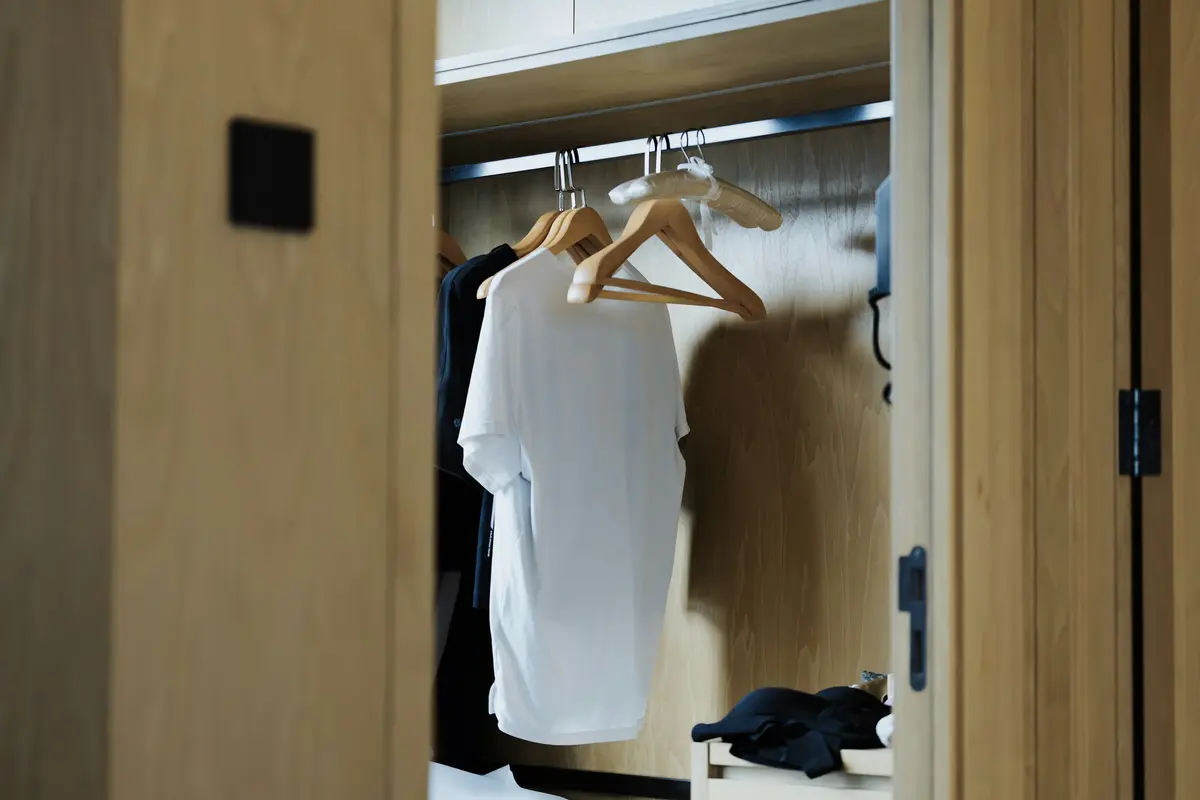
Mismatched hangers are a silent space thief. Thick plastic and wooden hangers take up twice the rod space of slim velvet ones, and they let jackets slide off onto the floor. Switching to slim, matching velvet hangers is one of the cheapest hall closet organization ideas, and it instantly makes a crowded rod look twice as neat.
A 50-pack of slim velvet hangers costs about $15–$20. Hang every coat facing the same direction, with the same color hanger throughout, and you will fit noticeably more coats on the same rod. The velvet surface grips fabric, so nothing slips, and the slim profile frees up room for one or two extra jackets.
Materials and cost: 50-pack slim velvet hangers ($15–$20). Total: about $15–$20.
When you swap hangers, take the chance to try on every coat. If it does not fit, you do not love it, or you have not worn it in two years, donate it on the spot. The hanger swap becomes a mini declutter, and the closet ends up lighter as well as neater.
Tip: Buy all your hangers in one color — black, grey, or white — and never mix in wire hangers again. One matching set is what makes the rod look like a boutique instead of a lost-and-found box.
Variation: If velvet hangers feel too fussy, use slim plastic hangers with a rubber grip strip. They cost about the same and still save space over chunky wooden ones.
8. Put a Two-Tier Shoe Rack on the Floor
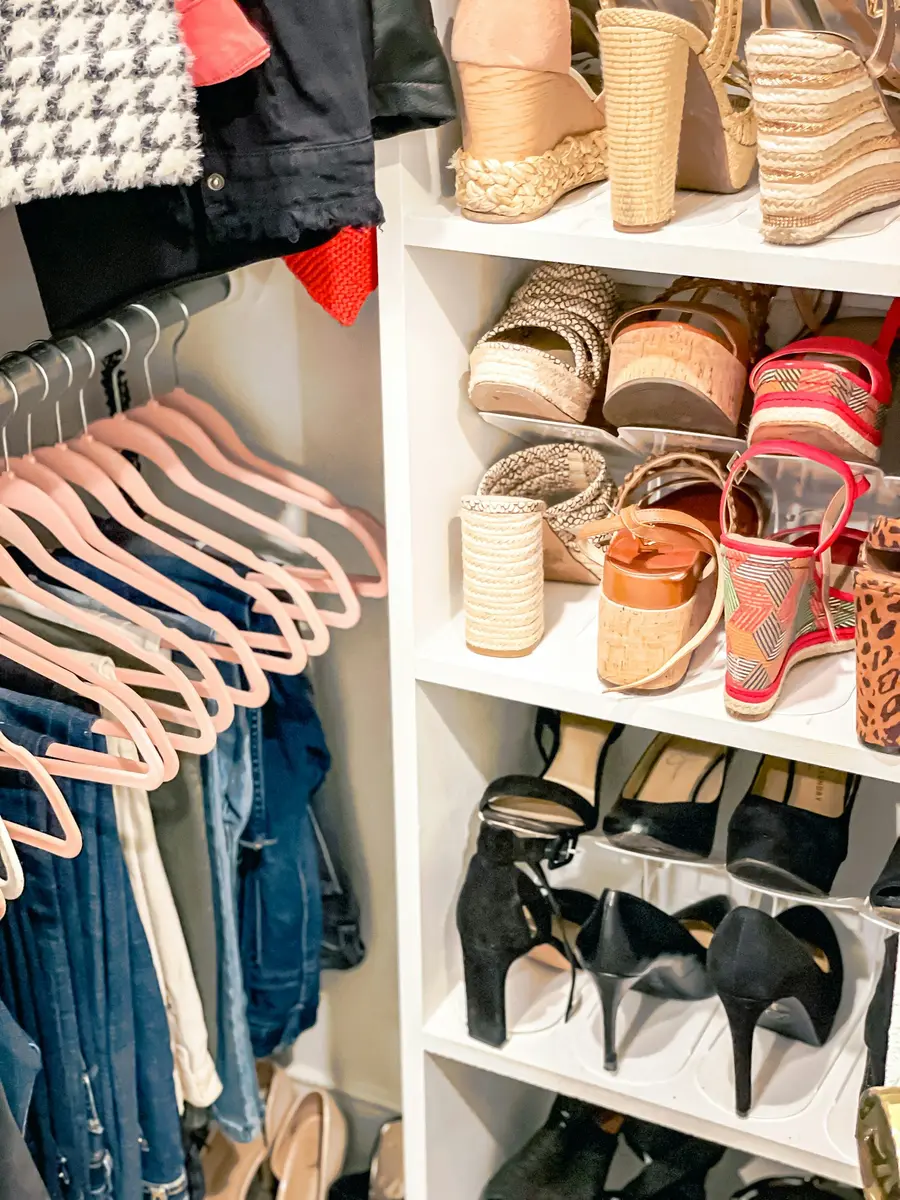
Shoes on the closet floor always end up in a tangled pile. A two-tier shoe rack lifts them off the floor, doubles the pairs you can store, and keeps muddy soles away from clean coats. It is a small buy with a big daily payoff, and it belongs in any list of hall closet organization ideas.
A simple bamboo or metal two-tier rack costs $25–$40 and fits most standard closets. Put everyday shoes on the top tier where you can grab them, and boots or less-worn pairs below. Leave one empty slot on the rack at all times so there is always a home for the pair you just kicked off.
Materials and cost: two-tier shoe rack ($25–$40), a boot tray to catch mud and water ($8–$12). Total: about $30–$50.
Measure the closet floor before you buy, and leave a few inches of clearance on each side for the door to swing. Floor measurements matter more than any other hall closet organization ideas detail, because a rack that is half an inch too wide simply will not fit. If the closet is very narrow, a stackable rack that grows upward works better than a wide one. Place the boot tray under the rack in wet weather, and wipe it out weekly.
Tip: Cap the household shoe count for the closet — two pairs per person, plus one pair of boots each. Anything beyond that lives in the bedroom closet, not the hall.
Variation: No floor space at all? Hang a shoe organizer on the door instead. The clear pockets hold a pair per pocket, and you keep the whole floor free for the vacuum and cleaning supplies.
9. Corral Cleaning Supplies in Clear Bins
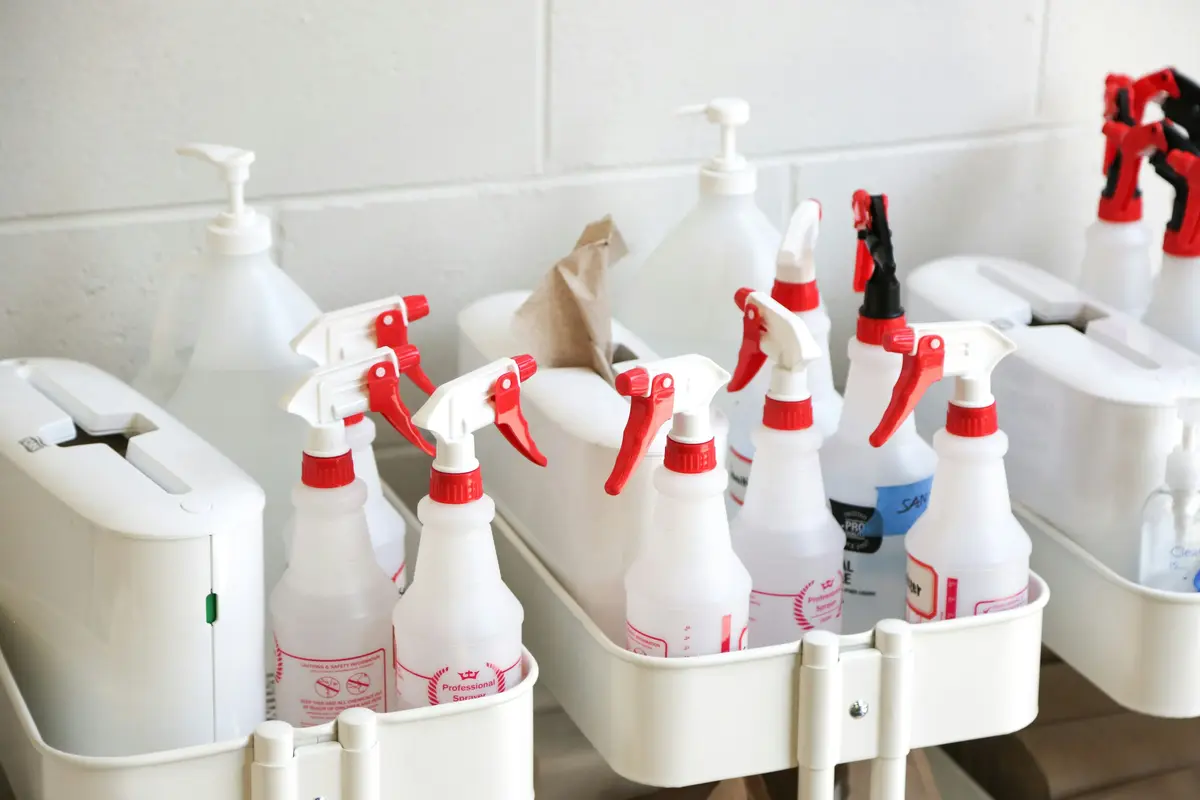
Cleaning supplies are the messiest residents of a hall closet. Bottles tip over, spray triggers snag on coats, and you can never find the one cleaner you actually need. Clear bins fix this: one bin for daily sprays, one for floor care, and one for tools like sponges and gloves. This hall closet organization ideas staple keeps chemicals upright, visible, and safely away from pet gear.
Clear bins let you see contents at a glance, which matters when you are mid-clean and in a hurry. Keep the bin you use most at waist height, and store refills and rarely used products on a higher shelf. If you have small children or pets, choose bins with lids and keep them on a shelf above reach.
Materials and cost: 2–3 clear bins with handles ($6–$10 each), labels ($5). Total: about $20–$35.
Group supplies by task, not by brand. A daily-cleaning bin might hold an all-purpose spray, glass cleaner, and microfiber cloths. A floor-care bin holds the mop solution and the vacuum attachments. When a bottle runs out, the empty spot in the bin tells you exactly what to buy.
Tip: Put a small caddy inside the cleaning bin for the items you carry room to room. Lift the caddy out, clean, and drop it back — the rest of the closet never gets disturbed. A caddy is a small hall closet organization ideas upgrade that makes cleaning day noticeably faster.
Variation: Use a lazy Susan turntable inside a deep bin or on a deep shelf. One spin brings the bottle at the back to the front, so nothing gets lost behind the spray bottles.
10. Hang a Hook Rail and Key Station
Keys, sunglasses, and the dog leash have a habit of landing wherever your hands happen to be. A hook rail and key station near the closet gives them a permanent home, so the frantic morning search ends for good. Mount it on the wall beside the closet or on the inside of the door.
A simple wooden peg rail with five or six hooks costs $12–$20 and mounts with two screws. Add a small shelf above it for sunglasses and mail, and a tiny dish or a magnetic strip for keys. Everyone in the house learns the rule fast: keys live on the rail, nowhere else.
Materials and cost: peg rail or hook rail ($12–$20), small wall shelf ($10–$15), screws and wall anchors ($3). Total: about $25–$40.
Mount the rail at a height everyone can reach, including kids — about 48 inches from the floor works for most families. A rail at the right height is one of those hall closet organization ideas that pays off every single morning. If you rent and cannot drill, use heavy-duty adhesive hooks rated for the weight, and test one hook with a full key ring before you trust it.
Tip: Give each person one labeled hook. Personal hooks end the “someone moved my keys” argument, and kids love having a spot that is theirs.
Variation: Add a small chalkboard or whiteboard above the rail for reminders — “dog fed,” “trash day,” “keys!” — so the station also runs the household.

11. Add Acrylic Shelf Dividers for Folded Linens
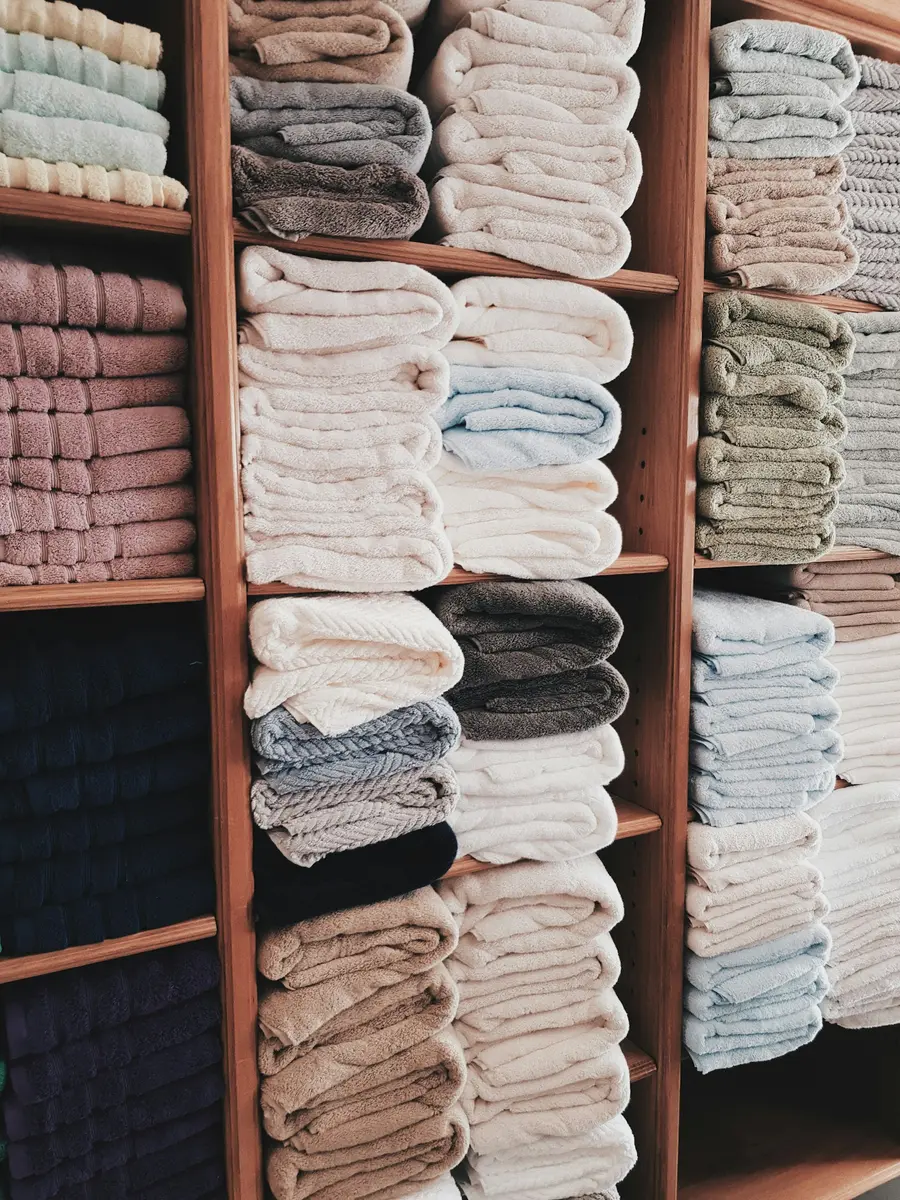
Folded towels and sheets have a way of toppling sideways the moment you pull one out. Clear acrylic shelf dividers stand upright on the shelf and hold each stack in its own lane, so a tall pile of towels stays tall and neat. Professional organizers recommend them for exactly this job, and they are one of the most practical hall closet organization ideas for linen storage.
Dividers cost about $12–$18 for a set of four and need no tools — they just clip or stand on the shelf. Space them to match your folded stacks, one divider per category: bath towels, hand towels, sheets by bed size, and spare pillowcases. Label the shelf edge under each stack so everyone puts things back in the right lane.
Materials and cost: set of 4 acrylic shelf dividers ($12–$18), shelf-edge labels ($5). Total: about $20–$25.
Fold linens to the same width every time so the stacks stay even. A simple trick is to fold each towel around a piece of cardboard cut to your shelf depth, then remove the cardboard — every stack comes out identical. Store sheet sets inside their own matching pillowcase so the set never splits up.
Tip: Keep one divider lane empty for the clean laundry that is waiting to be put away. It stops fresh towels from landing on top of a random stack.
Variation: If acrylic feels too modern for your style, use woven baskets as dividers instead. One basket per linen type holds the stack upright and looks warmer on an open shelf.
12. Give Each Person a Grab-and-Go Bin
In a busy household, the hall closet fails because everyone dumps their things in one shared pile. The fix is personal: one labeled grab-and-go bin per person, sitting on an easy-to-reach shelf. Each bin holds that person’s daily gear — gloves, hat, sunglasses, sports practice items, or the dog-walking kit.
Bins keep routines separate, so one person’s clutter never buries another person’s keys. Kids can find their own things without asking you, and the morning rush gets noticeably calmer. Use sturdy fabric or canvas bins in one matching color, and label each with a name in big, clear letters.
Materials and cost: one bin per person ($6–$10 each), name labels ($5). Total: about $25–$40 for a family of four.
Place the bins at a height each person can reach without a stool. Kids’ bins go lower, adults’ bins go higher. Putting bins within reach is the heart of hall closet organization ideas for families, because a system kids cannot reach is a system they cannot use. Do a weekly five-minute bin reset — usually Sunday evening — where everyone returns stray items to their own bin and tosses out what does not belong.
Tip: Keep the bins small on purpose. A bin that is too big becomes a junk box; a small bin forces each person to keep only what they actually use every day.
Variation: If bins do not suit your closet, use labeled hooks plus one small basket per person on a shelf. The principle is the same: one person, one spot, no sharing.

13. Light It Up with Motion-Sensor LED Strips
Hall closets are dark. The single bulb, if there is one, sits behind a shelf and casts shadows over everything you need. Battery-powered motion-sensor LED strips solve this for about $10–$15, and they make the closet feel twice as big because you can finally see what is inside.
Stick a strip under each shelf, and it lights up the moment you open the door. No wiring, no electrician, and no switch to remember. Most strips run on AA batteries or a USB-rechargeable pack, and a set lasts months between charges. Warm white light looks best — it keeps the closet cozy instead of clinical.
Materials and cost: motion-sensor LED strip lights, 2-pack ($10–$15), batteries or a USB cable. Total: about $10–$15.
Clean the shelf underside with a damp cloth before you stick the strip on, or the adhesive will peel off within days. Good lighting is an underrated part of hall closet organization ideas, since you cannot keep tidy what you cannot see. Place the sensor where the door swing triggers it, and test it with the door closed and open. If the light stays on too long, most strips have a timer setting you can shorten.
Tip: Put the brightest strip on the top shelf, where light is worst. A lit top shelf stops you from shoving things up there and forgetting them.
Variation: If you want a permanent fix, swap the closet bulb for a motion-sensor LED bulb. It screws in like a normal bulb and costs about $8, and it works in any closet with a light socket.
14. Run a Twice-Yearly Seasonal Swap
Even the best-organized closet drifts back to chaos if nothing maintains it. The last of these hall closet organization ideas is a simple habit: a twice-yearly seasonal swap, once in spring and once in fall. You pull out the out-of-season gear, vacuum-bag it, and move the in-season gear to the easy-reach zone.
A swap takes about 30 minutes. Winter coats and heavy scarves go into vacuum bags on the top shelf in spring; light jackets and rain gear move down to the rods. In fall, you reverse it. The routine also doubles as a mini declutter, since you handle every item twice a year and can spot the things nobody used.
Materials and cost: vacuum bags from idea 6 (already owned), one laundry basket for sorting ($5). Total: about $0–$5.
Put the swap dates on your calendar now — the first weekend of April and the first weekend of October work for most climates. Tie the swap to another seasonal chore, like switching the smoke alarm batteries, so you never forget it.
Tip: During each swap, snap a quick photo of the tidy closet. When the closet starts drifting, the photo reminds you what “done” looks like and makes the next reset faster.
Variation: If twice a year feels like too much, do a single New Year reset in January. One good annual reset still beats no maintenance at all, and January is when motivation is highest.
Frequently Asked Questions
How do I organize a small hall closet?
Start by emptying it completely and sorting everything into keep, donate, and toss piles. Then zone the space by routine, add a second hanging rod or an over-the-door rack, and use labeled bins for each category. Small closets improve fastest when every item has one assigned home and nothing is stored “just for now.” That simple sequence is the backbone of most hall closet organization ideas, and it works in closets of any size.
What should I store in a hall closet?
A hall closet should hold what you need on the way in or out: coats, shoes, hats, gloves, scarves, umbrellas, keys, the dog leash, and cleaning supplies. Keep bulky seasonal gear vacuum-bagged on the top shelf, and move anything you use less than once a month somewhere else in the house.
How do I organize a hall closet without adding furniture?
Use the space you already have: a second tension rod below the main rod, an over-the-door rack, adhesive hooks on the walls, hanging shelf organizers, and under-shelf baskets. None of these need furniture or drilling, and together they can double a small closet’s usable storage. These renter-friendly hall closet organization ideas need no drilling and no permanent changes.
How do I keep a hall closet tidy long-term?
Run a five-minute reset every Sunday — return stray items to their bins, hang up fallen coats, and toss anything that drifted in during the week. Then do a full seasonal swap twice a year. Small weekly resets prevent the slow slide back into clutter far better than one big annual cleanout. Consistency is the real secret behind lasting hall closet organization ideas.
What is the best way to organize a linen closet?
Fold linens to a uniform width, sort sheet sets by bed size, and store each set inside its matching pillowcase so it never splits up. Use acrylic shelf dividers to keep stacks upright, label the shelf edge under each stack, and keep everyday towels at waist height with spares up high.
Conclusion
A tidy hall closet is not about buying the fanciest system. It is about giving every item a home, using the space you already have, and keeping the system simple enough that the whole family can follow it. These hall closet organization ideas work because they start with a clean slate, build zones around your real routines, and use affordable tools like baskets, hooks, and vacuum bags.
Pick three ideas and do them this weekend — emptying the closet, zoning it, and adding labeled baskets will change how the space feels by Sunday night. Start with the easiest hall closet organization ideas first, and let the momentum carry you through the rest. Then add one idea a week until the whole list is done. Your mornings will thank you, and your front door will finally open onto calm instead of clutter.
If this guide helped you, save it to Pinterest so you can find it when your closet needs its seasonal swap. Your future self — the one walking out the door on time, keys in hand — will be glad you did.
For more small-space storage inspiration, see our small apartment decor ideas and our small living room decor ideas on a budget. If your entryway needs a seasonal touch too, our halloween entryway decor ideas show how to style the space around the closet.
For more professional guidance, The Spruce shares 32 small closet storage ideas including hall closet overhauls with bins, and HGTV’s professional organizers explain home organization ideas such as rod extenders and shelf dividers.




Leave a Reply