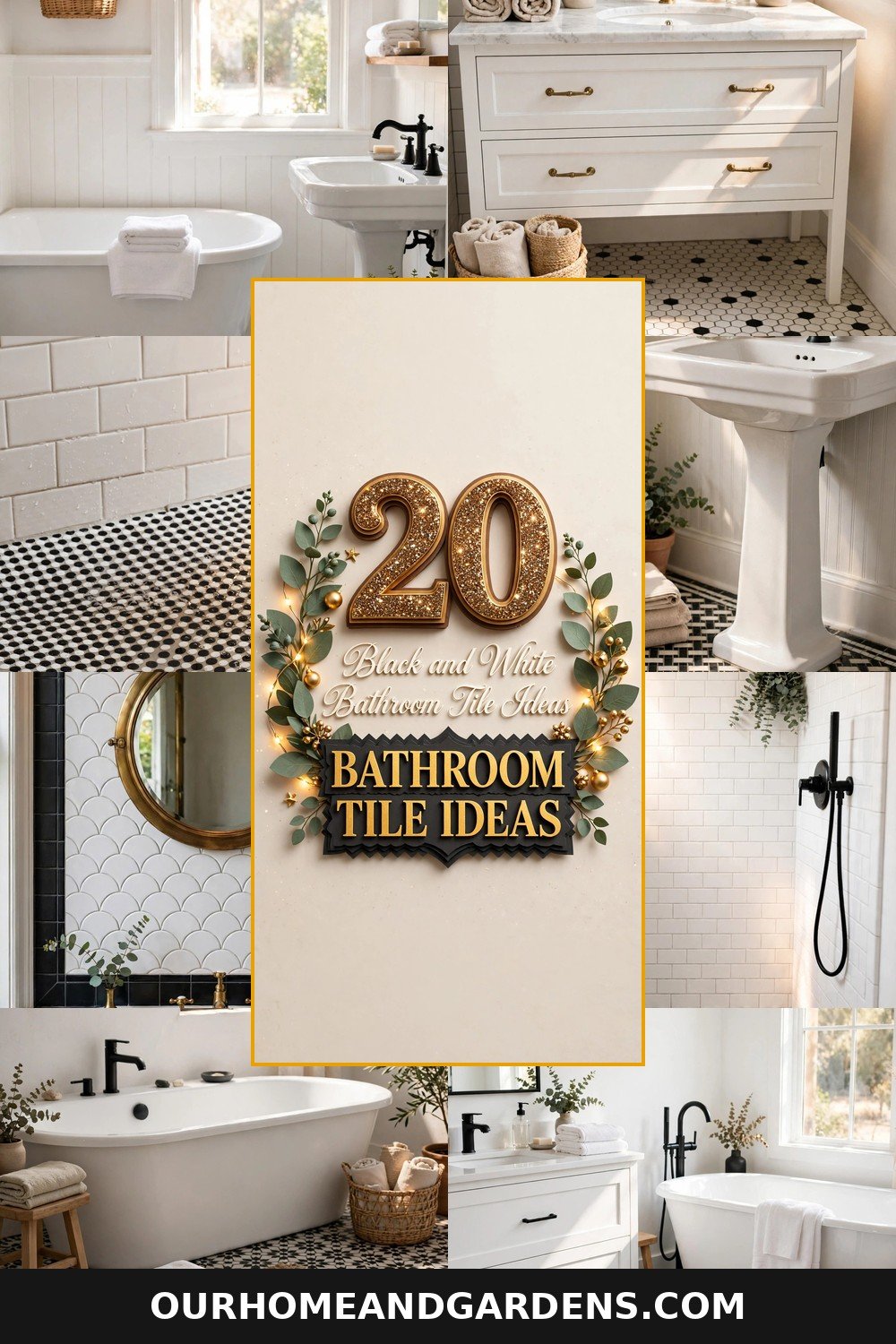
Black and White Bathroom Tile Ideas: 20 Stunning Looks
If you want a bathroom that looks expensive, stays timeless, and never feels dated, black and white bathroom tile ideas are your safest — and boldest — bet. This classic pairing has survived every trend cycle for a reason: the contrast creates instant structure, makes small rooms feel sharper, and pairs with almost any fixture finish you already own. Whether you are planning a full renovation or just refreshing one wall, these 20 ideas will help you pick a tile look you will still love in ten years.
Before you start, keep one rule in mind: let the tile be the star. When the pattern is strong, keep everything else calm — plain towels, one metal finish, and a simple mirror. That restraint is what makes black and white bathrooms feel designed rather than busy. If you are working with a tight budget, start with the floor or a single accent wall; you can find more budget-friendly room refreshes in our guide to small bathroom decor ideas on a budget.
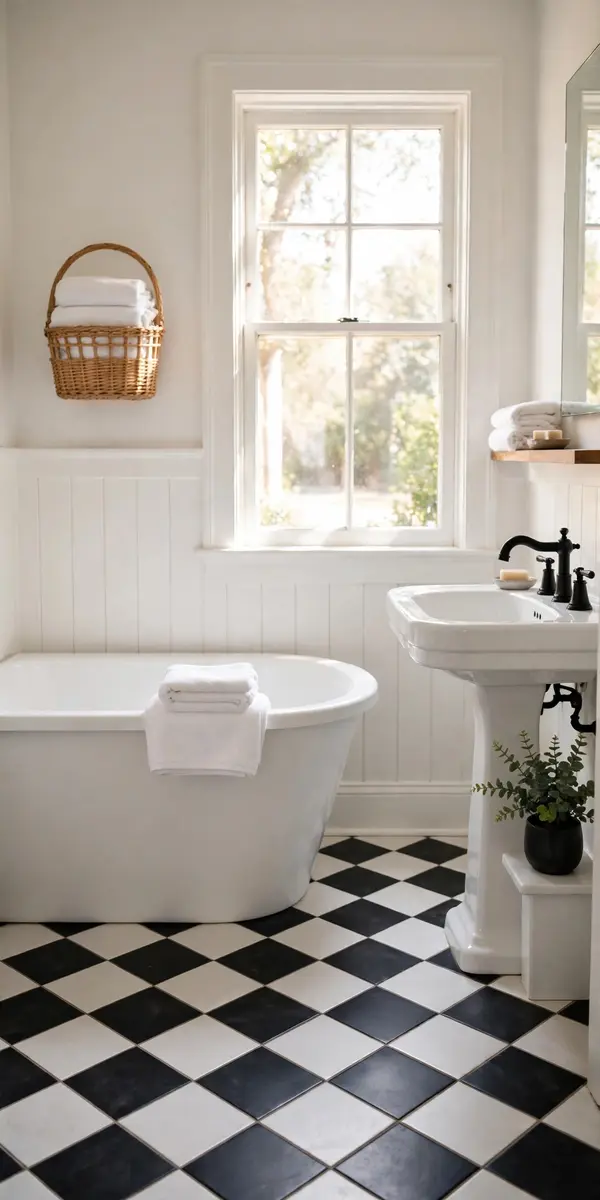
1. Classic Checkerboard Floors — Black and White Bathroom Tile Ideas That Never Date
Nothing says timeless quite like a checkerboard floor. Alternating black and white squares bring instant drama to a bathroom, and the repeating grid makes the floor feel intentional rather than random. It works in a 1920s home, a modern apartment, and everything in between, which is why it keeps coming back — the checkerboard comeback is one of the biggest bathroom trends of 2026.
Materials and cost: Standard 12×12-inch ceramic checkerboard tiles run about $3–$7 per square foot, plus $8–$15 per square foot for professional installation. A small bathroom floor typically costs $400–$900 in materials.
To lay it, start from the center of the room and work outward so the pattern stays symmetrical at the doorway. Dry-lay a few rows first to check that you do not end up with a sliver of tile along the tub. Use spacers for even grout lines, and seal the grout once it cures.
Tip: Lay the checkerboard on the diagonal in a small bathroom — it pulls the eye across the room and makes the floor feel wider.
Variation: Try oversized 18-inch squares for a modern, calmer take, or tiny 4-inch squares for a vintage diner feel.
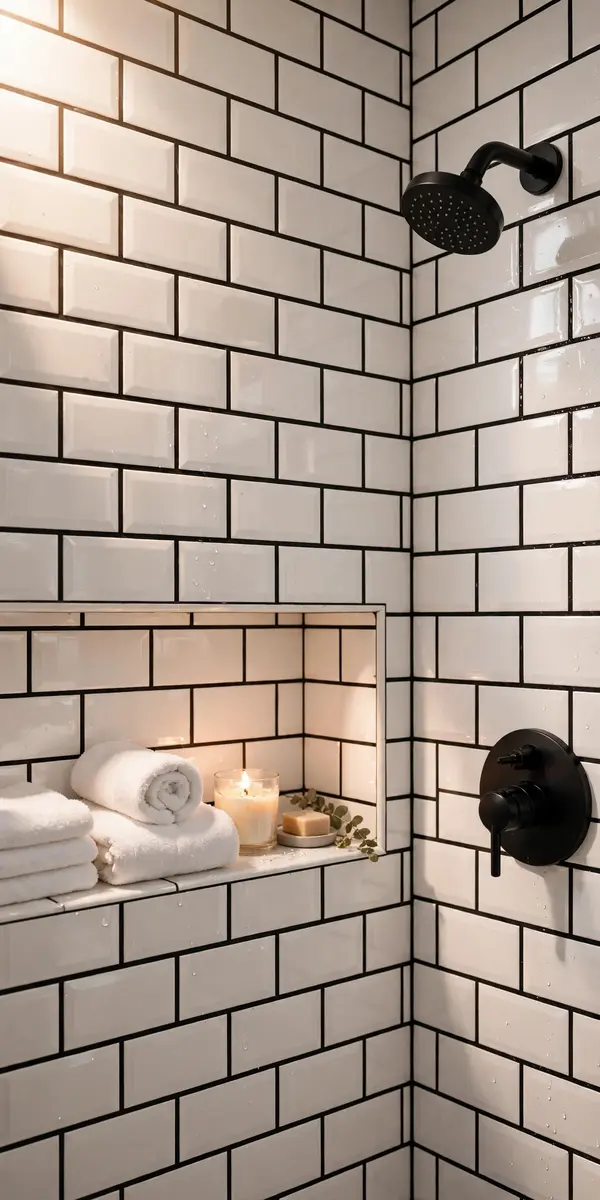
2. White Subway Tile with Black Grout
White subway tile is the workhorse of bathroom design, but black grout turns it from plain to graphic. The dark lines outline every brick, giving your shower or backsplash a crisp, drawn-on look that photographs beautifully. It is also one of the cheapest ways to get a high-contrast bathroom without buying patterned tile.
Materials and cost: Classic 3×6-inch white subway tile costs $2–$5 per square foot; black grout adds only a few dollars per bag. Expect $300–$700 for a standard shower surround in materials.
Set the tiles in a running-bond (brick) pattern, keeping the grout lines consistent at 1/16 to 1/8 inch. Wipe grout haze off quickly — black grout can stain white tile if it dries on the surface. Seal the grout to slow staining.
Tip: Choose a dark charcoal grout instead of pure black if you want the same graphic effect with less visible water spotting.
Variation: Stack the subway tiles vertically instead of horizontally for a taller, more modern feel.
3. Black and White Hexagon Tile Floors
Hexagon tiles — the honeycomb shape — add geometry without shouting. A black and white hex floor feels playful and modern, and the small tiles give your feet extra grip in a wet shower. Mix mostly white hexes with scattered black ones for a confetti effect, or split the floor into bold black and white zones.
Materials and cost: Porcelain hex mosaic sheets cost $6–$12 per square foot. A shower floor or small bathroom floor runs $500–$1,200 in materials.
Because hex sheets come pre-mounted on mesh, installation is faster than laying individual tiles. Cut sheets to fit around the drain, and use a mid-gray grout so the pattern reads clearly without harsh lines. Check the slope toward the drain before you grout.
Tip: In a shower, use smaller 1-inch hexes — more grout lines mean better slip resistance underfoot.
Variation: Create a gradient by fading from solid black hexes at the drain to solid white at the edges.
4. Black and White Marble Walls
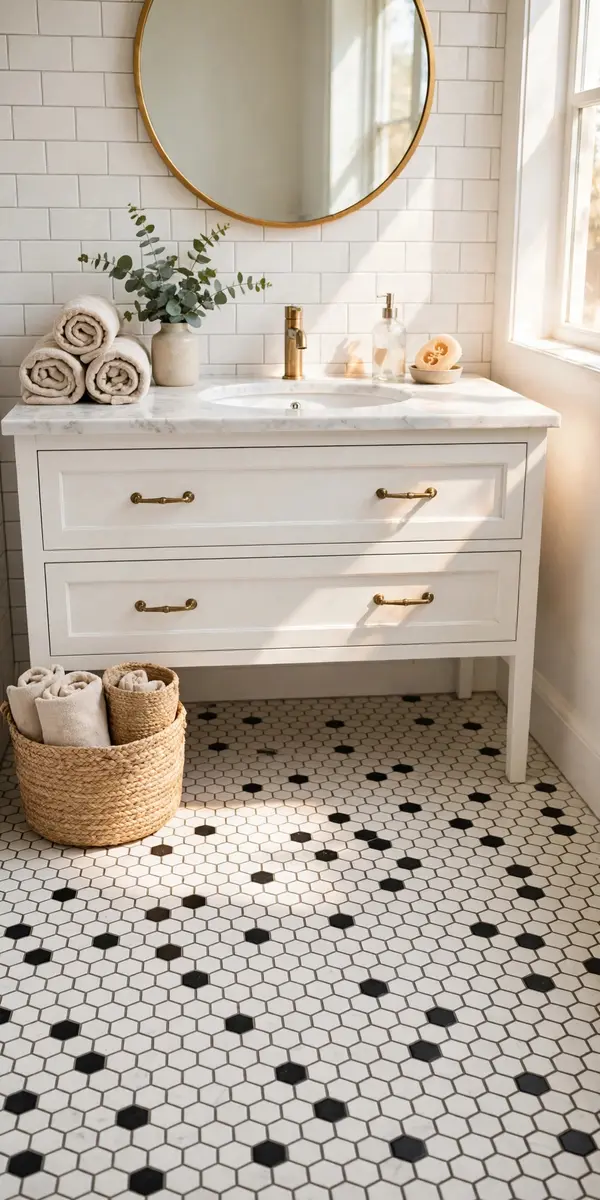
Few materials feel as luxurious as marble. White marble with black veining, or black marble with white veining, turns a plain bathroom wall into a piece of art. It pairs beautifully with brass or gold fixtures, which warm up the cool contrast — a trick also used in our black marble bathroom ideas.
Materials and cost: Marble tile runs $10–$25 per square foot, and a feature wall can cost $1,500–$4,000 installed. Porcelain marble-look tile is a smart alternative at $4–$9 per square foot.
Book-match the veining across the wall where possible so the pattern flows like one slab. Seal marble before and after grouting, since it stains more easily than porcelain. Wipe up hair dye and colored products quickly.
Tip: Seal marble twice a year in a bathroom — unsealed marble around a sink will show every splash.
Variation: Use marble-look porcelain on the floor and real marble only on the vanity backsplash to get the look for less.
5. Penny Round Mosaic Floors
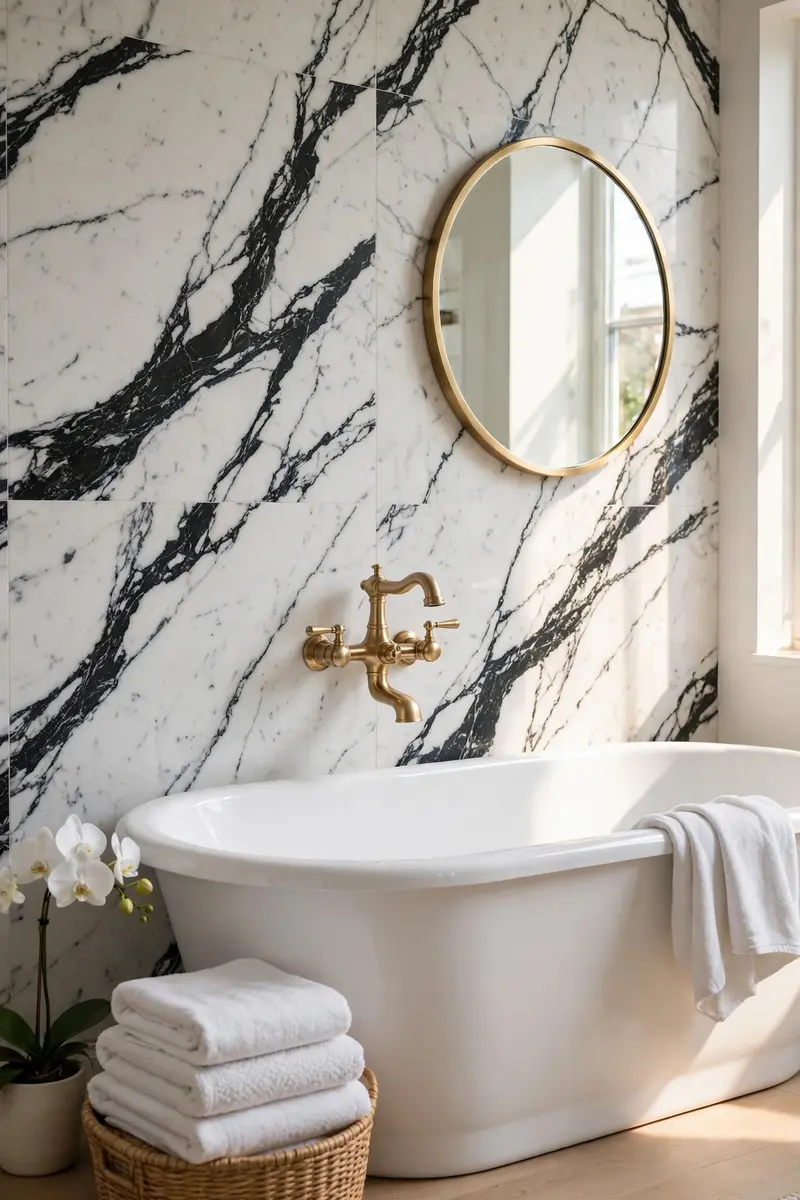
Penny rounds — tiny circular tiles — are a vintage favorite that is trending again for 2026. Their small scale adds texture and grip, and a mix of black and white pennies can form dots, stripes, or even a simple border pattern. They are especially good for curved shower floors, where larger tiles would need awkward cuts.
Materials and cost: Penny round mosaic sheets cost $7–$14 per square foot. Budget $600–$1,300 for a bathroom floor in materials.
Lay the sheets with consistent spacing, pressing them evenly into thinset so no tile sits proud. Grout color changes the whole look: white grout keeps it soft, black grout makes the circles pop. Seal well, since mosaic floors have a lot of grout to protect.
Tip: Order 10% extra penny tile — the small sheets are easy to miscut around drains and corners.
Variation: Use all-white pennies with a single black penny border, or spell out a simple motif like a star in the center of the floor.
6. Bold Black Accent Wall
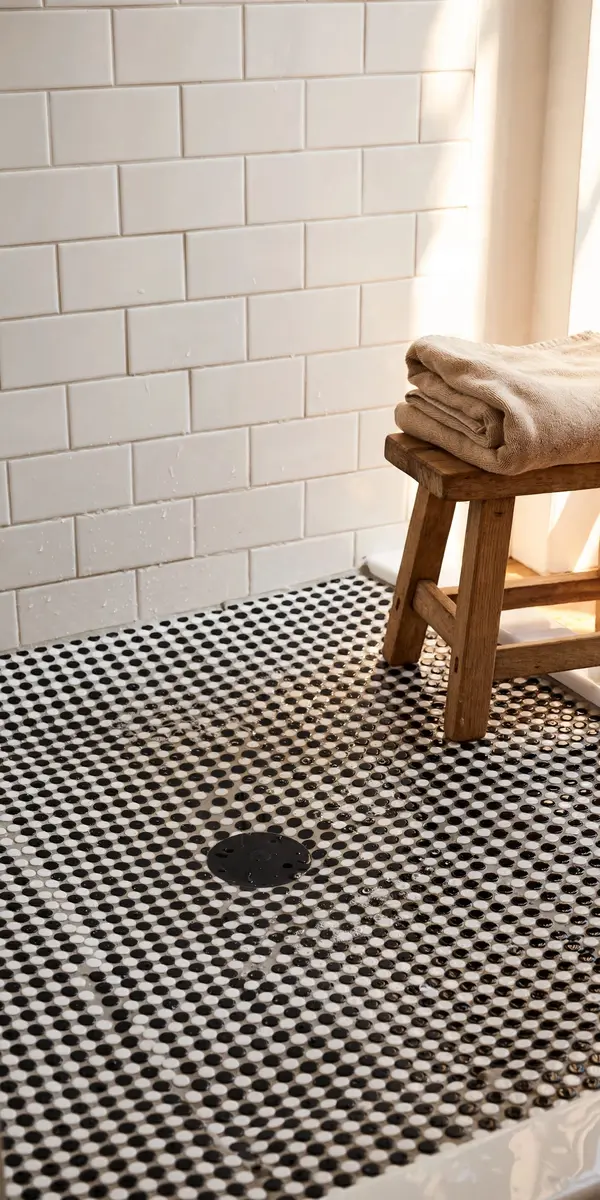
If an all-black bathroom feels too dark, try one black tile wall and keep the rest white. A matte black subway or large-format tile wall behind the vanity or tub creates a dramatic focal point, while the white surfaces around it keep the room bright. Add a round mirror and warm lighting so the black wall glows instead of looming.
Materials and cost: Matte black porcelain tile costs $4–$10 per square foot. One accent wall typically runs $400–$1,000 in materials.
Choose matte over glossy black for the wall — it hides fingerprints and water spots far better. Pair it with white grout if you want the brick pattern to show, or matching black grout for a seamless slab look. Light the wall with sconces or a picture light so the texture reads.
Tip: Never pair a black accent wall with a black floor in a windowless bathroom — you need at least one light surface to bounce light around.
Variation: Tile only the lower half of the wall in black and paint the upper half white for a classic wainscot effect.
7. Basketweave Tile Pattern
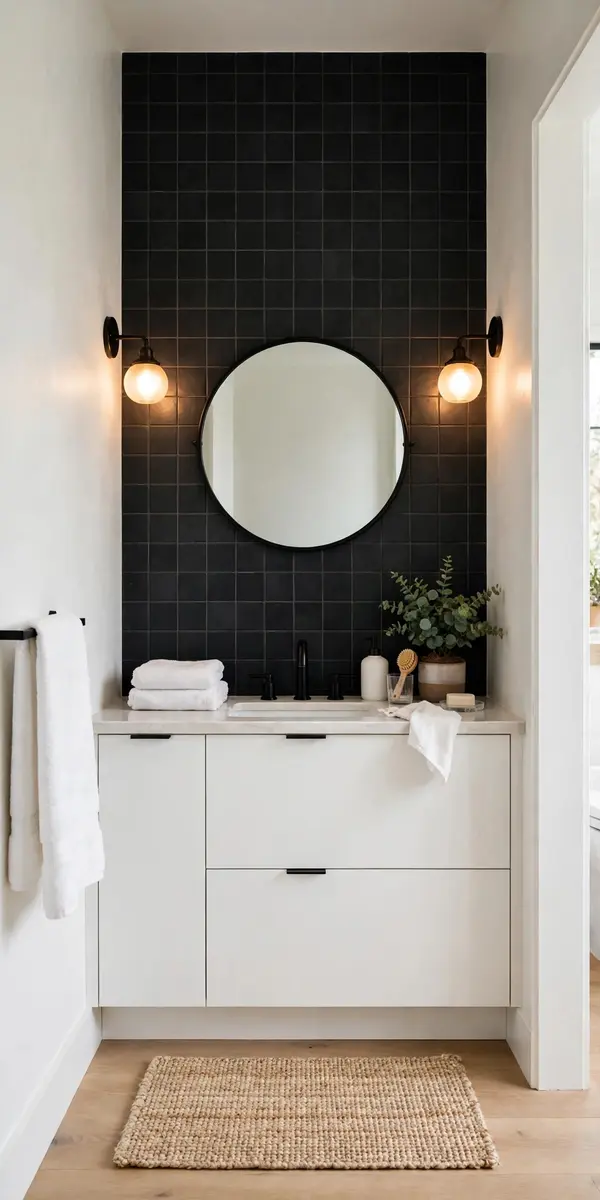
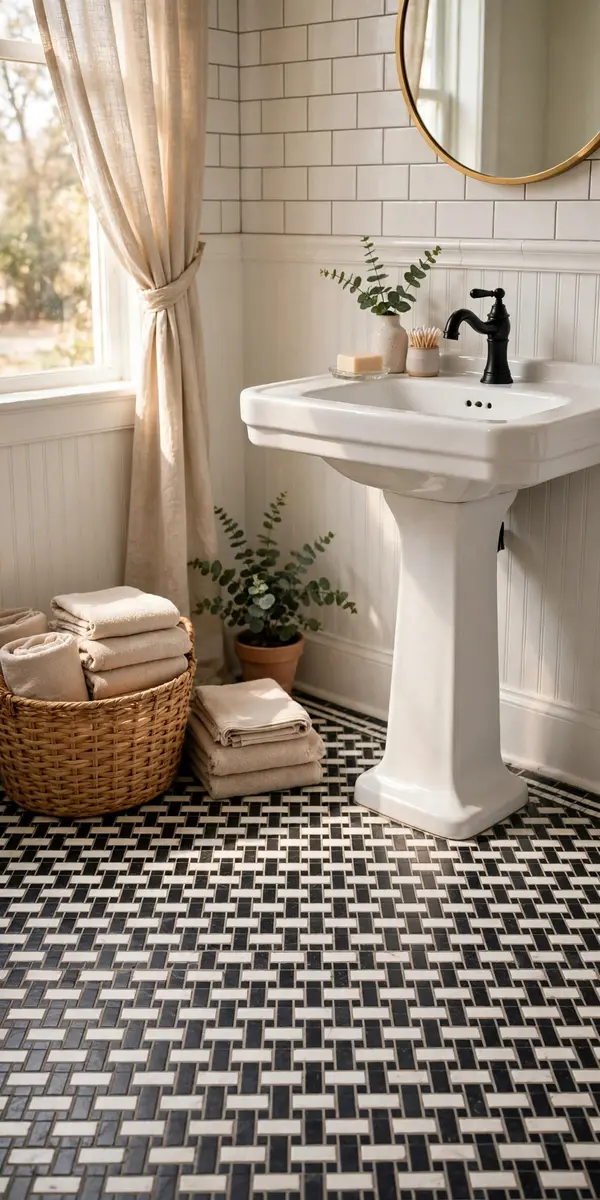
Basketweave looks like woven fabric made from tile: small rectangles woven around tiny square dots. In black and white it feels both vintage and refined, and it is one of the most pinned classic patterns for a reason. It works beautifully as a floor, and as a backsplash it adds detail without stealing attention from the mirror.
Materials and cost: Basketweave mosaic sheets cost $8–$15 per square foot. Expect $700–$1,400 for a floor in materials.
Because the pattern is intricate, buy sheets from the same dye lot so the whites match. Dry-lay the sheets first to align the weave, and use white or light gray grout so the woven effect stays visible. This is a pattern worth hiring out if you have never tiled before.
Tip: Keep the rest of the room simple with basketweave — plain white walls and one black fixture finish let the weave shine.
Variation: Swap the dot color to black on a white weave for a bolder, more graphic version.
8. Herringbone Shower Walls
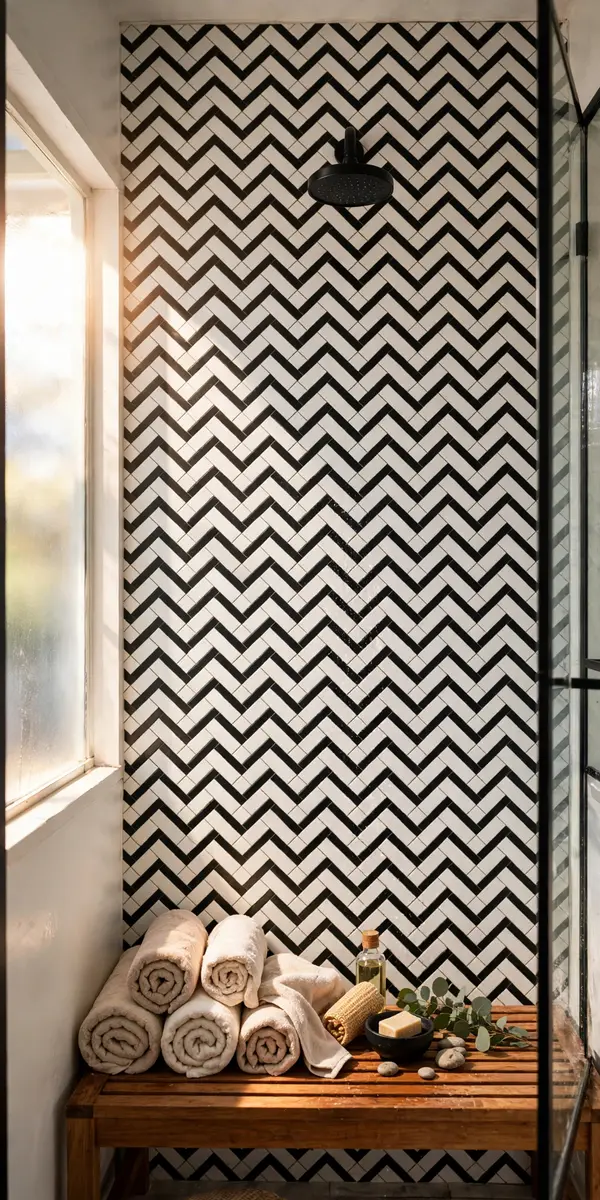
Herringbone — rectangles laid in a zigzag — adds movement to a shower wall like nothing else. In black and white, the zigzag becomes a bold graphic statement, especially when you use white tiles with black grout or alternate black and white pieces. It makes a plain rectangular shower feel custom and expensive.
Materials and cost: Subway or plank tiles for herringbone run $3–$8 per square foot, but labor is higher because of the cuts — budget 20–30% more for installation than a straight stack.
Start herringbone from the center of the wall so the pattern stays balanced, and cut carefully at the edges. Use a laser level or a marked centerline; herringbone drifts fast if the first rows are off. Keep the grout color consistent for a clean finish.
Tip: Practice one herringbone panel on the floor first — it is much easier to learn the pattern before thinset is involved.
Variation: Run herringbone on the floor instead, with plain white walls, for a quieter version of the same energy.
9. Art Deco Fan and Scallop Tiles
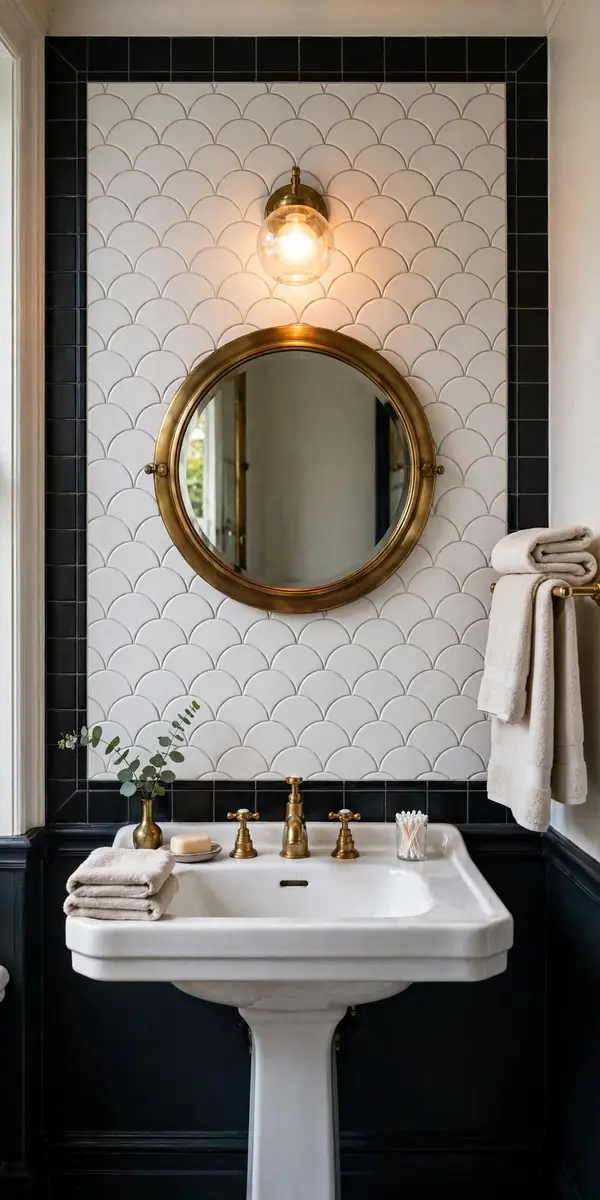
Art Deco bathrooms are all about glamour: scallop (fish scale) tiles, fan shapes, and bold geometric borders in black and white. A scalloped wall in white with a black border, or black scallops against white, feels like a 1920s hotel bathroom — and it is a look that never reads as generic builder-grade.
Materials and cost: Scallop mosaic sheets cost $9–$16 per square foot. A feature wall runs $800–$1,800 in materials.
Scallops show every uneven grout line, so take your time spacing the sheets and use a grout color close to the tile for a forgiving finish. Pair the tile with a round mirror, brass fixtures, and a globe light to complete the Deco mood.
Tip: Limit scallop tile to one wall or the shower — a whole room of scallops can feel overwhelming fast.
Variation: Use black scallops only as a border row above white subway tile for a subtle Deco nod.
10. Black and White Striped Walls
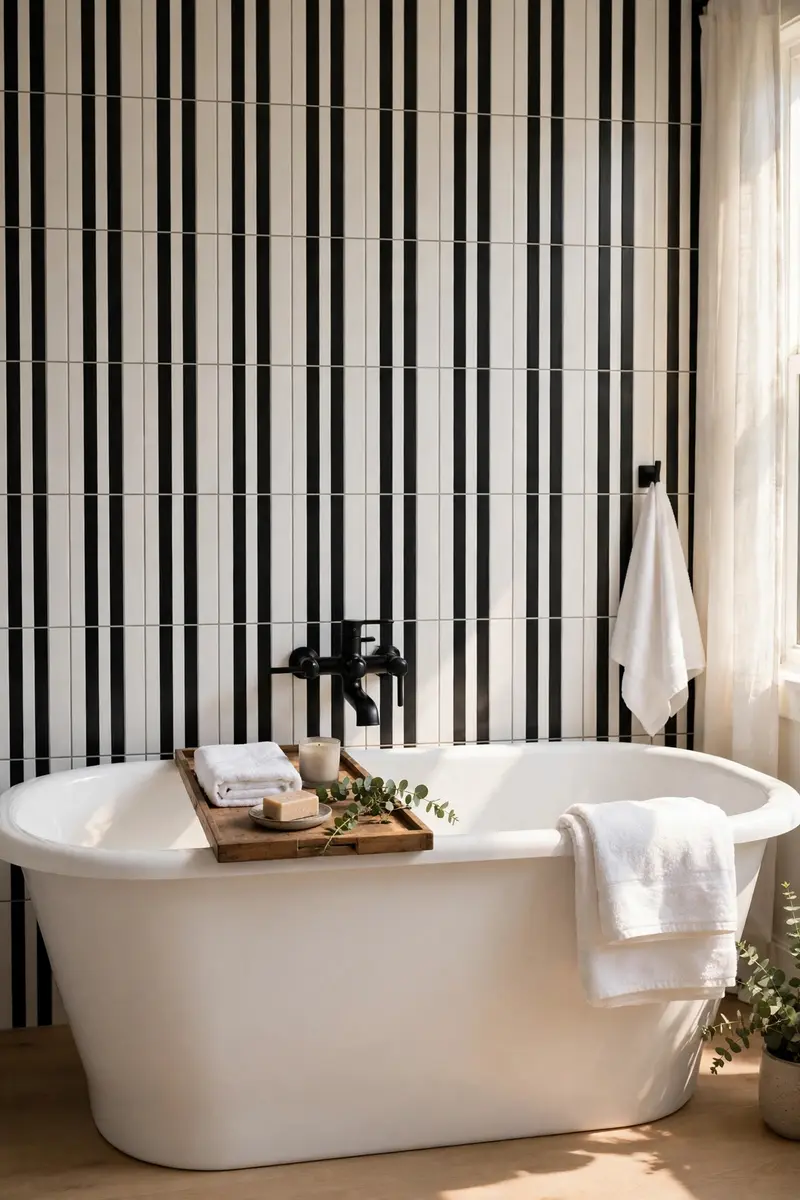
Vertical stripes make low ceilings feel taller, and black and white stripes do it with maximum punch. You can build stripes from alternating columns of subway tile, or paint one color and tile the other. A striped wall behind the tub or vanity becomes an instant focal point that costs little more than plain tile.
Materials and cost: Subway tile for stripes costs $2–$6 per square foot. A striped accent wall runs $300–$800 in materials.
Plan your stripe widths on paper first — even widths look orderly, while one wide black stripe between narrow white ones feels more modern. Use a level for every column, since a drifting stripe is obvious. Keep the other walls plain white.
Tip: Stop the stripes at chair-rail height and paint above in white if full-height stripes feel too bold for your space.
Variation: Try horizontal stripes on a short wall to make a narrow bathroom feel wider.
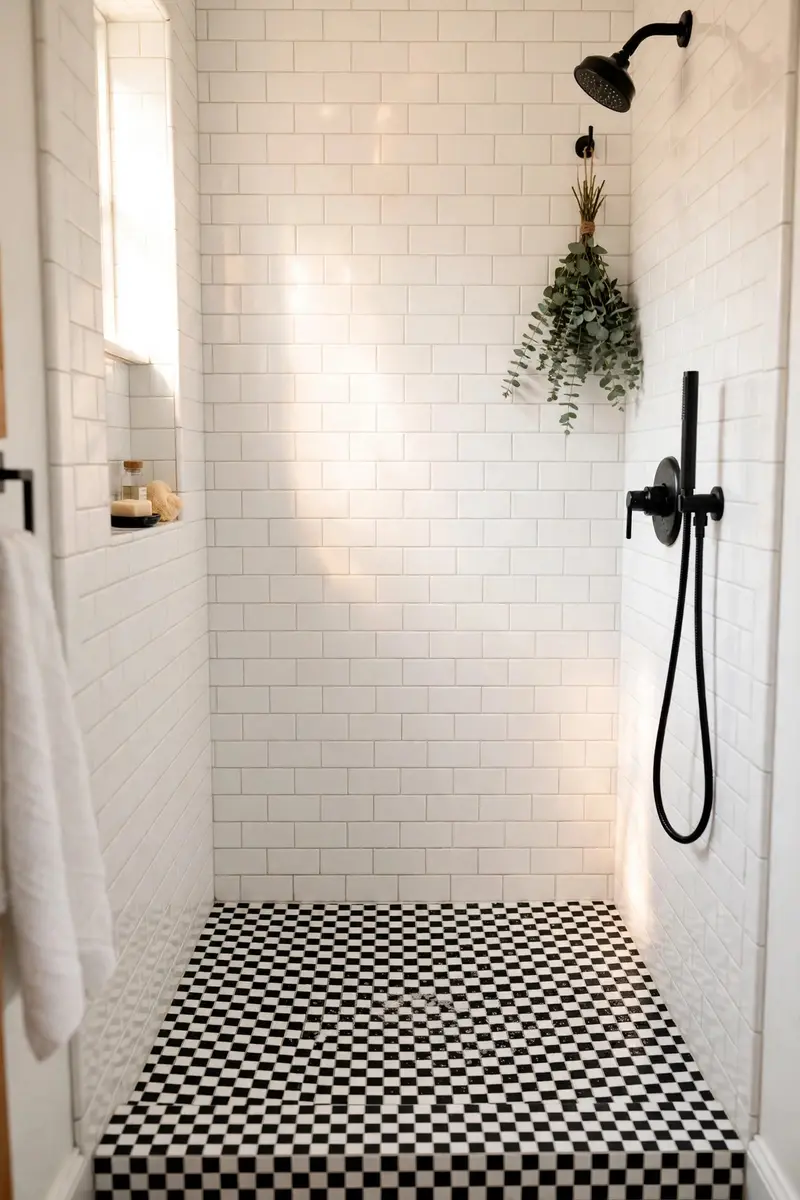
11. Checkerboard Shower Floor
Take the checkerboard off the main floor and into the shower, where it turns a daily routine into a design moment. A black and white checkerboard shower floor pairs perfectly with plain white wall tiles, and the small squares give excellent grip. It is also an easy way to add pattern without committing to it across the whole room.
Materials and cost: Small-format checkerboard mosaic costs $6–$12 per square foot. A shower floor runs $300–$700 in materials.
Use mosaic sheets rated for shower floors and slope them correctly toward the drain. Epoxy grout is worth the extra cost here — it resists staining and mold far better than cement grout in a constantly wet area. Rinse the floor after showers to keep grout bright.
Tip: Match your shower curb tile to the checkerboard so the pattern flows instead of stopping abruptly at the threshold.
Variation: Use a checkerboard of marble-look tiles for a softer, more luxurious version.
12. Black Vanity Backsplash with White Walls
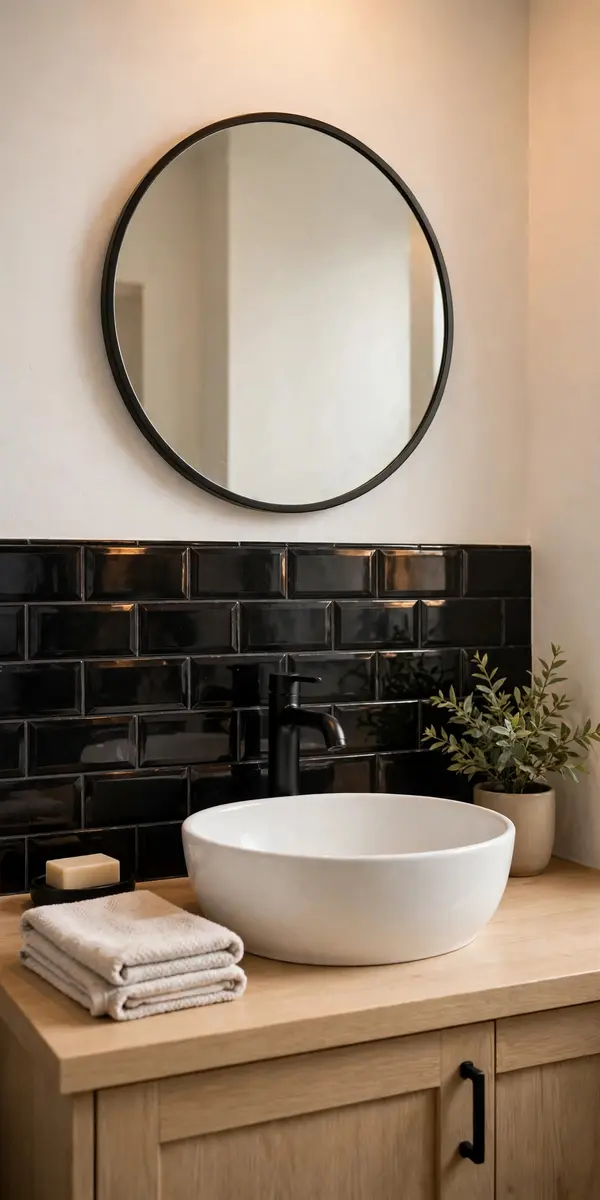
Sometimes the smartest tile move is a small one. A black tile backsplash behind the vanity — subway, hex, or fish scale — anchors the sink area and hides splashes, while white walls keep the room airy. It is a weekend-friendly project and a great first step if a full retile feels too big.
Materials and cost: Backsplash tile costs $3–$9 per square foot; most vanity backsplashes need only $100–$300 in tile.
Remove the old backsplash carefully, patch the wall, and tile from the countertop upward. Seal the bottom edge with silicone where tile meets counter to stop water creeping behind. Match the faucet finish to the tile’s mood — matte black fixtures disappear beautifully into a black backsplash.
Tip: Run the backsplash all the way to the mirror, not just a short 4-inch strip — the taller run looks far more intentional.
Variation: Use glossy black tiles for the backsplash so they reflect light and the mirror’s glow.
13. Moroccan and Geometric Patterned Tile
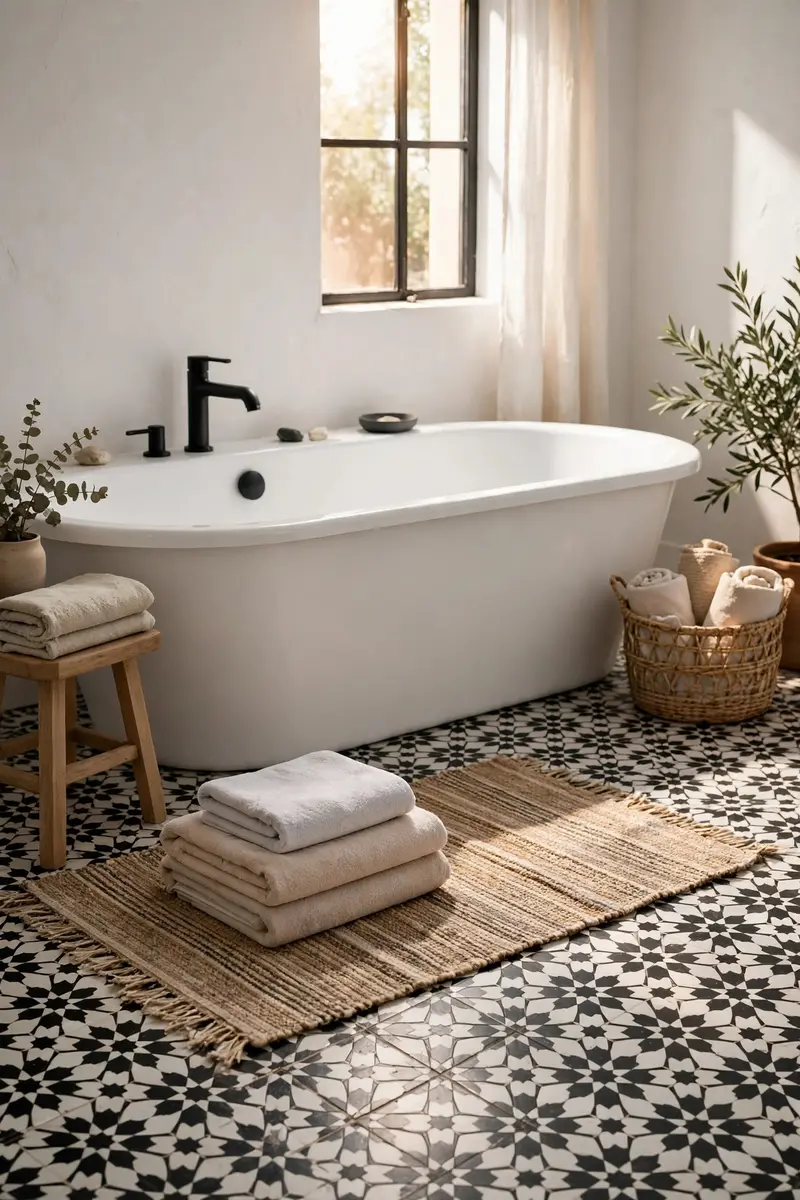
Moroccan-inspired and geometric patterned tiles in black and white add artistry without color risk. A patterned floor or feature wall feels handcrafted and global, and the monochrome palette keeps it from clashing with towels or art. Use it as one statement surface and keep the rest of the room quiet.
Materials and cost: Patterned cement-look porcelain costs $7–$14 per square foot. A patterned floor runs $700–$1,500 in materials.
Patterned tiles must be laid with the pattern orientation consistent — check the arrows on the back of each tile. Dry-lay a section first to confirm the repeat looks right. Seal cement-look tiles before grouting to prevent grout staining the pattern.
Tip: Pick one patterned tile per bathroom — two competing patterns in black and white will fight each other even without color.
Variation: Use patterned tile only inside a shower niche or as a border band for a low-commitment dose of pattern.
14. Tile Rug Inset on the Floor
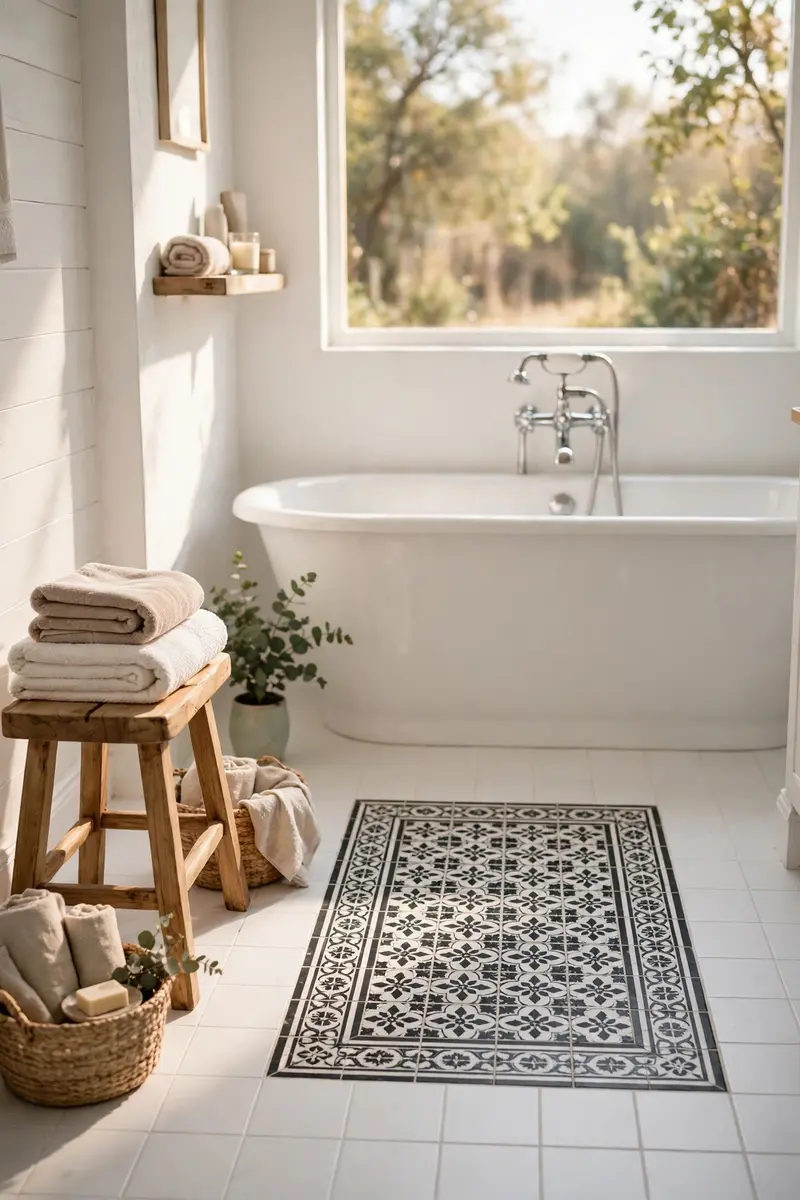
A tile rug is a decorative inset — a framed rectangle of patterned tile set into a plainer floor — and it is one of the most saved Pinterest ideas for bathrooms right now. It gives you a focal point underfoot without tiling the whole floor in pattern, and it works beautifully in front of a freestanding tub or vanity.
Materials and cost: Patterned tile for the inset costs $8–$15 per square foot; the surrounding field tile costs $3–$7. A typical inset adds $300–$600 to a floor project.
Frame the inset with a border tile or a contrasting grout line so it reads as a deliberate rug, not a mistake. Plan the inset size around whole tiles to avoid awkward cuts at the border. Keep the field tile a calm white or light gray.
Tip: Center the tile rug on the tub or vanity, not on the room — it should anchor the furniture, just like a real rug.
Variation: Use a checkerboard inset inside a white hex floor for a layered, custom look.
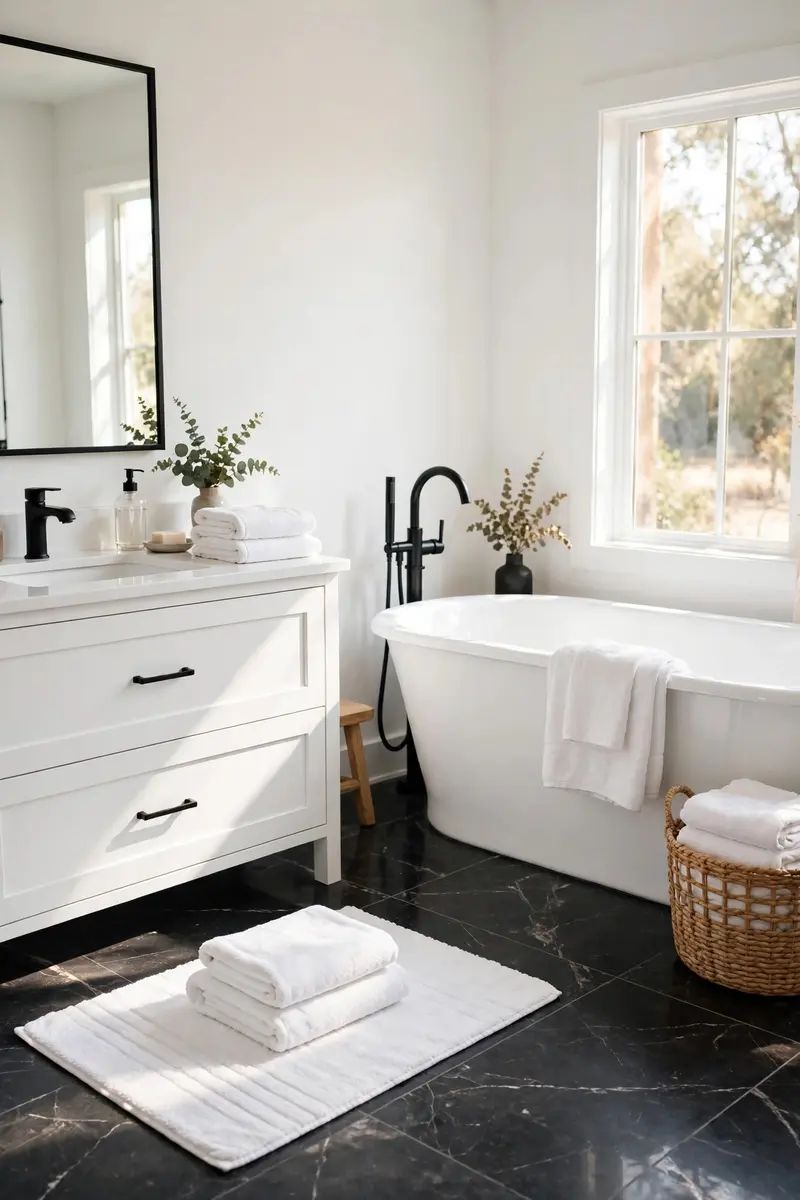
15. Black Marble-Look Floor with White Walls
Flip the usual formula: put drama underfoot with a black marble-look floor and keep the walls bright white. The dark floor grounds the room and makes white fixtures pop, while white walls stop it from feeling cave-like. It is a bold move that still feels classic because the palette never changes.
Materials and cost: Black marble-look porcelain costs $5–$11 per square foot. A bathroom floor runs $500–$1,100 in materials.
Use large-format tiles (12×24 inches or bigger) so the floor reads as stone slabs rather than busy grid. Match the grout to the tile color to keep the slab effect. Add a white rug or bath mat for contrast and warmth underfoot.
Tip: Add under-vanity lighting or a light-colored bath mat — a dark floor needs one bright note at floor level to feel balanced.
Variation: Pair the black floor with white marble-look wall tiles for a two-marble room that still reads as one palette.
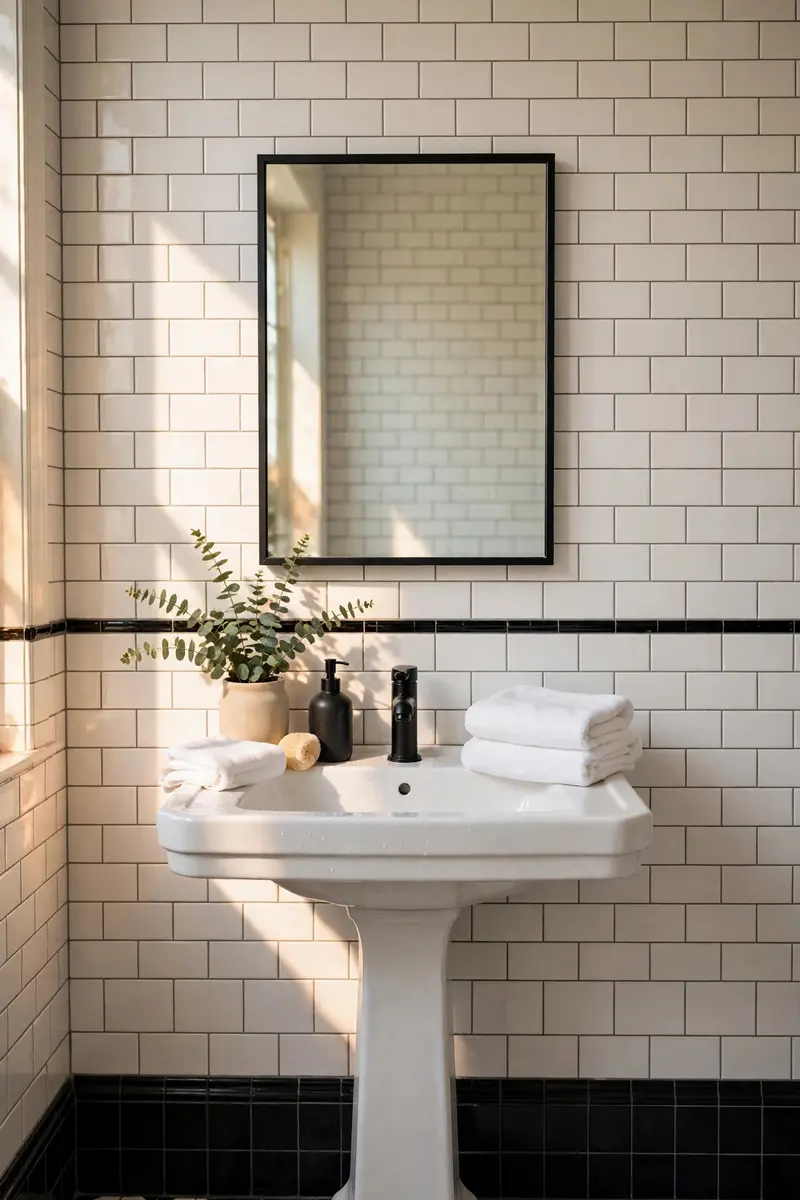
16. White Tile with Black Border Accents
A black border is the quiet luxury move: a row of black pencil tiles, a black chair rail, or a black baseboard tile framing plain white walls. It adds definition and a finished, tailored feel without any bold pattern. This is the trick used in many historic bathrooms, and it explains why those rooms still look good a century later.
Materials and cost: Black trim and pencil tiles cost $1–$4 per linear foot. A full bathroom border runs $100–$300 in materials.
Install the border at a consistent height — chair-rail height (about 32–36 inches) is classic — and miter the corners neatly. Use black baseboard tile at floor level too, so the room feels framed top and bottom. Keep grout lines tight and even.
Tip: Match your black border to your mirror frame and faucet finish for a pulled-together look with almost no effort.
Variation: Use a double border — a thin black line above a thicker black band — for a more detailed, historic feel.
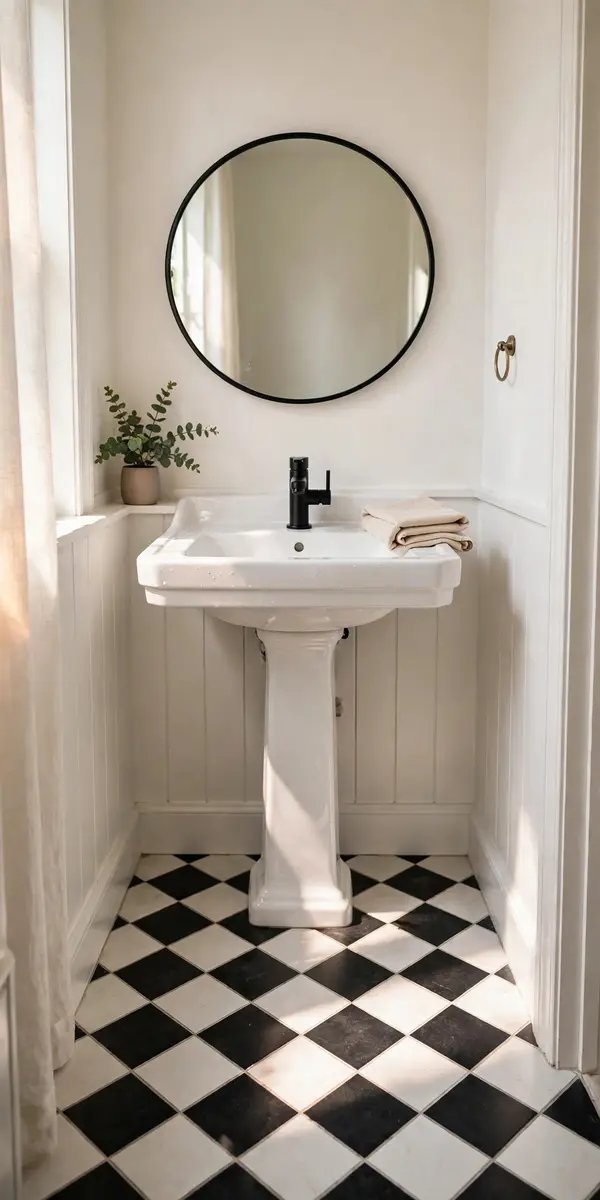
17. Black and White Diamond (Harlequin) Layout
Rotate the checkerboard 45 degrees and you get diamonds — the harlequin layout. It feels more dynamic and a little more glamorous than a straight checkerboard, and it is a great choice for a powder room or a bathroom where you want the floor to be the jewelry. Pair it with a pedestal sink so the pattern stays visible.
Materials and cost: Square tiles laid on the diagonal cost the same as checkerboard ($3–$7 per square foot), but labor runs higher due to edge cuts. Budget $600–$1,200 installed for a small floor.
Lay diamonds from the center outward, and expect more waste — order 15% extra for cuts. A light gray grout softens the diamond edges; black grout makes them razor-sharp. Seal well, especially in a powder room with heavy guest traffic.
Tip: In a tiny powder room, use small diamonds (4–6 inches) — large diamonds can overwhelm a room you only see in glimpses.
Variation: Use diamond tiles only in the entry zone of the bathroom, with plain tile beyond, to create a threshold moment.
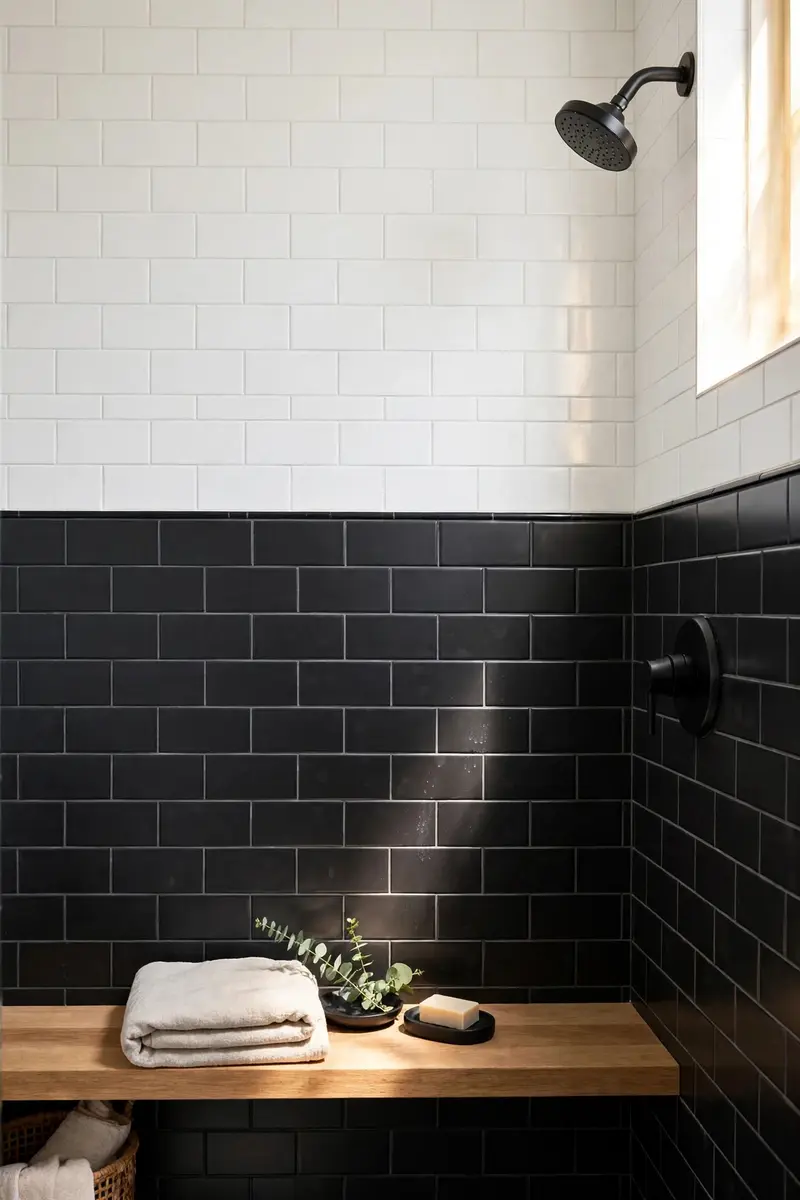
18. Half-Black, Half-White Shower Walls
Split your shower wall horizontally: black tile below, white tile above (or the reverse). The split adds architecture to a plain shower and lets you enjoy black tile without darkening the whole space. A black pencil border at the split line makes the transition look deliberate and finished.
Materials and cost: Subway tile in two colors costs $2–$6 per square foot. A split shower wall runs $400–$900 in materials.
Keep the split line perfectly level — a laser level is essential here, since a wavy line ruins the effect. Choose which color goes below based on light: black below grounds the room, white below brightens a dark shower. Add the border trim before grouting.
Tip: Put black on the bottom half if your shower has a window — the white upper half will bounce the daylight around.
Variation: Split the wall vertically instead, with black on the showerhead wall only, for a bolder asymmetric look.
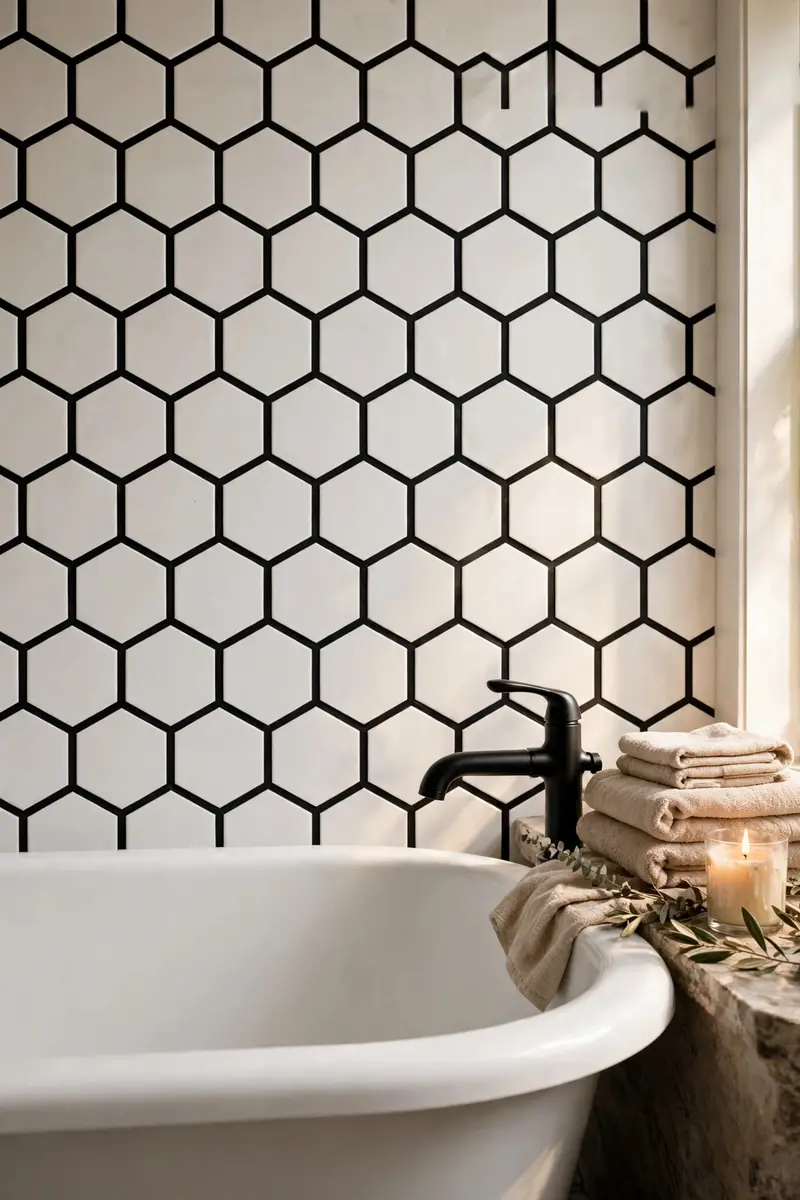
19. Black Grout with White Hexagon Walls
White hexagon tiles on the wall with black grout are a modern classic: the hex shape adds texture, and the black grout outlines every tile like a honeycomb drawing. It works on a full shower wall, a backsplash, or a single feature wall behind the tub. For more small-space wall inspiration, see our bathroom wall decor ideas.
Materials and cost: White hex mosaic costs $5–$11 per square foot. A feature wall runs $500–$1,100 in materials.
Black grout on white hexes shows every uneven gap, so spacing must be consistent — mosaic sheets help. Wipe haze promptly and seal the grout, since black grout in a shower sees constant water. If you love the look but fear the upkeep, use dark gray grout instead.
Tip: Test a grout sample on one sheet before committing — black grout reads much darker once sealed than it looks in the bag.
Variation: Reverse it: black hexes with white grout for a moodier wall that still shows the honeycomb shape.
20. Mixed Matte and Gloss Finishes
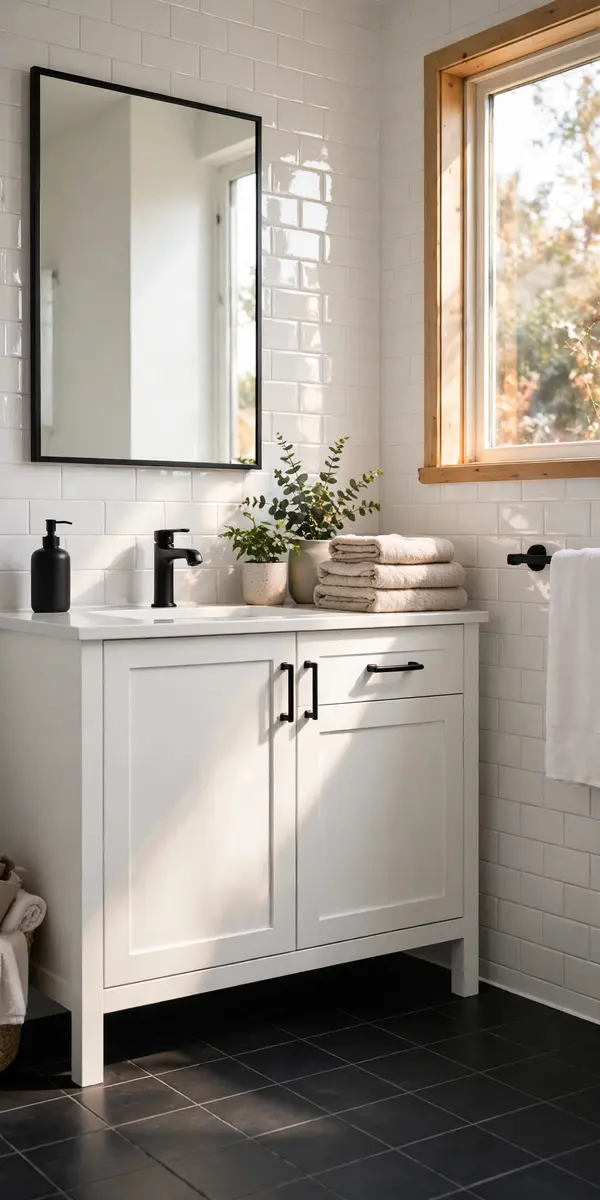
Here is the subtlest idea on the list: use the same black and white palette but mix matte and glossy finishes. Matte black floor tiles with glossy white wall tiles, or glossy black accents on matte white walls, create depth without any new color or pattern. Light plays differently across each finish, so the room feels layered even though the palette is simple.
Materials and cost: Mixing finishes costs no more than a standard tile job — matte and gloss tiles in the same line are usually priced identically ($3–$9 per square foot). Budget $500–$1,200 for a floor-and-wall combination.
Plan the finish split before you buy: glossy tiles suit walls and backsplashes (they reflect light), while matte tiles suit floors (they grip better and hide water spots). Keep the grout color consistent so the finish contrast, not the grout, does the talking.
Tip: Put the glossy finish where light hits it — opposite the window or under sconces — so the shine actually shows.
Variation: Mix finishes within one pattern, like matte black checkerboard squares with glossy white ones, for a checkerboard with a secret twist.
Frequently Asked Questions
Does black and white tile make a small bathroom look bigger?
Yes, when you use it the right way. A repeating pattern like checkerboard or hex pulls the eye across the whole floor, which makes the room feel wider. Keep walls mostly white and let the black act as an accent — a fully black small bathroom will feel smaller, but a black-and-white balance usually feels larger than an all-white room because the contrast adds depth. Designers at Apartment Therapy note the same effect in their small bathroom ideas, where white subway tile with black grout and black-and-white penny floors make compact bathrooms appear larger.
What grout color works best with black and white tile?
It depends on the look you want. White grout keeps the room soft and bright but shows dirt faster. Black grout makes patterns razor-sharp but needs sealing and shows water spots. Mid-gray grout is the forgiving middle ground — it defines the pattern without demanding constant cleaning, and it hides dirt between deep cleans. For shower floors, epoxy grout in gray is the most practical choice.
Is black and white bathroom tile hard to keep clean?
Not harder than any other tile, but the contrast shows dirt honestly. White tiles show grime and black tiles show water spots and soap scum, so you will notice mess sooner — which actually helps you clean it before it builds up. Seal grout yearly, squeegee shower walls after use, and use a pH-neutral cleaner to avoid dulling the finish.
What fixtures pair best with black and white tile?
Matte black fixtures are the natural match and keep the palette strict. Brushed brass or gold fixtures warm the room up and are ideal with marble or Art Deco tiles. Chrome is the safe classic that works with everything. The key is picking one finish and using it consistently for faucets, shower trim, mirror frames, and cabinet hardware.
Can you mix patterns in a black and white bathroom?
Yes, but follow the one-bold-pattern rule: pick one statement pattern (checkerboard floor, patterned feature wall, or herringbone shower) and keep everything else plain. Two bold patterns in the same small room will compete and feel chaotic, even without color. A plain white subway wall plus a patterned floor is the easiest winning combination, and you can see how a historic home balances basketweave floors with plain subway walls in this Victorian bathroom renovation.
Conclusion
Black and white bathroom tile ideas work because they do two things at once: they feel bold and they feel safe. You get the drama of high contrast with a palette that will never clash with your next towel set, mirror, or faucet upgrade. Start with the idea that fits your budget — a checkerboard floor, a black-grout subway wall, or a simple black border — and keep the rest of the room calm so the tile can shine.
Found a favorite? Save this post to Pinterest so you have it handy when you shop for tile, and share it with anyone planning a bathroom refresh. Your future bathroom will thank you.