
If you love the charm of a vintage bathroom but not the drafty windows and tired plumbing that often come with it, a modern retro bathroom is your sweet spot. It pairs the best of the past — pastel tile, warm brass, playful patterns — with the comforts you actually want today: good lighting, smart storage, and fixtures that work beautifully. You do not need a full renovation to get there, either. Many of these ideas are weekend projects, and a few are as simple as swapping a mirror or a faucet.
Below you will find 16 modern retro bathroom ideas, each one distinct, so you can pick a single starting point or mix several into a full makeover. Every idea includes realistic materials, a rough cost, and a practical tip to keep the look curated rather than costume-y. The golden rule throughout: let one or two retro stars shine, and keep everything else calm and modern.
1. A Pastel Vanity That Anchors Your Modern Retro Bathroom
Nothing says retro quite like a soft pastel vanity, and mint, pale blue, or blush instantly sets a nostalgic tone without overwhelming the room. A painted vanity gives you that vintage color story while the countertop, faucet, and hardware stay crisp and current, which is exactly what makes a modern retro bathroom feel fresh rather than dated.
Materials + cost: A quality vanity in a stock pastel finish runs about $350–$800; repainting an existing vanity with moisture-resistant cabinet paint costs roughly $60–$120 in supplies. Add brushed brass or chrome pulls for $20–$50.
To pull it off, keep the walls and floor neutral — white subway tile and a light floor let the pastel be the star. Pair it with a simple white basin and a modern faucet in a warm metal so the vanity reads as intentional, not accidental. If your bathroom is small, choose a floating pastel vanity; the open floor beneath keeps the room feeling airy.
Practical tip: Test your pastel in the room's actual light before committing — mint can turn grey under cool bulbs, so use warm-white lighting around the mirror.
Variation: Not ready for a full pastel vanity? Paint just the vanity doors' inset panels, or bring the pastel in through a painted stool or storage cabinet instead.

2. Checkerboard Floors With a Modern Twist
A black-and-white checkerboard floor is the most iconic retro bathroom move, and it still works because the pattern is graphic, timeless, and surprisingly forgiving of everyday mess. The modern twist is scale and finish: larger tiles and matte finishes keep it from feeling like a diner set.
Materials + cost: Porcelain checkerboard tiles cost about $4–$10 per square foot, plus $150–$400 for a pro install in a small bathroom (or a weekend of careful DIY). Matte black and soft white tiles look more current than glossy pure black and white.
Lay the pattern on the diagonal if you want the room to feel bigger, or keep it straight for a calmer, classic look. Use a light grey grout rather than stark white — it hides dirt and softens the contrast. Finish with plain white walls and one warm-metal accent so the floor stays the hero.
Practical tip: Buy 10% extra tile for cuts and breakage, and dry-lay a few rows first so the pattern centers nicely on the doorway.
Variation: Try a checkerboard in soft green and cream, or navy and white, for the same retro rhythm with a gentler palette.
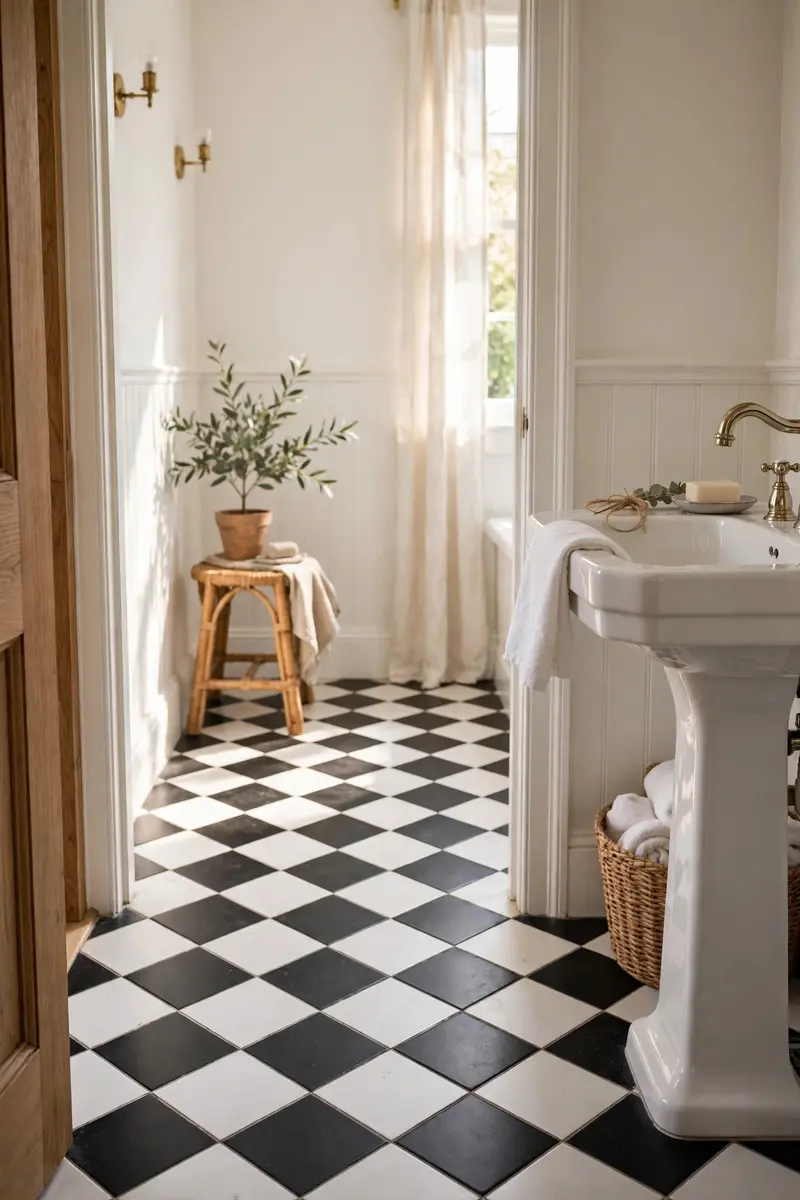
3. Unlacquered Brass Fixtures That Age Beautifully
Warm metals are the beating heart of the retro revival, and unlacquered brass is the most authentic choice. Unlike sealed finishes, it develops a soft patina over time, so your faucet actually looks better — more storied — the longer you live with it. Paired with clean white tile, brass feels both vintage and luxurious.
Materials + cost: A brass widespread faucet runs $150–$400; matching towel bars and a robe hook add $60–$150. If a full faucet swap is too much, start with brass cabinet pulls and a mirror frame for under $80.
Install brass on one or two focal points — the faucet and the mirror frame, for example — and keep other metals quiet. Mixing more than two finishes is the fastest way to make a bathroom feel chaotic, so commit to brass as your warm accent and let chrome or nickel sit out this round.
Practical tip: If you love the patina but not water spots, wipe the faucet dry after use for the first month while the finish settles.
Variation: Polished gold fixtures give a similar warmth with a shinier, more glamorous finish, while brushed brass reads softer and more casual.

4. Round Mirrors and Globe Sconces for Instant Vintage Glow
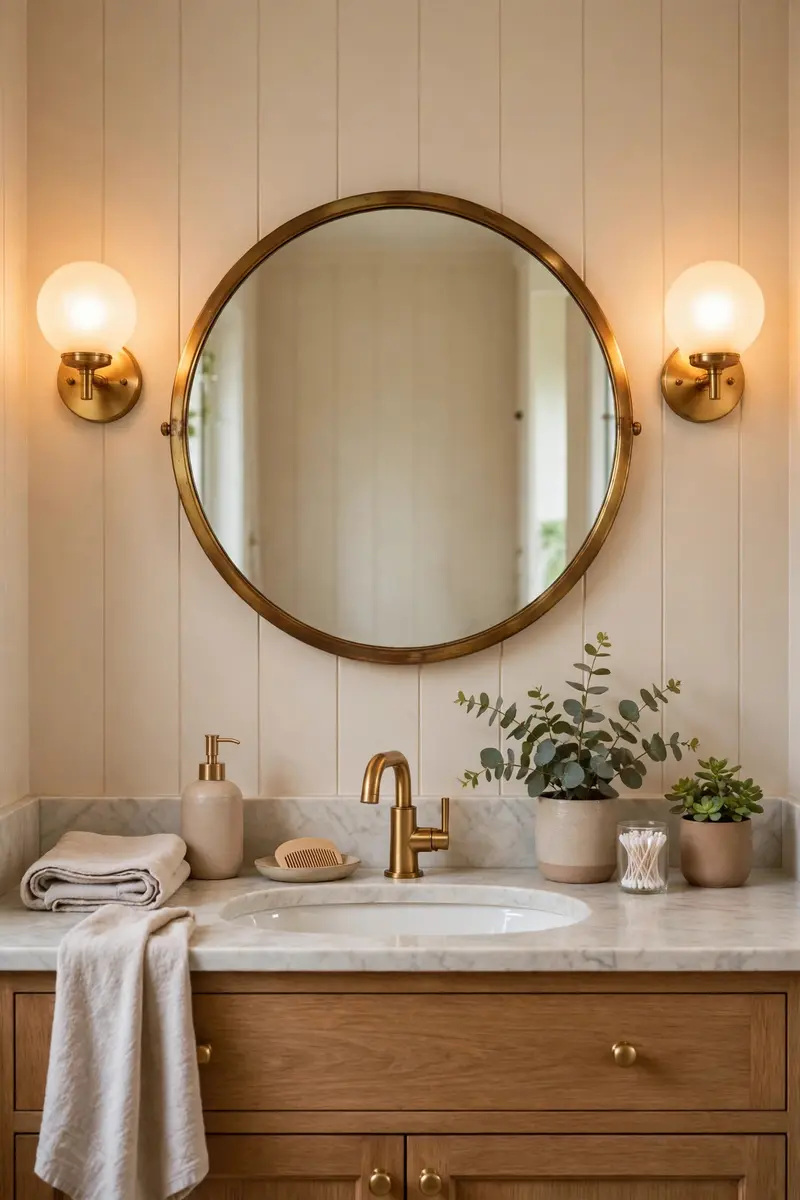
Swap a builder-grade rectangular mirror for a round or oval one, flank it with globe sconces, and your bathroom instantly time-travels — in the best way. Round shapes soften all the hard rectangles in a bathroom, and globe lights cast the flattering, even glow that made old Hollywood vanities famous.
Materials + cost: A 24–30 inch round mirror costs $40–$120; a pair of globe sconces runs $80–$250. An electrician charges roughly $100–$200 per sconce if new wiring is needed.
Hang the mirror so its center sits at eye level, and mount sconces at eye level on either side rather than a single bar overhead — side lighting eliminates harsh shadows on your face. Choose frosted globes for a soft diffusion, and warm-white bulbs (2700K) to keep the retro warmth intact.
Practical tip: If you cannot add wiring, use plug-in or battery globe sconces with a cord cover painted to match the wall — the look is nearly identical.
Variation: An arched mirror gives the same softening effect with a slightly more architectural, Mediterranean feel.
5. Bold Retro Wallpaper on One Accent Wall
Wallpaper is back in bathrooms, and modern peel-and-stick or vinyl options finally make it practical in a humid room. One accent wall in an Art Deco geometric, a mid-century atomic print, or a lush 70s floral turns a plain bathroom into a jewel box — and because it is only one wall, it never overwhelms.
Materials + cost: Peel-and-stick wallpaper runs $30–$80 per roll (most accent walls need 2–3 rolls); paste-the-wall vinyl is similar. A smoothing kit costs about $15.
Pick the wall behind the vanity or the toilet wall for maximum impact, and keep the other walls painted in a color pulled from the paper. Make sure your bathroom fan works well, and avoid papering inside the shower itself. If you rent, peel-and-stick is fully removable and leaves no damage when you move out.
Practical tip: Order a sample first and live with it for a few days — large-scale prints can look very different at full size than on a phone screen.
Variation: If full wallpaper feels bold, try a wallpaper border strip at picture-rail height, or frame a single panel of wallpaper like art above the toilet.

6. Penny Tile on the Shower Floor
Tiny penny-round tiles are a retro classic that also happens to be brilliantly practical: the many grout lines give you grip underfoot, and the small scale wraps neatly around a shower drain. A penny tile shower floor adds instant vintage character even if everything else in the shower is brand new.
Materials + cost: Penny tile sheets cost $6–$12 per square foot; a small shower floor redo runs $200–$500 with a pro, or less as a confident DIY. Choose a soft white, pale grey, or muted sage for a modern feel.
Keep the shower walls simple — large white subway or plain ceramic tiles — so the penny floor reads as a deliberate detail rather than pattern overload. A matching penny-tile border along the vanity backsplash ties the room together without much extra cost.
Practical tip: Seal the grout after installation and reseal yearly; penny floors have a lot of grout, and sealing keeps them looking fresh.
Variation: A penny tile rug — a rectangular inset of contrasting penny tile in front of the vanity — gives you the look without touching the shower at all.

7. A Clawfoot Tub With a Modern Filler
A freestanding clawfoot tub is the ultimate retro centerpiece, and today's versions pair beautifully with a sleek modern floor-mounted filler in brass or matte black. You get the romance of a vintage silhouette with the water pressure and temperature control of a modern fixture — the very definition of a modern retro bathroom.
Materials + cost: A new acrylic clawfoot tub runs $700–$1,500 (cast iron is $1,500–$3,000 and much heavier); a floor-mounted filler costs $250–$600. Check your floor can support the weight before ordering cast iron.
Give the tub breathing room — at least a few inches on all sides — and keep the surrounding palette quiet so the tub shape stands out. A simple teak bath caddy and a folded striped towel are all the styling it needs. If your bathroom is small, a slipper tub (one raised end) offers the same look in a shorter footprint.
Practical tip: Measure your doorways and turns before delivery — clawfoot tubs are bulky, and a tub that cannot reach the bathroom is an expensive problem.
Variation: A modern freestanding oval tub with ball-and-claw feet gives you the same vintage nod with a lighter, more contemporary silhouette.

8. Terrazzo Touches in Your Modern Retro Bathroom
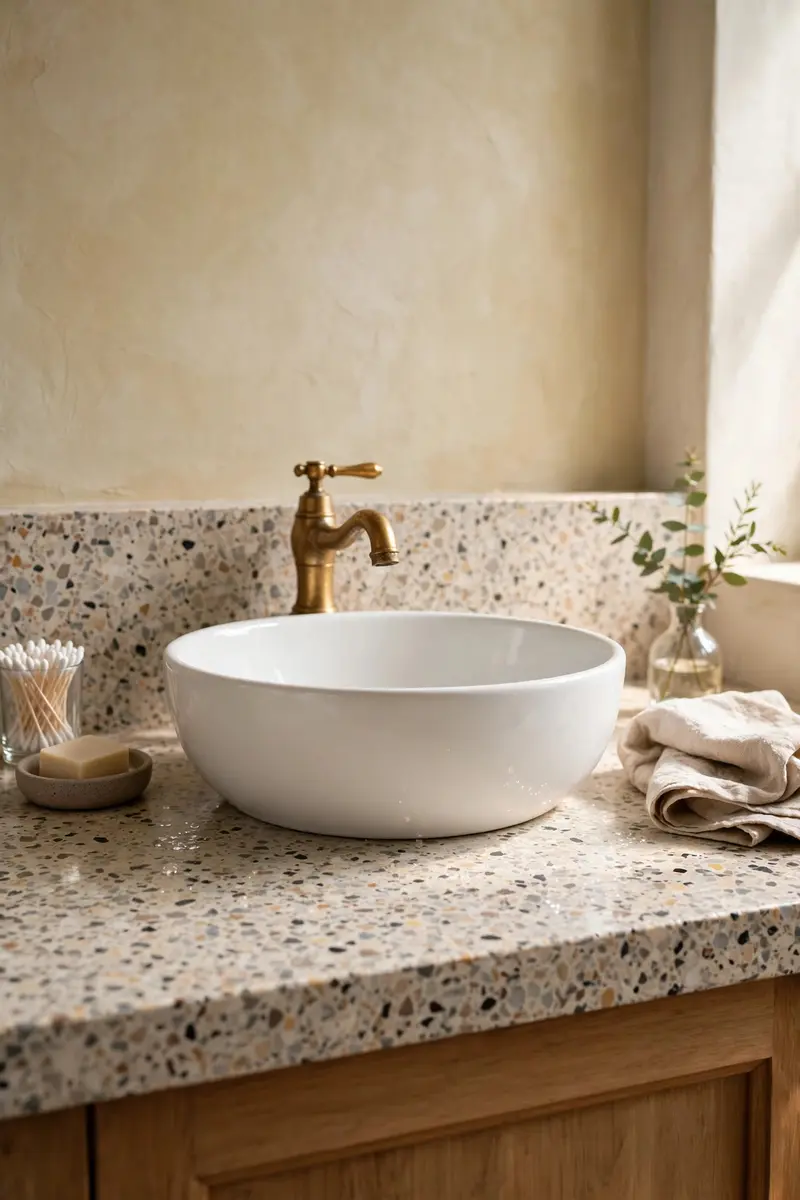
Terrazzo — those cheerful speckled chips set in cement or resin — was a mid-century staple, and it is back in a big way. A terrazzo vanity top, a terrazzo-look tile, or even small accessories bring instant retro texture without committing to a full renovation.
Materials + cost: A terrazzo vanity top runs $300–$700; terrazzo-look porcelain tiles cost $5–$12 per square foot. Terrazzo soap dishes and trays start around $25.
Use terrazzo in one place only — the vanity top or the floor, not both — and keep the rest of the room calm so the speckle can shine. Pair it with warm wood and brass for a true mid-century feel, or with white and chrome for a cooler, more modern take. For more mid-century inspiration, browse The Spruce's collection of midcentury modern bathrooms to see how designers balance these materials.
Practical tip: If real terrazzo is out of budget, terrazzo-look porcelain tile delivers the same visual at a fraction of the price and is easier to maintain.
Variation: Terrazzo drawer pulls, a terrazzo tray for perfumes, or a speckled bath mat bring the pattern in for under $50.
9. A Teak Floating Vanity With Tapered Legs
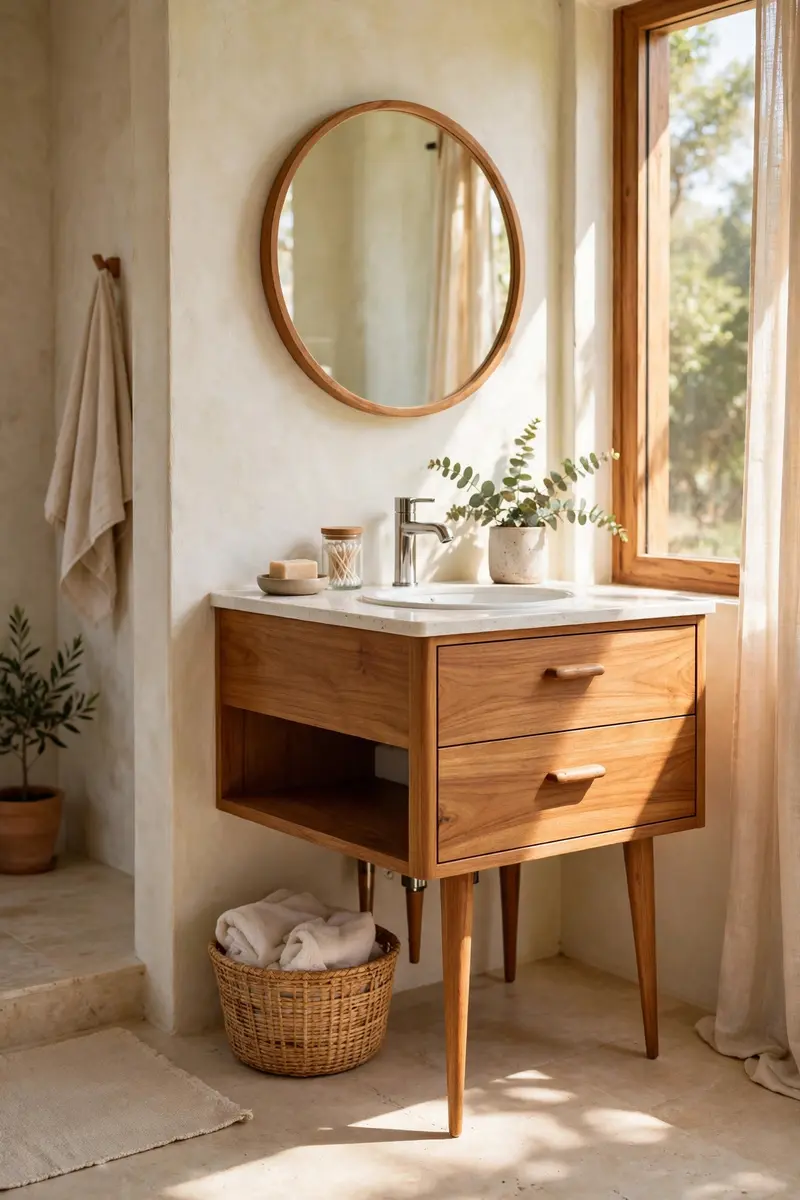
Mid-century design loved teak, and a floating teak vanity with tapered legs is one of the most flattering pieces you can put in a bathroom. The warm wood softens all that tile and porcelain, the floating design keeps the floor visible (so small rooms feel bigger), and the tapered legs are a pure 1960s signature.
Materials + cost: A teak or teak-look floating vanity runs $500–$1,200; a wall-mount faucet to pair with it costs $150–$350. Solid teak handles humidity better than most woods, but seal it well regardless.
Mount it at a comfortable height (about 32–34 inches to the counter) and leave the wall beneath it clear — no clutter stored underneath, or the floating effect disappears. A round mirror and a single vase of greenery complete the look without competing with the wood grain.
Practical tip: If your walls are tile, use proper anchors rated for the vanity's loaded weight; a floating vanity full of toiletries is heavier than it looks.
Variation: A walnut vanity gives the same mid-century warmth at a lower price, and a rattan-front vanity adds a breezier, boho-retro feel.
10. One Colored Porcelain Fixture as a Retro Star
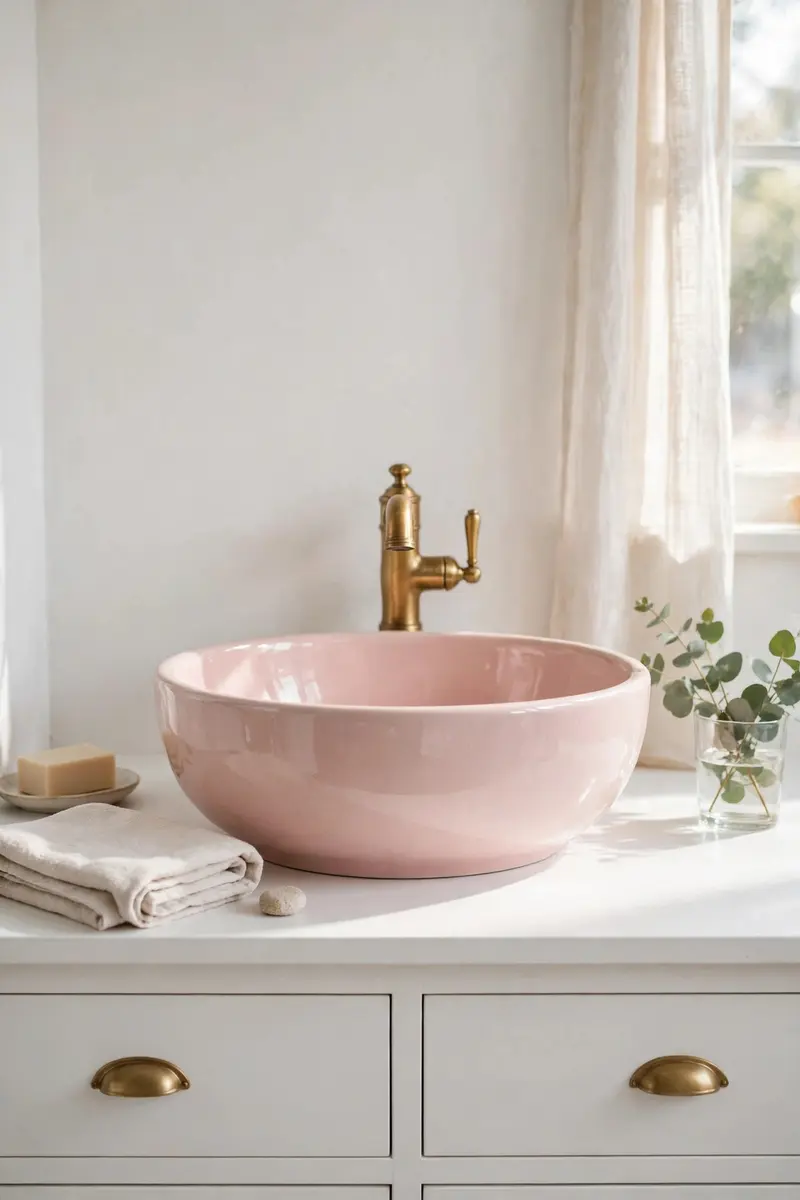
In the 1960s, bathrooms came in full pastel suites — pink tub, pink toilet, pink sink. The modern way to honor that is restraint: choose exactly one colored fixture, like a blush basin or a mint sink, and keep everything else white. It reads as a deliberate vintage wink, not a time capsule.
Materials + cost: A colored vessel or wall-hung basin costs $150–$400; installation is similar to a standard basin. Keep the toilet and tub white so the colored piece stays special.
Place the colored basin on a simple wood or white vanity, and echo its color once more in the room — a hand towel, a soap dish, or a small vase — so it feels connected rather than random. Avoid matching the wall color exactly to the fixture, or the whole room can feel washed in one shade.
Practical tip: Buy the fixture before you choose paint or tile, and carry a photo of it when shopping so your supporting colors harmonize.
Variation: If a colored fixture feels permanent, a colored toilet seat or a vintage-style colored faucet gives a similar pop and is easy to change later.
11. Geometric Shower Curtains and Retro Textiles
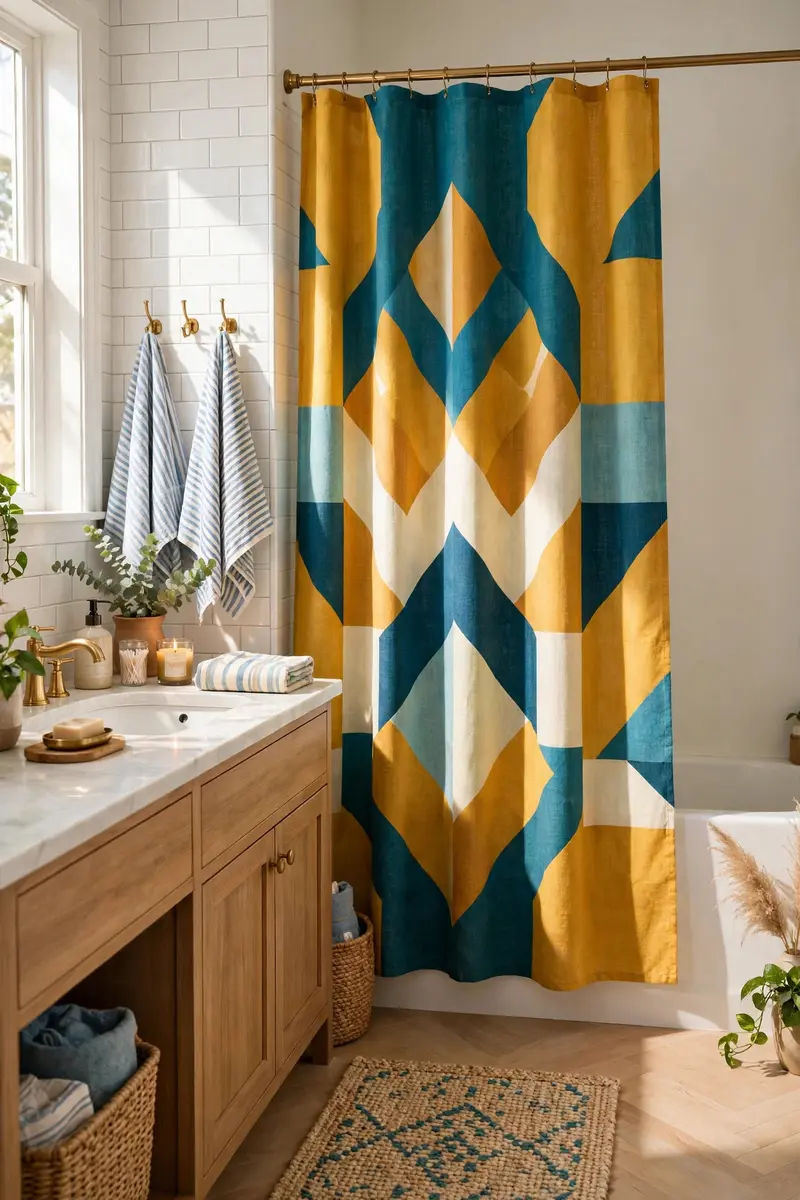
Textiles are the lowest-commitment way to go retro: a geometric shower curtain, striped towels, and a bold bath mat can transform a bathroom in an afternoon for under $100. Because they are easy to swap, textiles are also the perfect place to try a loud pattern you might not commit to in tile.
Materials + cost: A quality geometric shower curtain costs $25–$60; a set of striped or color-blocked towels runs $30–$70; a retro bath mat is $20–$45.
Choose one strong pattern — the shower curtain — and keep towels in solid colors pulled from it. A waffle-weave or ribbed texture adds a vintage feel even in a solid color. Hang towels on a warm wood ladder or brass hooks to reinforce the retro story without adding clutter.
Practical tip: Wash new colored towels separately the first time; retro brights can bleed, and you do not want pink streaks on your white shower curtain.
Variation: A bold curtain in the same print as a small framed art print above the toilet makes the pattern feel curated rather than accidental.
12. Starburst and Atomic Accents — Just a Few
The atomic age gave bathrooms starburst mirrors, sputnik lights, and boomerang shapes, and a single one of these accents delivers a huge dose of retro personality. The trick is dosage: one starburst mirror or one sputnik-style ceiling light is charming; five atomic accessories is a theme park.
Materials + cost: A starburst mirror costs $50–$150; a sputnik-style flush-mount light runs $80–$200. Both install like standard mirrors and lights.
Let your atomic piece be the only loud shape in the room, and keep the rest of the decor simple and modern. A starburst mirror above a clean-lined vanity is a perfect pairing — the mirror provides the playfulness, the vanity provides the calm. If your ceiling is low, choose a flush-mount sputnik rather than a dangling chandelier.
Practical tip: Center a starburst mirror carefully — its rays draw the eye, so an off-center placement is more obvious than with a plain mirror.
Variation: Boomerang-pattern hand towels or an atomic-print wastebasket bring the motif in for under $30 if a mirror or light feels like too much.

13. Fluted Glass for Privacy With Retro Style
Fluted (ribbed) glass was everywhere in mid-century bathrooms, and it solves a very modern problem: privacy without darkness. A fluted glass shower door or a fluted window panel lets light through while blurring the view, and the vertical ribs add a lovely texture that plain glass cannot match.
Materials + cost: A fluted glass shower panel costs $400–$900 installed; a fluted window film that mimics the look costs $20–$40 and applies in minutes.
Use fluted glass on the shower enclosure or a window, not both, and pair it with simple chrome or brass framing. The ribs catch light beautifully, so position it where daylight hits it when possible. Fluted film is a great renter-friendly trial before you commit to real glass.
Practical tip: Clean fluted glass with a squeegee after showers — the ribs can trap water spots more visibly than flat glass.
Variation: A fluted glass cabinet door on a medicine cabinet or linen cupboard brings the texture in at a smaller scale.

14. A Vintage-Style Medicine Cabinet or Arched Mirror
Storage is where retro bathrooms often fail, but a vintage-style medicine cabinet solves it elegantly: mirrored doors, brass trim, and hidden shelves keep clutter out of sight while looking like a piece of history. An arched mirror cabinet is especially on-trend right now and softens the room's hard lines.
Materials + cost: A recessed or surface-mount mirrored medicine cabinet costs $100–$350; an arched version runs $150–$450. Recessed installation needs a wall cavity free of studs and pipes — check before buying.
Mount it centered over the vanity at eye level, and choose one with adjustable shelves so tall bottles fit. If you prefer open styling, an arched mirror with a small brass shelf beneath gives you a display spot for one pretty bottle and a tiny plant.
Practical tip: Measure your tallest daily-use bottle before ordering — a cabinet that cannot fit your skincare is just a pretty box.
Variation: Two smaller arched mirrors over a double vanity give a boutique-hotel feel and let each person have their own reflection zone.

15. Layered Towels, a Retro Bath Mat, and Warm Wood Details
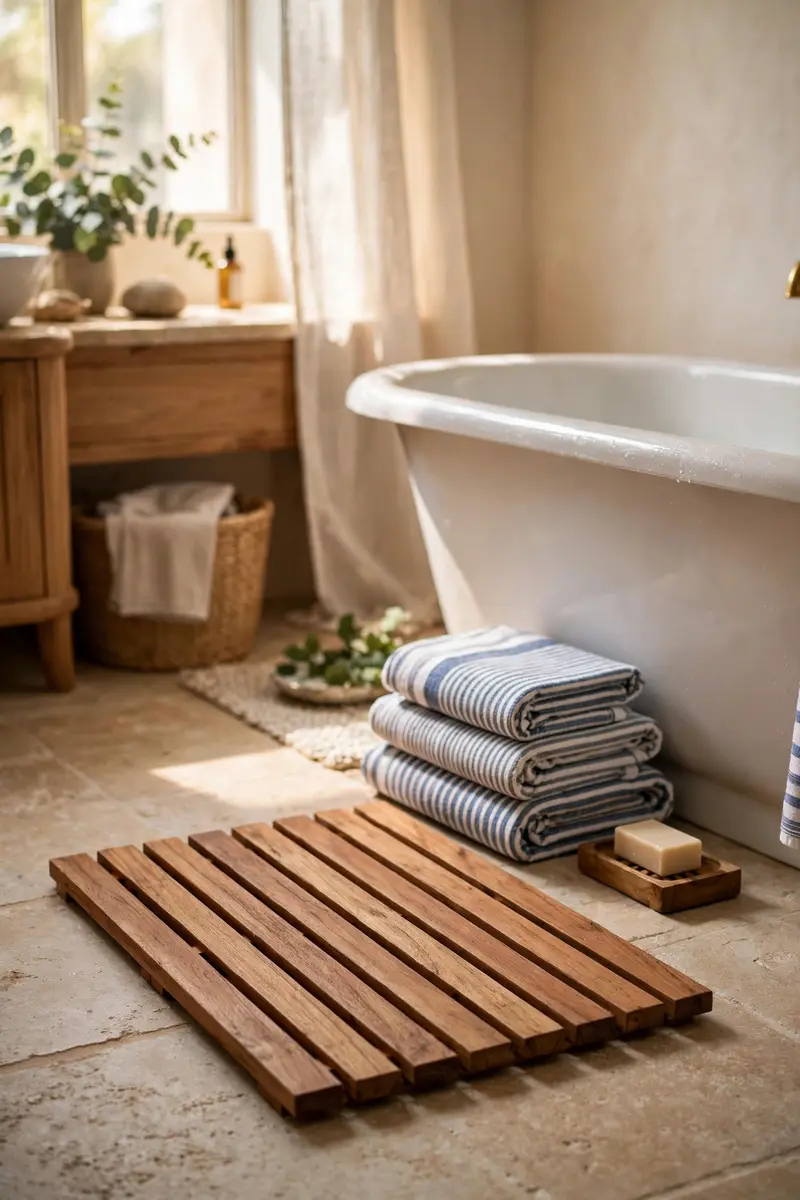
Sometimes the retro feeling comes not from a renovation but from the layers: thick striped towels, a shaggy or geometric bath mat, a teak bath mat over the tile, and small wood accessories like a soap dish or a stool. These warm, touchable details are what make a bathroom feel lived-in rather than showroom-cold.
Materials + cost: A teak bath mat costs $40–$90; a set of striped towels $30–$70; a wood soap dish and tray $20–$40. Total impact for well under $200.
Layer a flat-weave rug over tile for softness, place the teak mat where you step out of the shower, and keep wood accessories to two or three pieces so the room stays tidy. Warm wood is the ingredient that stops pastel and pattern from feeling chilly — it is the visual equivalent of a cozy blanket.
Practical tip: Oil teak accessories every few months to keep them water-resistant, and let the teak mat dry fully between uses to prevent mildew.
Variation: A small wooden stool beside the tub holds a book, a candle, and a towel, and doubles as a plant stand when guests visit.
16. Greenery and Plants to Soften the Retro Edges
Every great retro bathroom has a plant or two — trailing pothos on a shelf, a snake plant in a terracotta pot, a fern on the vanity. Plants soften tile edges, add life to a room that can otherwise feel hard and cold, and they were a genuine part of 1970s bathroom style, so they belong here historically too.
Materials + cost: Bathroom-friendly plants cost $10–$35 each; terracotta or ceramic pots run $8–$25. A macrame hanger adds $15–$30 and a lovely retro touch.
Choose plants that love humidity and low-to-medium light: pothos, snake plants, ferns, and peace lilies all thrive in bathrooms. Hang one trailing plant from the ceiling or a high shelf, and keep one upright plant on the floor or vanity — more than three plants in a small bathroom starts to feel like a jungle.
Practical tip: Make sure pots have drainage, and never let a plant sit in standing water — root rot kills more bathroom plants than low light does.
Variation: If your bathroom has no natural light, high-quality faux trailing greenery gives the same softening effect with zero maintenance.

Frequently Asked Questions
How do you make a retro bathroom look modern?
Keep the retro elements to one or two focal points and make everything else clean and current. A retro tile floor with a modern vanity, or a vintage mirror with a frameless shower, reads as curated. The modern half — simple lines, good lighting, uncluttered surfaces — is what stops the retro half from feeling dated.
What colors work best in a modern retro bathroom?
Soft pastels (mint, blush, pale blue), warm neutrals (cream, warm white, walnut), and one bold accent (mustard, teal, or terracotta) are the classic combination. Use the bold color sparingly — a towel, a vase, or a single wall — and let the pastels and neutrals carry the room.
Can you mix vintage fixtures with modern plumbing?
Yes, and it is the smartest way to get the look. Most vintage-style faucets, tub fillers, and shower sets are made to modern plumbing standards, so you get the old look with new reliability. For genuine antiques, have a plumber check compatibility and replace internal washers before installation.
What tile patterns suit a retro bathroom?
Checkerboard, penny rounds, hexagons, subway tile with contrasting grout, and terrazzo-look tiles are all authentically retro. Choose one pattern as your star and keep the other surfaces plain so the patterns do not compete.
How do you update a retro bathroom on a budget?
Start with textiles, mirror, lighting, and hardware — a new shower curtain, a round mirror, globe sconces, and brass pulls can transform the room for under $300. Peel-and-stick wallpaper and a fresh coat of paint on the vanity are the next best-value moves before you touch any tile or plumbing.
Conclusion
A modern retro bathroom is really about balance: enough vintage charm to make the room feel personal and warm, and enough modern comfort to make it a pleasure to use every day. Start with the idea that excites you most — a pastel vanity, a checkerboard floor, or simply a round mirror and some brass — and build from there. One change is often enough to shift the whole feeling of the room.
If you found an idea you love, save this post to Pinterest so you can find it again when you are ready to start. Your future self, stepping into a bathroom that feels both nostalgic and brand new, will thank you. For more vintage inspiration, explore our vintage bathroom ideas, our retro bathroom ideas, and our mid century bathroom ideas.


Leave a Reply