
You do not need a spare room to work from home well. These small home office ideas prove that a corner, a closet, an alcove, or even a stretch of hallway wall can become a workspace you actually enjoy sitting at — as long as the desk fits your body, the light is kind, and everything you reach for daily has a home. The trick is not buying more furniture; it is choosing the right spot, going vertical with storage, and giving the office a clear edge so work does not spill into the rest of your life.
Below you will find 38 distinct setups, from budget fold-down desks to cozy color-drenched nooks, so you can pick the one that fits your space, your budget, and the way you really work.
1. Small Home Office Ideas: Bedroom Corner Desk Nook
A bedroom corner is the most common small home office spot, and it works beautifully when you give it a boundary. A compact desk tucked into the corner, a rug under the chair, and a curtain or folding screen you can close at night all signal that work ends here. Among small home office ideas, this bedroom corner is the easiest place to start.
Materials: narrow desk (about $80–$200), comfortable chair, small rug, curtain or screen (about $30–$80).
Place the desk at right angles to the window to avoid screen glare, add a desk lamp with adjustable brightness, and keep only daily essentials on the surface. A small shelf above holds books and supplies without eating floor space.
Tip: Face the desk toward the room, not the wall, if the corner allows it — you will feel less boxed in during long calls. For small home office ideas that keep the room calm, face the desk toward the room when you can.
Variation: Swap the screen for a tall open bookshelf that doubles as a room divider.

2. Small Home Office Ideas: The Cloffice (Closet Office)
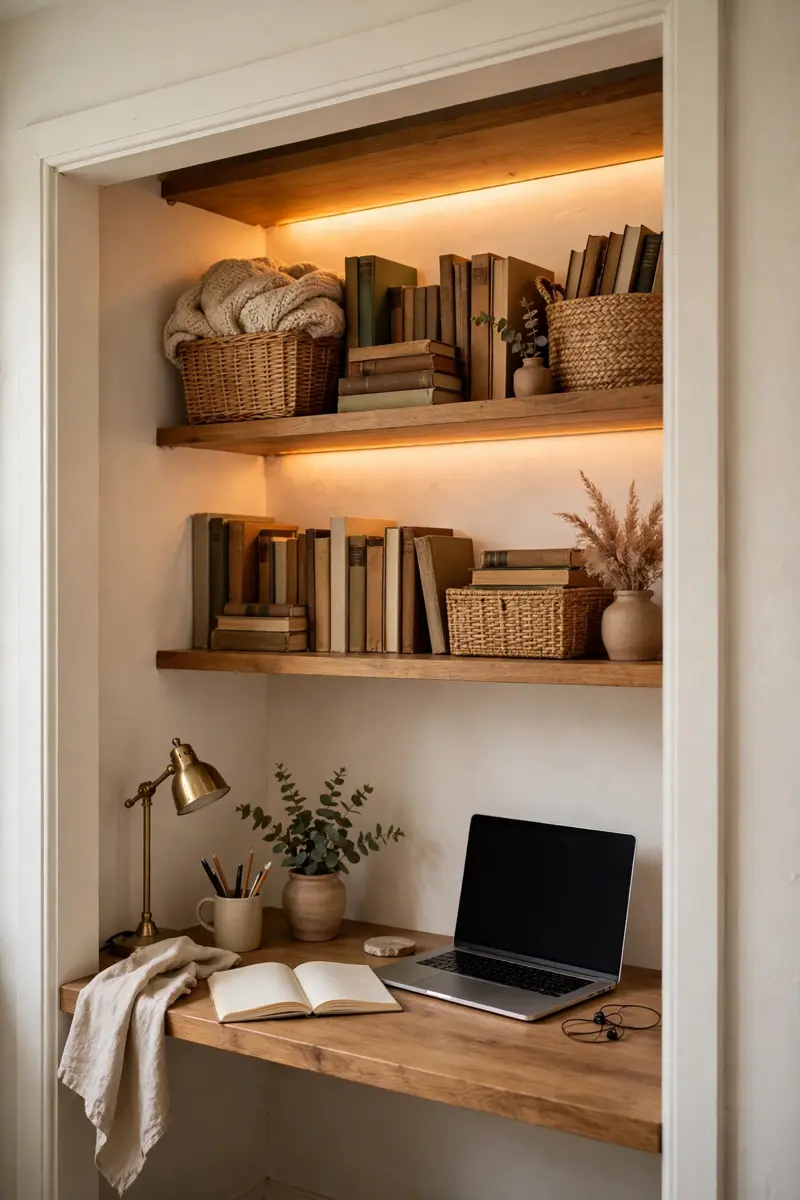
A cloffice turns an underused closet into a complete office that closes away at the end of the day. Remove the doors or keep them for a clean shutdown, fit a desk surface across the closet at sitting height, and add shelves above for everything else. For small home office ideas, this cloffice is the tidiest way to hide work away at day’s end.
Materials: plywood desk top, brackets, two shelves, LED strip light (about $100–$250).
Measure the closet width, cut the desk top to fit snugly, and mount it at standard desk height. Run a warm LED strip under the top shelf so the whole nook glows without a desk lamp taking up surface space.
Tip: Paint the inside of the closet a light, bright color — a dark closet nook feels cramped even with good lighting. For small home office ideas that stay bright, light paint inside a closet nook helps a lot.
Variation: Add a pegboard on one side wall for scissors, cables, and small supplies.
3. Fold-Down Small Home Office Desk
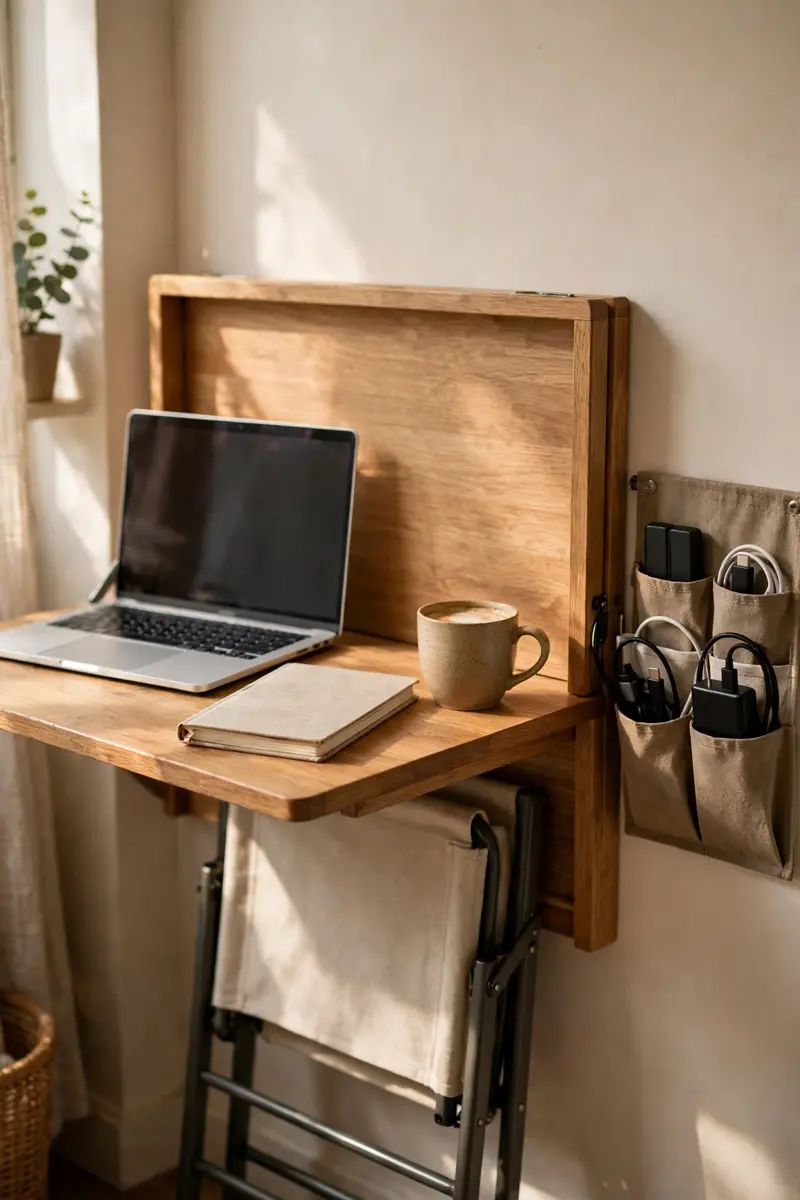
A fold-down wall desk is the small-apartment office in its purest form: a real work surface that folds flat against the wall when the laptop closes. Open, it holds a laptop, a notebook, and a mug; closed, it is a slim cabinet.
Materials: wall-mounted fold-down desk kit, wall anchors or stud screws, folding chair (about $90–$220).
Mount it at proper desk height (about 29–30 inches) into studs, and pair it with a chair that tucks fully underneath or folds away. Keep a small wall pocket nearby for chargers and notebooks.
Tip: Check the weight rating before you buy — a desk that sags under a monitor will not last a month of daily use. For small home office ideas that last, check the weight rating before buying a fold-down desk.
Variation: Choose a cabinet-style version with art on the outer face so it looks like decor when closed.
4. Small Home Office Ideas: Under-Stairs Work Nook
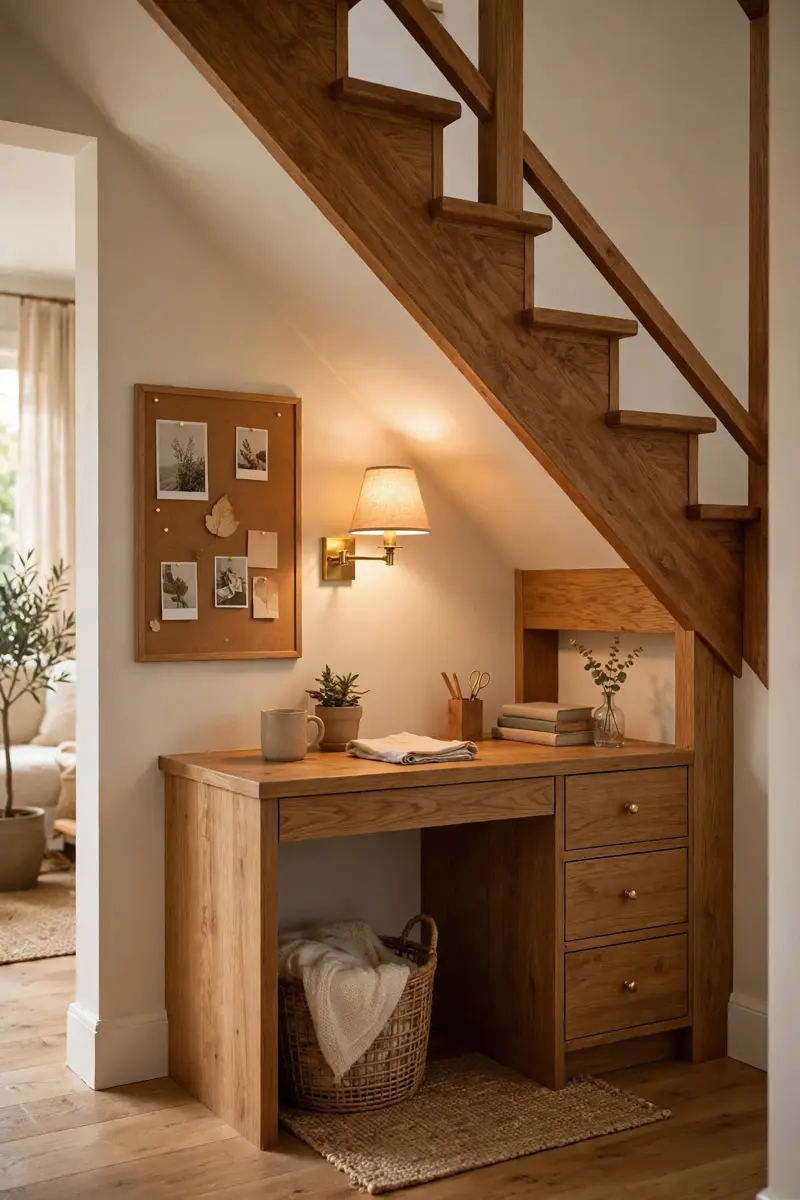
The space under the stairs is often wasted, yet it is usually just wide enough for a desk and a chair. A built-in desk that follows the slope of the stairs turns dead space into a surprisingly cozy office. Among small home office ideas, this under-stairs nook is the smartest use of wasted space.
Materials: custom or cut-to-fit desk top, shelves, task light (about $120–$300).
Fit the desk into the tallest part of the under-stair triangle so you have headroom while seated, and use the lower, sloping side for drawers or a printer. Add a wall-mounted light to avoid a bulky lamp.
Tip: Measure your seated headroom before building — you need clearance to stand up comfortably, not just to sit. For small home office ideas that stay comfortable, measure seated headroom before building anything.
Variation: Add a corkboard or magnetic board on the stair wall for notes and inspiration.
5. Living Room Alcove Desk
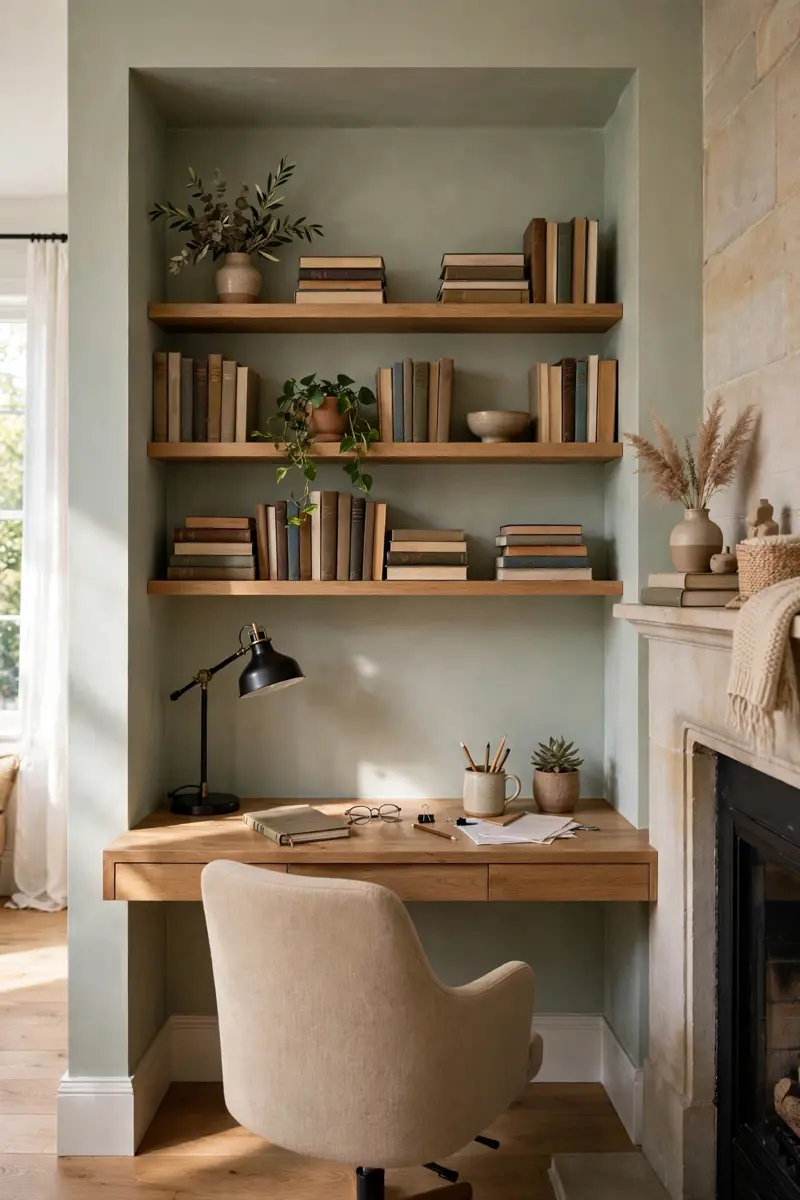
Alcoves beside a fireplace or built-in shelving are made for a fitted desk. The walls on either side naturally frame the workspace, so it reads as intentional rather than improvised. For small home office ideas, this fitted alcove desk is the most seamless way to add a workspace to a living room.
Materials: desk top cut to alcove width, floating shelves, chair (about $150–$350).
Fit the desk surface wall to wall, add two shelves above at comfortable reach height, and use a chair that slides fully under the desk. Keep the palette close to the living room so the office blends in.
Tip: Match the desk finish to nearby furniture — a matching wood tone makes the office disappear into the room. For small home office ideas that blend in, match the desk finish to nearby furniture.
Variation: Paint the alcove back wall a soft accent color to define the zone without a divider.
6. Window-Facing Desk
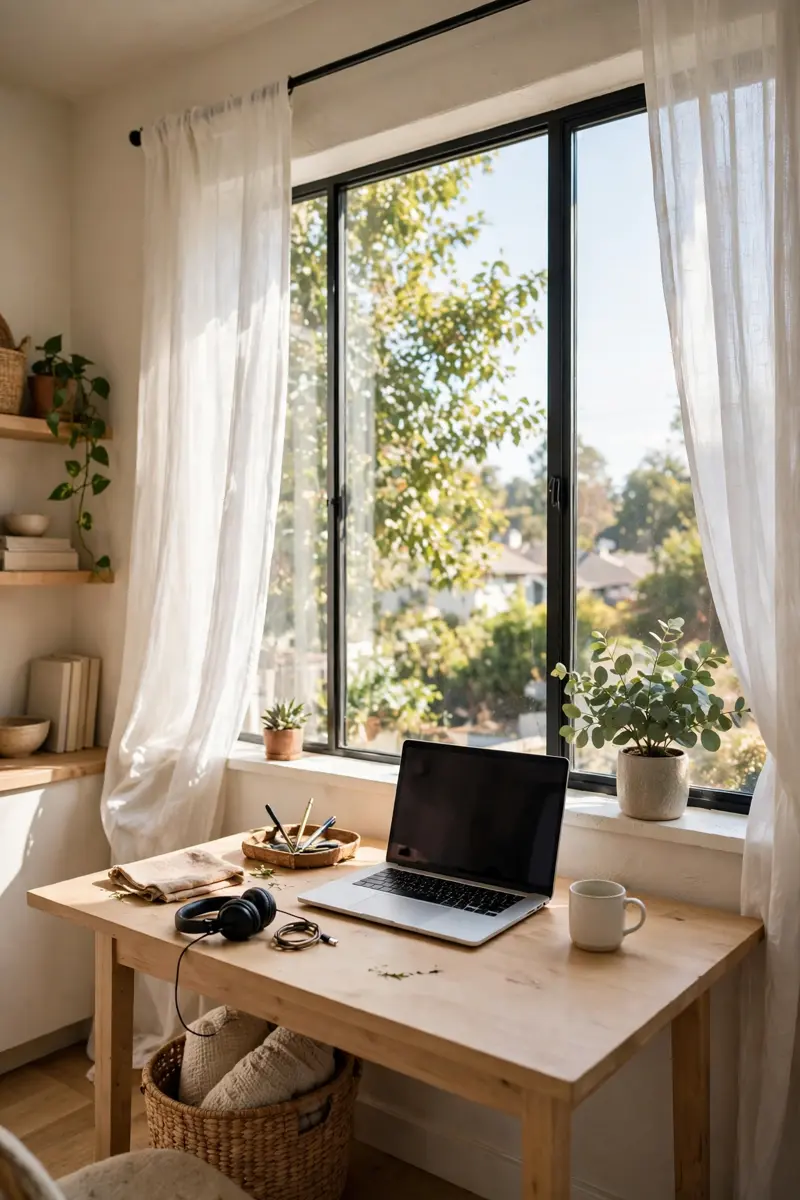
Placing your desk facing a window gives you natural light, a view, and a mood lift that no lamp can match. The key is managing glare: sit with the window to your side or in front, and use a sheer curtain to soften harsh sun. Among small home office ideas, this window-facing desk is the brightest way to lift your mood while you work.
Materials: simple desk, sheer curtain or blind, plant (about $100–$250).
Position the desk so daylight falls across your work, not directly onto your screen. Add one plant on the sill and a small tray for pens so the surface stays calm and focused.
Tip: For video calls, face the window — front light flatters your face far better than light from behind you. For small home office ideas that flatter video calls, face the window for front light.
Variation: Add a window bench with storage underneath if the sill is wide enough.
7. Floating Wall-Mounted Desk
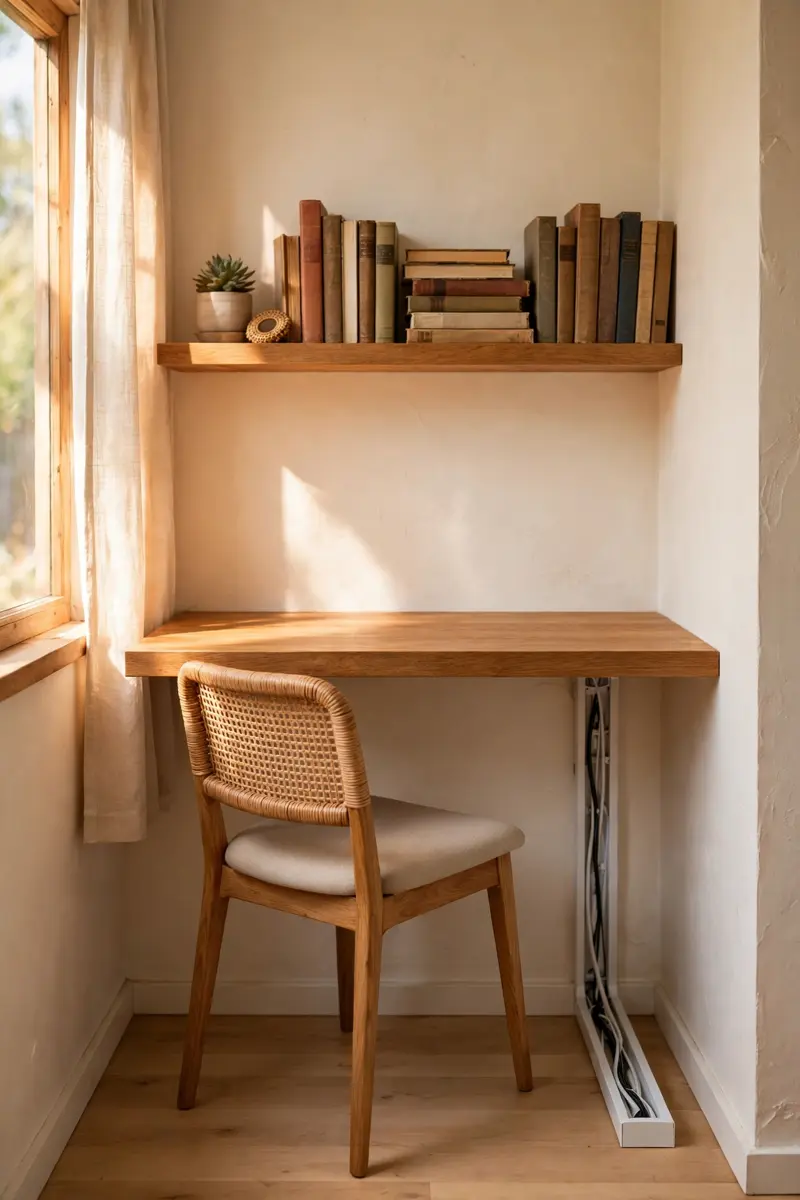
A floating desk mounts directly to the wall with no legs, which keeps the floor clear and makes a tiny room feel larger. It is ideal for narrow walls, hallways, and bedrooms where every inch of floor matters. For small home office ideas, this floating desk is the cleanest way to keep a tiny room feeling open.
Materials: floating desk shelf, heavy-duty brackets, wall anchors (about $60–$180).
Mount it into studs at desk height, check it is level, and add a shelf above for storage. Because there are no legs, a chair or stool can slide completely out of the way.
Tip: Do not overload a floating desk — keep the monitor on a wall arm if you use one, so the surface stays light. For small home office ideas that stay safe, keep a floating desk lightly loaded.
Variation: Run a cable channel down the wall to hide chargers completely.
8. Behind-the-Sofa Console Desk
A narrow console table behind the sofa doubles as a desk in a living room without a spare corner. When work ends, the laptop closes and the table returns to being a display surface. Among small home office ideas, this behind-the-sofa console is the easiest way to add a desk without a spare corner.
Materials: console table (about $100–$250), stool or slim chair, small lamp.
Choose a console at desk height, place it behind the sofa with a stool that tucks underneath, and add a lamp and a basket for supplies. Work facing the room, with the sofa back acting as a natural boundary.
Tip: Use a laptop, not a desktop setup, here — the whole point is a workspace that can vanish in a minute. For small home office ideas that disappear fast, a laptop-only setup clears in a minute.
Variation: Add a pair of matching consoles on either side of the sofa for a symmetrical look.

9. Kitchen Counter Office Nook
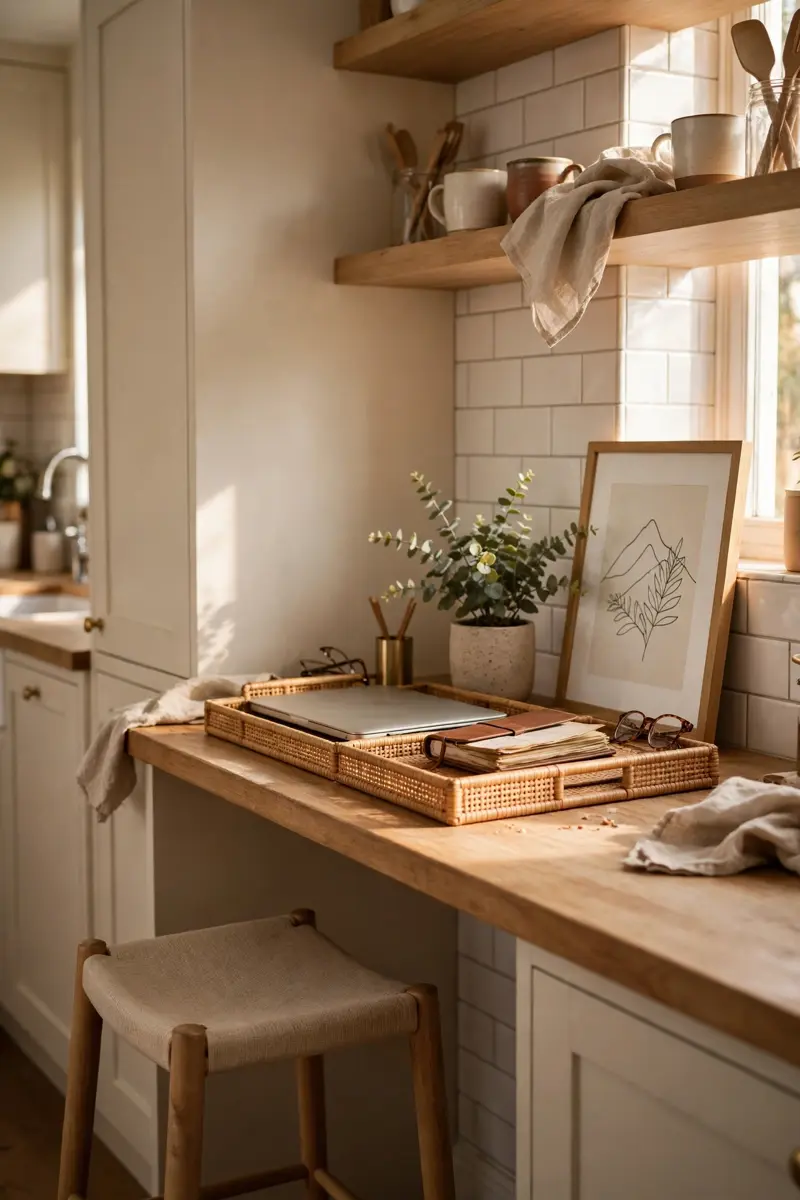
A quiet end of the kitchen counter, or a breakfast bar with a stool, can serve as a part-time office — especially for short admin sessions, homework help, or morning planning. The trick is a dedicated tray that holds your work kit. For small home office ideas, this kitchen counter nook is the most flexible part-time workspace.
Materials: counter stool, desk organizer tray, portable lamp (about $50–$150).
Claim one end of the counter, keep your laptop, notebook, and chargers in a single tray, and pack the tray away when cooking starts. A small plant or framed print marks the spot as yours.
Tip: Set a firm end-of-work ritual — tray away, surface wiped — or kitchen clutter and work clutter merge fast. For small home office ideas that protect evenings, a firm end-of-work ritual helps.
Variation: Add a wall-mounted fold-down shelf above the counter for extra surface when you need it.
10. Hallway Landing Desk
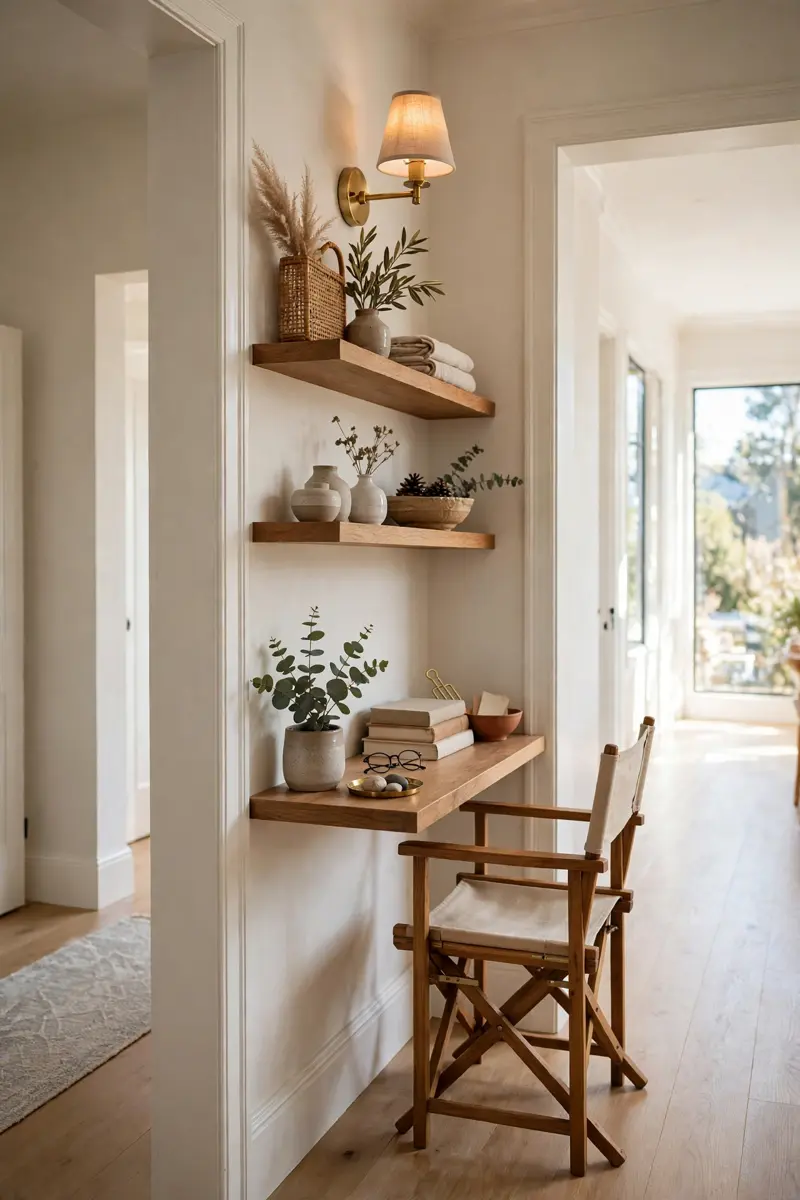
A landing or wide hallway often has a flat stretch of wall that fits a narrow desk perfectly. Because it is a pass-through space, keep the footprint slim and the storage vertical.
Materials: narrow desk or wall shelf (about $70–$200), wall-mounted light, slim chair.
Mount a desk no deeper than about 50 cm, add a wall lamp instead of a table lamp, and hang a shelf or two above. Choose a chair that folds flat so the hallway stays walkable.
Tip: Keep this desk for focused, short sessions rather than all-day work — a landing rarely has the quiet a full workday needs. For small home office ideas that suit short sessions, keep this desk for focused work only.
Variation: Use a rolling cart underneath for files that can move to another room when guests arrive.
11. Guest Room and Office Combo
A guest room that doubles as an office is one of the smartest small home office ideas for homes that host visitors a few times a year. A Murphy bed or a daybed lets the room work as an office every day and a bedroom when needed.
Materials: Murphy bed cabinet or daybed, compact desk, storage ottoman (about $400–$1,200).
Place the desk on the wall opposite the bed, keep daily supplies in a closed cabinet, and choose a chair that doubles as guest seating. When guests arrive, clear the desk surface and fold the bed down.
Tip: A daybed with drawers underneath gives you guest bedding storage and office supply storage in one piece. For small home office ideas that store well, daybed drawers hold bedding and supplies.
Variation: Use a sleeper sofa instead of a Murphy bed if your budget is tighter.
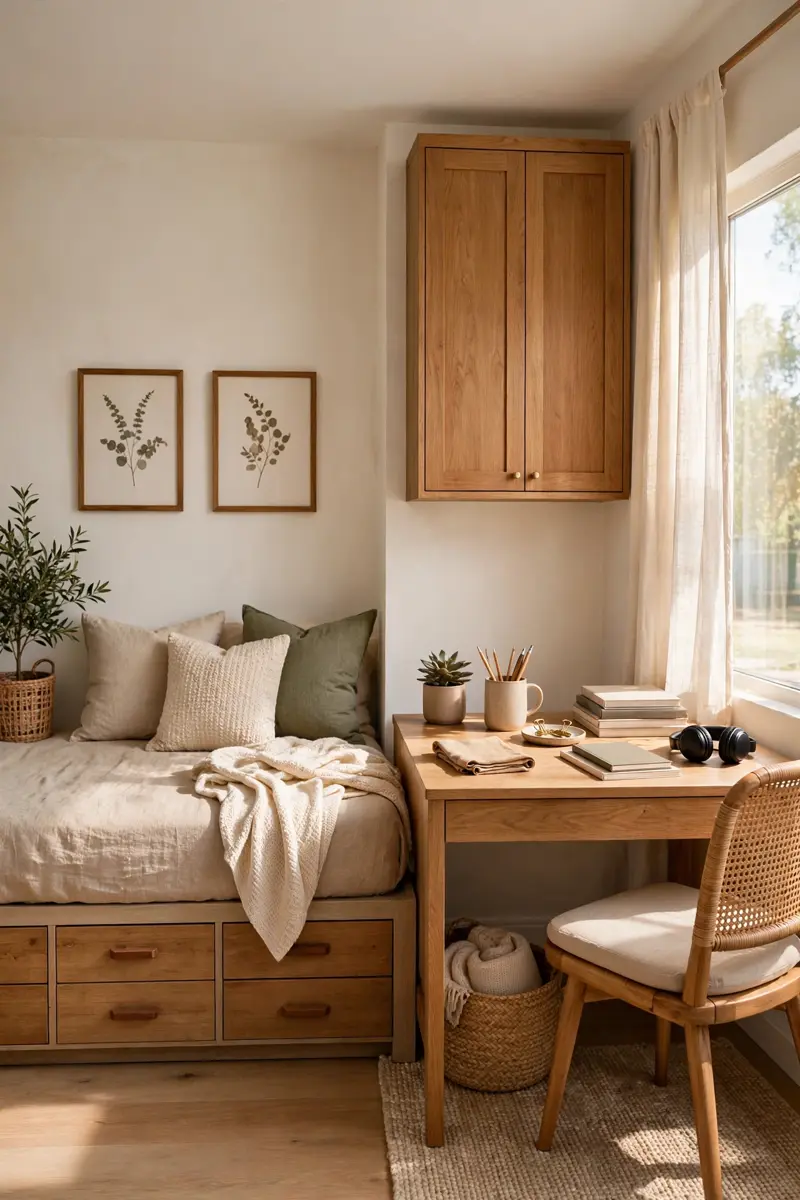
12. Attic Eaves Desk
Sloped attic ceilings create a natural nook that is perfect for a desk — the low ceiling feels cozy when you are seated, and the awkward space finally earns its keep. Fit the desk under the slope and use the tallest wall for shelves.
Materials: low desk or custom top, knee-wall storage, task light (about $150–$350).
Place the desk where headroom is comfortable while seated, add a skylight-friendly lamp, and use the knee wall for drawers or baskets. Light colors on the sloped ceiling keep the nook from feeling dark.
Tip: Sit with your back to the slope, facing out into the room, so the ceiling never feels like it is closing in. For small home office ideas that feel open, sit facing out into the room.
Variation: Add a small rug and a cushion to make the eaves nook a reading corner after work hours.
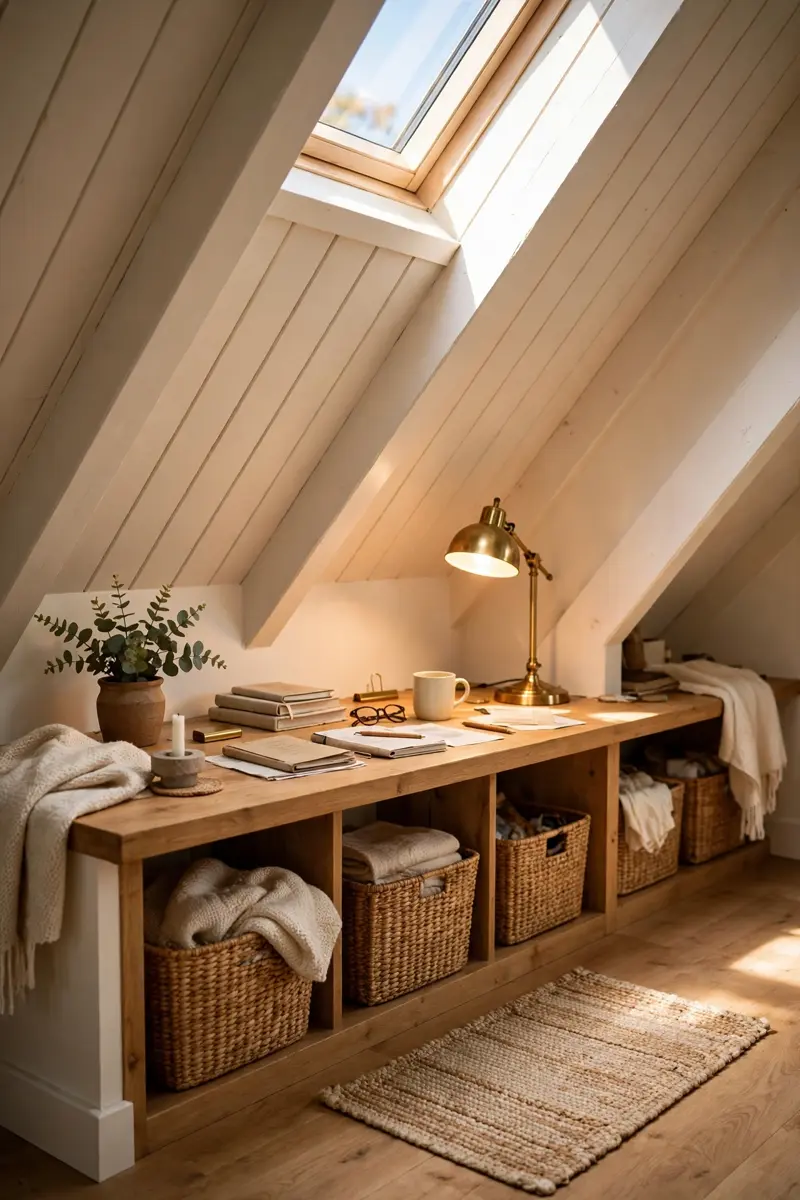
13. Tiny Spare Room Office
If you do have a tiny spare room — even one barely bigger than a closet — treat it as a dedicated office rather than a junk room. A full desk, a door you can close, and good lighting beat a larger shared space for focus.
Materials: desk, ergonomic chair, shelves, door draft stopper (about $200–$500).
Put the desk on the longest wall, add shelves to the ceiling, and keep the door closed during work hours to signal focus to the rest of the household. A rug softens echo in a small, hard-floored room.
Tip: If the room has no window, use a daylight lamp and a large mirror to keep it from feeling like a box. For small home office ideas that lack windows, a daylight lamp keeps the room from feeling boxed.
Variation: Paint all four walls one soft color to make the tiny room feel calm and unified.
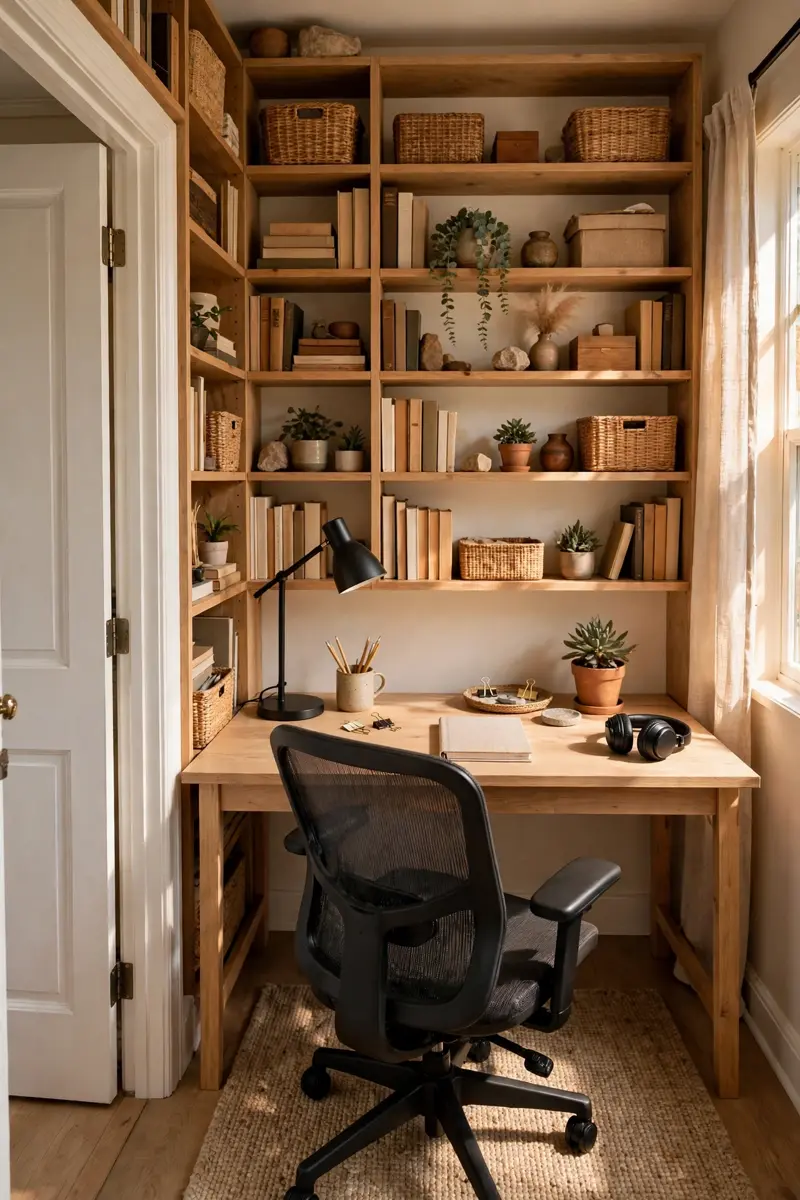
14. Rolling Cart Office
A rolling cart office is a workspace on wheels: a small cart with a laptop shelf, drawers, and a power strip that you roll to the best light, then roll away when you are done. It is perfect for homes where no single spot can be permanently claimed.
Materials: rolling utility cart or desk cart, power strip, basket (about $80–$200).
Load the cart with your laptop, notebook, chargers, and a water bottle, and park it by a window or in a quiet corner. At day’s end, roll it into a closet or against a wall.
Tip: Keep the cart’s top surface clear except for the laptop — a rolling desk tempts you to pile things on it. For small home office ideas that travel, keep the cart top clear except for the laptop.
Variation: Add a clip-on lamp and a small plant to make the cart feel like a real desk, not a trolley.
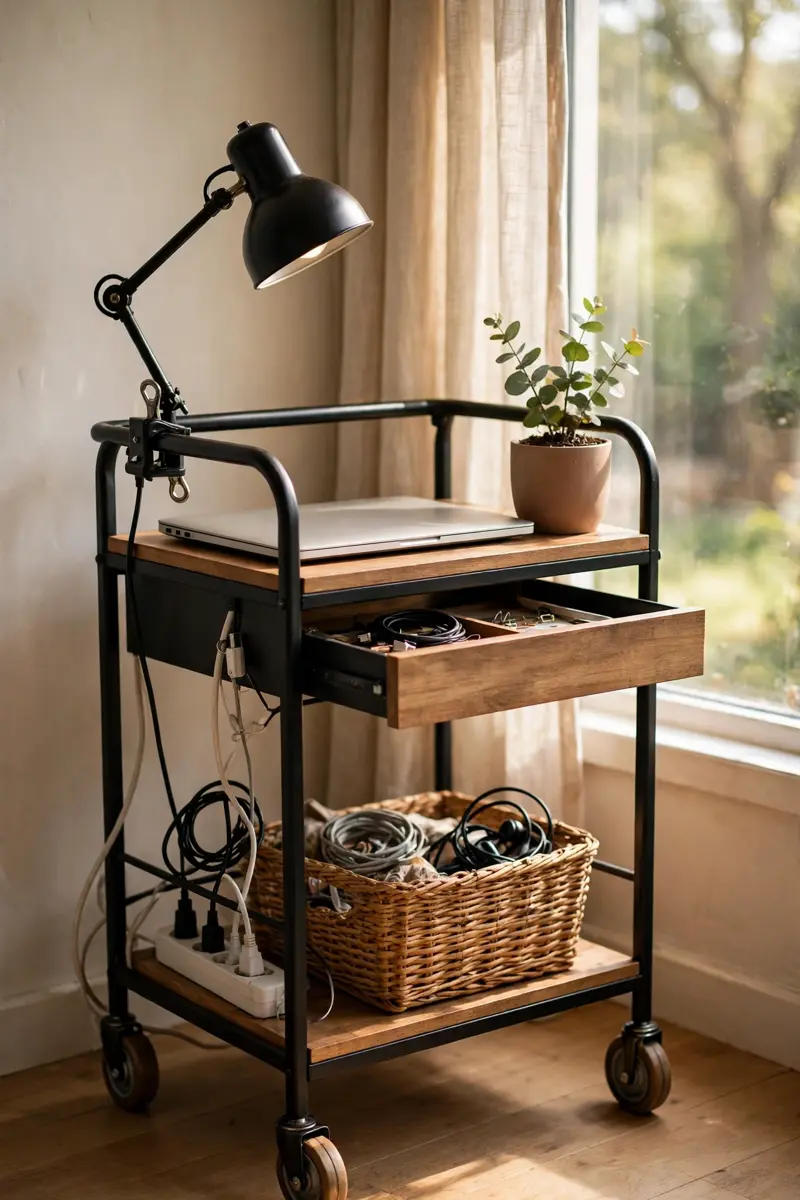
15. Secretary Desk (Bureau) Office
A secretary desk, or bureau, is the original hideaway office: a fold-down writing surface with cubbies and drawers inside, and doors or a roll top that close over everything. It looks like furniture, not office equipment.
Materials: vintage or new secretary desk (about $150–$600), chair, small lamp.
Open the desk for work, use the cubbies for mail, notebooks, and chargers, and close it at night so the room returns to a living space. A slim chair that fits inside the footprint keeps it tidy.
Tip: Check the interior depth before buying — modern laptops need more depth than antique writing desks sometimes offer. For small home office ideas that suit laptops, interior depth matters more than style.
Variation: Hunt thrift stores for a solid wood bureau and repaint it to match your room.

16. Ladder and Leaning Desk
A leaning ladder desk rests against the wall, with a desk surface at the bottom and shelves rising above it. It takes almost no floor space, installs without major drilling, and looks light and airy.
Materials: leaning ladder desk (about $90–$220), small chair, basket.
Lean it securely against the wall, use the top shelves for books and plants, and keep the desk surface for daily work only. Anchor it to the wall if you have kids or pets who might bump it.
Tip: Keep heavier items on the lower shelves — a top-heavy leaning desk is a tipping risk. For small home office ideas that stay steady, keep heavy items low on leaning desks.
Variation: Style the upper shelves with a mix of books, a plant, and one framed print for a curated look.

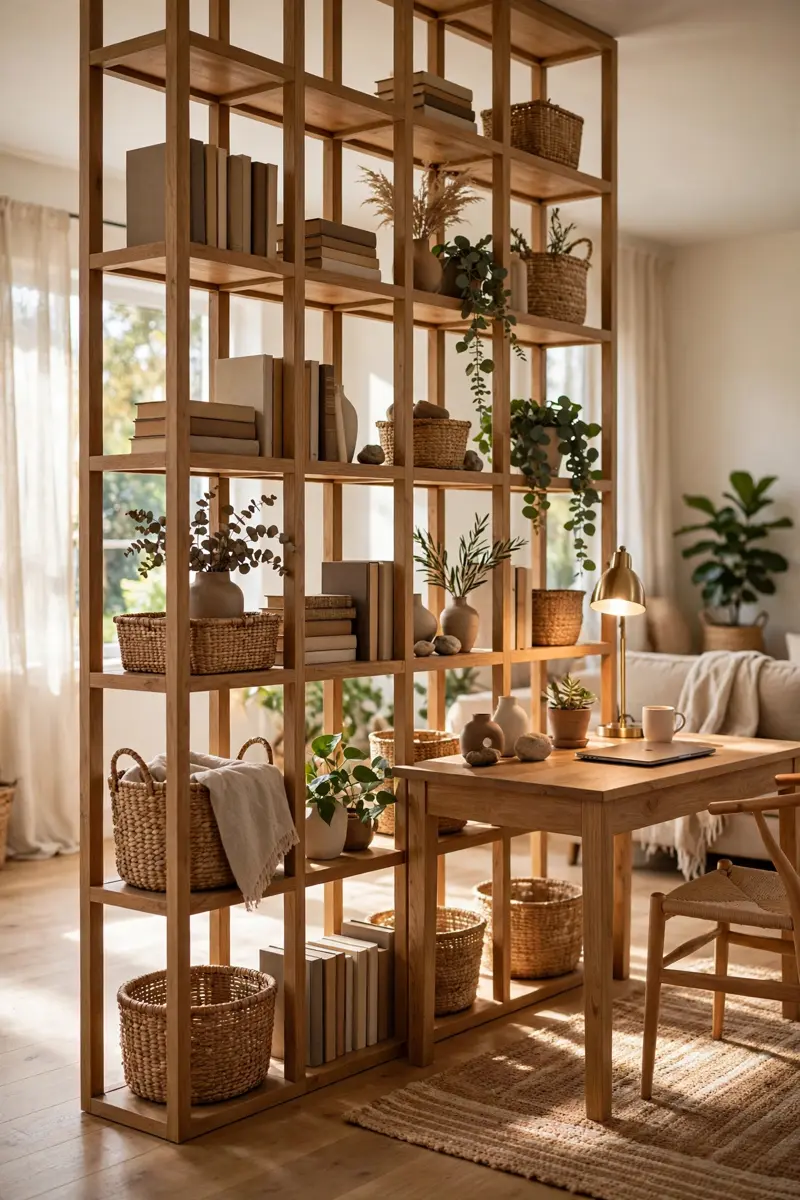
17. Bookshelf Divider Office
A tall open bookshelf can divide a room and create an office zone without building a wall. Place the shelf perpendicular to a wall, put a desk on one side, and you have a private-feeling nook that still lets light through.
Materials: open bookshelf, desk, rug (about $150–$400).
Position the shelf so it blocks sightlines but not windows, style the shelf with books and baskets facing both sides, and anchor it firmly to the wall or floor for safety.
Tip: Leave some shelf cubes open rather than packed — gaps let light through and keep the divider from feeling like a wall. For small home office ideas that stay bright, leave some shelf cubes open for light.
Variation: Use a low bookshelf as a divider if you want to keep sightlines open across the room.
18. Two-Person Narrow Desk
A shared small office does not need two desks — one long, narrow desk along a wall gives two people a full workspace without dominating the room. Give each person a defined zone and shared storage in the middle.
Materials: long narrow desk or two matching desks pushed together, two chairs, shared shelves (about $200–$500).
Run the desk the full length of the wall, place a small divider tray or plant between zones, and use headphones and a shared “quiet hours” agreement to keep the peace.
Tip: Mount a shared power strip under the desk so cables never tangle between the two setups. For small home office ideas that share well, a shared strip stops cable tangles.
Variation: Face two desks toward each other in a tiny room if wall length is limited.

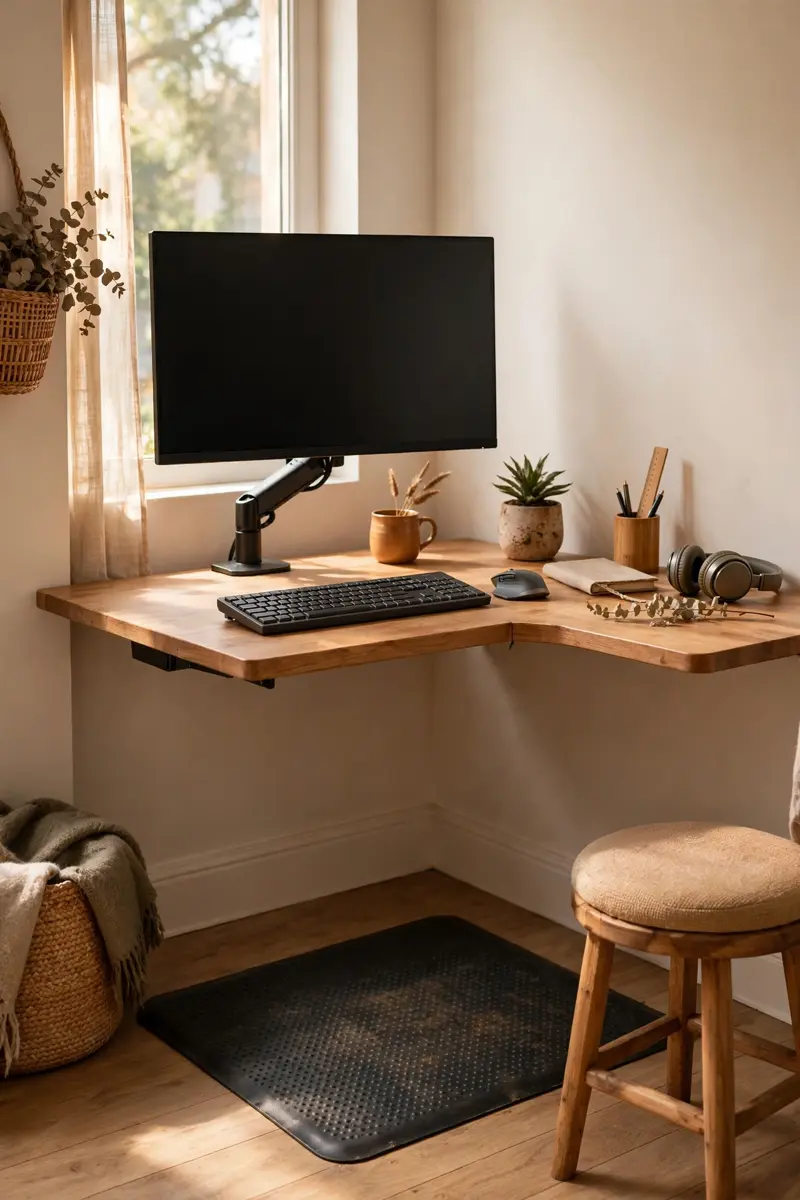
19. Standing Desk Corner
A compact standing desk in a corner lets you alternate between sitting and standing without a large footprint. Corner standing desks use dead corner space and give you more surface than a straight desk of the same width.
Materials: corner standing desk or adjustable frame with corner top (about $180–$450), anti-fatigue mat.
Set the desk height so your elbows rest at about 90 degrees when standing, add a mat for comfort, and keep a stool nearby for seated breaks. A monitor arm frees even more surface.
Tip: Alternate every 30–60 minutes rather than standing all day — your back will thank you. For small home office ideas that protect backs, alternate sitting and standing regularly.
Variation: Use a manual crank desk to save money over an electric model.
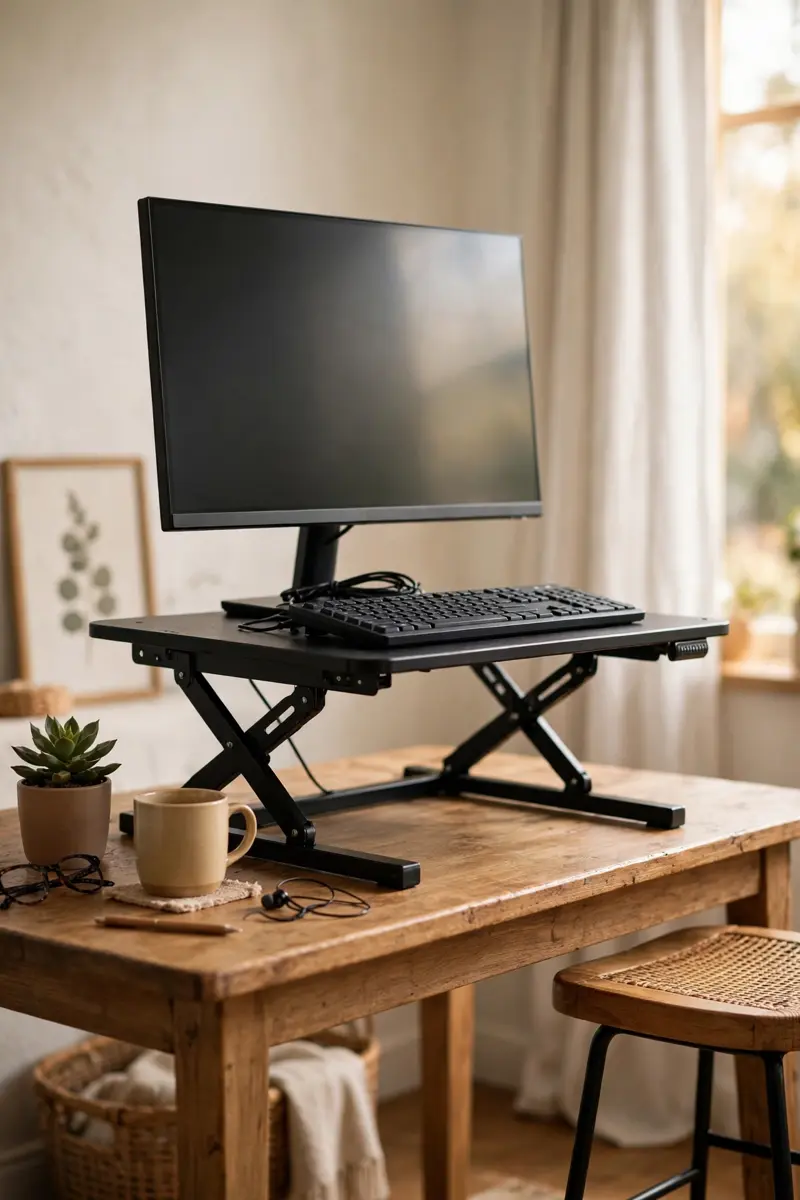
20. Sit-Stand Converter on an Existing Table
If you already have a table you love, a sit-stand converter turns it into a standing desk without replacing furniture. The converter sits on top and lifts your monitor and keyboard to standing height.
Materials: sit-stand converter (about $120–$300), monitor arm if needed.
Place the converter on a sturdy table, adjust it so the screen is at eye level, and keep the keyboard at elbow height. When you want to sit, lower it back down in seconds.
Tip: Check the converter’s weight capacity against your monitor — dual monitors need a heavier-duty model. For small home office ideas that hold monitors, check converter capacity before buying.
Variation: Pair the converter with a bar stool for a comfortable in-between height.
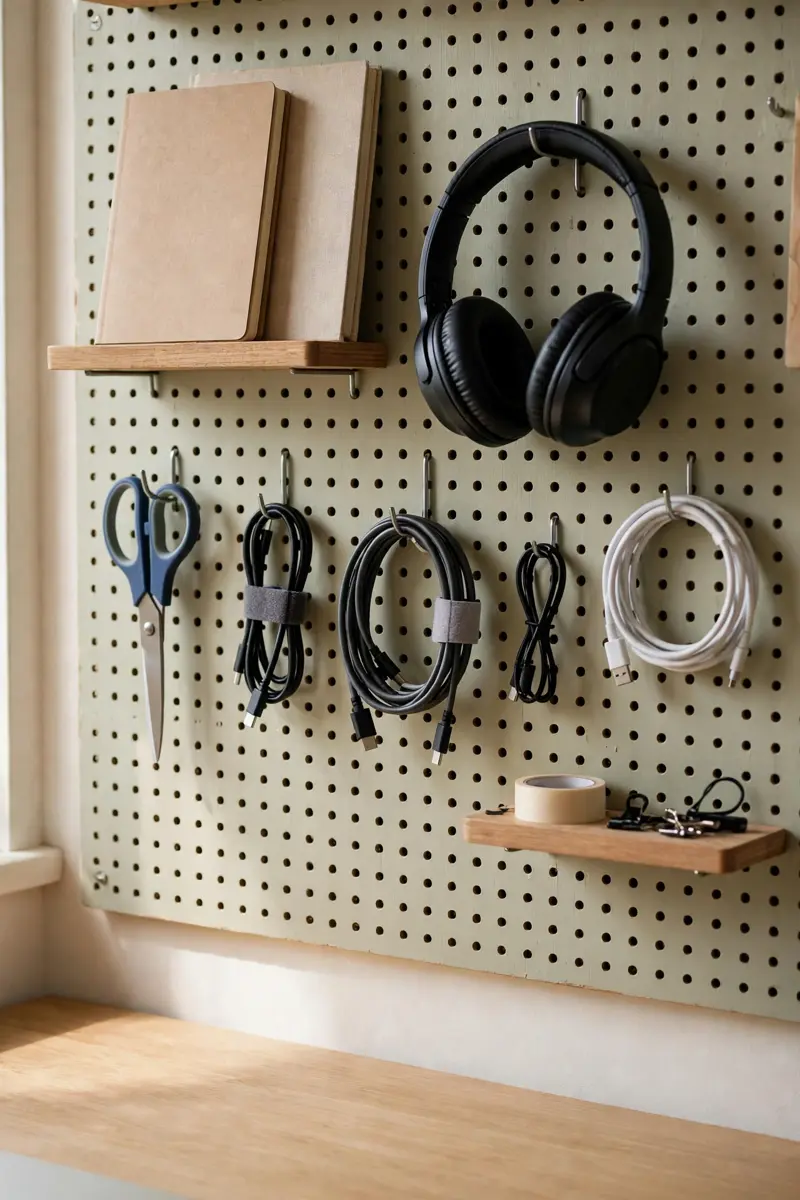
21. Pegboard Wall Organization Office
A pegboard wall above your desk turns vertical space into flexible storage: hooks, shelves, and cups that you can rearrange as your work changes. It keeps supplies visible and off the desk surface.
Materials: pegboard panel, hooks and small shelves, paint (about $40–$120).
Mount the pegboard securely into studs, paint it to match your wall or make it an accent, and arrange hooks for scissors, headphones, cables, and notebooks. Leave breathing room between items so it reads as organized, not cluttered.
Tip: Trace the outline of each tool on the pegboard if you want a tidy, workshop-style look that shows what is missing.
Variation: Use a metal pegboard or grid panel for a more modern, industrial feel.
22. Vertical Shelving Tower Office
When floor space is gone, go up. A tall, narrow shelving tower beside or above the desk holds files, books, and supplies in a footprint no wider than a single shelf, freeing the desk for actual work.
Materials: tall narrow shelf unit, baskets, labels (about $80–$250).
Place the tower beside the desk, label each basket, and keep daily items at arm height and archive items up high. A tower with a mix of open shelves and closed baskets looks tidier than all-open shelving.
Tip: Anchor tall shelving to the wall — a fully loaded tower is a tipping hazard, especially in a small room.
Variation: Use a tower with a built-in desk section for an all-in-one office unit.

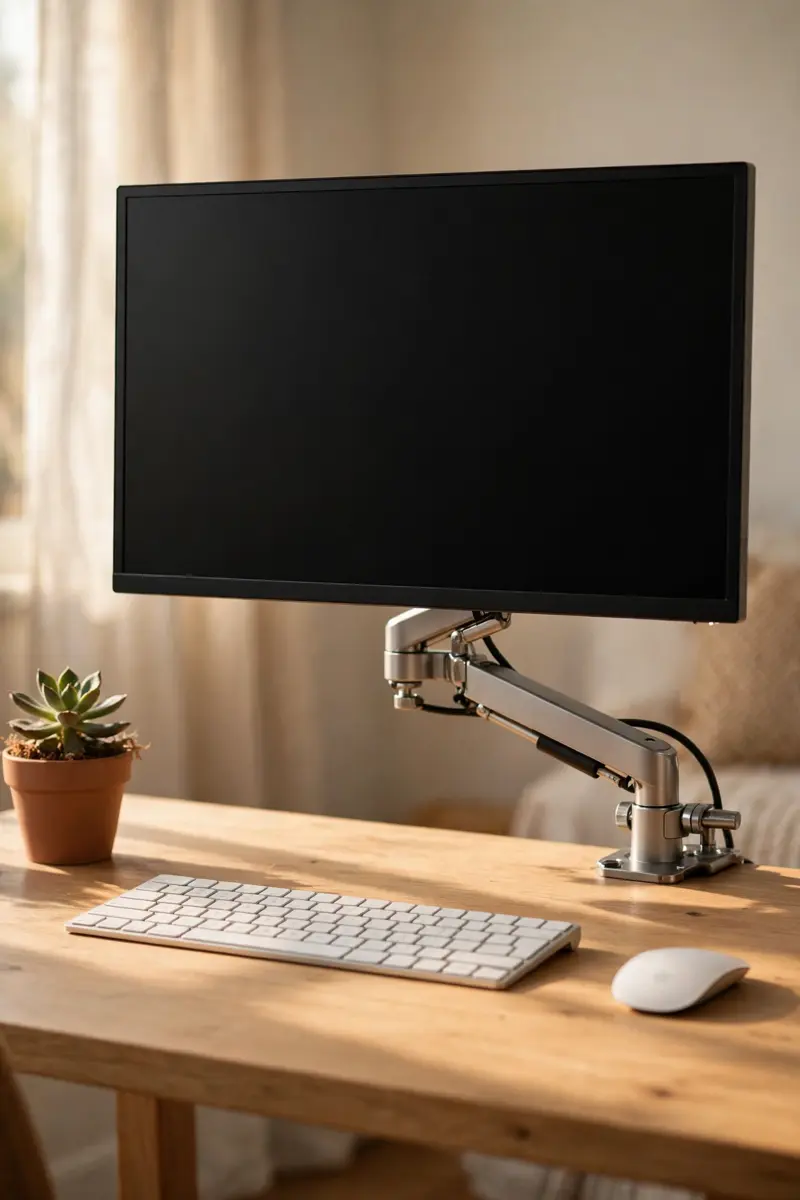
23. Monitor-Arm Minimal Desk
A monitor arm clamps to the back of your desk and holds your screen at exactly the right height, freeing the entire desk surface underneath. For a tiny desk, that reclaimed space is transformative.
Materials: monitor arm (about $30–$90), small desk, wireless keyboard and mouse.
Clamp the arm to a sturdy desk edge, adjust the screen so the top is at or slightly below eye level, and slide the keyboard underneath when you need writing space. Cable clips keep cords tidy along the arm.
Tip: Make sure your desk edge is thick and solid enough for the clamp — glass desks usually need a different mount.
Variation: Add a second arm for a dual-monitor setup without doubling the desk size.
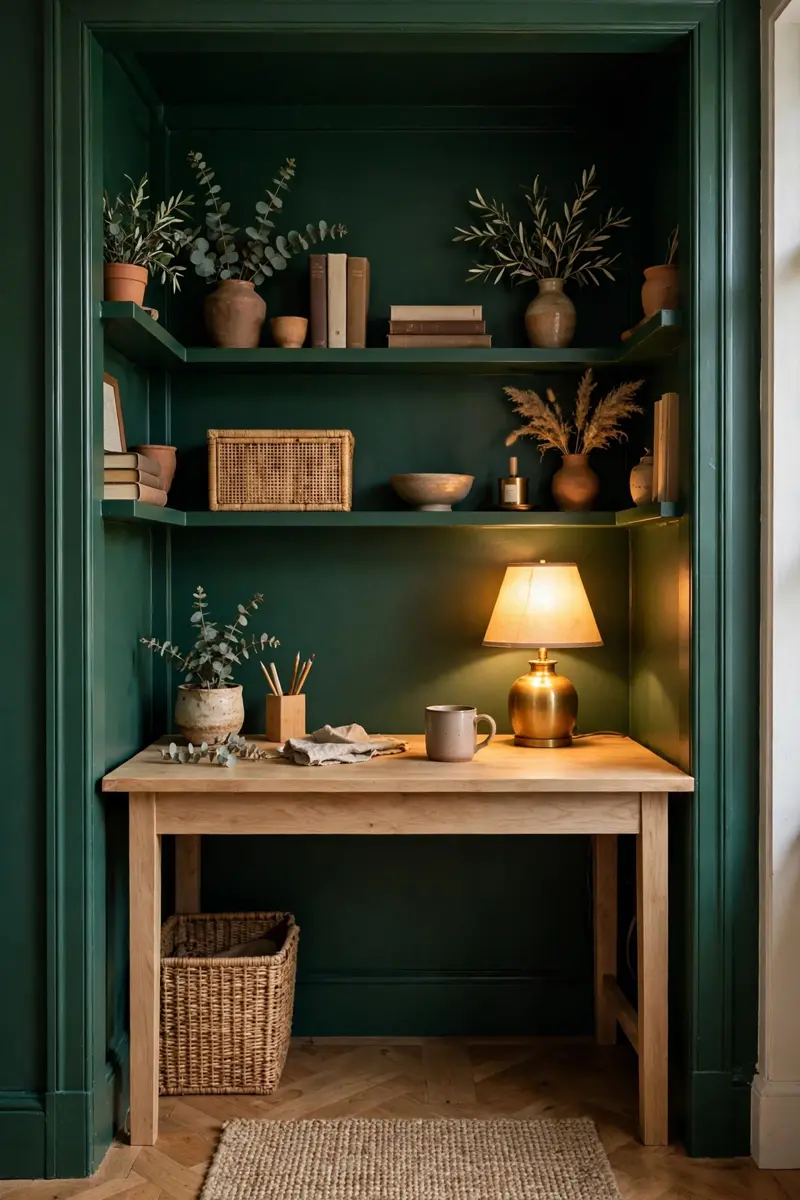
24. Color-Drenched Small Home Office Nook
Color-drenching — painting walls, trim, shelves, and even the ceiling one rich tone — makes a pocket-sized office feel intentional and cozy rather than cramped. Deep green, navy, or warm terracotta all work beautifully in small doses.
Materials: paint, brushes, desk in a matching or contrasting tone (about $60–$180).
Paint the whole nook, including shelves, in one medium-to-deep tone, then add warm lighting and wood accents to keep it inviting. Keep the desk surface light so your work area does not disappear into the color.
Tip: Test the color in the nook’s actual light before committing — deep colors look very different under a desk lamp than in daylight.
Variation: Color-drench just the alcove back wall if a full drench feels too bold.
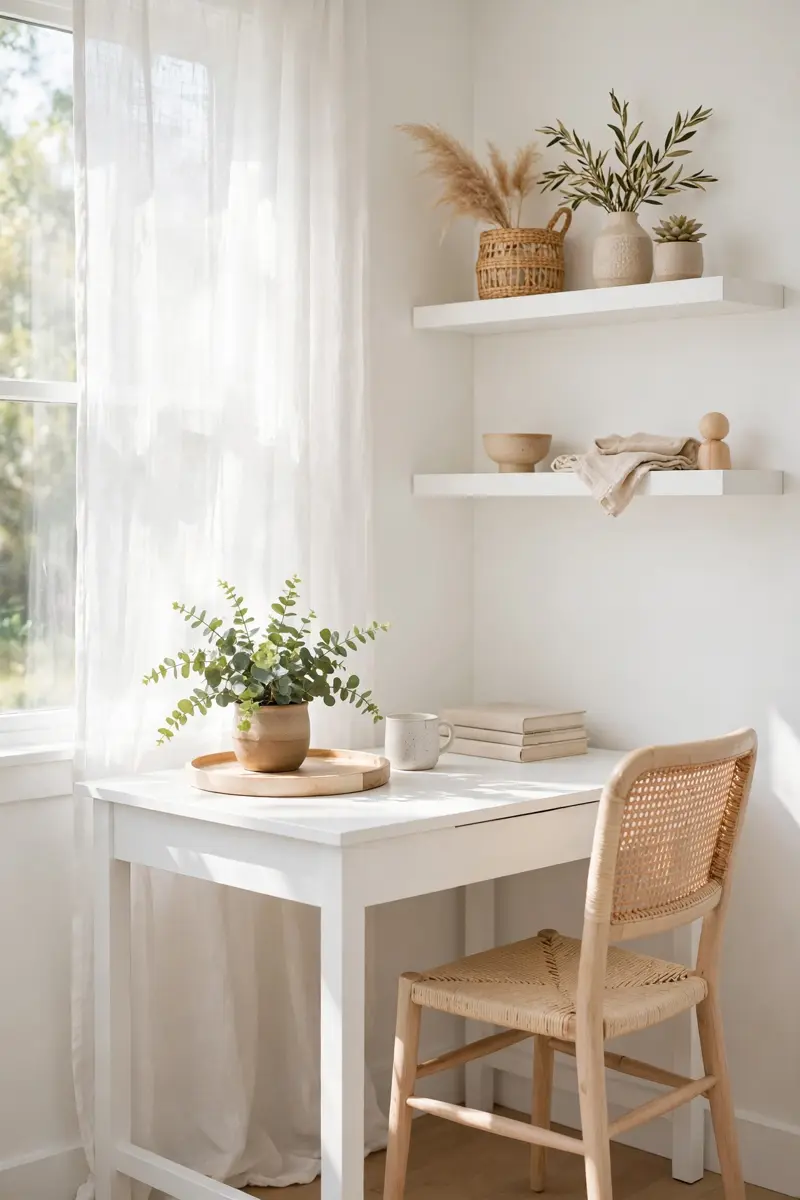
25. White Bright Airy Nook
The opposite approach — all white walls, a white desk, and white shelving — makes a small office feel larger and calmer. Light bounces around the nook, and the space reads as clean even when you are busy.
Materials: white desk and shelves, light chair, sheer curtain (about $120–$300).
Match the desk, shelves, and storage boxes in white or pale wood, add one warm element like a wood tray or a plant, and let natural light do the rest. Keep cables hidden so the bright palette stays serene.
Tip: Add texture — linen, wood, woven baskets — so an all-white nook feels warm, not sterile.
Variation: Add a single bold art print for a focal point that pops against the white.
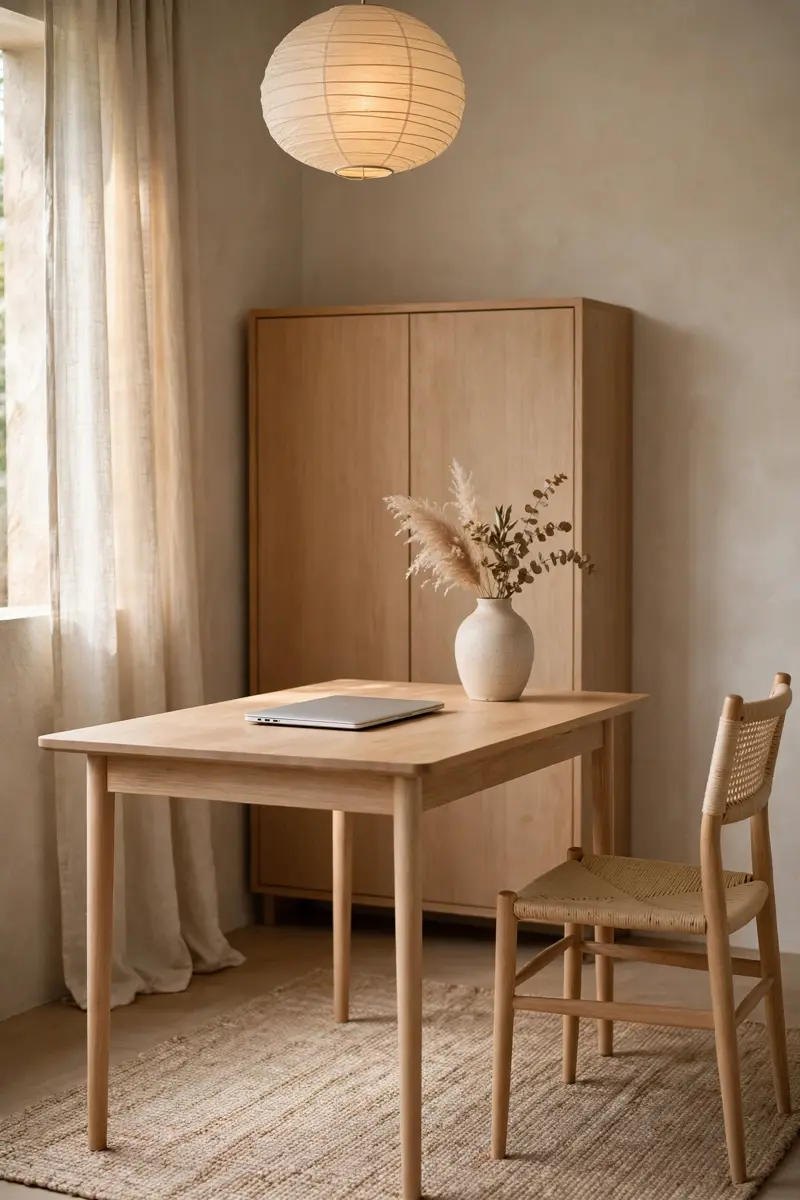
26. Japandi Minimal Office
Japandi style — Japanese minimalism meets Scandinavian warmth — is made for small offices: clean lines, natural wood, low clutter, and a calm palette. Every item earns its place, which is exactly what a tiny workspace needs.
Materials: light wood desk, simple chair, linen and ceramic accents (about $150–$400).
Choose a desk with slim legs, keep the surface to a laptop, a lamp, and one beautiful object, and store everything else in a closed cabinet. Soft, warm lighting completes the calm.
Tip: Follow a one-in, one-out rule for desk objects — Japandi only works if clutter never accumulates.
Variation: Add a low wooden shelf with a single vase and a stack of books for a wabi-sabi touch.
27. Boho Warm Office Nook
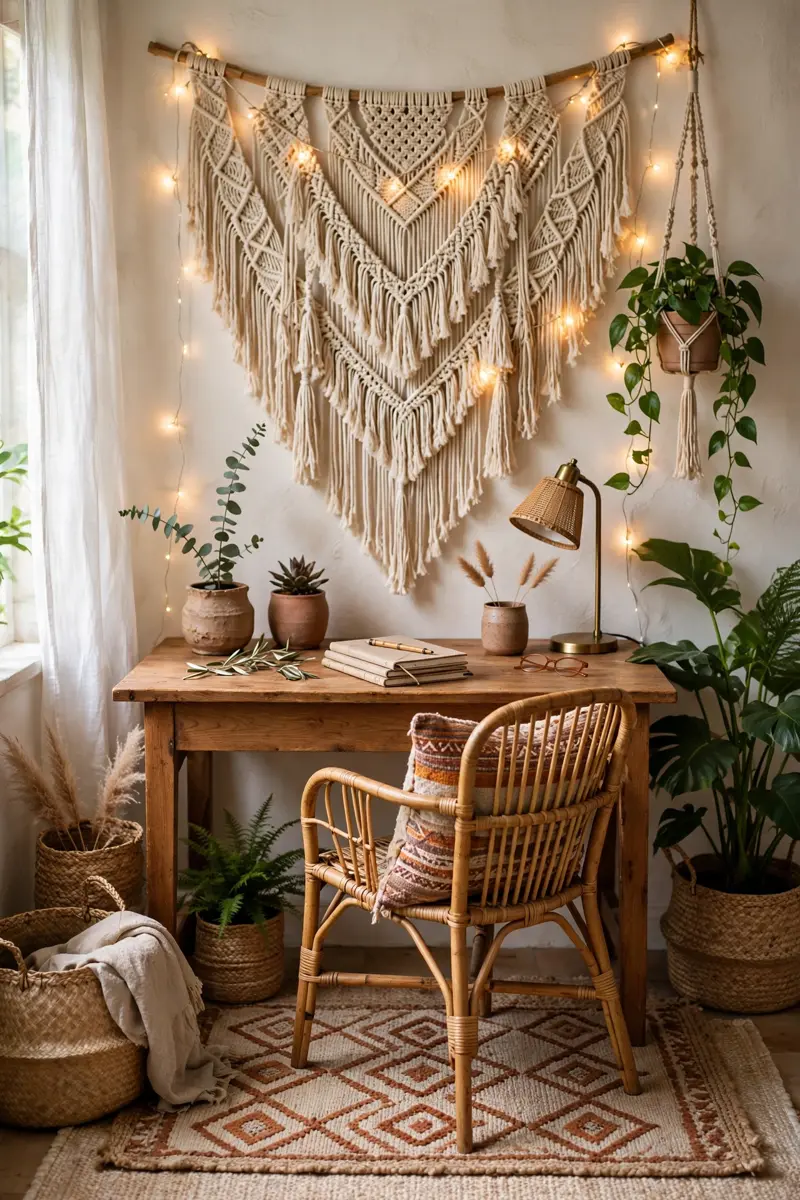
A boho office nook layers warm textures — rattan, woven baskets, macrame, plants, and warm wood — to make a small workspace feel inviting rather than corporate. It is cozy, personal, and forgiving of a little creative mess.
Materials: wood desk, rattan chair or cushion, woven baskets, plants (about $150–$400).
Layer a rug under the chair, hang a woven wall piece above the desk, and use baskets for supplies. Warm fairy lights or a candle-style lamp add glow in the evening.
Tip: Keep the desk surface itself fairly clear — boho texture belongs on the walls and floor, not piled on your work area.
Variation: Add a hanging planter above the desk for greenery that takes zero surface space.
28. Vintage Wood Desk Nook
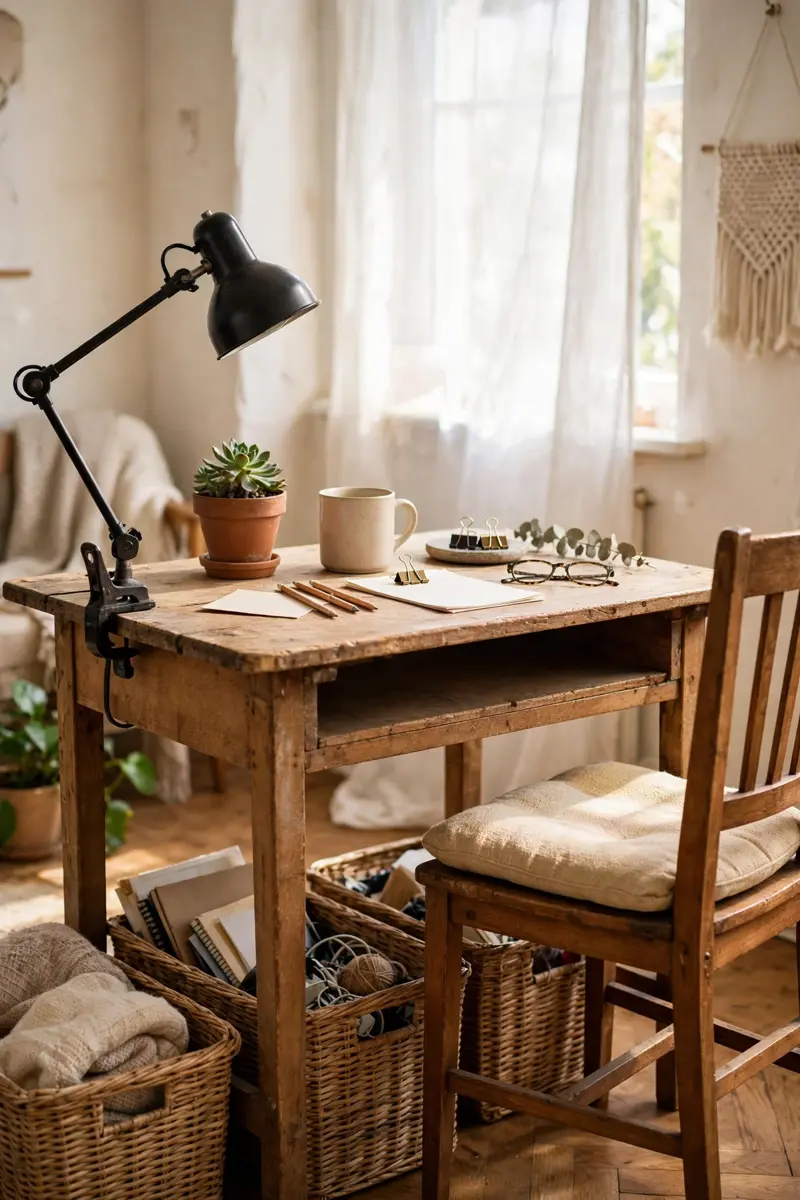
A vintage wood desk — a thrifted writing desk, a farmhouse table, or a mid-century find — brings character that flat-pack furniture cannot match, and its solid construction lasts for decades.
Materials: vintage desk (about $80–$400), comfortable chair, desk lamp.
Sand and oil the wood if it needs love, pair it with a modern ergonomic chair for comfort, and add a simple lamp that suits the desk’s era. Keep the surrounding decor simple so the desk stays the star.
Tip: Measure drawer clearance before buying — some vintage desks have shallow drawers that will not hold modern supplies.
Variation: Paint a scratched vintage desk in a soft sage or cream for a fresh cottage look.

29. Modern Black and Wood Office
Black accents with warm wood is a classic modern pairing that makes a small office look sharp and intentional. A black desk frame, black shelves, and wood surfaces create contrast without visual noise.
Materials: black metal and wood desk, black shelves, warm wood accessories (about $150–$400).
Use black for the frame and hardware, wood for the desk top and shelves, and keep accessories minimal. Good task lighting is essential, since black surfaces absorb light.
Tip: Add a light-colored rug or wall art to keep a black-and-wood office from feeling dark.
Variation: Swap black for matte charcoal if pure black feels too harsh in your room.

30. Plant-Filled Green Office
Plants are the easiest way to make a small office feel alive: they soften hard edges, improve the mood of the room, and give your eyes a rest from the screen. Even a tiny desk can host a trailing pothos or a small succulent.
Materials: desk, 3–5 plants in matching pots, wall hooks or shelf (about $50–$150).
Place one trailing plant on a shelf above the desk, one small plant on the desk itself, and a floor plant beside it if space allows. Choose low-light plants like pothos or snake plants if your nook is dim.
Tip: Water on a schedule and use pots with drainage — a dead plant on a desk is worse than no plant at all.
Variation: Hang a macrame planter from the ceiling to add greenery without using any surface.

31. Art-Led Gallery Wall Office
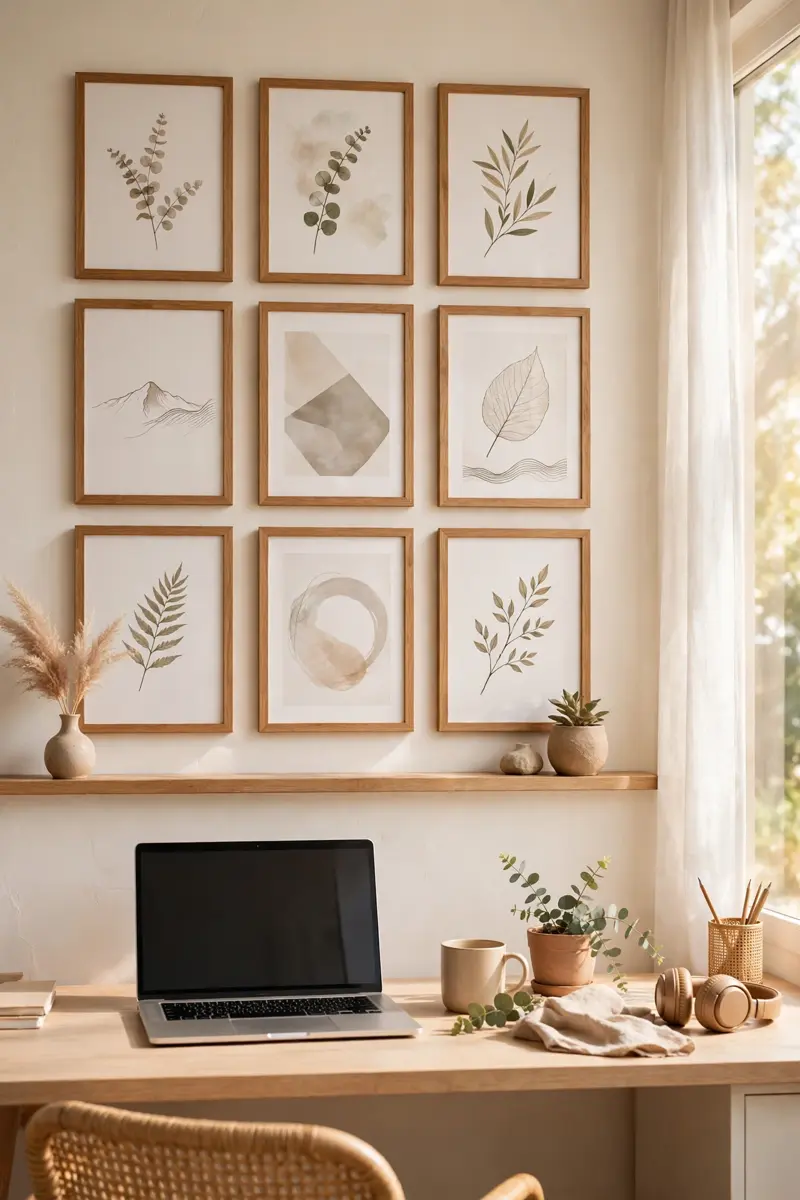
An art-led office puts a gallery wall above the desk, so your video-call background and your daily view are both beautiful. Framed prints, photos, and a small shelf of objects turn a plain wall into inspiration.
Materials: frames, prints, picture ledge or hooks (about $60–$200).
Hang art at eye level above the desk, mix frame sizes but keep one consistent element — same frame color or same mat — and leave the desk surface clear so the wall does the talking.
Tip: Lay the arrangement on the floor first and photograph it before hanging — you will spot spacing problems instantly.
Variation: Use a picture ledge so you can swap prints seasonally without new holes.
32. Video-Call Ready Backdrop Office
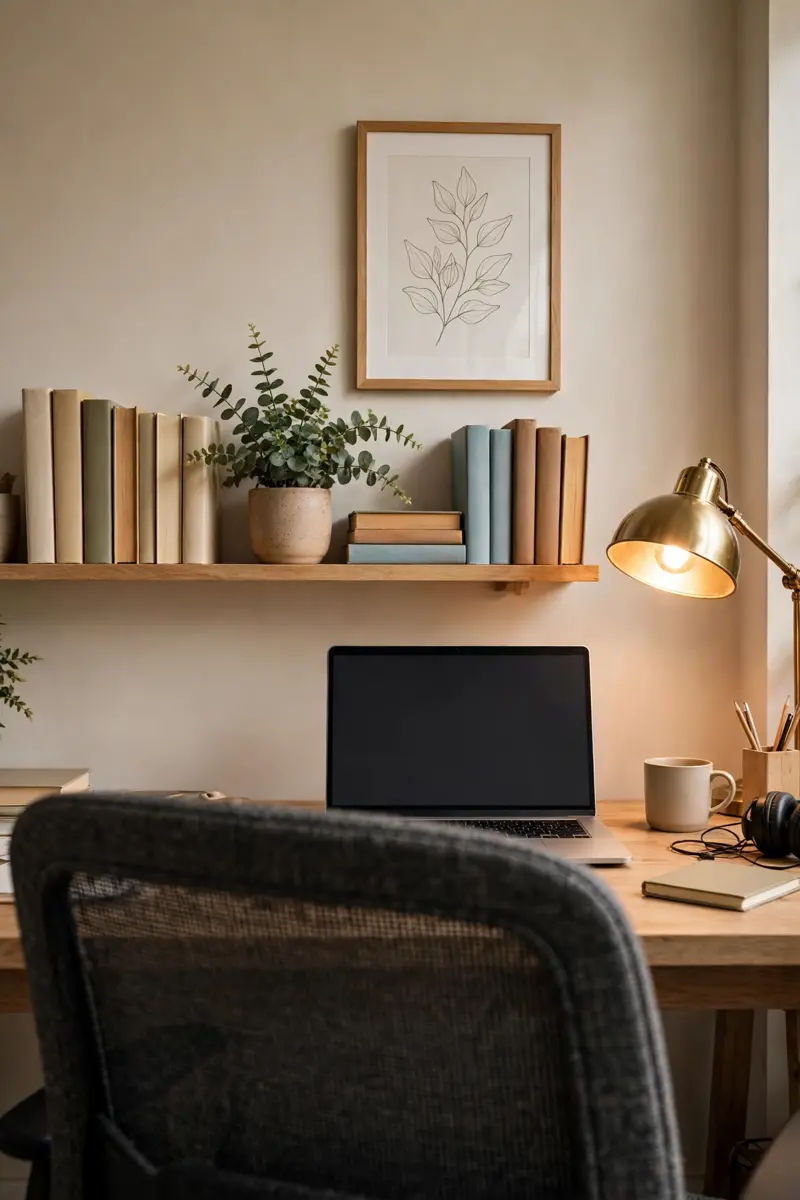
If you spend your day on video calls, design the wall behind you first. A tidy shelf, a plant, soft lighting, and a neutral wall color make you look polished without a virtual background.
Materials: shelf, plant, warm lamp, neutral paint if needed (about $50–$180).
Clear the background wall of clutter, add one shelf with books and a plant, and place a lamp in front of you (not behind) for flattering light. Test the view on a real call before finalizing.
Tip: Sit about an arm’s length from the camera with light on your face — distance and light matter more than decor.
Variation: Add a framed print at shoulder height for a focal point that is never distracting.
33. Renter-Friendly Small Home Office
Renters need an office that leaves no trace: no major drilling, no built-ins, no paint you cannot undo. Freestanding furniture, adhesive hooks, and tension rods give you a full office that moves with you.
Materials: freestanding desk, adhesive hooks, tension rod and curtain, rolling cart (about $150–$400).
Use a desk that stands on its own, hang supplies with adhesive hooks rated for the weight, and hide the office behind a curtain on a tension rod when the workday ends. Everything packs up in an afternoon.
Tip: Photograph the walls before you move in, and use removable hooks only where the lease allows them.
Variation: Use a leaning desk that needs only one small anchor, or none at all, for the lightest footprint.

34. Budget Office Under $100
A genuinely useful small office can cost under $100 if you shop secondhand and keep it simple: a thrifted table, a dining chair with a cushion, a clip lamp, and a few baskets for storage.
Materials: thrifted table (about $30–$50), chair cushion, clip lamp, baskets (total under $100).
Hunt thrift stores and marketplace listings for a sturdy table at desk height, add a cushion to a chair you already own, and use baskets instead of drawers. Spend the remaining budget on lighting, which matters more than the desk itself.
Tip: Test any secondhand table for wobble before you buy — a shaky desk ruins typing comfort.
Variation: Use a folding table and a folding chair if you need the office to disappear completely.
35. DIY Plywood Desk Build
A DIY plywood desk is a weekend project that gives you an exact fit for an awkward wall, alcove, or corner — at a fraction of the cost of custom furniture. One sheet of plywood, some legs or brackets, and a finish are all you need.
Materials: plywood sheet, legs or brackets, stain or paint, screws (about $80–$200).
Cut the top to your wall’s exact width, sand the edges smooth, finish with stain or paint, and mount it on brackets or hairpin legs. Add a cable grommet or clip to keep cords tidy.
Tip: Seal plywood edges with edge banding or extra sanding and paint — raw edges splinter and look unfinished.
Variation: Build a matching plywood shelf above the desk from the same sheet for a coordinated set.

36. Repurposed Vanity Desk
An old dressing table or vanity makes a charming small desk: it already has drawers, a mirror you can remove or keep, and a height that suits seated work. It is a favorite thrift-store conversion for bedrooms.
Materials: vintage vanity (about $60–$250), chair, lamp, drawer organizers.
Remove or keep the mirror depending on your needs — a mirror can double as a video-call check — and add drawer organizers for pens, chargers, and notebooks. A small lamp on one side completes the setup.
Tip: Check the knee clearance under a vanity before buying — some have a center drawer that blocks comfortable seating.
Variation: Paint the vanity a bold color and swap the knobs for a custom look.

37. Dining Room Dual-Purpose Office
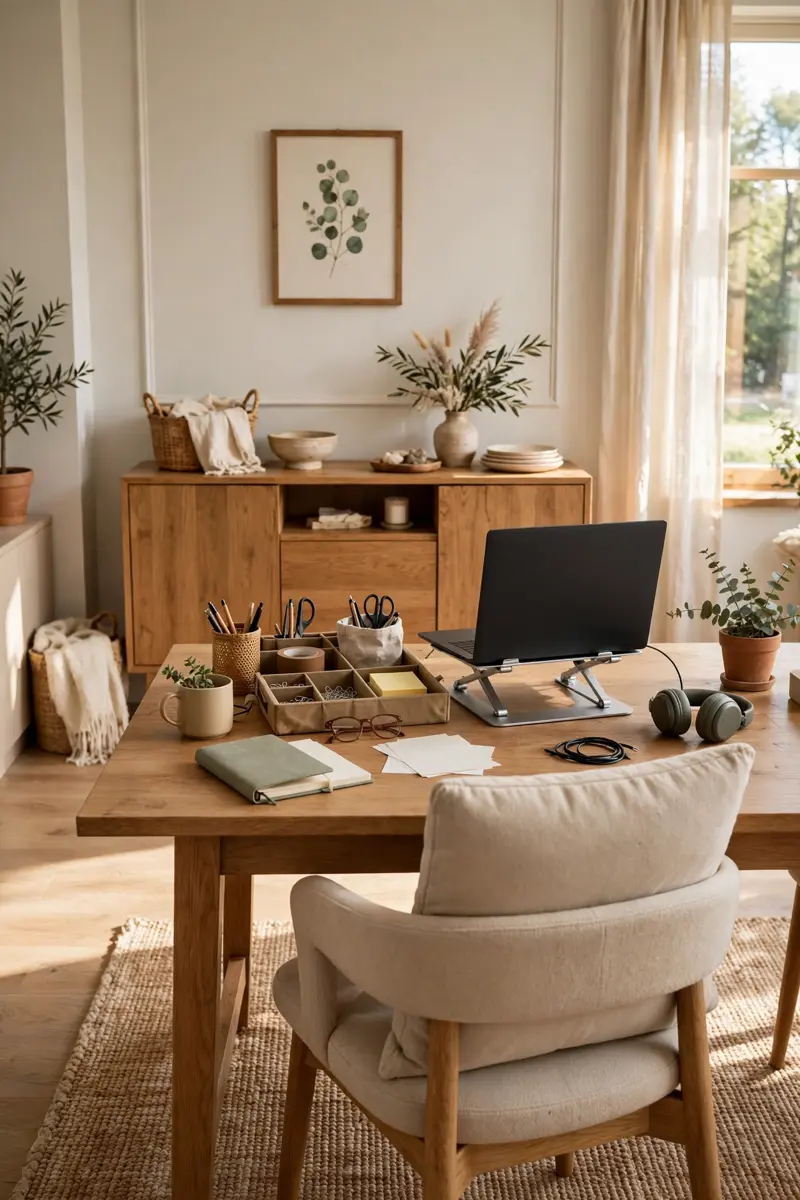
A dining room desk zone lets one table serve meals and work, as long as the work kit is portable and the boundary is clear. A tray, a laptop stand, and a chair with good back support make the switch easy.
Materials: tray or caddy, laptop stand, supportive chair cushion (about $50–$150).
Keep your work kit in a single caddy that lives on a sideboard, set up at the dining table for work sessions, and clear it completely for meals. A laptop stand improves ergonomics over a flat laptop on a dining table.
Tip: Agree on work hours for the dining table with the household, so meals never compete with deadlines.
Variation: Claim a sideboard or buffet as a permanent work station and use the table only for overflow.
38. Balcony and Sunroom Micro-Office
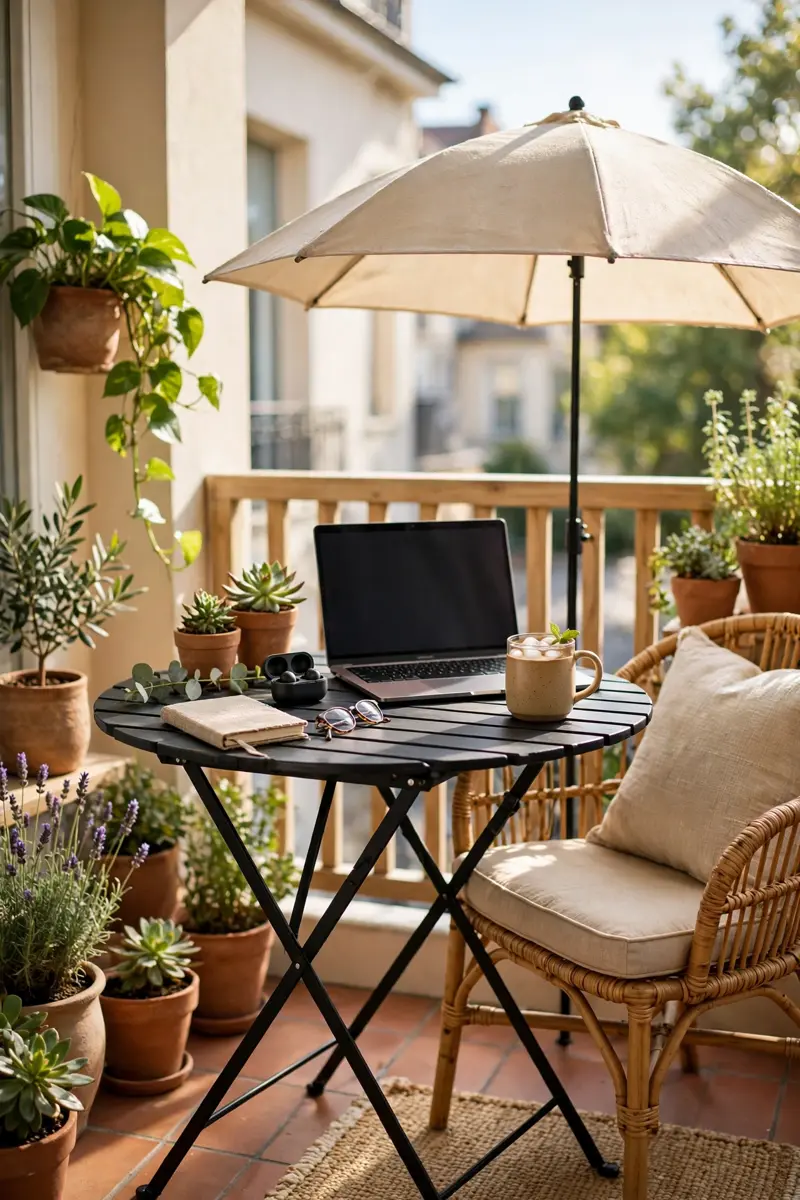
Weather permitting, a balcony or sunroom makes a glorious part-time office: fresh air, natural light, and a view that no indoor nook can match. A folding bistro table and a comfortable chair are all you need to start.
Materials: folding table, weather-resistant chair, cushion, small shade (about $80–$250).
Choose lightweight furniture you can bring inside in bad weather, add a cushion for long sessions, and use a shade or umbrella to cut screen glare. Keep electronics in a bag you can grab quickly if rain arrives.
Tip: Never leave a laptop unattended on a balcony, and bring a power bank so you are not hunting for an outdoor outlet.
Variation: Enclose the balcony with clear panels or use a sunroom year-round if your climate allows it.
Frequently Asked Questions
How much space do you need for a small home office?
You need far less than you think. A desk about 100 cm wide and 50–60 cm deep, plus room to pull a chair out, is enough for most laptop-based work — roughly six square feet of floor. The real requirements are good light, a chair that supports your back, and storage that keeps the surface clear. If you can fit those three things, you have a workable office, whether it is in a corner, a closet, or under the stairs.
Can you fit a home office in a bedroom corner?
Yes, and it is one of the most popular small home office ideas for a reason. Choose a narrow desk, place it at right angles to the window to avoid glare, and create a boundary — a rug under the chair, a curtain, or a folding screen — so work does not bleed into rest. Closing the office off at night, even just by folding a screen across it, helps your brain switch off.
How do you hide a home office when you are not working?
The best hideaway options are furniture that closes: a cloffice with doors, a secretary desk, a fold-down wall desk, or an armoire office. If your desk cannot close, use a curtain on a tension rod, a folding screen, or a simple shutdown ritual — laptop closed, tray packed away, surface wiped — that signals the end of the workday even in an open-plan room.
What lighting works best in a small home office?
Layer your lighting. Natural daylight is best during the day, with your screen at right angles to the window to avoid glare. Add an adjustable desk lamp for task work, and a warm ambient light — a wall lamp, LED strip, or fairy lights — for evenings. For video calls, light your face from the front, never from behind, so you do not appear as a silhouette.
How do you make a small office comfortable for full-time work?
Ergonomics matter more than decor for full-time work. Set your screen at or slightly below eye level, use a separate keyboard and mouse with a laptop, support your feet, and choose a chair that fits under the desk and supports your lower back. Take regular breaks, stand up every hour, and keep the room’s temperature and noise comfortable — soft furnishings like rugs and curtains reduce echo in small, hard-floored spaces.
Conclusion
A small home office is not a compromise — it is a design challenge with a satisfying answer. Whether you carve out a cloffice, fold a desk down from the wall, claim a bedroom corner, or build a plywood desk to fit an awkward alcove, the principles are the same: pick the right spot, go vertical with storage, light it well, and give work a clear edge so the rest of your home stays yours.
Start with one idea from this list that fits the space you already have, and build from there. You might be surprised how little room a great workspace actually needs — and how much better your workday feels once you have one. If you found an idea you love, save this post to Pinterest so you can come back to it when you are ready to build your own small home office.
Looking for more ideas for the rooms around your office? See our desk in living room ideas for workspaces that blend into shared rooms, our small apartment decor ideas for maximizing every inch, and our small living room decor ideas on a budget for affordable styling. For more inspiration, explore The Spruce’s small home office ideas and Better Homes & Gardens’ small office ideas.


Leave a Reply