
If your living room feels unfinished, the windows are usually the reason. Bare glass looks cold, and the wrong panels can make a lovely room feel short, dark, or cluttered. The right drapes for living room windows fix all three at once: they soften the light, frame the view, and pull the whole room together.
In this guide, you will find 10 drapes for living room ideas that work in real homes, not just showrooms. Each idea includes honest costs, simple hanging steps, and a variation, so you can pick the look that fits your light, your budget, and your style. Start with one window, get the length right, and the rest of the room suddenly looks intentional.
The most common mistake is buying panels before measuring, which is why this guide keeps returning to rod height, width, and length. Get those three numbers right and almost any fabric looks good. The best drapes for living room windows are rarely the most expensive ones; they are the ones that fit the window properly and suit how you actually live in the room.
1. Sheer White Linen Layers for Soft Daylight
Sheer white linen is the easiest starting point for drapes for living room windows because it brightens the room without blocking the view. The fabric filters harsh sun into a gentle glow, takes the edge off television glare, and still lets you see trees and sky outside during the day.
You need two to four sheer linen-look panels ($20–$40 per panel), a slim rod ($15–$30), and clip rings or a rod pocket. Total cost: about $55–$130 per window, depending on width and whether you add a second layer later.
Measure from your rod position to just above the floor, then buy panels at least that long. Hang the rod 4–6 inches above the frame and 6–10 inches wider than the frame on each side. Slide the panels on, let them fall straight, and steam out the creases for a clean finish.
Tip: Choose white or ivory sheers first, because they work with every wall color and let you change the outer drape later without starting over.
Variation: Layer the sheers over woven wood shades for texture and evening privacy, keeping the daytime look light and airy.
Sheers are also the easiest drapes for living room upkeep, because most linen-look panels wash on a gentle cycle and steam back into shape in minutes. That low maintenance is part of why they suit busy family rooms so well.

2. Floor-to-Ceiling Velvet Panels in a Warm Jewel Tone
Velvet panels make a living room feel cozy and grown-up, especially in emerald, navy, or warm rust. The heavy fabric absorbs sound, blocks drafts, and gives a plain wall the feeling of a finished, tailored backdrop. Drapes for living room drama do not get much simpler than this.
You need two velvet panels ($40–$90 per panel), a sturdy rod with strong brackets ($30–$60), and wall anchors if you are hanging into drywall. Total cost: about $110–$240 per window, with custom lengths costing more.
Mount the rod close to the ceiling, not just above the frame, so the eye travels upward. Let the panels kiss the floor or break slightly at the bottom for a relaxed, luxe look. Keep the panels wide enough to stack clear of the glass when open, so you never lose daylight.
Tip: Test one velvet swatch in your evening light before you order, because jewel tones can read much darker after sunset than they do in a store.
Variation: Use velvet only on the outer panels and keep ivory sheers behind them, so the room stays bright by day and cocooned at night.

3. Warm Neutral Linen Hung High to Make the Room Look Taller
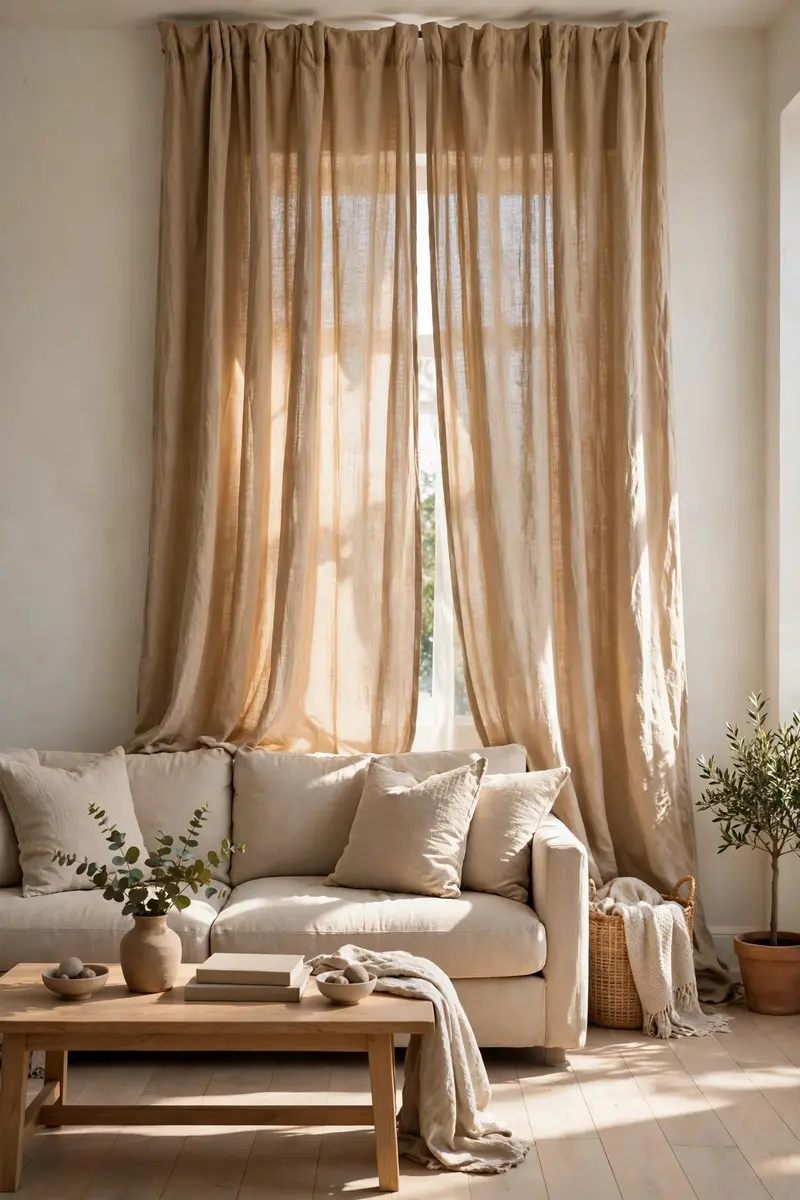
When a ceiling feels low, hanging drapes for living room height is the fastest fix. Warm neutrals like sand, oat, and soft taupe draw the eye upward, especially when the rod sits near the ceiling and the panels run all the way to the floor.
You need two to four linen-blend panels ($30–$70 per panel), a rod ($20–$45), and finials that match your other hardware. Total cost: about $80–$185 per window, before any lining or steaming.
Hang the rod 8–12 inches above the frame, or just below the ceiling in a standard-height room. Extend it 8–12 inches past each side of the frame, then measure from the rod to half an inch above the floor. Avoid panels that stop several inches short, because that high-water look makes ceilings feel lower.
Tip: Match the drape color to your wall color for a seamless look, or go one shade darker for gentle definition without a hard visual break.
Variation: Choose a subtle slub or woven texture instead of flat fabric, so neutral panels still add interest up close.
Warm neutrals also age well, which matters when drapes for living room windows stay up for years. Sand and oat tones do not date as quickly as bold colors, and they still work if you repaint or swap the sofa later.
4. Layered Sheers Plus Blackout Drapes for Day and Night
Layering is the 2026 move for drapes for living room flexibility: a sheer closest to the glass handles daytime, and a heavier outer drape closes at night. You get soft light in the morning, real privacy after dark, and better insulation in winter, all from one window.
You need a double rod ($35–$70), two sheer panels ($20–$40 each), and two blackout or lined panels ($35–$80 each). Total cost: about $145–$300 per window, which still beats replacing the window treatment twice.
Install the double rod with the sheer track closest to the glass. Hang the sheers first, then the outer drapes, keeping both layers wide enough to stack off the glass. Close the outer layer only when you need privacy or darkness, and leave the sheers drawn for a soft daytime glow.
Tip: Keep both layers in the same color family so the window reads as one intentional treatment instead of two competing ideas.
Variation: Swap the blackout layer for a medium-weight linen drape if you want privacy without full darkness, which suits rooms that double as daytime workspaces.

5. Patterned Statement Drapes for Living Room Art
If your room feels plain, patterned drapes for living room walls can carry the whole design. A botanical print, a classic stripe, or a soft geometric gives the room a focal point, so you can keep the sofa and rug simple and let the windows do the talking.
You need two patterned panels ($35–$85 per panel), a simple rod in black or brass ($25–$50), and solid cushions that pick up one color from the print. Total cost: about $95–$220 per window.
Pick a pattern with a background color close to your wall color, so the print feels bold but not loud. Hang the panels high and wide, as in the ideas above, and let the pattern repeat fall naturally without forcing perfect symmetry. Keep other patterns in the room small and quiet, so the drapes stay the star.
Tip: Order a fabric swatch and live with it for three days, because a large-scale pattern looks very different across a full window than it does in a small online photo.
Variation: Use the pattern on one statement window only, and dress the other windows in a matching solid, which keeps the room lively without feeling busy.
One statement window is often enough, because drapes for living room impact come from scale. A single large patterned window can anchor the seating area, while the remaining windows quietly support it instead of competing.

6. Two-Tone Panels for a Custom Look on a Ready-Made Budget
Two-tone drapes look custom because the color blocking adds structure, but you can build the look from ready-made panels. A darker outer panel with a lighter inner panel, or a solid panel with a contrasting leading edge, frames the window like a tailored border. Drapes for living room style on a budget rarely look this considered.
You need two outer panels ($30–$60 each) and two inner panels in a lighter shade ($25–$50 each), plus a single wide rod ($25–$45). Total cost: about $110–$205 per window.
Hang all four panels on one rod, with the lighter panels closest to the glass and the darker panels on the outside. When the drapes are open, the lighter layer peeks out and softens the edge. When closed, the darker layer dominates and the room feels grounded and finished.
Tip: Keep the two tones within the same family, such as charcoal with soft grey or terracotta with cream, so the contrast feels deliberate rather than random.
Variation: Try a contrasting trim or leading-edge band on solid panels if you prefer a quieter room with just a hint of custom detail.

7. Clean Grommet Panels on a Black Rod for Modern Rooms
Grommet-top panels are the low-fuss choice for modern living rooms: they slide smoothly, fall in even folds, and look neat without pleats or tiebacks. Paired with a slim black rod, they suit contemporary, industrial, and transitional rooms alike. These drapes for living room simplicity are also the easiest to open and close every day.
You need two to four grommet panels ($25–$55 per panel) and a black metal rod with matching rings ($25–$45). Total cost: about $75–$155 per window, making this one of the most affordable polished looks.
Choose a rod diameter that fits the grommets without sticking, usually around 1 inch for standard panels. Hang the rod high and wide, thread the panels on, and let the folds settle for a day before you judge the length. A quick steam removes packaging creases and helps the folds hang evenly.
Tip: Buy one extra panel per window if you want fullness when closed, because skimpy panels that barely cover the glass are the most common modern-room mistake.
Variation: Swap the black rod for brushed brass if your room already has warm metals, keeping the same clean grommet panels for a softer modern feel.
Grommet panels also suit renters well, since drapes for living room rentals need to go up and come down without damage. A tension-friendly rod and clip-free panels mean you can take the whole look with you when you move.

8. Rod-Pocket Cottage Drapes With Simple Tiebacks
Rod-pocket drapes bring a relaxed, cottage feel that heavier treatments cannot match. The gathered top softens the window, the fabric moves gently in a breeze, and simple tiebacks let you shape the light during the day. Drapes for living room coziness often come down to this easy, gathered look.
You need two rod-pocket panels ($20–$45 per panel), a slim rod ($15–$30), and fabric tiebacks ($10–$20 per pair). Total cost: about $65–$140 per window, before any sheer layer underneath.
Slide the panels onto the rod and gather them evenly, aiming for about 1.5 times the window width in total fabric. Hang the rod just above the frame for a casual feel, or higher for a slightly dressier cottage look. Pull the tiebacks to about two-thirds of the height, which keeps the window framed without blocking the view.
Tip: Wash and dry the panels once before you hang them, because cotton gathers can shrink slightly and you want the final length, not the store length.
Variation: Add a short valance across the top to hide the rod hardware, which suits traditional and farmhouse rooms that like a finished edge.

9. Drapes as a Room Divider in an Open-Plan Living Room
In an open-plan home, drapes can do more than dress a window: they can zone the space. A ceiling track with flowing panels separates a reading corner, a workspace, or a dining area without building a wall, and you can pull the panels back when you want the room open again. Drapes for living room zoning are one of the most practical 2026 trends.
You need a ceiling-mounted track ($40–$90), four to six lightweight panels ($25–$50 each), and ceiling anchors rated for the track. Total cost: about $140–$390, depending on the span and fabric weight.
Fix the track to ceiling joists or use proper anchors, then hang the panels so they just clear the floor. Leave enough stack space at one end so the panels disappear when open. Choose a fabric that matches your window drapes, so the divider feels like part of the room rather than an afterthought.
Tip: Pick a light or semi-sheer fabric for a divider, because heavy panels can make an open room feel closed off even when they are pulled back.
Variation: Use the same track idea across a wide doorway or a studio alcove, which creates a guest nook in minutes without any construction.
A fabric divider is also kinder to a budget than a built wall, and drapes for living room zoning can be changed with the seasons. Swap a light summer panel for a heavier winter one, and the same track gives the room a different feeling.

10. Bay Window Drapes for Living Room Reading Nooks
Bay windows are beautiful and awkward in equal measure, but a bendable track solves the angles. Full-length panels follow the curve, soften the corners, and turn the bay into a cozy reading nook with cushions and a throw. Drapes for living room bay windows work best when the track, not the rod, does the bending.
You need a bendable curtain track kit ($45–$95), three to five panels ($25–$55 each), and a window seat cushion if you do not already have one. Total cost: about $120–$370 per bay, depending on the number of panels.
Shape the track to follow the bay, fixing it to the ceiling or high on the wall, then test the glide before you hang the panels. Hang the panels so they stack at the outer edges during the day, keeping the seat and the view clear. Add a soft throw and a small lamp, and the bay becomes the room’s favorite corner.
Tip: Measure each bay section separately and add the sections together, because guessing one total width is how bay tracks end up short.
Variation: Pair the bay drapes with a Roman shade inside the bay for extra privacy, keeping the outer panels purely decorative and soft.

How to Measure Before You Buy
Before you order anything, measure twice. Start with the width of the window frame, then decide how far past the frame your rod will extend. For fullness, your total panel width should be 1.5 to 3 times the window width, with 2 to 2.5 times the sweet spot for most living rooms.
Next, measure from your planned rod height to the floor. Floor-length panels should kiss the floor or hover half an inch above it, while a slight puddle of 1–3 inches suits formal rooms you do not walk through often. Write both numbers down before you shop, because guessing is how panels end up too short. For more measuring guidance, see the step-by-step curtain guide from Pottery Barn and the Planner5D curtain length guide.
If your windows are different sizes, measure each one separately instead of assuming they match. Drapes for living room windows often need different panel counts per window, especially in older homes where frames vary by an inch or two.
Finally, check what sits under the window before you choose a length. Radiators, heaters, and low furniture can all change the right answer, and drapes for living room safety should never rest directly on a heat source. Floor-length panels suit clear walls, while a shorter, tailored length is the smarter call above a radiator.
If you are refreshing the whole room, not just the windows, our small living room decor ideas on a budget and rustic sage green living room ideas pair well with the looks above. A brown leather couch living room also benefits from soft drapes, which balance the weight of the leather.
Frequently Asked Questions
What length should drapes be for a living room?
Floor-length drapes work best in most living rooms. Measure from the rod to about half an inch above the floor for a tailored finish, or let the fabric kiss the floor for a softer look. Avoid panels that stop several inches above the floor, because they make the room look unfinished. That is why floor-length drapes for living room windows are the safest default.
How wide should drapes for living room windows be?
Your total panel width should be 1.5 to 3 times the width of your window. That fullness matters most when the drapes are closed, but it also helps open panels stack neatly at the sides instead of looking skimpy. For a 60-inch window, aim for 120–180 inches of total panel width.
How high should I hang the curtain rod?
Hang the rod 4–6 inches above the window frame as a minimum, and higher — 8–12 inches above, or near the ceiling — if you want the room to feel taller. Extend the rod 6–12 inches past each side of the frame, so open panels clear the glass and the window looks wider. This high placement is the simplest way to make drapes for living room windows look custom rather than off the rack.
What color drapes make a living room look bigger?
Light, neutral drapes make a room feel larger and more open, especially white, cream, soft beige, and pale grey. Matching the drape color to your wall color also helps, because it removes a hard visual break and lets the eye travel across the room uninterrupted.
Are sheer drapes or blackout drapes better for a living room?
It depends on how you use the room. Sheers suit bright, daytime rooms where you want light and a soft view, while blackout drapes suit media rooms, street-facing windows, and anyone who wants evening privacy. Layering both, as in idea 4, gives you the best of each without choosing. If you can only buy one set, start with sheers, then add outer drapes for living room privacy later as budget allows.
Final Thoughts
The best drapes are the ones you will actually enjoy living with: the right length, a fabric that suits your light, and a color that feels calm in your room. Start with one window, hang the rod high, and let the panels fall to the floor. Small choices like fullness and rod height matter more than an expensive brand name.
Save this guide to Pinterest before you shop, so your measurements, lengths, and favorite looks are all in one place when you are ready to order. Your living room will feel taller, softer, and more finished — often in a single afternoon.




Leave a Reply