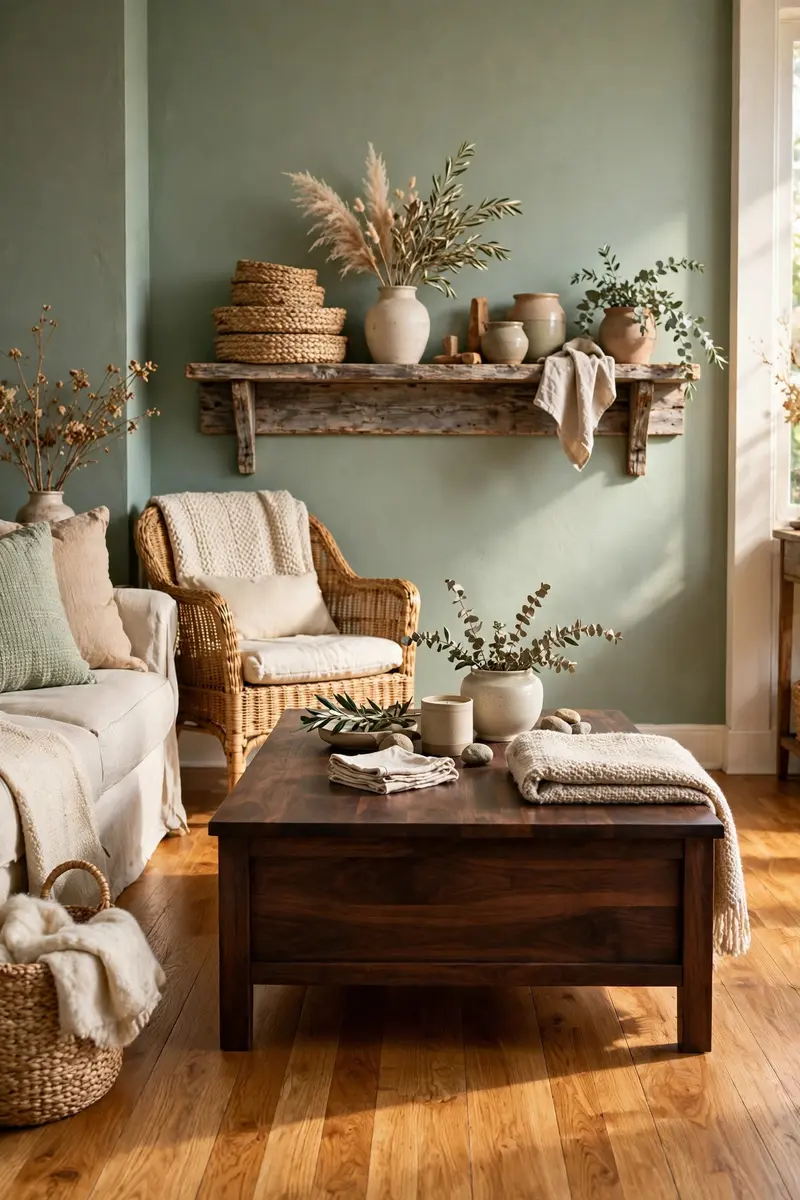
If you love rooms that feel calm, collected, and a little bit like a countryside cottage, a rustic sage green living room is one of the easiest looks to get right — and this guide keeps the sage exactly where it belongs: in the living room. Sage green is soft enough to live with every day, yet it has enough depth to make wood, leather, and stone look even better. Pair it with whitewashed brick, worn leather and reclaimed wood, and the whole room exhales.
In this guide, you will find 30 rustic sage green living room ideas you can actually use, whether you are painting a whole room or just swapping a few cushions. Every idea includes realistic costs, simple steps, and a practical tip, so you can start with one weekend project and build the look over time.
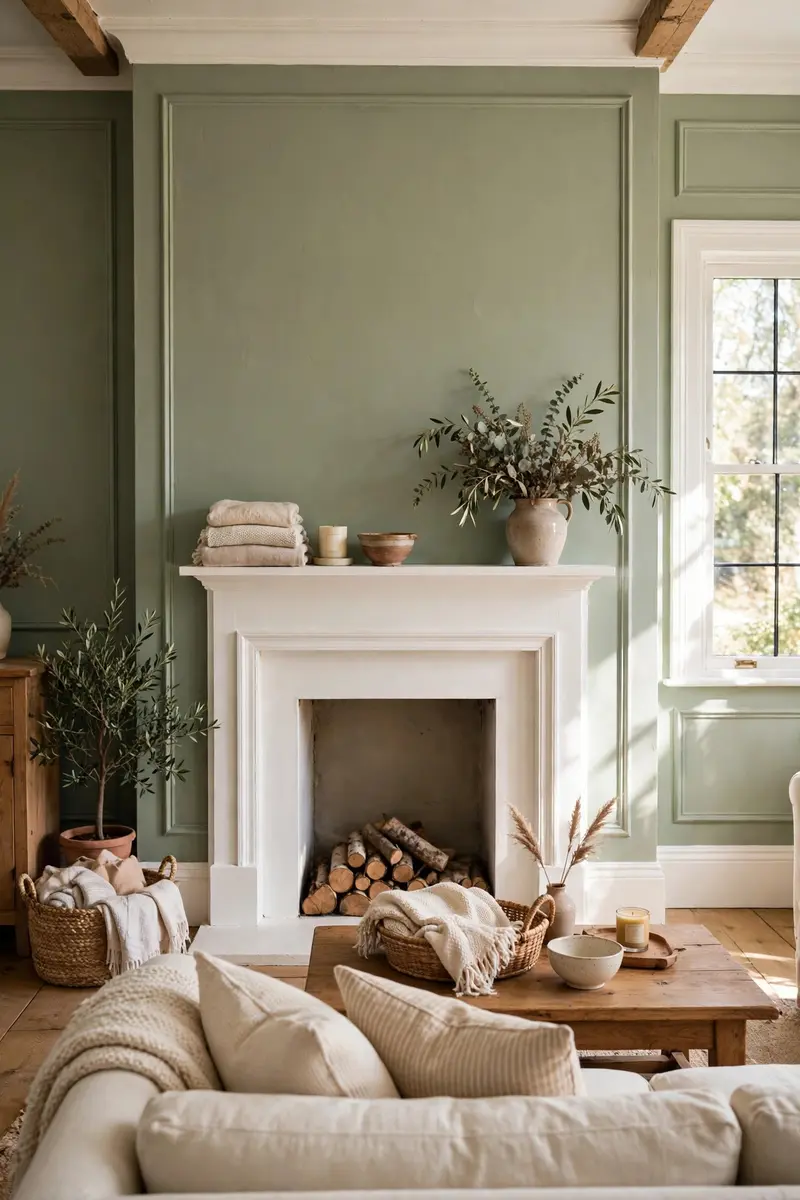
1. Paint the Walls Sage in Your Rustic Sage Green Living Room
Sage green walls are the fastest way to set the tone. The soft, gray-green shade calms a room instantly and makes warm wood tones glow, which is exactly why it works so well in a rustic sage green living room. It also pairs beautifully with white trim, so the room stays bright instead of feeling dark.
Materials and cost: one gallon of sage paint ($35–$60), primer ($20–$30), painter’s tape and rollers ($25). Expect $80–$120 for an average living room wall set.
Start by testing two or three sage swatches on different walls and checking them in daylight and lamplight. Paint the largest wall first, cut in around the trim, and roll in even W-shaped strokes. Two coats usually give full, even coverage.
Tip: Choose a sage with warm gray undertones rather than a minty one, so it reads as earthy, not pastel.
Variation: If full walls feel like too much, paint just one accent wall behind the sofa and keep the rest warm white.
2. Add a Reclaimed Wood Coffee Table
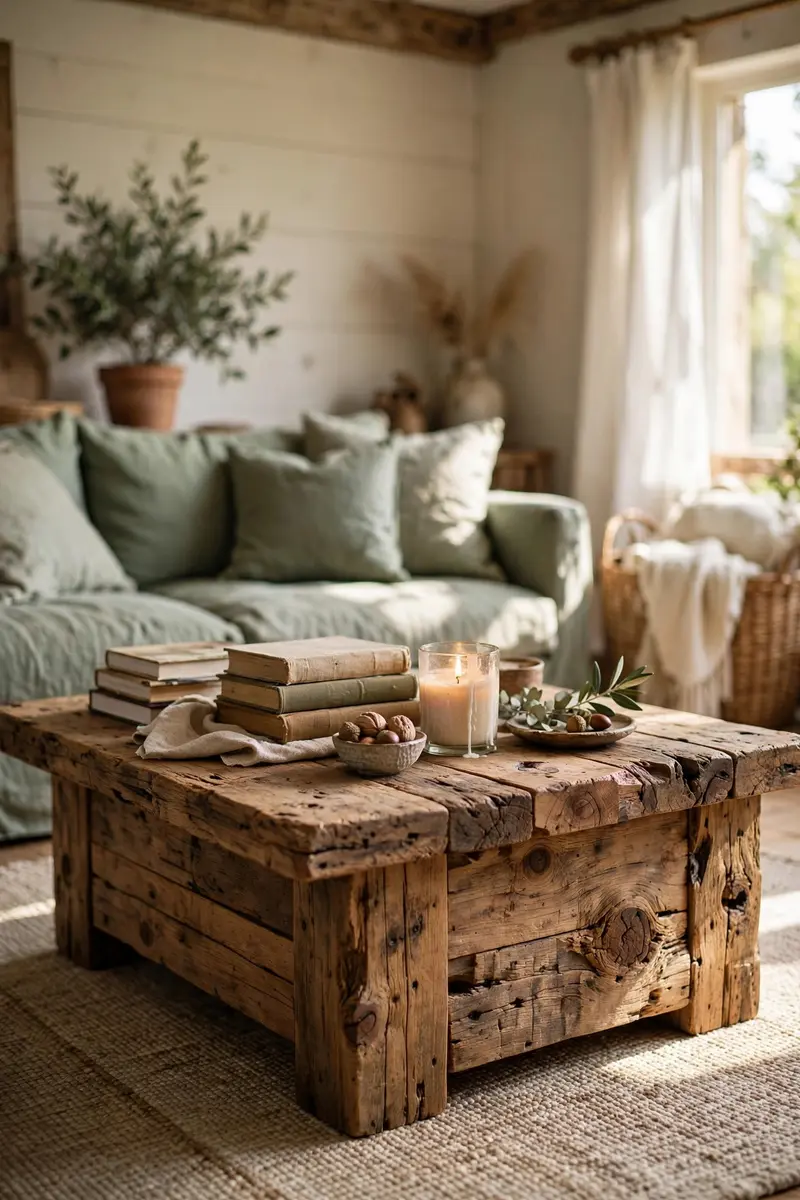
A chunky reclaimed wood coffee table anchors the whole seating area and gives the room its rustic backbone. The knots, grain, and slightly uneven edges tell a story that a shiny new table never can, and the warm timber looks gorgeous against sage upholstery.
Materials and cost: reclaimed wood coffee table ($150–$450 secondhand or $300–$700 new), wood wax or oil ($15).
Place the table about 18 inches from the sofa so there is room to walk around it and set down drinks comfortably. Style it with a small stack of books, a candle, and a low bowl so the wood itself stays visible.
Tip: Leave at least half the tabletop clear, or the room starts to feel cluttered instead of collected.
Variation: A live-edge slab table gives the same rustic feel with a slightly more modern edge.
3. Center the Room on a Cognac Leather Sofa
A cognac leather sofa is the classic partner for sage green walls. The warm, caramel-brown leather grounds the soft green and adds a lived-in richness that only gets better with age, making it a favorite in rustic sage green living room designs.
Materials and cost: leather sofa ($900–$2,500), leather conditioner ($15–$25).
Position the sofa on the longest wall, facing the fireplace or television, and pull it a few inches off the wall so the room breathes. Add cream or oatmeal cushions to soften the leather, and keep a throw draped over one arm for instant coziness.
Tip: Condition the leather twice a year to keep it supple and prevent cracking in dry, heated rooms.
Variation: If full leather feels heavy, try a leather sofa with linen armchairs beside it for a lighter mix.

4. Whitewash a Brick Fireplace
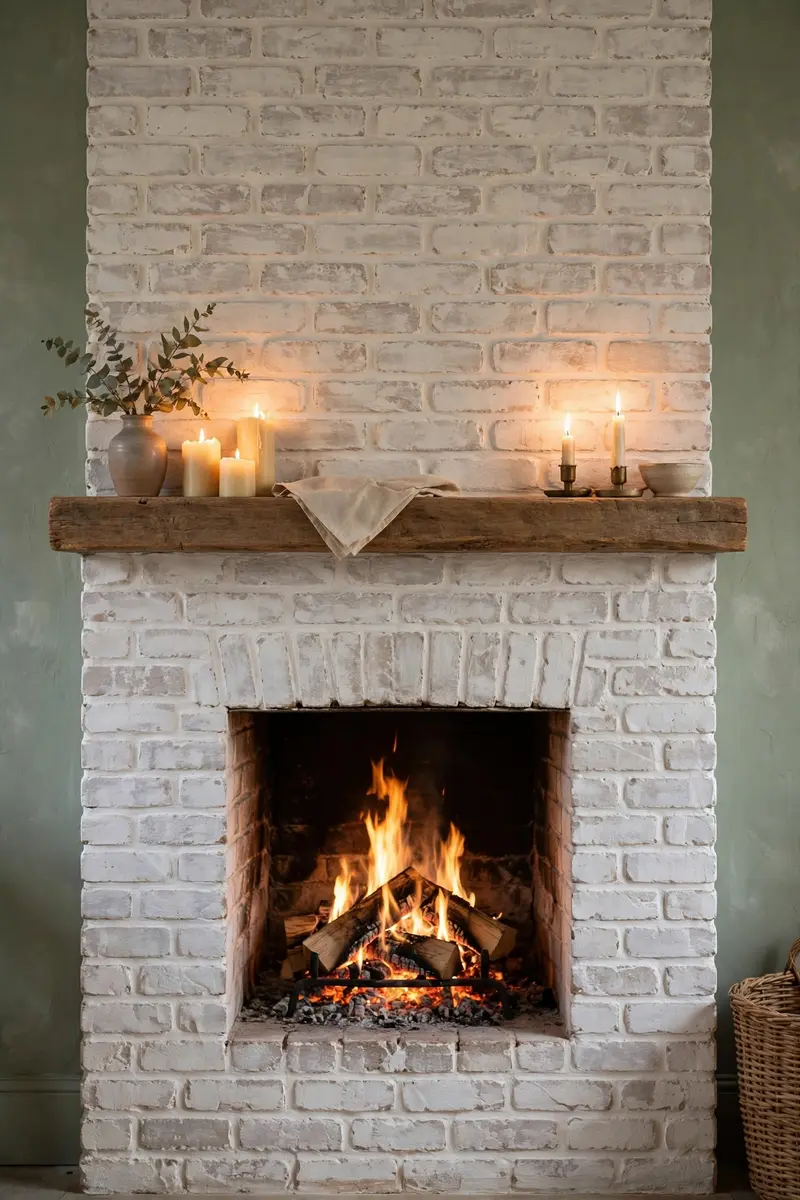
A whitewashed brick fireplace brings instant cottage charm and lightens a heavy brick wall without hiding its texture. The pale, chalky finish sits beautifully against sage walls and lets the fire itself become the focal point.
Materials and cost: whitewash paint or diluted latex paint ($25–$40), brushes, drop cloths ($20). Total: $45–$70.
Clean the brick first, then brush on a thin, watered-down coat of paint and wipe some areas back with a rag so the brick shows through unevenly. That unevenness is the charm, so do not aim for perfect coverage. Let it dry fully before lighting a fire.
Tip: Test the wash on a hidden corner of brick first, because it is much easier to add another coat than to remove one.
Variation: For a softer look, limewash instead of paint; it gives a chalkier, more old-world finish.
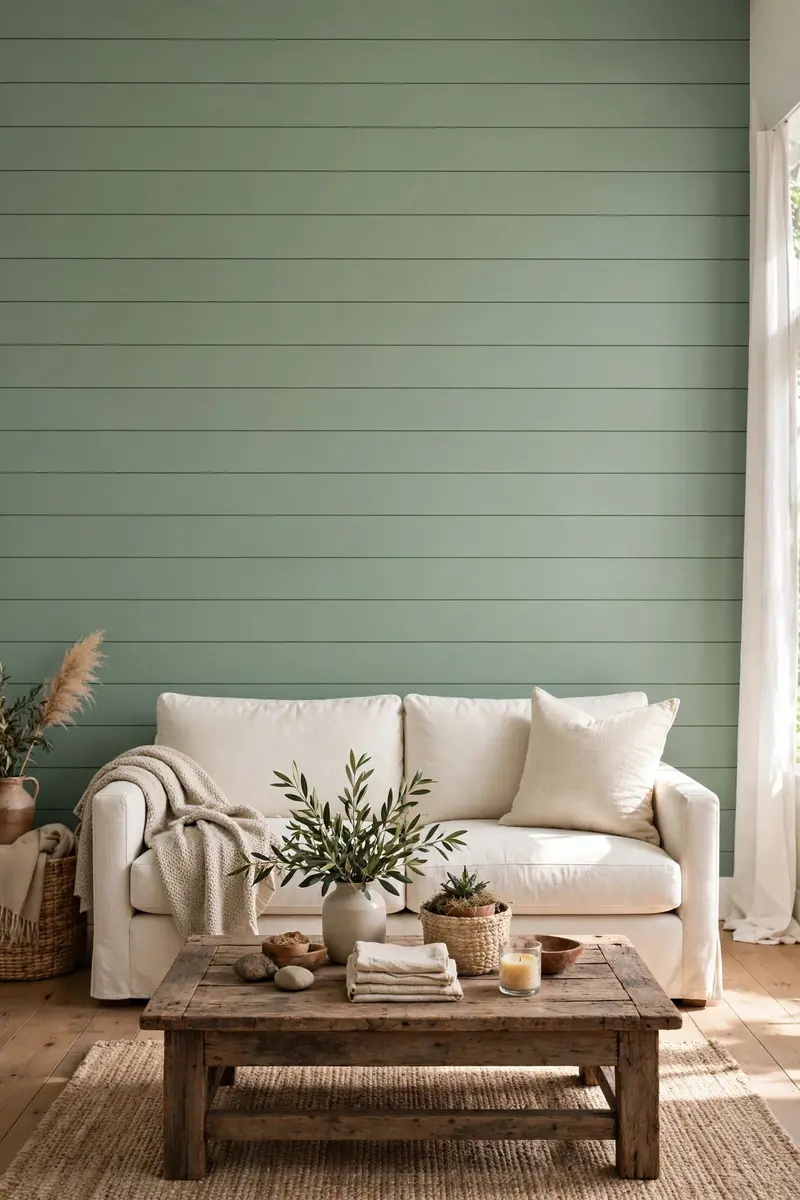
5. Try a Sage Shiplap Accent Wall
Sage shiplap adds texture that flat paint cannot, and it gives a rustic sage green living room a farmhouse backbone. The horizontal lines draw the eye across the room, and the painted boards catch light and shadow in a way that feels handcrafted.
Materials and cost: shiplap boards or MDF planks ($150–$350), sage paint ($35–$60), nails and adhesive ($30).
Measure the wall, cut boards to fit, and start at the bottom, spacing each board evenly with a small gap. Paint after installation for the cleanest finish, and finish the edges with simple trim boards.
Tip: Run shiplap horizontally in a small room to make it feel wider, and vertically if you want the ceiling to feel taller.
Variation: Shiplap just the lower half of the wall and paint the upper half warm white for a classic cottage split.
6. Show Off Exposed Wooden Beams
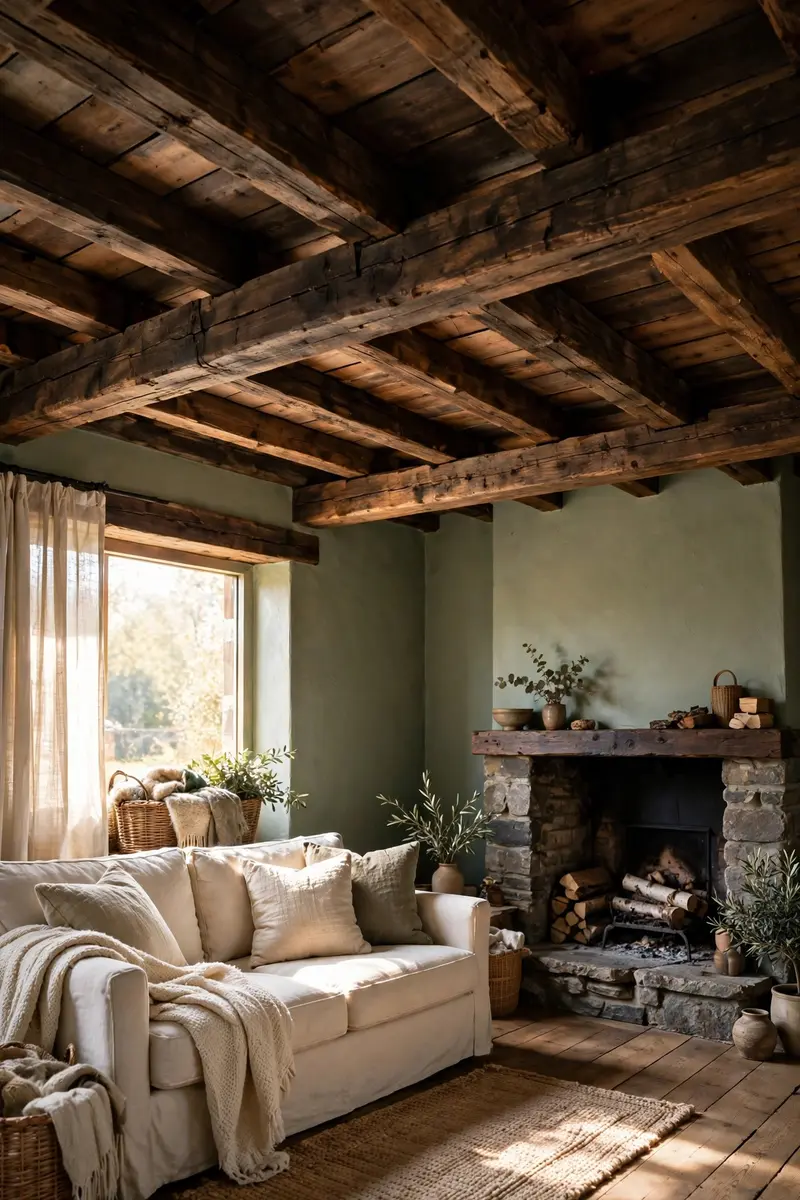
Exposed wooden beams are the single most rustic feature a living room can have. They add warmth overhead, frame the room, and make even a plain ceiling feel architectural and full of character.
Materials and cost: faux wood beams ($100–$300 each), mounting hardware ($30–$60 per beam).
If you do not have real beams, lightweight faux beams install with brackets screwed into ceiling joists and look convincing from below. Space them evenly, stain them a warm walnut, and keep the ceiling itself a soft white so the beams stand out.
Tip: Match the beam stain to your coffee table or mantel wood so the room feels connected, not random.
Variation: A single chunky beam above the fireplace gives the same effect on a smaller budget.
7. Choose a Linen Slipcovered Sofa
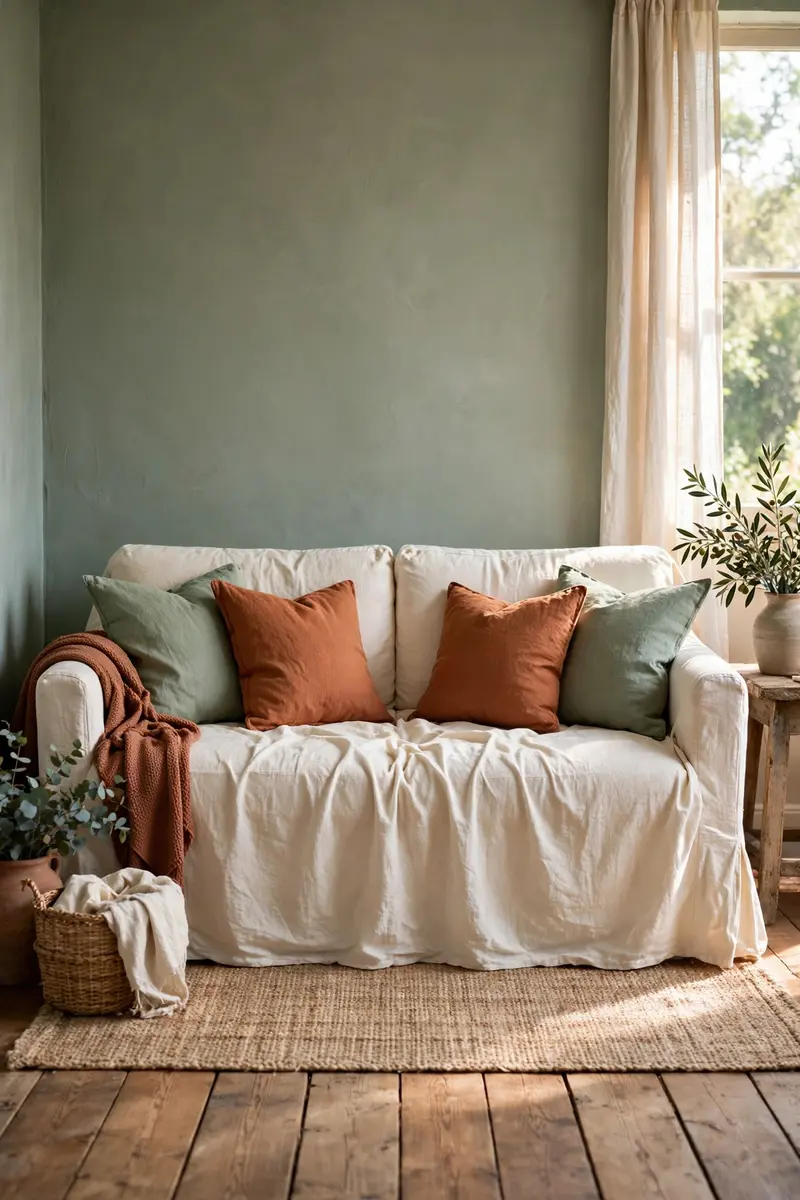
A linen slipcovered sofa is relaxed, washable, and perfectly rustic. The slightly rumpled fabric says “come sit down” in a way stiff upholstery never does, and cream or oatmeal linen keeps the room light against sage walls.
Materials and cost: slipcovered sofa ($700–$1,800), spare slipcover for washing ($150–$300).
Dress the sofa with sage and rust cushions, and wash the slipcover every few months to keep it fresh. Tuck the fabric neatly at the corners, but do not stress about perfect smoothness — a little softness is the point.
Tip: Buy a sofa with removable, machine-washable covers if you have kids or pets; it will save the sofa many times over.
Variation: A white slipcovered sofa with sage throws gives the same look with even more flexibility.
8. Layer a Jute Rug Under a Smaller Wool Rug
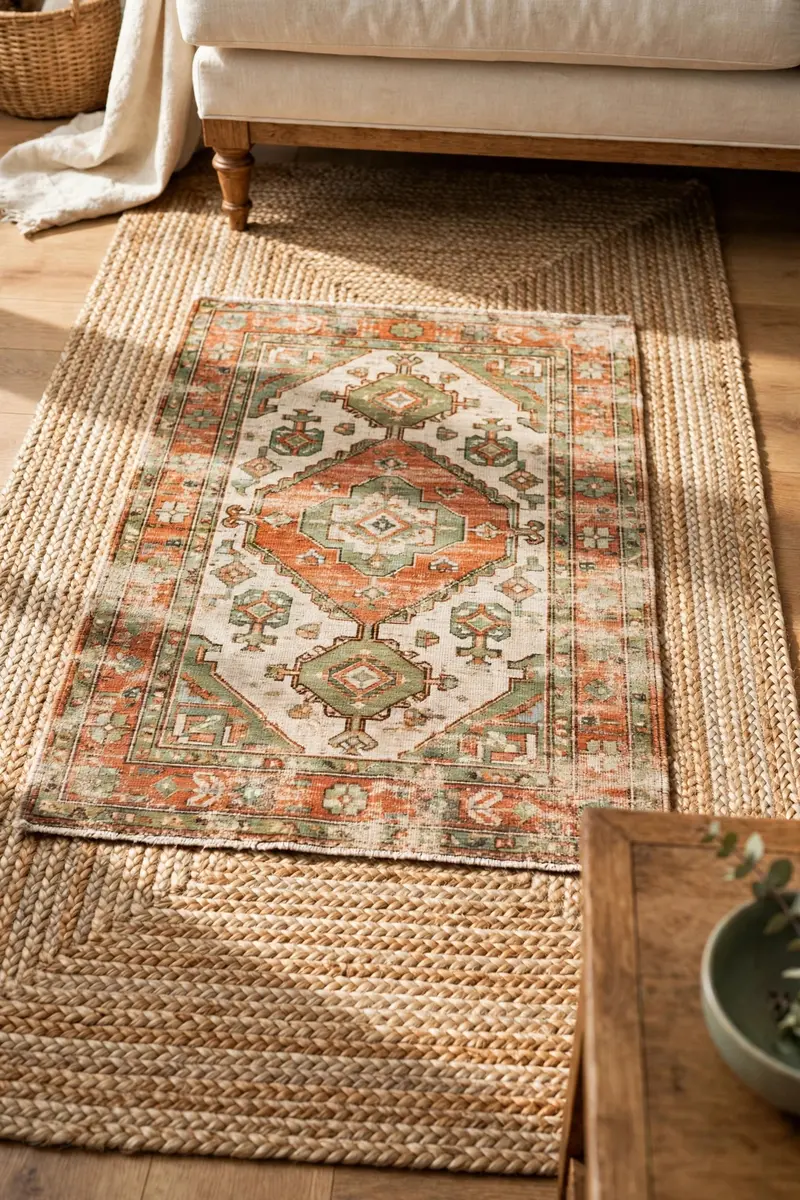
Layering rugs is a stylist’s trick that makes a rustic room feel finished. A large natural jute rug grounds the seating area, and a smaller patterned wool rug on top adds softness, color, and a collected, traveled feel.
Materials and cost: jute rug 8×10 ($120–$250), wool rug 5×7 ($100–$300), rug pad ($30).
Lay the jute rug so the front legs of the sofa and chairs sit on it, then center the wool rug on top, slightly angled or straight depending on the room. Keep the top rug’s pattern muted — faded rust, cream, and sage tones work best.
Tip: Use a non-slip rug pad under both layers so nothing slides when you walk across it.
Variation: Swap the wool rug for a vintage kilim for a bolder pattern and the same layered warmth.
9. Build a Stone Fireplace with an Oak Mantel
A stone fireplace with a thick oak mantel is the heart of a rustic living room. The rough stone adds texture, the solid wood adds warmth, and together they create a natural gathering point that needs almost no other decoration.
Materials and cost: stone veneer ($400–$900), oak mantel beam ($150–$400), installation ($500–$1,500 if hired).
Keep the mantel styling simple: a mirror or landscape print above it, two candle holders, and a small vase of greenery. Let the stone and wood do the talking, and avoid crowding the mantel with small objects.
Tip: Seal natural stone once a year if it sits near a working fire, so soot and dust wipe off easily.
Variation: A faux stone veneer panel gives the same look in a rental or on a tighter budget.

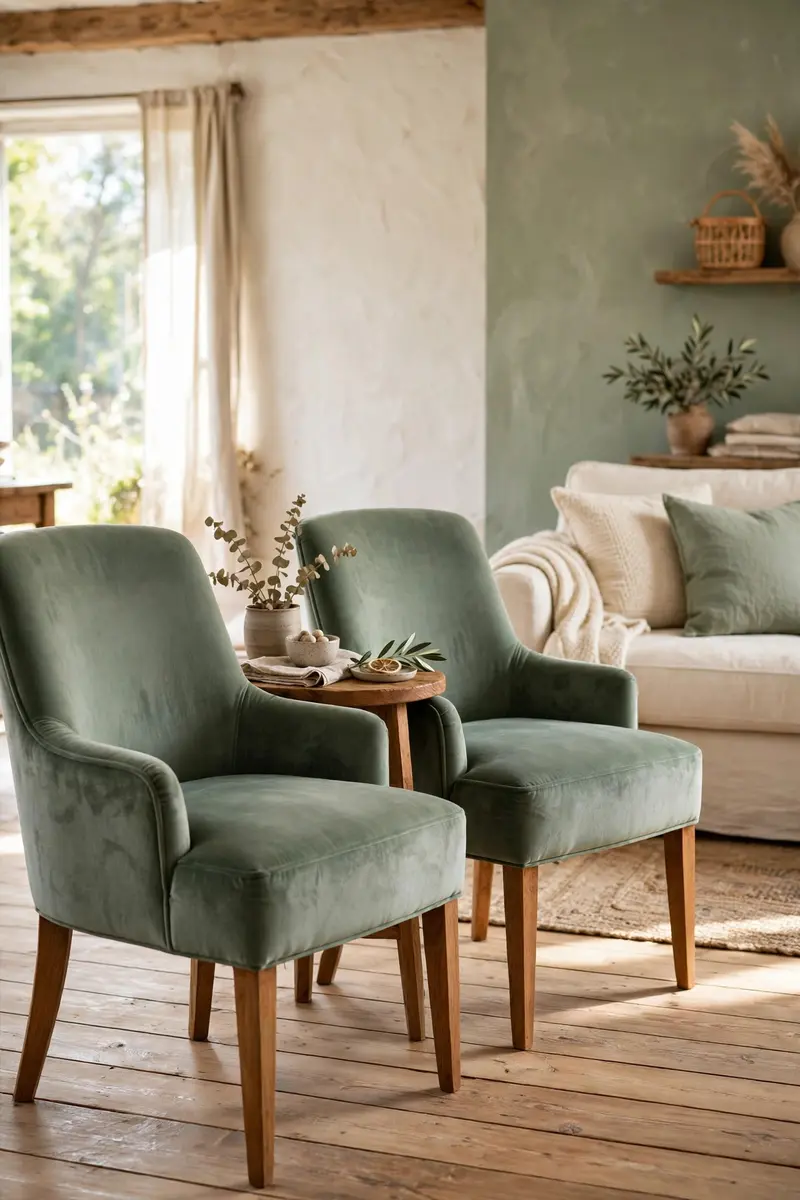
10. Add Sage Velvet Accent Chairs
Sage velvet accent chairs bring a touch of softness and luxury to a rustic room without breaking its relaxed mood. The velvet catches the light beautifully, and the sage tone ties the chairs straight back to the walls.
Materials and cost: velvet accent chair ($180–$450 each), cushion ($25).
Place two chairs opposite the sofa or angled beside the fireplace to create a conversation corner. Pair them with a small wooden side table between them so there is somewhere to set a coffee cup.
Tip: Brush velvet chairs lightly with a clothes brush to keep the pile looking even and plush.
Variation: Choose chairs with wooden legs in a warm oak finish to keep the rustic thread running through the room.
11. Use Woven Baskets for Storage That Looks Good
Woven baskets solve the eternal living room problem: where to put blankets, toys, and magazines without ugly plastic boxes. Seagrass, rattan, and wicker baskets look like decor on their own and keep clutter out of sight.
Materials and cost: large seagrass basket ($25–$60), medium baskets ($15–$35 each).
Put one large basket beside the sofa for throws, one near the television unit for remotes and chargers, and a tall one in a corner for rolled magazines or firewood. Label nothing; the natural texture is the decoration.
Tip: Choose baskets with handles so they are easy to move when you clean or rearrange the room.
Variation: A lidded basket hides clutter completely and doubles as a side table with a tray on top.

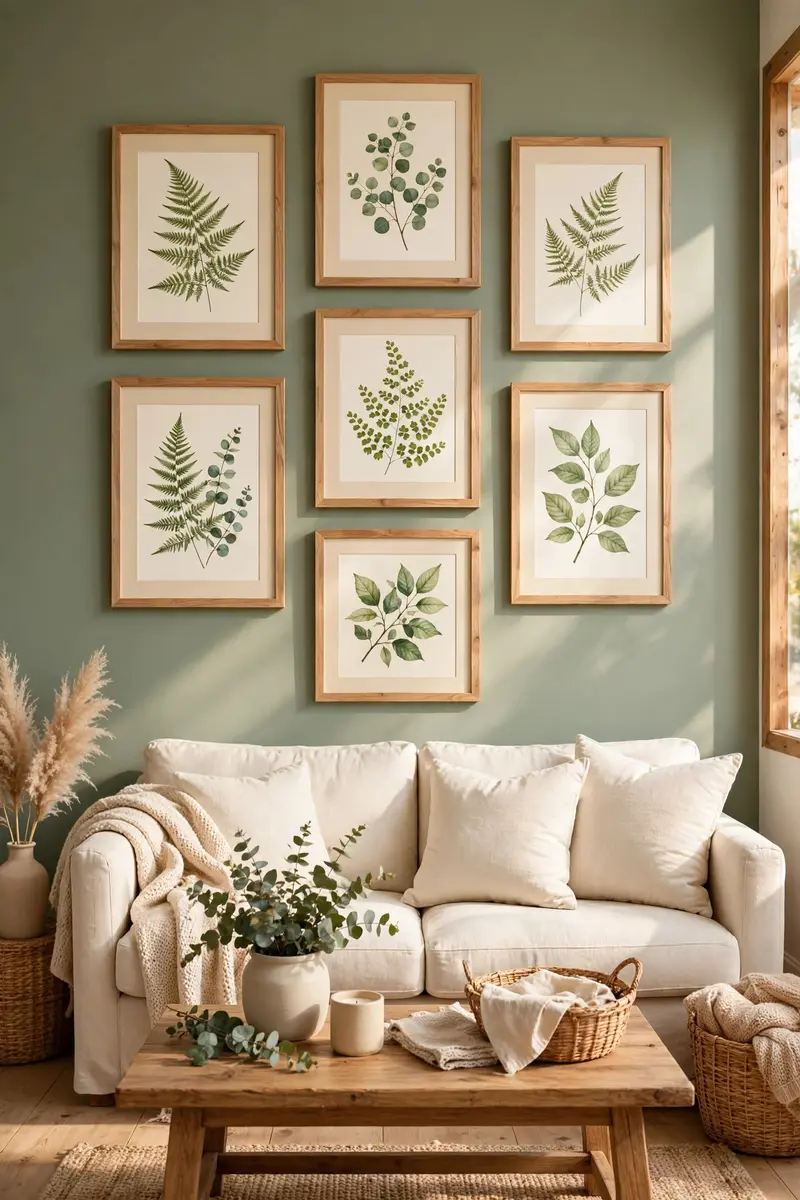
12. Hang a Botanical Gallery Wall
A botanical gallery wall brings the outdoors in and softens a rustic room with gentle, natural art. Pressed leaves, fern prints, and landscape sketches in simple wooden frames feel collected rather than store-bought.
Materials and cost: 6–8 prints ($40–$120), wooden frames ($60–$150), hanging kit ($15).
Lay the arrangement on the floor first, keeping about 2 inches between frames, then hang the largest piece at eye level in the center and build outward. Mix frame finishes slightly — oak and walnut together look more collected than one perfect match.
Tip: Use the same mat color (cream or white) in every frame to keep a mixed collection looking calm and intentional.
Variation: Swap botanical prints for black-and-white family photos in the same frames for a personal version.
13. Style a Rustic Ladder Shelf
A leaning wooden ladder shelf is a charming way to display plants, books, and small treasures without drilling a wall full of shelves. It leans, it looks handmade, and it fits neatly into corners that otherwise go unused.
Materials and cost: wooden ladder shelf ($60–$150), small plants and decor ($30–$60).
Place heavier items on the lower rungs and lighter ones higher up, and leave some rungs partly empty so the shelf breathes. Drape a small throw over one rung for softness, and put a trailing plant on top so greenery spills down.
Tip: Anchor the top of the shelf to the wall with a small bracket if you have children or pets who might bump it.
Variation: A blanket ladder beside the sofa does the same job for throws and adds instant coziness.

14. Pile On Chunky Knits and Linen Pillows
Nothing says rustic comfort like a pile of chunky knit throws and linen pillows. The mix of textures — nubby wool, soft linen, woven cotton — is what makes a sage room feel warm rather than flat, even before you light a fire.
Materials and cost: chunky knit throw ($40–$90), linen pillow covers ($15–$30 each), inserts ($10 each).
Use the rule of three textures: one chunky knit, one smooth linen, and one woven or fringed pillow per sofa corner. Stick to a palette of cream, oatmeal, rust, and sage so the pile looks curated, not chaotic.
Tip: Store off-season throws in a basket rather than a closet, so swapping them with the seasons takes seconds.
Variation: In summer, swap the chunky knits for lightweight cotton gauze throws in the same colors.

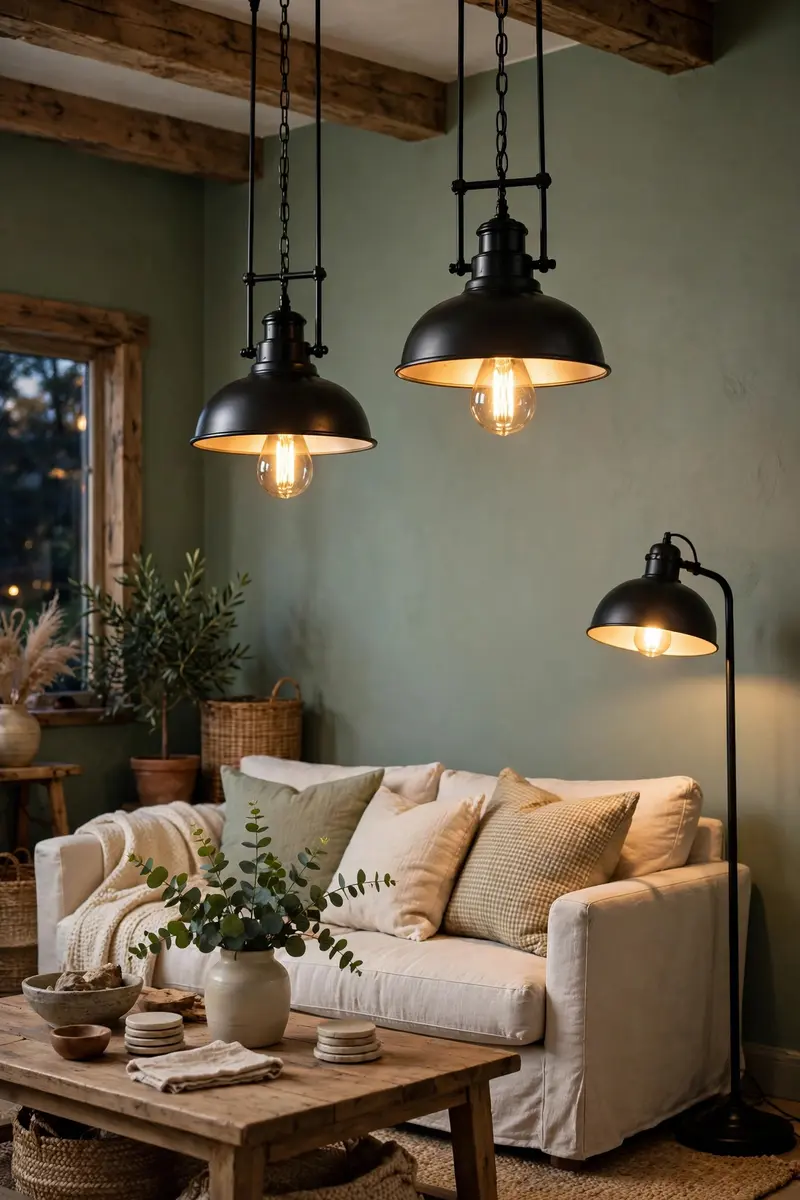
15. Choose Black Metal Lighting Fixtures
Black metal lighting gives a rustic sage room its crisp edge. A wrought-iron chandelier, black pendant lights, or matte black floor lamps add contrast against soft green walls and keep the room from feeling too sweet.
Materials and cost: black metal pendant ($60–$180), floor lamp ($80–$200), dimmer bulbs ($15).
Hang pendants over side tables or in a pair flanking the fireplace, and put all living room lights on dimmers so you can shift from bright daytime to golden evening light. Warm-white bulbs (2700K) keep the sage tones cozy.
Tip: Keep black metal details small and repeated — curtain rods, lamp bases, and picture frames — so the contrast feels deliberate.
Variation: Oil-rubbed bronze gives the same dark contrast with a slightly softer, warmer finish.
16. Add Brass and Antique Gold Accents
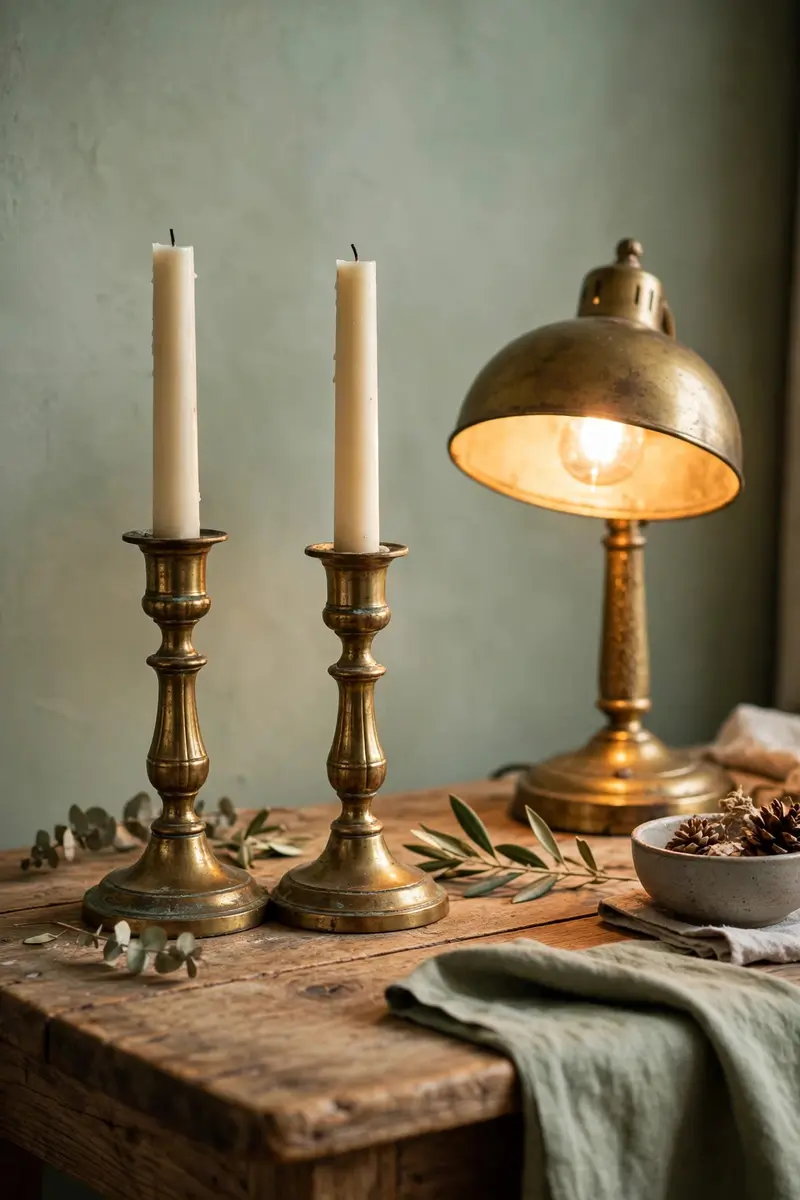
A little brass goes a long way in a rustic sage room. Antique gold picture frames, brass candle holders, and a warm metallic lamp base catch the light and add a quiet touch of elegance that keeps the rustic look from feeling rough.
Materials and cost: brass candle holders ($20–$50 pair), antique gold frame ($25–$60), brass lamp ($80–$180).
Scatter brass in three places — the mantel, a side table, and a shelf — rather than clustering it all in one spot. Aged or brushed brass suits rustic rooms better than shiny polished gold, which can look too formal.
Tip: Mix metals sparingly: brass plus black metal works, but adding chrome and copper too will make the room feel unsettled.
Variation: If brass feels too dressy, use aged bronze accessories for the same warmth with a more muted glow.
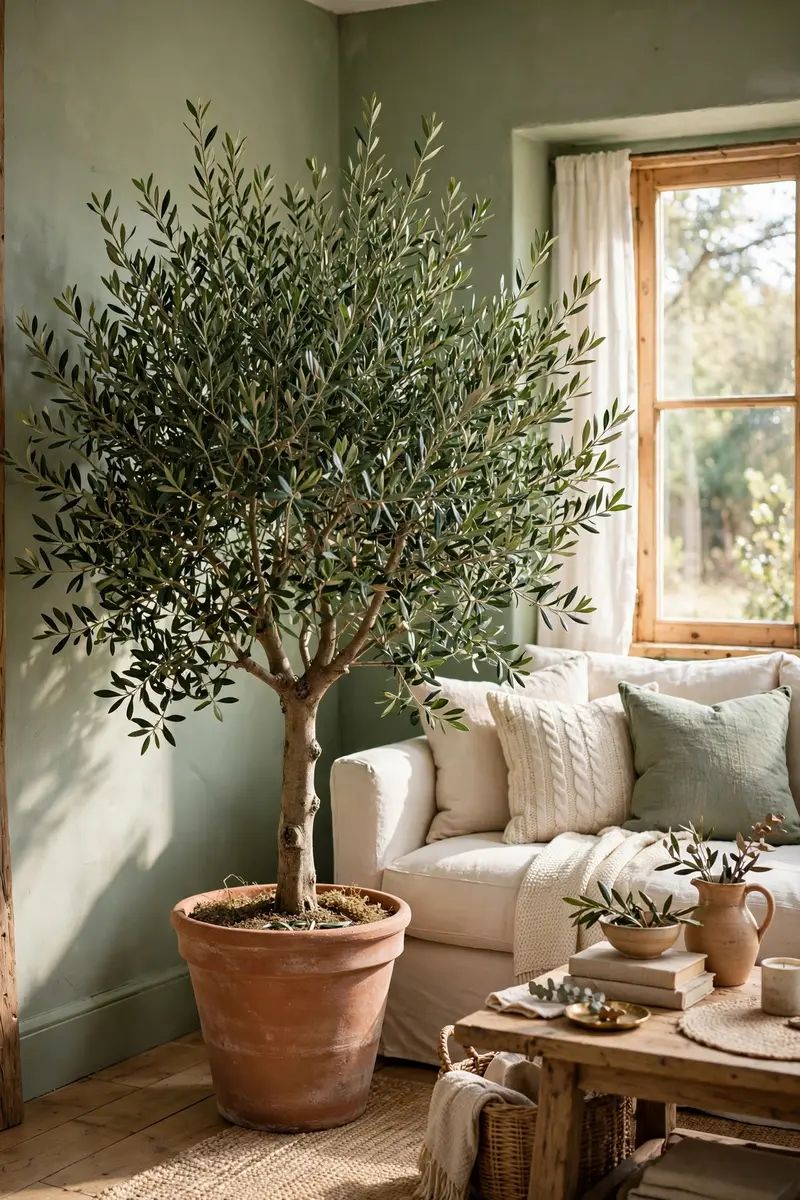
17. Bring In an Olive Tree or Large Floor Plant
A large olive tree or fiddle-leaf fig is the living centerpiece of a rustic sage room. The silvery-green leaves echo the wall color, the height draws the eye upward, and the plant makes the whole space feel alive and breathing.
Materials and cost: olive tree in pot ($60–$150), terracotta or woven pot ($25–$50).
Place the tree in a bright corner near a window, but out of the main walkway, and rotate it a quarter turn every few weeks so it grows evenly. Water only when the top two inches of soil feel dry, since overwatering kills more houseplants than neglect.
Tip: If your room gets little natural light, choose a high-quality faux olive tree for the same silhouette with zero upkeep.
Variation: A cluster of three plants at different heights — tall, medium, and trailing — gives a lush corner on a smaller budget.
18. Style a Distressed Wood Console
A distressed wood console under the television or along an empty wall adds rustic storage and display space in one piece. The weathered finish pairs naturally with sage walls, and the open shelves keep books and baskets within reach.
Materials and cost: distressed wood console ($250–$700), decor and baskets ($40–$80).
Style the top with a lamp on one side, a stack of books in the middle, and a vase of dried stems on the other, keeping the arrangement low so it does not block the television or artwork above. Use the lower shelves for baskets that hide cables and games.
Tip: Run cables through a small hole in the back panel or a cord cover painted the wall color, so wires never spoil the look.
Variation: A reclaimed barn-wood bench works as a console in a narrow room where depth is limited.

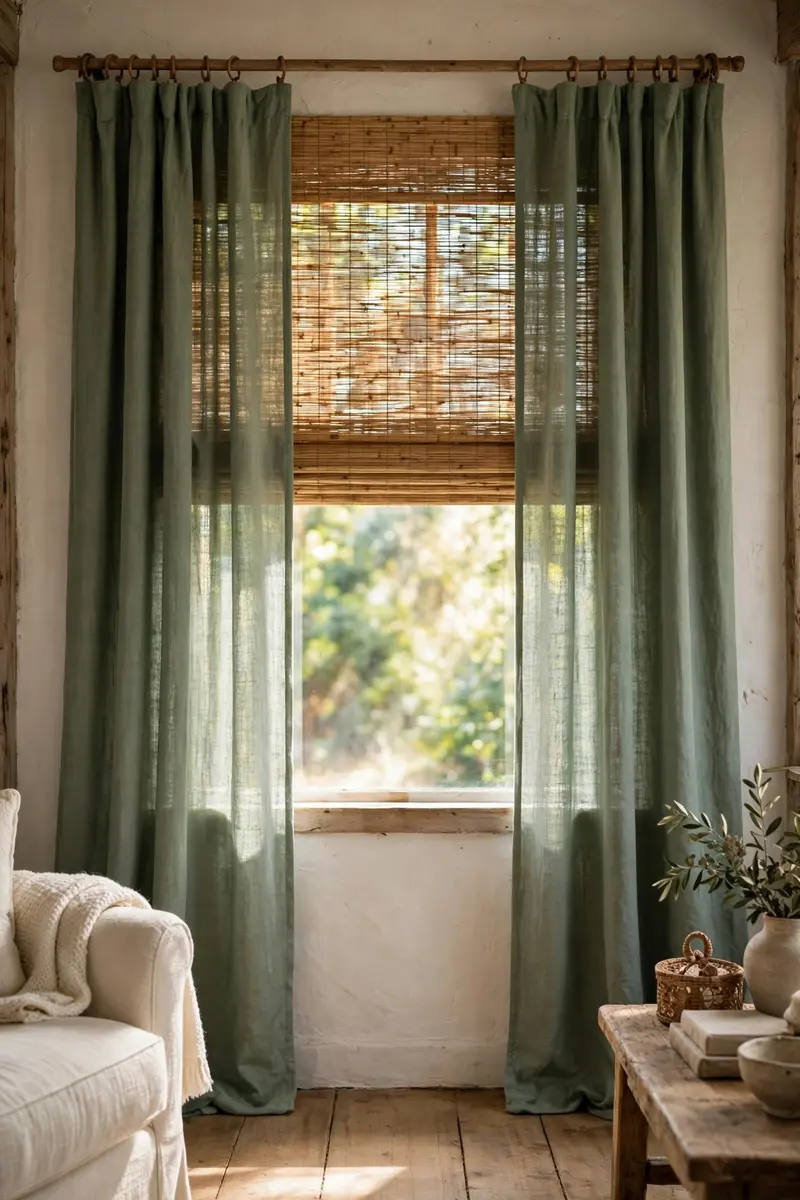
19. Hang Sage Curtains with Bamboo Shades
Window treatments set the mood of a rustic room more than almost anything else. Sage linen curtains layered over natural bamboo shades filter light beautifully, add texture, and make the windows feel dressed without blocking the view.
Materials and cost: bamboo shades ($40–$90 per window), sage linen curtain panels ($30–$70 pair), curtain rod ($25–$50).
Hang the rod 4–6 inches above the window frame and 3–4 inches wider on each side, so the curtains make the window look larger. Let the panels fall to the floor, and leave the bamboo shades half-raised during the day for filtered light.
Tip: Line linen curtains with a light cotton backing if the sun fades fabric quickly in your room.
Variation: Cream curtains with a sage valance give the same layered effect with a brighter, airier feel.
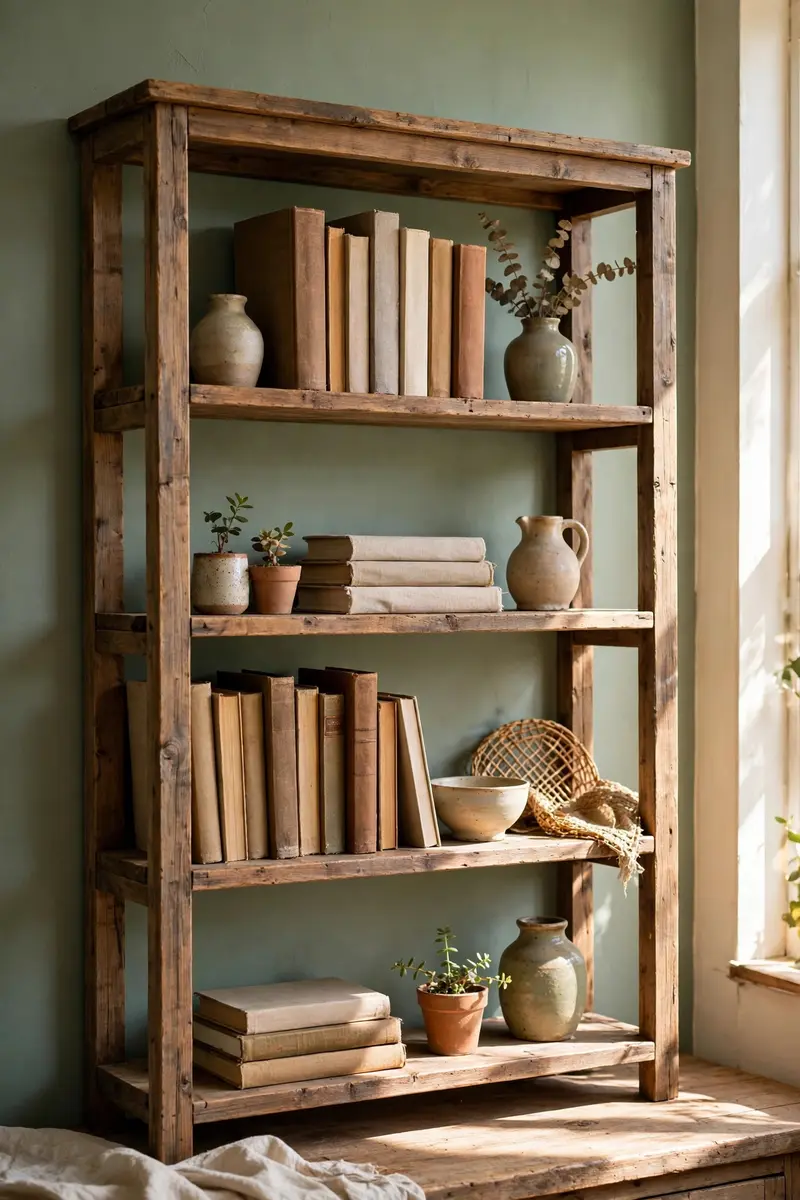
20. Create a Farmhouse Bookshelf Display
A well-styled farmhouse bookshelf turns storage into decoration. Books, ceramics, small plants, and a few vintage finds arranged with breathing room look collected over years, not assembled in an afternoon.
Materials and cost: wooden bookshelf ($150–$400), books and ceramics (mostly existing), small plants ($20–$40).
Group books both upright and in horizontal stacks, then place a small object — a candle, a tiny plant, a framed photo — on top of each horizontal stack. Leave about a quarter of each shelf empty so the display feels calm rather than crowded.
Tip: Turn some books spine-inward for a neutral, textural block of color if bright spines clash with your sage palette.
Variation: Paint an old bookshelf sage green for a built-in look that ties straight into the walls.
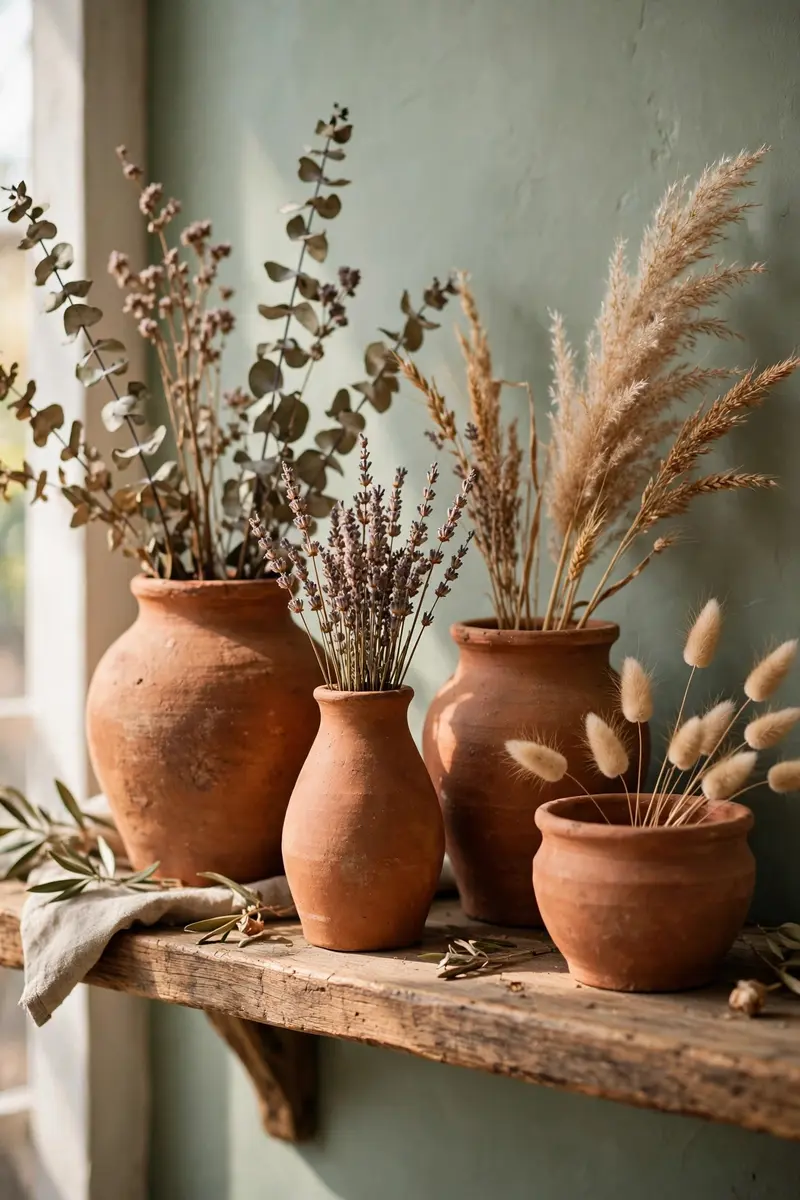
21. Scatter Terracotta Pottery Accents
Terracotta pottery is the warm, earthy accent that keeps sage green from feeling cool. The orange-brown clay glows against soft green walls, and handmade pots, vases, and bowls add an artisan touch to shelves and tables.
Materials and cost: terracotta pots and vases ($10–$40 each), dried stems or fresh greenery ($10–$20).
Use terracotta in odd numbers — one large vase on the mantel, two smaller pots on a shelf — and keep the shapes simple and handmade-looking. A little imperfection in the glaze is part of the charm.
Tip: If terracotta feels too orange, choose aged or whitewashed terracotta for a softer, chalkier version of the same warmth.
Variation: Pair terracotta with cream ceramic pieces so the warm accent never overwhelms the sage palette.
22. Layer Plaid and Checked Textiles
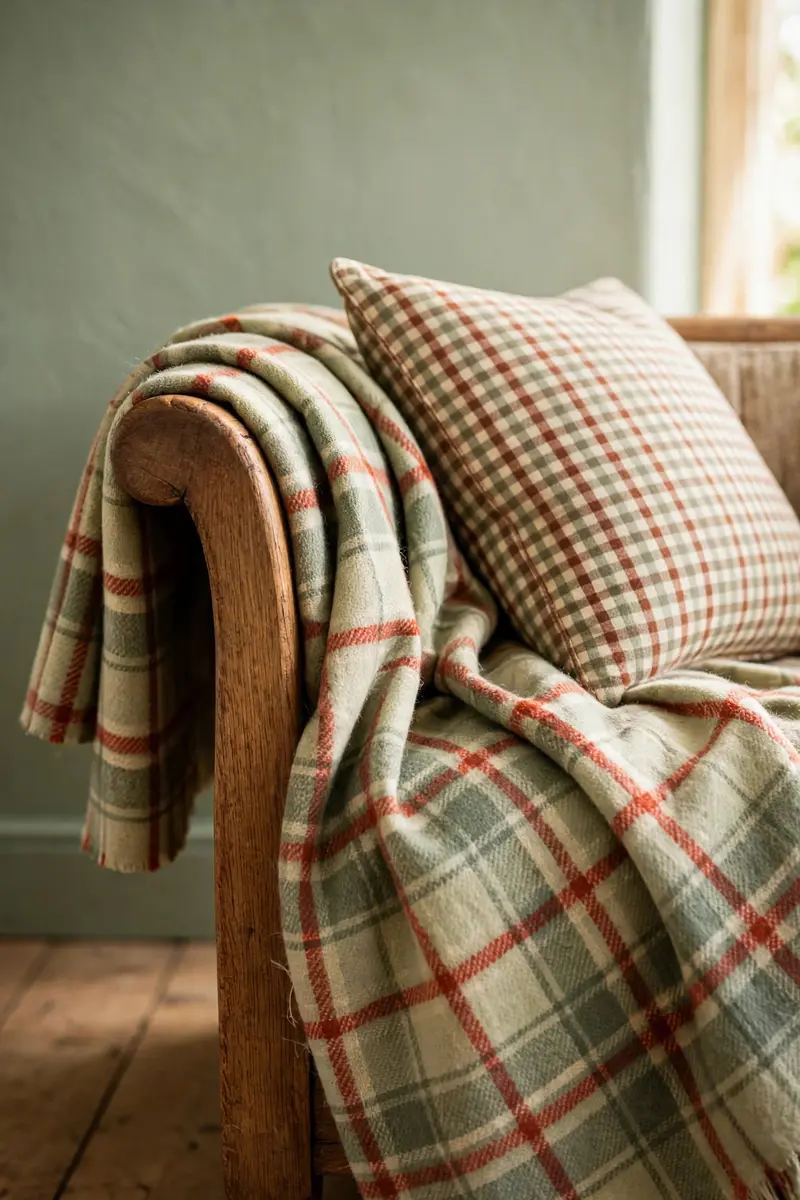
Plaid throws and checked cushions are the cozy, cabin heart of rustic style. A sage-and-cream plaid throw over the sofa arm, or checked cushions on an armchair, adds pattern without fighting the calm green palette.
Materials and cost: plaid throw ($30–$70), checked pillow covers ($15–$30 each).
Keep the scale of the check small to medium, and limit plaid to two or three pieces in the room so it reads as an accent, not a theme park. Sage, cream, and rust plaids blend best with this palette.
Tip: Mix one plaid with solid linen pillows rather than pairing plaid with another busy pattern, or the two will compete.
Variation: A buffalo check in cream and sage is bolder and works well as a single statement throw.
23. Ground the Room with a Vintage Rug
A vintage rug in faded, muted tones ties a rustic sage room together like nothing else. The worn pattern, soft colors, and slight imperfections make the floor feel storied, and the rug’s rust, cream, and sage threads echo the whole palette.
Materials and cost: vintage-style rug 8×10 ($150–$400), rug pad ($30).
Center the rug under the coffee table with the front legs of all seating on it, and choose a pattern that is faded enough to read as texture from across the room rather than a loud graphic. Vacuum on a low setting to protect older fibers.
Tip: Buy a rug one size larger than you think you need; a too-small rug is the most common living room mistake.
Variation: A flatweave kilim gives the same vintage feel with a lighter, easier-to-clean weave.

24. Dress the Mantel with Wood and Greenery
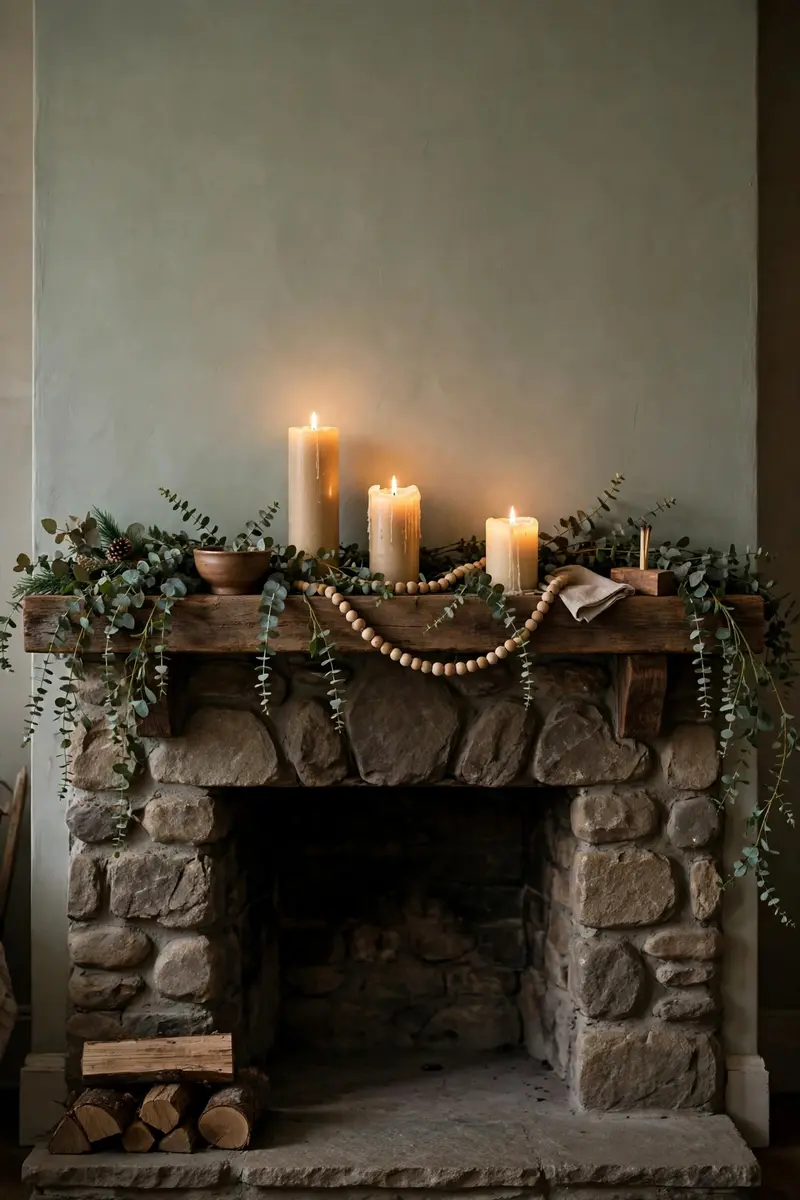
A mantel dressed with a wooden beam, trailing greenery, and a few candles is the simplest seasonal decoration a rustic room needs. It changes with the year — fresh stems in spring, dried leaves in autumn — and always looks effortless.
Materials and cost: eucalyptus or olive stems ($15–$30), pillar candles ($15–$30), wooden bead garland ($15–$25).
Drape greenery along the mantel so it spills slightly over the edges, place candles at different heights on one side, and balance the other side with a framed print or small mirror. Step back and check the silhouette from the sofa before calling it done.
Tip: Use battery candles on a timer inside lanterns on the mantel, so the glow appears every evening without any fuss.
Variation: Swap greenery for a row of small terracotta pots with herbs in spring for a fresh, kitchen-garden feel.
25. Make a Sage Green Sofa the Star
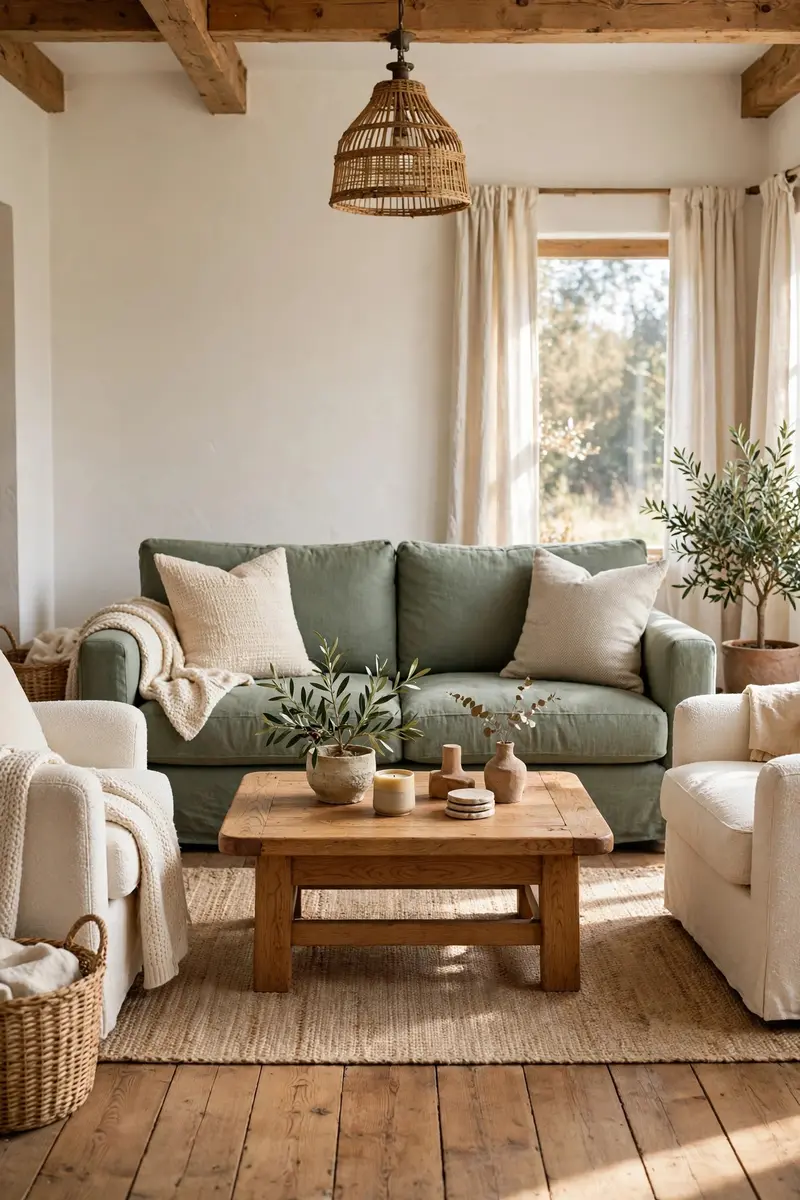
If you would rather commit to color on the furniture than the walls, a sage green sofa is the way to do it. It becomes the room’s anchor, looks stunning against warm wood floors, and lets you keep the walls a simple warm white.
Materials and cost: sage green sofa ($800–$2,000), neutral cushions ($40–$80).
Keep the rest of the room’s large pieces neutral — cream armchairs, oak tables, a natural rug — so the sofa stays the star. Add rust and cream cushions for contrast, and a chunky throw for texture.
Tip: Order fabric swatches and check them against your wood floors in daylight before committing, since sage shifts a lot with light.
Variation: A sage green sectional works beautifully in a family room where seating for five or more matters.
26. Build a Window Reading Nook
A window reading nook turns an overlooked corner into the most loved seat in the house. A cushioned bench or a deep armchair beside the window, with a basket of books and a good lamp, invites slow mornings and quiet evenings.
Materials and cost: armchair or bench cushion ($100–$300), reading lamp ($60–$150), book basket ($25).
Place the chair at an angle to the window so you get light over your shoulder, not glare in your eyes. Add a small side table for tea, and keep a soft throw folded on the chair arm so the nook always looks inviting.
Tip: A lamp with a warm bulb beside the chair matters more than overhead lighting for comfortable evening reading.
Variation: A built-in window seat with storage underneath is the dream version if you ever remodel.

27. Pair Rustic Side Tables with Lanterns
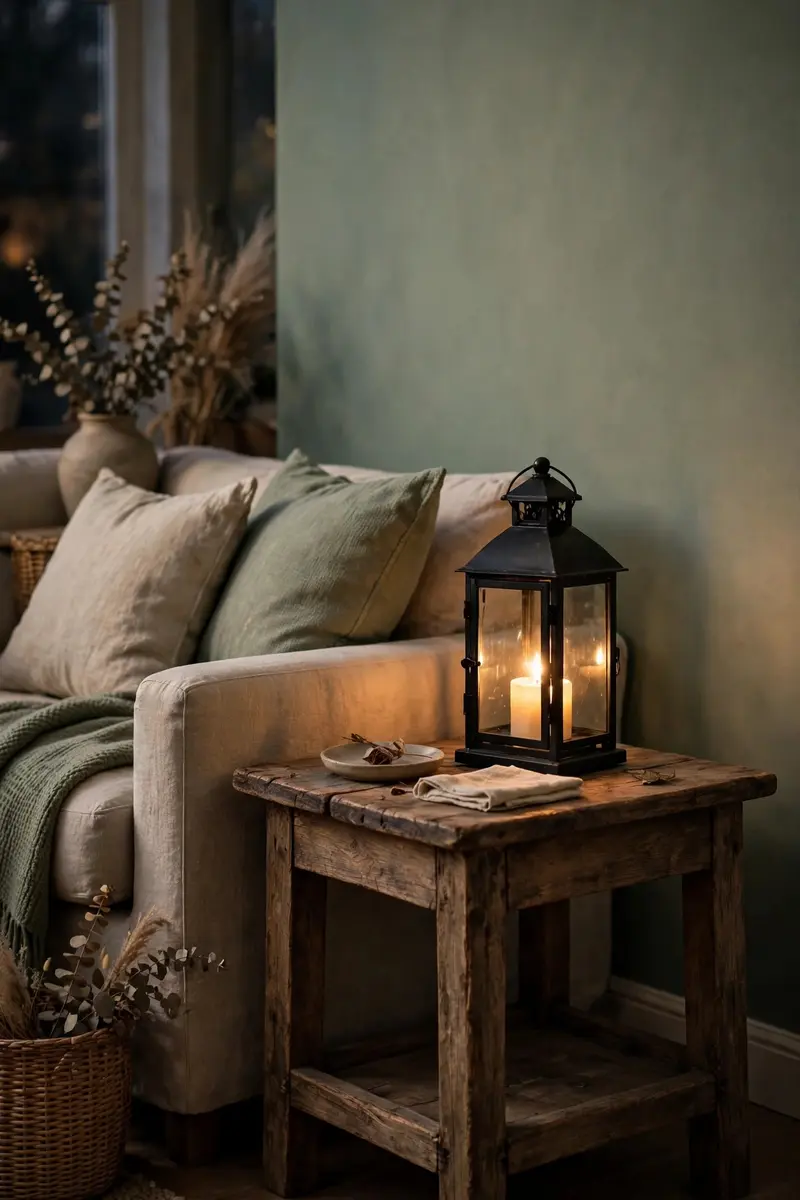
Rustic side tables topped with lanterns are small details that make a big difference at night. The warm lantern glow softens the whole room, and the wood-and-metal combination echoes the larger rustic pieces around it.
Materials and cost: wooden side table ($60–$150), metal lantern ($20–$45), pillar candle ($10).
Put a side table beside each end of the sofa, and a lantern on at least one of them. Light them in the evening instead of the overhead lights, and the room instantly shifts into cozy mode.
Tip: Use flameless candles inside lanterns near curtains or throws, so you get the glow with none of the worry.
Variation: A stack of old books topped with a small lantern gives the same glow on a table you already own.
28. Mix Wood Tones Instead of Matching Them
Rustic rooms look best when wood tones are mixed, not matched. Oak floors, a walnut coffee table, and a weathered pine shelf together feel collected over time, while a room where every wood matches exactly can feel like a showroom.
Materials and cost: no new purchase needed — work with what you have, plus wood oil ($15) to refresh dull pieces.
Keep the tones in the same warm family — honey, walnut, and weathered gray-brown — and repeat each tone at least twice in the room so nothing looks like an accident. A dark walnut table with oak shelves and a pine mantel is a good starting mix.
Tip: If one piece clashes badly, sand and re-oil it a shade darker or lighter rather than replacing it.
Variation: Add one painted wood piece, such as a sage side table, to break up an all-timber room.
29. Layer Candlelight and Fairy Lights
Candlelight and fairy lights are the cheapest way to make a rustic sage room feel magical. Strung along a shelf, draped over a mantel, or glowing inside lanterns, they turn an ordinary evening into a cozy one.
Materials and cost: fairy light strands ($10–$25 each), candles and holders ($20–$40).
Drape one strand along a bookshelf or mantel, never across the whole room, and use warm-white lights only — cool white will clash with the sage and wood tones. Cluster candles in groups of three at different heights for the best glow.
Tip: Put fairy lights on a timer plug so they come on at dusk automatically, even when you forget.
Variation: In summer, move the fairy lights to a covered porch or balcony for the same cozy effect outdoors.

30. Swap in Rust and Autumn Accents for the Season
The beauty of a sage base is how easily it shifts with the seasons. In autumn, swapping cream cushions for rust and mustard ones, adding a plaid throw, and placing a few mini pumpkins on the mantel gives the whole room a fall refresh for almost nothing.
Materials and cost: rust cushion covers ($15–$30 each), plaid throw ($30–$70), seasonal mantel decor ($20–$40).
Change only the small, soft pieces — cushions, throws, and mantel decor — and leave the furniture and walls alone. The sage underneath keeps the autumn colors from feeling garish, and the swap takes under an hour.
Tip: Store each season’s cushion covers in one labeled basket, so the next swap is a ten-minute job.
Variation: In spring, swap rust for blush pink and cream, and replace pumpkins with fresh tulips for the same easy refresh.

Frequently Asked Questions
What colors go with a sage green living room?
Cream, warm white, oatmeal, and beige are the safest partners, and they keep the room bright. For warmth, add cognac leather, terracotta, rust, and walnut wood. Black metal and brass both work as accents, while mustard and dusty pink add a gentle pop if you want color.
What sofa color works best with sage green walls?
A cream or oatmeal linen sofa keeps the room light and lets the walls shine, while a cognac leather sofa adds warmth and rustic richness. A sage green sofa also works beautifully if your walls are warm white instead. Avoid very dark gray sofas, which can make sage walls look muddy.
How do you keep a rustic sage green living room from looking cold?
Layer warm textures: chunky knit throws, a wool or jute rug, wooden furniture, and warm-white lighting at 2700K. Add terracotta, brass, and cognac leather accents, and make sure at least one light source glows warm in the evening. Sage only feels cold when the room is all hard surfaces and cool light.
Can sage green work in a small living room?
Yes, and it often works better than white because it adds depth without darkness. Use a pale sage on the walls, keep large furniture light in color, hang curtains high and wide, and use mirrors to bounce light around. Our guide to small living room decor ideas on a budget has more small-space tricks that pair well with sage.
What wood tones pair best with sage green?
Warm oak, walnut, and weathered pine all pair beautifully with sage green. Reclaimed wood with a honey or medium-brown tone is the classic rustic match. Avoid very red cherry wood, which can clash with sage’s cool undertones, and very pale ash, which can wash the room out. If you love sage in the kitchen too, see our rustic sage green kitchen cabinets and sage green and black kitchen ideas for matching inspiration.
For more sage green inspiration from an outside expert, The Spruce’s roundup of sage green living room ideas is well worth a browse.
Conclusion
A rustic sage green living room is really about balance: soft green walls, warm wood, cozy textures, and just enough contrast from leather, black metal, or brass to keep it interesting. Start with one idea from this list — paint a wall, swap a throw, or style a mantel — and let the look grow naturally from there. You do not need a full renovation to get a room that feels calm, collected, and completely your own.
Found an idea you love? Save this post to Pinterest so you can find it again when you start your next weekend project, and share it with a friend who is dreaming of a cozier living room too.




Leave a Reply