
A fireplace can be the best thing that ever happened to a tiny living room, and these small living room fireplace ideas will show you how to make it work without giving up a single inch of comfort. The fire gives your room a natural focal point, a reason for the furniture to gather, and a warmth that no radiator or space heater can copy. The trick in a small space is proportion: choose a slim unit, keep the surround simple, and let the seating stay close and cozy.
You do not need a chimney, a big budget, or a renovation to get the look. Many of the ideas below cost under $200 and use things you may already own, like mirrors, paint, candles, and art. Pick the three or four that fit your room, your lease, and your life, and start there. If your whole room needs a rethink, our small living room decor ideas on a budget will help you stretch every dollar, and our fall front porch decor ideas carry the same cozy feeling outside. For general fireplace safety and styling guidance, HGTV's fireplace ideas are a solid reference to browse for inspiration.
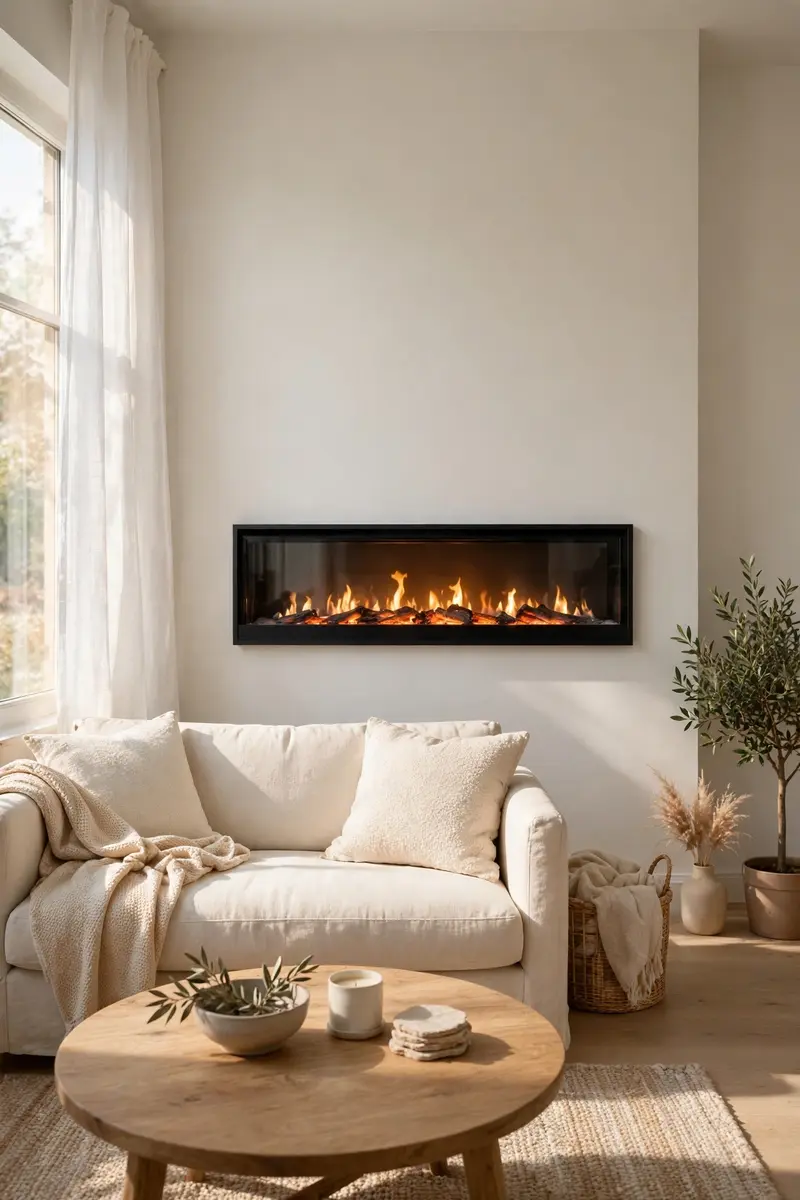
1. Wall-Mounted Linear Electric Fireplace for a Small Living Room
A wall-mounted linear electric fireplace is the easiest small living room fireplace idea because it adds almost zero depth to the room. The slim unit hangs like a piece of art, needs no chimney or gas line, and gives you instant flame and heat with a remote. In rooms under 180 square feet, a 36 to 50 inch linear unit is usually the sweet spot.
You will need: a wall-mounted electric fireplace ($200–$600), a stud finder, and a nearby outlet. Mount it at eye level from your sofa, roughly 12 to 18 inches above the floor, and keep the wall around it bare so the flame stays the star. Variation: choose a unit with color-changing flames if you like a modern look at night.
Tip: Measure your wall first and follow the one-third rule — the fireplace should fill about a third to a half of the wall width, never the whole wall.
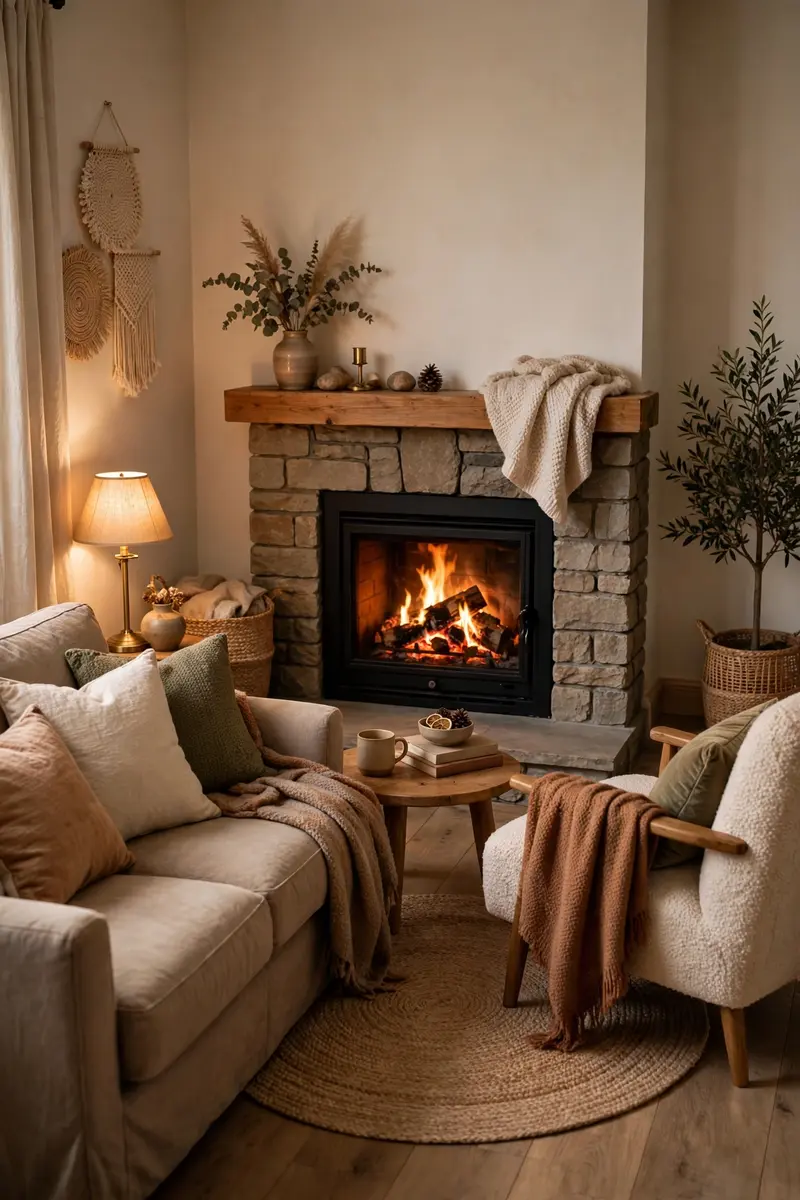
2. Corner Fireplace with Angled Seating
Tucking the fireplace into a corner frees up your longest wall for seating, storage, or a TV, which is gold in a small room. Angle a loveseat and one chair toward the corner so the conversation zone feels intentional instead of awkward, and keep walkways at least 36 inches wide.
You will need: a corner electric insert or freestanding corner unit ($250–$800), a small loveseat, and one accent chair. Place a round rug under the seating group to soften the angle. Variation: paint the corner wall a shade deeper than the rest to make the nook feel like a built-in feature.
Tip: Do not push every seat to face the fire directly — a slight angle keeps the room feeling open and easy to move through.
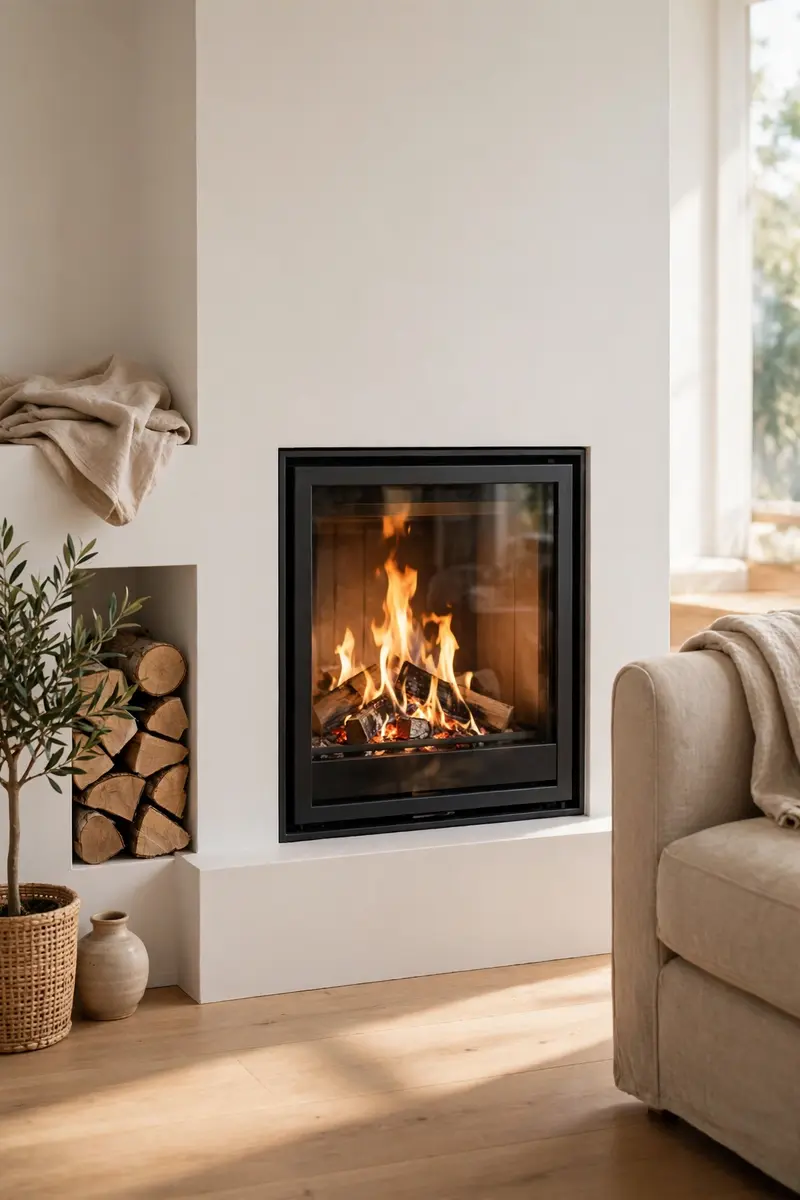
3. Slim Built-In Gas Insert
If you already have a fireplace opening that feels too big or drafty, a slim gas insert turns it into a clean, efficient focal point. Modern inserts run just 12 to 16 inches deep, so they sit flush and give you real flame and steady heat without eating floor space.
You will need: a direct-vent gas insert ($1,000–$2,500 installed by a licensed fitter) and a simple surround. Keep the mantel slim and the hearth shallow so the proportions stay small-room friendly. Variation: add a black steel frame for a modern look, or a white painted surround for a cottage feel.
Tip: Always use a licensed installer for gas work, and confirm the heat clearance above the unit before hanging anything over it.
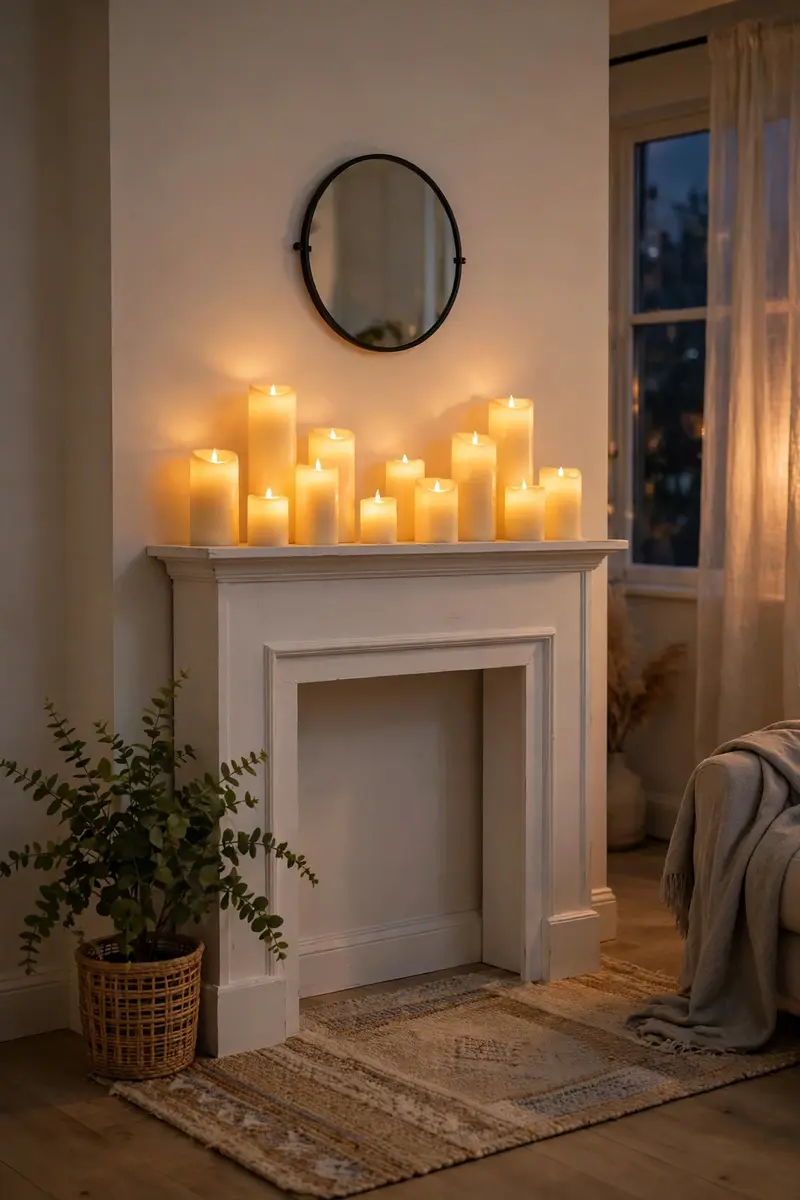
4. Faux Fireplace with LED Candles
Renters, this one is for you. A faux fireplace — a simple mantel frame, a painted arch, or even a console with a firebox opening — gives you the look and the gathering point with zero venting, zero permits, and zero damage. Cluster LED pillar candles inside for a flickering glow that is safe to leave on all evening.
You will need: a faux mantel or console ($80–$300), battery LED candles ($15–$40 for a set), and a small mirror or art above. Variation: fill the opening with stacked books or a trailing plant in summer when you want the candles off.
Tip: Use candles of three different heights inside the opening so the glow looks like a real fire, not a flat row of lights.
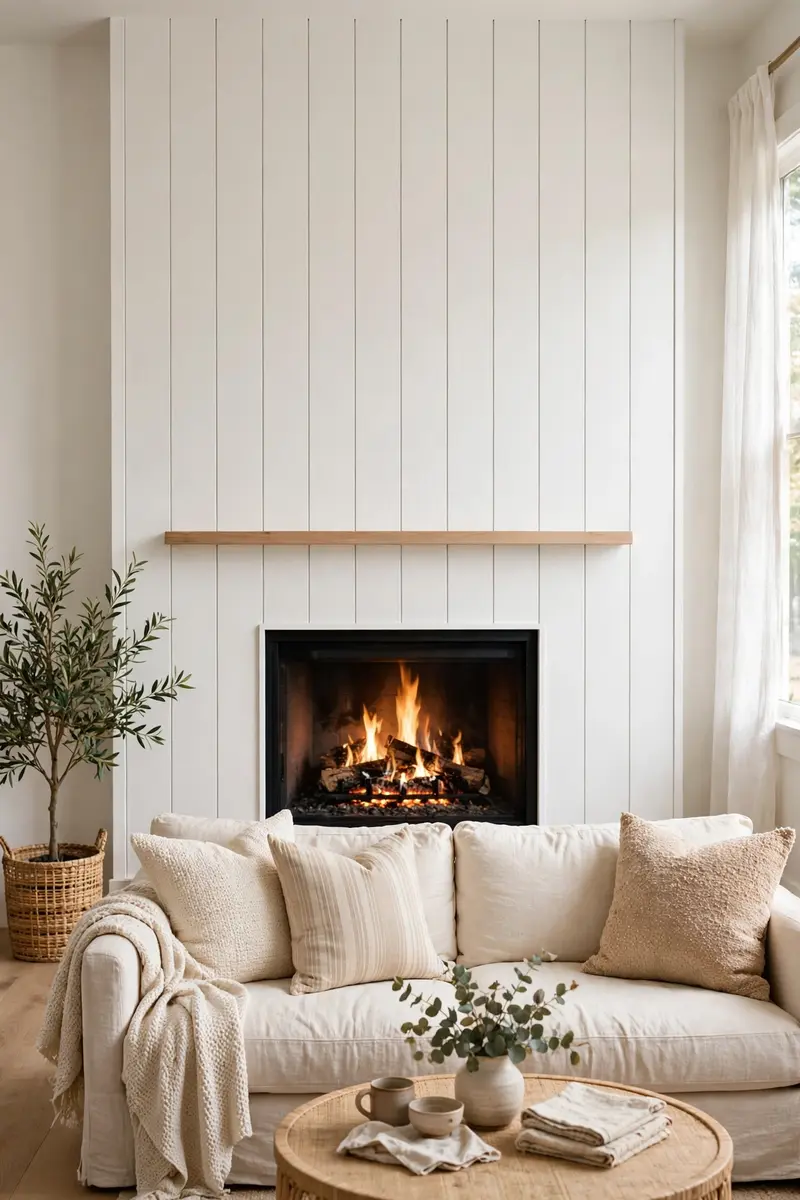
5. Floor-to-Ceiling Shiplap Surround
Running shiplap from floor to ceiling draws the eye upward and makes a small room feel taller, which is exactly what a compact fireplace wall needs. Paint it white or warm off-white, keep the mantel slim, and let the vertical lines do the decorating.
You will need: shiplap boards or peel-and-stick panels ($100–$400), paint ($35–$60 per gallon), and a floating mantel shelf ($40–$120). Install the boards vertically for extra height, and keep mantel styling to three pieces. Variation: paint the shiplap a soft sage or dusty blue for a cottage look that still feels light.
Tip: Stop the shiplap at the ceiling, not at picture-rail height — the full run is what creates the tall-room illusion.
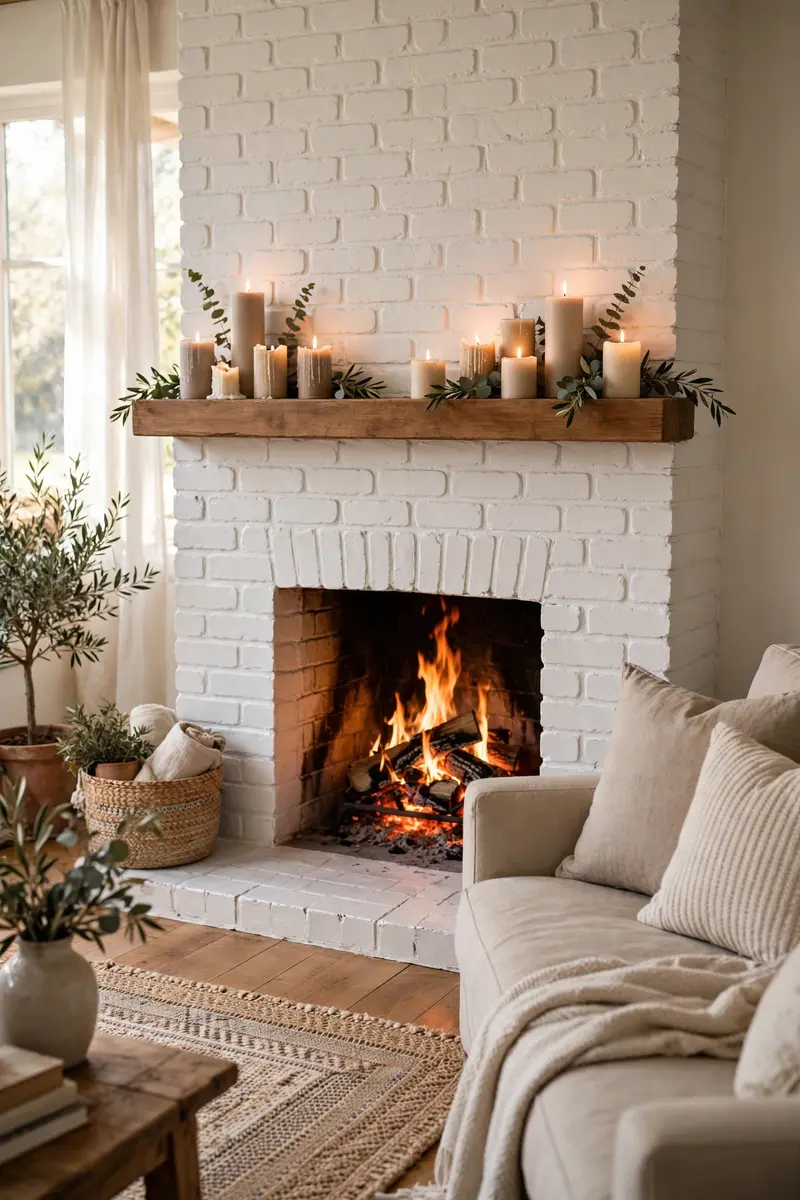
6. Painted White Brick Fireplace
An old brick fireplace can dominate a small room, but a coat of white or cream paint calms it instantly. The brick texture stays, so you keep the character, while the pale color bounces light around and lets your furniture take center stage.
You will need: masonry primer and heat-resistant paint ($40–$80), a stiff brush, and painter's tape. Clean the brick well, prime, then roll two thin coats rather than one thick one. Variation: try a warm limewash instead of solid paint for a softer, old-world finish.
Tip: Test the white on one small patch first — a cool white can look stark against warm wood floors, while a warm white glows.
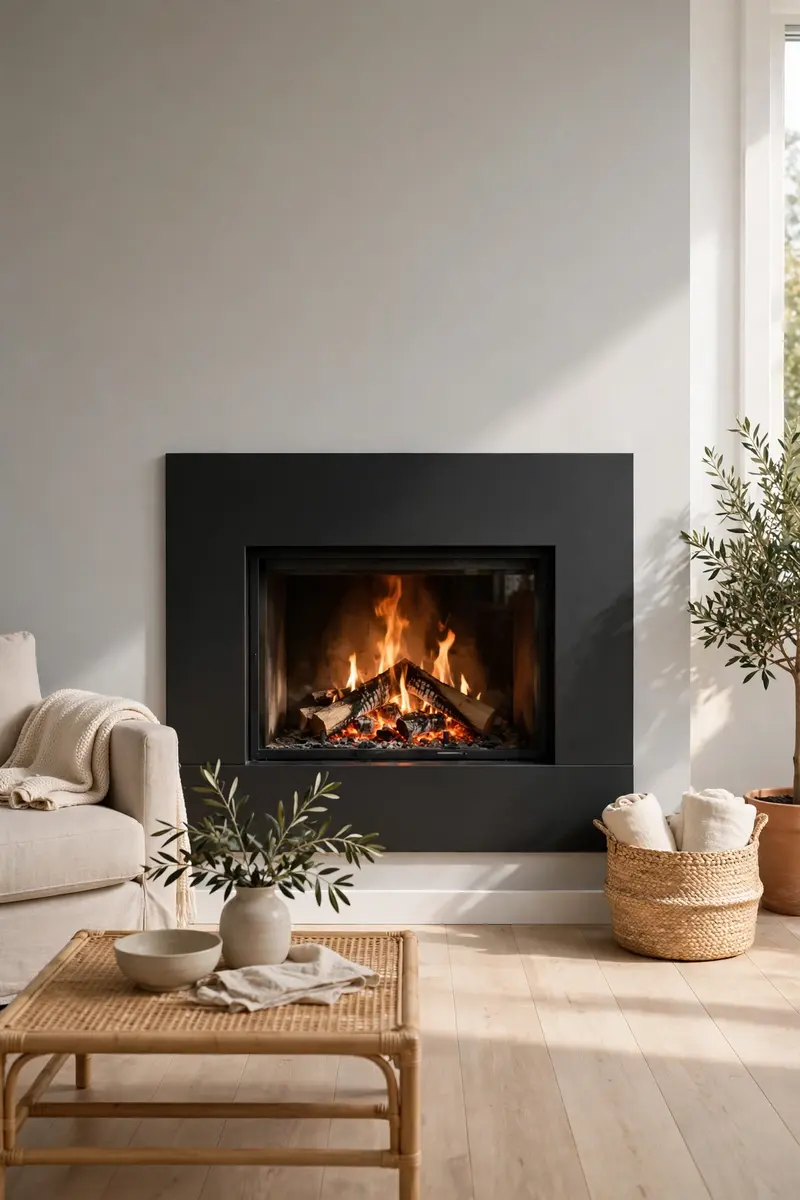
7. Black Steel Modern Surround
A flat black steel surround gives a small fireplace a sharp, modern frame without any bulk. It reads as a thin outline rather than a heavy mantel, so the fire itself stays the focus, and it pairs beautifully with light walls and pale wood floors.
You will need: a black steel surround or frame kit ($150–$500) and a simple hearth tile if yours is worn. Keep everything else on the wall minimal — one piece of art or nothing at all. Variation: mix in brass tools or a brass fire screen for a warm metallic accent.
Tip: Matte black hides soot and fingerprints far better than gloss, so choose a matte finish for a working fireplace.
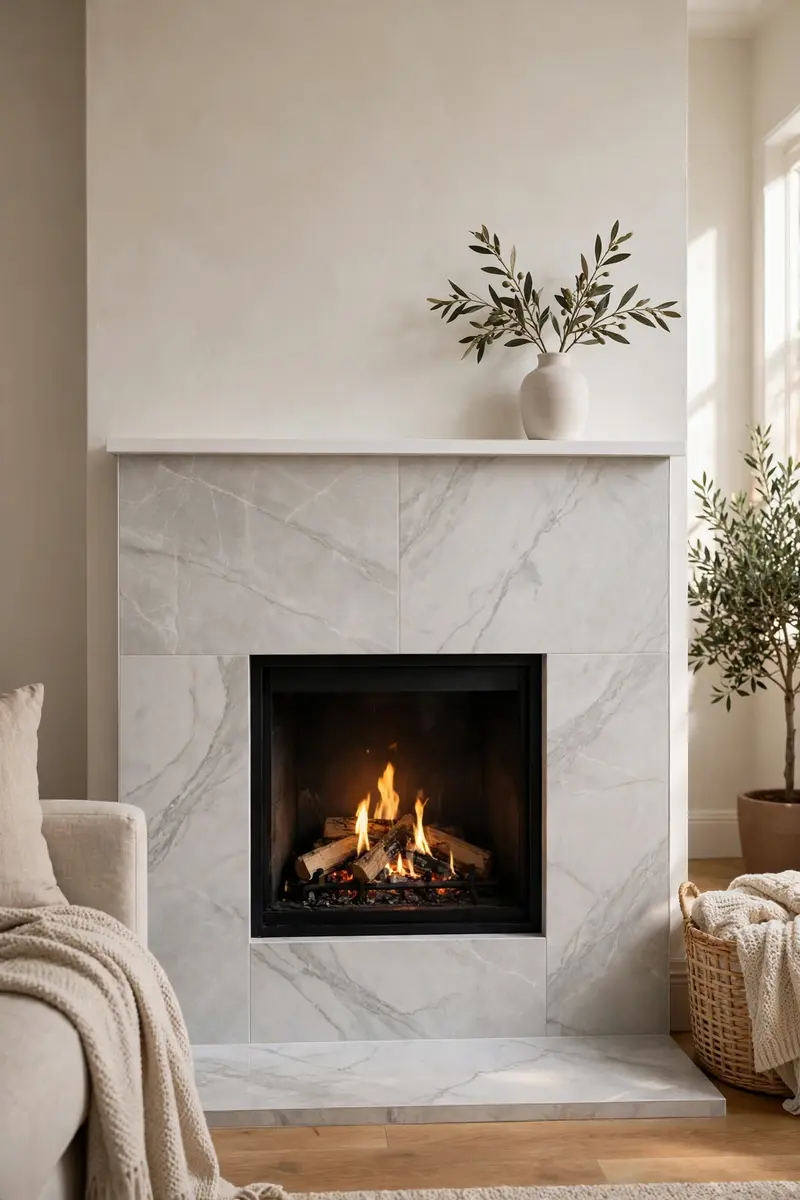
8. Marble-Look Tile Surround
Real marble is pricey, but large-format marble-look porcelain tile gives you the same elegant veining for a fraction of the cost, and it is easy to wipe clean. In a small room, one dramatic material on the surround is enough — you do not need marble everywhere.
You will need: marble-look porcelain tile ($4–$10 per square foot), tile adhesive and grout ($30–$60), and a slim mantel shelf. Run the tile in a simple stacked pattern so the veining, not the grout lines, catches the eye. Variation: use the same tile on the hearth for a seamless, built-in look.
Tip: Choose tiles with soft, quiet veining rather than bold dramatic streaks, so a small wall does not feel busy.
9. Floating Mantel with One Bold Art Piece
A floating mantel shelf takes up almost no visual space, and hanging one large piece of art above it gives the whole wall a gallery feel. The rule is simple: one anchor piece beats five small ones in a small room, because your eye lands once and rests.
You will need: a floating mantel shelf ($40–$120), one large framed print or canvas ($50–$200), and two small accents for the shelf ends. Hang the art so its center sits at eye level from standing, and keep the shelf styling to a candle and a small plant. Variation: swap the art seasonally — a landscape in winter, a bright abstract in summer.
Tip: The art should be about two-thirds the width of the mantel, never wider than it, or the balance tips.

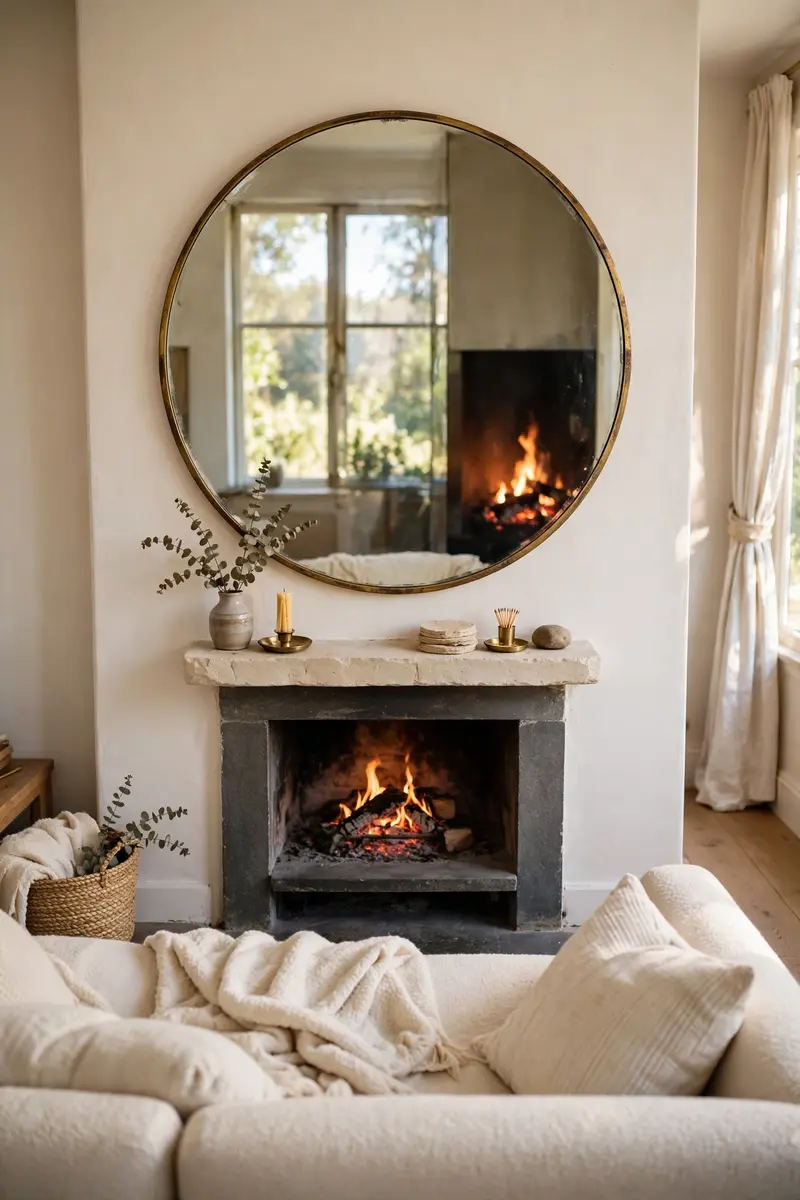
10. Oversized Mirror Above the Mantel
A large mirror above the mantel is the oldest small-room trick for a reason: it bounces light and the fire's glow around the room and doubles the sense of space. Choose a simple frame that matches your room, and let the reflection do the work.
You will need: a large mirror ($60–$250) and secure wall fixings rated for its weight. Hang it so it reflects a window or a pretty corner, not a blank wall or clutter. Variation: try an arched mirror to soften a boxy fireplace, or a round mirror for a modern look.
Tip: Sit on your sofa and check the reflection before you fix the mirror in place — you want glow and greenery, not the ceiling fan.
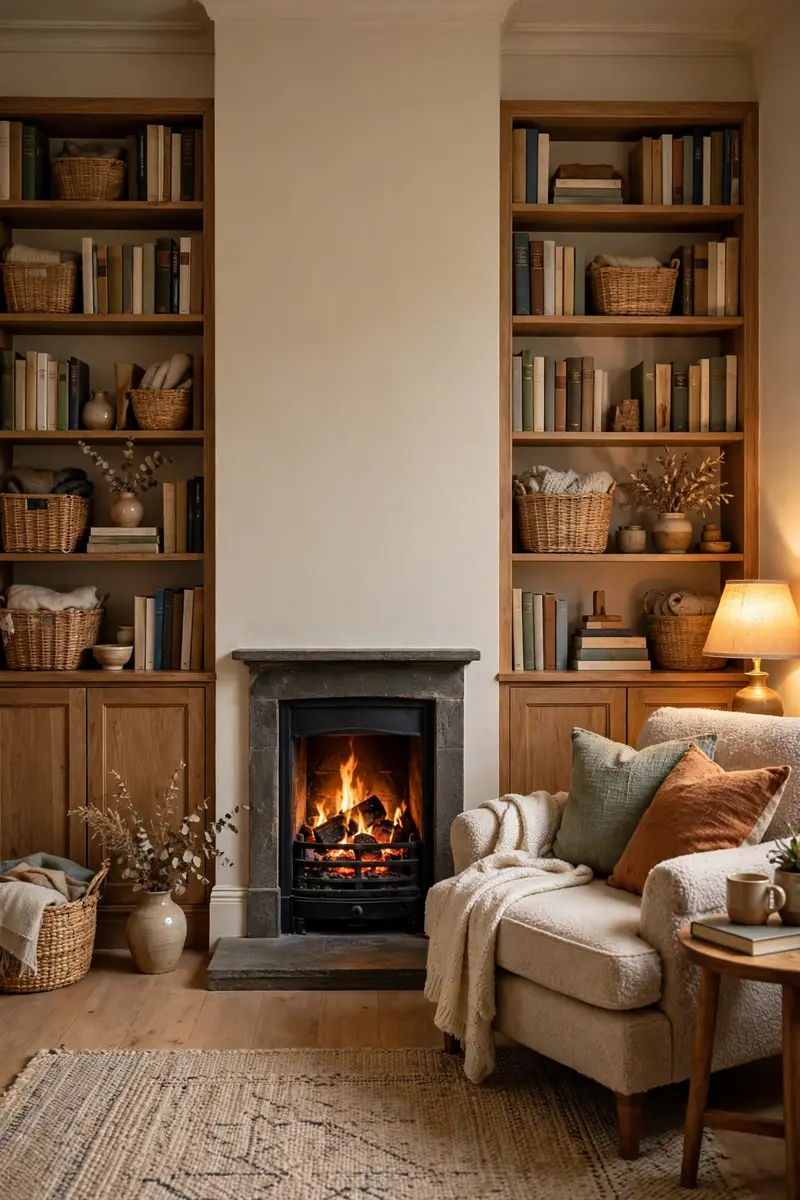
11. Built-In Shelves Flanking the Fireplace
Shelves on both sides of the fireplace turn a plain wall into a fitted-looking feature and solve small-room storage at the same time. Books, baskets, and a few favorite objects fill the shelves, so the fireplace reads as part of a whole wall, not a lonely box.
You will need: two simple bookcases or floating shelf sets ($100–$400 total) and matching baskets ($15–$30 each). Keep the shelves about 70 percent full — leave breathing room on every shelf. Variation: paint the shelves the same color as the wall for a built-in look, or a contrasting color to frame the fire.
Tip: Group books by color or size and hide clutter in baskets on the lowest shelves, where eyes land last.
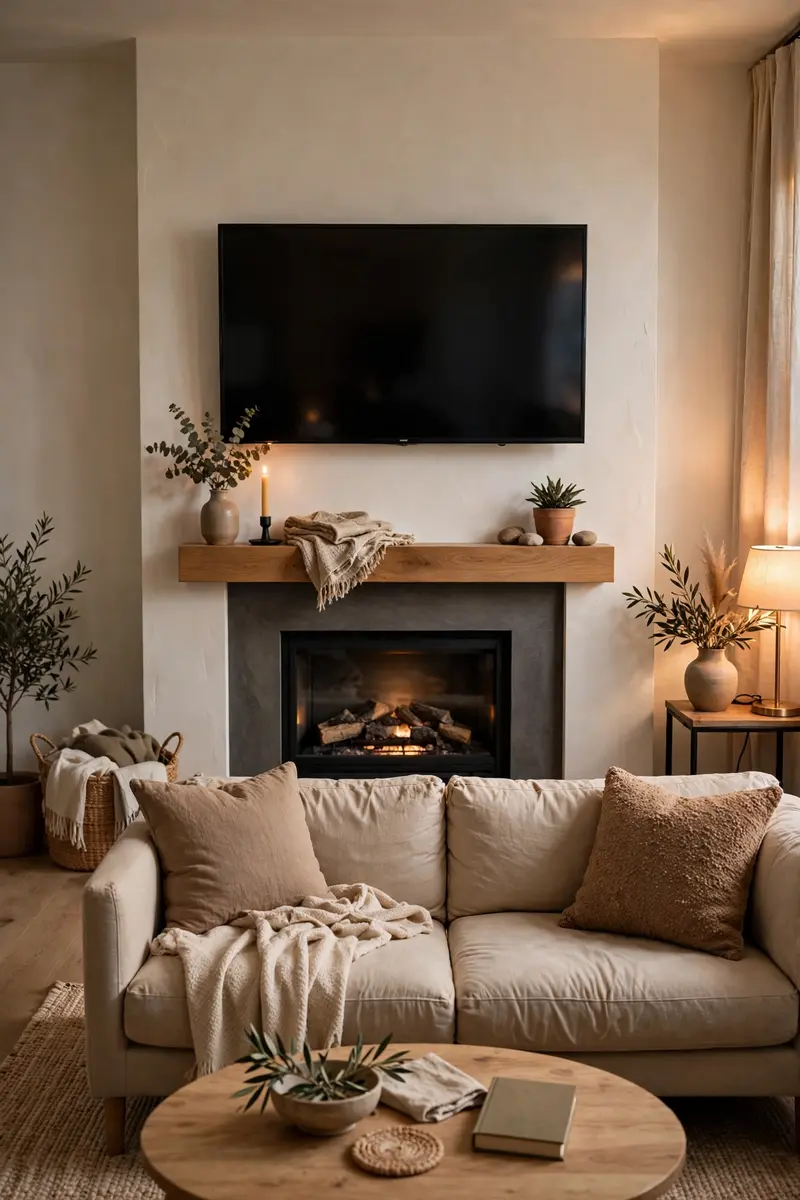
12. TV Above the Fireplace in a Small Living Room, Done Right
Putting the TV above the fireplace saves an entire wall in a small room, but only if you get the height and heat right. Electric fireplaces are the safest partner here, and a tilting mount plus a mantel shelf that deflects heat will protect both your screen and your neck.
You will need: a tilting TV mount ($30–$80), a mantel shelf if you do not have one, and a heat check from both appliance manuals. Keep 40 to 60 centimeters of clearance above a gas or wood unit, and mount the TV as low as the mantel allows. Variation: hide the TV behind sliding art panels when it is not in use, so the fireplace owns the wall.
Tip: Sit in your usual spot and check the viewing angle before drilling — if you are craning your neck, the TV is too high.
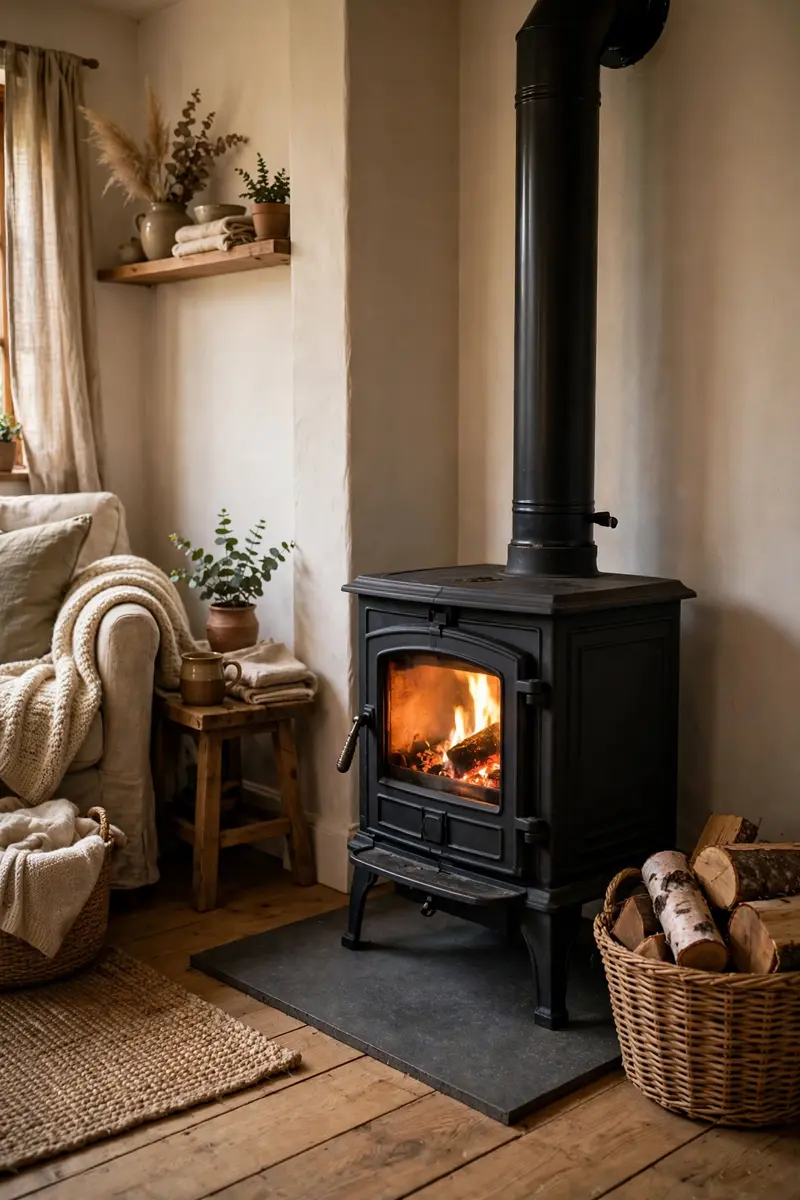
13. Compact Wood Stove in the Corner
A small freestanding wood stove brings real flame and serious heat to a tiny room, and its compact footprint fits corners that a full fireplace never could. The stove itself becomes a sculptural object, especially in black cast iron, and the flue pipe adds vertical interest.
You will need: a compact wood stove ($800–$2,000 installed with a proper flue) and a fireproof hearth pad ($80–$200). Follow your local clearance rules — typically 12 to 36 inches from combustible materials — and keep a log basket nearby. Variation: a modern cylindrical stove suits contemporary rooms, while a classic box stove suits cottages.
Tip: Never skip the professional flue installation; a stove is only as safe as its chimney.
14. Freestanding Bioethanol Fireplace
Bioethanol fireplaces burn real flame with no chimney, no gas line, and no ash, which makes them a flexible pick for small rooms and rentals. A freestanding unit can move from the living room to a bedroom, and a tabletop version works on a sturdy console.
You will need: a freestanding or tabletop bioethanol fireplace ($150–$600) and bioethanol fuel ($20–$40 per supply). Check the room-volume rule for your burner size — roughly 200 cubic feet of air per 1,000 BTU per hour — and store fuel safely away from the flame. Variation: choose a glass-sided model so the flame is visible from two seats, not just one.
Tip: Light it only in a ventilated room and never refill while it is lit or still hot.

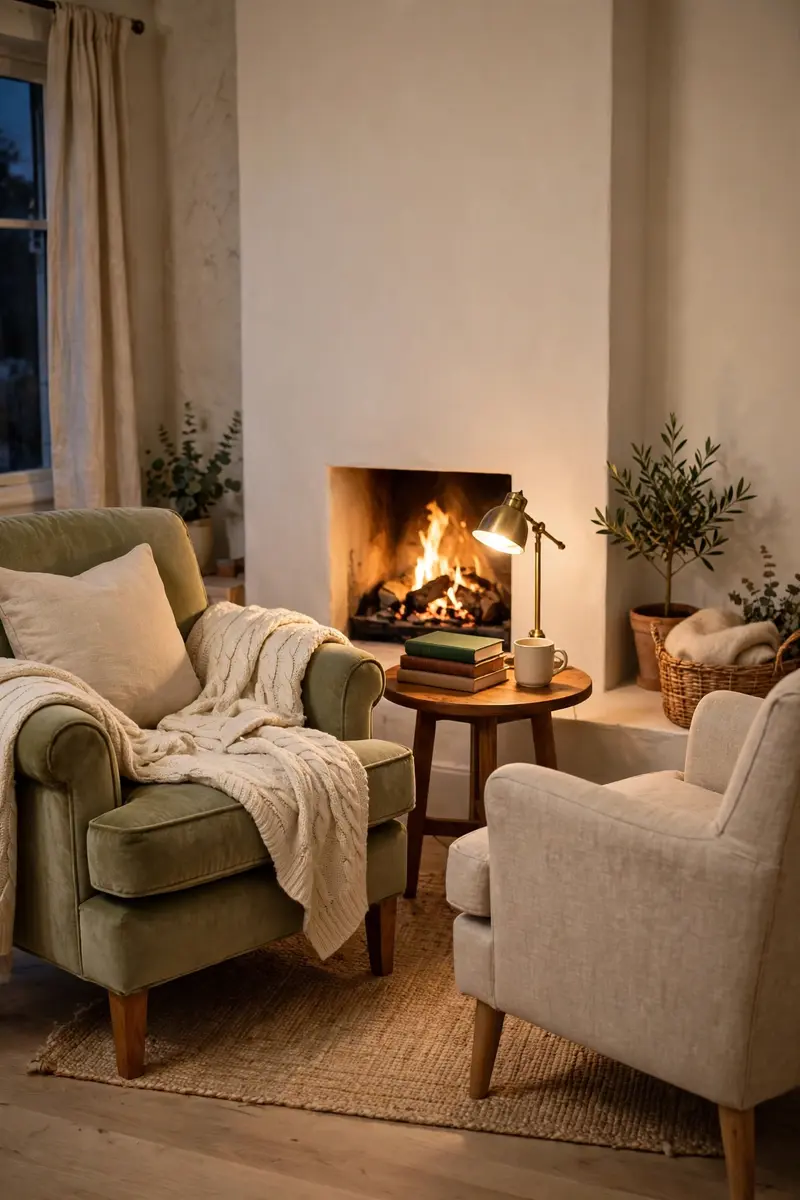
15. Fireplace Reading Nook with Two Chairs
Instead of aiming a whole sofa at the fire, try two comfortable chairs and a small table pulled close to the hearth. This reading-nook layout fits rooms where a sofa would block the walkway, and it makes the fireplace feel like a private retreat.
You will need: two armchairs ($150–$400 each), a small round side table ($40–$100), and a floor lamp for reading. Angle the chairs slightly toward each other as well as the fire, so conversation flows. Variation: add a shared ottoman between the chairs as a footrest and extra surface.
Tip: Keep the chairs close enough to feel the warmth — about 4 to 6 feet from the firebox is ideal for reading comfort.
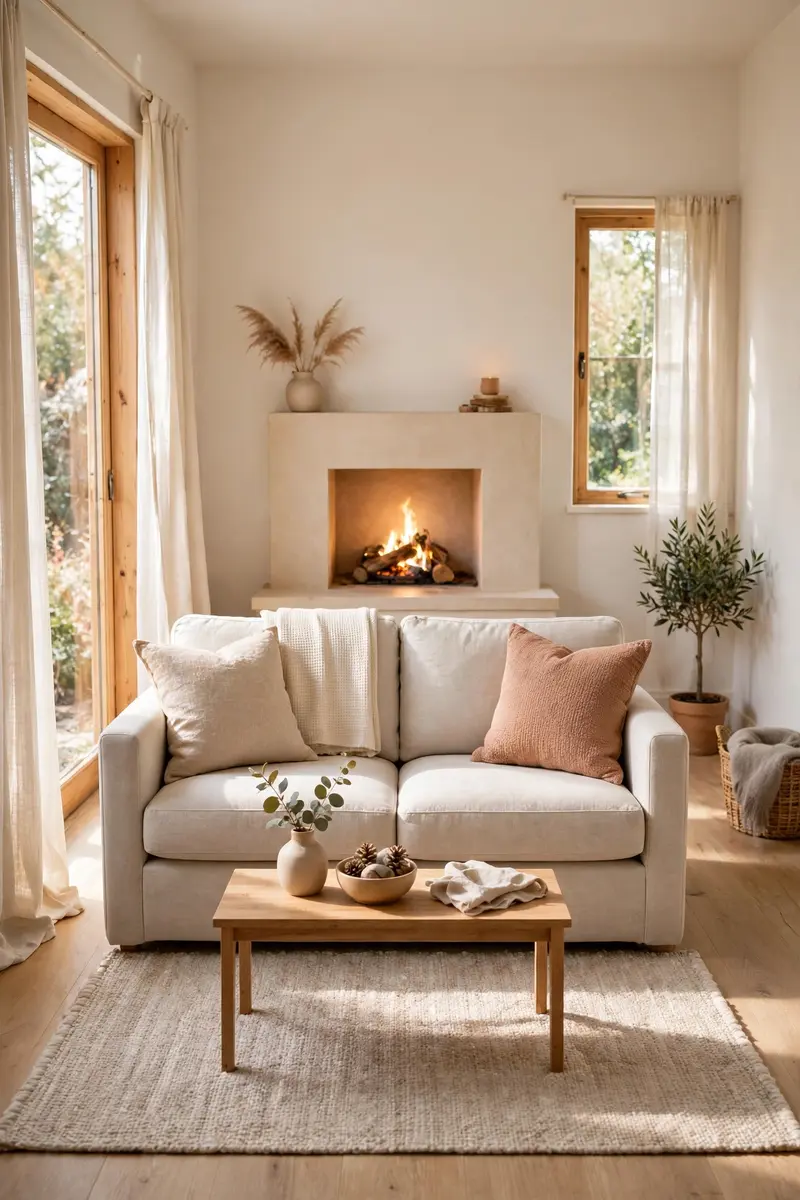
16. Loveseat Facing the Fire
A loveseat is the small living room's best friend: it seats two comfortably, faces the fireplace directly, and leaves room for side tables and a walkway on both sides. Pair it with a slim coffee table or an ottoman so the path to the fire stays open.
You will need: a loveseat ($300–$900), a slim coffee table or ottoman ($80–$250), and a soft throw. Center the loveseat on the fireplace and anchor it with a rug that extends under its front legs. Variation: choose a loveseat in a light fabric to keep the room feeling airy, and add color with pillows.
Tip: Leave at least 18 inches between the loveseat and the coffee table so legs have room and the fire stays visible.
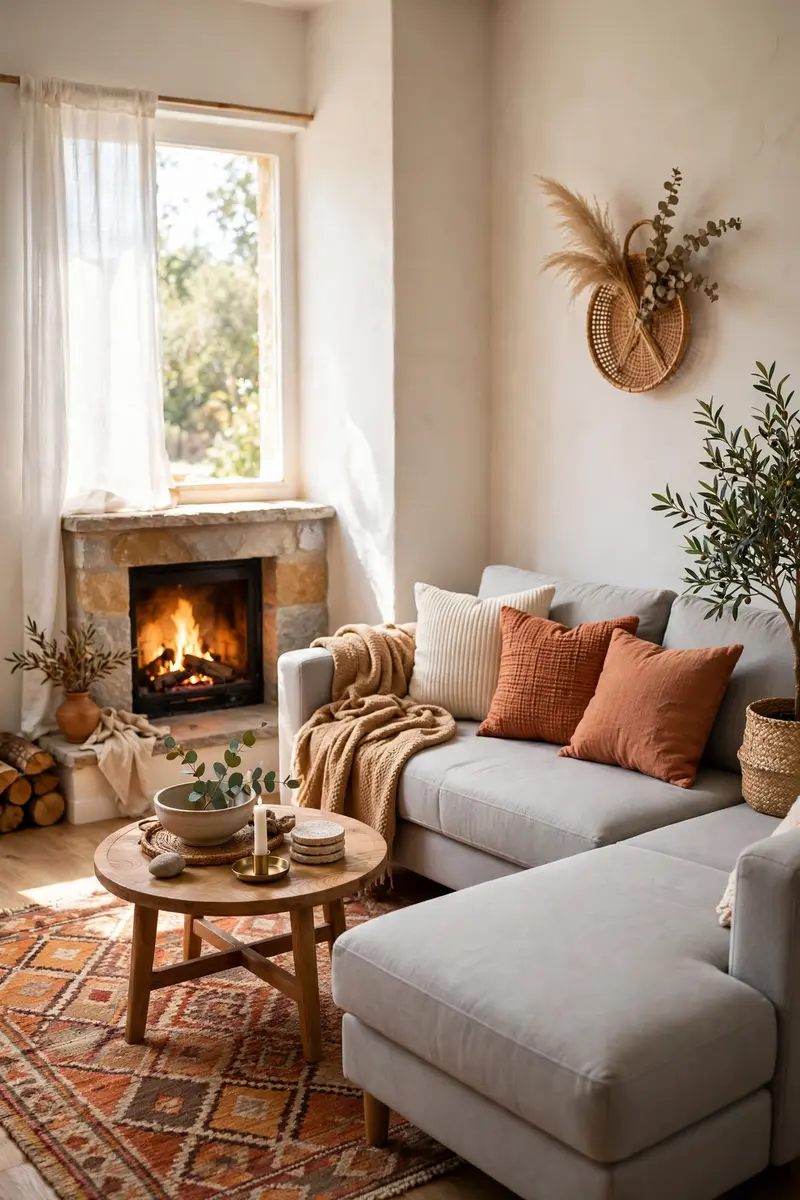
17. Small L-Shaped Sectional Angled to the Fire
A compact L-shaped sectional can work with a fireplace if you keep it short — 90 inches or less on the long side — and angle it slightly instead of squaring it to the wall. The angle opens up the walkway and lets everyone see the flames without turning their heads.
You will need: a small sectional ($600–$1,500) and a round coffee table, which suits angled layouts better than a rectangle. Float the sectional off the wall by a few inches so the room breathes. Variation: put the chaise on the side away from the fireplace so the fire view stays clear from every seat.
Tip: Tape the sectional's footprint on the floor before you buy — it is the only way to be sure the angled layout leaves a real walkway.
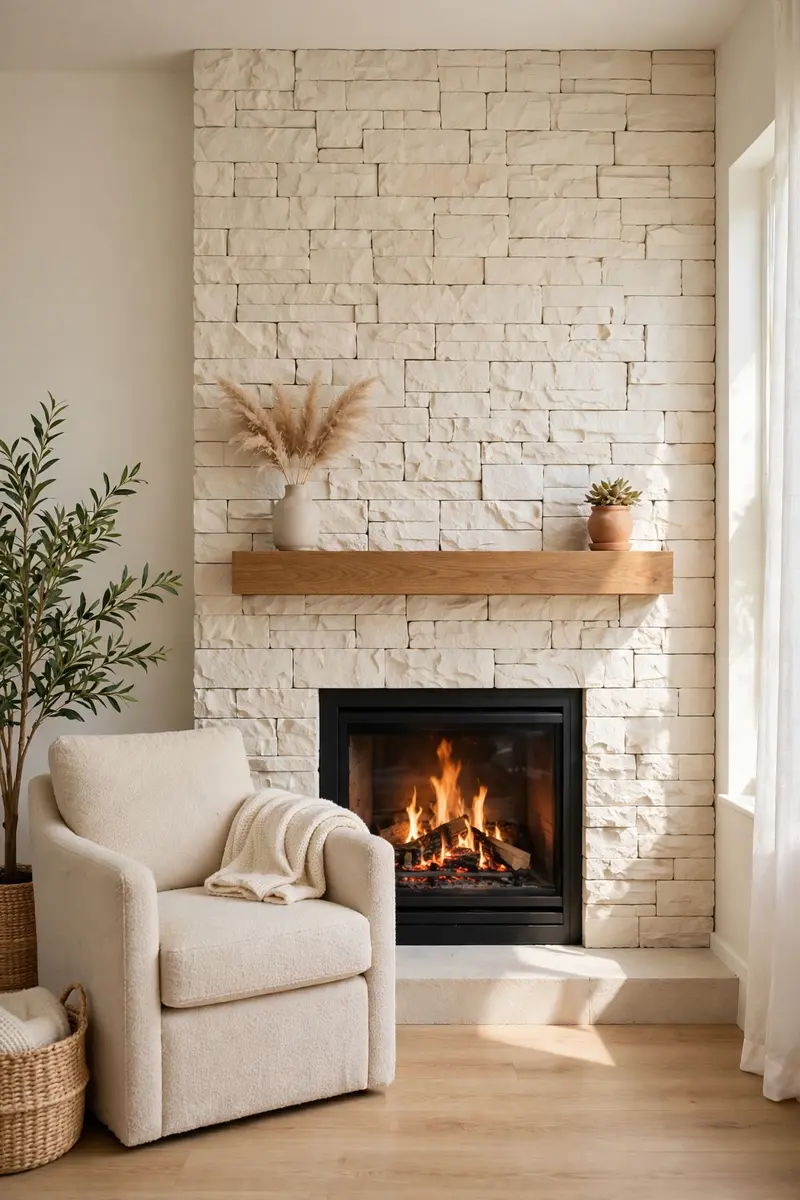
18. Stone Veneer Accent Wall
Thin stone veneer gives you a full stone fireplace wall at a fraction of the weight and cost of real stone, and it adds texture that flat paint never can. In a small room, keep the stone to the fireplace wall only so it reads as a feature, not a cave.
You will need: stone veneer panels ($7–$15 per square foot), adhesive and grout ($40–$80), and a simple wood mantel. Choose lighter stones — cream, pale grey, or warm sand — to keep the room bright. Variation: run the veneer only up to mantel height and paint above it for a lighter, half-and-half look.
Tip: Seal the veneer if you burn wood, so soot wipes off instead of staining the stone.
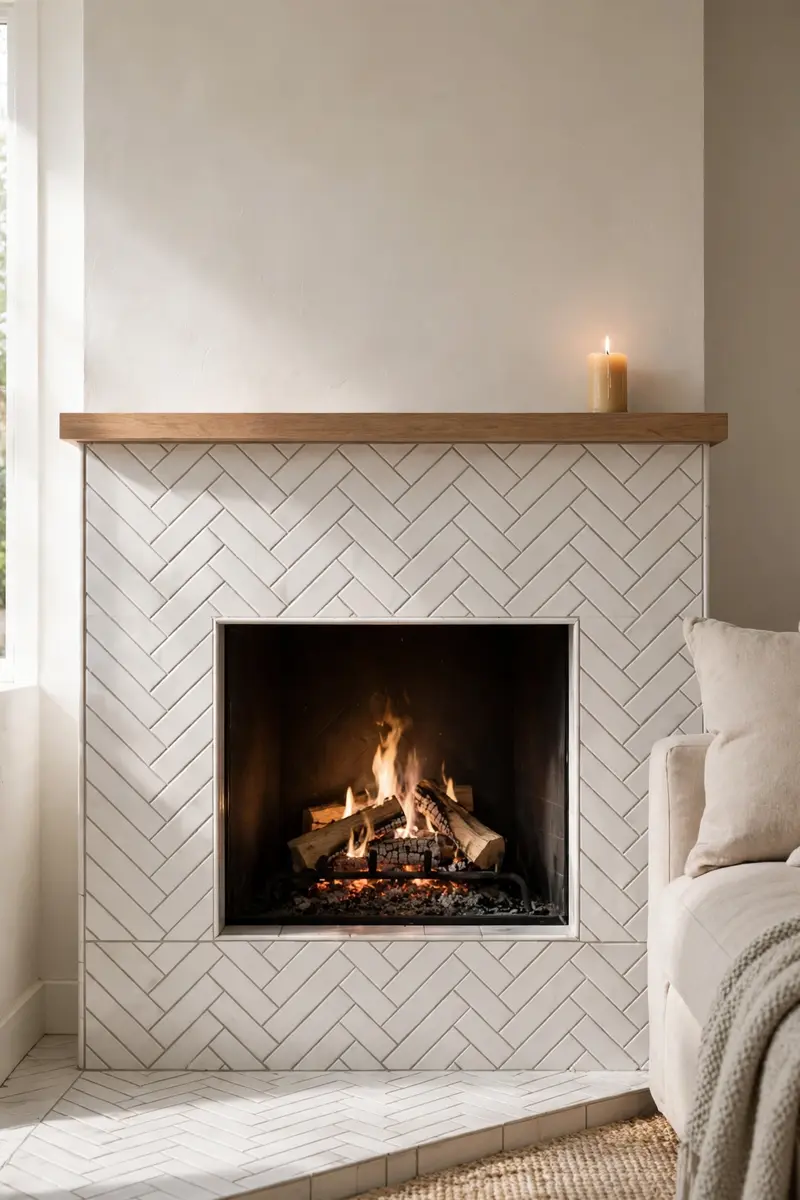
19. Herringbone Tile Surround
A herringbone pattern turns an ordinary tile surround into a design detail, and it works beautifully in small rooms because the pattern adds interest without adding bulk. White or cream herringbone with a soft grey grout is classic; a deep green or navy version makes a bold statement.
You will need: subway or rectangular tile ($3–$8 per square foot), adhesive, grout, and a tile cutter for the angled cuts. Lay the pattern carefully — herringbone wastes more tile than straight patterns, so buy 15 percent extra. Variation: use the herringbone only on the fireplace face and plain tile on the hearth to save money and cutting time.
Tip: Hire a tiler if you have never cut herringbone before — the angles punish beginners, and a wonky pattern shows from the sofa.
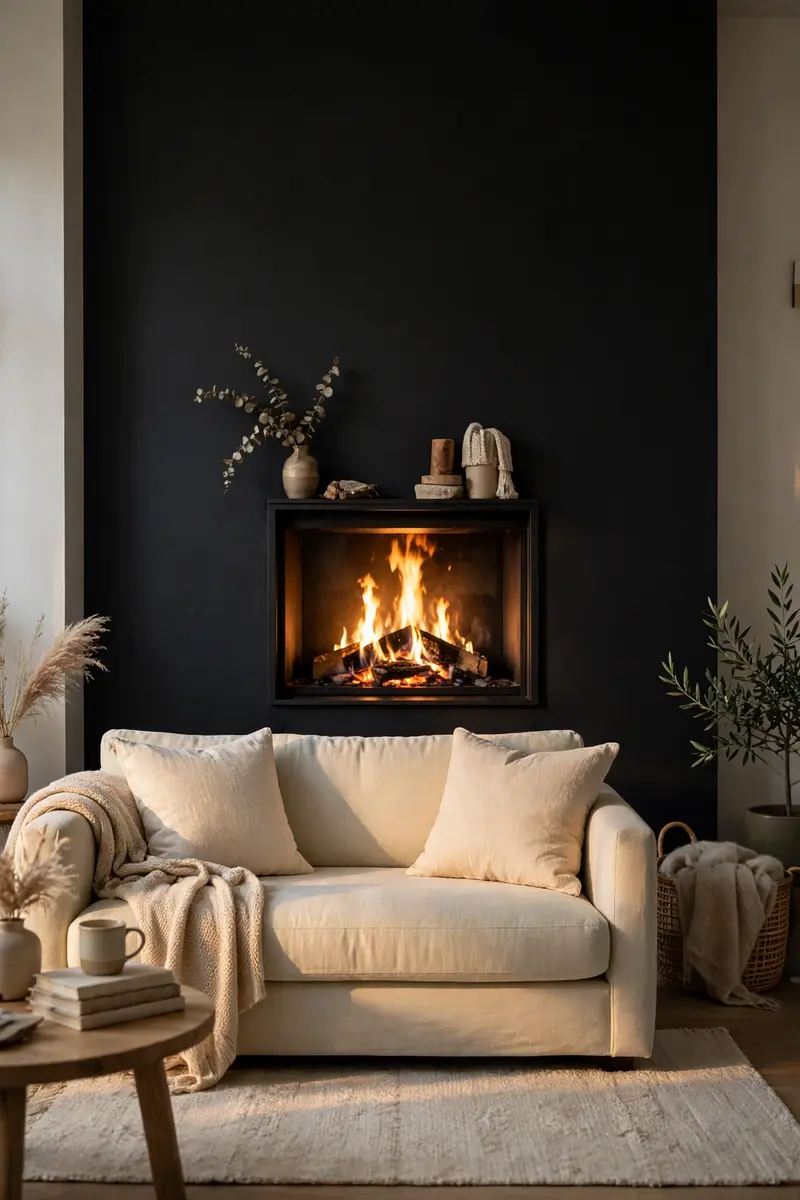
20. Moody Dark Accent Wall Behind the Fire
Painting just the fireplace wall a deep charcoal, forest green, or navy makes the flames pop and turns the whole wall into a visual anchor. The trick is keeping everything else light — pale sofa, light rug, bright art — so the dark wall adds depth instead of closing the room in.
You will need: one gallon of deep accent paint ($35–$60), painter's tape, and light-colored accessories to balance it. Paint the full fireplace wall, including the surround if it is wood, for a seamless look. Variation: use a matte finish for a soft, velvety depth, or an eggshell finish if you want the wall to wipe clean.
Tip: Test the dark color in firelight as well as daylight — flames warm up paint colors, and a color that looks grey by day can glow green or blue at night.
21. Light Neutral Palette for a Small Living Room Fireplace
When the fireplace is dark brick or heavy wood, the fastest fix is everything around it: pale walls, a cream sofa, a light rug, and sheer curtains. The fireplace becomes a rich accent in a bright room instead of a dark hole, and the whole space feels bigger.
You will need: warm white or greige paint ($35–$60 per gallon), a light rug ($80–$250), and cream or oatmeal pillow covers ($12–$25 each). Repeat one warm wood tone — a coffee table, a frame, a basket — so the room still feels cozy. Variation: add one warm accent color, like terracotta or mustard, in small doses so the neutrals never feel flat.
Tip: Choose warm neutrals, not cool greys, around a real flame — cool tones can make firelight look harsh instead of cozy.

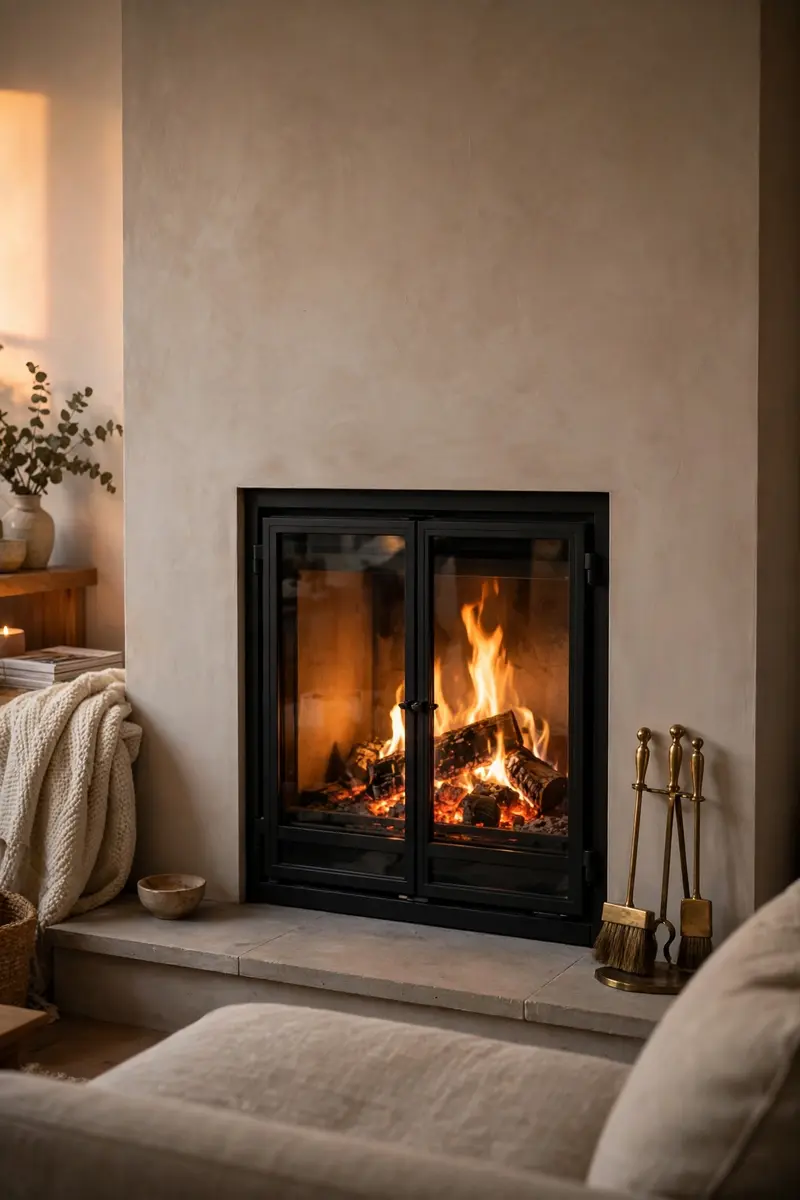
22. Glass Doors and a See-Through Fire Screen
Solid fireplace doors block the view of the fire and add visual weight, while glass doors or a mesh screen keep the flames visible and the room feeling open. A see-through screen is also safer with kids and pets, since it stops sparks without hiding the glow.
You will need: glass fireplace doors ($150–$400) or a mesh fire screen ($40–$120). Measure your opening carefully — doors are sized by opening, not by surround. Variation: choose black-framed glass doors for a modern look, or brass-trimmed doors for a traditional room.
Tip: Clean the glass with a fireplace glass cleaner, not regular glass spray, so heat stains do not bake on permanently.
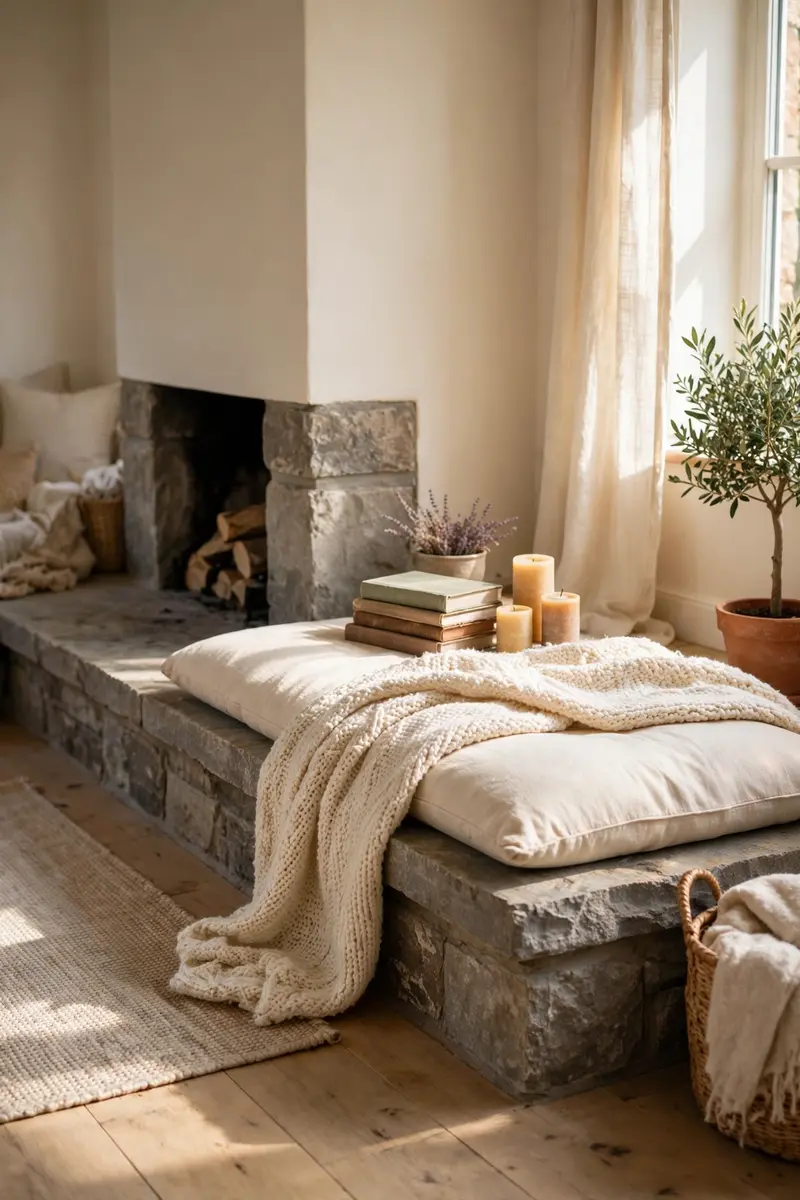
23. Hearth Bench Seating
A wide, low hearth doubles as extra seating in a small room — the perfect perch for one more guest, a stack of books, or a tray of candles. Dress it with a long cushion and it reads as a built-in window seat, not just a step.
You will need: a hearth cushion ($40–$100, custom-sized if needed), a throw, and a small basket beside it for fire tools. Keep the cushion in a washable fabric if the fireplace is used often. Variation: use the hearth as a display shelf in summer, with plants and lanterns, and add the cushion back in winter.
Tip: Never sit on a hearth while a real fire is burning — the bench is for the fire-off hours and for guests at the edges, not for sitting over flames.
24. Log Storage Niche Styling
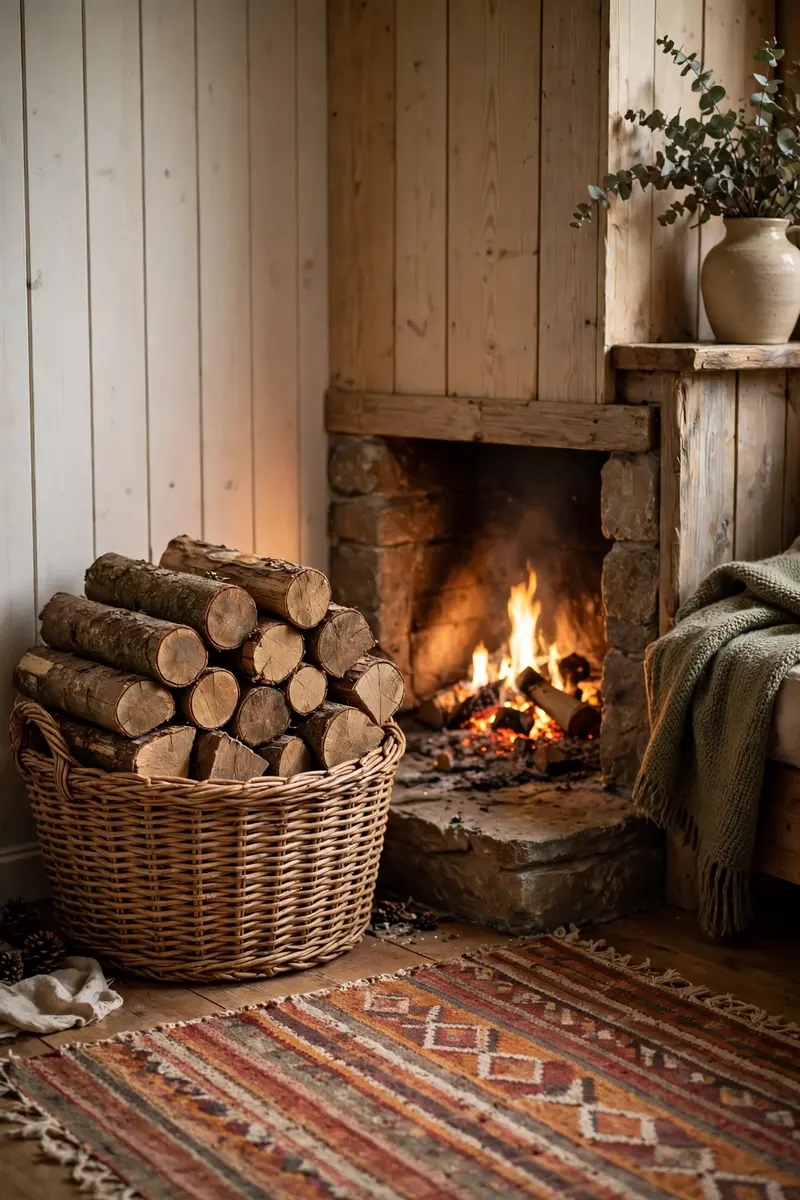
A niche stacked with firewood is both storage and decor, and it brings a natural, rustic texture into a small room for almost no money. Even if you burn gas or electric, a small stack of decorative logs beside the fireplace adds the cabin feeling instantly.
You will need: a log basket or iron holder ($25–$80) and seasoned logs ($20–$50 per bundle, or free if you have a source). Stack the logs neatly, bark out, in a basket or a built-in niche. Variation: use birch logs with pale bark for a Scandinavian look, or dark oak for a rustic one.
Tip: Keep firewood dry and off the floor on a rack, and never stack it touching the firebox surround.
25. Seasonal Mantel Rotation
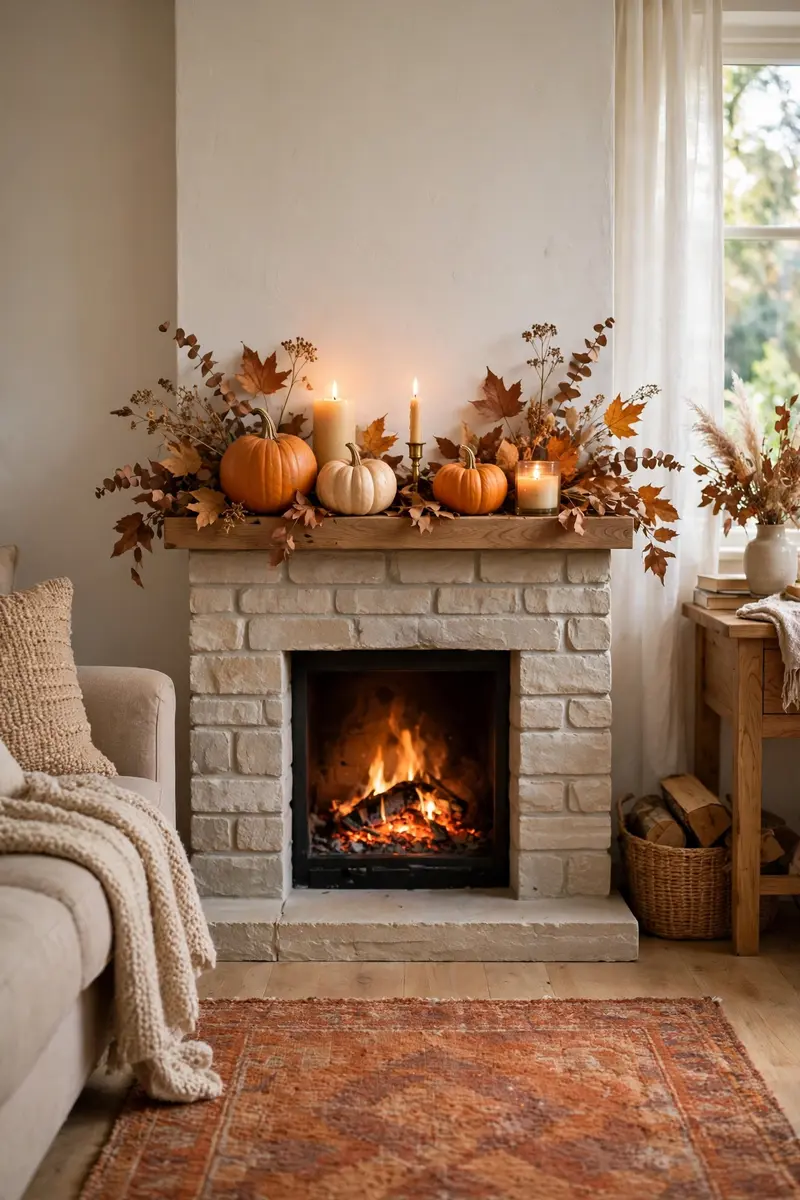
A mantel that changes with the seasons keeps a small living room feeling fresh without any new furniture. In autumn, try pumpkins and dried leaves; in winter, greenery and candles; in spring, fresh flowers; in summer, a mirror and a vase of grasses.
You will need: a small storage box for off-season mantel pieces and a few versatile basics — candlesticks, a garland, a vase ($50–$120 total). Change just three or four pieces each season so the mantel never looks cluttered. Variation: keep one anchor piece, like a clock or a mirror, up all year and rotate only the accents around it.
Tip: Photograph each seasonal arrangement you love, so next year you can recreate it in five minutes instead of starting over.
26. Sconce Lighting Flanking the Fireplace
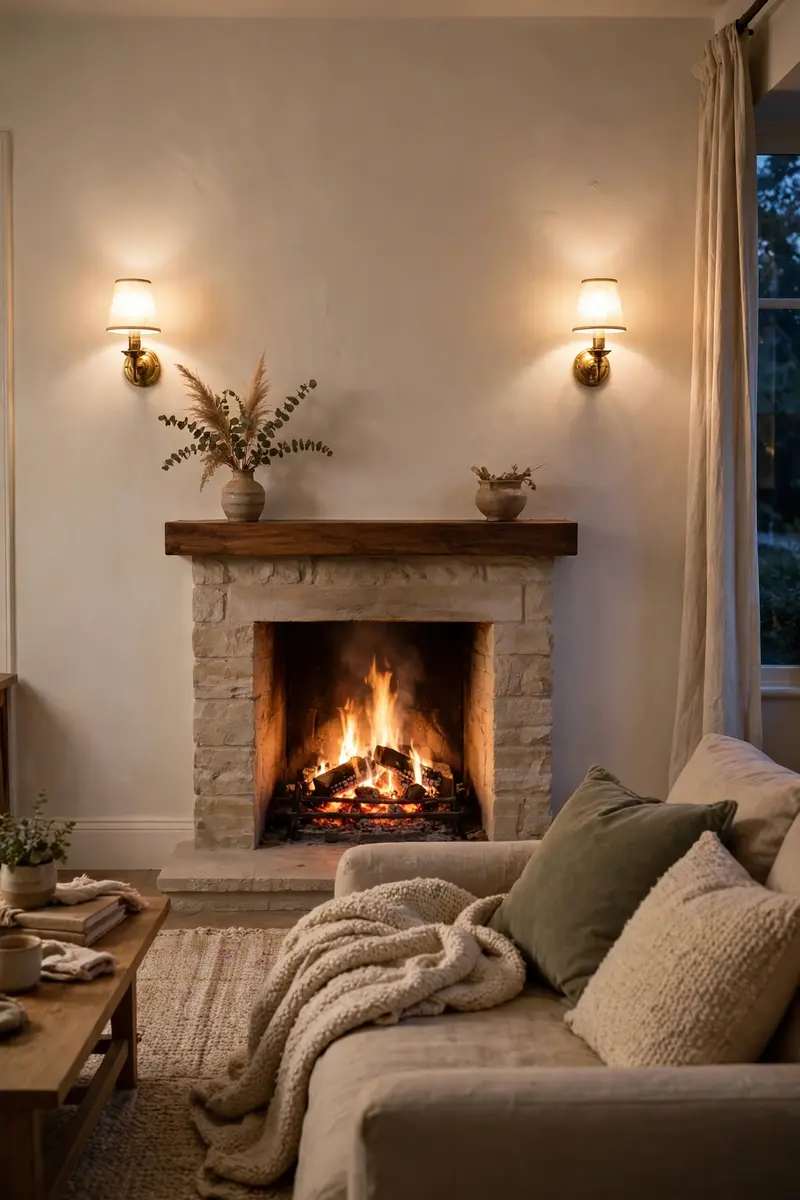
Wall sconces on both sides of the fireplace give you warm, layered light without taking up a single inch of floor or table space — perfect for small rooms. They also frame the fireplace symmetrically, which makes the whole wall feel designed.
You will need: two plug-in or hardwired sconces ($40–$150 each) and warm-white bulbs. Mount them at about eye level, roughly 60 inches from the floor, and equidistant from the mantel edges. Variation: use battery-operated sconces with a remote if you rent and cannot wire new lights.
Tip: Choose warm-white bulbs (2700K) so the sconce light matches the fire's glow instead of fighting it with cold blue light.
27. Rug Anchoring the Fireplace Zone
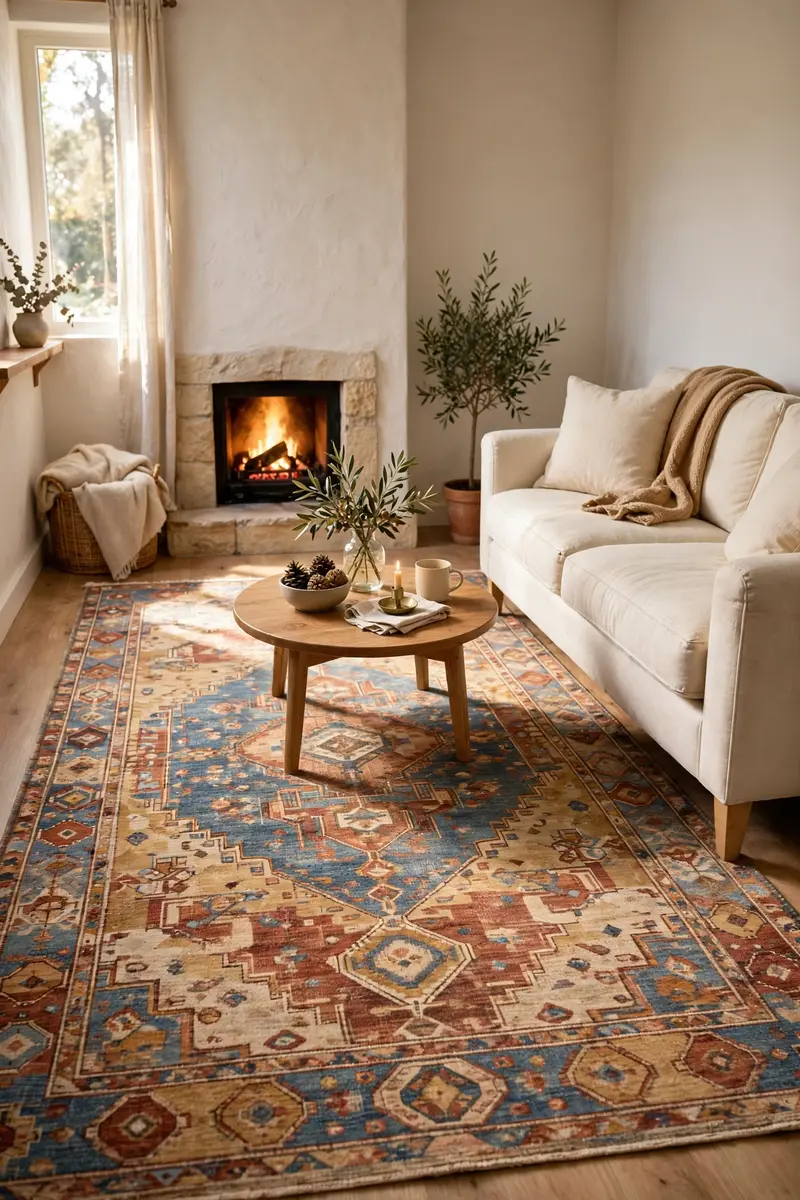
A rug that stretches from the fireplace to the front legs of your seating pulls the whole grouping together and defines the fireplace zone, even in an open-plan room. Without it, furniture floats and the fireplace feels disconnected from the seats.
You will need: a rug large enough to reach under the front legs of all seating ($100–$400). Choose a low-pile rug if you have a working hearth nearby, and keep at least 12 inches of bare floor between the rug edge and the hearth. Variation: layer a smaller patterned rug over a large natural jute rug for texture without bulk.
Tip: The rug should be wider than your sofa by at least a foot on each side, or the seating group will look pinched.
28. Low-Profile Furniture for Clear Sightlines
Low sofas, armless chairs, and slim coffee tables keep the sightline to the fireplace open from every corner of a small room. When furniture is low, the fire stays visible even from the kitchen doorway, and the room feels taller.
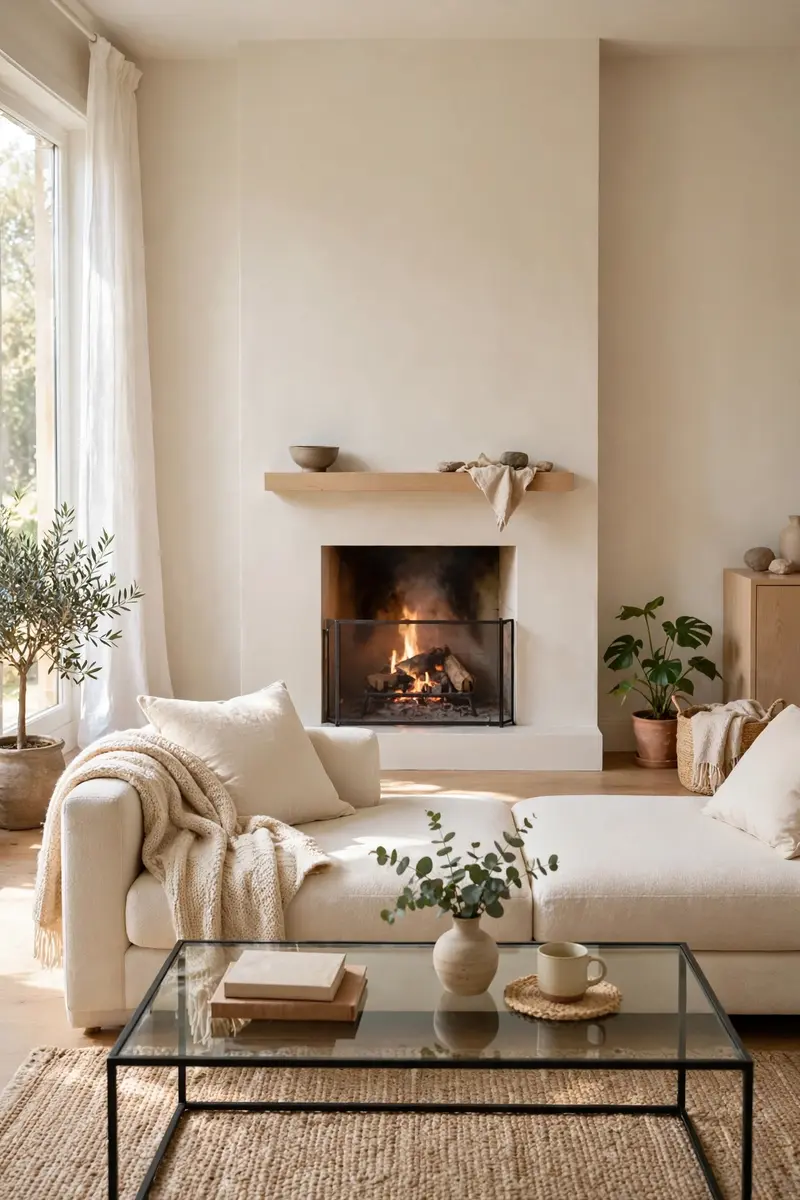
You will need: low-profile seating if you are buying new ($400–$1,200), or simply remove tall chair backs and bulky ottomans you already own. Keep coffee table height below the sofa seat height for a relaxed, open feel. Variation: use a glass coffee table, which nearly disappears and keeps the fire visible through it.
Tip: Sit in every seat, including the doorway, and check you can see the flames — if a chair back blocks the fire, move or swap that chair.
29. Double-Sided Fireplace as a Room Divider
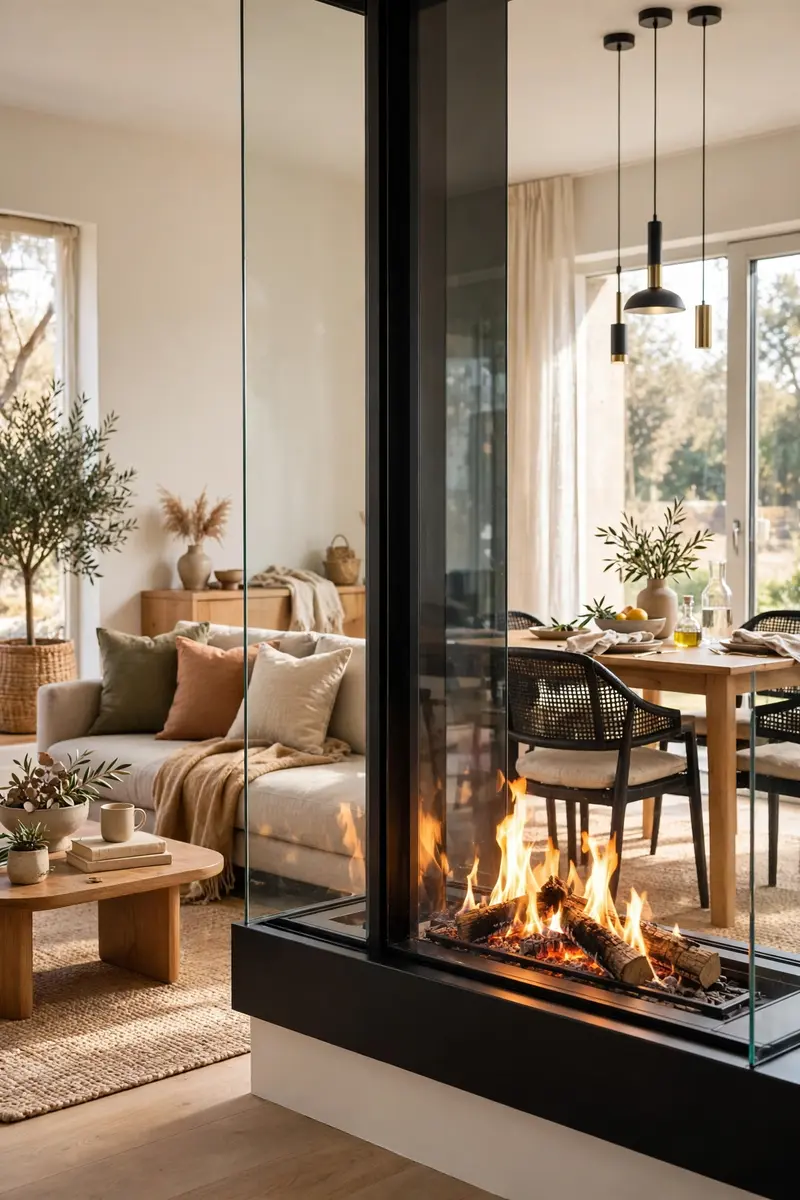
In an open-plan small home, a double-sided fireplace divides the living room from the dining area while giving both sides a focal point. It is a bigger project, but it replaces a wall with warmth, and both rooms gain character from one unit.
You will need: a double-sided gas or electric unit ($1,500–$4,000 installed) and a professional installer. Keep furniture low on both sides so the fire reads from across both rooms. Variation: a see-through electric unit is the renter-friendly version of this idea, set into a freestanding console between zones.
Tip: Plan the flue or vent route before you fall in love with a spot — the unit's position is decided by venting, not just by furniture.
30. Salvaged Vintage Mantel
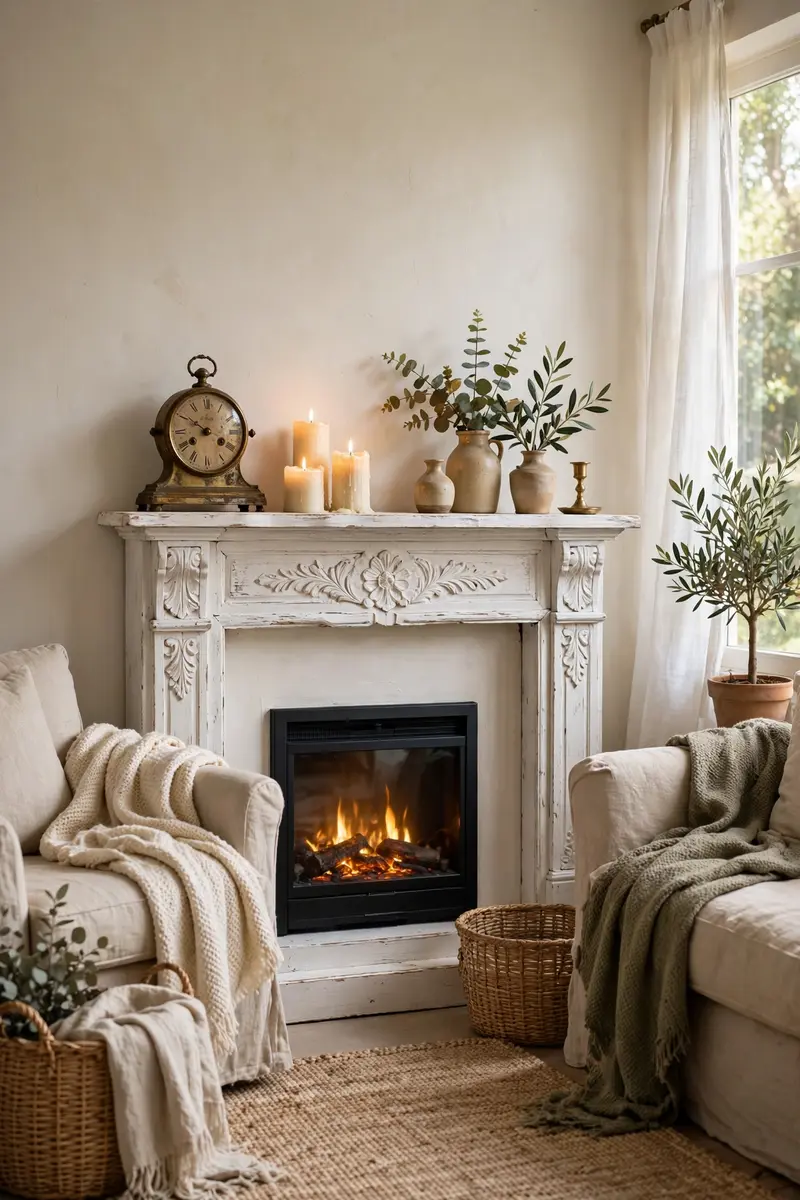
An old wooden mantel from a salvage yard brings instant character that new furniture cannot copy — carved details, worn paint, and a story. Mounted around a simple electric insert or a faux opening, it becomes the room's heirloom piece.
You will need: a salvaged mantel ($100–$500 from salvage yards or marketplaces) and fixings rated for its weight. Clean it, repair loose joints, and seal it before mounting. Variation: paint a salvaged mantel white for a cottage look, or strip it back to bare wood for a rustic one.
Tip: Measure your wall and your insert before you buy — salvaged mantels come in odd sizes, and a mantel that is too wide will crowd a small room.
31. Arched Firebox Shape
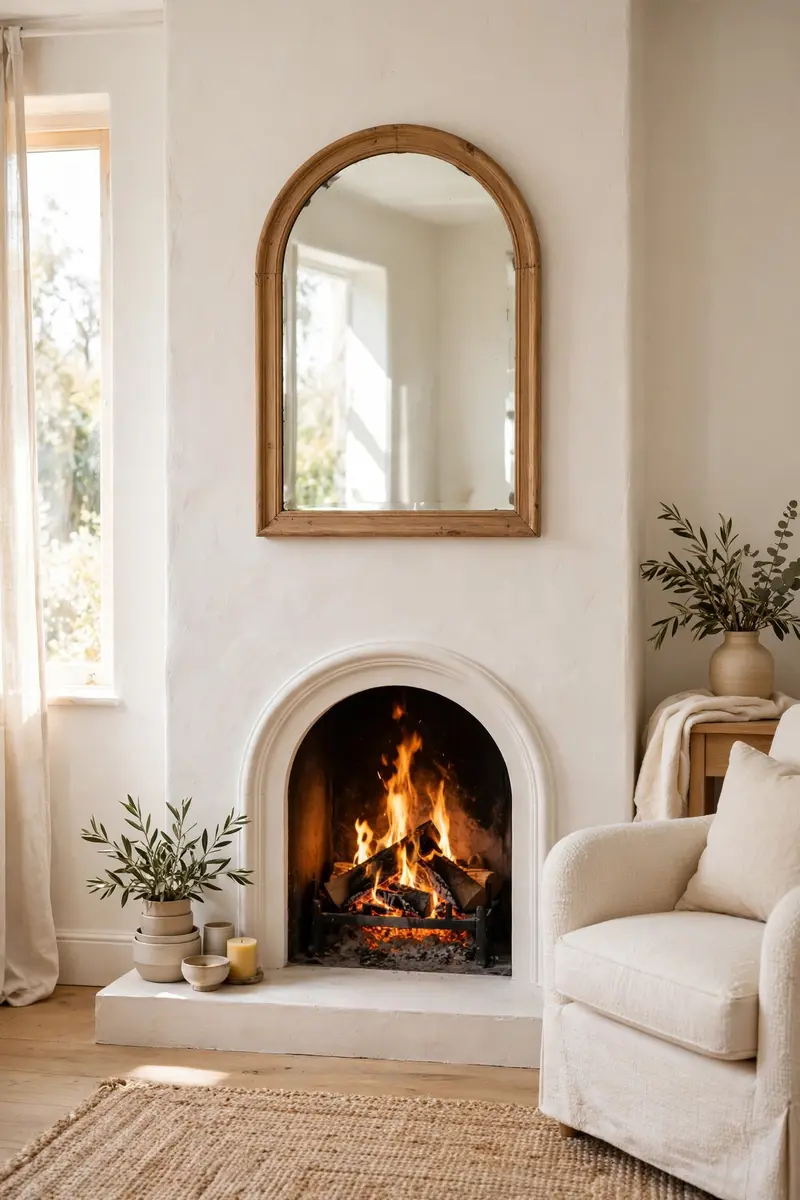
An arched opening softens a boxy fireplace and adds an architectural detail that makes a small room feel custom-designed. You can get the arch with a new firebox surround, an arched insert, or even an arched mirror or art hung above a square opening to echo the shape.
You will need: an arched surround kit or custom plaster arch ($200–$800) and paint to match the wall. Keep the rest of the wall simple so the arch is the single curved moment in the room. Variation: repeat the arch in a mirror, a doorway, or a window frame nearby so the shape feels intentional, not random.
Tip: An arch that is too tall for its width looks pinched — keep the arch height to about a quarter of the opening's height for classic proportions.
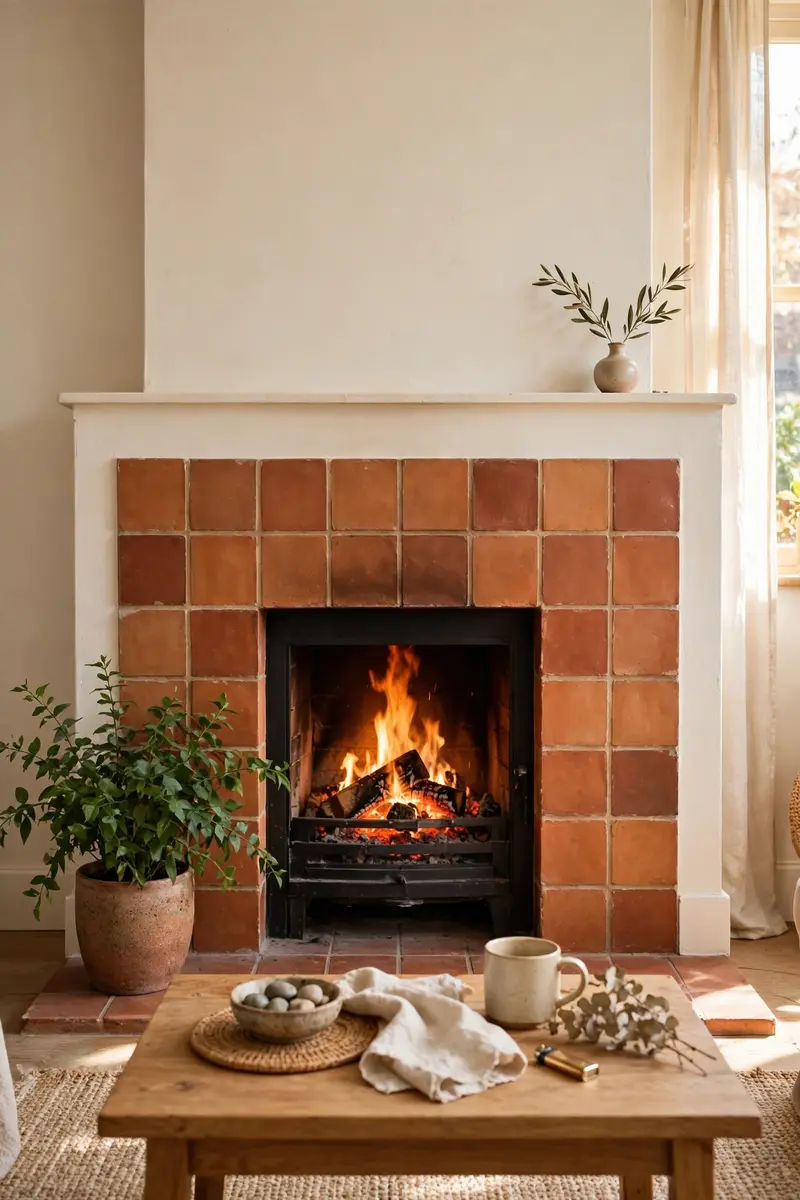
32. Terracotta and Warm Clay Surround
Terracotta tiles or a warm clay plaster surround bring earthy, Mediterranean warmth to a small living room fireplace, and the color glows beautifully in firelight. It is a softer alternative to stone or brick, and it pairs well with wood, linen, and plants.
You will need: terracotta tiles ($5–$12 per square foot) or clay plaster ($50–$120), plus grout and sealer. Seal terracotta well, since it is porous and stains easily near a working fire. Variation: use terracotta only on the hearth and keep the surround painted, for a hint of warmth without a full commitment.
Tip: Pair terracotta with cream walls and green plants — the combination reads warm and fresh, never heavy.
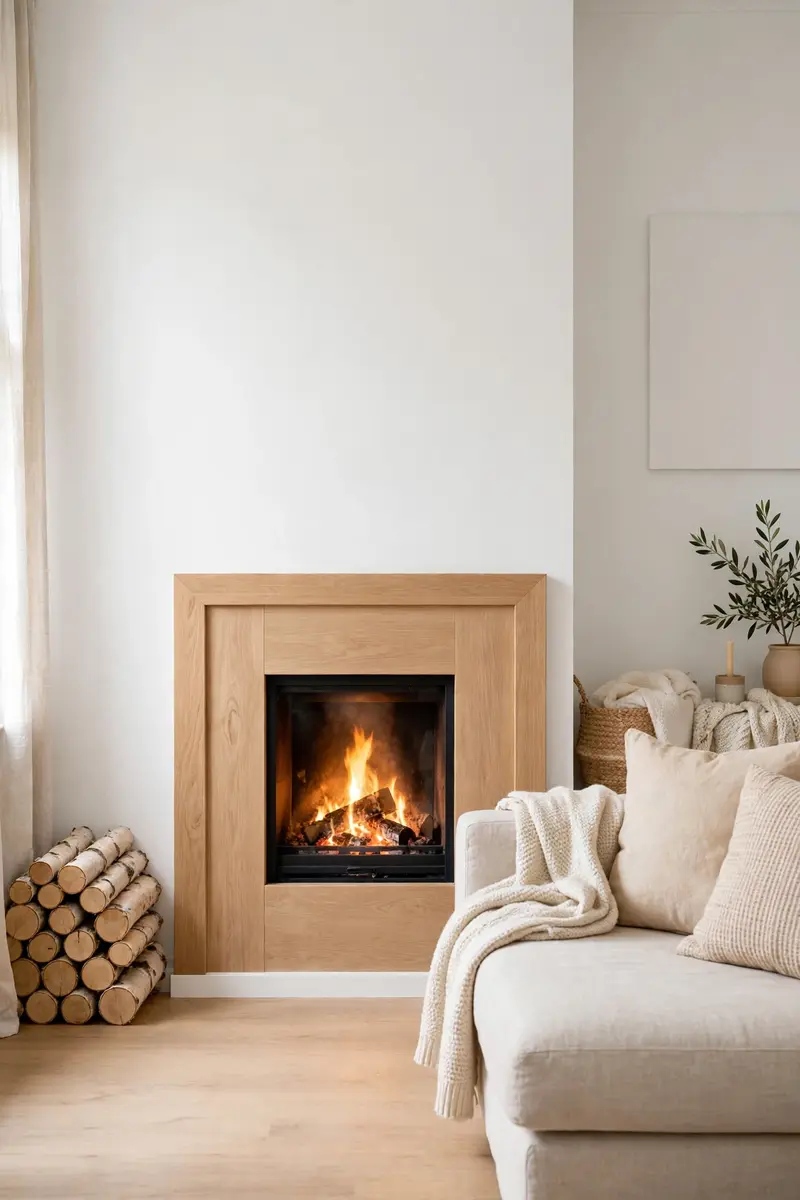
33. Scandinavian Pale Wood Surround
A pale wood surround — light oak, ash, or birch — gives a small fireplace a calm, Scandinavian feeling that never overwhelms the room. The wood adds warmth without darkness, and it looks beautiful against white walls and soft textiles.
You will need: a pale wood mantel and surround kit ($200–$600) or reclaimed pale wood boards. Keep the wood finish natural or lightly whitewashed, and protect it with a heat-safe sealant near the firebox. Variation: add a stack of pale birch logs beside the fireplace to repeat the wood tone.
Tip: Keep the mantel styling minimal — a single candle and a small vase — so the pale wood itself stays the feature.
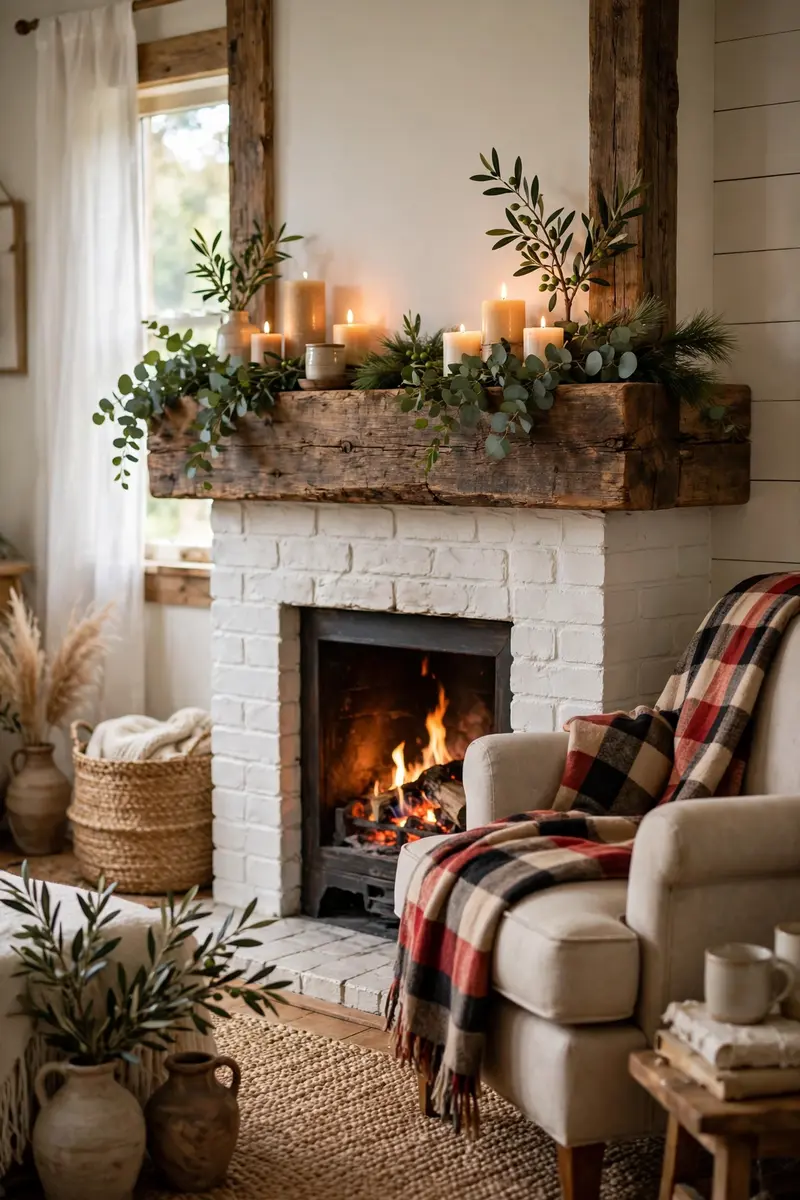
34. Farmhouse Wood Beam Mantel
A chunky reclaimed wood beam as a mantel brings instant farmhouse warmth, and its rough texture contrasts beautifully with a smooth painted surround. In a small room, one thick beam is enough — you do not need a whole timber wall to get the look.
You will need: a reclaimed wood beam mantel ($80–$300) and heavy-duty brackets or corbels. Sand splinters smooth, seal the wood, and check the heat clearance above your firebox before mounting. Variation: stain the beam dark for a rustic lodge look, or whitewash it for a coastal farmhouse feel.
Tip: A beam mantel should project about 6 to 8 inches from the wall — deep enough for candles, shallow enough to keep the walkway clear.
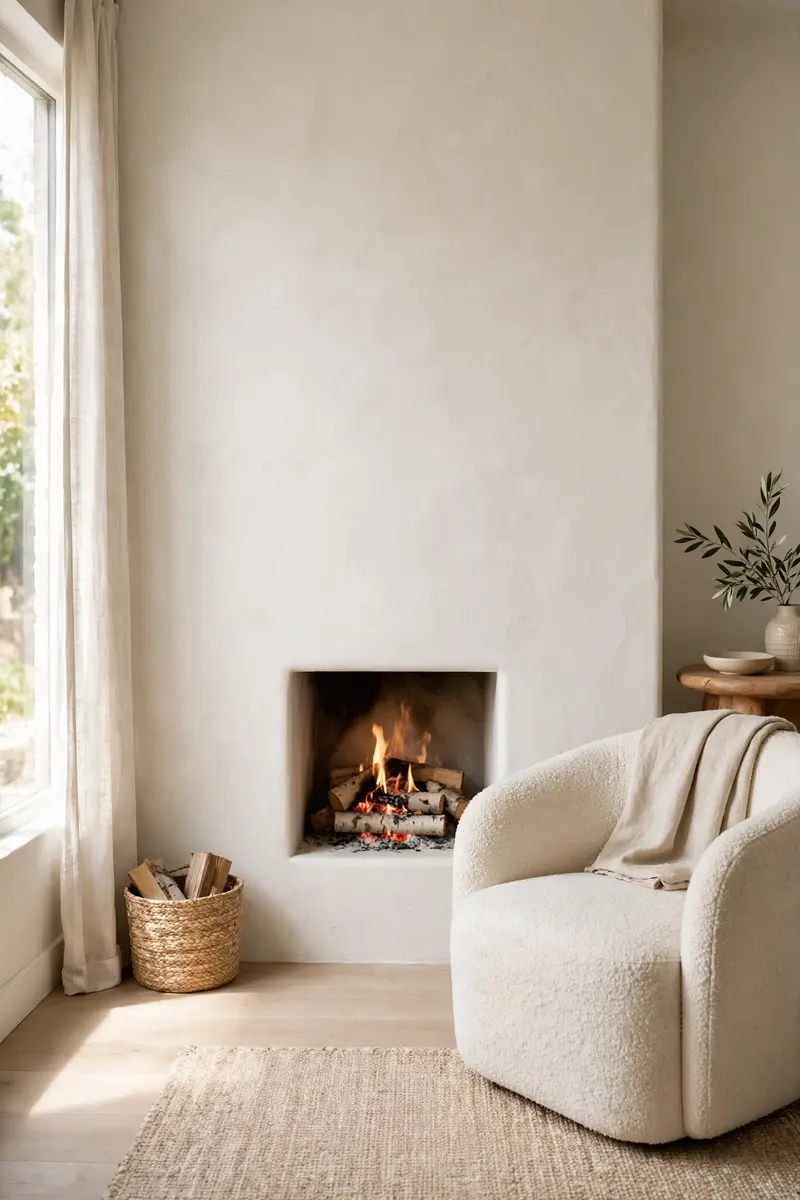
35. Minimalist Limewash Plaster Surround
A smooth limewash or microcement plaster surround gives a small fireplace a soft, seamless, contemporary finish with no grout lines and no visual clutter. The matte, chalky texture catches firelight beautifully and makes the fireplace feel like part of the wall itself.
You will need: limewash paint or plaster kit ($60–$150) and a plasterer's trowel or brush. Apply two to three thin coats over a primed surround, letting each dry fully. Variation: tint the limewash a soft warm grey or pale sage instead of pure white for a subtle color story.
Tip: Limewash is forgiving to apply but hard to remove, so test it on a board first and live with the sample for a day before committing.
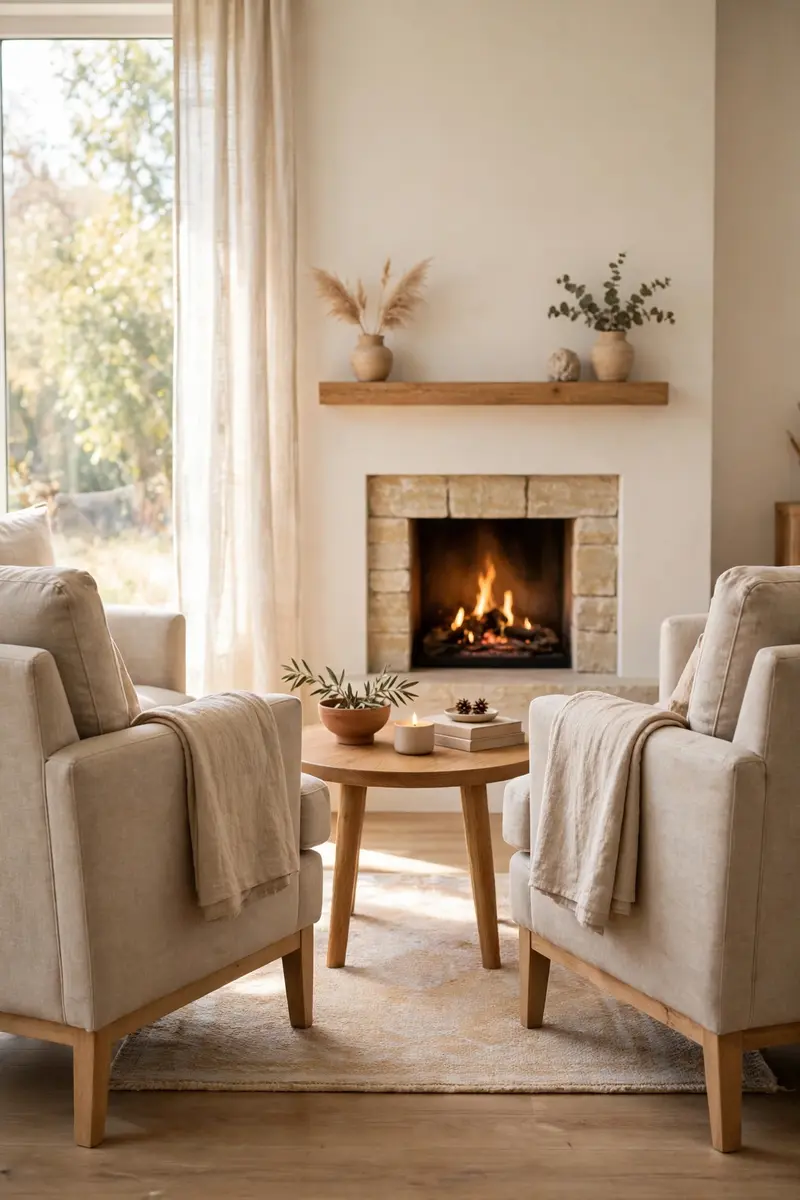
36. Symmetrical Pair of Armchairs
Two matching armchairs facing the fireplace at a slight angle is the most balanced small-room layout there is. Symmetry calms a busy room, gives everyone an equal view of the fire, and leaves the center of the room open for a coffee table or ottoman.
You will need: two matching or coordinating armchairs ($150–$500 each) and a small table between or in front of them. Keep the chairs close enough for conversation — about 5 to 7 feet apart, facing slightly inward. Variation: use two different chairs in the same color family for a collected look that still feels balanced.
Tip: Anchor the pair with one rug and one shared throw, so the two chairs read as a set even if they are not identical.
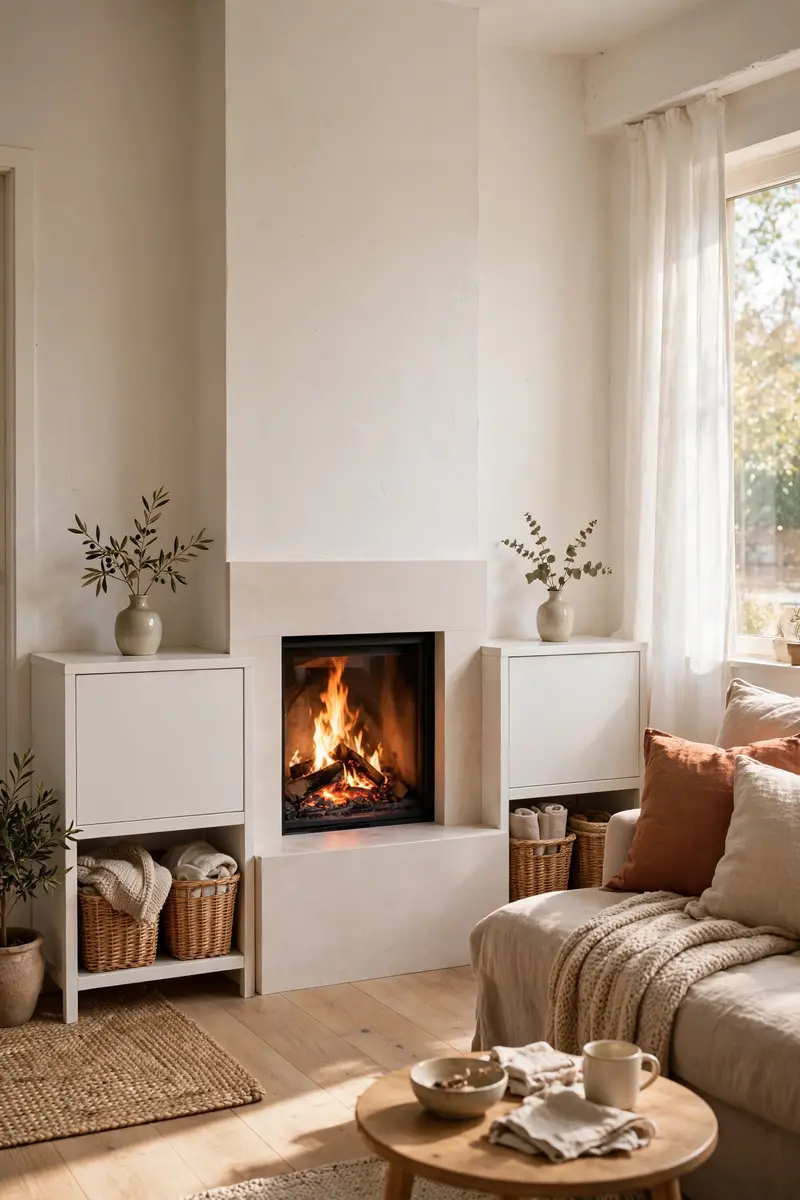
37. Fireplace Wall with Storage Cabinets
Low cabinets on either side of the fireplace hide clutter, hold media gear, and give you a surface for styling — all without adding freestanding furniture to a small room. Paint them the wall color and they nearly disappear, leaving only the fireplace and your favorite objects visible.
You will need: two low cabinets or a built-in unit ($200–$800) and baskets or boxes for inside. Keep the cabinet tops styled with just one or two pieces each. Variation: use open shelving on top of closed cabinets, so you get display space above and hidden storage below.
Tip: Run the cabinets the full width of the fireplace wall if you can — a wall-to-wall unit looks built-in, while two short cabinets can look like an afterthought.
38. Fluted Wood Panel Fireplace Wall
Vertical fluted wood panels behind the fireplace add rhythm and texture to a plain wall, and the vertical lines make a small room feel taller. Paint the panels the same color as the wall for subtle texture, or a deeper tone for a statement feature wall.
You will need: fluted wood panels or MDF slats ($100–$350), adhesive and paint, and a simple mantel shelf. Install the panels floor to ceiling behind the fireplace, keeping the firebox area clear per your unit's clearance rules. Variation: use half-height paneling with a painted wall above, for a classic look that costs less and feels lighter.
Tip: Keep the panel color close to the wall color if your room is very small — high contrast paneling can chop a tiny wall into stripes.

Frequently Asked Questions
What is the best fireplace for a small living room?
A slim electric fireplace suits most small living rooms because it needs no chimney or venting, mounts almost flush to the wall, and comes in sizes as narrow as 30 inches. If you want real flame and own your home, a direct-vent gas insert just 12 to 16 inches deep is the next best pick.
Can you put a TV above a fireplace in a small living room?
Sometimes. Electric fireplaces are the safest partner, since they produce little upward heat. For gas or wood units, keep 40 to 60 centimeters of heat clearance above the unit, check both appliance manuals, and mount the TV as low as the mantel allows so you are not craning your neck.
How far should seating sit from a small fireplace?
For comfort and conversation, place main seating 6 to 10 feet from the firebox, and closer — about 4 to 6 feet — for a reading chair. Keep walkways at least 36 inches wide, and follow your fireplace manufacturer's clearance rules, which matter more than any decorating guideline.
How do you make a small fireplace the focal point?
Give it one strong move: a floor-to-ceiling surround, a bold paint color on the fireplace wall, or a large mirror or art piece above the mantel. Then keep everything else quiet — low furniture, a light palette, and minimal mantel styling — so the eye lands on the fire first.
Do you need a chimney for a fireplace in a small living room?
No. Electric, bioethanol, and vent-free gas fireplaces need no chimney at all, and direct-vent gas units vent through a sealed pipe in an outside wall. Only a traditional wood-burning fireplace or stove needs a chimney or flue, and that is a job for a professional installer.
Conclusion
These small living room fireplace ideas prove that a tiny room and a great fireplace are not a contradiction — they are a perfect match. A slim unit, a smart layout, and a few thoughtful details can turn the smallest living room into the coziest room in your home, whether you own, rent, or are somewhere in between. Start with the idea that fits your space and your budget, live with it for a week, and then add one more layer. The best rooms grow slowly, one good choice at a time.
Save this guide to Pinterest so you can come back to it when you are ready to restyle, and try one idea this weekend. Your small living room already has the best seat in the house — now it just needs the fire to gather around.



Leave a Reply