Vintage Bathroom Ideas: 32 Stunning Looks That Wow
A vintage bathroom is the easiest way to give your home instant character. Unlike a trend that fades in a season, vintage style is built on pieces that have already stood the test of time: a clawfoot tub, a pedestal sink, small-format tile, and warm brass that only gets better with age. You do not need a full gut renovation to get the look, either. Here are 32 distinct vintage bathroom ideas, each with realistic costs and practical guidance, so you can pick the ones that fit your space, your budget, and the era you love most.
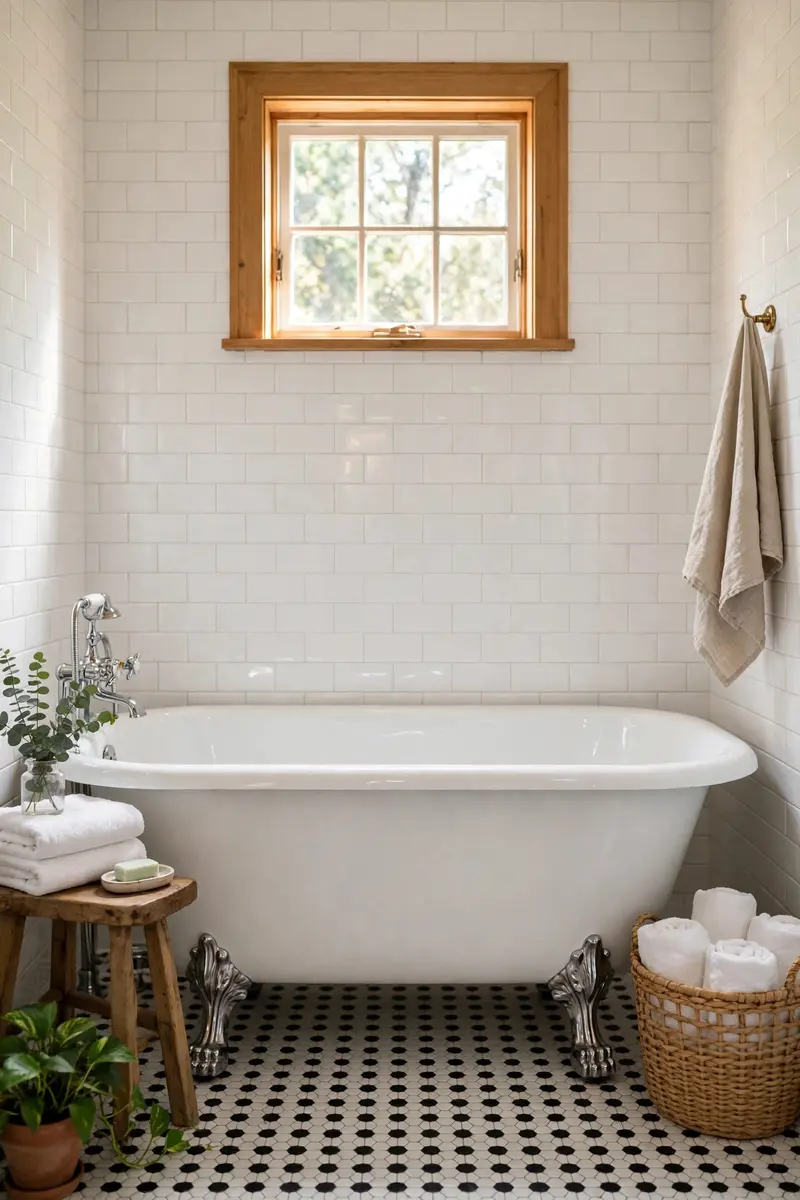
1. Clawfoot Tub as the Centerpiece
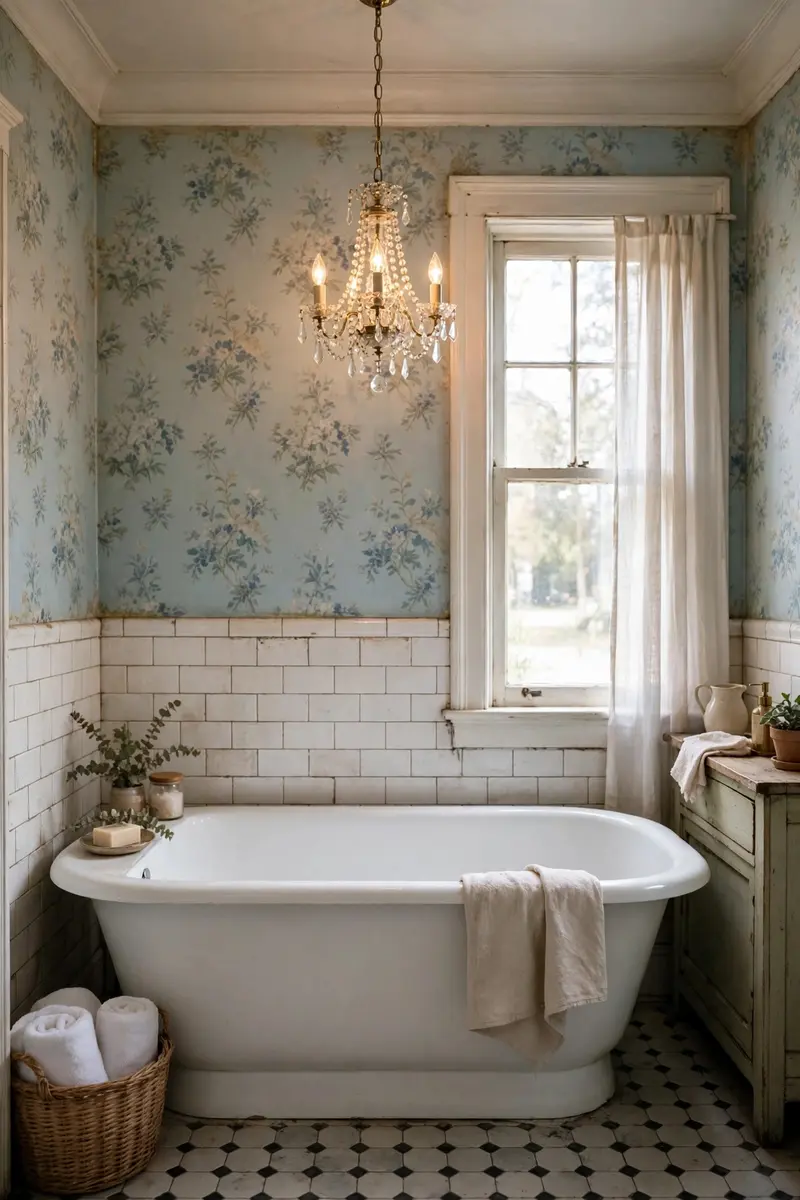
Nothing says vintage bathroom quite like a freestanding clawfoot tub. Its curved silhouette and raised feet turn bathing into an occasion, and it instantly becomes the focal point of the room, even in a modest space.
Materials and cost: A new cast-iron or acrylic clawfoot tub runs $800–$2,500, plus $150–$400 for a floor-mounted or wall-mounted filler. A refinished secondhand tub can cost half that, but budget $200–$400 for professional refinishing if the enamel is worn.
Place the tub where it gets the best light, ideally under a window or beneath a chandelier, and leave at least 6 inches of clearance around the feet for cleaning. A freestanding filler looks best centered on the long side of the tub, while a wall-mounted filler suits tubs pushed against a wall.
Practical tip: Measure your doorways and stairwell before ordering — a cast-iron tub can weigh over 300 pounds and may not fit around a tight turn.
Variation: Paint the outside of the tub a soft sage, navy, or blush for a custom, furniture-like finish.
2. Pedestal Sink with Exposed Chrome Plumbing
A pedestal sink is the vintage bathroom's space-saving hero. It shows off beautiful floor and wall tile instead of hiding it behind a bulky cabinet, and its slim profile makes a small bathroom feel noticeably larger.
Materials and cost: A porcelain pedestal sink costs $150–$450; decorative chrome supply lines and trap add $40–$90. A wall-mounted faucet, if you choose one, runs $120–$300.
Mount the sink to blocking in the wall, not just drywall, because a pedestal carries real weight.
Practical tip: If storage is tight, add a small wall cabinet or a stool with a basket underneath — never a bulky vanity that defeats the pedestal's airy look.
Variation: Choose a console-style pedestal with chrome legs for a little extra towel-hanging space on each side.
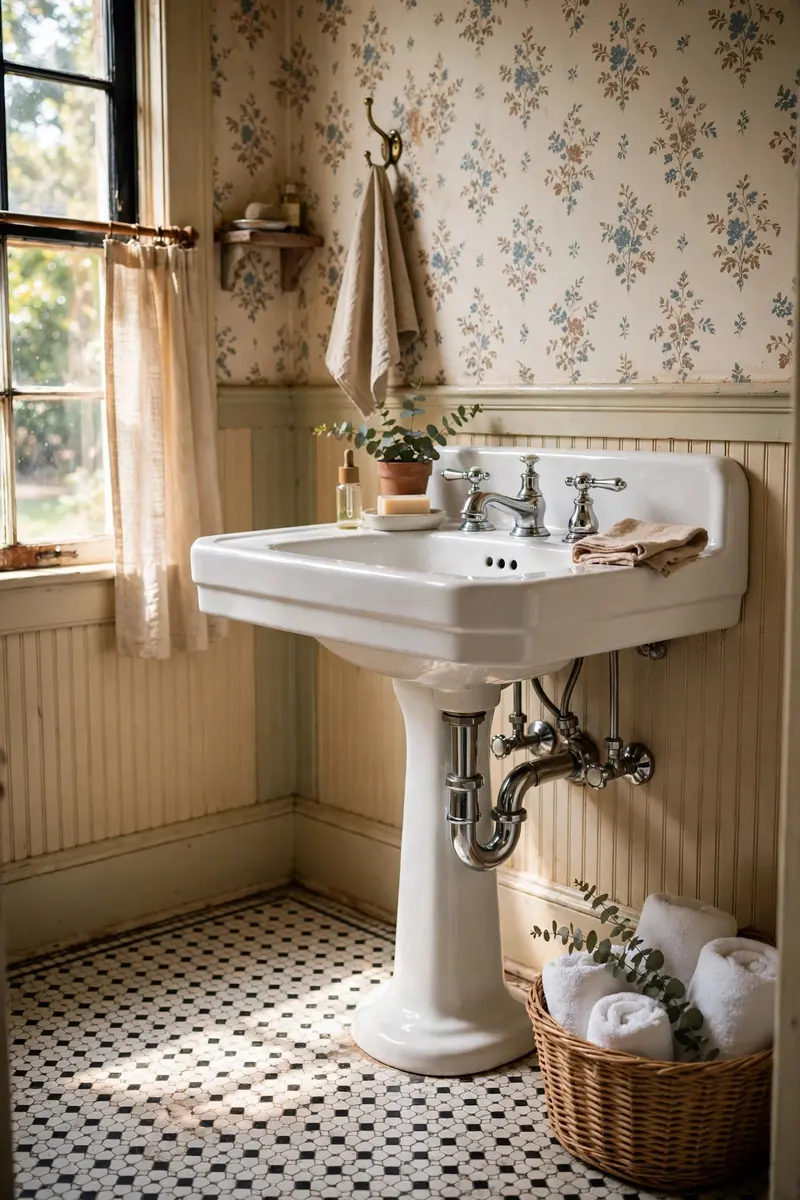
3. Black-and-White Checkerboard Floor
The black-and-white checkerboard floor is the most recognizable vintage bathroom floor of all, and it still looks fresh a century later. The bold graphic pattern grounds white fixtures, makes a small room feel intentional, and pairs with everything from pastel walls to brass fixtures.
Materials and cost: Classic 12-inch ceramic checkerboard tile runs $3–$8 per square foot, plus $100–$250 in thinset, grout, and sealer for an average bathroom. Professional installation typically adds $400–$900.
Snap chalk lines from the center of the room outward so cut tiles land evenly at the edges, and dry-lay one full row before you mix any thinset.
Practical tip: Seal the grout after it cures; white tiles in a bathroom show every splash, and sealer makes weekly cleaning a quick wipe.
Variation: Shrink the squares to 6 inches for a busier, more traditional look, or lay them on the diagonal for a touch of drama.
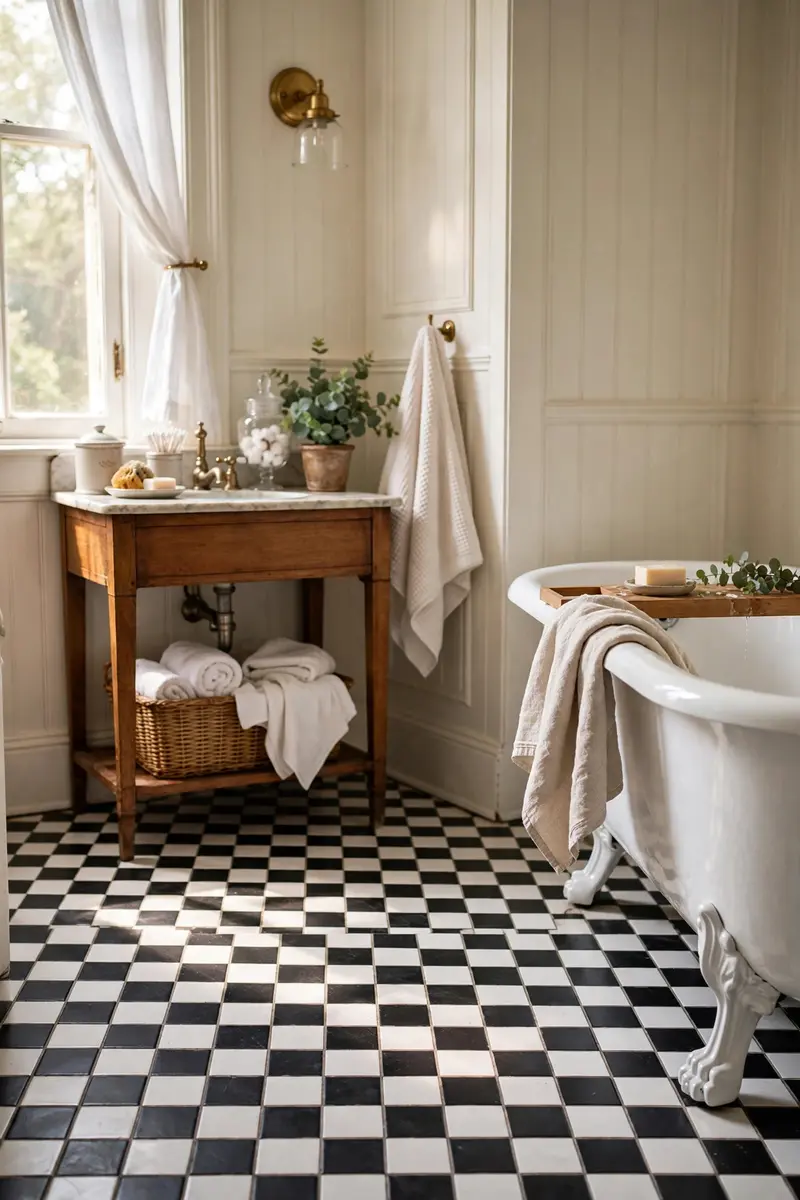
4. Hexagon Tile Floor with a Border Rug
Small hexagon tiles, often called hex tile, are the vintage bathroom floor that designers reach for when they want pattern without boldness. Laid in white with a darker border, they read like a woven rug underfoot — a detail that instantly signals a period bathroom.
Materials and cost: One-inch porcelain hex tile costs $5–$12 per square foot, plus $150–$300 in setting materials. Expect labor to run higher than for large tile because of the many grout lines.
Plan your border first: lay a band of black or grey hex tiles two rows wide around the perimeter, then fill the center with white. Keep grout joints tight and consistent, and seal the finished floor twice, since small tiles mean a lot of grout to protect.
Practical tip: Order 15% extra tile instead of the usual 10% — small mosaics are easy to damage during cutting, and dye lots vary between batches.
Variation: Swap the border for a single flower pattern or a Greek-key-style band made from contrasting hex tiles.
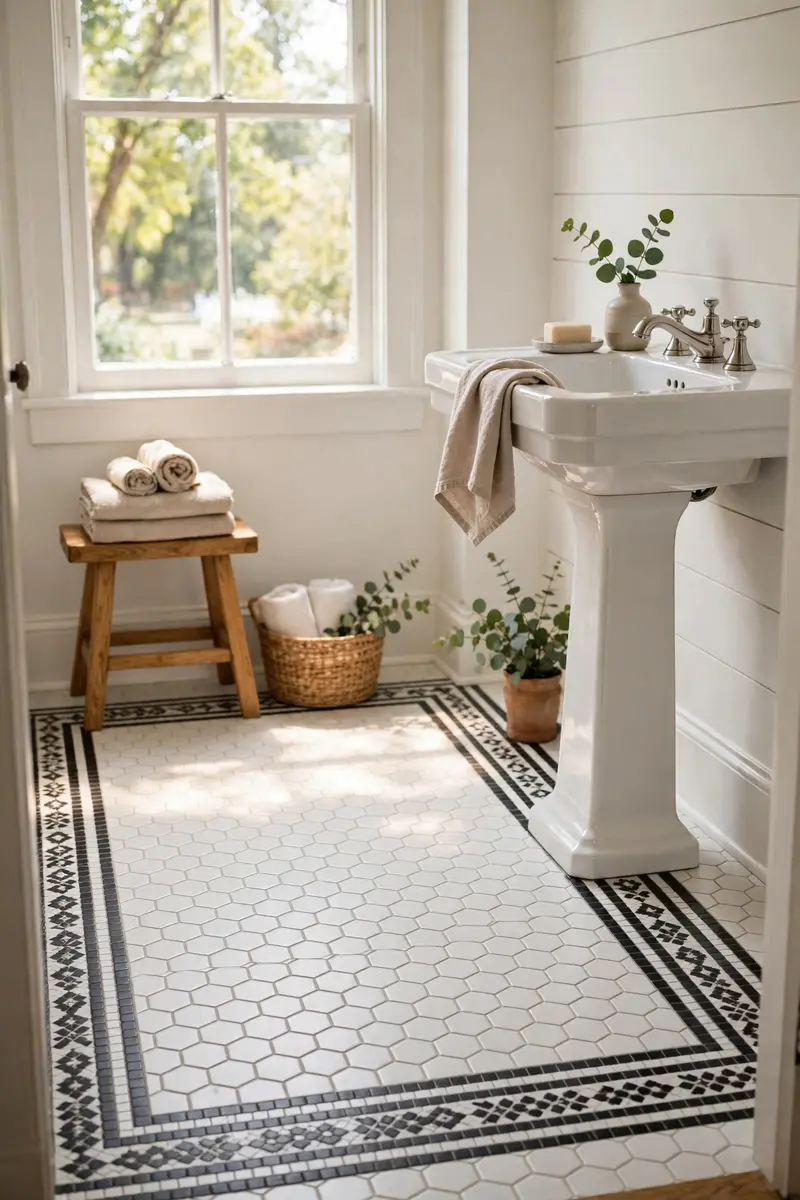
5. Penny Round Tile Floor
Penny round tiles are pure vintage charm: tiny circles of glazed porcelain that feel soft underfoot and catch the light beautifully. They were a staple of early-1900s bathrooms, and they still work today because the dotted pattern adds texture without competing with the rest of the room.
Materials and cost: Penny round mosaic sheets cost $6–$14 per square foot, plus $150–$300 in thinset, grout, and sealer. A standard bathroom floor usually needs 40–60 square feet of tile.
Because penny rounds come on mesh sheets, layout is fast — but cutting around a toilet flange or a curved tub base takes patience and a sharp wet saw. Press each sheet firmly into the thinset so no tile sits proud of its neighbors, and grout in small sections so the tiny joints fill evenly.
Practical tip: Seal penny-round grout well — the many tiny joints stain faster than large-tile grout.
Variation: Use a single accent color, like dusty blue, for a scattered confetti effect across an otherwise white floor.
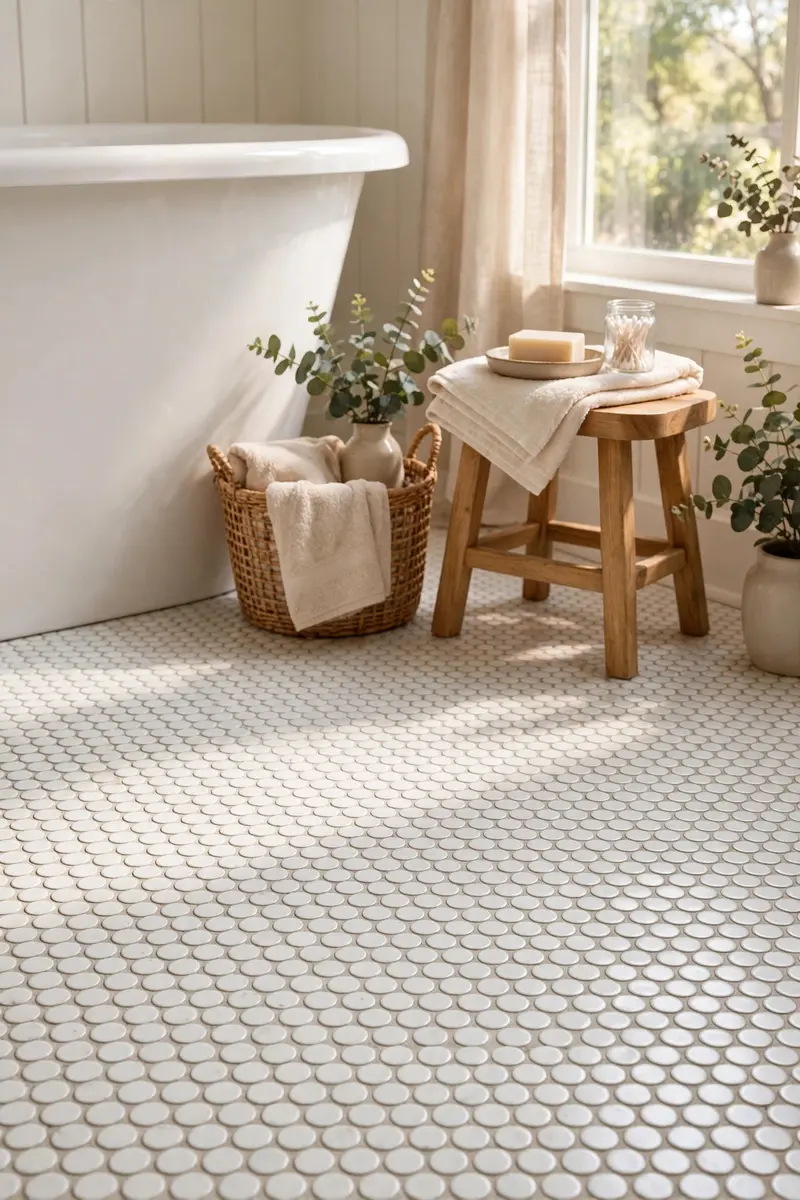
6. Subway Tile Wainscot with a Chair Rail
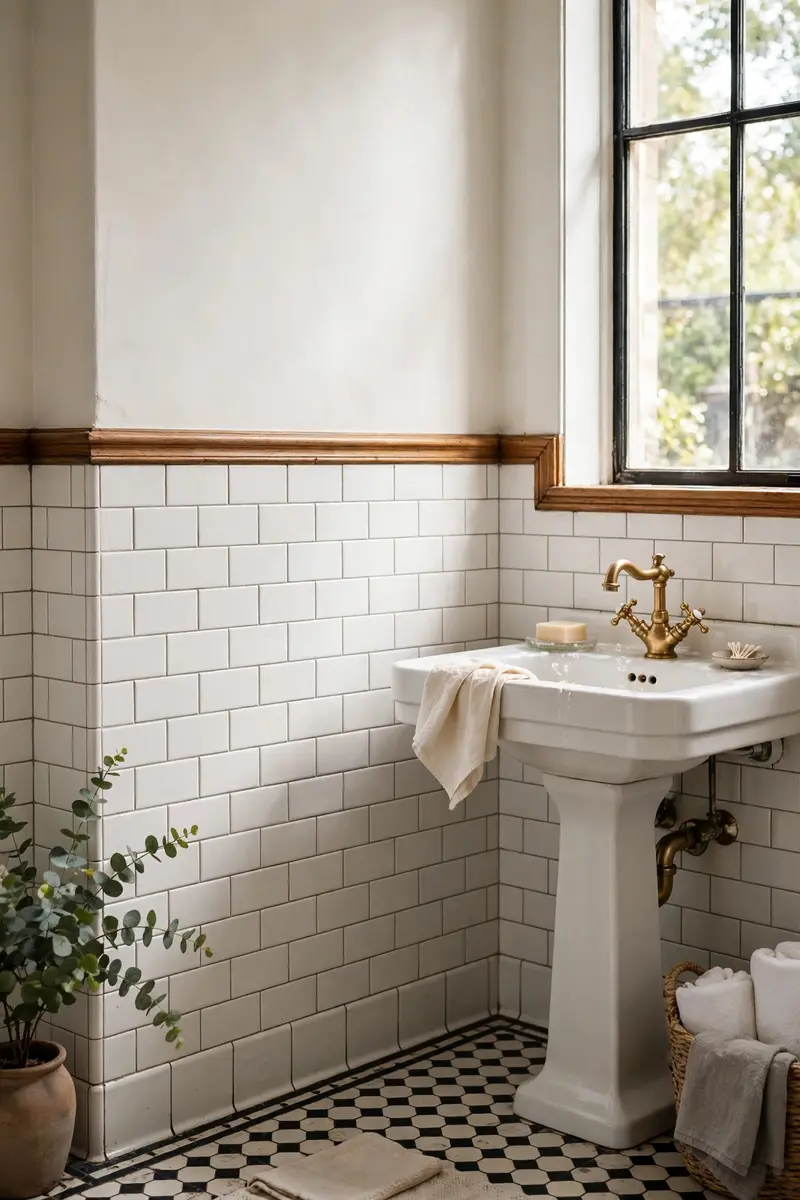
A subway tile wainscot is the backbone of a vintage bathroom wall. Running glossy 3-by-6-inch tiles up to chair-rail height, capped with a bullnose or pencil trim, protects the lower wall from splashes while giving the room its period proportions.
Materials and cost: White ceramic subway tile costs $2–$6 per square foot, plus $80–$200 in trim, thinset, and grout. A typical wainscot runs $300–$700 in materials.
Set the wainscot height at 42 to 48 inches for the most authentic look, and keep the cap line perfectly level — the eye reads that horizontal line across the whole room. Run the tile in a running-bond pattern, offset by half a tile, and finish corners with bullnose pieces rather than raw cut edges.
Practical tip: Paint the wall above the wainscot a warm white or soft pastel; stark white above glossy white tile can feel cold and clinical.
Variation: Use a soft sage or pale blue subway tile instead of white for a gentle wash of color that still reads vintage.
7. Beadboard Wall Panels
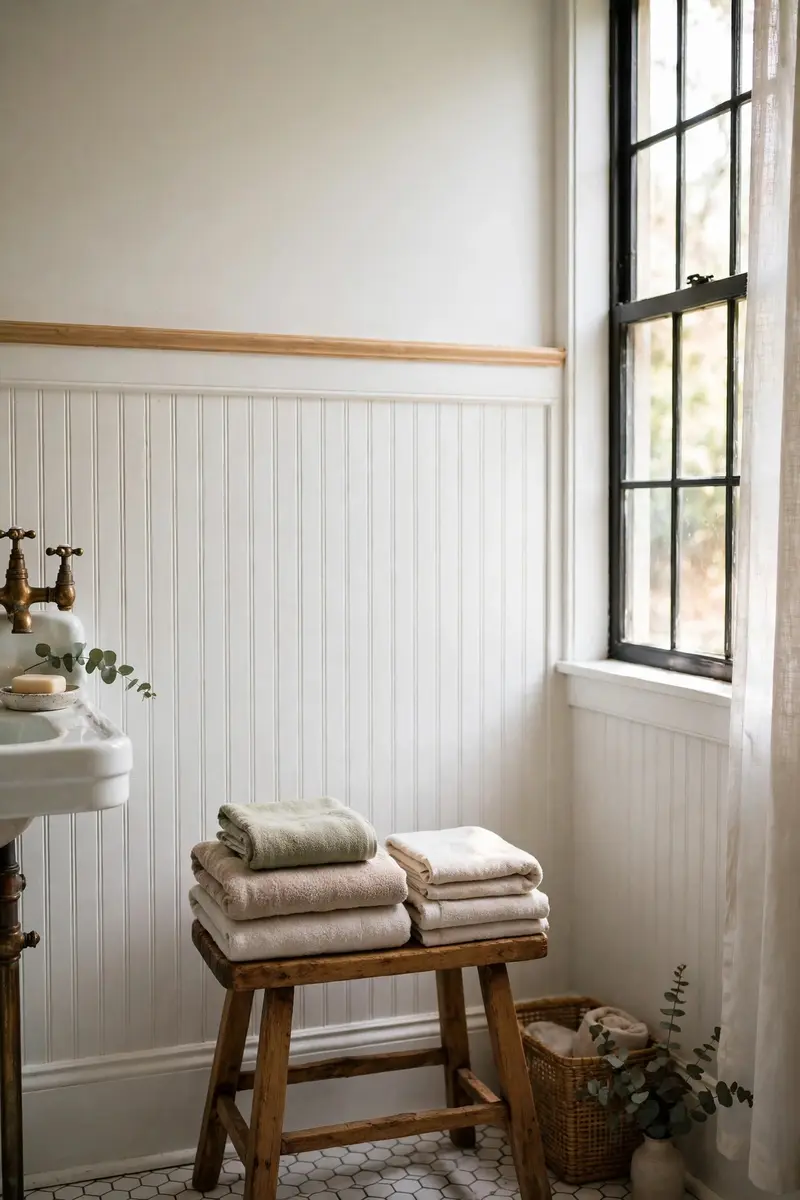
Beadboard brings instant cottage character to a vintage bathroom. The narrow vertical grooves add texture and rhythm to plain walls, and painted beadboard is far more forgiving of imperfect plaster than a flat painted wall.
Materials and cost: Primed MDF or pine beadboard panels cost $1.50–$4 per square foot, plus paint, caulk, and trim; a typical wainscot costs $200–$500 in materials. Moisture-resistant PVC beadboard costs more but holds up better in a steamy shower room.
Cut panels to fit snugly, leave a small gap at the floor for caulk, and prime every cut edge before painting — beadboard drinks moisture at exposed ends.
Practical tip: Add a simple cap rail and baseboard in the same paint color; the trim is what makes beadboard look built-in rather than stuck-on.
Variation: Paint the beadboard a dusty blue or soft green and keep the upper walls warm white for a two-tone vintage scheme.
8. Cross-Handle Brass Faucets
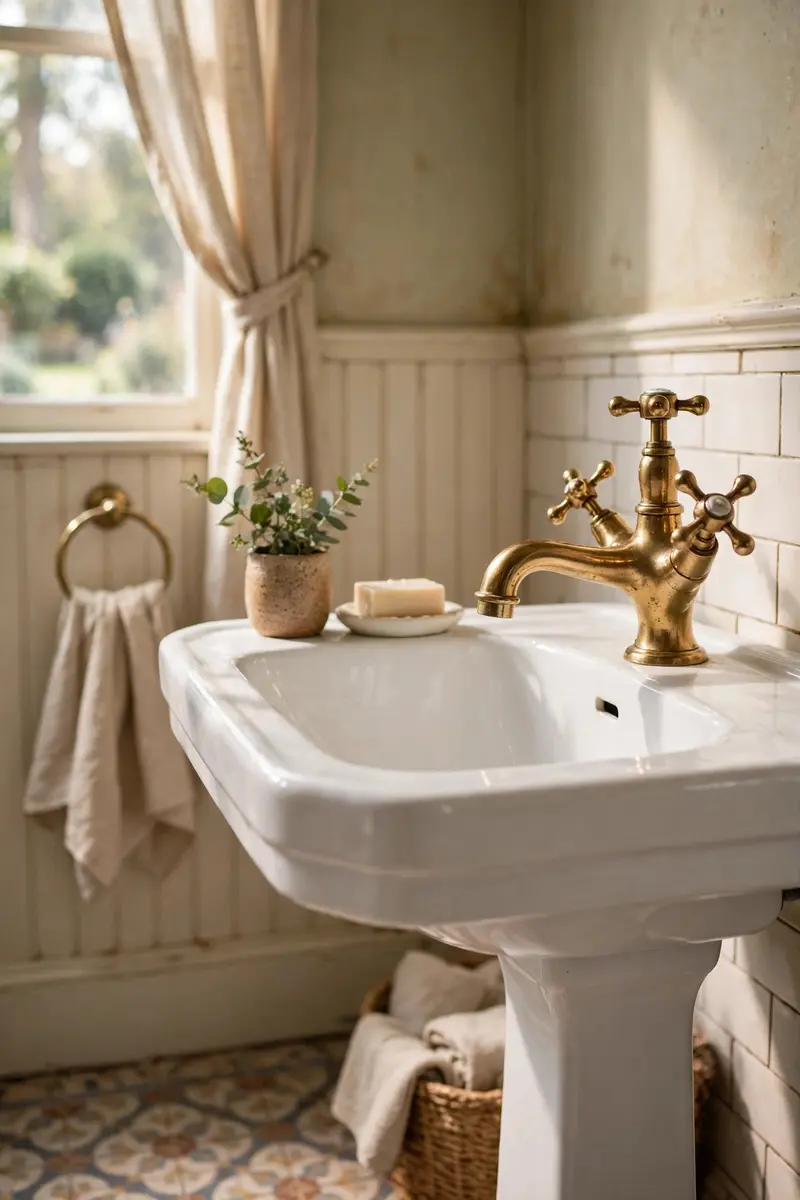
Cross-handle faucets are the jewelry of a vintage bathroom. The little X-shaped handles are easy to grip, instantly recognizable, and they pair with pedestal sinks, console sinks, and clawfoot tubs alike.
Materials and cost: A widespread cross-handle faucet set costs $120–$350; a tub filler with cross handles runs $250–$600. Budget $100–$250 for installation if you are not doing it yourself.
Match the faucet finish to your other metals — mixing brass faucets with chrome towel bars can look accidental, while one consistent finish looks collected on purpose. Check your sink's hole spacing before ordering: widespread sets need 8-inch centers, while centerset models fit 4-inch spacing.
Practical tip: Buy ceramic-disc cartridges, not old-style washers; you get the vintage look outside and drip-free modern performance inside.
Variation: Choose porcelain cross handles with a brass base for a softer, 1930s dressing-table feel.
9. Unlacquered Brass That Ages Beautifully
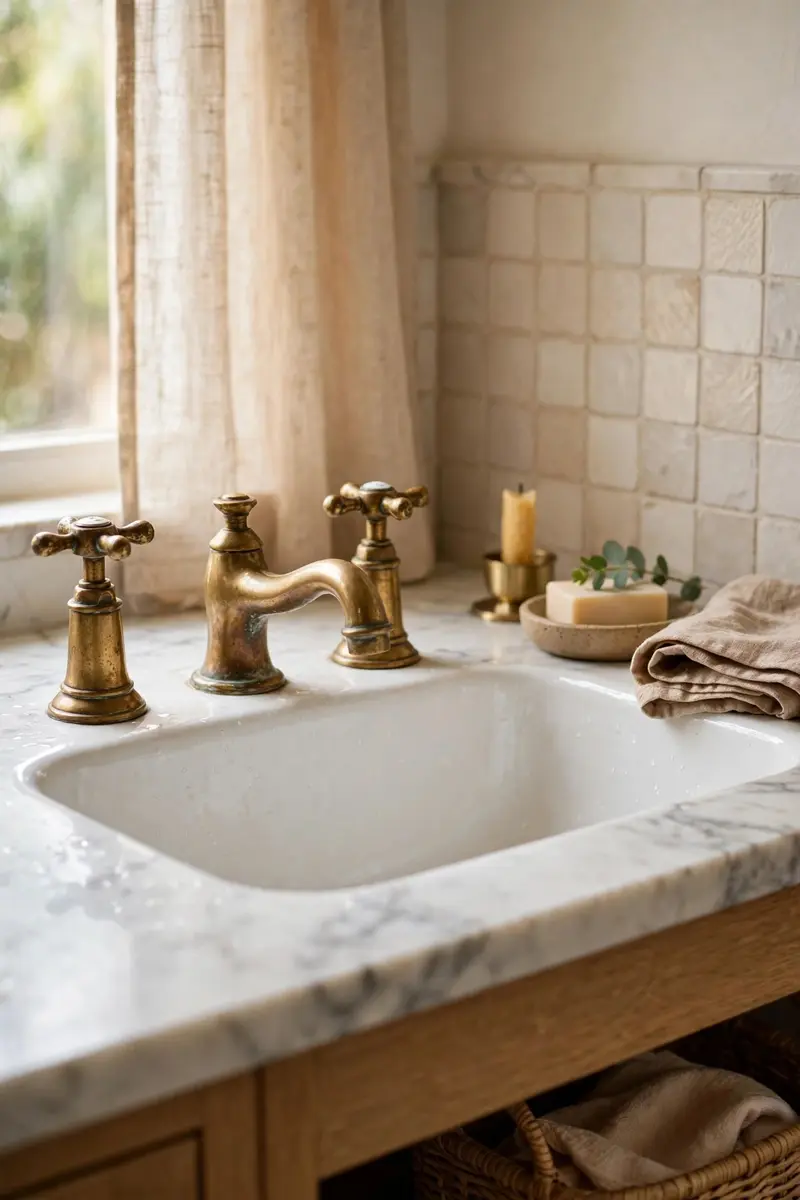
Unlacquered brass is brass with no protective coating, so it develops a rich, lived-in patina over time. That slow change is exactly the point: instead of a shiny finish that looks the same on day one and day one thousand, unlacquered brass tells the story of your bathroom.
Materials and cost: Unlacquered brass fixtures cost about 10–20% more than their lacquered equivalents — a faucet set runs $180–$450, and a showerhead $80–$200. Polishing paste costs a few dollars if you ever want to brighten the finish back up.
Know what you are signing up for before you buy: water spots and fingerprints will darken the finish unevenly at first, then settle into a warm, mottled glow. If you love a bright finish, polished nickel is a better choice; if you love character, unlacquered brass is unbeatable.
Practical tip: Wipe fixtures dry after showers for the first month; even drying slows the early spotting and gives a more even patina.
Variation: Mix unlacquered brass with marble and white porcelain only, and keep chrome out of the same room so the patina stays the star.
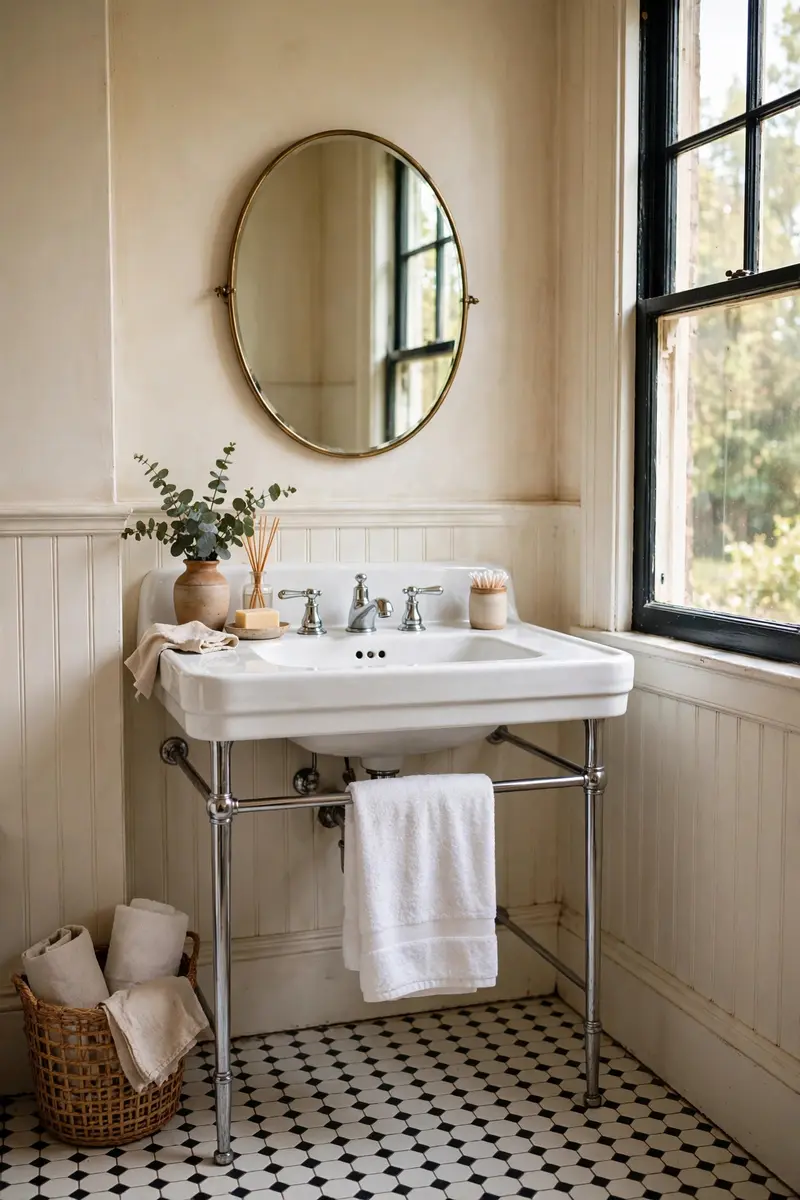
10. Console Sink with Towel Bar Legs
A console sink gives you the openness of a pedestal with a little more practicality. Two slim chrome or brass legs support the basin, and a towel bar stretched between them holds hand towels exactly where you need them.
Materials and cost: A porcelain console sink with legs costs $250–$600; a matching towel bar is usually included. Wall-mounted faucets for console sinks run $120–$300.
Anchor the legs to the floor and the basin to the wall — a console sink that wobbles will crack its supply lines over time. Keep the area beneath the sink clear so the towel bar stays usable, and choose towels in a single soft color so the open space reads calm, not cluttered.
Practical tip: Hang a small hand towel on each side of the bar rather than one big bath towel; the balance looks intentional and dries faster.
Variation: Add a glass shelf below the basin for a folded stack of washcloths and a small plant.
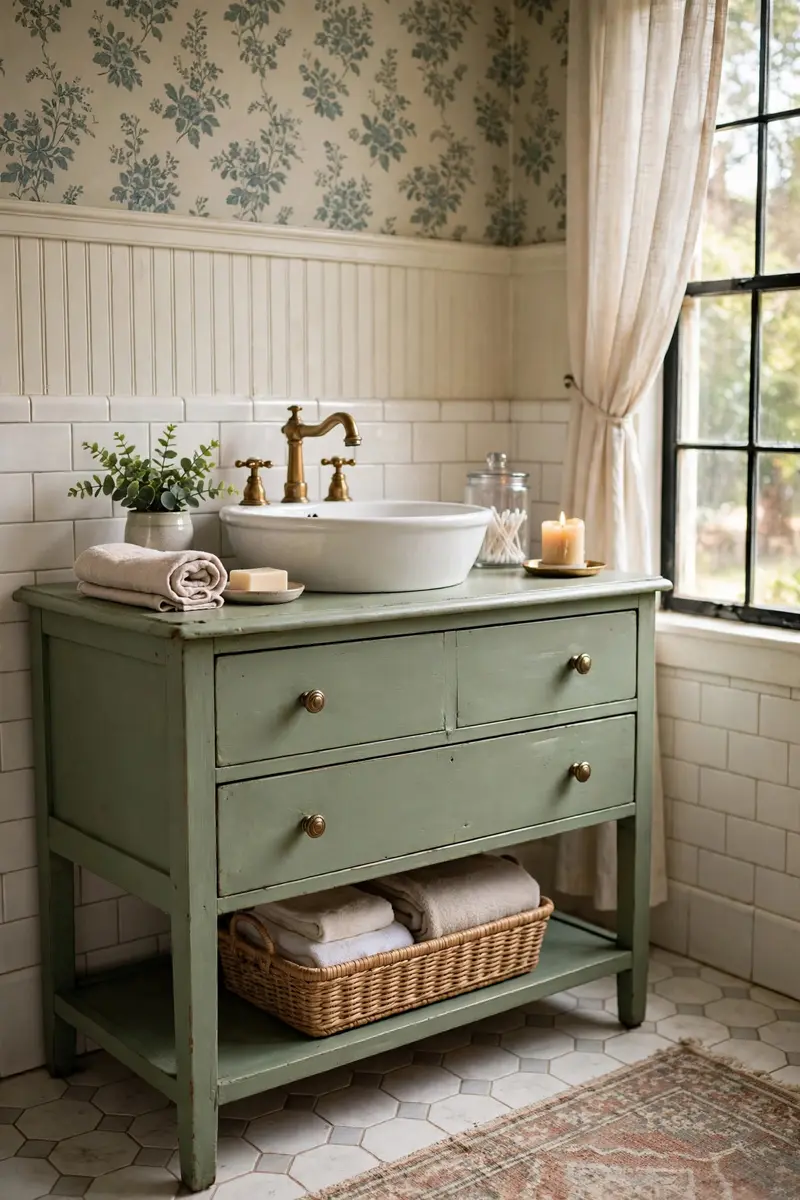
11. Repurposed Dresser Vanity
Turning an old dresser into a vanity is the vintage bathroom idea with the most personality. A thrifted dresser, a buffet, or even a sewing-machine table becomes a one-of-a-kind vanity that no one else has, and the drawers give you storage that a pedestal never could.
Materials and cost: A thrifted dresser costs $50–$250; a vessel or undermount sink adds $80–$300, a faucet $100–$250, and a waterproof topcoat $20–$40. A plumber will typically charge $150–$350 to adapt the plumbing.
Cut the top drawer down or remove it entirely to make room for the sink trap, and seal every surface — top, sides, and drawer interiors — with marine varnish or a good polyurethane. A stone or quartz remnant on top protects the wood where water splashes most.
Practical tip: Pick a dresser that is 32 to 34 inches tall before the sink goes on; standard dressers are often shorter, and a too-low vanity is miserable to use daily.
Variation: Paint the dresser a soft sage or dusty blue and swap the knobs for small brass cup pulls.
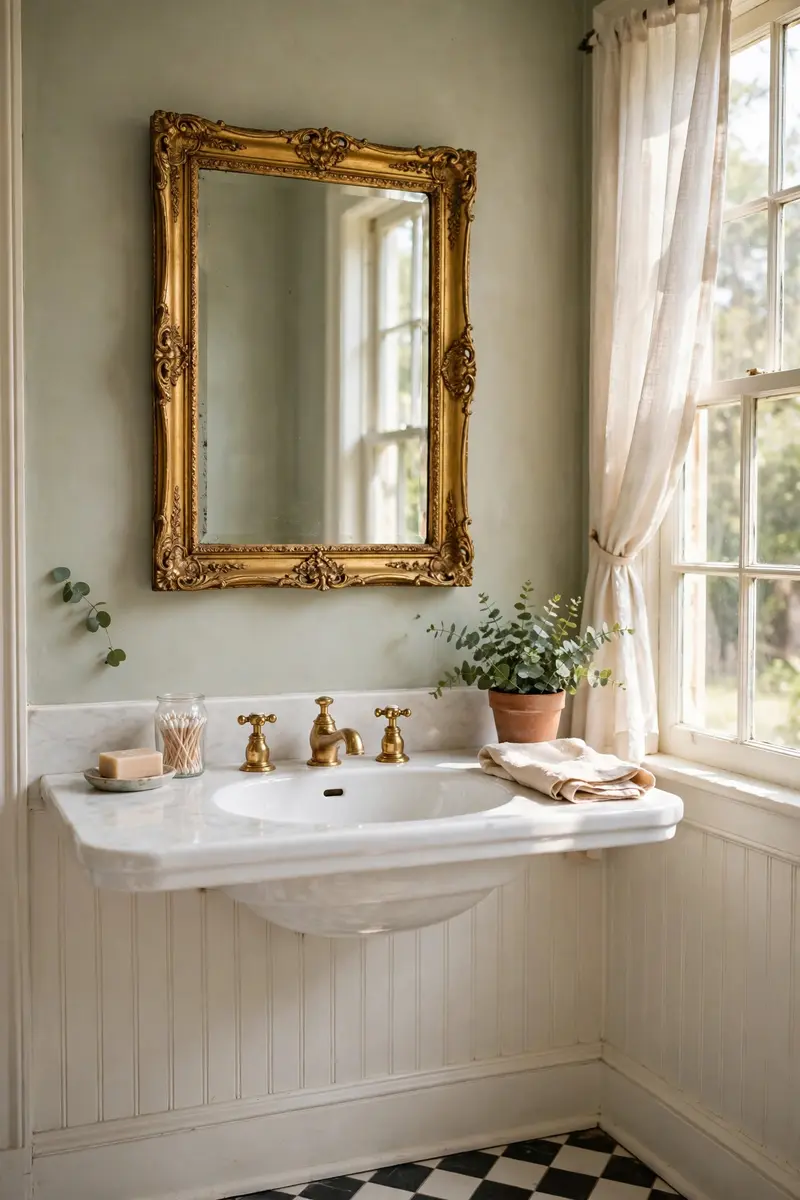
12. Gilt-Framed Vintage Mirror
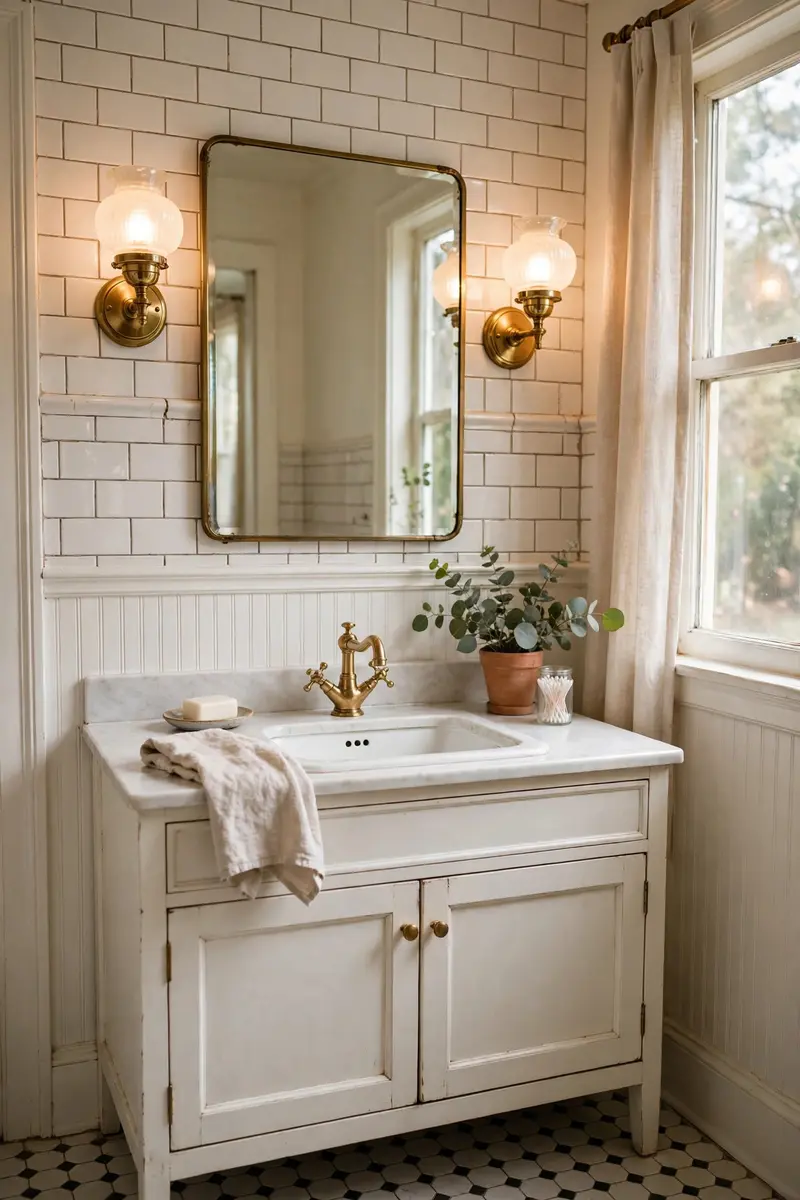
A gilt-framed mirror is the fastest way to make a plain bathroom feel like a grand hotel. The warm gold frame, whether genuinely antique or a good reproduction, adds age and glamour above any sink, and its reflective surface doubles the light in the room.
Materials and cost: A thrifted gilt mirror costs $40–$150; a new reproduction runs $120–$350. Hanging hardware and a French cleat add $10–$25.
Hang the mirror so its center sits at eye level, about 60 inches from the floor, and anchor it into a stud or solid blocking — ornate frames are heavier than they look. Keep the glass clean and the frame dry; gilt finishes spot if water sits on them.
Practical tip: If the gilt is too yellow for your room, a light dry-brush of soft white paint over the raised details tones it down without hiding the carving.
Variation: Hang two matching gilt mirrors side by side over a double vanity for a symmetrical, hotel-suite look.
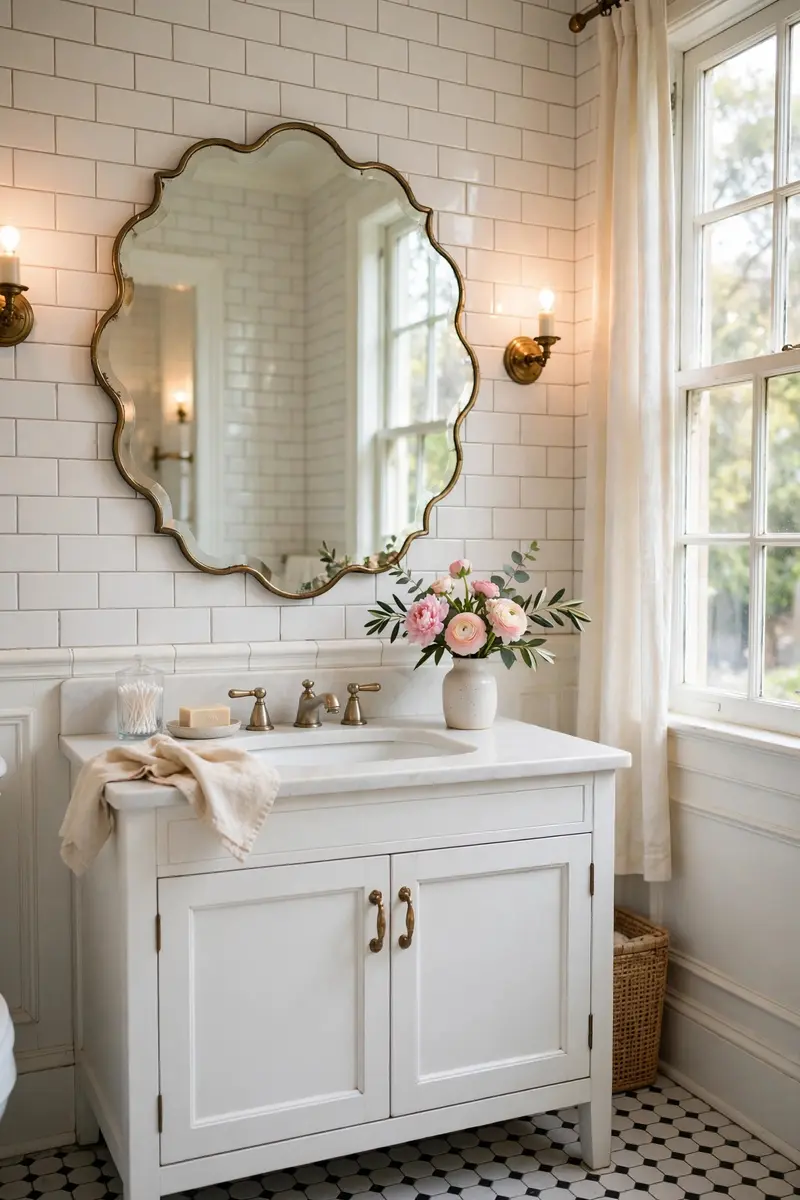
13. Scalloped Vanity Mirror
A scalloped mirror brings a softer, more romantic vintage note than a straight rectangular frame. The gentle curves echo the arches of old windows and the rolled edges of clawfoot tubs, and they pair beautifully with floral wallpaper and pastel tile.
Materials and cost: A scalloped wall mirror costs $60–$200; a pair of matching sconces to flank it runs $80–$250. Hanging hardware adds $10–$20.
Center the mirror over the sink and leave at least 4 inches between the bottom of the mirror and the faucet, so splashes do not constantly spot the glass. If your mirror is large, choose a frame in the same finish as your faucets so the whole wall reads as one composed vignette.
Practical tip: In a small bathroom, choose a scalloped mirror that is wider than it is tall; the horizontal shape makes the wall feel wider, too.
Variation: Layer a small scalloped mirror over a larger plain mirror for a collected, vintage dressing-table effect.
14. Vintage Chandelier Lighting
A small chandelier over a freestanding tub, or a pair of mini chandeliers over a vanity, is the vintage bathroom luxury that guests always remember.
Materials and cost: A small bathroom-safe chandelier costs $150–$500; an electrician will charge $150–$350 to install it on a dimmer. Always choose a fixture rated for damp locations in a bathroom.
Hang the chandelier at least 8 feet above the tub rim and 3 feet from the tub edge for safety, and put it on a dimmer so you can switch from bright morning light to a soft evening soak. Keep the bulbs warm white, around 2700K, for the most flattering glow.
Practical tip: If your ceiling is low, choose a flush-mount crystal fixture instead of a hanging chandelier — you get the sparkle without the head-bump risk.
Variation: Use a small beaded or capiz-shell chandelier for a softer, coastal take on vintage glamour.
15. Flanking Wall Sconces
Sconces mounted at eye level on either side of the mirror are the most flattering bathroom lighting of all. Unlike an overhead bar that casts shadows down your face, side sconces light you evenly from both sides, which is exactly what you want for getting ready in the morning.
Materials and cost: A pair of vintage-style sconces costs $80–$300; installation by an electrician runs $150–$300 for the pair if wiring is not already in place.
Mount sconces 60 to 65 inches from the floor and 28 to 36 inches apart, centered on the mirror, so the light falls on your face rather than the wall behind you. Choose shades that diffuse the bulb — bare bulbs at eye level are harsh, no matter how pretty the fixture.
Practical tip: Put sconces on a separate dimmer from the ceiling light; soft sconce light alone is perfect for an evening bath.
Variation: Use plug-in sconces with cord covers if you are renting — you get the look without opening any walls.
16. Floral Wallpaper for a Vintage Bathroom Accent Wall
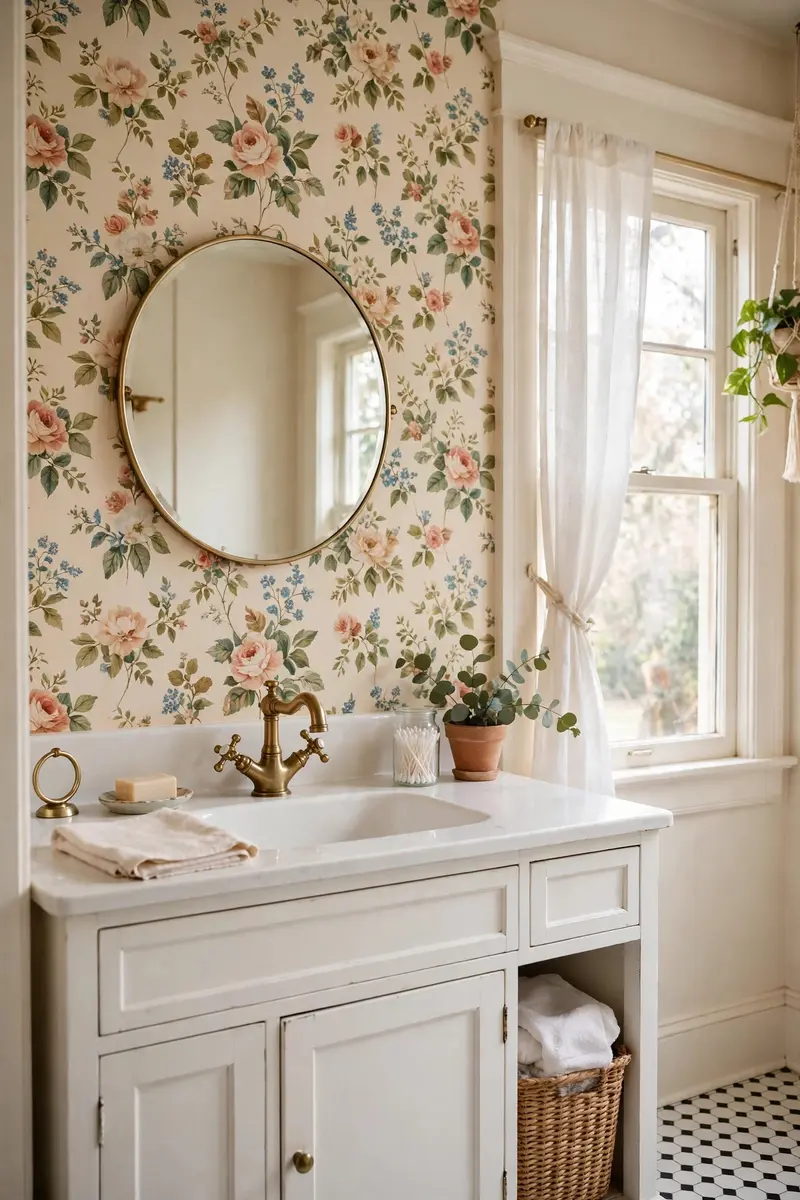
Floral wallpaper is the vintage bathroom accent that does the most work for the least effort. For more ideas on dressing bathroom walls, see our bathroom wall decor ideas.
Materials and cost: Vintage-style wallpaper costs $30–$90 per roll, and a single accent wall usually needs 2–3 rolls. Paste, tools, and primer add $30–$60. Professional hanging runs $200–$500 per wall.
Choose a paper rated for bathrooms or at least for high humidity, and keep it off the wall directly behind the tub or shower, where constant steam will loosen even the best paste. A small-scale print suits a small bathroom, while a large-scale botanical looks wonderful in a room with room to breathe.
Practical tip: Order one extra roll beyond your measurements; pattern matching at seams eats more paper than the square footage suggests.
Variation: Wallpaper only the upper wall above a tile or beadboard wainscot, so the print reads as art rather than a full-room commitment.
17. Powder-Blue Painted Walls
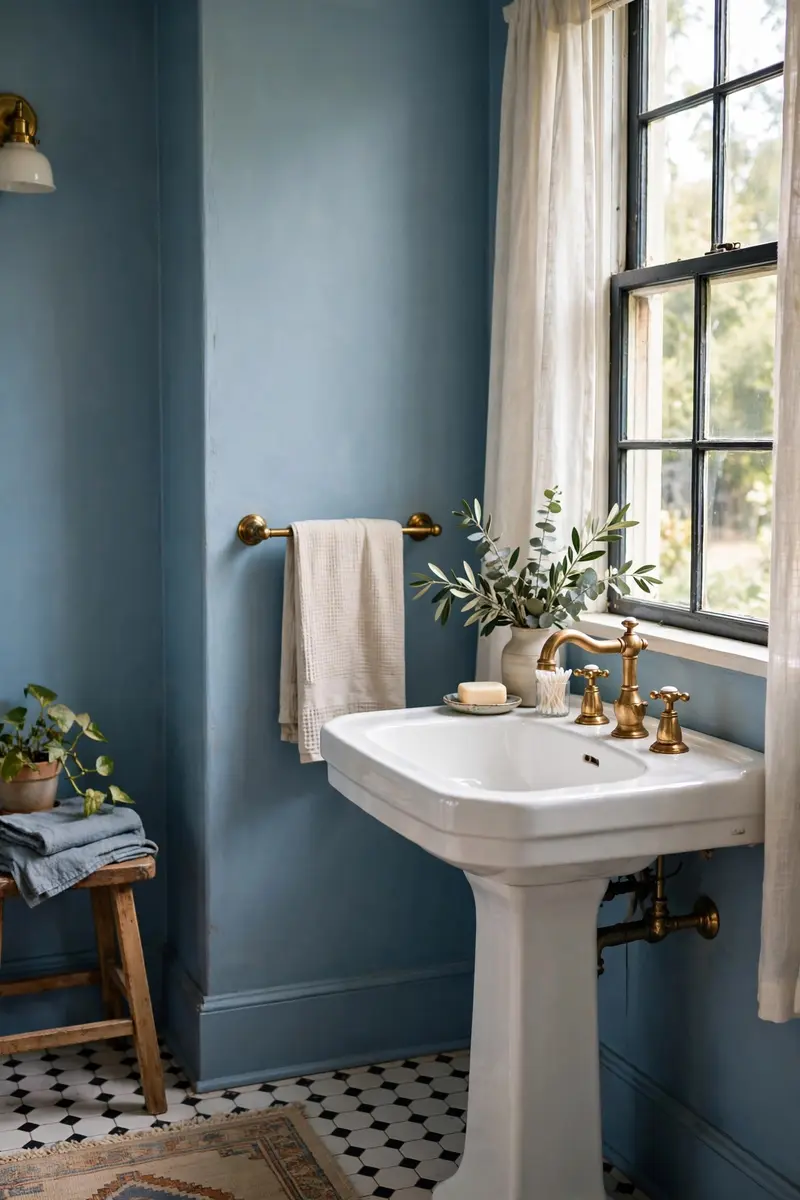
Powder blue is the vintage bathroom paint color that never goes wrong. It is soft enough to feel calm, blue enough to feel fresh, and it makes white porcelain, chrome, and brass all look their best.
Materials and cost: A gallon of quality bathroom paint costs $35–$60, and most bathrooms need one gallon for two coats. Primer, tape, and rollers add $20–$40.
Sample the color on the wall for a full day before committing — powder blue can shift grey in low light and almost lavender under warm bulbs. Choose a satin or semi-gloss finish made for bathrooms, which resists moisture and wipes clean.
Practical tip: Paint the ceiling a slightly lighter tint of the same blue instead of stark white; the room feels taller and the color transition disappears.
Variation: Pair powder-blue walls with navy towels and a white waffle shower curtain for a crisp, hotel-like finish.
18. Sage Green Cabinetry
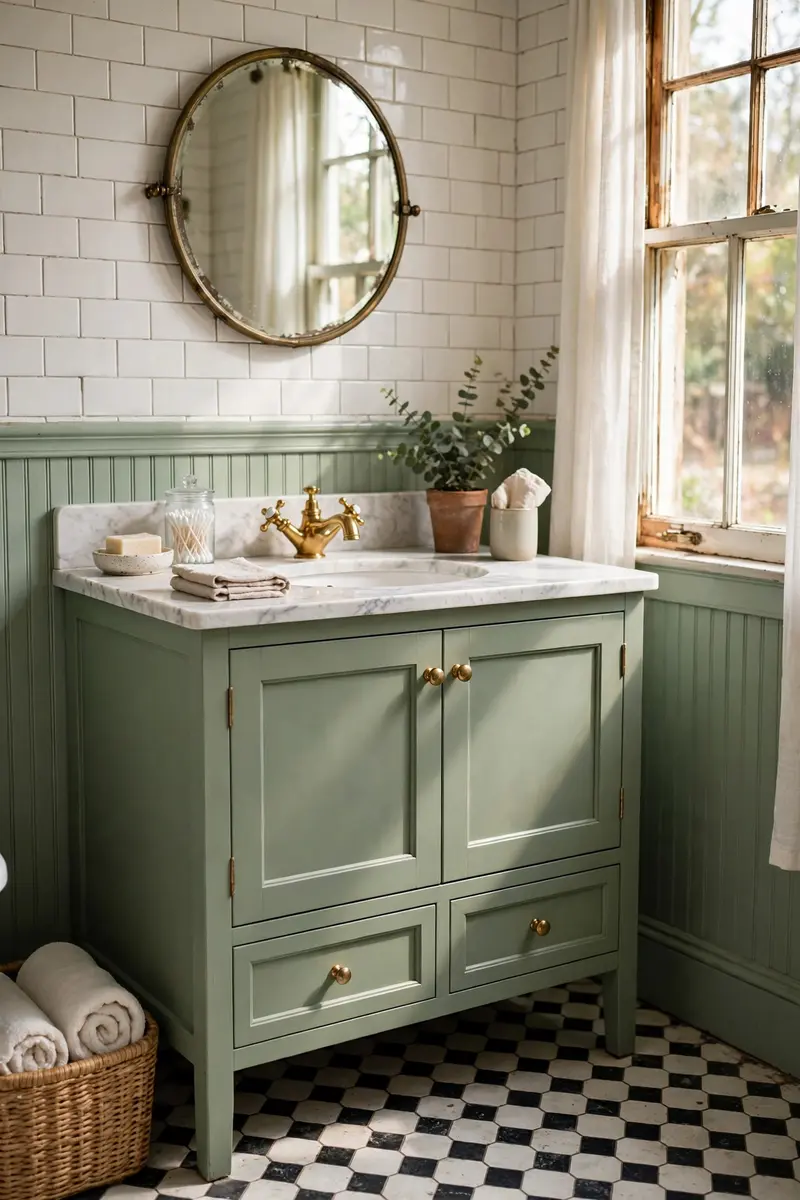
Sage green is the vintage bathroom cabinet color for people who love plants, pottery, and a calm, collected room. A sage vanity with marble and brass is one of the most pinned vintage bathroom combinations for good reason.
Materials and cost: Cabinet paint or a professional repaint runs $40–$120 in materials for a single vanity, or $300–$700 professionally sprayed. New sage cabinetry costs $400–$1,200 depending on size.
Remove the doors and drawers before painting, label every hinge, and sand lightly between coats for a smooth, factory-like finish. Two coats of cabinet-grade enamel over a bonding primer will survive bathroom humidity far longer than ordinary wall paint.
Practical tip: Swap to small brass knobs or cup pulls at the same time you paint; new hardware is the detail that makes a repaint look like a replacement.
Variation: Paint only the lower vanity sage and keep the upper walls warm white, so the color anchors the room without closing it in.
19. Blush Pink Tile Accent
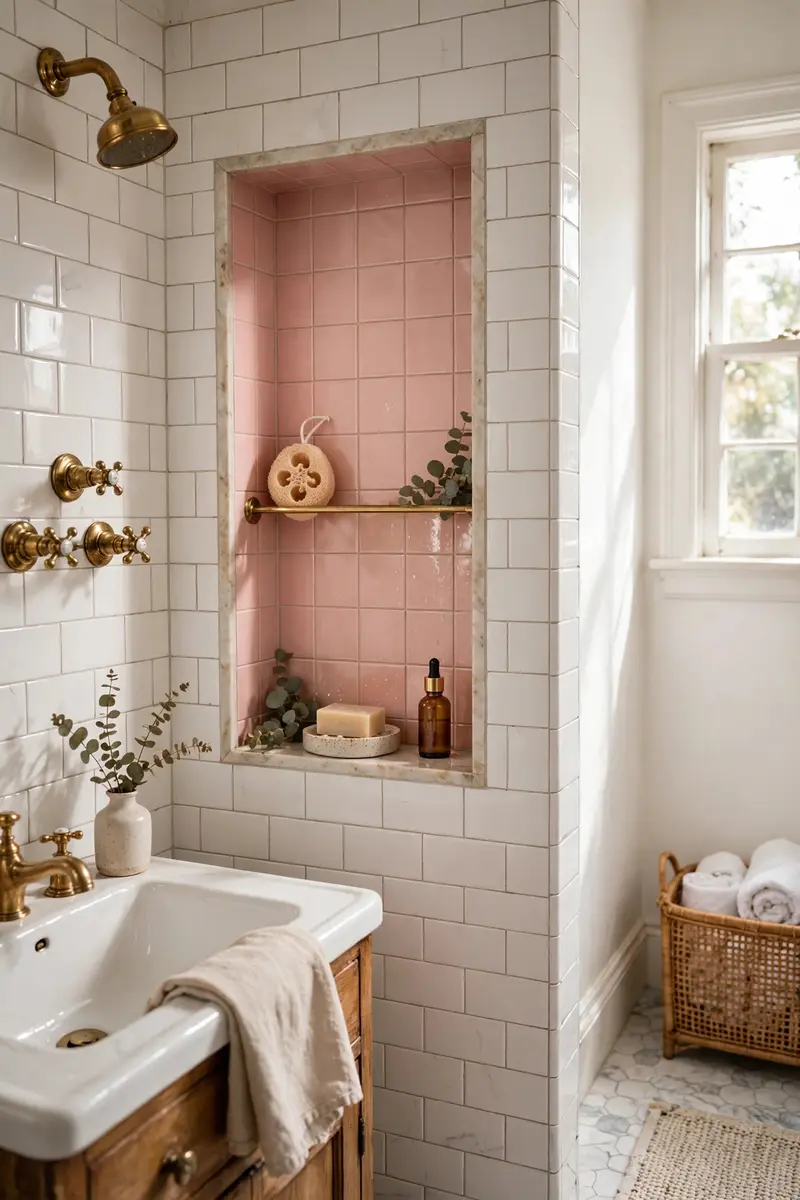
Blush pink tile is the vintage bathroom surprise that always gets compliments. Used as a full wall it can feel like a 1950s time capsule, but used as an accent — a niche, a backsplash strip, or the inside of a shower — it feels soft, modern, and romantic.
Materials and cost: Glossy blush ceramic or porcelain tile costs $5–$12 per square foot, plus $100–$250 in setting materials for an accent area. A full shower wall in blush tile runs $500–$1,200 in materials.
Keep the rest of the room quiet — white walls, white fixtures, one metal finish — so the pink reads as a deliberate accent rather than a theme park. White grout keeps blush tile soft; grey grout makes it look more modern and graphic.
Practical tip: Carry the blush into towels and a small vase of flowers, and nowhere else; repeating an accent three times is the designer's rule for making it look intentional.
Variation: Use blush pink only as a pencil-trim border around a white subway tile wall for the subtlest possible nod.
20. Wooden Bath Stool and Caddy
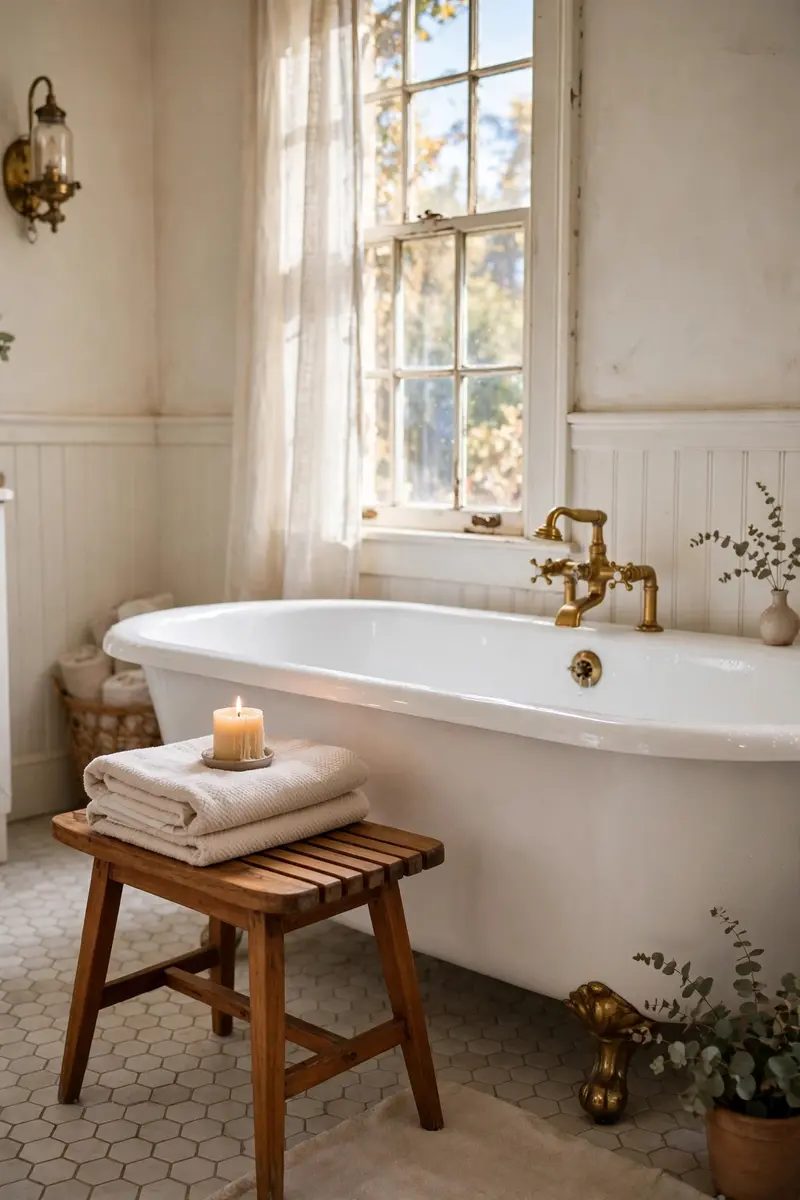
A wooden bath stool is the small vintage bathroom luxury you will use every single day. It holds a book, a candle, and a glass of water within reach of the tub, gives you a place to sit while you dry your feet, and folds away when guests come.
Materials and cost: A teak bath stool costs $40–$120; a matching tub caddy runs $25–$80. A simple wooden stool from a thrift shop can cost under $20 with a coat of oil.
Oil the wood every few months with teak or tung oil so it never dries out and cracks, and keep the stool out of direct shower spray. If your tub has a wide rim, a caddy that spans the tub is even more useful than a stool beside it.
Practical tip: Choose a stool that is the same height as your tub rim; you can slide it over the tub edge for extra surface when you need it.
Variation: Use a small antique wooden chair beside the tub instead of a stool — it holds towels, clothes, and a book all at once.
21. Lace-Trimmed Shower Curtain
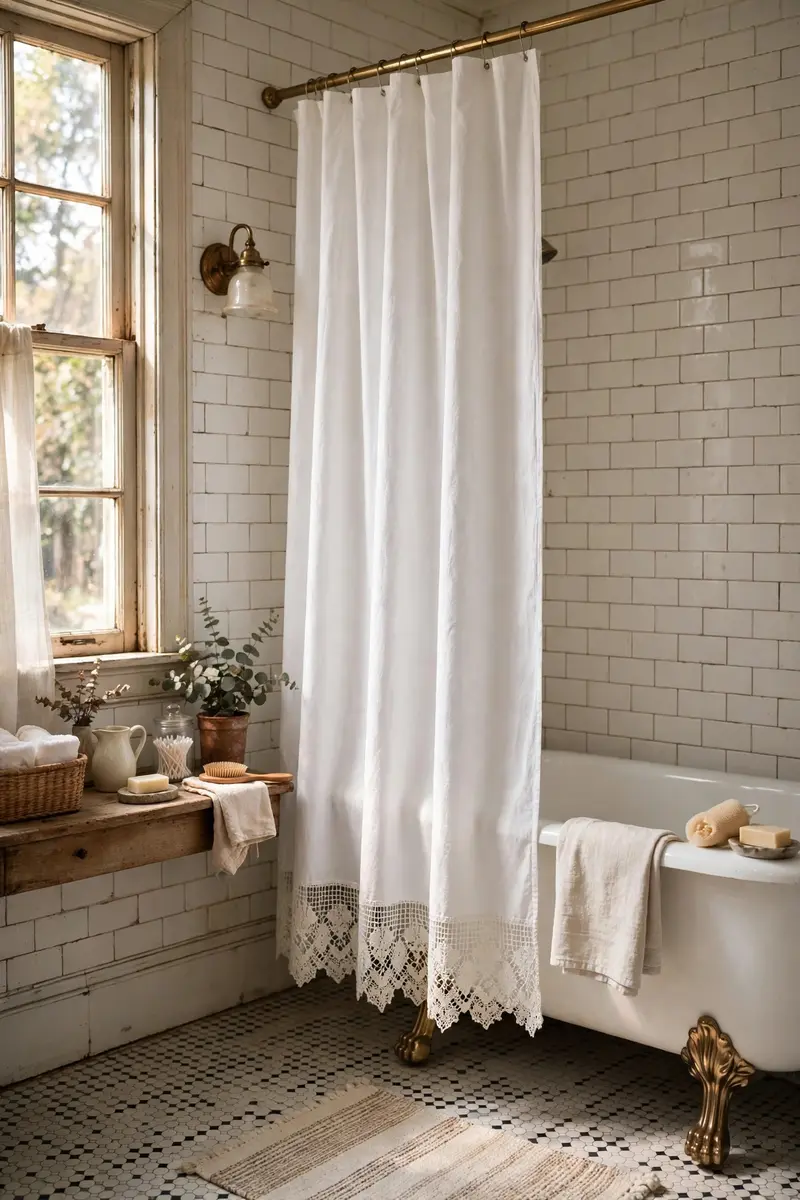
A lace-trimmed shower curtain is the vintage bathroom detail that softens the whole room in one move. The lace edge, whether real cotton lace or a good machine-made trim, catches the light, breaks up a plain curtain, and instantly reads as 1940s romance.
Materials and cost: A cotton shower curtain with lace trim costs $25–$60; a separate waterproof liner adds $10–$20, and a set of vintage-style rings runs $10–$25.
Hang the curtain high — close to the ceiling if you can — so the room feels taller, and let the lace edge fall just above the tub rim so it never sits in standing water. Wash the outer curtain regularly in cold water so the lace stays white and crisp.
Practical tip: Use double hooks so the liner and the outer curtain hang on the same rod but move independently; the liner stays inside the tub while the lace stays dry outside.
Variation: Choose a waffle-weave cotton curtain with a simple scalloped hem if full lace feels too fussy for your home.
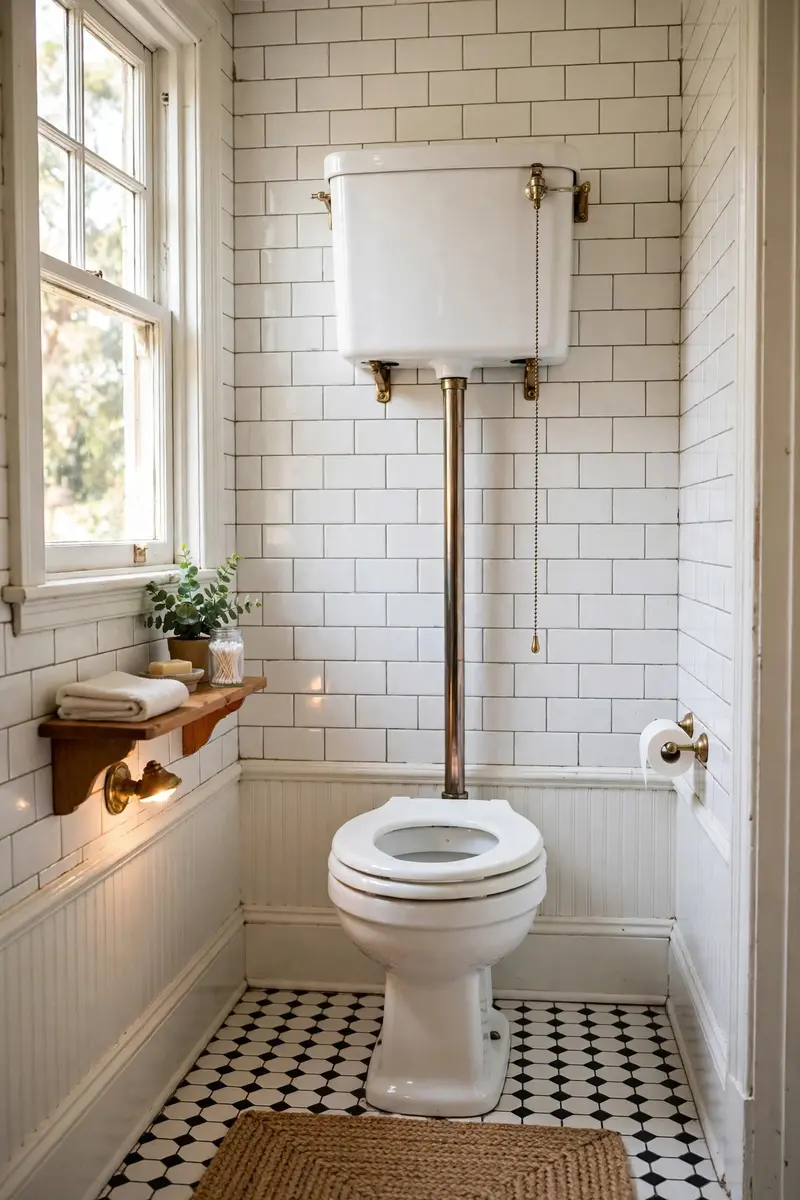
22. High-Tank Pull-Chain Toilet
A high-tank pull-chain toilet is the vintage bathroom statement piece that guests always ask about. The tank sits high on the wall, the long pull chain drops down beside it, and the whole arrangement looks like it stepped out of a grand old hotel.
Materials and cost: A high-tank toilet set costs $600–$1,400, plus $200–$400 for installation and wall reinforcement. A wall-mounted tank needs solid blocking behind the plaster.
Plan the plumbing carefully: the tank needs a supply line at height, and the wall must be strong enough to hold a full tank of water. Keep the chain within easy reach and hang it so it does not swing into the wall and chip the paint.
Practical tip: Choose a dual-flush high-tank model if you can find one; it keeps the vintage silhouette and saves thousands of gallons a year.
Variation: Use a low-profile wooden toilet seat in oak or walnut instead of white plastic; the wood warms up the whole arrangement.
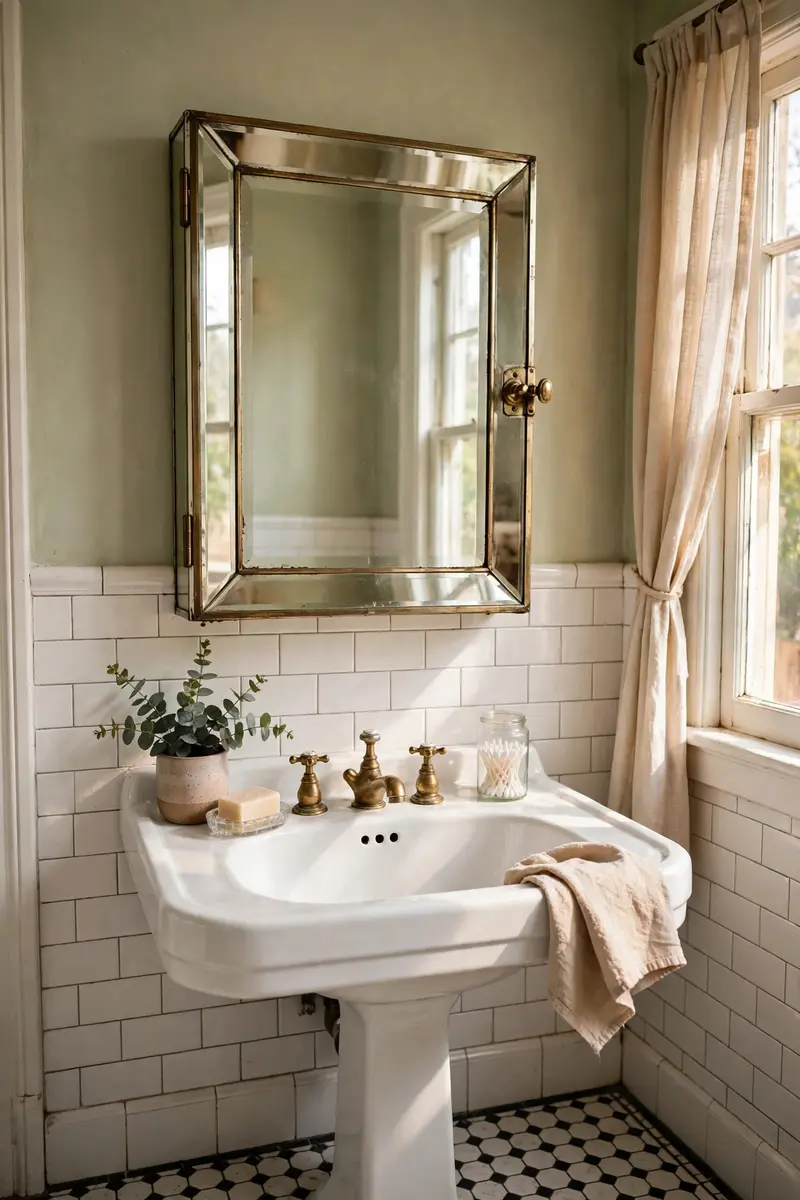
23. Vintage Medicine Cabinet with a Mirror Front
A recessed medicine cabinet with a mirrored front is the vintage bathroom storage that hides in plain sight. It keeps daily essentials off the counter, puts a mirror exactly where you need it, and its beveled or arched front adds period detail to a plain wall.
Materials and cost: A new vintage-style medicine cabinet costs $100–$350; a salvaged original runs $30–$120 plus cleaning and new mirror glass if needed. Installation runs $100–$250 if the wall must be opened.
Mount the cabinet so its mirror center is at eye level, and check for studs and wiring before you cut into the wall — a recessed cabinet needs a clear bay between studs. If your wall cannot be opened, a surface-mounted cabinet with a deep frame gives almost the same look.
Practical tip: Line the shelves with small trays or cups; a tidy cabinet interior makes the whole bathroom feel calmer every morning.
Variation: Hang two narrow medicine cabinets side by side over a double vanity instead of one wide cabinet.
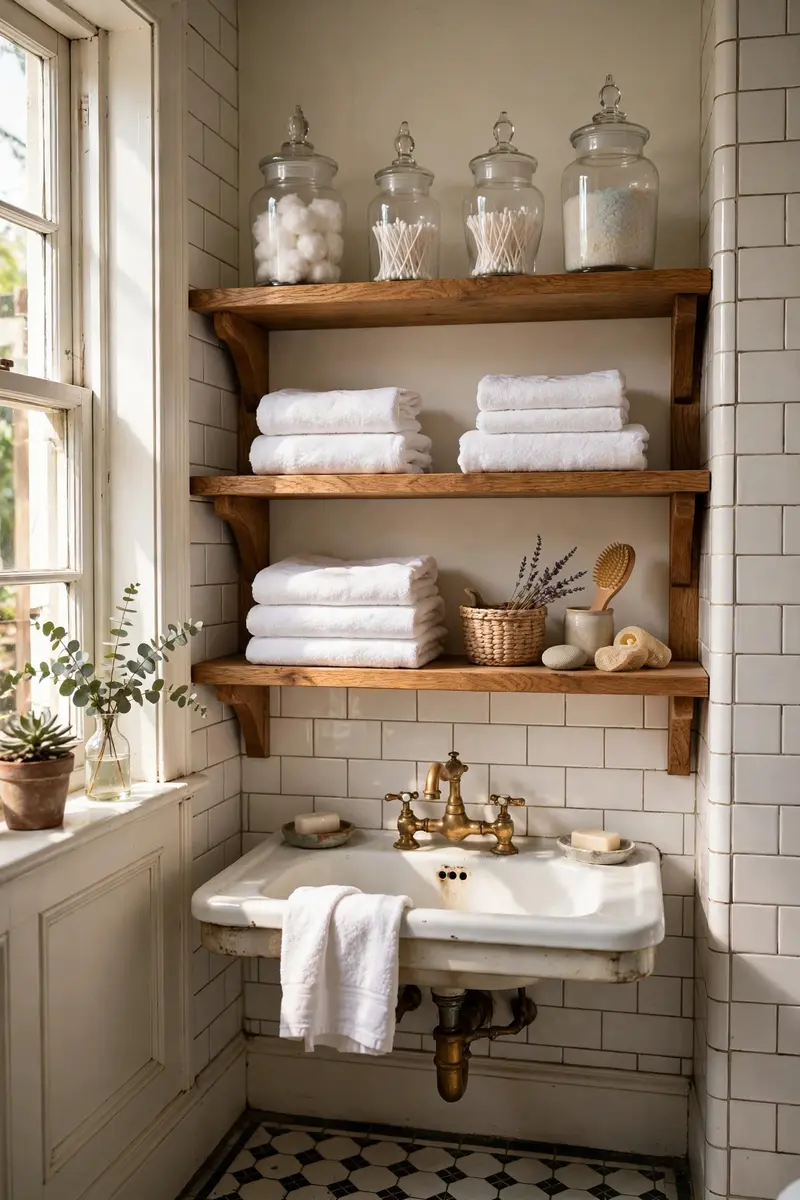
24. Open Oak Shelving with Apothecary Jars
Open oak shelving turns everyday bathroom storage into vintage bathroom decor. Warm wood shelves, glass apothecary jars, folded waffle towels, and a small plant create a display that feels collected rather than staged, and everything you need stays within reach.
Materials and cost: Two or three solid oak shelves cost $60–$180 with brackets; apothecary jars run $8–$25 each. A small potted fern or trailing plant adds $10–$25.
Anchor shelves into studs, not just drywall, especially above a toilet or a tub where a falling shelf would be a real hazard. Keep the shelves styled but usable: cotton balls, bath salts, and rolled towels in jars look beautiful and get used, while purely decorative objects gather dust.
Practical tip: Decant only the products you actually use into jars; a shelf of pretty jars you never open is clutter, not decor.
Variation: Use reclaimed barn-wood shelves for a rougher, farmhouse take on the same idea.
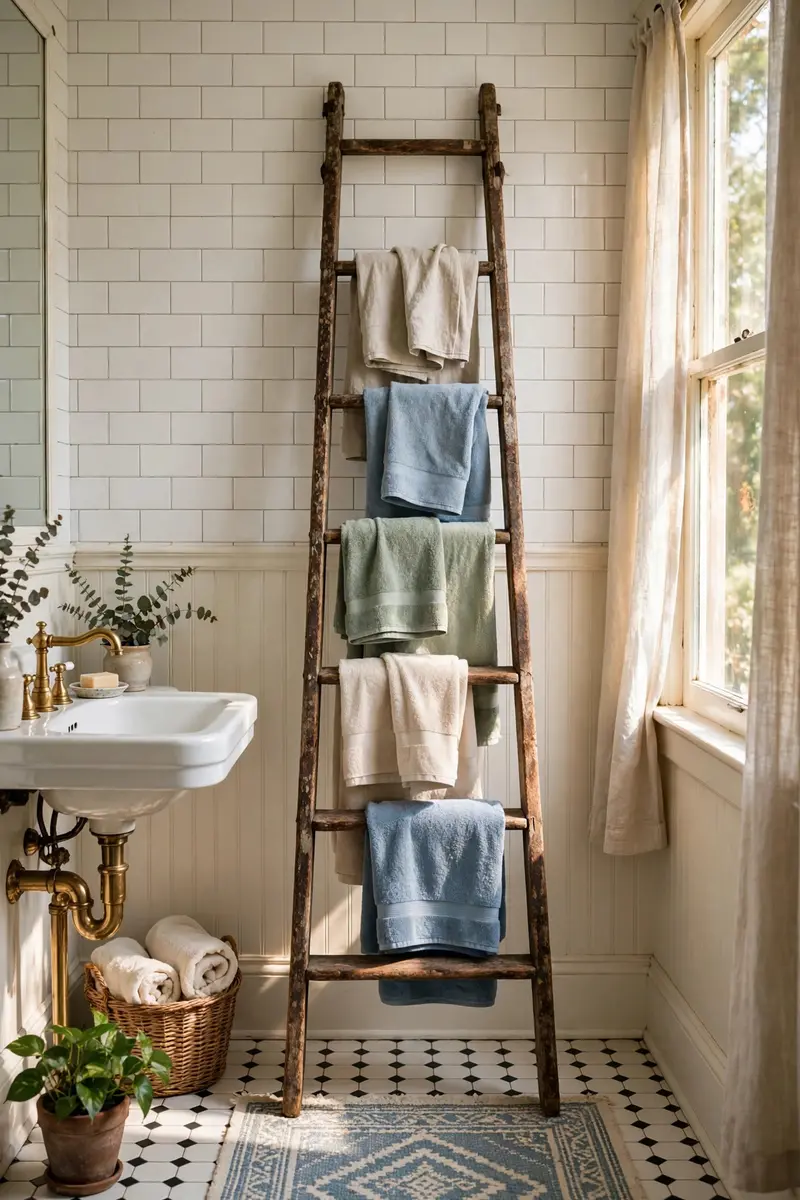
25. Antique Ladder Towel Rack
An antique wooden ladder leaning against the bathroom wall is the vintage towel rack that costs almost nothing and looks completely intentional. Flea markets, thrift shops, and even old blanket ladders all work beautifully.
Materials and cost: A secondhand wooden ladder costs $20–$80; a new decorative ladder runs $40–$120. Wall-anchoring hardware adds $5–$15.
Anchor the top of the ladder to the wall with a small hook or bracket so it can never slide, especially in a house with children or pets. Hang towels so they drape evenly and dry fully — bunching them on one rung traps moisture and mildew.
Practical tip: Sand and seal an old ladder before it comes into the bathroom; splinters and flaking paint have no place near bare skin.
Variation: Paint the ladder white or sage to match your room, and hang a small wreath or dried flowers from the top rung for a seasonal touch.
26. Vintage Rug Runner on Tile
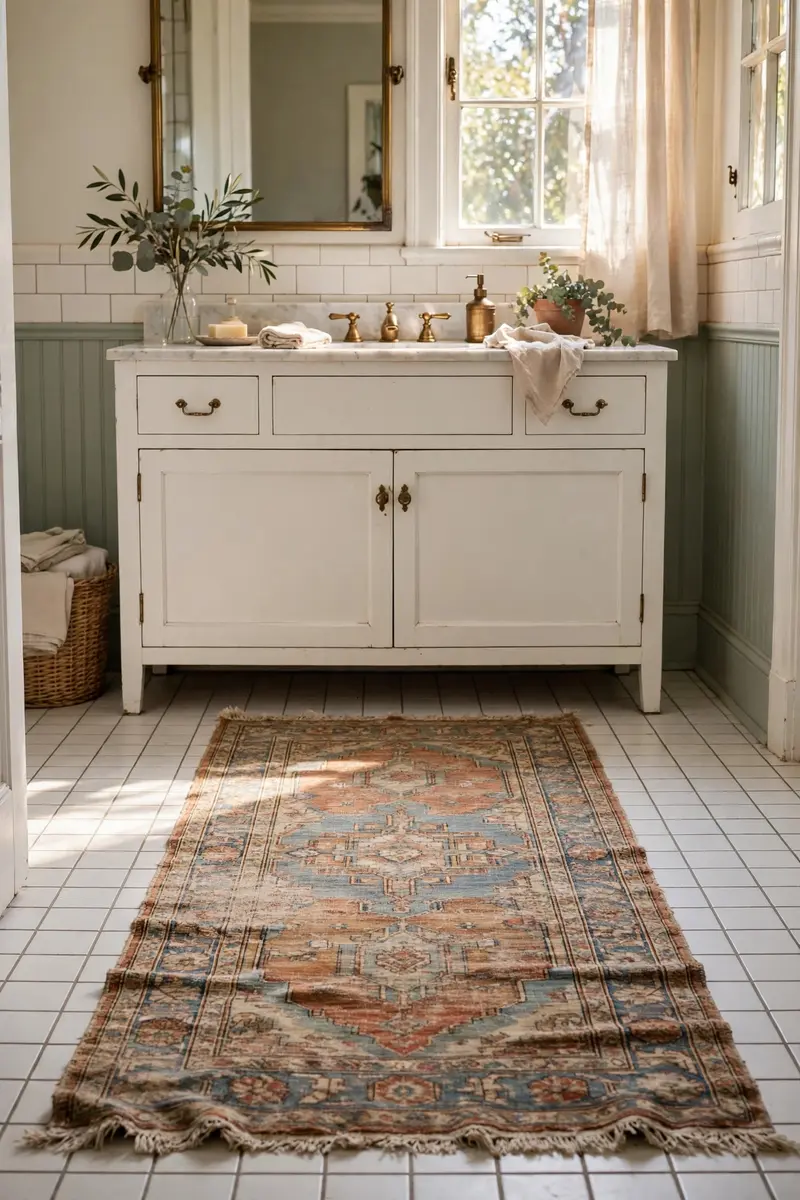
A vintage rug runner softens a cold tile floor, adds color and pattern, and makes bare feet happy on winter mornings. A flatweave kilim, a faded Persian-style runner, or a simple cotton rag rug all work in a bathroom, as long as the rug is low-pile, washable, and backed with a non-slip pad.
Materials and cost: A washable vintage-style runner costs $30–$120; a non-slip rug pad adds $10–$25. A genuine vintage kilim runner runs $100–$400 depending on size and age.
Choose a rug that is no wider than the clear floor in front of the vanity or tub, and keep it out of direct shower splash.
Practical tip: Wash or air out the runner monthly; bathroom humidity dulls colors faster than any other room in the house.
Variation: Layer a small vintage rug over a larger natural-fiber rug for a collected, collected-over-time look.
27. Framed Vintage Advertisements and Art
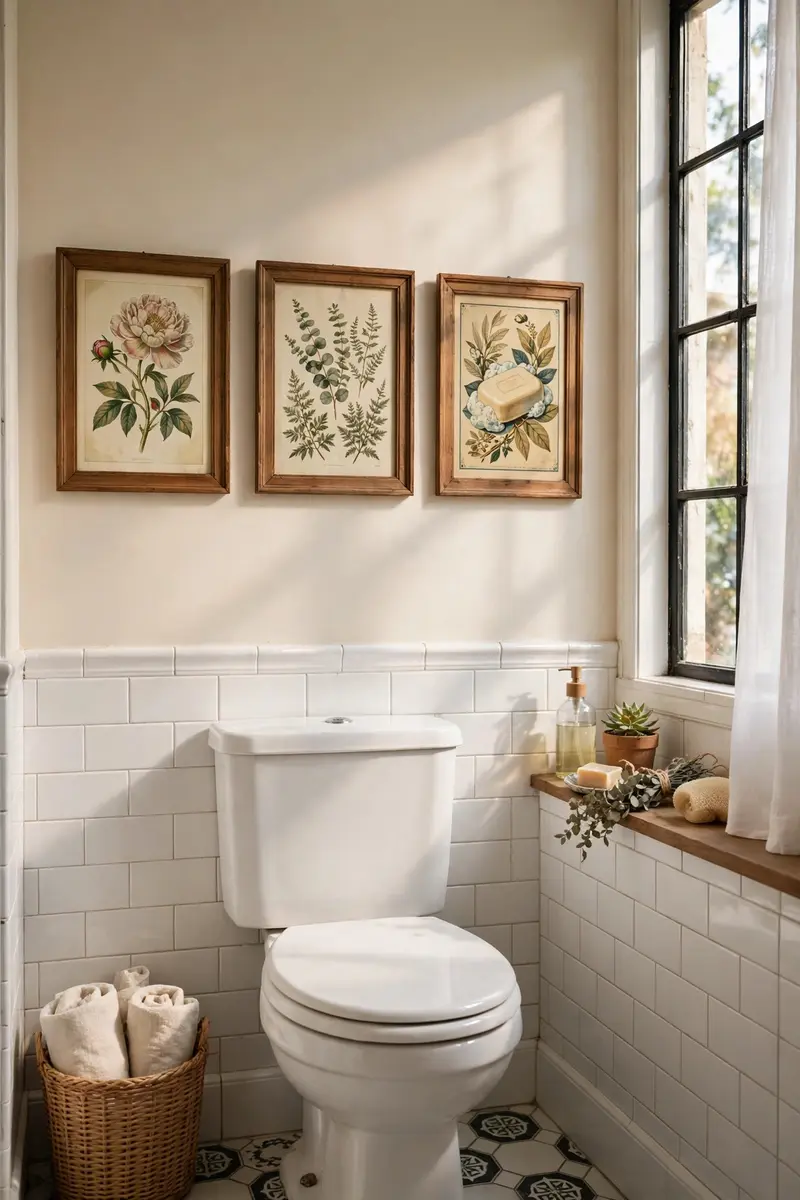
Framed vintage advertisements for soap, perfume, and bath salts are the vintage bathroom wall art with a sense of humor. Old botanical prints, sepia photographs, and vintage travel posters work just as well.
Materials and cost: Reproduction vintage prints cost $10–$40 each; simple wood or brass frames run $10–$30 each. A set of three framed prints usually totals $60–$200.
Hang art where it will not get splashed — above the toilet, on the wall opposite the shower, or in a dry corner — and use frames with glass or acrylic fronts to protect the prints from steam. A small grouping of three prints in matching frames looks more intentional than one large poster alone.
Practical tip: Keep art at eye level, about 57 inches to the center of the grouping, even in a bathroom; art hung too high reads as an afterthought.
Variation: Frame pages from an old seed catalog or a vintage fashion magazine for art that is truly one of a kind.
28. Glass Soap Dispensers and Apothecary Accessories
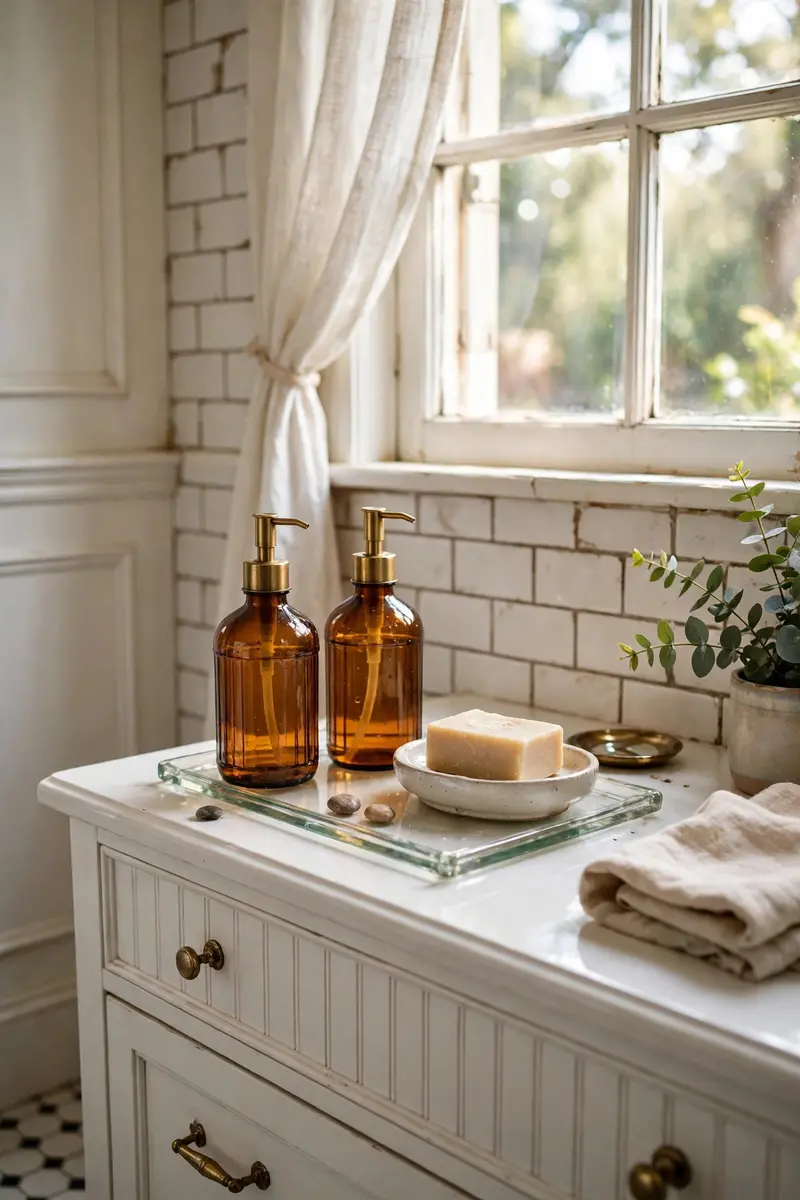
Swapping plastic bottles for glass dispensers and apothecary accessories is the smallest vintage bathroom change with the biggest visual payoff.
Materials and cost: A set of amber glass dispensers costs $15–$35; a ceramic soap dish runs $10–$25, and a small glass tray $10–$30. Refillable bottles pay for themselves within a few months of refills.
Decant only what you use daily — hand soap, lotion, and one or two favorites — and keep the rest stored out of sight. Label the bottles if two products look alike, and wipe the tray weekly so soap rings never build up.
Practical tip: Choose pump bottles with a metal, not plastic, pump head; plastic pumps break first and ruin the vintage illusion.
Variation: Use small vintage perfume bottles as bud vases on the tray for a touch of dressing-table glamour.
29. Wicker Baskets and Natural Storage
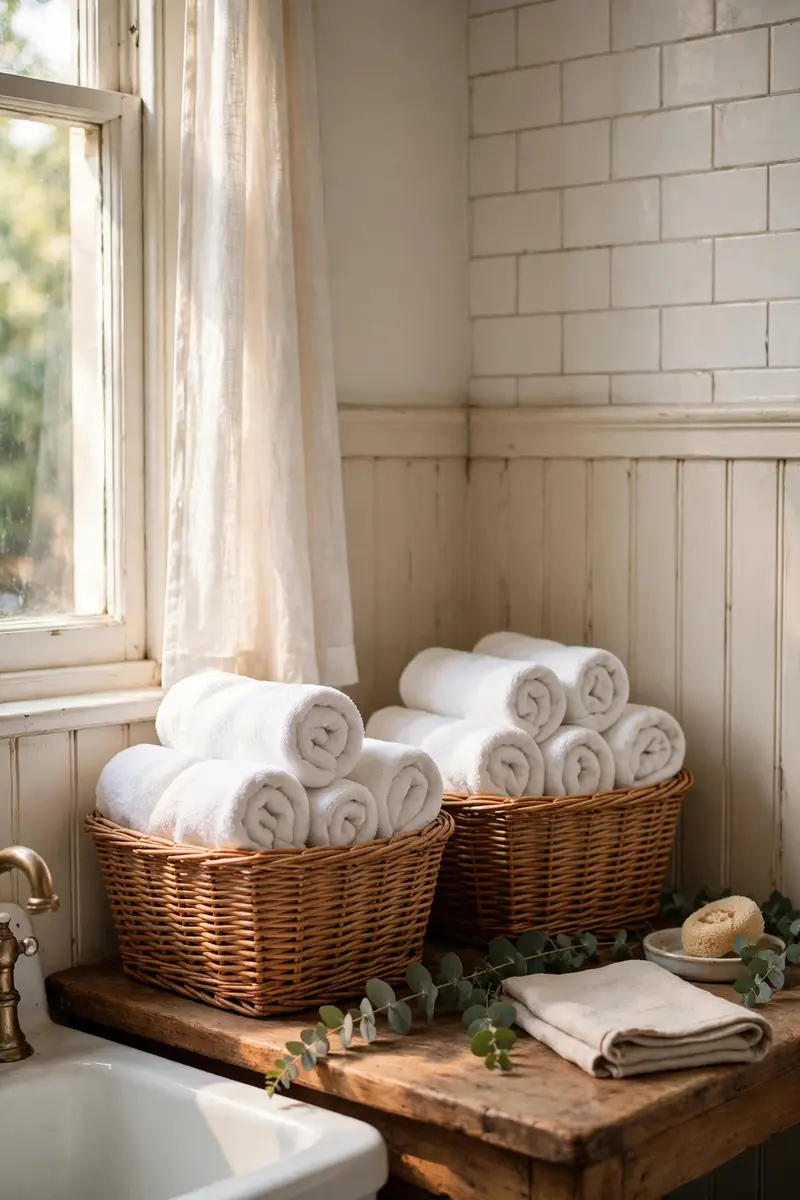
Wicker baskets are the vintage bathroom storage that hides clutter while adding warmth. A lidded basket for laundry, an open basket for rolled towels, and a small basket on the vanity for daily essentials keep everything tidy without a single plastic bin in sight.
Materials and cost: Wicker baskets cost $10–$40 each depending on size; a set of three usually runs $30–$90. Basket liners, if you want them, add $5–$15 each.
Keep baskets off the floor in the wettest spots — a basket sitting in a puddle will mildew — and choose baskets with handles so they are easy to carry to the laundry. Line laundry baskets with a washable cotton liner to protect the wicker from damp clothes.
Practical tip: Limit yourself to three baskets in a small bathroom; more than that and the room starts to look like a storage closet.
Variation: Use seagrass baskets for a lighter, coastal feel, or dark rattan for a moodier, library-like vintage room.
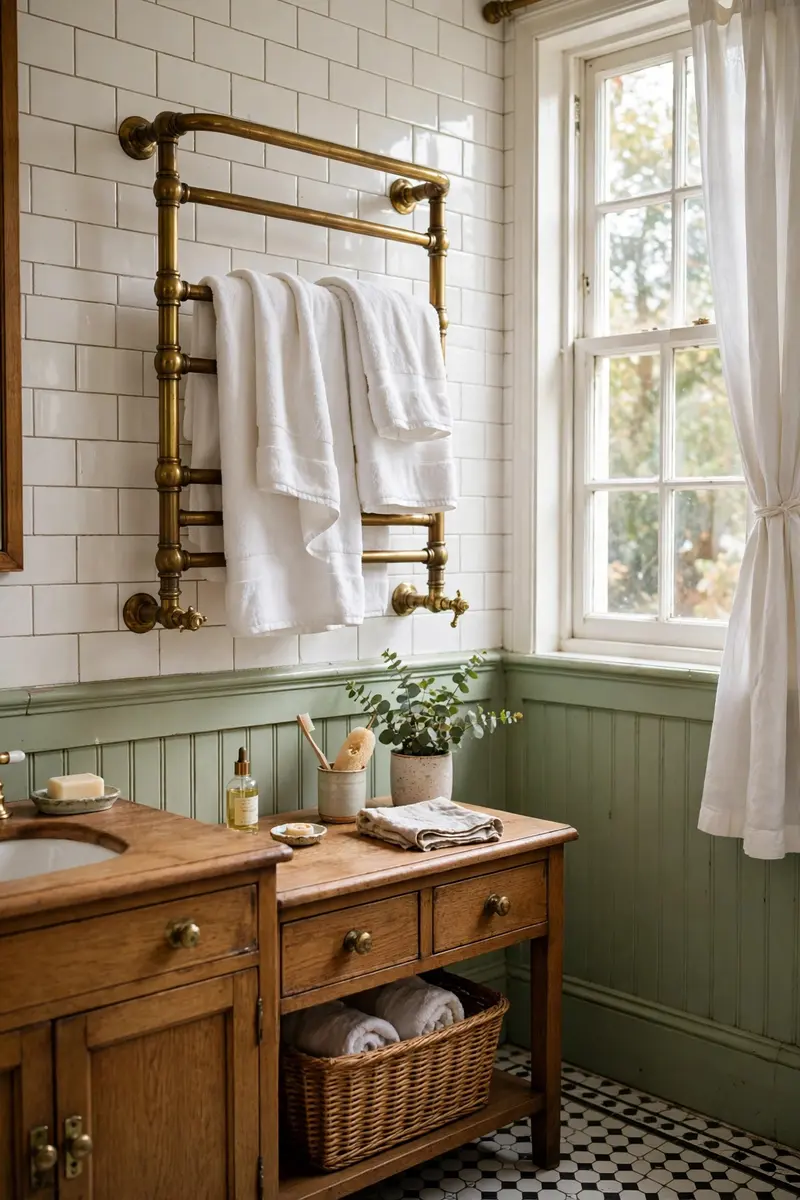
30. Cast-Iron-Style Heated Towel Rail
A heated towel rail in a cast-iron or traditional ladder style is the vintage bathroom luxury that earns its keep every winter. Warm towels after every shower, a rail that gently dries the room, and a fixture that looks like it belongs in an old country house — all in one piece.
Materials and cost: A traditional heated towel rail costs $150–$450; electric models are easier to retrofit, while plumbed models tie into central heating. Installation runs $150–$400 depending on wiring or plumbing.
Place the rail within reach of the shower or tub, but never directly above it, and leave clearance for towels to hang without touching the wall. An electric rail with a timer is the most practical choice for a retrofit, since it needs no new pipework.
Practical tip: Put the rail on a timer that runs for an hour before your usual shower time; you get warm towels without heating the rail all day.
Variation: Choose a brass rail to match brass faucets, or a matte black rail to echo black-and-white floor tile.
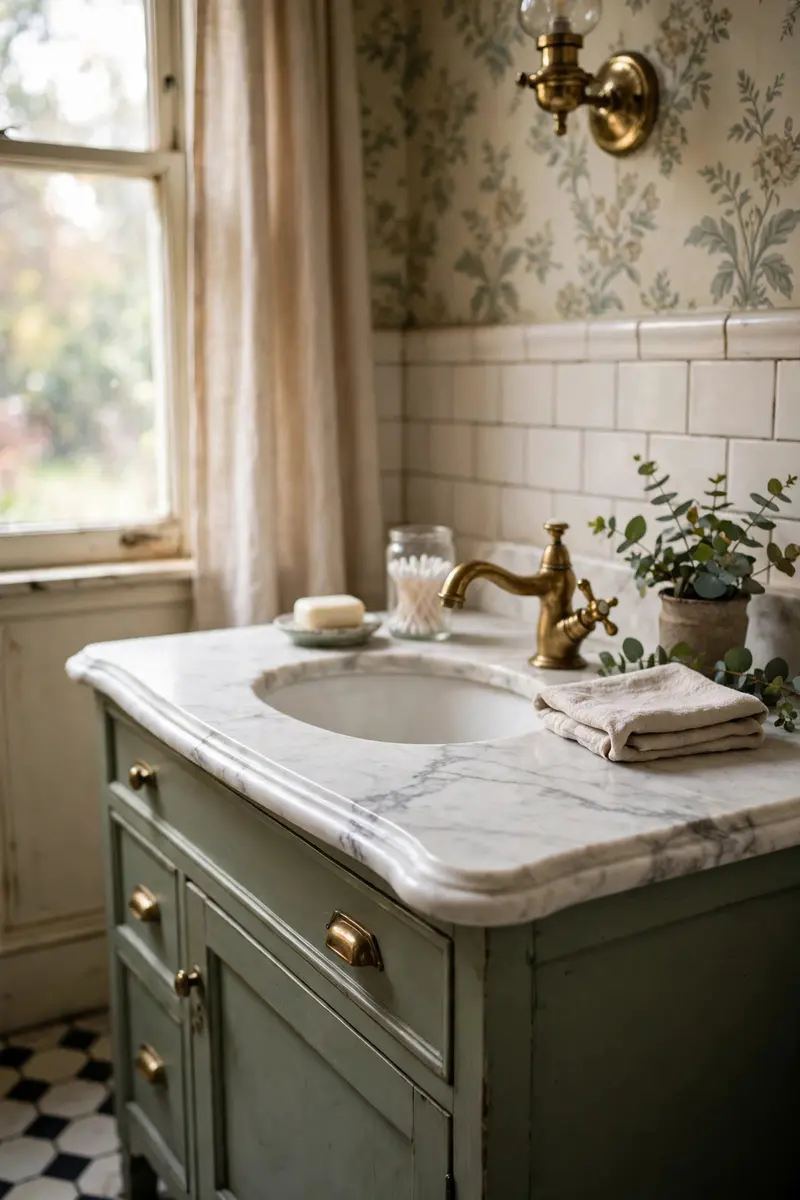
31. Marble Vanity Top with an Ogee Edge
A marble vanity top with an ogee edge is the vintage bathroom detail that signals true craftsmanship. Carrara marble is the classic choice, with its soft grey veining on white.
Materials and cost: A Carrara marble vanity top with an ogee edge costs $300–$900 depending on size; a matching marble backsplash adds $100–$300. Professional templating and installation runs $200–$500.
Seal the marble before first use and reseal every 6 to 12 months, since marble stains from makeup, hair dye, and even some soaps. Wipe spills immediately, and never place a hot styling tool directly on the stone.
Practical tip: Ask the fabricator to show you the exact slab before cutting; marble veining varies enormously, and you want to love the piece you live with.
Variation: Use the same marble for a small shelf above the toilet or a windowsill, tying the whole room together with one stone.
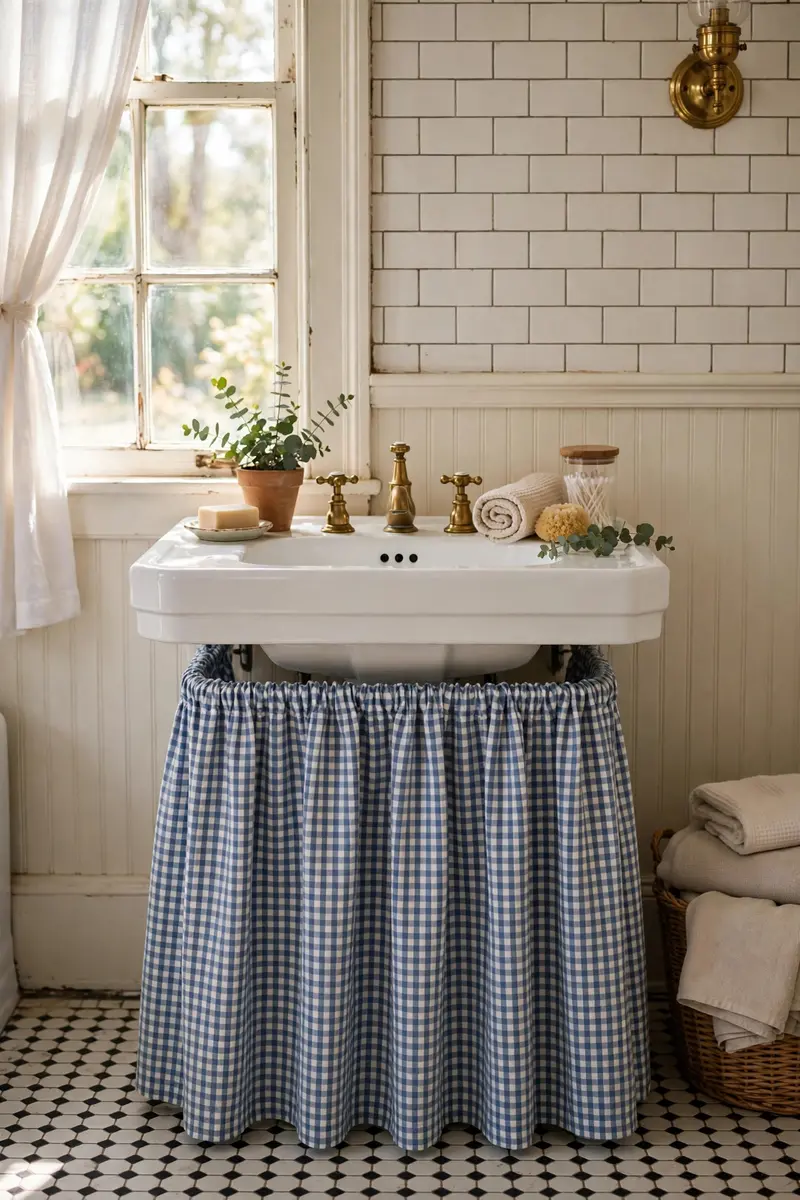
32. Under-Sink Curtain Skirt
An under-sink curtain skirt is the vintage bathroom trick for hiding ugly plumbing and gaining hidden storage in one move. It is also completely renter-friendly and costs almost nothing.
Materials and cost: A yard or two of cotton fabric costs $10–$30; a tension rod runs $5–$12, and simple café clips add $5–$10. A ready-made sink skirt costs $20–$45.
Measure the sink width and the drop to the floor, then cut the fabric about twice as wide as the opening so it gathers nicely. Hem the edges, clip or sew the top to the rod, and choose a washable fabric — gingham, ticking stripe, and small florals all read beautifully vintage.
Practical tip: Make two skirts and swap them when one is in the wash; a bathroom skirt gets splashed more often than you expect.
Variation: Match the skirt fabric to your shower curtain for a coordinated, intentionally designed look.
Frequently Asked Questions
How do you make a modern bathroom look vintage without a full remodel?
Start with the surfaces and details you can change in a weekend: swap the mirror, change the faucet handles to cross handles, add a vintage rug runner, and replace plastic accessories with glass and ceramic. Paint is the next step — powder blue, sage, or warm white transforms the room for the price of a gallon. Tile and fixtures can wait; a room that reads vintage is mostly about consistent finishes, warm metals, and a few honest period details.
What tiles are best for a vintage bathroom?
Small-format tiles are the most authentic choice: hex, penny round, basketweave, and classic 3-by-6 subway tile all date to the early 1900s and still look right today. Keep the palette calm — white, cream, soft grey, black, and one pastel — and let the pattern, not the color, do the talking. For more guidance on period tile, HGTV's vintage bathroom decor ideas show how these tiles look in real rooms.
Are clawfoot tubs practical for everyday use?
Yes, with two caveats: a clawfoot tub is deeper than a standard tub, so stepping in and out takes a little more care, and the freestanding design means the floor around it gets wet unless you use a curtain ring or a good bath mat. If mobility is a concern, choose a tub with a lower rim or add a sturdy step stool.
What paint colors suit a vintage bathroom?
The classic vintage palette is soft and muted: powder blue, sage green, blush pink, butter yellow, and warm cream. These colors were popular in real vintage bathrooms because they flatter skin tones and pair with white porcelain and brass. Avoid harsh, saturated brights — a vintage room should feel calm and collected, not loud. Sample any color on the wall for a full day, since bathroom lighting changes it dramatically.
How do you mix vintage pieces with modern plumbing?
Hide the modern parts and celebrate the vintage ones. Use a modern pressure-balanced valve behind a cross-handle trim, a quiet modern fan behind a vintage-style grille, and a water-saving toilet with a traditional silhouette. The rule is simple: anything you touch or see should look vintage, and anything hidden in the wall can be as modern as you like. That way you get the charm without the leaks, the noise, or the water bill of a genuinely old bathroom.
Conclusion
A vintage bathroom is not about recreating one exact decade — it is about choosing the details you love, from clawfoot tubs and hex tile to brass faucets and floral wallpaper, and letting them work together in one calm, collected room. Start with one or two ideas from this list, live with them for a while, and add the next layer when you are ready. Save this post to Pinterest so you can come back to your favorite ideas when you are ready to start — and tell us in the comments which vintage bathroom idea you are trying first.