
Cinder block planter ideas are one of the easiest ways to turn a plain patio, balcony, or backyard corner into a garden that looks intentional — without spending a fortune or learning masonry. A standard concrete block costs just a couple of dollars, stacks without mortar for most small projects, and already comes with built-in planting pockets. That means you can build a raised bed on Saturday morning and plant it by lunch.
In this guide, you will find 26 cinder block planter ideas for every space and skill level, from a classic raised bed and a kitchen herb grid to a vertical living wall, a planter bench, and painted blocks that add instant color. Each idea includes realistic materials, a rough cost, and simple steps you can follow, plus a practical tip and a variation so you can make it your own. If you are working with a tight budget, pair these builds with our small backyard ideas on a budget for more low-cost outdoor projects.
Before you start, remember two basics that apply to almost every project below. First, level the ground as best you can — a wobbly first course makes every course above it wobbly too. Second, cinder block planters drain fast, which most herbs, succulents, and flowers love, but it also means you will water more often in hot weather. A layer of mulch on top of the soil helps a lot.
1. Classic Cinder Block Planter Ideas Raised Bed
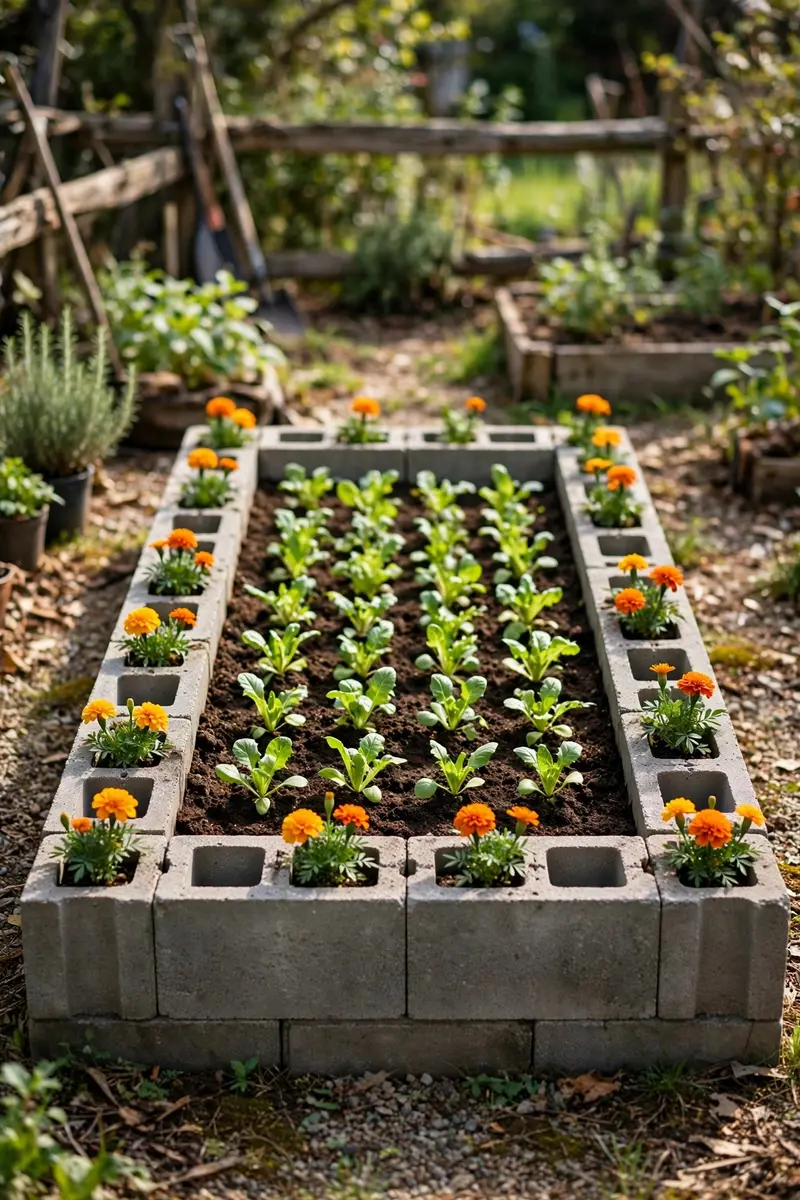
This is the build that starts most cinder block gardens: a simple rectangular raised bed with blocks forming the border and rich soil in the middle. It works because it gives you deep, loose soil, clear edges that keep grass out, and extra planting pockets in every block cavity.
Materials: 16–24 standard blocks, garden soil and compost, gravel for the base. Cost: about $40–$90, depending on bed size.
Mark a rectangle on level ground, dig a shallow trench a few inches deep, and set the first course with the cavities facing up. Stagger a second course if you want more height, then fill the center with a mix of topsoil and compost, leaving an inch or two below the rim. Plant the center with vegetables or flowers, and tuck herbs or marigolds into the block holes.
Tip: Keep the bed no wider than 4 feet so you can reach the middle from either side without stepping on the soil. This works for many cinder block planter ideas.
Variation: Cap the blocks with flat cap stones to create a comfortable ledge for sitting while you weed. For a permanent version, see this guide to building a permanent raised bed with cinder blocks.
2. Stepped Corner Pyramid
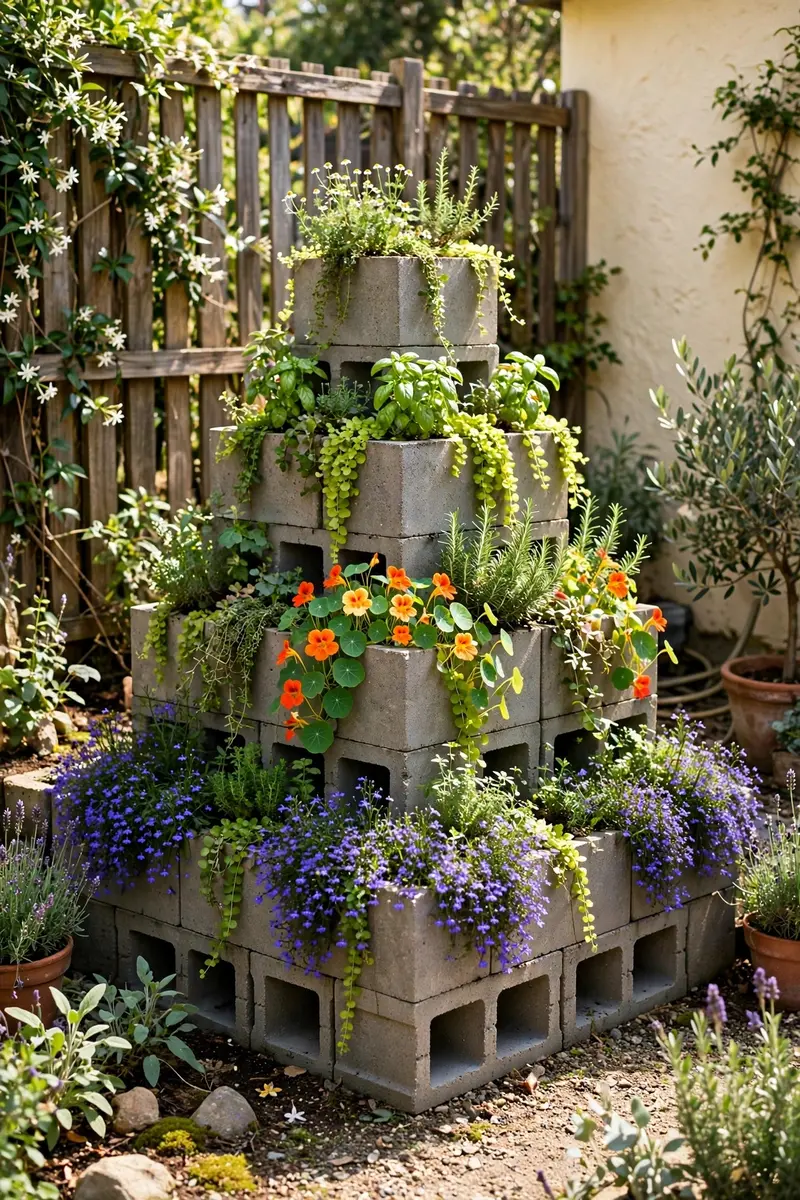
A stepped pyramid turns an awkward corner into the star of the yard. Each layer steps back from the one below, so plants at every level get sun and you get a lot of growing space in a small footprint.
Materials: 12–20 blocks, soil, small plants. Cost: about $30–$70.
Start with a wide base layer in an L or square shape in the corner, fill it with soil, then add a smaller second layer set back by half a block, and a third if you like. Plant trailing flowers like sweet alyssum on the edges and upright herbs or annuals in the middle of each tier.
Tip: Water the top tier first and let excess drain down — the lower tiers will stay moist longer. This tip applies to many cinder block planter ideas.
Variation: Build the pyramid against a fence and plant the back row with taller flowers for a layered backdrop.
3. Kitchen Herb Grid
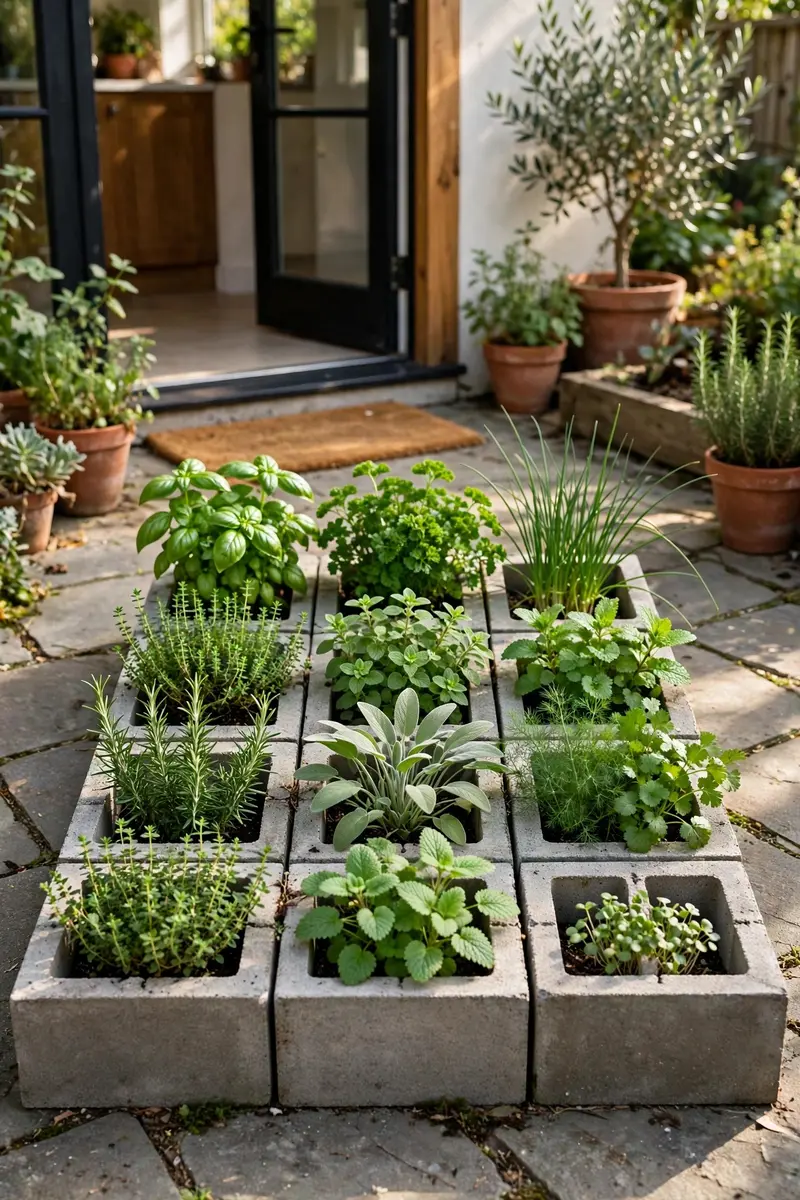
A flat grid of single blocks, each one holding a different herb, is the most organized herb garden you will ever own. It works because every plant gets its own pocket, mint cannot take over the whole bed, and harvesting is as easy as reaching for the right square.
Materials: 9–16 blocks, potting mix, herb starts. Cost: about $25–$60.
Lay the blocks in a neat grid near the kitchen door, cavities up, with a little space between rows for your feet. Fill each cavity with potting mix and plant basil, parsley, chives, thyme, oregano, and mint in separate blocks. Label the blocks with a paint pen if you are still learning your herbs.
Tip: Put mint in its own block, never in shared soil — it will spread everywhere if you give it the chance. This works for many cinder block planter ideas.
Variation: Paint the outer faces of the grid in one soft color so the whole grid reads as a single designed feature.
4. Vertical Living Wall
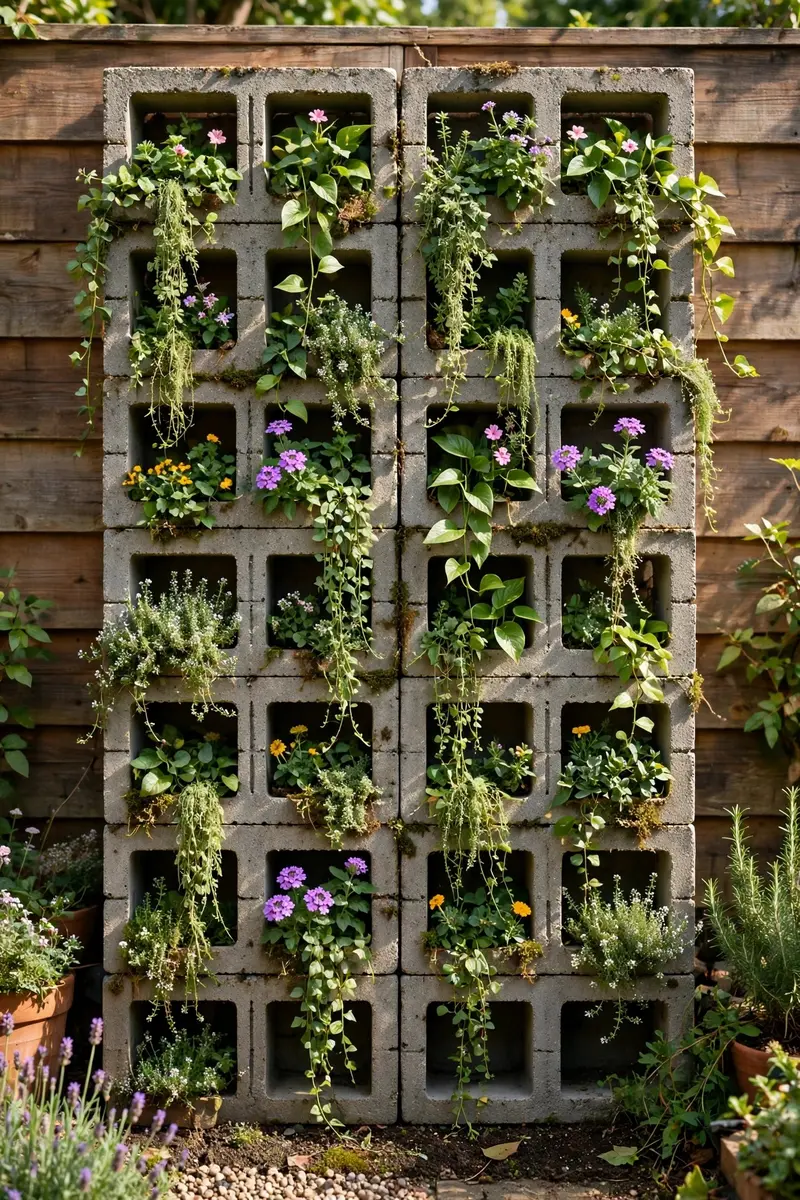
When floor space is tight, go up. A vertical cinder block planter stacks blocks into a wall of planting pockets, turning a blank fence or garage wall into a living feature that takes almost no ground space at all.
Materials: 12–24 blocks, masonry adhesive for taller stacks, soil, trailing plants. Cost: about $40–$100.
Stack blocks in a running-bond pattern against a sturdy fence or wall, gluing courses above the second for stability. Fill the cavities with a light potting mix and plant trailing plants at the top, compact flowers in the middle, and herbs at the bottom where they are easy to reach.
Tip: Never build a freestanding vertical wall taller than you can safely reach and stabilize — anchor it to a fence or wall, and keep it to three or four courses. This tip applies to many cinder block planter ideas.
Variation: Leave a few cavities empty and tuck in small solar lights for a soft evening glow.
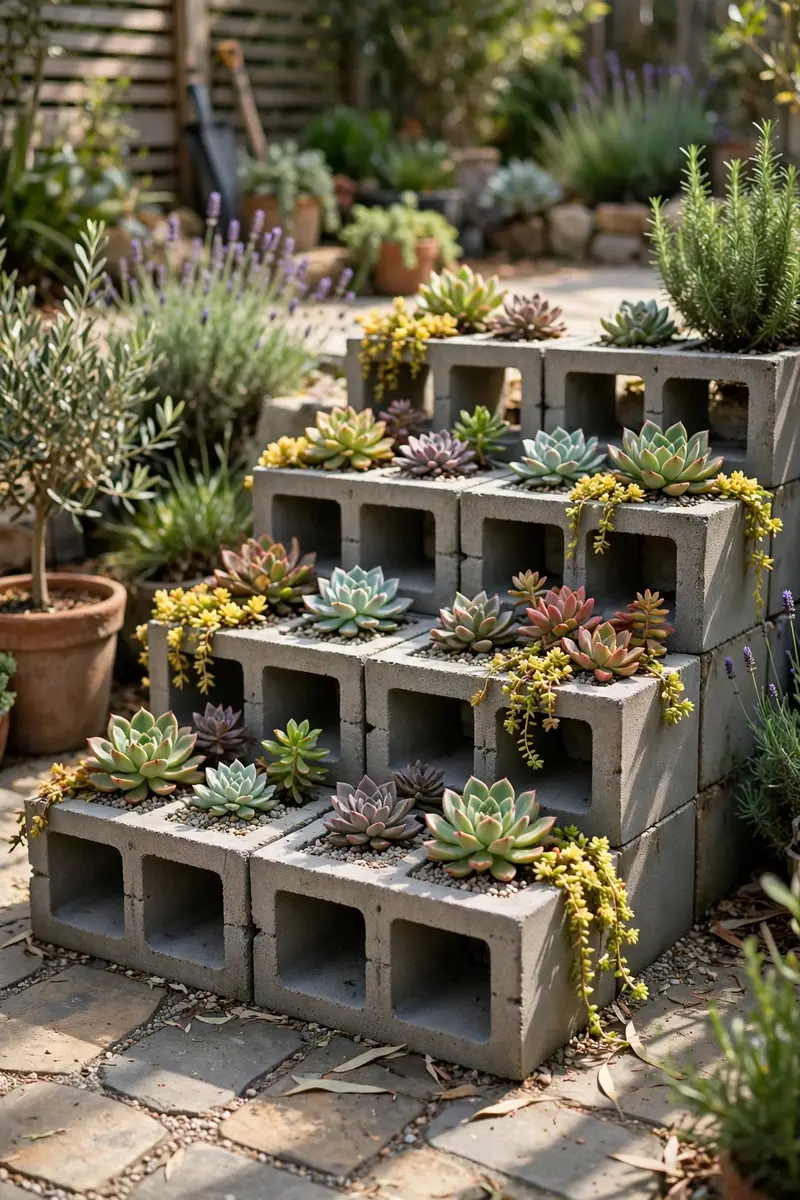
5. Succulent Staircase
A staircase arrangement mimics steps, with each layer of blocks sitting a little higher and further back than the one below. Succulents love it because the concrete stays warm, drainage is excellent, and every rosette gets its own sunny perch.
Materials: 10–16 blocks, cactus potting mix, succulent starts. Cost: about $30–$75.
Build three short steps of blocks on a sunny patio, fill the cavities with gritty cactus mix, and plant echeveria, sedum, and hens-and-chicks in a mix of sizes and colors. Add a thin top dressing of small gravel to keep the rosettes clean and dry.
Tip: Water succulents in blocks sparingly — the porous concrete wicks moisture away, but soggy soil still rots roots. This works for many cinder block planter ideas.
Variation: Use a single color family, like blue-green succulents with one burgundy accent, for a calm, designer look.
6. Whitewashed Cottage Planters
If raw gray concrete feels too industrial for your porch, whitewash it. A thin wash of white paint softens the blocks, brightens a shady corner, and makes green foliage and pastel flowers pop.
Materials: 6–12 blocks, exterior white paint thinned with water, brush, plants. Cost: about $25–$55.
Brush a watered-down coat of exterior paint over clean, dry blocks and let it dry fully before planting — two thin coats look better than one thick one. Fill with potting mix and plant cottage favorites like petunias, lobelia, and trailing ivy.
Tip: Whitewash only the outside faces you will see, and leave the planting cavities unpainted so paint never touches the root zone. This tip applies to many cinder block planter ideas.
Variation: Try a pale sage or soft cream wash instead of pure white for a warmer cottage feel.

7. Bold Painted Color Blocks
On the other end of the spectrum, paint your blocks in bold, cheerful colors. Turquoise, sunny yellow, coral, or cobalt turn plain blocks into a playful focal point, and the color carries the design even before the plants fill in.
Materials: 8–14 blocks, exterior acrylic paint, plants. Cost: about $30–$65.
Paint clean blocks outdoors and let them cure for a day or two. Arrange them in a row, a grid, or a low wall, then plant with white or bright flowers that contrast with your paint color. Seal with a clear exterior sealer if your winters are harsh.
Tip: Paint a test block first and look at it in full sun — bright colors look much stronger outdoors than they do in the store. This works for many cinder block planter ideas.
Variation: Paint each block a different shade of one color, from pale to deep, for an ombre effect along a path.

8. Pollinator Flower Bed
A cinder block bed built for pollinators pairs big flowering plants in the center with small blooms in the block cavities, giving bees and butterflies food at every height. It works because the border itself becomes part of the planting, not just a frame.
Materials: 16–22 blocks, soil and compost, pollinator plants. Cost: about $45–$95.
Build a rectangular bed and plant zinnias, coneflowers, or salvia in the center. Fill the block cavities with marigolds, alyssum, and dwarf cosmos, which bloom for months and are easy to replace if one fades.
Tip: Skip pesticides on a pollinator bed entirely — even “garden-safe” sprays can harm the visitors you are trying to attract. This tip applies to many cinder block planter ideas.
Variation: Add a shallow dish of water with pebbles nearby so bees can drink safely without drowning.

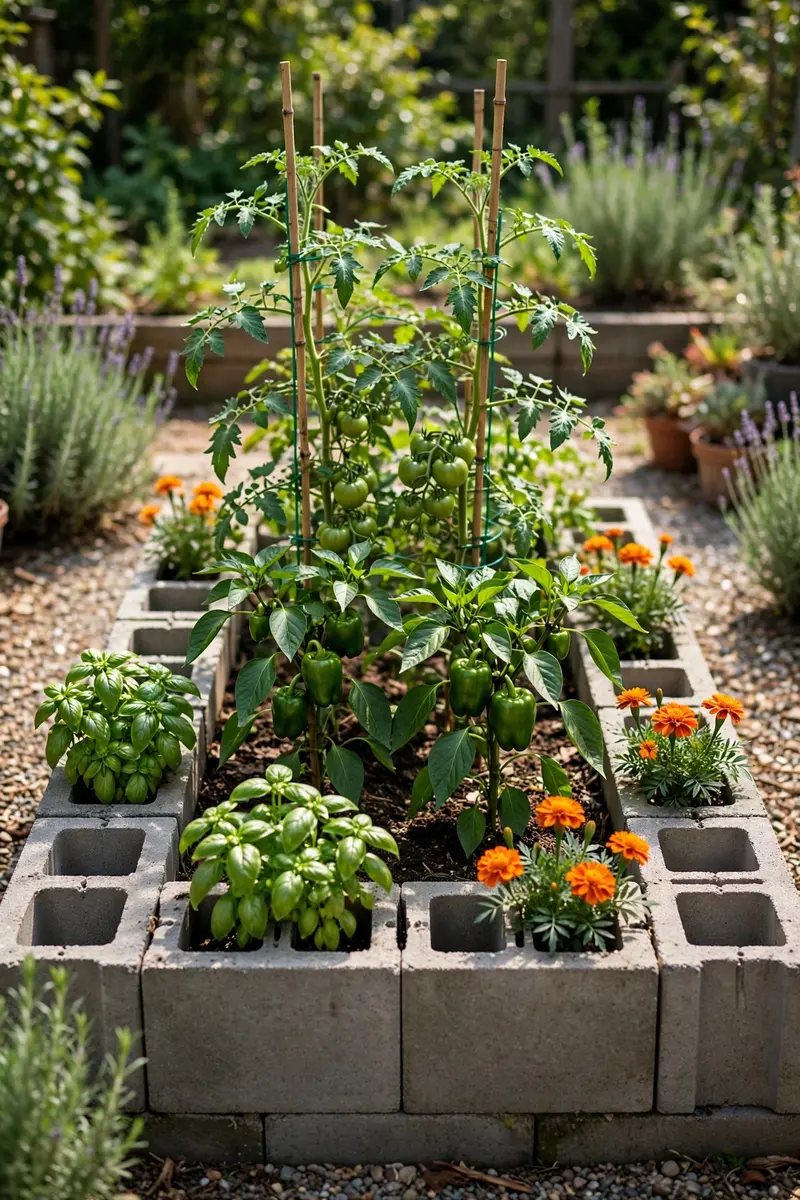
9. Vegetable Companion Bed
Vegetables and flowers make better neighbors than most people expect, and a cinder block bed is perfect for companion planting. The center holds your crops while the block pockets hold pest-deterring flowers and herbs right where they are needed.
Materials: 18–26 blocks, soil and compost, vegetable starts. Cost: about $50–$110.
Plant tomatoes, peppers, or eggplant in the center of the bed, with marigolds in the surrounding block cavities and basil tucked near the tomatoes. Keep taller crops on the north side so they do not shade shorter ones, and mulch the center well.
Tip: Rotate crops each year — do not plant tomatoes in the same bed two years running, or soil diseases build up. This works for many cinder block planter ideas.
Variation: Grow beans up a small trellis at the back of the bed and let squash trail over the front edge.
10. Cinder Block Planter Ideas Narrow Balcony Row
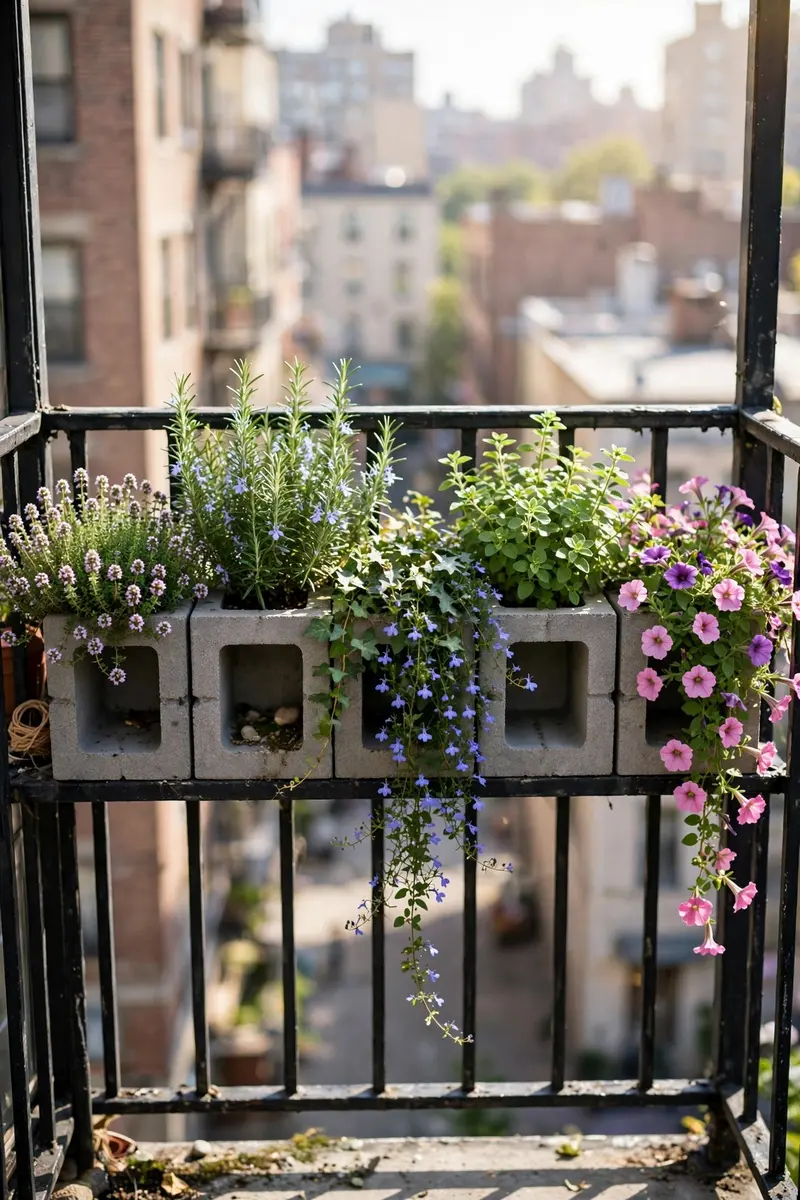
A single row of blocks along a balcony edge or narrow patio gives you a surprising amount of garden in almost no space. It works because the row is slim, stable, and every cavity is a mini planter you can reach from one side.
Materials: 4–8 blocks, potting mix, compact plants. Cost: about $15–$40.
Set one row of blocks against the railing or wall, cavities up, and plant each with a compact herb, flower, or trailing plant. Check your balcony weight limit first — concrete is heavy, so a short row is smarter than a tall stack. For more renter-friendly outdoor ideas, see our small backyard ideas for renters.
Tip: Use lightweight potting mix, not heavy garden soil, in balcony blocks to keep the total weight down. This tip applies to many cinder block planter ideas.
Variation: Alternate flowering plants with herbs so the row is both pretty and useful for cooking.
11. Fence-Line Planter
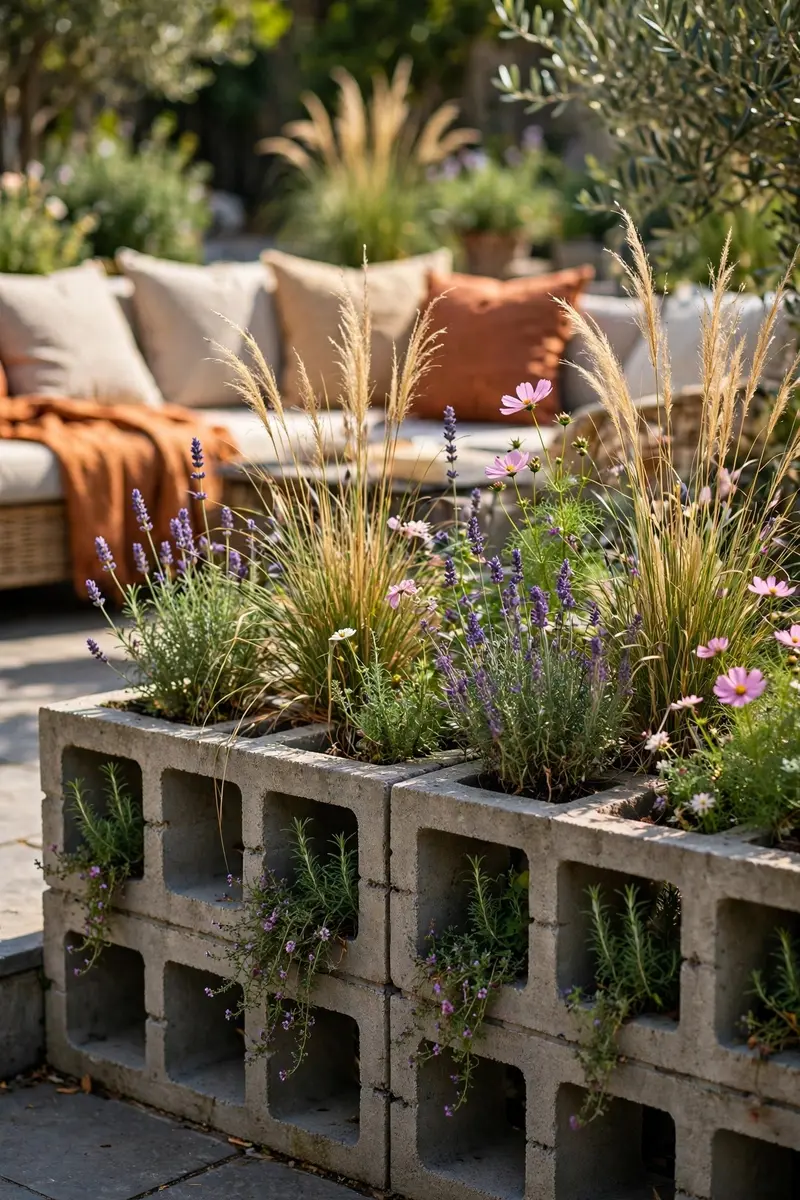
A long, low run of blocks along a fence softens a hard boundary and fills a strip of ground that is often wasted. It is one of the easiest cinder block planter ideas because the fence does the stabilizing and you only build one or two courses high.
Materials: 10–20 blocks, soil, plants. Cost: about $30–$80.
Lay a single or double row along the fence, fill the cavities and any center space with soil, and plant a repeating pattern of shrubs, ornamental grasses, or flowers. A repeating pattern looks intentional even if the plants are simple.
Tip: Leave a few inches between the blocks and a wooden fence so air can circulate and the fence stays dry. This works for many cinder block planter ideas.
Variation: Plant climbing roses or jasmine at intervals and train them up the fence above the blocks.

12. Circular Tree-Ring Bed
A ring of blocks around a tree turns bare dirt under a tree into a finished garden bed. The circle shape looks deliberate from every angle, and the blocks protect the tree’s roots from mower damage.
Materials: 10–16 blocks, soil, shade-tolerant plants. Cost: about $30–$70.
Arrange blocks in a circle a few feet out from the trunk, leaving the trunk itself clear, and fill the cavities with shade plants like hostas, ferns, or impatiens. Do not pile soil against the trunk — keep the root flare visible.
Tip: Choose plants that tolerate dry shade, since tree roots drink a lot of water and cast deep shade in summer. This tip applies to many cinder block planter ideas.
Variation: Make a double ring with a path of mulch between the rings for a more formal look.

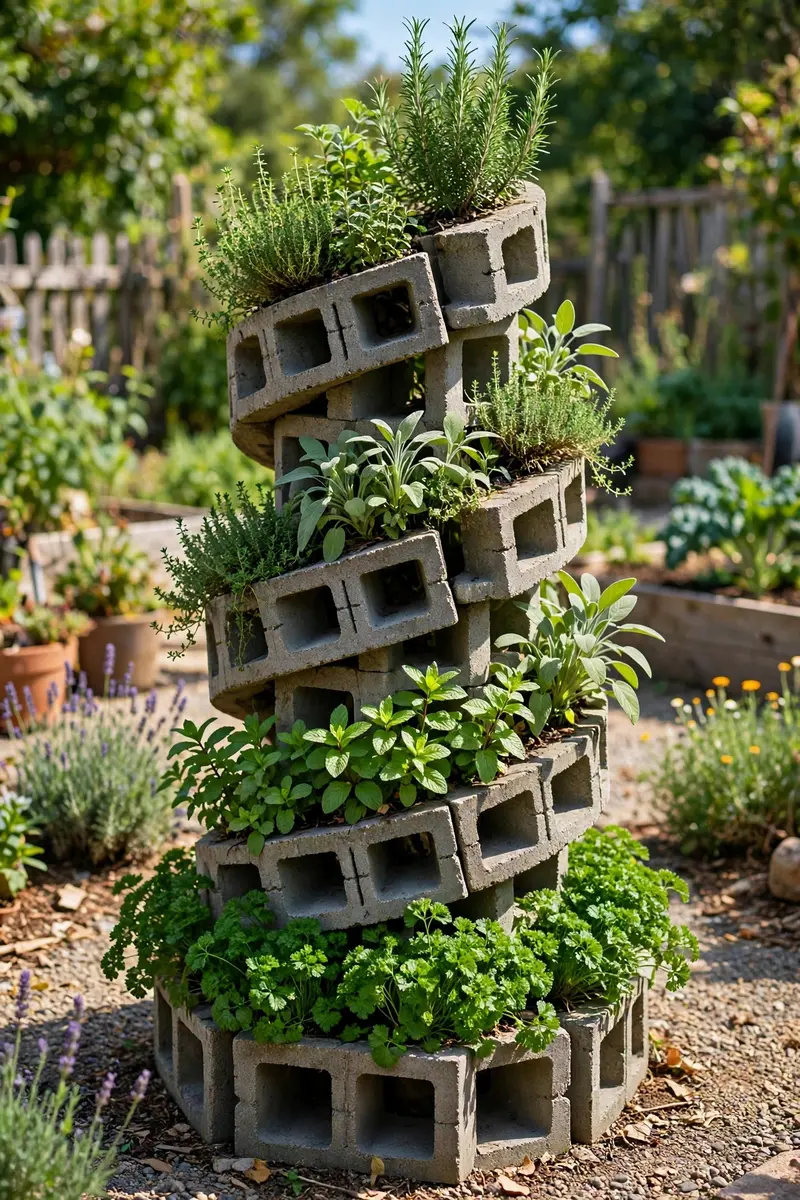
13. Spiral Herb Tower
A spiral tower winds upward like a snail shell, giving you sunny, dry spots at the top and cooler, moister spots at the bottom — perfect for herbs with different needs in one small structure.
Materials: 14–22 blocks, soil, herb starts. Cost: about $40–$85.
Lay blocks in a spiral that rises one course at a time, filling as you go so the structure stays stable. Plant rosemary, thyme, and sage at the sunny top, parsley and chives in the middle, and mint and cilantro in the cooler bottom pockets.
Tip: Build the spiral on a flat, sunny spot near the kitchen — you will use it far more if it is steps from the door. This works for many cinder block planter ideas.
Variation: Top the spiral with a single large terracotta pot for a classic herb-garden focal point.
14. Planter Bench
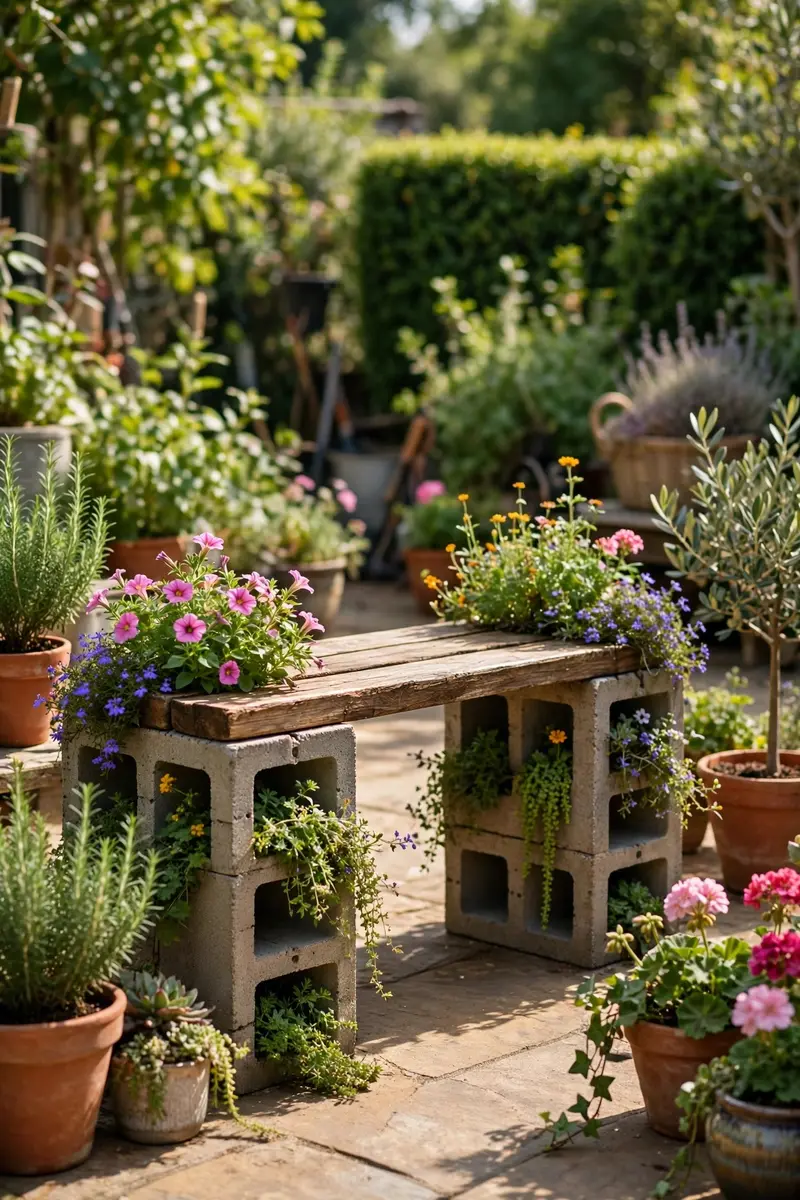
A planter bench does two jobs at once: blocks at each end hold plants, and wooden planks across the top make a seat. It is a favorite for patios because it adds seating without buying furniture, and the plants soften the hard concrete.
Materials: 8–12 blocks, 2–3 wooden planks, soil, plants. Cost: about $45–$100.
Stack two blocks high at each end, cavities up, and lay planks across the top for the seat. Plant the end blocks with flowers or herbs, sand the planks smooth, and seal the wood for outdoor use. Test the seat for wobble before you trust it with guests.
Tip: Use planks at least 2 inches thick — thin boards will flex and eventually crack under weight. This tip applies to many cinder block planter ideas.
Variation: Add a middle block column for a longer bench, and plant trailing flowers that spill over the ends.
15. Potting Table
Two stacks of blocks with planks through their cavities make a sturdy, adjustable potting table in minutes. It works because the block holes are exactly the right size for planks, and you can raise or lower the work surface by adding a course.
Materials: 6–10 blocks, 2 wooden planks, soil. Cost: about $30–$70.
Stand blocks on end at each side, thread planks through the cavities for a shelf and a work surface, and fill the remaining cavities with soil for small plants or tools. Keep the table near your beds so potting up seedlings is a short walk, not a chore.
Tip: Set the work surface at hip height — your back will thank you after an afternoon of repotting. This works for many cinder block planter ideas.
Variation: Add a lower plank shelf for bags of soil, pots, and watering cans.

16. Front Porch Flankers
A pair of block planters flanking the front door frames the entrance and makes even a small porch feel welcoming. Symmetry does the heavy lifting here — two matching planters look designed even with simple plants inside.
Materials: 6–10 blocks, potting mix, plants. Cost: about $25–$60.
Build a small square or L-shaped planter on each side of the door, paint or whitewash the blocks to match your house trim, and plant with a thriller, a filler, and a spiller in each — for example, a small evergreen, colorful annuals, and trailing ivy. For more entrance ideas, see our fall front porch decor ideas.
Tip: Keep porch planters clear of the swing of the door and the path of the mail carrier — beautiful should never mean in the way. This tip applies to many cinder block planter ideas.
Variation: Swap the annuals each season so the entrance always looks fresh, while the evergreen thriller stays year-round.

17. Cinder Block Planter Ideas for Porch Steps
Porch steps are wasted garden space, and a block planter on each step turns them into a cascade of color. Each step gets its own small arrangement, so the whole staircase reads as one flowing display.
Materials: 2–4 blocks per step, potting mix, plants. Cost: about $20–$50.
Place one or two blocks on the wider steps, fill with potting mix, and plant trailing flowers that spill toward the step below. Keep the walking path clear and the planters stable — never block a step entirely.
Tip: Use lightweight, compact plants on steps, and water carefully so runoff does not make the steps slippery. This works for many cinder block planter ideas.
Variation: Plant one color per step, moving from pale at the top to deep at the bottom, for a gentle gradient effect.

18. Cap-Topped Ledge Planters
Flat cap blocks laid across the top of a block wall turn the wall itself into a shelf. You get a planting wall below and a display ledge above, perfect for pots, lanterns, or a row of small succulents.
Materials: 12–20 blocks plus cap blocks, soil, plants. Cost: about $45–$100.
Build a low wall two courses high, then set cap blocks across the top, overhanging slightly on the front. Plant the cavities below and use the ledge for potted herbs, candles in hurricane holders, or trailing plants in small pots.
Tip: Glue the cap blocks down with masonry adhesive so they cannot be knocked off by accident. This tip applies to many cinder block planter ideas.
Variation: Leave gaps in the cap row at intervals and plant a tall grass or flower in the gap for a rhythmic look.

19. Strawberry Pocket Tower
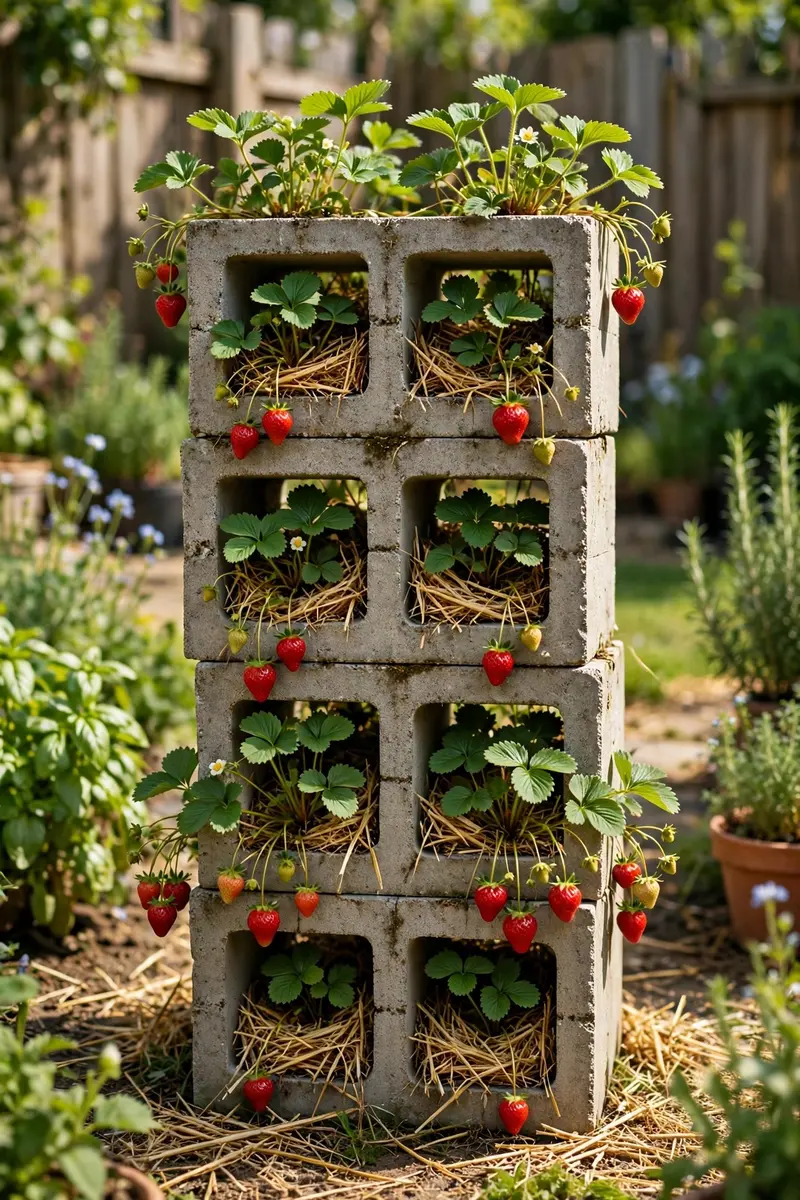
Strawberries love cinder block pockets. Each cavity is just big enough for one plant, the fruit hangs over the edge away from slugs and soil, and a tower of blocks gives you dozens of plants in a tiny footprint.
Materials: 10–16 blocks, potting mix, strawberry starts. Cost: about $35–$80.
Stack blocks into a short tower or pyramid, fill every cavity with rich potting mix, and plant one strawberry start per pocket. Water from the top and let it trickle down, and mulch the pockets with straw — fittingly — to keep berries clean.
Tip: Net the tower once berries start ripening, or birds will harvest them before you do.
Variation: Mix in a few alpine strawberries, which fruit all summer and are sweeter than supermarket varieties.
20. Shady Fern Haven
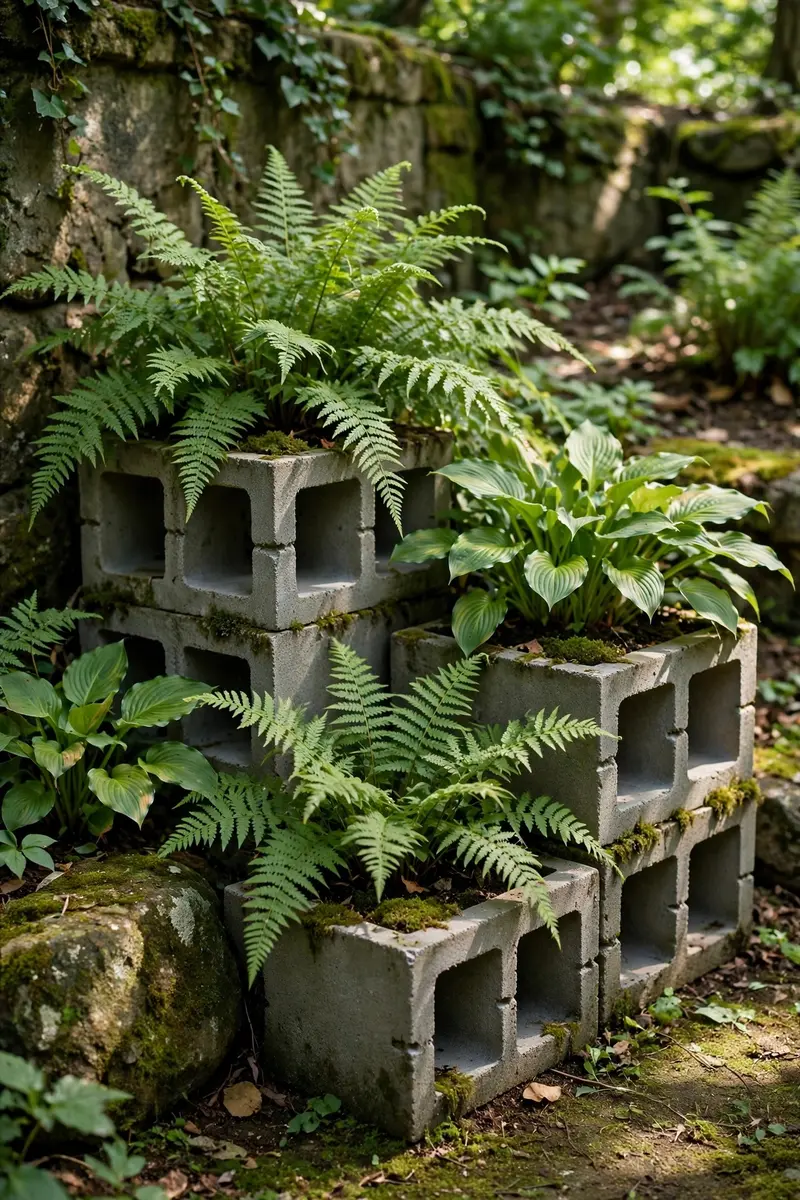
Not every garden spot gets full sun, and cinder blocks are surprisingly good in shade. Grouped in a shaded corner and filled with ferns, hostas, and moss, they make a cool, lush retreat that looks far more expensive than it was.
Materials: 8–14 blocks, shade potting mix, ferns and hostas. Cost: about $30–$70.
Arrange blocks in a loose cluster under a tree or on the north side of the house, fill with moisture-retentive potting mix, and plant ferns in the cavities and hostas in the center. The gray concrete recedes in shade, letting the green foliage take center stage.
Tip: Shade planters dry out more slowly, so check the soil before watering — overwatering is the most common mistake in shade.
Variation: Add a small birdbath or a moss-covered stone beside the cluster for a woodland feel.
21. Desert Cactus Garden
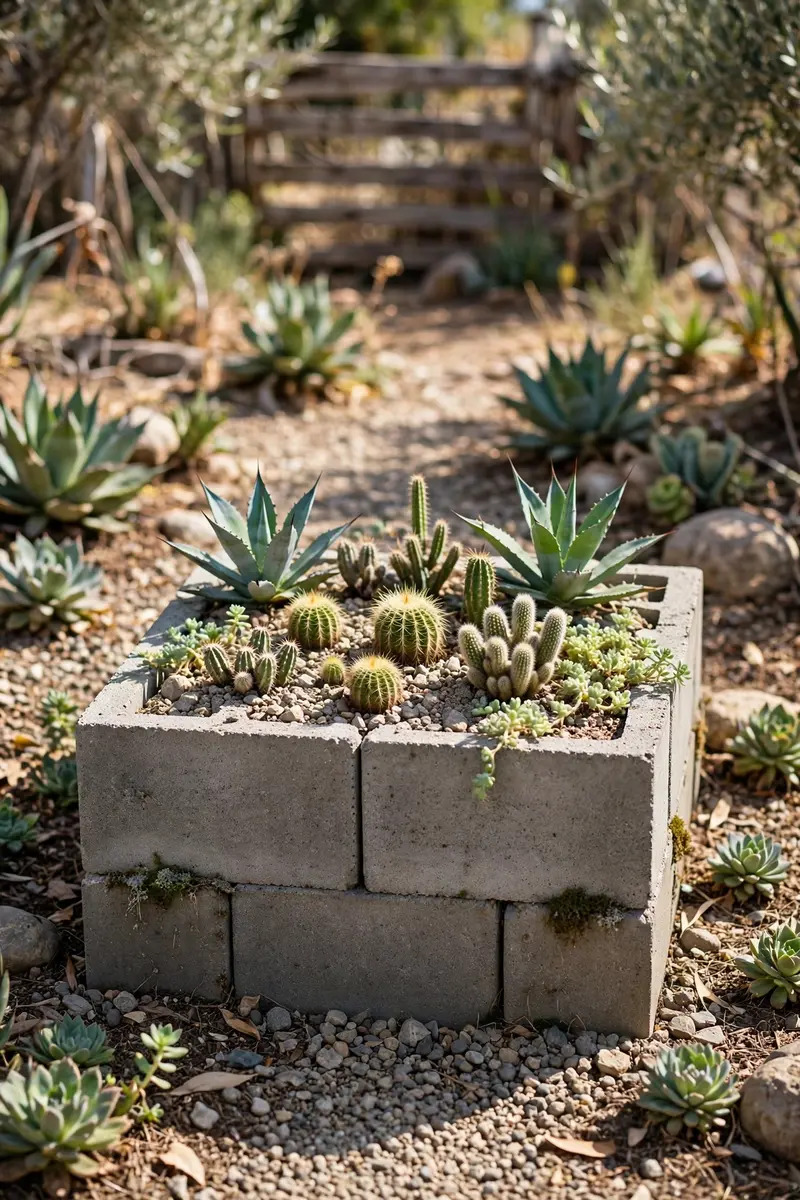
In hot, dry climates, a cinder block planter is a natural home for cacti and agaves. The blocks absorb heat during the day, drain instantly, and their rugged look suits desert plants perfectly.
Materials: 8–14 blocks, cactus mix, gravel, cacti. Cost: about $35–$85.
Build a low, open arrangement on a sunny, well-drained spot, fill with gritty cactus mix, and plant a mix of small cacti, agaves, and sedums. Top-dress with decorative gravel or small stones to finish the desert look.
Tip: Wear thick gloves and use tongs or folded newspaper when handling cacti — even small spines are no joke.
Variation: Add one sculptural agave as a centerpiece and keep the surrounding plants low so it stands out.
22. Cinder Block Planter Ideas Privacy Screen
A low wall of planted blocks along a patio edge gives you privacy without a fence. At two or three courses high with tall plants on top, it screens a seating area while still letting breeze and light through.
Materials: 16–30 blocks, soil, tall plants. Cost: about $50–$120.
Build the wall along the side of the patio you most want screened, plant ornamental grasses, bamboo in containers sunk into the bed, or tall flowers in the cavities, and keep the wall low enough that it feels like a garden feature, not a fortress.
Tip: Check local rules before building any wall near a property line — height limits often apply even to planters.
Variation: Leave a gap in the wall for a path, and flank the gap with two taller planters as a garden gate effect.
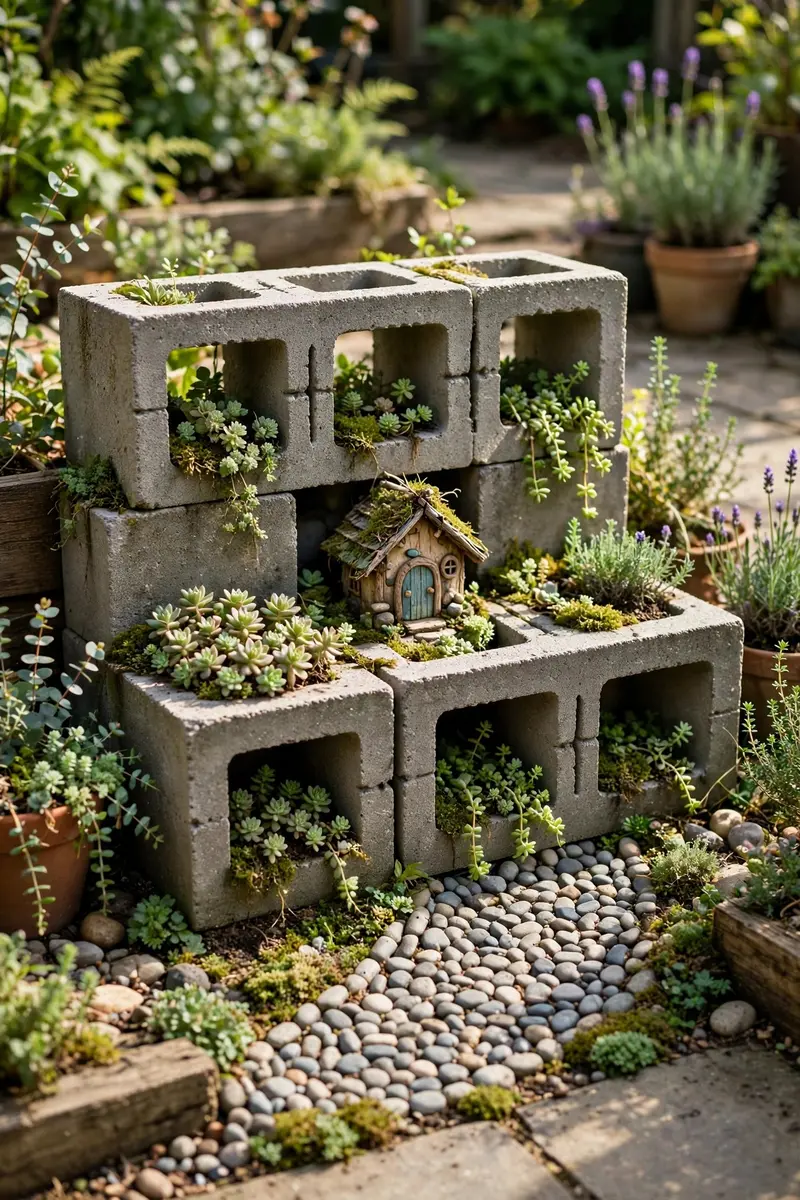
23. Kids’ Fairy Garden
A single block, or a small cluster, makes a perfect fairy garden for children. The cavities become tiny rooms and gardens, and kids can rearrange pebbles, moss, and miniature plants to their hearts’ content.
Materials: 2–6 blocks, potting mix, miniature plants, pebbles. Cost: about $15–$40.
Set blocks at child height on a patio, fill the cavities with potting mix, and plant tiny sedums, moss, and miniature flowers. Add pebble paths, a tiny house, or a small mirror “pond” and let children take charge of the decorating.
Tip: Choose sturdy, non-toxic plants and skip anything with thorns for a garden children will actually play in.
Variation: Build one block per child so each has a garden to tend and compare through the season.
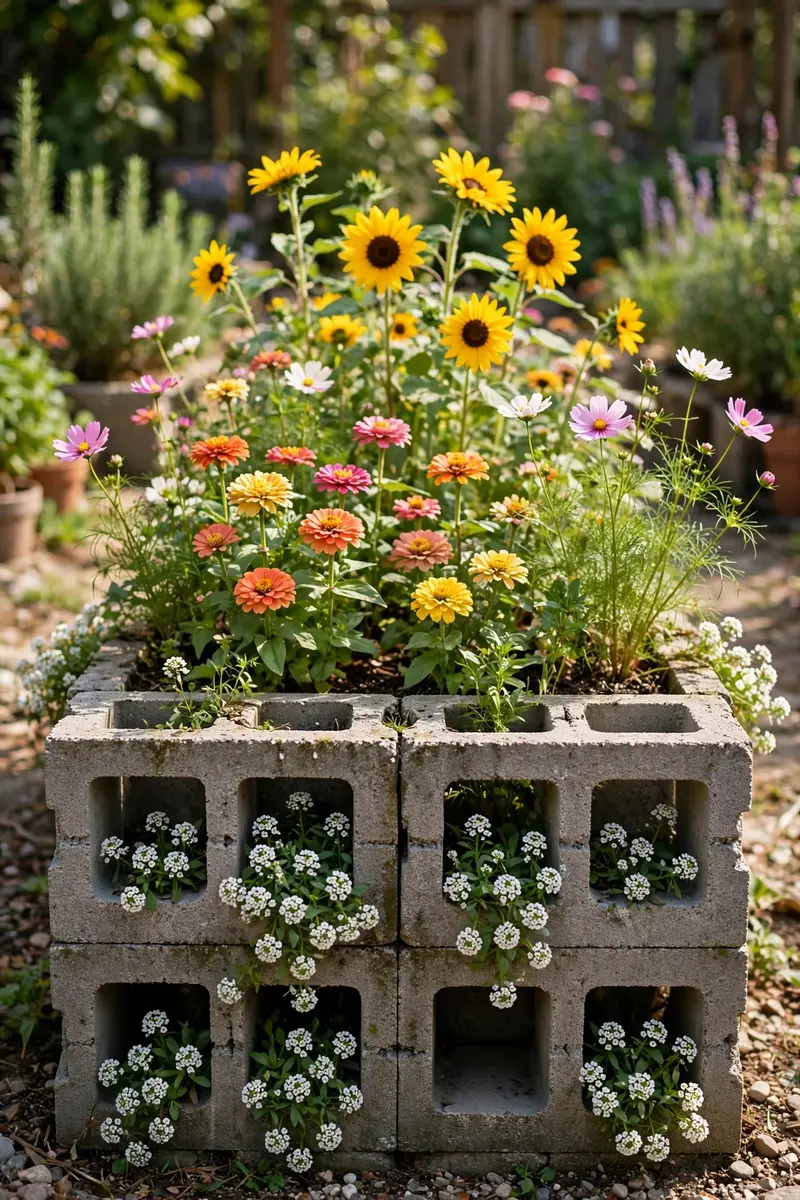
24. Cut-Flower Cutting Bed
If you love bringing flowers indoors, dedicate a cinder block bed to cutting flowers. Zinnias, cosmos, sunflowers, and sweet peas all grow happily in a raised block bed, and cutting them regularly only makes them bloom more.
Materials: 16–24 blocks, soil and compost, flower seeds or starts. Cost: about $40–$90.
Build a bed in full sun, plant rows of cutting flowers in the center, and use the block cavities for short filler flowers like alyssum and marigolds. Cut stems in the morning when they are full of water, and change the vase water every couple of days.
Tip: Plant cutting flowers in succession — sow a new row every two or three weeks for blooms all season instead of one big flush.
Variation: Dedicate one corner of the bed to fragrant flowers like sweet peas and stock for bouquets that smell as good as they look.
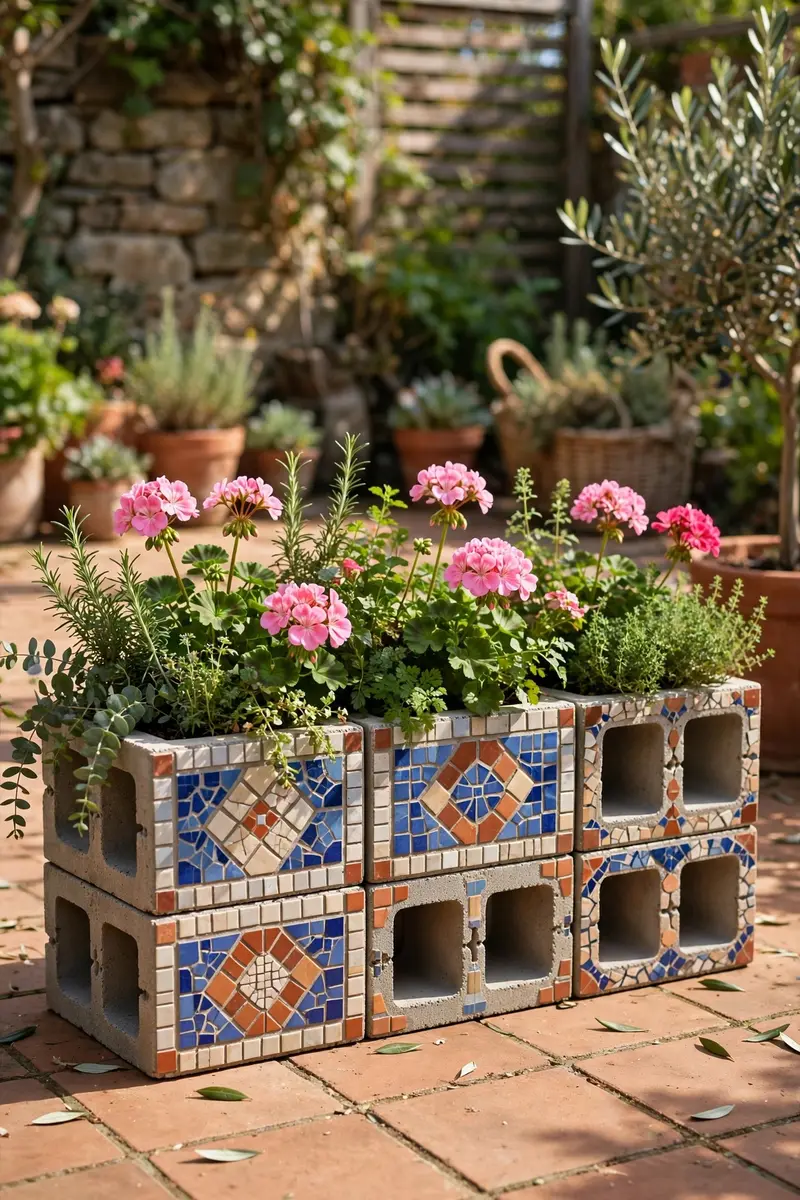
25. Mosaic-Clad Planters
For a truly artistic finish, clad the outside of your blocks with mosaic tiles, broken pottery, or glass pieces. The rough concrete disappears under color and pattern, and the planter becomes garden art in its own right.
Materials: 6–12 blocks, tile adhesive, mosaic tiles or broken pottery, grout, plants. Cost: about $40–$100.
Glue tiles to the clean outer faces of the blocks in a pattern you like, grout, seal, and let everything cure fully before planting. Keep the planting cavities free of tile and grout so roots stay in clean soil.
Tip: Use frost-proof tiles and exterior grout if your planters will stay outside through winter, or the mosaic can crack and lift.
Variation: Make a mosaic top edge only, and leave the block faces plain, for a subtler artistic touch.
26. Single-Block Seasonal Accents
Sometimes the simplest idea is the best one. A single cinder block, planted and placed with care, makes a charming accent by a door, a bench, or a garden path — and you can swap its planting every season.
Materials: 1 block per accent, potting mix, seasonal plants. Cost: about $5–$15 each.
Place single blocks where a pot would normally go, fill with potting mix, and plant with the season: pansies in spring, petunias in summer, mums in fall, and evergreen sprigs with berries in winter. Group three singles at different heights for a bigger statement.
Tip: Single blocks are easy to move, so use them to test a spot before committing to a larger bed there.
Variation: Paint single blocks to match your front door for a small, intentional detail that ties the whole entrance together.

Frequently Asked Questions
Are cinder blocks safe for vegetable gardens?
Modern concrete blocks sold in the US are generally considered safe for vegetable gardening, but older blocks and fly-ash cinder blocks can be a concern. If you are unsure about your blocks, line the planting area with landscape fabric, use fresh bagged soil, and grow vegetables in the center bed rather than directly against old block material. When in doubt, use new concrete blocks from a reputable supplier.
How do you drain a cinder block planter?
Cinder block planters drain naturally through the porous concrete and the gaps between blocks, which is usually plenty. For extra insurance, set the first course on gravel, use a loose, gritty potting mix, and never seal the bottom of a planter that sits on soil. If a planter sits on a patio, raise it slightly on small feet or a gravel bed so water can escape underneath.
Do you need to line cinder block planters?
Lining is optional for flowers and ornamentals, but it helps in two cases: when you want to protect old blocks from direct soil contact, and when you want to slow moisture loss in very hot climates. Landscape fabric works well as a liner because it holds soil in while letting water through. Avoid solid plastic liners unless you also add drainage holes, or the planter can turn into a swamp.
How much do cinder block planters cost?
Most small cinder block planters cost between $15 and $100 in total. A single block costs roughly $1–$3, a bag of potting mix $5–$15, and plants vary widely. A simple herb grid or a few accent blocks can be done for under $30, while a large raised bed or privacy wall with many blocks and soil can reach $100 or more. Buying blocks in bulk and using your own compost keeps costs down.
Can you paint cinder block planters?
Yes, and painting is one of the easiest ways to make cinder block planters look intentional. Use exterior acrylic or masonry paint on clean, dry blocks, let the paint cure fully before planting, and paint only the outside faces. For a softer look, thin the paint with water for a whitewash effect. A clear exterior sealer on top helps the color last through rain and winter.
Conclusion
Cinder block planter ideas prove that a great garden does not need an expensive budget or a professional builder — just a few sturdy blocks, good soil, and plants you love. Start with one small project, like a herb grid or a pair of porch planters, and see how it looks for a season before you build bigger. You can always add another course, another row, or another bed later.
Pick your favorite idea from this list, sketch it out on paper first, and build it this weekend. And when your planters are planted and looking their best, save this post to Pinterest so you can find your favorite design again next spring — and share it with a friend who has a stack of blocks waiting for a second life.


Leave a Reply