
If your kitchen feels cold, stark, or just a little tired, beige kitchen cabinets might be the refresh you have been waiting for. Beige sits in that sweet spot between white and wood: it warms up a room without darkening it, and it pairs with almost every countertop, backsplash, and hardware finish you already love.
In this guide, you will find 22 beige kitchen cabinets ideas for every style and budget, from a simple weekend repaint to a full remodel. Each idea includes realistic costs, easy how-to guidance, and a practical tip you can use right away. Save your favorites as you scroll, and picture which one fits your kitchen best.
1. Classic Shaker Beige Cabinets with Brass Hardware
Classic Shaker beige kitchen cabinets are the safest beautiful choice you can make, and that is exactly why designers keep coming back to them. The clean five-piece door adds just enough detail to feel custom, while the warm beige keeps the room soft and welcoming.
Materials and cost: a gallon of cabinet paint runs $60–$90, new brass knobs and pulls cost $3–$8 each, and a full DIY repaint of an average kitchen lands around $300–$600. Hiring a painter usually costs $3,000–$6,000.
Start by removing the doors and hardware, then clean, sand, and prime every surface before painting two thin coats. Label each door with painter’s tape so reassembly takes minutes, not hours.
Tip: Test your beige on a single door first, since beige kitchen cabinets can lean pink or yellow once they are on the wall.
Variation: swap the brass for matte black hardware if you want the same cabinets to feel more modern.
2. Greige Cabinets for a Modern Neutral Kitchen
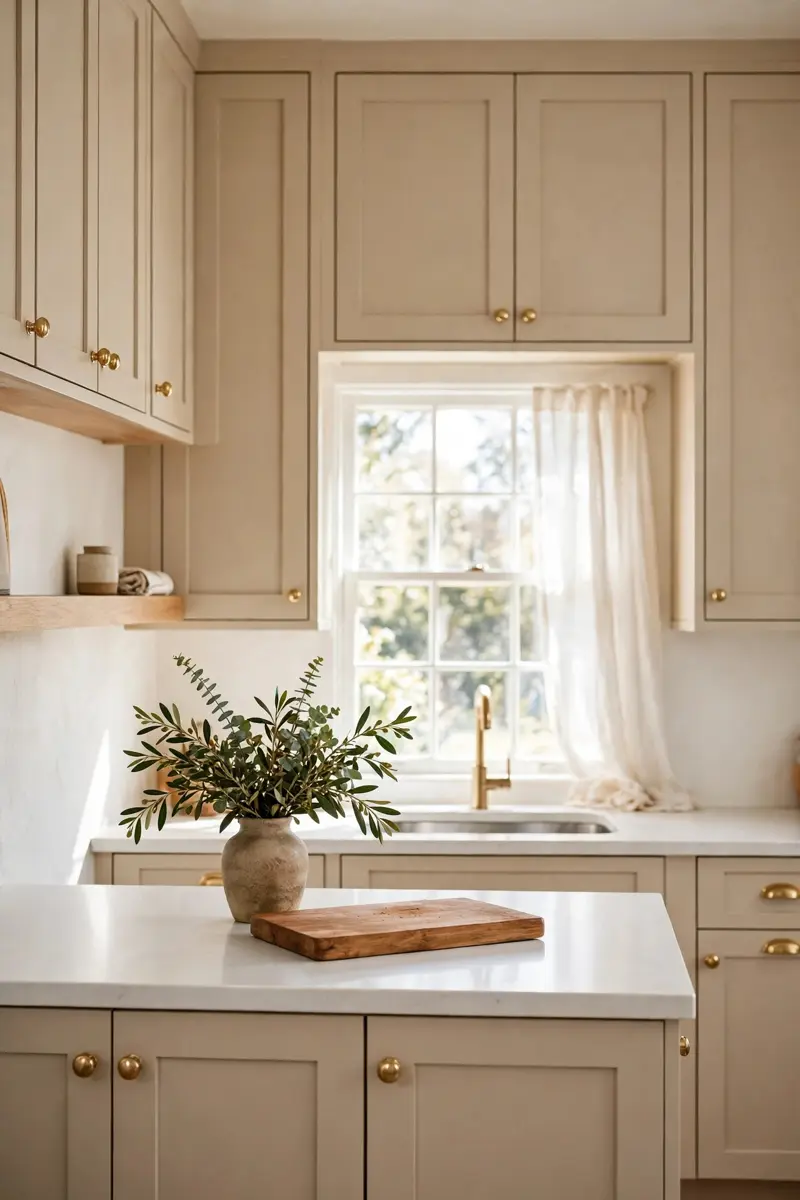
Greige, the blend of gray and beige, gives you the warmth of beige kitchen cabinets with a cooler, more modern edge. It is the perfect pick if you love neutrals but find pure beige a touch too golden.
Materials and cost: greige cabinet paint costs $60–$90 per gallon, and a DIY repaint runs $300–$600. New greige cabinet fronts for a mid-size kitchen start around $4,000.
Choose a greige with a warm undertone if your kitchen gets little natural light, and a cooler one if the room is sun-drenched. Pair it with white quartz counters and brushed nickel pulls to keep the look crisp.
Tip: Hold the swatch against your flooring, not just the wall, because greige shifts dramatically next to wood tones.
Variation: paint only the lower cabinets greige and leave the uppers white for a lighter, two-tone feel.

3. Two-Tone Beige and White Cabinets
Two-tone beige kitchen cabinets paired with white uppers give you depth without darkness, which is ideal for smaller kitchens. The beige grounds the room while the white keeps it feeling tall and airy.
Materials and cost: two paint colors add only $60–$90 to a DIY repaint, bringing the total to about $350–$650. A professional two-tone job runs $3,500–$7,000.
Paint the lower cabinets beige and the uppers a soft white, keeping the same door style throughout so the pairing looks intentional. Use one hardware finish across both tones to tie the design together.
Tip: Keep the island in the beige tone so the eye travels around the room instead of stopping at one block of color.
Variation: flip the formula in a large kitchen, with beige uppers and deep green or navy lowers.
4. Beige Cabinets with Marble Countertops
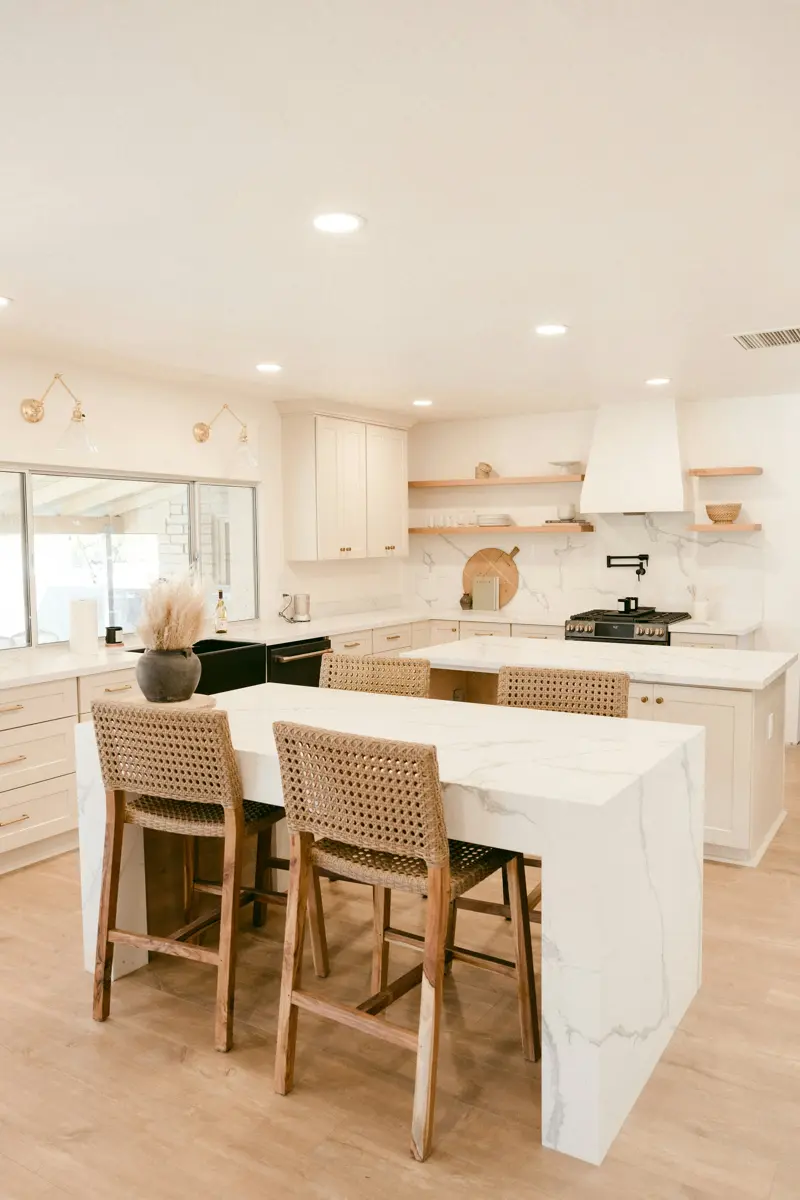
Few pairings feel as luxurious as beige kitchen cabinets topped with marble. The soft veining in the stone picks up the warmth of the beige, and the whole kitchen reads expensive even when the cabinets themselves are a budget repaint.
Materials and cost: marble-look quartz costs $60–$100 per square foot installed, while real marble runs $75–$150. A DIY cabinet repaint underneath keeps the total far below a full remodel.
Seal natural marble once or twice a year to guard against stains, and wipe spills quickly. If you cook a lot, choose a honed finish, which hides etch marks better than polished stone.
Tip: Bring a cabinet door sample when you shop for stone, since beige kitchen cabinets vary from creamy to taupe and the wrong marble can clash.
Variation: use marble only on the island and butcher block on the perimeter to cut costs in half.

5. Warm Taupe Cabinets with Butcher Block
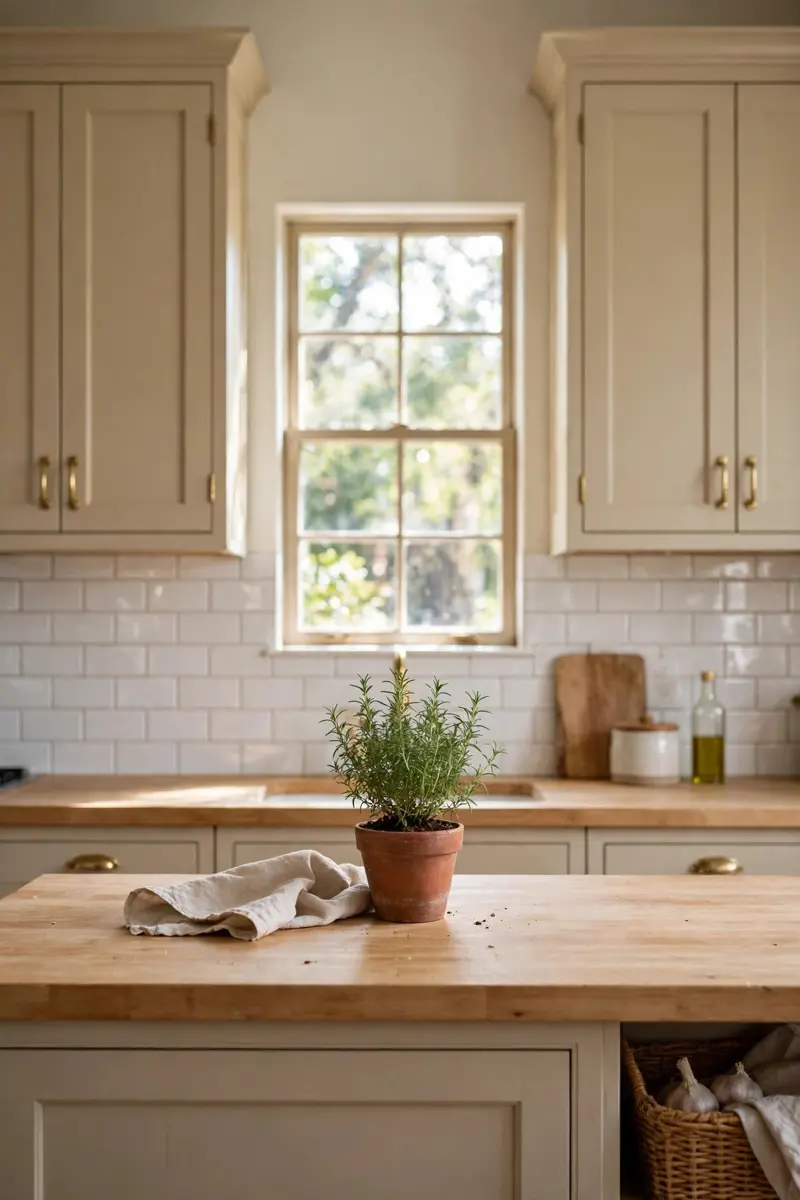
Warm taupe beige kitchen cabinets with butcher block counters feel like a countryside kitchen that still works for real life. The wood counters add texture and warmth, and they are far more forgiving than stone when you drop a pan.
Materials and cost: butcher block counters cost $30–$60 per square foot, and a DIY install for an average kitchen runs $800–$1,500. Taupe cabinet paint adds $300–$600 for a repaint.
Sand and oil butcher block every few months to keep it water-resistant, and always use a cutting board for raw meat. Small scratches sand out in minutes, which is part of the charm.
Tip: Choose a medium taupe rather than a pale one, because butcher block and pale beige can blur into one washed-out tone.
Variation: add a butcher block island top only, keeping stone or laminate on the perimeter counters.

6. Beige Cabinets with a Contrasting Dark Island
A dark island against beige kitchen cabinets is the fastest way to add drama without repainting the whole room. The contrast anchors the space and gives the kitchen a designer look for the price of one island repaint.
Materials and cost: repainting just an island costs $100–$250 in paint and supplies, or $800–$1,500 professionally. New bar stools to match run $80–$250 each.
Pick a dark tone with a warm undertone, like espresso or charcoal brown, so it harmonizes with the beige instead of fighting it. Repeat the dark tone once more, perhaps in a pendant light or a rug, to make it feel deliberate.
Tip: If your island is small, keep the countertop light so the dark base does not shrink the room visually.
Variation: use a dark wood stain instead of paint for a richer, furniture-like island finish.

7. Creamy Beige Cabinets with Open Shelving
Creamy beige kitchen cabinets with a stretch of open shelving feel light, collected, and personal. Removing a few upper cabinets opens the wall and gives you a spot to show off pretty dishes, plants, and cookbooks.
Materials and cost: removing uppers and adding two wood shelves costs $100–$300 in lumber and brackets, or $500–$1,200 professionally. A creamy beige repaint runs $300–$600 DIY.
Keep open shelves to everyday items you actually reach for, and style them loosely with breathing room between pieces. If dust worries you, limit open shelving to one wall and keep the rest closed.
Tip: Style shelves in odd-numbered groups, since beige kitchen cabinets and open shelves both look best with a little asymmetry.
Variation: use the open shelves only beside the range hood, where they frame the cooking zone beautifully.
8. Beige Cabinets with a Subway Tile Backsplash
Subway tile is the classic partner for beige kitchen cabinets, and for good reason: it is affordable, timeless, and easy to clean. A glossy white tile brightens the beige, while a handmade-look tile adds soft texture.
Materials and cost: ceramic subway tile costs $5–$15 per square foot, and a DIY backsplash for an average kitchen runs $200–$500. Professional installation adds $800–$1,500.
Lay the tile in a classic brick pattern for a traditional look, or stack it vertically for something more modern. Use a warm white grout rather than bright white so the grout lines blend with the beige.
Tip: Order 10 percent extra tile for cuts and breakage, because dye lots change and a mid-project shortage is a real headache.
Variation: run the subway tile all the way to the ceiling behind open shelves for a high-end, custom feel.
9. Matte Beige Flat-Panel Cabinets
Matte beige kitchen cabinets with flat-panel doors are the modern minimalist’s answer to warm neutrals. The flat fronts keep the look clean, while the matte finish softens the room and hides fingerprints far better than gloss.
Materials and cost: flat-panel cabinet doors cost $30–$80 each for replacements, and a full set of new matte cabinets starts around $5,000. A matte repaint runs $300–$600 DIY.
Choose a matte or eggshell cabinet paint made for cabinetry, since regular wall paint chips quickly on doors. Apply thin coats with a foam roller or sprayer for the smoothest finish.
Tip: Wipe matte beige kitchen cabinets with a damp microfiber cloth only, since harsh scrubbing can burnish the finish shiny.
Variation: add slim brass edge pulls to keep the minimalist look while making doors easy to open.
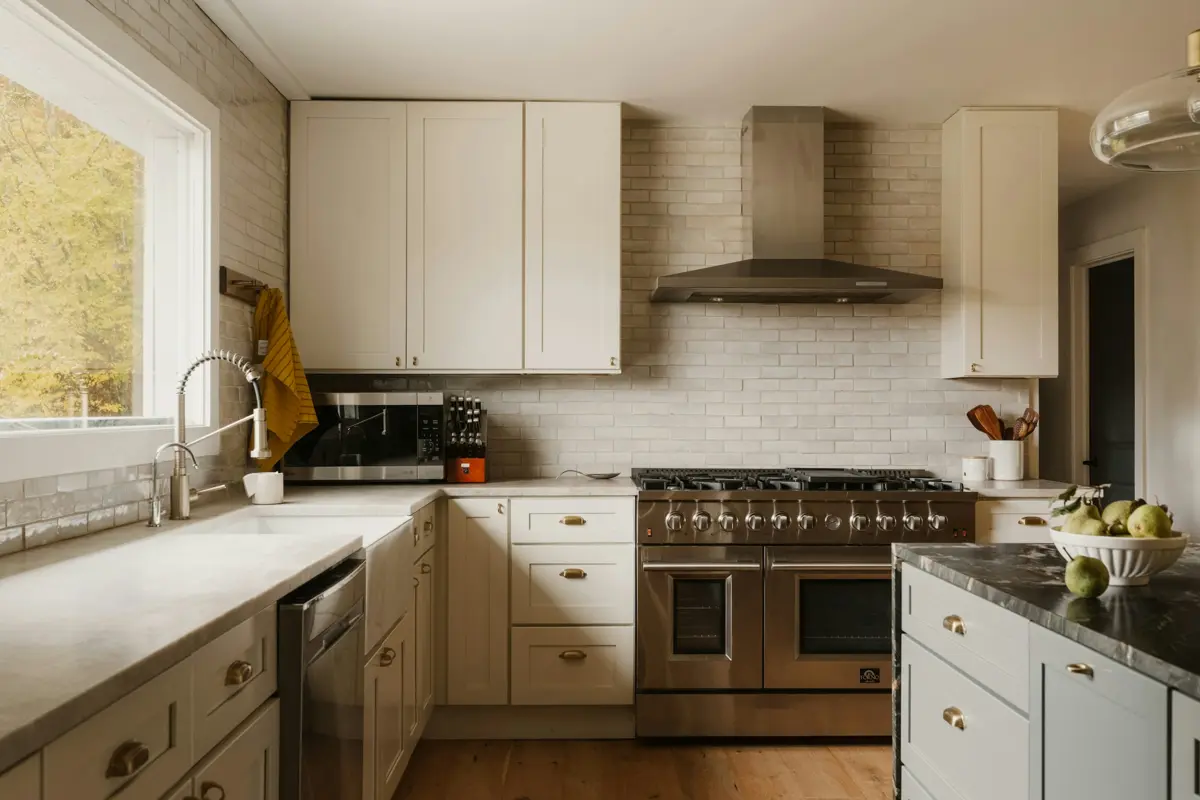
10. Beige Cabinets with Black Countertops
Black countertops against beige kitchen cabinets create a bold, grounded contrast that still feels warm. The dark surface makes the beige glow, and it hides crumbs and stains better than any light counter will.
Materials and cost: black granite or quartz costs $50–$100 per square foot installed. A DIY cabinet repaint underneath runs $300–$600.
Balance the darkness with a light backsplash and good under-cabinet lighting so the room never feels heavy. Brushed gold or brass hardware warms the pairing even further.
Tip: Pick a black counter with subtle veining or speckle, since solid black shows every dust speck and water spot.
Variation: use black counters on the perimeter and a warm wood island top to soften the contrast.

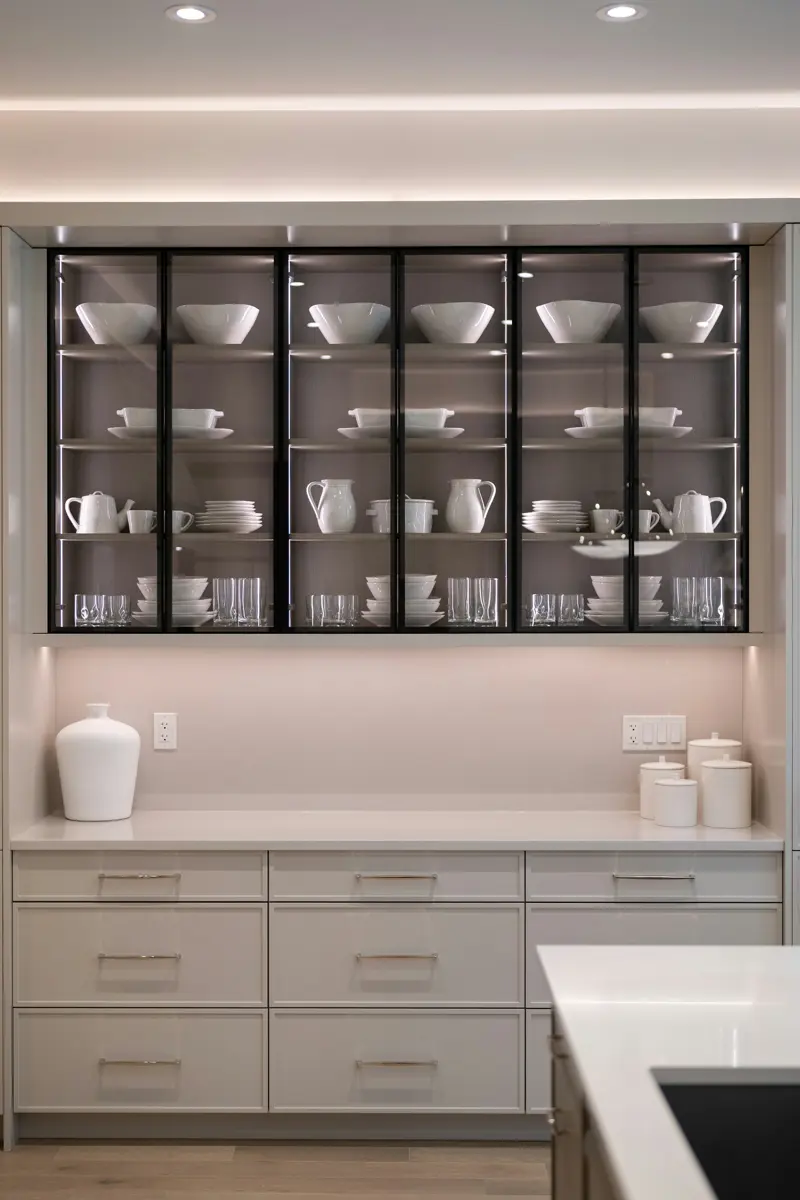
11. Beige Glass-Front Display Cabinets
Glass-front beige kitchen cabinets turn your prettiest dishes into decor. Even one or two glass doors break up a long run of solid cabinets and make the kitchen feel more open and curated.
Materials and cost: replacing two solid doors with glass-front doors costs $150–$400, including glass inserts. A full set of glass uppers runs $1,000–$2,500.
Use glass fronts only where the contents look good, and keep the interiors tidy with matching dish sets. Add a small LED strip inside each glass cabinet for a soft evening glow.
Tip: Frosted or reeded glass is your friend if you love the look of beige kitchen cabinets with glass but not the pressure of perfect styling.
Variation: put glass on the upper cabinets only, keeping everyday clutter hidden in solid lowers.
12. Farmhouse Beadboard Beige Cabinets
Beadboard beige kitchen cabinets bring instant farmhouse charm, with vertical grooves that add texture and a cottage feel. This look works beautifully in older homes and in any kitchen that needs a little coziness.
Materials and cost: beadboard panels cost $25–$50 per sheet, and refacing cabinet doors with beadboard runs $500–$1,500 DIY. A beadboard backsplash adds $150–$400.
Attach beadboard panels to flat cabinet doors with adhesive and brad nails, then caulk the edges and paint the whole door one warm beige. Keep the hardware simple, like cup pulls or wooden knobs.
Tip: Paint beadboard beige kitchen cabinets with a sprayer if you can, since brushes leave marks in the grooves.
Variation: use beadboard only on the island and the backsplash, keeping the perimeter cabinets smooth Shaker.

13. Beige Cabinets with Natural Wood Accents
Natural wood accents are the Pinterest-favorite partner for beige kitchen cabinets right now, and it is easy to see why. Wood shelves, a wood range hood, or a wood island base add organic warmth that keeps beige from feeling flat.
Materials and cost: wood open shelves cost $50–$150 each, and a wood range hood cover runs $300–$800. A beige repaint underneath costs $300–$600 DIY.
Stick to one wood tone, like warm white oak, across all your accents so the kitchen reads cohesive. Let the wood be the star in one or two places rather than scattering it everywhere.
Tip: If your floors are wood, match the accent wood’s undertone to the floor, not the cabinets, for the calmest result.
Variation: add a wood ceiling beam or two for a rustic touch that costs under $200 in lumber.
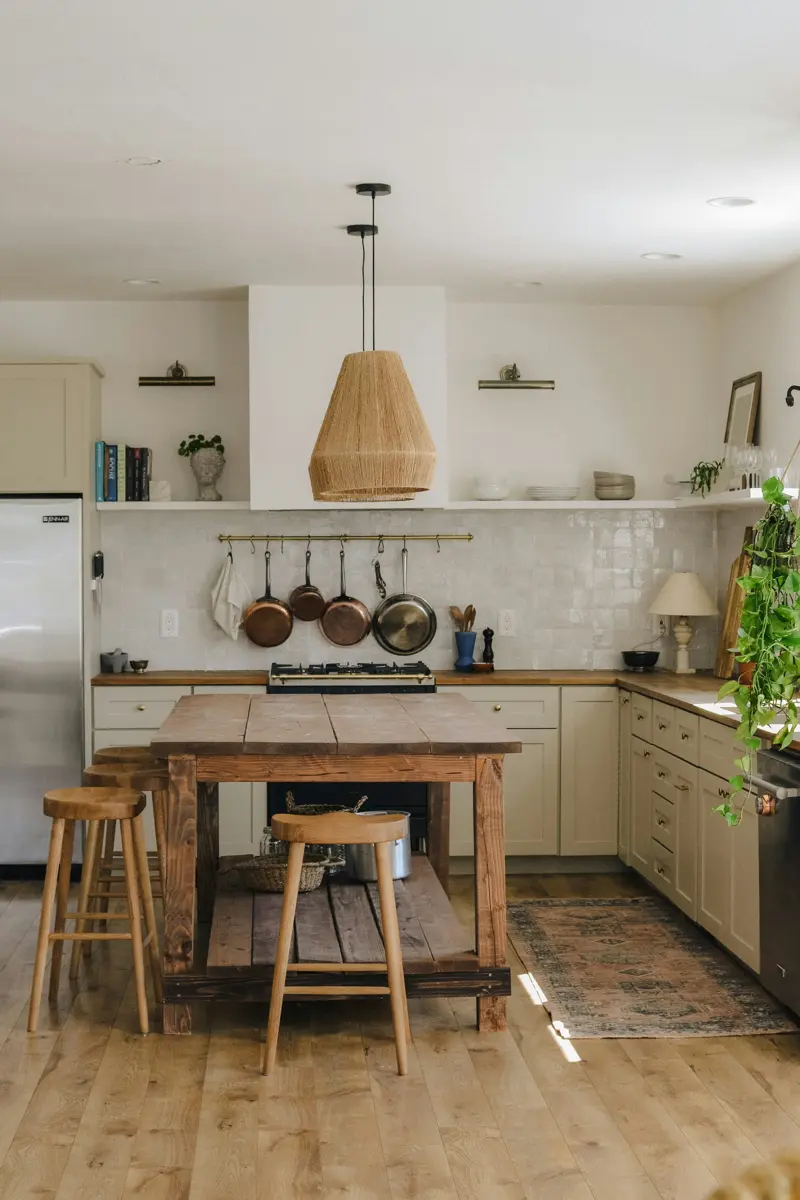
14. Beige Cabinets with a Sage Green Island
A sage green island next to beige kitchen cabinets is one of the prettiest color pairings in kitchens today. The soft green reads like a plant in the room: calming, natural, and just colorful enough to be interesting.
Materials and cost: repainting an island sage green costs $100–$250 DIY or $800–$1,500 professionally. Sage bar stools or a sage runner rug add $100–$300.
Keep the rest of the kitchen neutral so the island stays the focal point, and repeat the sage once in a small way, like a vase or a tea towel. Choose a muted sage rather than a bright mint for the most timeless result.
Tip: Sample the sage next to your beige in daylight, since beige kitchen cabinets can pull green paint warmer or cooler than expected.
Variation: use sage on the lower cabinets throughout and beige on the uppers for a softer version of the same pairing.
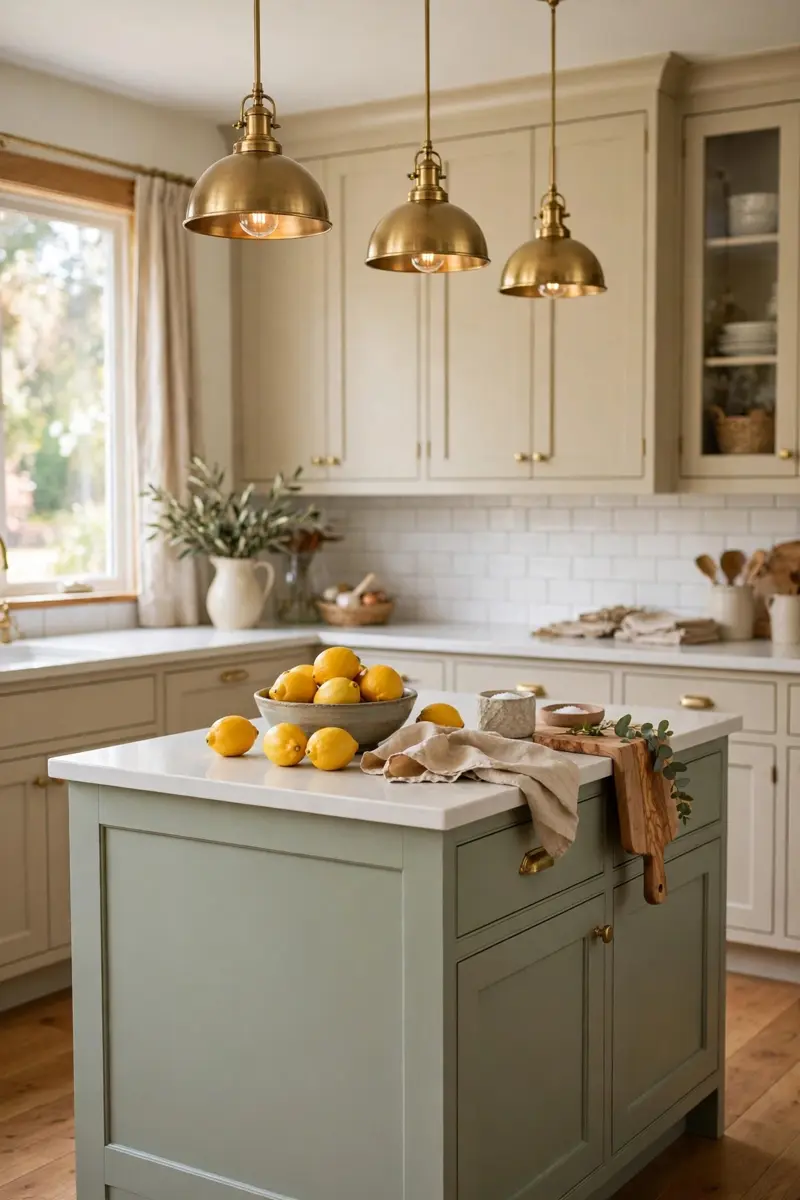
15. Beige Cabinets with Gold Hardware and Fixtures
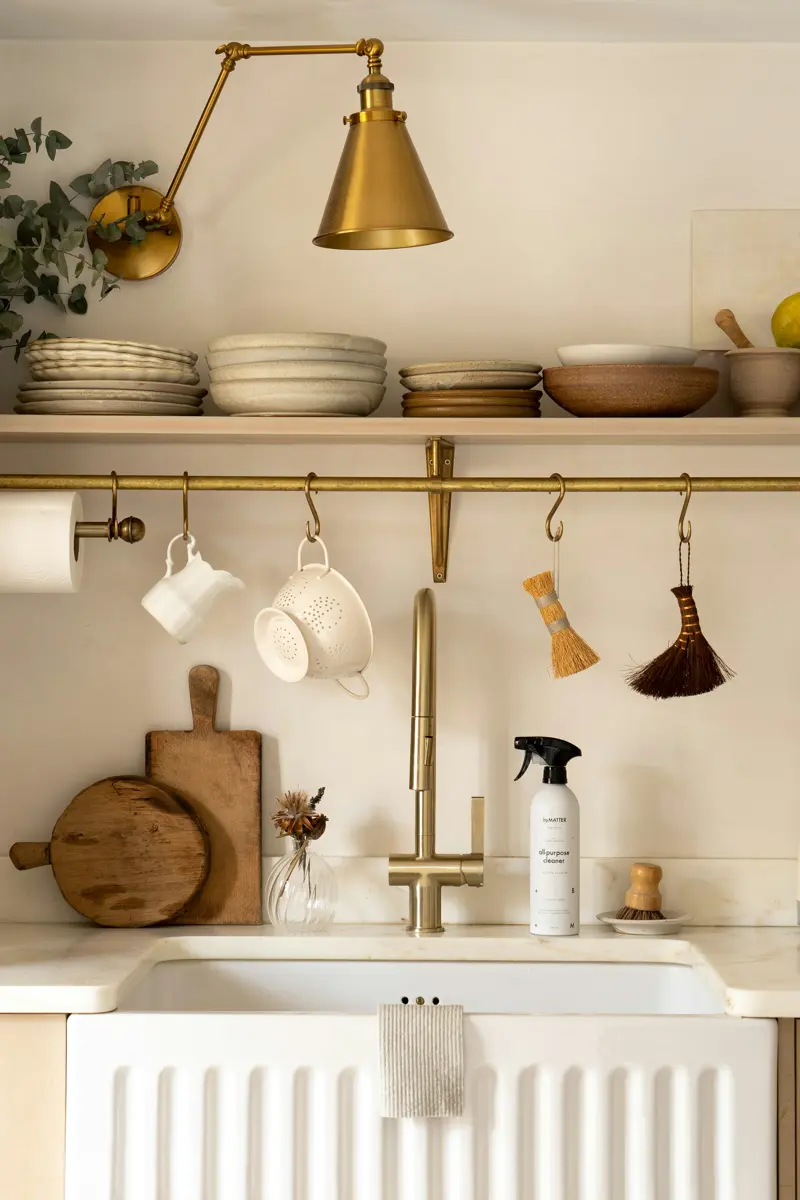
Gold hardware is the jewelry that makes beige kitchen cabinets shine. Warm brass knobs, a gold faucet, and matching pendant lights lift a simple beige kitchen into something that feels truly finished.
Materials and cost: brass knobs and pulls cost $3–$10 each, a gold faucet runs $150–$400, and a full hardware swap for an average kitchen totals $200–$500.
Keep all your gold finishes in the same family, either polished brass or brushed gold, since mixing them looks accidental. If your appliances are stainless, that is fine: gold hardware and stainless appliances pair well when the beige ties them together.
Tip: Buy one knob first and live with it for a week, since gold finishes vary wildly between brands.
Variation: use gold only on the island hardware and keep the perimeter in a quieter brushed nickel.

16. Beige Cabinets with a Stone Backsplash
A stone backsplash gives beige kitchen cabinets a rich, textural backdrop that tile cannot quite match. Stacked stone or a slab backsplash adds depth and makes the whole wall feel like a design feature.
Materials and cost: stacked stone panels cost $10–$25 per square foot, and a slab stone backsplash runs $50–$100 per square foot installed. A DIY panel install totals $300–$800.
Seal natural stone to protect it from cooking splashes, and choose a stone with warm beige or cream tones so it blends with the cabinets. Keep the counters simple when the backsplash is busy.
Tip: Order a full sample panel, not just a chip, because stone varies a lot and beige kitchen cabinets deserve a true match.
Variation: use stone only behind the range as a feature panel, with simple tile on the remaining walls.
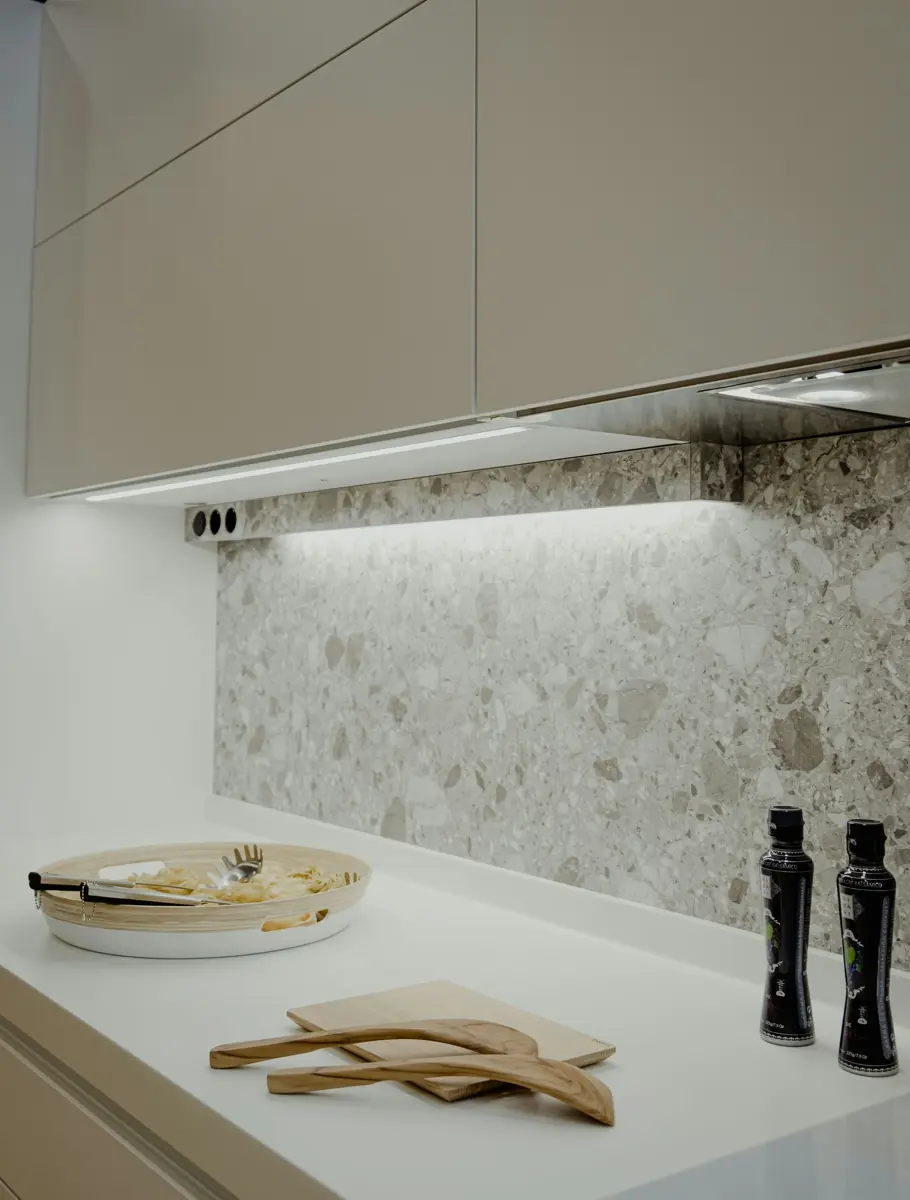
17. Beige Cabinets with Integrated Under-Cabinet Lighting
Under-cabinet lighting transforms beige kitchen cabinets after dark, washing the counters in a warm glow and making the beige look richer. It is also one of the highest-impact, lowest-cost upgrades you can make.
Materials and cost: LED light bars cost $20–$50 each, and a full kitchen kit runs $150–$400. Battery or plug-in bars need no electrician, while hardwired strips cost $300–$800 installed.
Choose warm white LEDs around 2700K so the light flatters the beige instead of turning it gray. Mount the bars toward the front of the cabinet so the light falls on the counter, not the backsplash.
Tip: Add a dimmer if you can, since beige kitchen cabinets look best under soft evening light and bright task light at different times.
Variation: add LED strips inside glass-front cabinets too, for a gentle display glow in the evening.
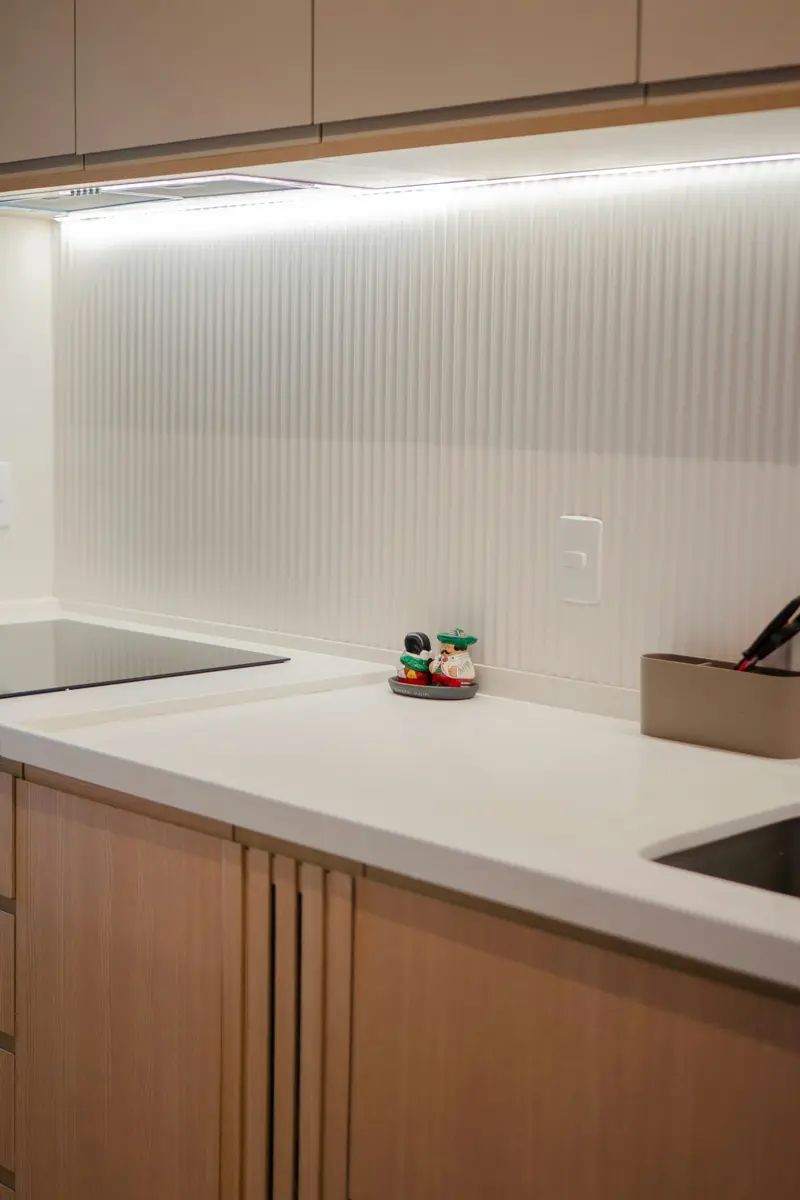
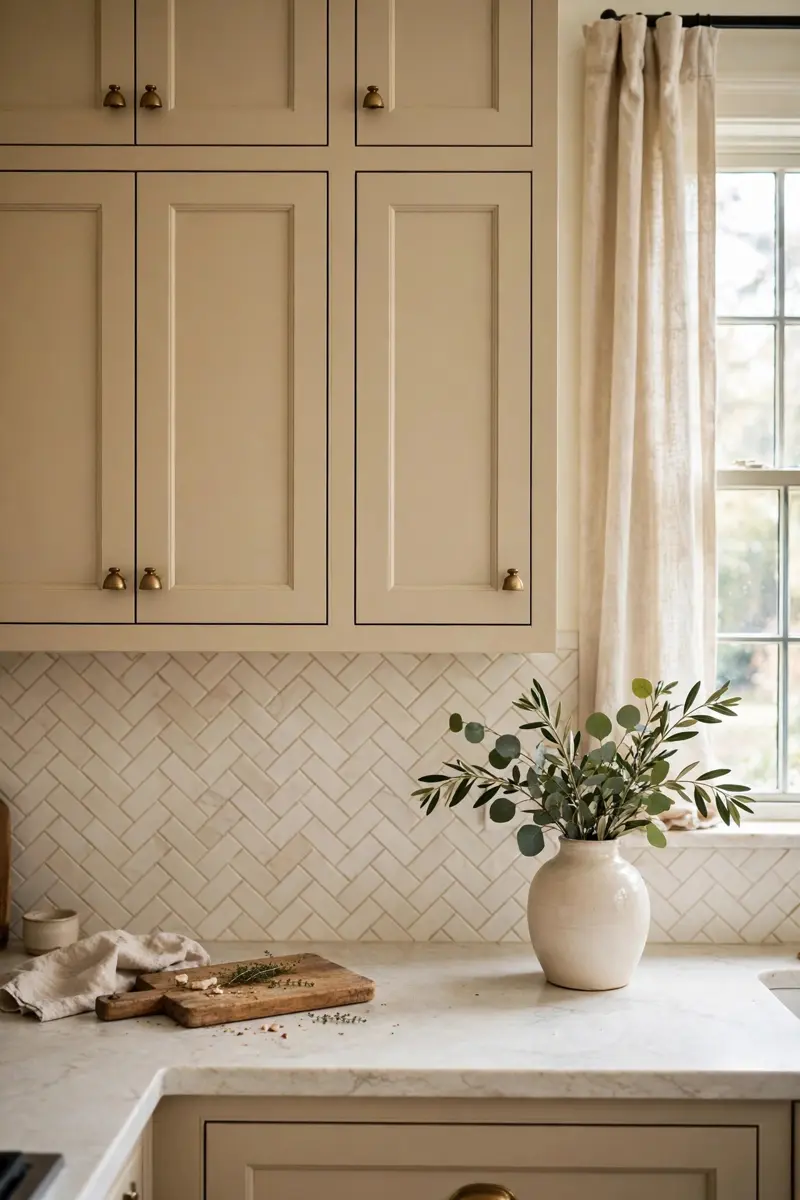
18. Beige Cabinets with a Herringbone Tile Backsplash
A herringbone backsplash gives beige kitchen cabinets a custom, high-end feel without a high-end price. The zigzag pattern adds movement and catches the eye, even in a simple neutral kitchen.
Materials and cost: herringbone tile costs $10–$30 per square foot, and a DIY backsplash runs $300–$700. Professional installation adds $1,000–$2,000 because the pattern takes longer to lay.
Use a grout color close to the tile color so the pattern reads as texture rather than a busy grid. Keep the counters quiet, since the backsplash is now the star of the wall.
Tip: Buy 15 percent extra tile for a herringbone layout, since the angled cuts waste more than a straight pattern.
Variation: use herringbone only behind the range and classic subway tile elsewhere to save money and time.
19. Beige Cabinets with a Breakfast Nook
A breakfast nook beside beige kitchen cabinets turns an empty corner into the most-used spot in the house. Morning coffee tastes better at a sunny banquette, and the nook adds seating without a full table and chairs.
Materials and cost: a DIY banquette bench costs $300–$800 in lumber and cushions, while a custom built-in runs $1,500–$4,000. A small pedestal table adds $150–$400.
Build the bench with hidden storage inside for table linens and board games, and choose washable cushion fabric if kids eat there. Keep the nook palette in the same beige family so it blends with the cabinets.
Tip: Leave at least 18 inches of table overhang on the bench side so legs slide in comfortably.
Variation: skip the built-in and use a curved bench or two comfy chairs for a flexible, renter-friendly nook.

20. Beige Cabinets with a Coffee Bar Station
A coffee bar station carved out of beige kitchen cabinets makes mornings feel like a ritual. Dedicate one cabinet run or a tall pantry section to your machine, mugs, and beans, and the rest of the counter stays clear.
Materials and cost: a coffee bar setup costs $100–$300 for shelving, hooks, and organizers, plus the machine itself. Converting a cabinet section runs $200–$600.
Keep mugs on hooks or a small shelf above the machine, and store beans in airtight jars for a tidy, cafe-like look. Add a small tray to catch drips and corral supplies.
Tip: Put the coffee bar near a water source if you can, since beige kitchen cabinets stay cleaner when the machine never travels across the room.
Variation: use a rolling bar cart in beige tones if you have no spare cabinet space at all.

21. Beige Cabinets with a Pantry Wall
A full pantry wall of beige kitchen cabinets solves storage and looks like custom millwork at the same time. Floor-to-ceiling cabinets hide appliances, food, and cleaning supplies behind one calm, uniform wall.
Materials and cost: stock tall pantry cabinets cost $300–$800 each, and a three-cabinet wall runs $1,000–$2,500. Custom pantry cabinetry starts around $4,000.
Plan the interior before you buy: pull-out shelves for food, tall slots for brooms, and one shallow shelf for spices. Keep the door style identical to the rest of the kitchen so the wall reads as one piece.
Tip: Add the pantry wall on the least-visible wall if your kitchen is small, so the tall cabinets do not dominate the room.
Variation: leave one tall section open with shelves for cookbooks and a few pretty jars to break up the wall.

22. Beige Cabinets with Terracotta Accents
Terracotta accents warm up beige kitchen cabinets with an earthy, Mediterranean glow. Clay pots, a terracotta tile detail, or rust-toned linens add color without breaking the calm neutral palette.
Materials and cost: terracotta pots and accessories cost $20–$100 total, and a terracotta tile accent strip runs $100–$300. A full terracotta floor, if you go further, costs $8–$15 per square foot.
Use terracotta in small doses, like pots on open shelves or a runner rug, so it reads as an accent rather than a competing color. Pair it with wood and brass for a layered, collected feel.
Tip: Repeat the terracotta tone at least twice in the room, since a single terracotta item can look like an accident.
Variation: use terracotta only in the dining area next to the kitchen for a gentle color echo.

Frequently Asked Questions
What color goes best with beige kitchen cabinets?
Warm whites, soft sage green, muted blues, and natural wood tones all pair beautifully with beige kitchen cabinets. For hardware, brass and gold warm the room up, while matte black adds modern contrast. Pick one accent color and repeat it in two or three places for a pulled-together look.
Are beige kitchen cabinets still in style?
Yes, beige kitchen cabinets are firmly in style, especially as homeowners move away from stark white toward warmer neutrals. Greige and warm taupe versions are trending on Pinterest and in designer kitchens alike. Because beige is a classic neutral, it outlasts trendier colors and still looks fresh years later.
What paint color is best for beige kitchen cabinets?
Popular choices include Sherwin-Williams Accessible Beige, Benjamin Moore Revere Pewter, and Behr Camel Haze. Always test three swatches on your actual cabinets, since beige shifts with your lighting and flooring. What looks creamy in the store can turn yellow or pink at home.
Do beige cabinets make a kitchen look bigger?
Beige cabinets can make a kitchen feel larger than dark cabinets do, because light warm tones reflect more light. For the biggest effect, pair beige lowers with white uppers, add under-cabinet lighting, and keep the backsplash light. A glossy or satin finish reflects even more light than matte.
How do you keep beige cabinets from looking yellow?
Choose a beige with a gray or greige undertone if yellow is your worry, and avoid pairing beige cabinets with yellow-toned lighting or golden oak floors. Cool white LED bulbs around 3000K keep beige looking creamy rather than yellow. When in doubt, sample the paint in your own kitchen light before committing.
Conclusion
Beige kitchen cabinets prove that neutral never has to mean boring. Whether you repaint what you have, add brass hardware, or plan a full remodel around marble and wood, these 22 ideas give you a warm, timeless kitchen that still feels personal.
Start with the idea that fits your budget and your weekend, then build from there. If this guide helped you picture your new kitchen, save it to Pinterest so you can find it when the paint swatches come out.
For more inspiration, explore our guides to rustic sage green kitchen cabinets and white kitchen with black backsplash ideas. If you want an expert take on styling beige tones, The Spruce has a helpful guide to beige kitchen cabinets that is well worth a read.

Leave a Reply