
Your dining room deserves more than a table and four chairs pushed against a wall. The best dining room decor makes everyday meals feel special and turns a plain room into the place everyone gathers, without a renovation or a huge budget. In this guide, you will find 34 ideas that work in real homes, from statement lighting and correctly sized rugs to thrifted finds and seasonal centerpieces. Most of these ideas cost under $50, and several start at just $15, so you can pick one weekend project and see a real difference fast.
1. Hang a Statement Chandelier
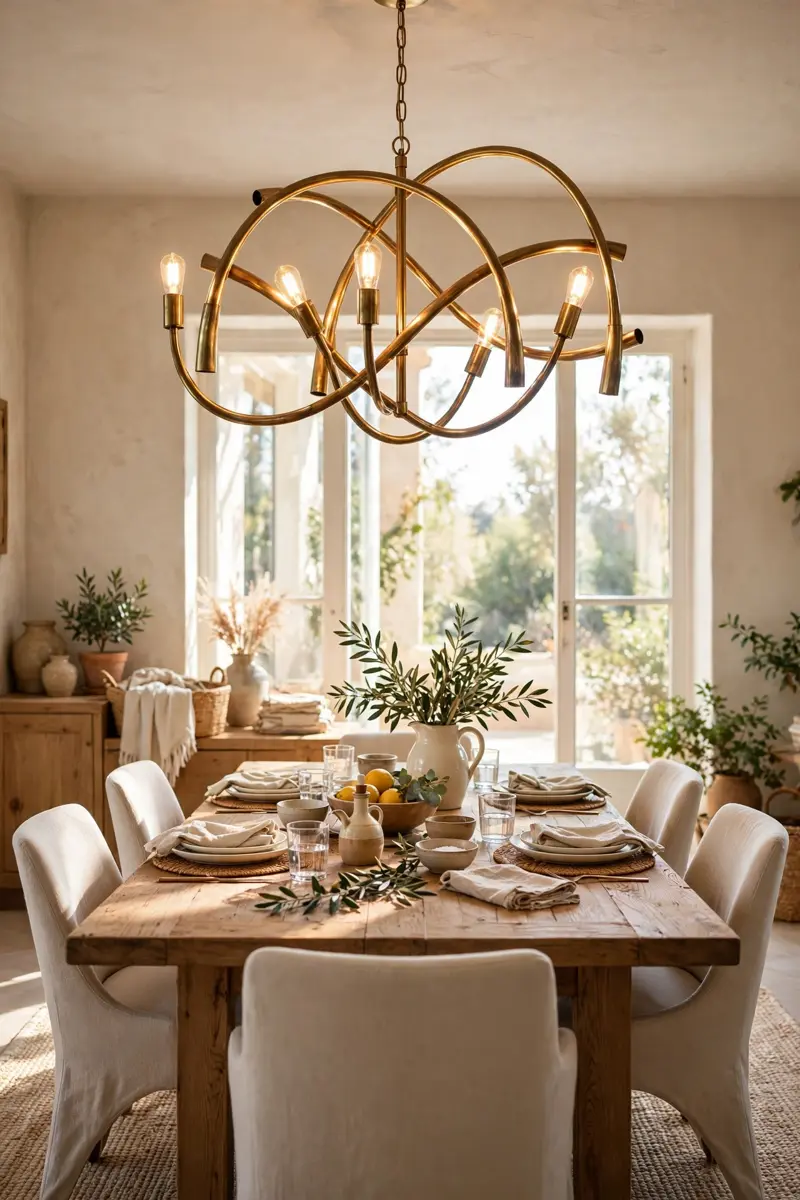
A statement chandelier is the fastest upgrade in dining room decor because it draws every eye to the table and sets the mood for the whole room.
You need: a chandelier sized about 12 inches narrower than your table, a dimmer switch, and warm-white bulbs.
Center the fixture over the table, not the middle of the room, and hang it 30 to 36 inches above the tabletop for an 8-foot ceiling. Add a dimmer so one fixture works for bright family breakfasts and candlelit dinners alike.
Tip: If your ceilings are tall, add about 3 inches of height per extra foot of ceiling.
Variation: Try a trio of small pendants instead of one chandelier over a long rectangular table.
2. Choose a Round Table for a Small Room
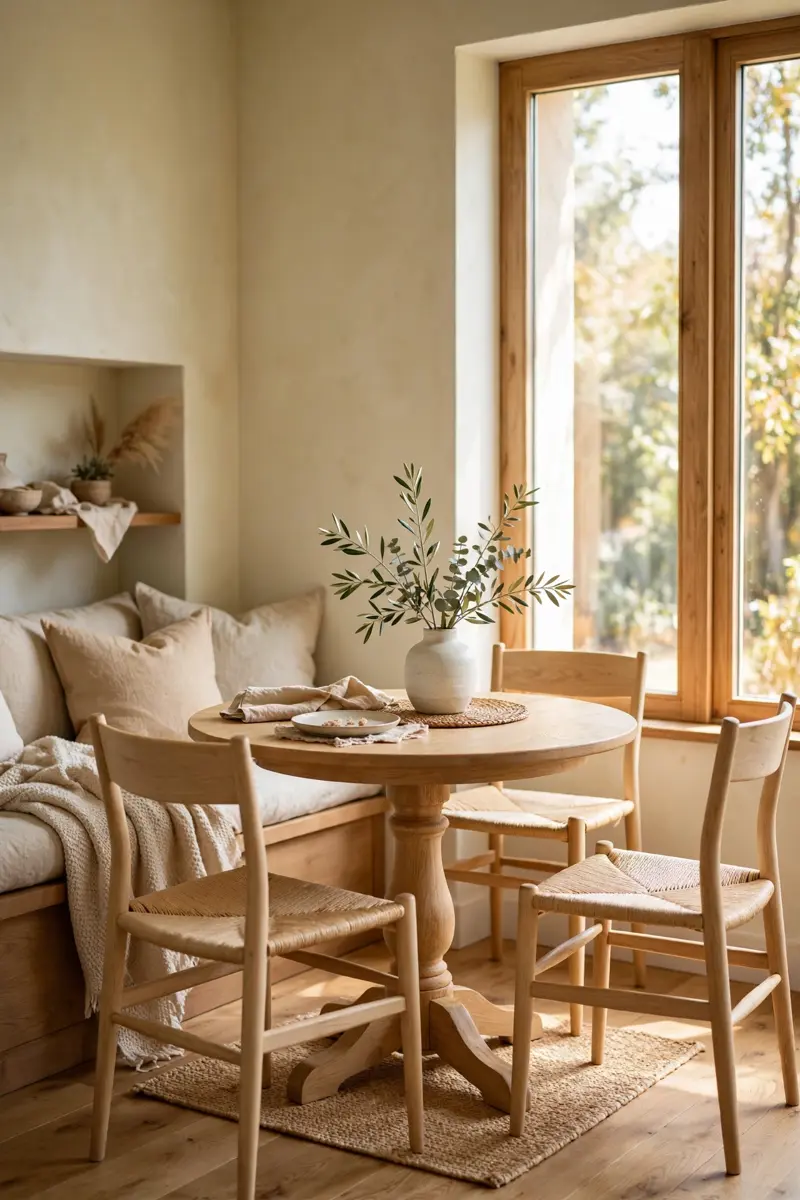
A round table makes dining room decor feel friendlier in a tight space because everyone faces each other and there are no sharp corners to bump into.
You need: a 36- to 48-inch round table, four comfortable chairs, and a small lazy Susan if you like shared dishes.
Leave at least 36 inches of clearance around the table so chairs pull out easily. A pedestal base beats four legs here because it frees up legroom for every seat.
Tip: A round table seats four comfortably at 48 inches and squeezes six for a party.
Variation: Pick a drop-leaf round table that folds small on weekdays and opens up for guests.
3. Build a Layered Tablescape
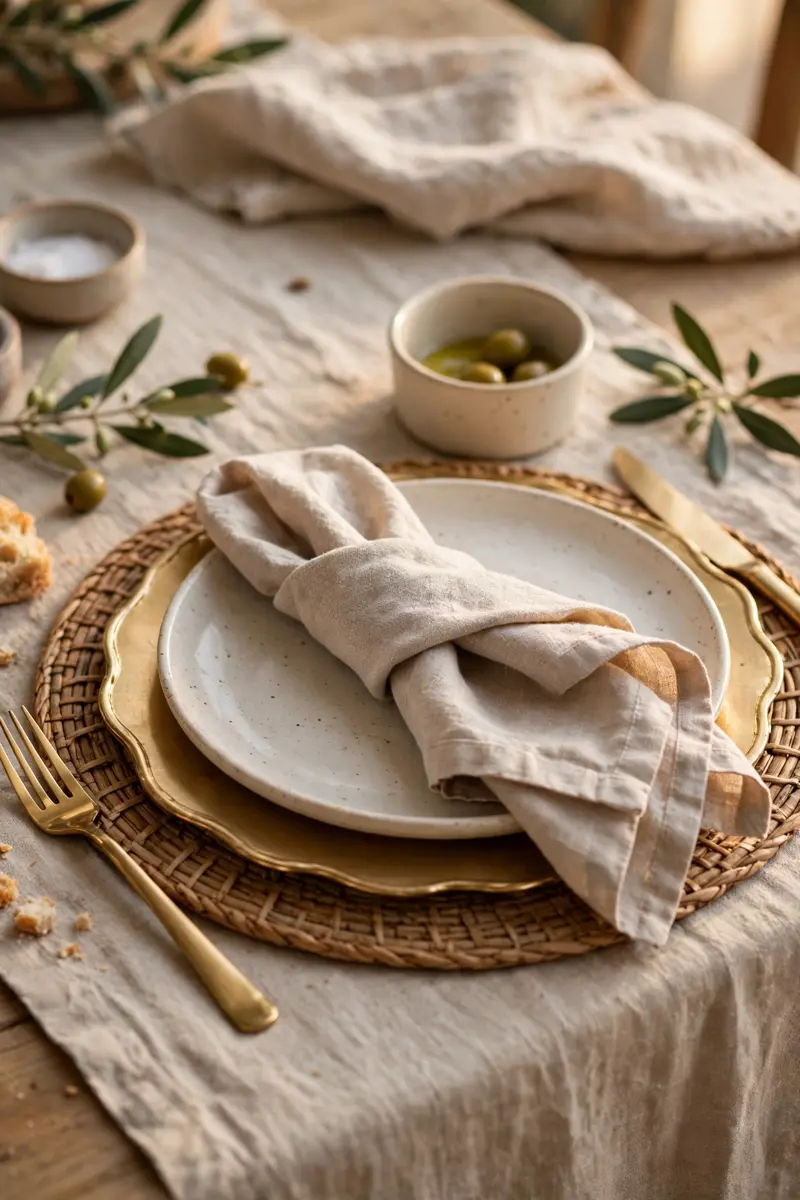
A layered tablescape is dining room decor you can enjoy even between meals, turning a bare table into the prettiest spot in the house.
You need: a linen runner, placemats, cloth napkins, and one low centerpiece that does not block sightlines.
Start with the runner, add placemats, then stack a dinner plate over a charger. Keep the centerpiece under 12 inches tall so conversation flows across the table.
Tip: Repeat one accent color from your curtains or art in the napkins to tie the room together.
Variation: Swap the runner seasonally — linen in summer, velvet in winter — for an instant refresh.
4. Keep a Sculptural Everyday Centerpiece
A sculptural centerpiece keeps dining room decor looking intentional every day, not just when guests come over for dinner.
You need: one ceramic bowl, a sculptural vase, or a wooden tray, plus a few stems or a candle cluster.
Place the piece slightly off-center for a relaxed look, then add two smaller items beside it in odd numbers. Leave the rest of the table clear so everyday meals still feel easy.
Tip: Low and wide beats tall and fussy — you want to see the faces across the table.
Variation: Fill the bowl with lemons, pinecones, or ornaments as the seasons change.

5. Hang One Oversized Mirror
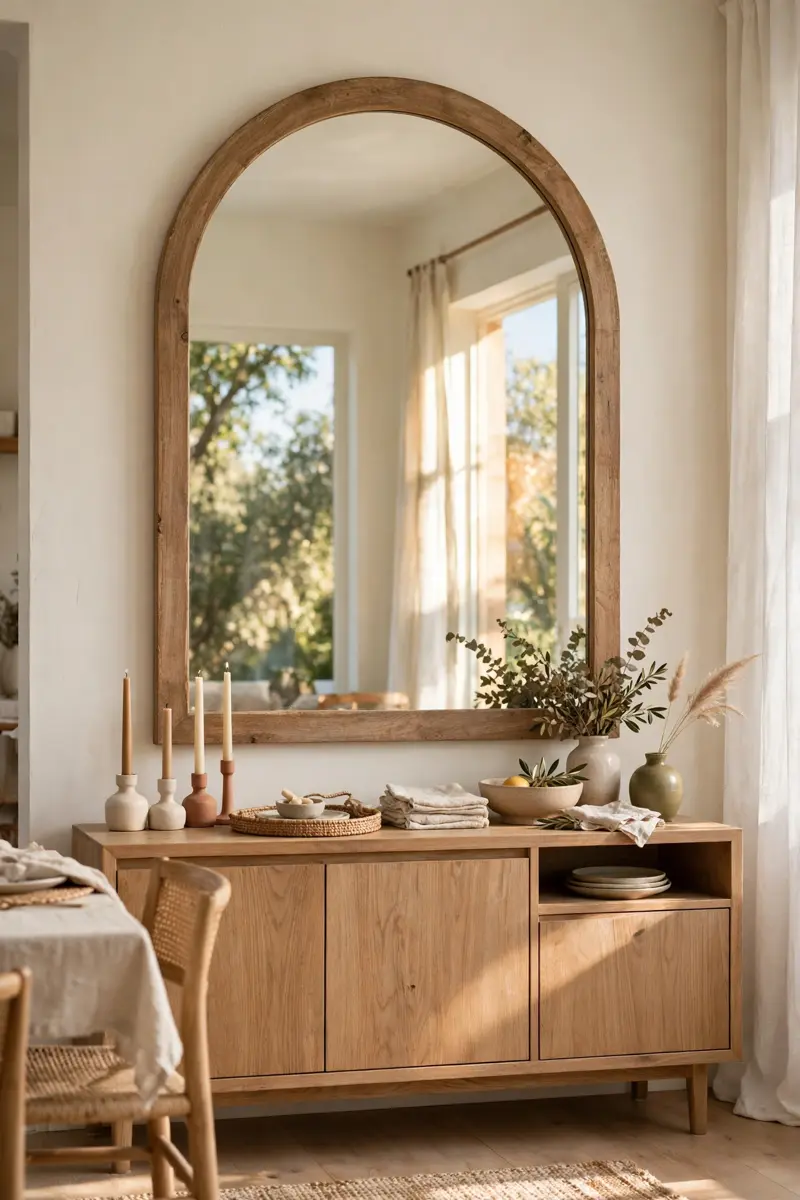
One big mirror is hardworking dining room decor: it bounces light around, doubles the glow of candles, and makes a small room feel twice as open.
You need: a mirror at least two-thirds the width of your sideboard or table wall, plus sturdy wall anchors.
Hang it with its center at eye level, about 57 to 60 inches from the floor. Angle it to reflect a window or your chandelier, never a cluttered corner.
Tip: A mirror opposite a window is the cheapest way to brighten a dark dining corner.
Variation: Lean a tall arched mirror against the wall for a relaxed, renter-friendly look.
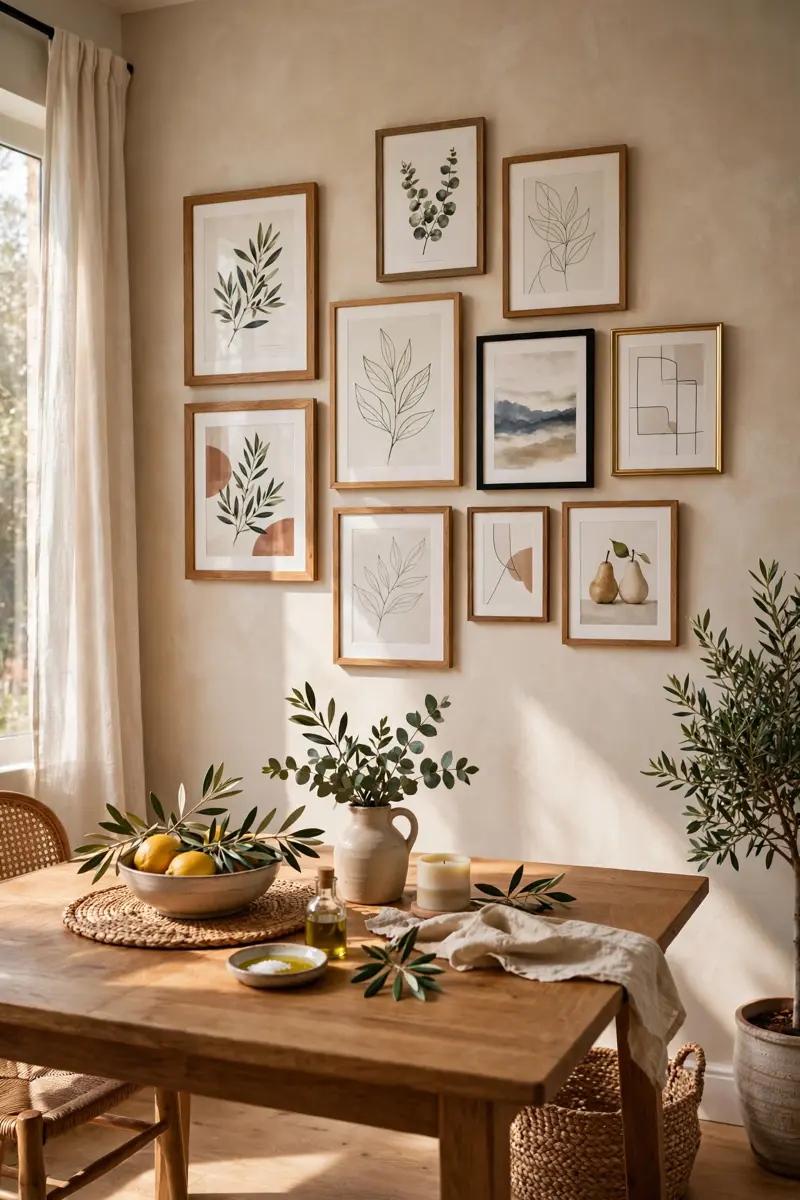
6. Create a Gallery Wall
A gallery wall turns blank dining room decor into a personal story, showing off travel prints, family photos, and art you actually love.
You need: 5 to 9 frames in one or two finishes, paper templates, and a level.
Lay the arrangement on the floor first, then tape paper templates to the wall before hammering anything. Keep 2 to 3 inches between frames and the whole grouping centered over furniture.
Tip: Start with the largest piece in the center and build outward for a balanced look.
Variation: Use a picture ledge so you can swap prints without new holes in the wall.
7. Add Wainscoting and Wallpaper
Wainscoting topped with wallpaper is classic dining room decor that adds architecture and pattern without taking a single inch of floor space.
You need: beadboard or molding strips, paint, a bold wallpaper, and adhesive or paste.
Install the paneling on the lower third of the wall and paint it a crisp white or deep tone. Hang wallpaper above it, and finish the seam with a chair rail for a tailored edge.
Tip: Peel-and-stick wallpaper makes this a weekend project renters can reverse.
Variation: Paint the wainscoting the same color as the wall for a subtle, modern texture.

8. Paint a Bold Accent Wall
A bold accent wall gives dining room decor instant depth, especially in deep green, navy, or warm chocolate brown.
You need: one gallon of paint, painter's tape, a roller, and a drop cloth.
Paint the wall behind the sideboard or the table, keeping the other walls warm white. Let it dry fully, then hang lighter art or a mirror so the color does not feel heavy.
Tip: Test a large swatch for two days — deep colors change dramatically in evening light.
Variation: Try limewash or plaster paint for a soft, textured finish instead of flat color.
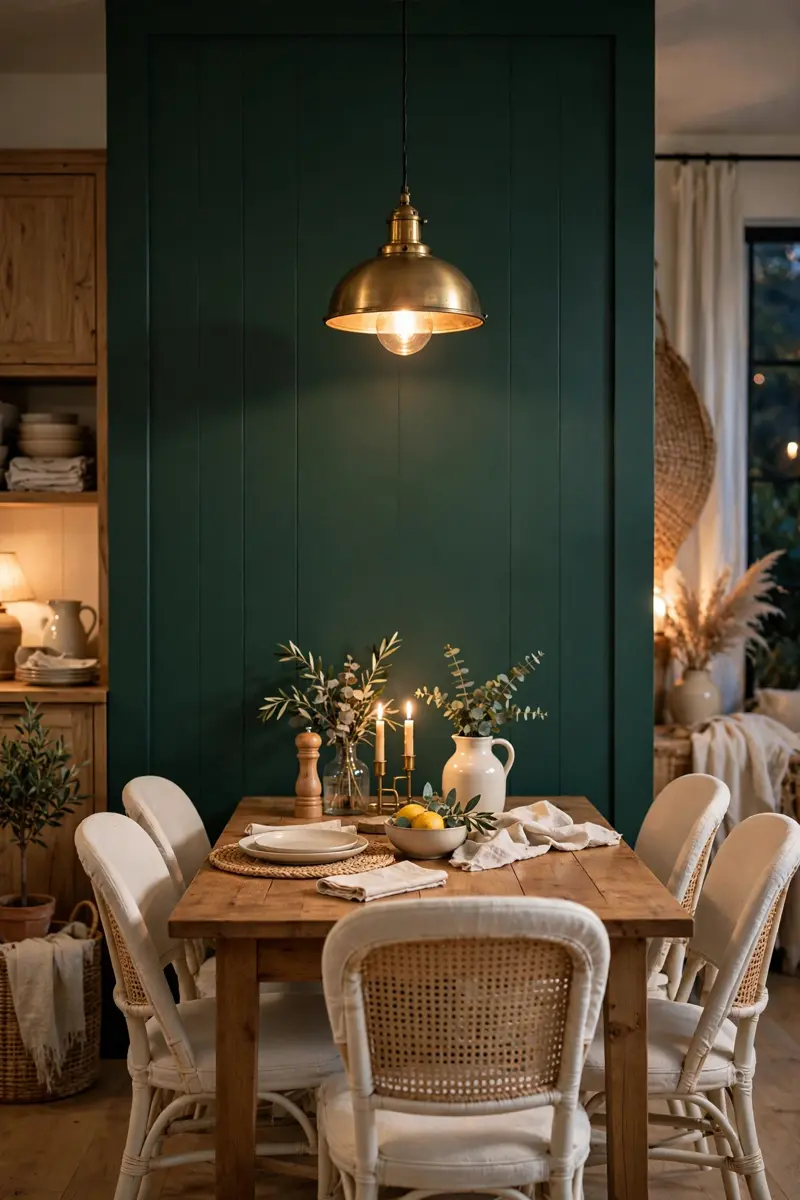
9. Warm Up With a Natural Wood Table
A natural wood table brings warmth to dining room decor that painted furniture cannot match, with grain and texture that age beautifully.
You need: a solid or veneer wood table, linen placemats, and coasters to protect the finish.
Let the wood be the star by keeping chairs simple and the centerpiece low. Oil the top twice a year if it is solid wood, and wipe spills promptly.
Tip: Mixed wood tones look intentional when one tone clearly dominates the room.
Variation: Pair a walnut table with black chairs for a modern contrast, or oak with cream for farmhouse softness.

10. Invest in Upholstered Chairs
Upholstered chairs change dining room decor from a pit stop into a place where people linger over dessert and long conversations.
You need: chairs with a performance fabric, a stain-resistant spray, and seat pads if your chairs are hard.
Choose a seat height of about 18 inches and a fabric you can blot clean. Keep the chair color in the same family as your rug so the set feels calm, not busy.
Tip: Performance fabrics like Crypton or treated linen survive red wine and small children.
Variation: Upholster only the two end chairs for a designer look at half the cost.

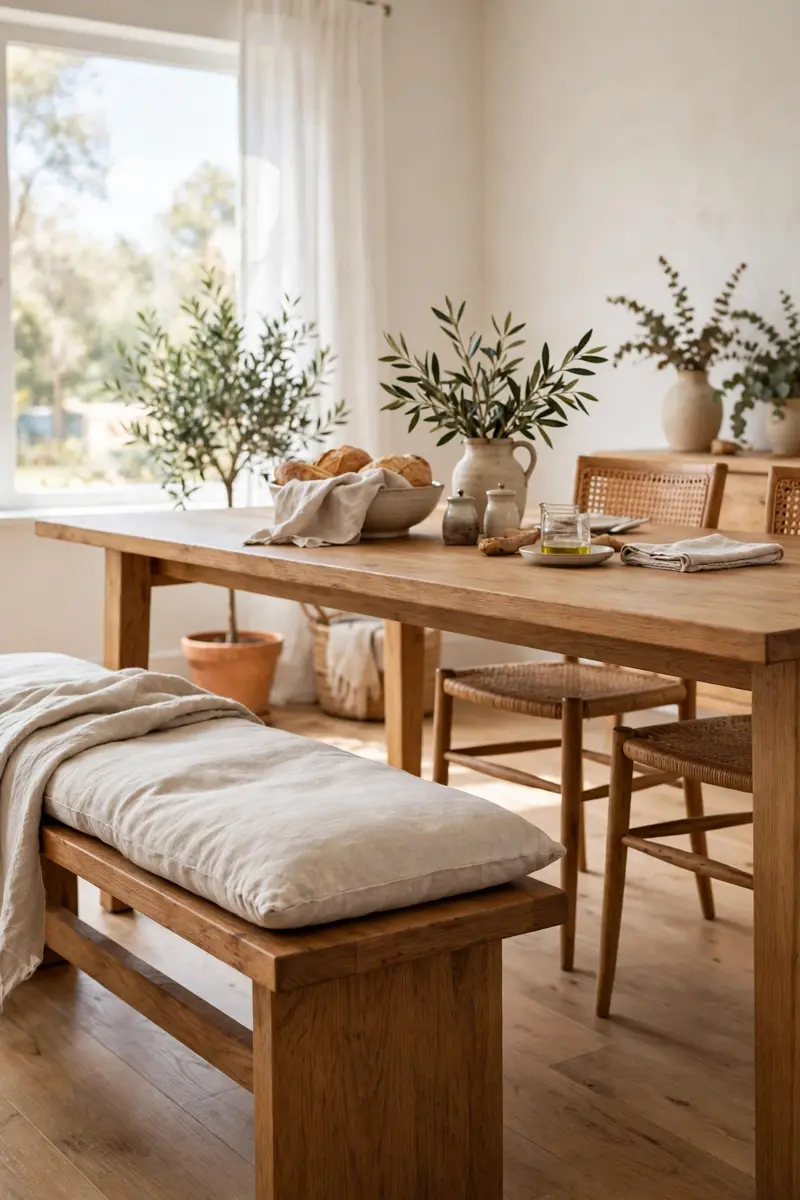
11. Add Bench Seating on One Side
A bench makes dining room decor more flexible because it slides under the table, seats extra kids, and suits narrow rooms beautifully.
You need: a bench matched to table height, a cushion, and a washable cover.
Place the bench on the wall side so it tucks away neatly, and keep chairs on the other side for easy access. A cushion in a wipeable fabric keeps it comfortable for long meals.
Tip: A backless bench under a window seat creates a cozy breakfast-nook feel.
Variation: Use a vintage church pew for a farmhouse look with real character.
12. Size Your Rug Correctly
The right rug anchors dining room decor, quiets echo, and stops chairs from catching on bare floors — but only if it is big enough.
You need: a low-pile rug that extends 24 inches beyond the table on every side, plus a rug pad.
Measure your table, add 48 inches to each dimension, and shop that size. A 10-by-13 rug suits most long tables, while an 8-foot round rug fits a 48-inch round table.
Tip: When in doubt, size up — a too-small rug is the most common dining room mistake.
Variation: Try a flatweave or indoor-outdoor rug if you have pets or messy eaters.

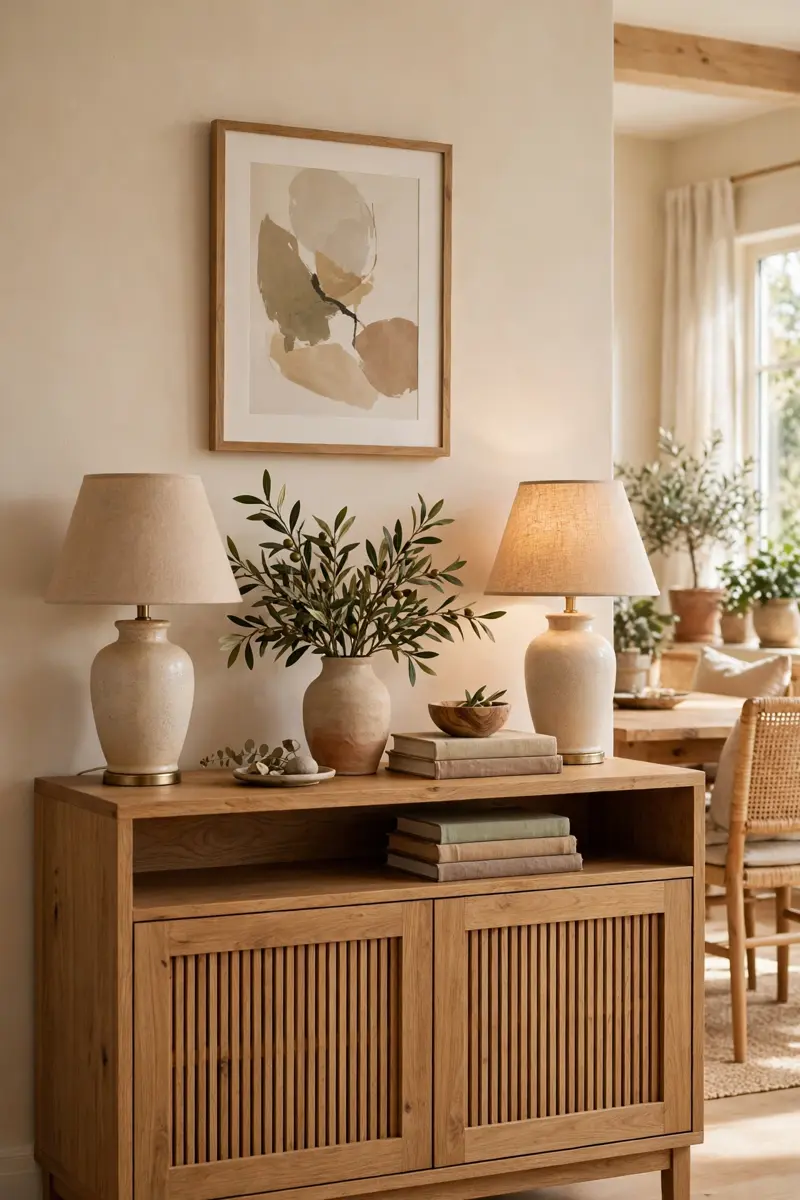
13. Style a Sideboard for Storage and Display
A sideboard is the hardest-working piece of dining room decor, hiding serving dishes while giving you a surface to style with lamps and art.
You need: a sideboard, two matching lamps or one lamp and a vase, and a few books or a tray.
Anchor it with art or a mirror above, then style the top in a triangle: a tall item on one end, a low stack in the middle, and something medium on the other.
Tip: Keep one drawer empty for placemats and candles so setting the table takes minutes.
Variation: Swap the sideboard for a vintage dresser painted in your accent color.
14. Park a Bar Cart in the Corner
A bar cart adds a touch of celebration to dining room decor and doubles as extra serving space when you host a crowd.
You need: a two-tier cart, a few glasses, a small tray, and a bottle opener.
Style the top tier with glasses and a decanter, and keep bottles and extra linens below. Roll it beside the table during parties and back to its corner after.
Tip: A small plant or candle on the top tier stops the cart from looking like a liquor store shelf.
Variation: Use the cart as a coffee station for brunch guests instead of a bar.

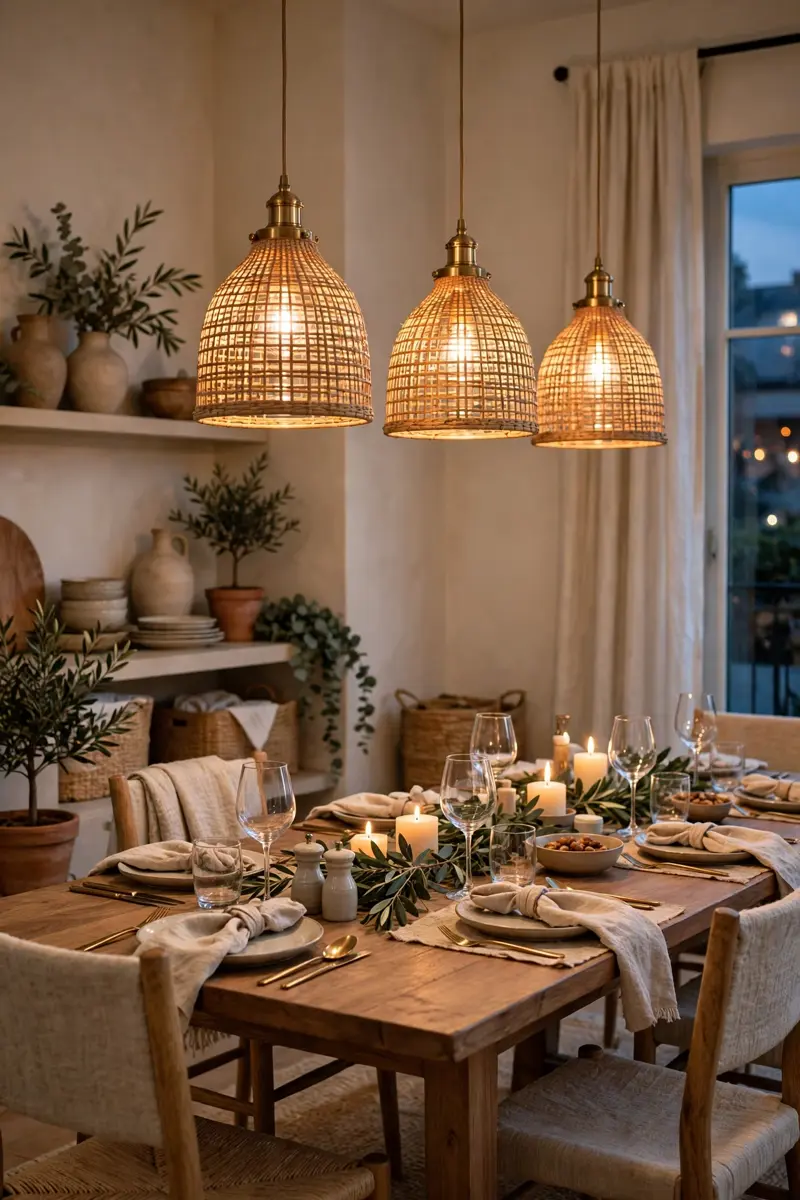
15. Try a Trio of Pendants Over a Long Table
Three pendants give dining room decor a rhythmic, modern line over a long table, spreading light evenly instead of pooling it in one spot.
You need: three matching pendants, dimmable bulbs, and a ceiling canopy or track if wiring is limited.
Space them evenly along the table, hanging 30 to 34 inches above the surface. Keep the total width of the pendants narrower than the table for good proportions.
Tip: Plug-in pendant kits with cord covers work when you cannot rewire the ceiling.
Variation: Mix one large pendant in the center with two smaller ones for a collected look.
16. Layer Candlelight With Dimmers
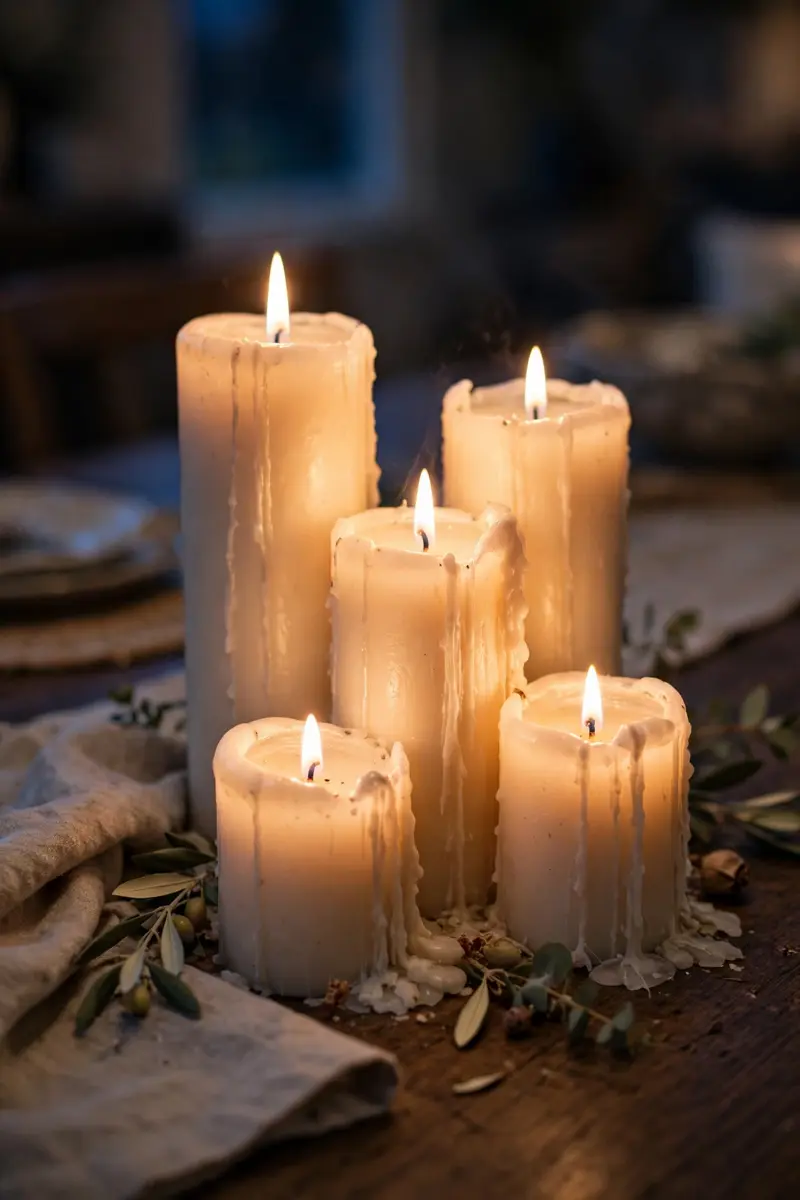
Candlelight is the cheapest luxury in dining room decor, turning an ordinary Tuesday dinner into something that feels like an occasion.
You need: pillar candles in varied heights, a few candleholders, and a dimmer switch for the overhead light.
Cluster candles in odd numbers down the table or along the sideboard, keeping flames away from curtains. Dim the overhead light to about half and let the candles do the rest.
Tip: Battery candles with timers give the same glow safely around kids and pets.
Variation: Float tea lights in a shallow bowl of water with a few flower heads for a party trick.
17. Bring in Greenery, Real or Faux
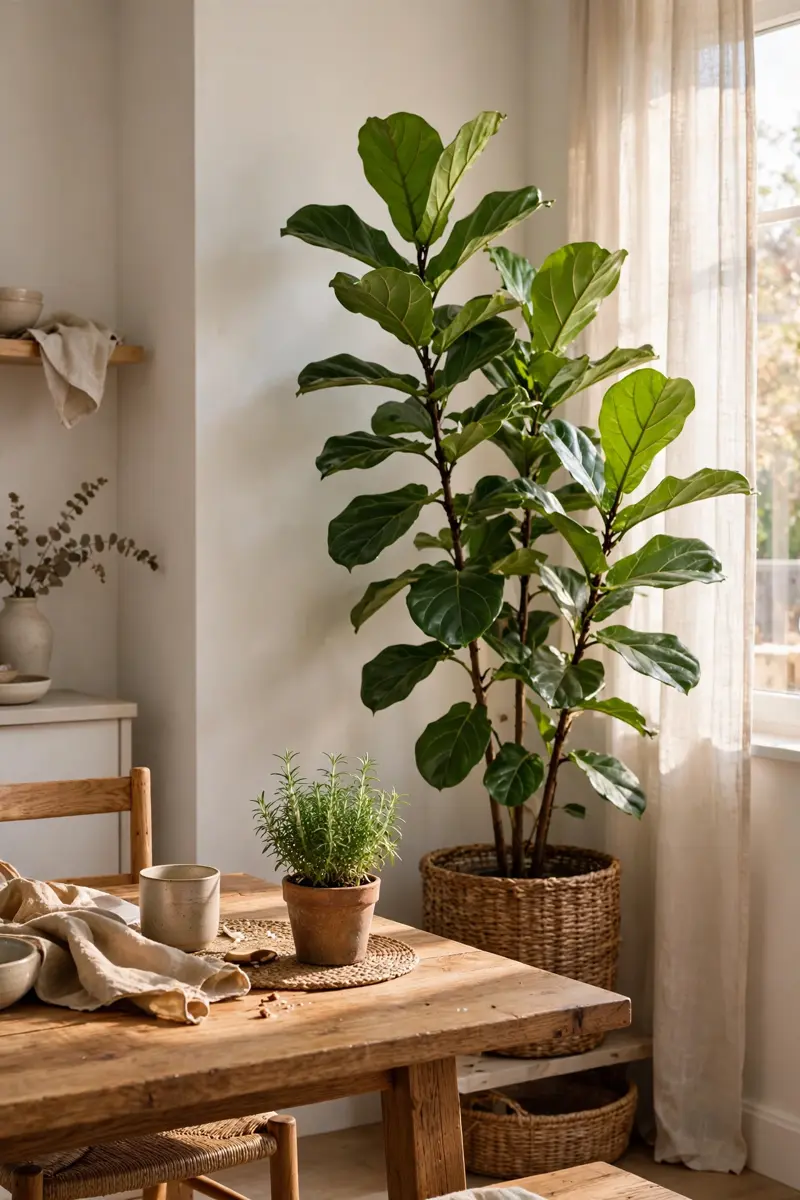
Greenery softens dining room decor instantly, adding color and life to a room full of hard wood, glass, and ceramic surfaces.
You need: one tall plant for a corner, a small potted herb or trailing plant for the table, and a watering can.
Place the tall plant in a woven basket by the window, and keep the table plant low so it never blocks a face. Faux plants work well on high shelves where watering is a chore.
Tip: Rotate real plants toward the window weekly so they grow evenly, not lopsided.
Variation: Hang a trailing pothos from a ceiling hook above the sideboard for a lush cascade.
18. Seasonal Dining Room Decor: Swap the Centerpiece
A seasonal centerpiece swap keeps dining room decor feeling fresh all year for under $20 each time, without redecorating the whole room.
You need: one neutral tray or bowl, plus seasonal fillers like citrus, pinecones, or fresh stems.
Keep the base the same and change only the fillers: lemons in summer, mini pumpkins in fall, pine branches in winter, tulips in spring. Store off-season fillers in one labeled box.
Tip: Shop your garden and grocery store first — eucalyptus stems cost a few dollars and last weeks.
Variation: Let kids pick one seasonal item each month so the table reflects your family.

19. Mix Chair Styles for an Eclectic Look
Mixed chairs are confident dining room decor, proving your room was collected over time rather than bought in one afternoon.
You need: chairs that share one common thread — the same wood tone, seat height, or color family.
Keep the end chairs distinct and the side chairs matching, or alternate two styles around the table. Unify the mix with matching seat cushions or one repeated finish.
Tip: Keep every seat at the same height, or the table will feel wobbly and awkward.
Variation: Paint thrifted chairs one color for a bold, cohesive set on a budget.

20. Hang a Plate Wall
A plate wall turns dishes you already own into dining room decor, adding pattern and color exactly where it belongs — near the table.
You need: 7 to 11 plates in a shared palette, plate hangers or adhesive discs, and a level.
Arrange the plates on the floor first, mixing sizes with the largest in the center. Hang them 2 inches apart, starting from the center outward, and step back often to check balance.
Tip: Thrift stores sell beautiful single plates for a few dollars each — perfect for this project.
Variation: Mix in a small mirror or woven basket to break up a wall of pure plates.

21. Dress Windows With Linen Curtains
Linen curtains soften dining room decor, filter harsh daylight, and hush the echo that bare windows and hard floors create.
You need: curtain panels that reach the floor, a rod hung 4 to 6 inches above the window frame, and rings or clips.
Hang the rod wide so curtains frame the window without blocking light, and let panels just kiss the floor. Choose a color one shade deeper than your walls for warmth.
Tip: Lined curtains insulate better and hang in prettier folds than unlined ones.
Variation: Layer sheer panels under linen drapes for privacy by day and softness at night.

22. Add Open Shelving for Everyday Beauty
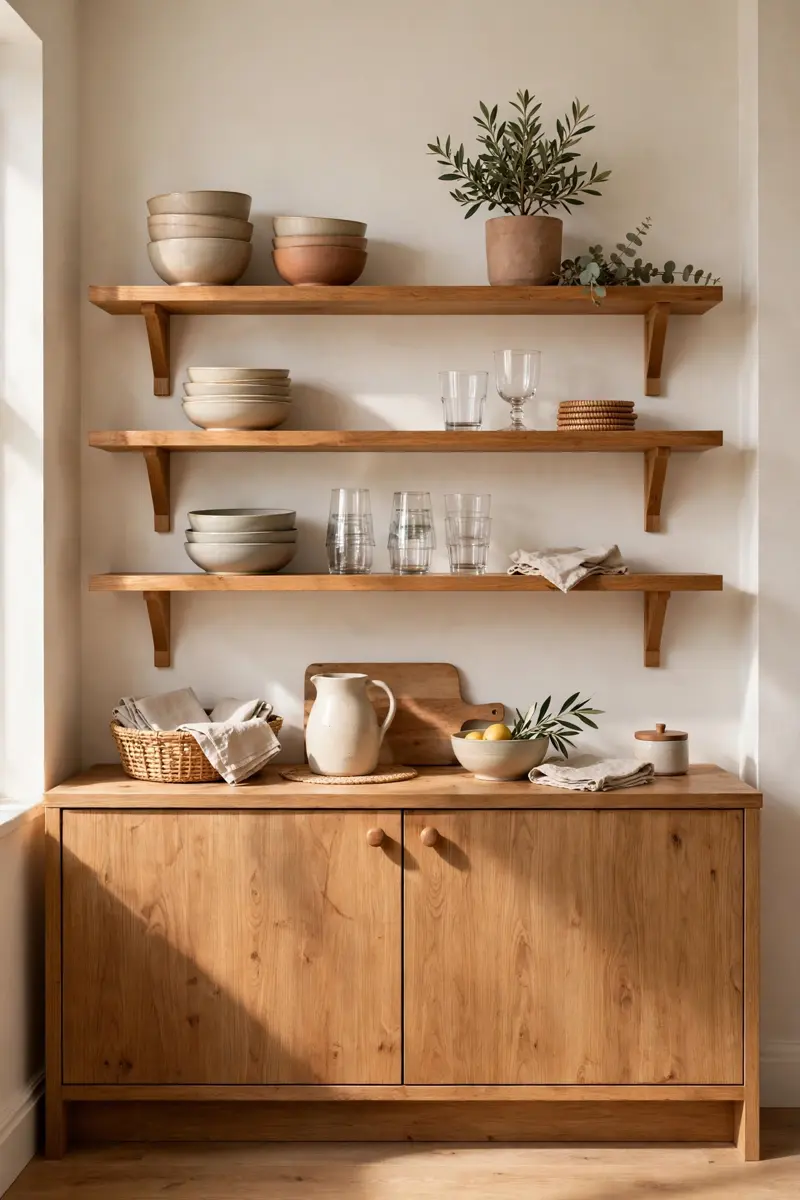
Open shelving makes dining room decor work double duty, displaying pretty dishes you use daily instead of hiding them behind cabinet doors.
You need: two or three wood shelves, brackets, and your prettiest everyday dishes.
Mount shelves at eye level beside the table or above the sideboard, and style them with stacks of bowls, a few glasses, and one plant. Keep the bottom shelf for daily items within easy reach.
Tip: Limit each shelf to one color family so the display reads calm, not cluttered.
Variation: Use a glass-front cabinet instead if dust is a problem in your home.
23. Use Matching Buffet Lamps for Symmetry
Matching buffet lamps bring instant order to dining room decor, framing the sideboard and adding warm light at face height.
You need: two identical lamps, warm bulbs, and a sideboard with an outlet nearby.
Place one lamp at each end of the sideboard, with shades at roughly the same height as the mirror or art above. Use warm 2700K bulbs and switch them on for dinner.
Tip: Battery-operated lamps work beautifully when no outlet is close to the sideboard.
Variation: Pair one lamp with a tall vase of branches for an asymmetric but balanced look.
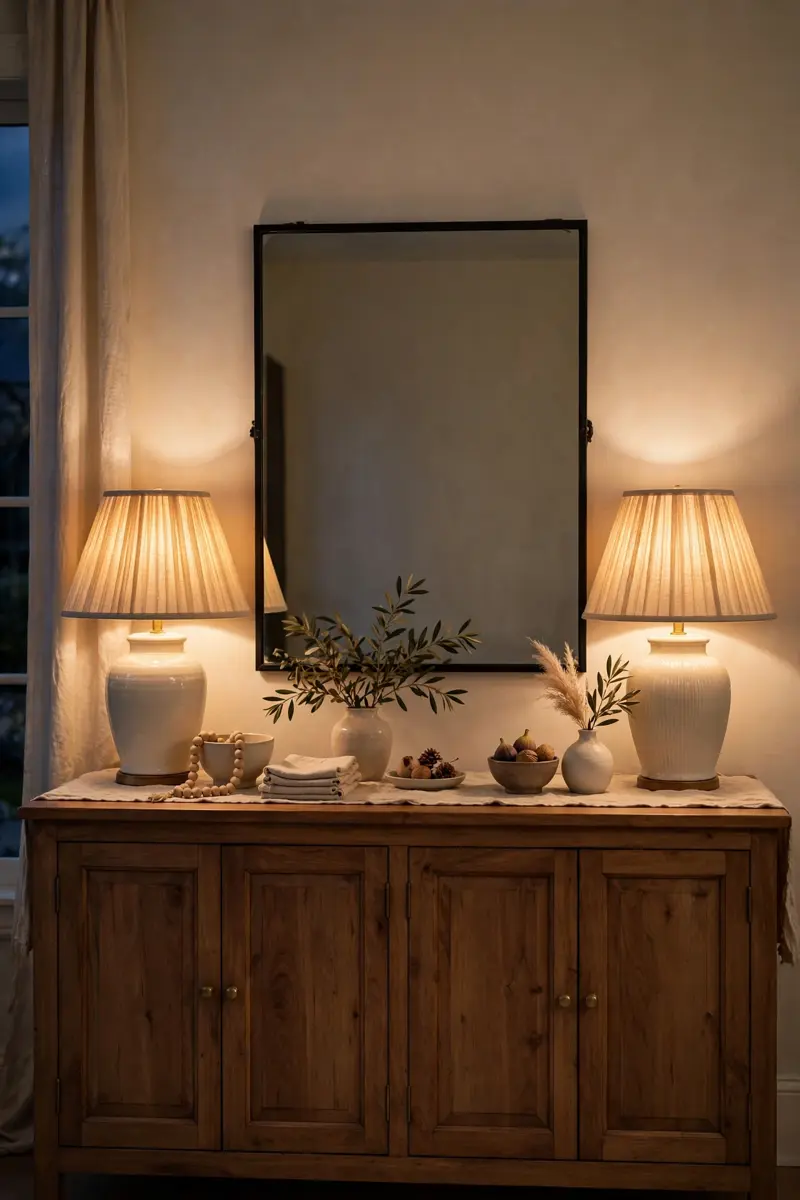
24. Khaki-Coded Dining Room Decor in Earthy Neutrals
Khaki-coded earthy neutrals are a 2026 Pinterest favorite for dining room decor, wrapping the room in olive, moss, stone, and warm taupe.
You need: linen tablecloth or runner in stone, olive napkins, and matte ceramic dishes.
Keep the palette tight — three earthy tones at most — and let texture do the talking with linen, wood, and unglazed ceramics. Add one darker accent, like walnut, to ground the scheme.
Tip: Khaki tones help an open-plan dining area blend with the living room while still feeling defined.
Variation: Add terracotta napkins or a clay vase for a sun-warmed lift in summer.

25. Make a Dark Wood Table the Star
A dark wood table gives dining room decor a grounded, confident feel, especially when the rest of the room stays light and airy.
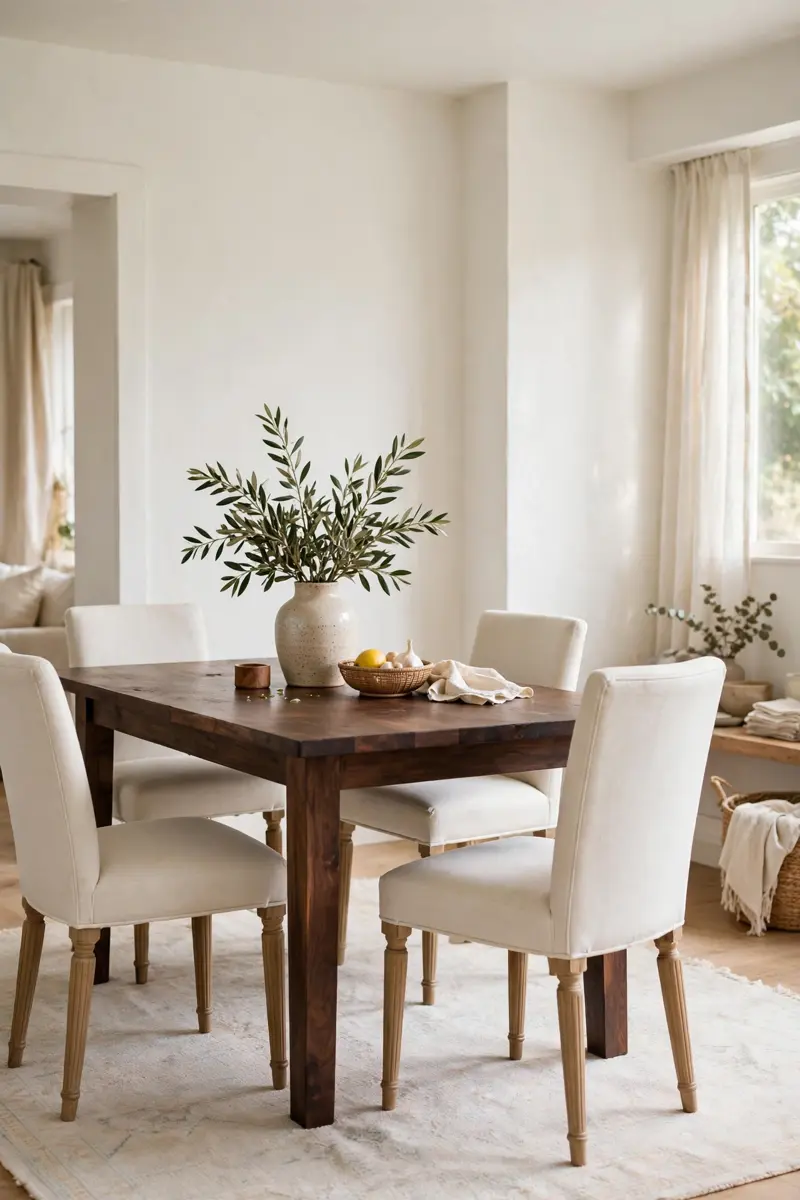
You need: a walnut or espresso table, pale chairs or a light rug, and a simple centerpiece.
Balance the dark top with cream chairs and a pale rug so the room never feels cave-like. Keep the walls warm white and add brass or gold accents for warmth.
Tip: One dark piece is a statement; dark walls, dark table, and dark chairs together feel heavy.
Variation: Pair the dark table with rattan chairs to soften the look with natural texture.
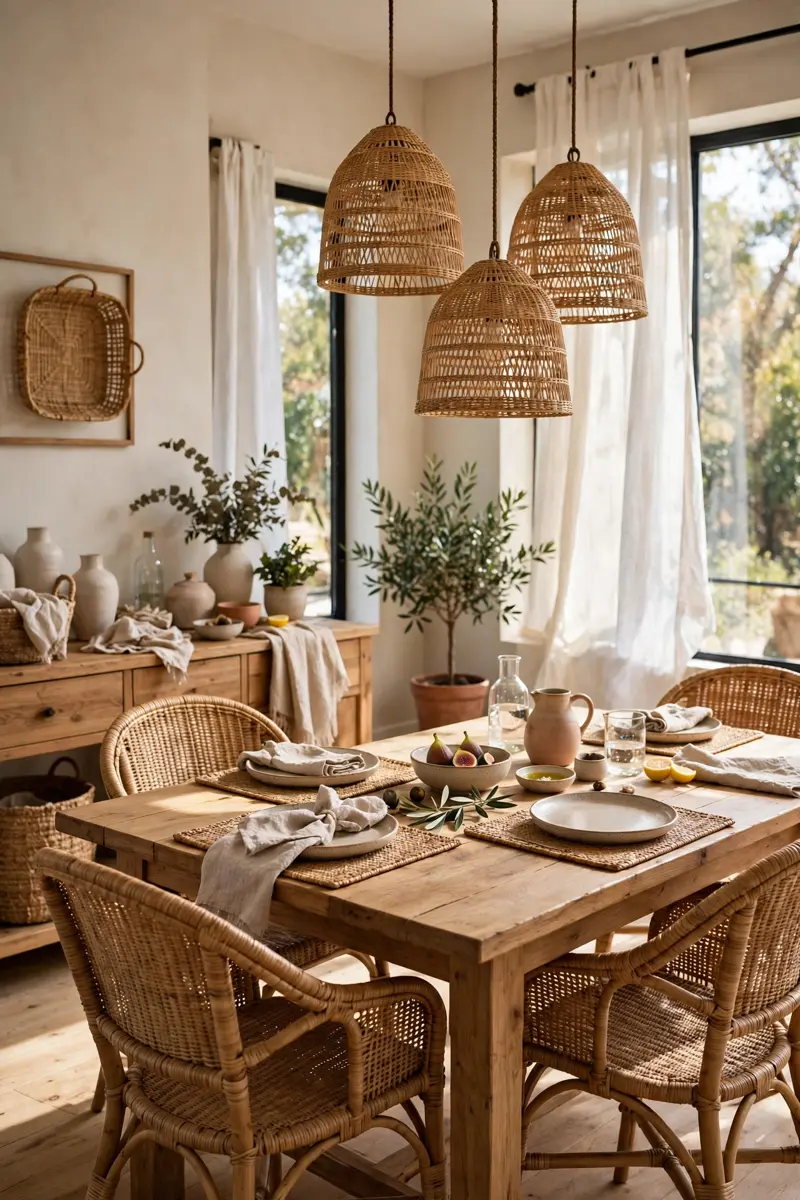
26. Weave in Rattan and Natural Texture
Rattan and woven textures bring a relaxed, beachy warmth to dining room decor that hard furniture alone cannot provide.
You need: rattan pendant shades or placemats, a woven basket, and a jute rug or runner.
Add rattan in two or three places — a pendant light, chair seats, and placemats — and keep the rest of the room simple. Natural textures pair best with white walls and wood tones.
Tip: Mix rattan with one metal finish, like black or brass, so the room still feels finished.
Variation: Use woven seagrass chargers for a table setting that costs a few dollars each.
27. Hang One Oversized Abstract Painting
One oversized painting is bold dining room decor that ends the blank-wall problem in a single move, no gallery planning required.
You need: art about two-thirds the width of your table or sideboard, plus a proper hanging hook.
Center it 57 to 60 inches high, or about 6 to 8 inches above the sideboard. Pick up one color from the painting in your napkins or a vase to make the room feel designed.
Tip: A big canvas from a discount store, reframed well, looks far more expensive than small prints.
Variation: Try a DIY abstract canvas in your room's colors for a personal, budget-friendly piece.

28. Layer a Table Runner Over a Cloth
Layering a runner over a cloth adds depth to dining room decor and protects the tablecloth underneath from spills and heat.
You need: a plain tablecloth, a contrasting runner, and a centerpiece that sits on the runner.
Lay the cloth first, then center the runner so equal lengths hang at both ends. The runner should be narrower than the table and long enough to drape 6 to 12 inches over each edge.
Tip: A patterned runner over a solid cloth is easier to style than two competing patterns.
Variation: Skip the cloth and use a runner alone on a beautiful wood table to show off the grain.

29. Set Places With Personal Details
Personal place settings turn dining room decor into hospitality, making every guest feel expected rather than just accommodated.
You need: place cards, a small sprig of greenery or a favor, and cloth napkins.
Fold each napkin simply, tuck in a sprig of rosemary or eucalyptus, and lean a handwritten name card against the glass. Keep the rest of the setting classic so the personal touch stands out.
Tip: A handwritten card costs nothing and is the detail guests photograph and remember.
Variation: Use a small ornament, shell, or cookie as the place marker for a party.

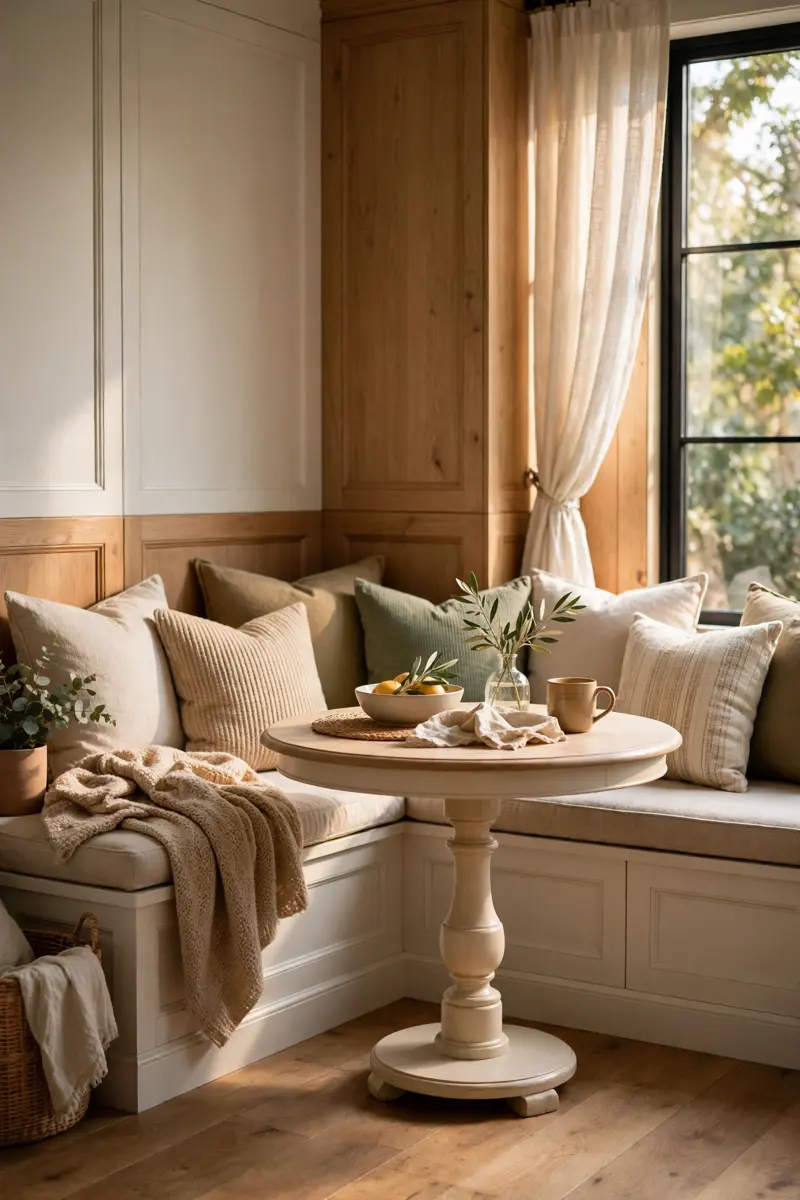
30. Banquette Dining Room Decor for a Cozy Nook
A banquette turns an awkward dining corner into the coziest seat in the house, and it is brilliant dining room decor for small rooms.
You need: a built or freestanding bench, a pedestal table, and washable cushions.
Tuck the bench into the corner, add a table that slides easily in and out, and pile on cushions in a wipeable fabric. A pendant above the table finishes the nook.
Tip: A banquette seats more people than chairs in the same footprint because there are no gaps.
Variation: Use a storage bench with lift-up seats to hide table linens and board games.
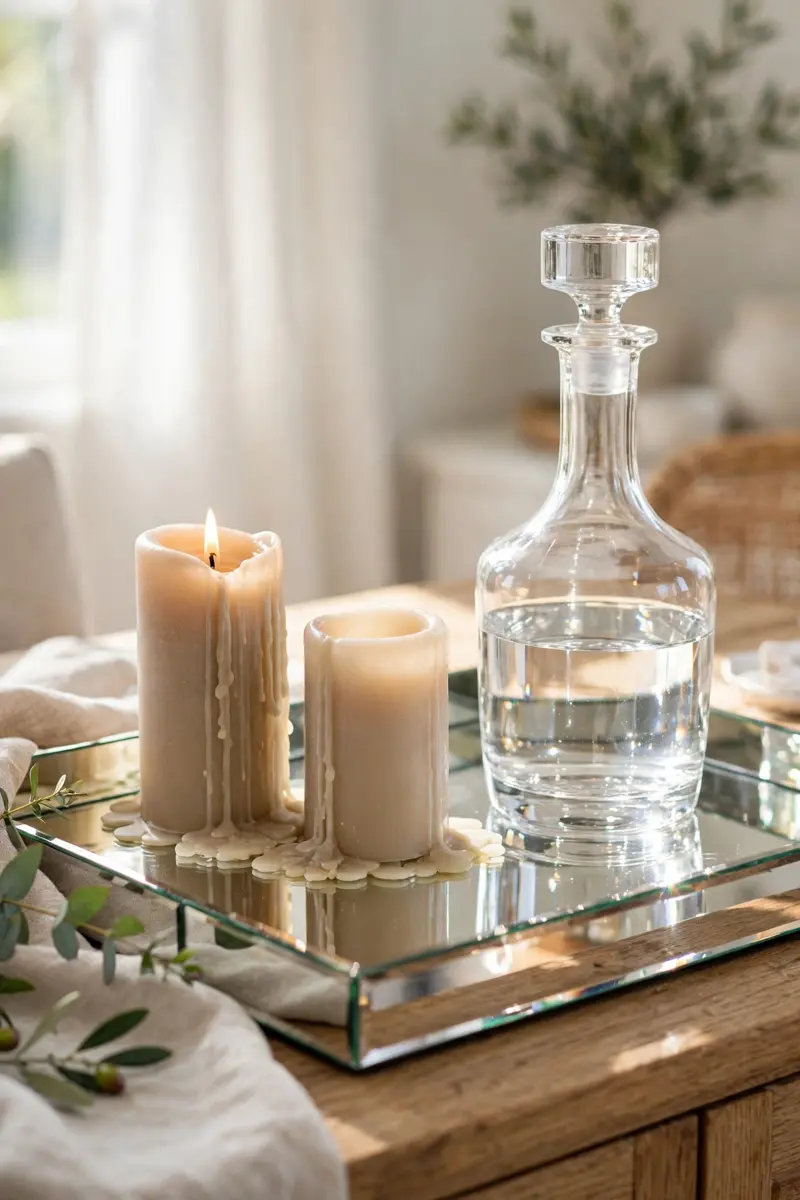
31. Use Glass and Mirrors to Reflect Light
Glass and mirrors are light-multiplying dining room decor, perfect for rooms with one small window or no window at all.
You need: a glass vase or decanter, a mirrored tray, and light-colored linens.
Place a mirrored tray under candles on the sideboard and keep glassware visible on open shelves. Pale linens and a light rug bounce even more light around the room.
Tip: Clear glass chairs visually disappear, making a small dining room feel much bigger.
Variation: Try a glass-top table over a patterned rug so the rug becomes the artwork.
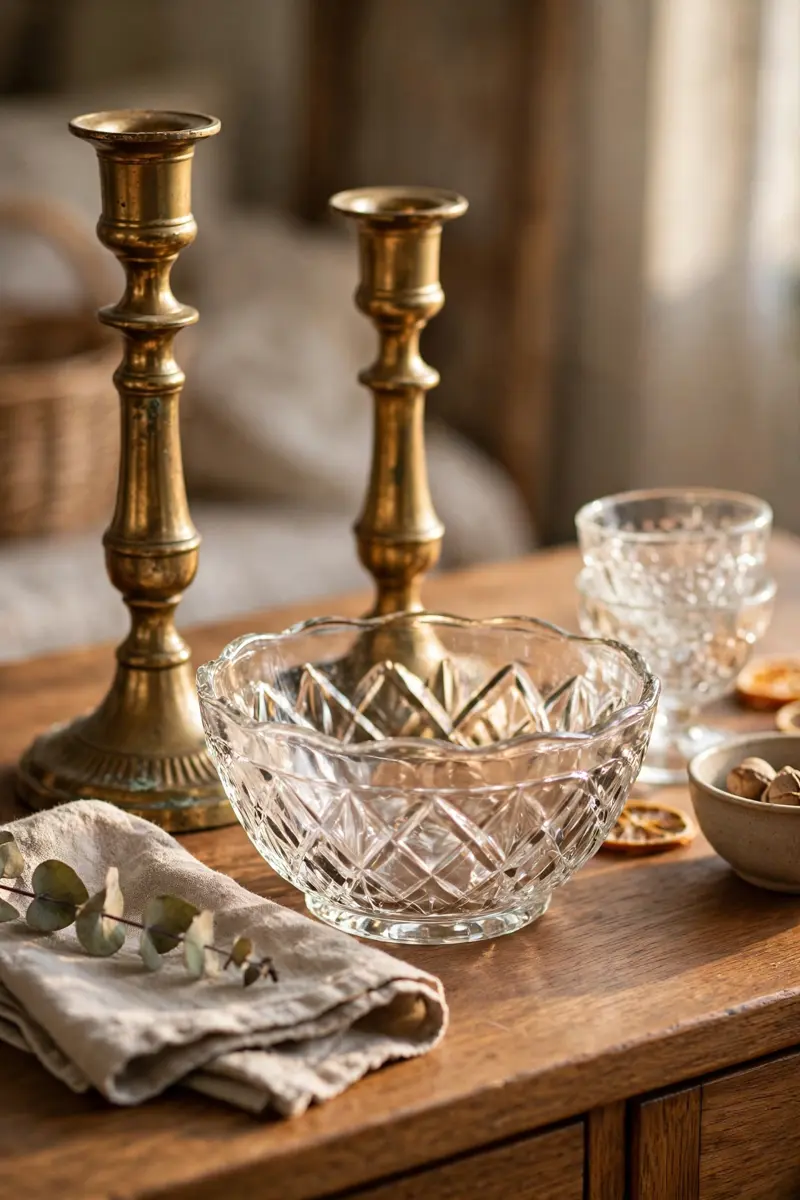
32. Shop Thrifted Finds for Character
Thrifted finds give dining room decor a soul that new matching sets cannot fake, from brass candlesticks to a vintage punch bowl.
You need: a thrift-store list, patience, and a budget of $20 to $50 per trip.
Hunt for one hero piece per trip — a lamp, a set of goblets, a unique vase — and let it earn its place before buying more. Clean brass with lemon and salt, and wash vintage glass well.
Tip: Shop on weekday mornings for the best selection before weekend pickers arrive.
Variation: Paint a mismatched thrifted chair set one color for an instant designer collection.
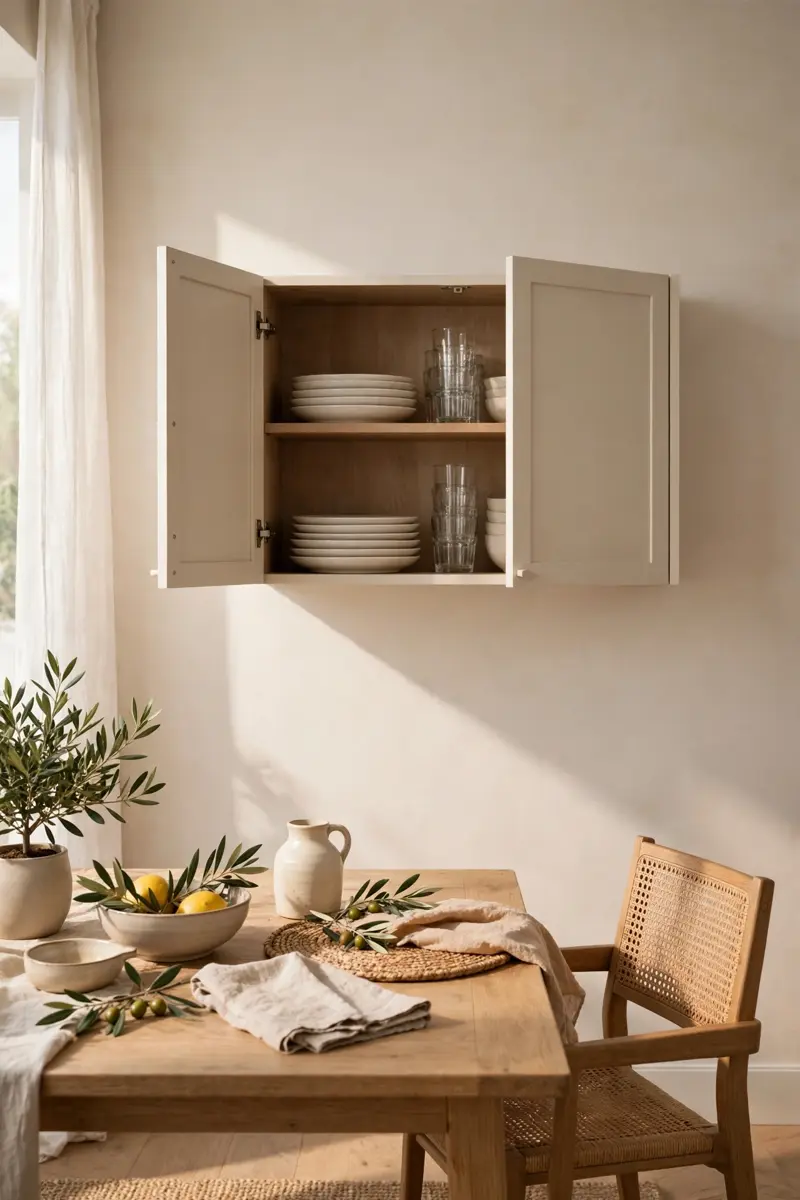
33. Add Built-In Storage That Disappears
Built-in storage is invisible dining room decor, keeping serving pieces close without the visual weight of another big cabinet.
You need: a shallow built-in or wall cabinet, baskets for small items, and labels if you like order.
Use the wall beside the table or an unused alcove, and paint the cabinet the wall color so it blends in. Store everyday dishes low and holiday pieces high.
Tip: A cabinet only 12 inches deep holds plates, glasses, and linens without jutting into the room.
Variation: Add a fold-down shelf inside the cabinet for a hidden serving station.
34. Plan the Flow for Easy Hosting
Good flow is the secret ingredient of dining room decor, because a beautiful room that guests cannot move through comfortably never gets used.
You need: a tape measure, a floor plan sketch, and a willingness to move one piece of furniture.
Keep 36 inches of walkway around the table and a clear path from the kitchen to the table. Move the sideboard to the wall guests pass least, and keep the serving path short.
Tip: Walk the route carrying a tray before a party — you will spot every bottleneck instantly.
Variation: For big gatherings, move the rug and extend the table into the living room for one long table.

More Ideas You Will Love
If you love budget-friendly projects, browse our DIY home decor ideas on a budget for more weekend wins, see how thrift store flips add character for pennies, and steal storage tricks from our small living room decor ideas on a budget. For more expert guidance, The Spruce shares modern dining room ideas and common dining room mistakes to avoid.
Frequently Asked Questions
What size rug goes under a dining table?
Choose a rug that extends about 24 inches beyond the table on every side, so chairs stay on the rug when pulled out. For most rectangular tables, that means adding 48 inches to each dimension — a 10-by-13 rug suits many long tables, while an 8-foot round rug fits a 48-inch round table.
How high should a chandelier hang above a dining table?
Hang a chandelier 30 to 36 inches above the tabletop for an 8-foot ceiling, adding about 3 inches for each extra foot of ceiling height. Center it over the table, not the center of the room, and choose a fixture about 12 inches narrower than the table.
What is the best wall color for a dining room?
Warm neutrals like warm white, greige, and soft taupe suit almost every dining room, while deep green, navy, or warm chocolate add drama on one accent wall. If your room is small or dark, keep three walls light and paint only the wall behind the sideboard in the deeper shade.
How do I decorate a small dining room?
Start with a round or drop-leaf table, a bench on one side, and a correctly sized rug to define the space. Add one mirror to bounce light, keep the centerpiece low, and choose light colors with one or two natural textures so the room feels open, not crowded.
How do I style a dining table for everyday use?
Keep one low sculptural centerpiece on the table at all times, plus a runner or placemats that protect the surface. Store a small box of candles and cloth napkins in the sideboard so you can dress the table in five minutes when friends drop by.
Conclusion
You do not need to do all 34 ideas to transform your room — start with lighting, a rug that actually fits, and one centerpiece you love. Those three changes alone can make your dining room decor feel warm, welcoming, and ready for guests. Save this guide to Pinterest so you can find your favorite idea again, then pick your first project this weekend and enjoy the difference at your very next meal.



Leave a Reply