Your baby’s clothes are tiny, but somehow they take over the whole room. These nursery closet ideas fix that — they turn one small, forgotten closet into the hardest-working spot in the nursery, so every onesie, blanket, and pair of socks has a home you can actually find at 3 a.m.
The best part is how little most of these nursery closet ideas cost. A second rod, a set of cube bins, or a pack of wooden dividers can double your storage for under $50, and nearly every idea below takes an afternoon or less. You do not need a custom closet or a contractor to get a closet that looks straight out of a magazine.
You also do not need to do all fourteen at once. Pick the one that solves your biggest headache — usually hanging space or the pile of outgrown clothes — and start there. The nursery closet ideas below build on each other, so your closet can grow right along with your baby.
How to Plan Your Nursery Closet Ideas First
Before you buy a single bin, empty the closet completely and sort everything into three piles: keep, next size up, and outgrown. This one step makes every other decision easier, because you finally see what you actually own instead of guessing. Most parents are shocked by how much is hiding in there.
Next, measure the closet — width, depth, and the height from the floor to the rod and from the rod to the shelf. Baby clothes are short, so the dead space under a single rod is usually the biggest waste in the whole nursery. Write the numbers on your phone before you shop, and you will never buy a bin that does not fit.
Finally, plan for growth. The best nursery closet ideas use adjustable pieces — a second rod you can raise, cube shelves you can restack, dividers you can slide — because your baby will outgrow three sizes in the first year. A system that adapts beats a perfect system you have to rebuild every three months.
1. Add a Second Hanging Rod
A second hanging rod is the single highest-impact move in this whole list, and it is the first of these nursery closet ideas most parents wish they had tried sooner. Baby clothes are so short that one rod wastes nearly half the closet’s height, while two rods instantly double your hanging space without a single new shelf.
- Materials: 1 adjustable closet rod or tension rod, 2 rod brackets, screws, level. Cost: $15–$30.
Measure about 20 inches below your existing rod and mark the spot for the new one — that leaves enough drop for onesies and pants on the top rod and sleepers on the bottom. Screw the brackets into studs if you can find them, or use sturdy wall anchors, then snap the rod into place and give it a firm tug to test it.
Hang today’s size on the lower rod where you can grab it one-handed, and keep the next size up on the top rod. That way the morning routine stays simple, and the clothes your baby grows into are already waiting in plain sight.
Tip: Use a tension rod if you rent — it installs in minutes, leaves no holes, and holds baby clothes easily. These nursery closet ideas work best when they fit your home, not the other way around.
*Variation:* If your closet is extra narrow, hang the second rod front-to-back on one side instead of side-to-side, and use the freed space for a tall stack of bins.

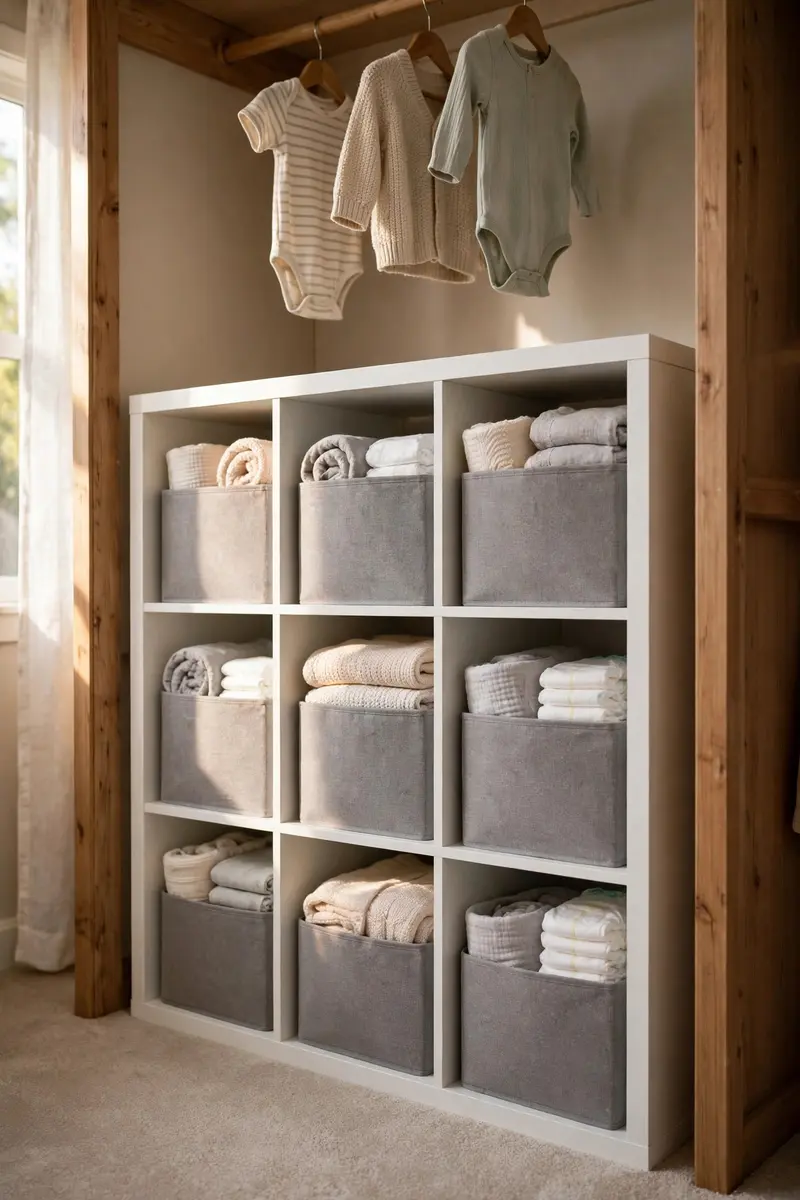
2. Stack Cube Storage with Fabric Bins
Cube storage is the backbone of an organized nursery closet, and it is one of the most flexible nursery closet ideas on this list. A simple 6- or 9-cube unit turns an empty closet floor into labeled homes for diapers, burp cloths, blankets, and all the little things that never seem to have a place.
- Materials: 1 cube organizer (6 or 9 cubes), 6–9 fabric bins, labels. Cost: $40–$80.
Set the cube unit on the closet floor or on a low shelf, then slide a fabric bin into each cube. Keep the bins you reach for daily — diapers, wipes, pajamas — at waist height, and put backups and out-of-season items in the top and bottom rows where you will not bump into them every day.
Choose bins in one matching color or pattern so the whole closet looks calm and pulled together, even when the contents are pure chaos. Soft fabric bins are also safer than hard plastic in a room where a curious toddler will eventually pull everything down.
Tip: Buy bins that are one inch smaller than the cube opening so they slide in and out smoothly. Stiff bins that wedge and stick are the fastest way to abandon a system that should have worked.
*Variation:* Turn two cubes sideways as open display shelves for a few favorite books or a stuffed animal, so the closet feels styled instead of purely utilitarian.
3. Switch to Slim Velvet Hangers
Chunky plastic hangers steal inches you do not have. Slim velvet hangers are one of the simplest nursery closet ideas, and they can free up a surprising amount of rod space — often 30 percent or more — while making the whole closet look neat and expensive at the same time. Few nursery closet ideas deliver this much change for so little money.
- Materials: 30–50 slim velvet baby hangers. Cost: $12–$20.
Swap the hangers one outfit at a time rather than all at once, starting with the clothes your baby wears most. The velvet grip stops tiny clothes from sliding off and pooling on the closet floor, which means fewer wrinkles and fewer lost socks hiding under the dresser.
Pick one hanger color for the whole closet — white, grey, or blush all look lovely — because matching hangers are the cheapest visual upgrade in this entire list. The closet will look intentional even on the days when the rest of the nursery is not.
Tip: Keep a small basket on the closet floor for empty hangers, and rehang clean laundry straight onto them. The system only stays tidy if the hangers have a home when they are not holding clothes.
*Variation:* Use wooden baby hangers for special-occasion outfits you want to photograph — they look beautiful and keep delicate fabrics from stretching.

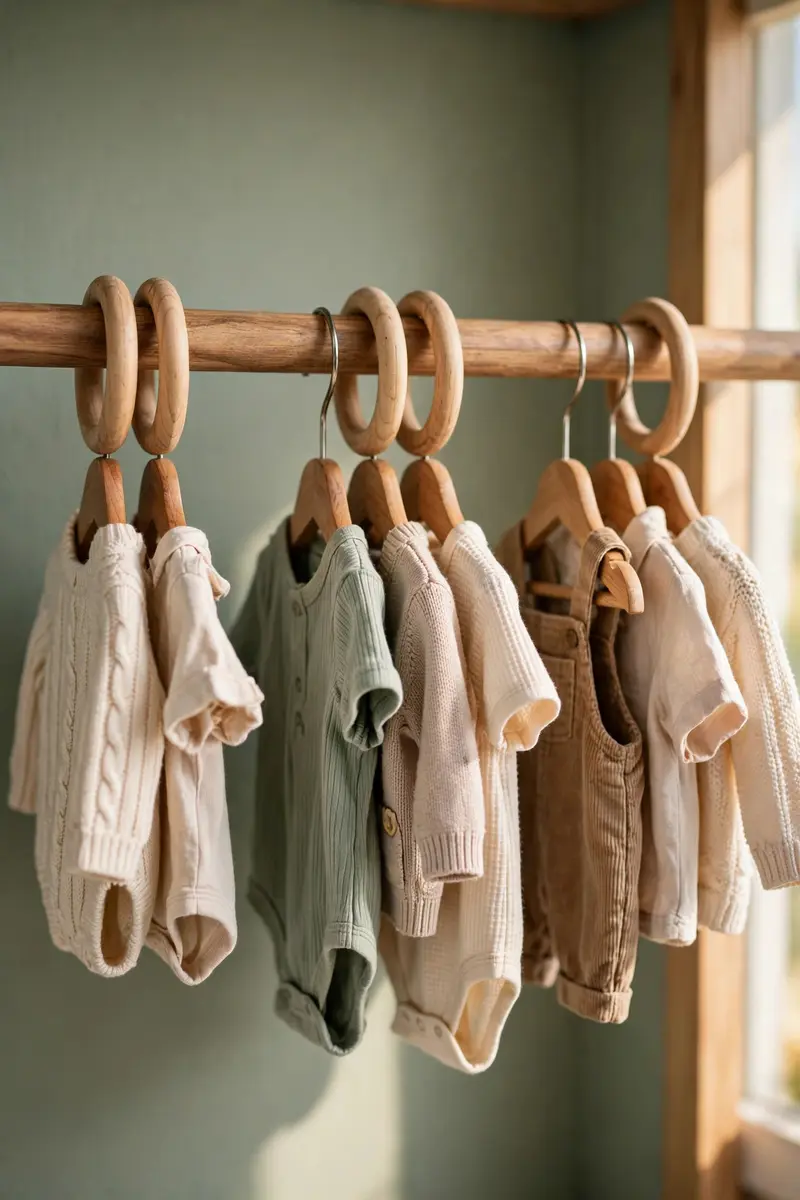
4. Sort Clothes with Wooden Size Dividers
Babies outgrow sizes fast, and mixed-up sizes are the reason you can never find the right outfit. Wooden size dividers are one of the prettiest nursery closet ideas, and they solve the problem in seconds — just slide a ring onto the rod between sizes and the closet sorts itself.
- Materials: 1 set of wooden closet dividers (newborn to 24 months), fine-tip marker. Cost: $10–$15.
Hang the dividers in size order from left to right, starting with the smallest size your baby wears now. When you bring home new clothes, hang them behind the right divider immediately instead of tossing them on a chair to sort later — later never comes, and the chair pile always wins.
Label the dividers clearly if your set comes blank, and keep the next size up visible so you can see at a glance when it is time to rotate. A quick weekly check — two minutes while the baby naps — keeps the whole system honest.
Tip: Store the next two sizes in the closet and everything bigger in a labeled bin on the top shelf. These nursery closet ideas stay simple when only the sizes that matter are on the rod.
*Variation:* Use printable paper dividers if you want a free test run before buying wooden ones — they work just as well for a few months.
5. Label Every Bin and Basket
Labels are the secret that keeps an organized closet organized, especially when two parents, a grandparent, and a babysitter all put things away differently. This is one of the cheapest nursery closet ideas, and it is the one that protects all the others from slowly falling apart.
- Materials: label maker or chalk tags, adhesive labels, marker. Cost: $5–$10.
Label bins with broad categories — “0–3 Months,” “Blankets,” “Sleep Sacks,” “Shoes” — instead of ultra-specific ones you will outgrow in a month. Big, readable labels beat tiny perfect ones, because anyone should be able to find the diapers at midnight without turning on the overhead light.
Put the label on the front of the bin at eye level, and keep the wording consistent across the whole closet. When every bin answers its own question, nobody has to open three boxes to find one pair of mittens.
Tip: Use removable labels or chalk tags so you can rewrite them as your baby grows. Permanent labels on bins you reuse every three months just create confusion and extra work.
*Variation:* Add a small photo label on bins for pre-readers — a picture of a sock on the sock bin means even a visiting toddler helper knows where things go.

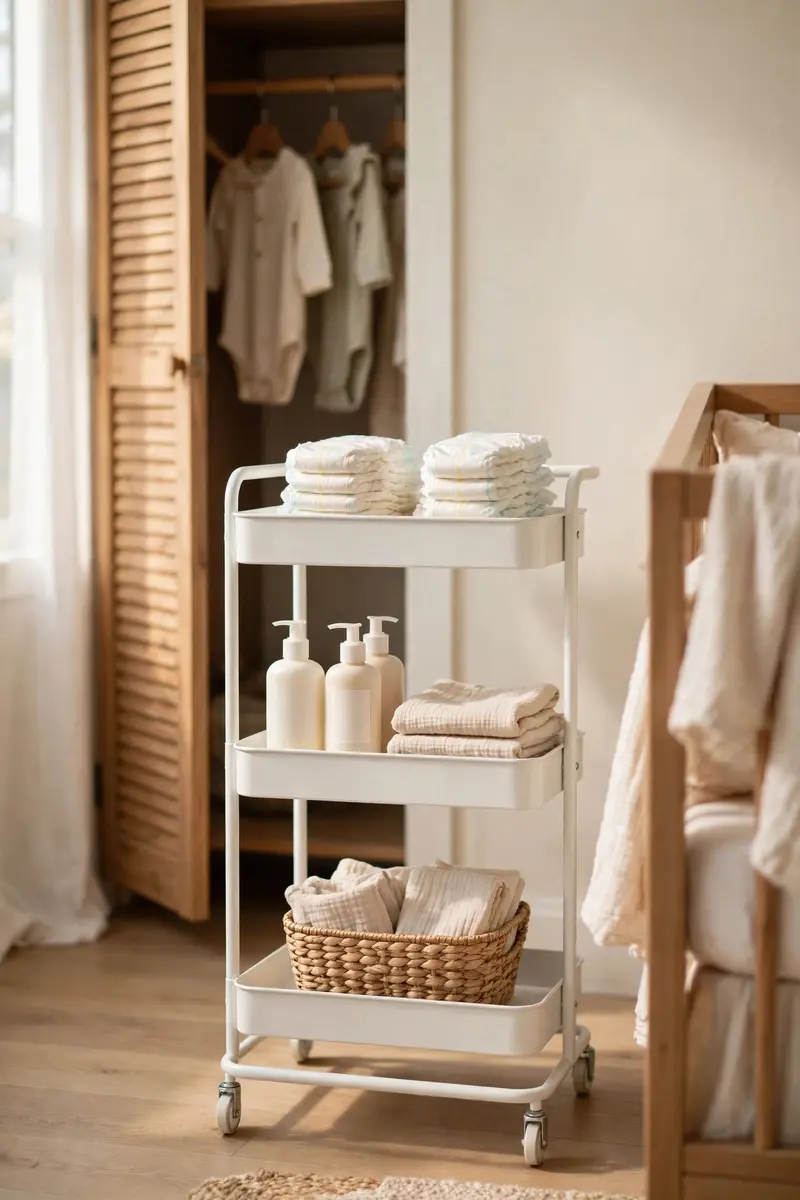
6. Roll In a Slim Utility Cart
A narrow rolling cart is one of the most practical nursery closet ideas because it moves wherever you need it. Roll it into the closet for storage, then pull it beside the changing table for diaper duty or beside the glider for late-night feeds — it is storage on wheels, and it earns its floor space.
- Materials: 1 slim 3-tier rolling cart, small baskets or cups for the tiers. Cost: $30–$50.
Park the cart in the closet with diapers and wipes on the top tier, creams and lotions in the middle, and extra burp cloths or blankets on the bottom. The open tiers mean you can see everything at a glance, which matters when you are holding a wiggly baby with one hand.
Choose a cart narrow enough to fit through the closet doorway — most 3-tier carts are about 15 inches wide, which slides into nearly any reach-in closet. If it does not fit inside, it can live just outside the closet door and still do the same job.
Tip: Keep a small trash bag or laundry pouch hanging from the cart’s side rail so dirty burp cloths go straight into the wash pile instead of back on a shelf.
*Variation:* Dedicate one cart tier to “out the door” items — a spare outfit, a hat, and sunscreen — so leaving the house takes thirty seconds instead of ten minutes.
7. Use the Back of the Door
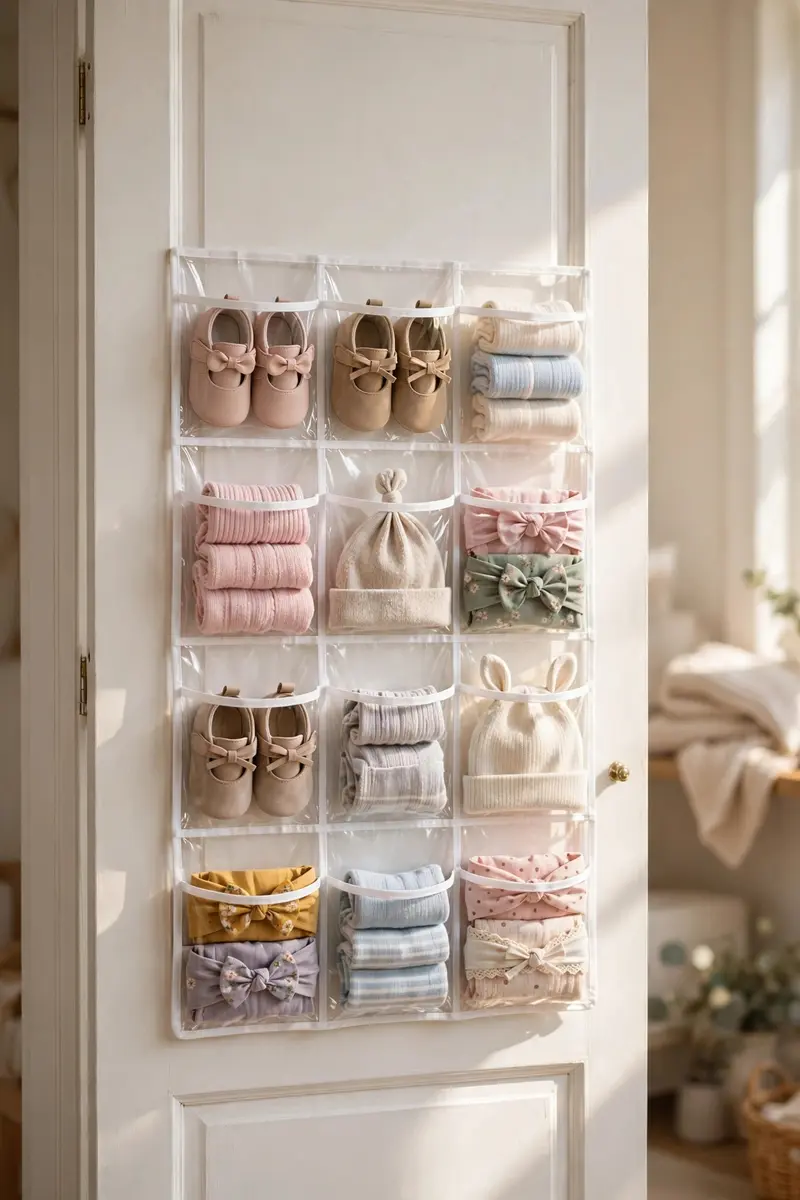
The back of the closet door is free real estate most parents ignore, and it is one of the easiest nursery closet ideas to add today. A clear over-the-door organizer holds shoes, socks, hats, bows, and all the tiny accessories that vanish into drawers and never come back.
- Materials: 1 clear over-the-door shoe organizer, 2 over-door hooks. Cost: $15–$25.
Hang the organizer on the inside of the closet door and fill the pockets by category — shoes in the bottom rows, socks and mittens in the middle, hats and headbands up top. Clear pockets matter here, because you need to see the tiny shoes before you can grab the matching pair.
If your door is a sliding door with no “back,” hang the organizer on the inside wall of the closet instead, or use adhesive hooks on the door frame. The idea works anywhere you have a flat vertical surface that is currently doing nothing.
Tip: Keep one pocket empty on purpose and use it as the “found it” pocket for the single sock or mitten that turns up in the laundry. You will be amazed how often that pocket saves a matching set.
*Variation:* Use a hanging organizer with larger pockets for diapers and wipes if your closet has no room for a cart — it turns the door into a mini changing station.
8. Claim the Top Shelf
The top shelf is the most underused space in a nursery closet, and claiming it is one of the smartest nursery closet ideas for long-term sanity. It is the perfect home for the things you need to keep but do not need every day — the next size up, seasonal clothes, and the keepsakes you are saving.
- Materials: 3–4 matching lidded boxes or fabric bins, labels. Cost: $20–$35.
Put the biggest sizes and the out-of-season clothes in lidded boxes up top, and label each box on the front so you can read it from the floor. Matching boxes keep the shelf looking tidy even when the contents are a jumble of hand-me-downs and gifts you have not sorted yet.
Keep a small step stool nearby, tucked beside the closet or behind the door, so reaching the top shelf is a five-second job instead of a production. If you cannot reach it easily, you will stop using it — and the boxes will quietly become permanent clutter.
Tip: Write the size range and the season on each box in big letters, like “6–9M WINTER,” so a quick glance tells you whether it is time to bring that box down yet.
*Variation:* Store one keepsake box up top for the coming-home outfit and the first shoes — the things you will want to find in a year without digging through four bins of outgrown clothes.

9. Tuck a Small Dresser Inside
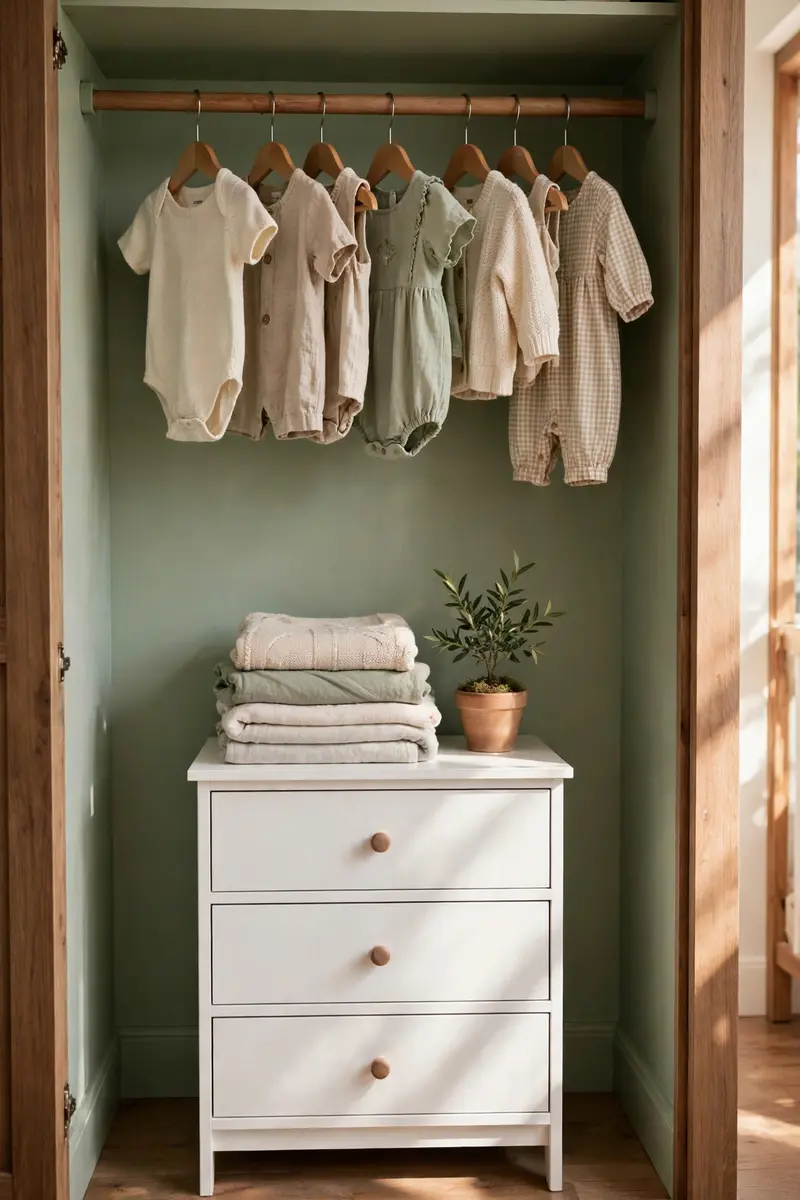
If your closet is wide enough, a small dresser inside it changes everything. This is one of the roomiest nursery closet ideas, because it turns wasted floor space under short baby clothes into real drawers for diapers, pajamas, and all the soft things that do not need a hanger.
- Materials: 1 small 3- or 4-drawer dresser, drawer dividers, non-slip shelf liner. Cost: $80–$150 new, $30–$60 thrifted.
Measure the closet first — most reach-in closets fit a dresser about 30 inches wide — then slide it in under the hanging rod and anchor it to the wall so it can never tip. A thrifted dresser with a fresh coat of paint looks just as good as a new one for a fraction of the price, and the top becomes a handy folding surface.
Give each drawer a job: top drawer for onesies, second for pants and sleepers, third for socks, hats, and accessories, bottom for diapers and wipes. Drawer dividers inside each one keep the categories from sliding into a single messy pile by the end of the week.
Tip: Line the drawers with non-slip shelf liner so the dividers stay put. These nursery closet ideas only work if the system stays where you left it after a busy week of laundry.
*Variation:* No room for a dresser? A stack of two wide drawers or a set of rolling under-bed boxes under the rod gives you the same idea at half the footprint.
10. Line the Walls with Peel-and-Stick Wallpaper
A plain white closet feels like a storage room, but one patterned wall turns it into a little jewel box. Peel-and-stick wallpaper is one of the most joyful nursery closet ideas, and because the space is small you need only one roll — which makes it a genuinely cheap upgrade.
- Materials: 1–2 rolls peel-and-stick wallpaper, smoothing tool, utility knife. Cost: $25–$50.
Pick a soft pattern — tiny florals, subtle stripes, or small stars — in colors that match the nursery, and paper just the back wall so the pattern frames the clothes instead of fighting them. The small space means you can finish in under an hour, and if you ever hate it, it peels right off with no damage.
Apply the first strip from the top down, smoothing as you go, and trim the extra at the baseboard with a sharp knife. A second pair of hands helps, but this is one of the few wallpaper jobs that is genuinely easy to do alone.
Tip: Paper the back wall only and paint the side walls a matching solid color. The contrast makes the pattern pop and keeps the closet feeling bright instead of busy.
*Variation:* Try a soft sage green or warm cream paint on the closet walls instead — a painted backdrop costs even less and makes white shelving stand out beautifully.

11. Corral Blankets in Woven Baskets
Blankets, swaddles, and soft toys multiply faster than any other baby item, and they look messy no matter how neatly you fold them. Woven baskets are one of the warmest nursery closet ideas, because they hide the pile while adding the texture and warmth that make a closet feel styled instead of stuffed.
- Materials: 2–3 woven or seagrass baskets, labels or tags. Cost: $15–$30 each.
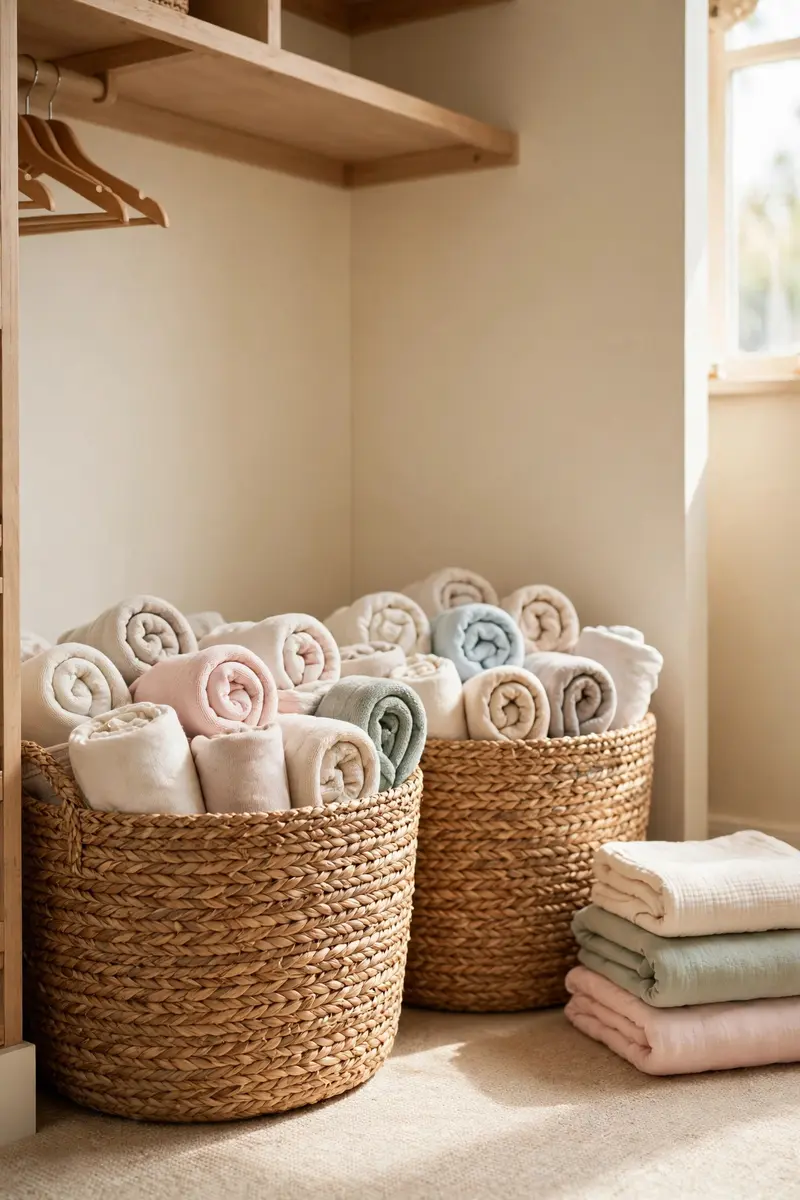
Set one basket on the closet floor for everyday blankets, one on a shelf for swaddles, and one up high for the extras you rotate in. Rolling blankets instead of folding them saves space and makes it easy to pull one out without disturbing the rest — a small trick that keeps the basket looking tidy all week.
Choose baskets with handles so you can carry the whole lot to the living room for tummy time and back again without making three trips. Natural materials like seagrass, cotton rope, and rattan all fit a nursery beautifully and hide wear far better than bright plastic.
Tip: Keep one basket strictly for “too small” blankets and loveys you are not ready to pass on. When it is full, that is your signal to donate or store the overflow instead of starting a fourth basket.
*Variation:* Use a lidded woven hamper for dirty laundry inside the closet, so the wash pile has a home that looks like decor instead of a chore waiting to happen.
12. Divide Drawers with Honeycomb Organizers
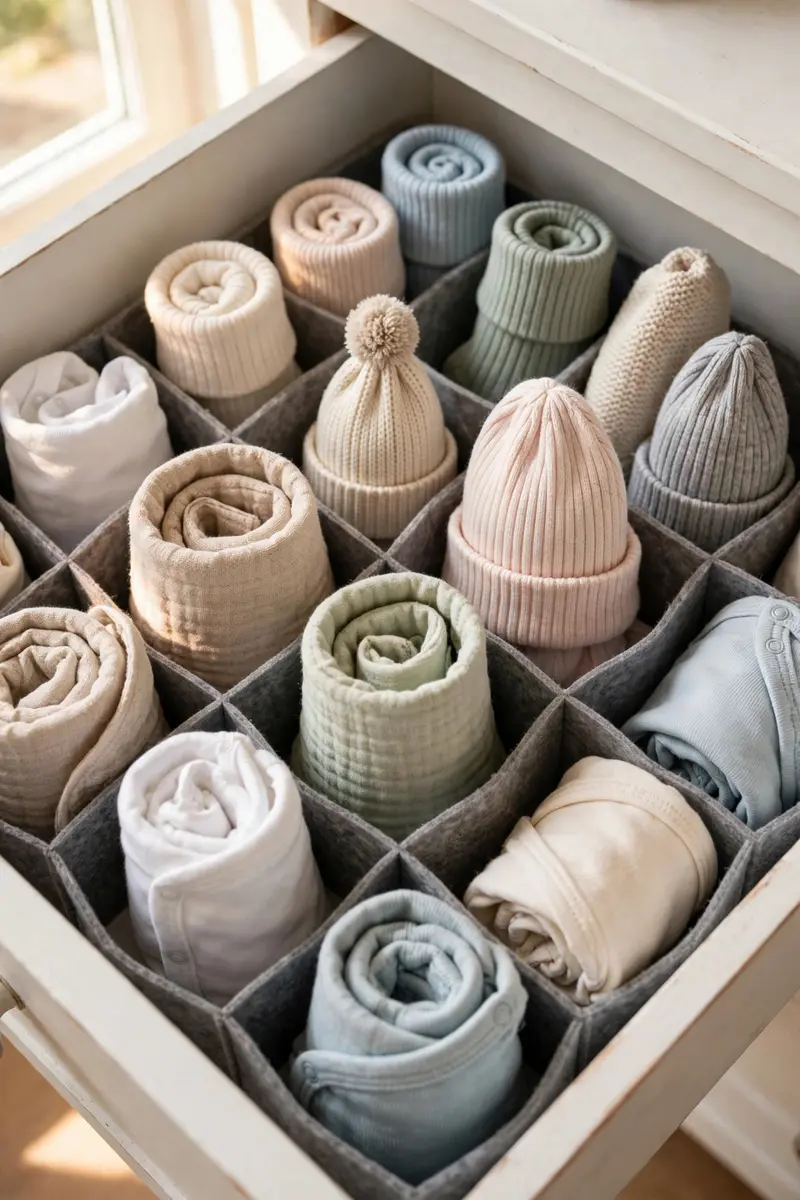
Open a nursery drawer without dividers and you will find one big tangled pile. Honeycomb organizers are one of the most satisfying nursery closet ideas, because they turn a drawer into a grid of little homes — socks in one cell, hats in another, mittens in a third — and everything stays visible.
- Materials: 1–2 honeycomb drawer organizers, drawer dividers. Cost: $10–$18.
Measure the drawer before you buy, then drop the organizer in and sort by category: socks together, hats together, bibs together. Fold tiny clothes so they stand upright in their cells, like files in a drawer, so you can see every item at once instead of digging through a stack to find the one you want.
This trick works in the dresser inside the closet and in the changing-table drawers out in the room, so one purchase can organize two spots. If you are working with a small nursery overall, these small wins add up — see our small nursery ideas for more space-saving tricks that pair perfectly with this one.
Tip: Keep a spare organizer in the next size up on the top shelf. When your baby outgrows the current drawer setup, the replacement is already waiting and the swap takes five minutes.
*Variation:* No organizer on hand? Clean shoeboxes and small gift boxes cut to height make excellent free drawer dividers in a pinch.
13. Rotate Sizes with Clear Bins
Babies move through sizes so fast that the closet needs a rotation system, not just storage. Clear bins are one of the most practical nursery closet ideas, because you can see exactly what is inside without opening anything — which means the 6–9 month clothes come down the day your baby needs them, not a month later.
- Materials: 3–4 clear bins with lids (56–65 quart), labels. Cost: $20–$40.
Label one bin per size range — “0–3M,” “3–6M,” “6–9M,” “9–12M” — and keep the current size in the closet while the rest wait on the top shelf or under the crib. When your baby outgrows a size, move those clothes into the “outgrown” bin and pull the next bin down in the same five-minute swap.
Stack the bins with the soonest size on top so the rotation follows a simple order, and keep a “donate” bin beside them for the pieces you will not keep. The whole system runs on one habit: swap the bin the day the clothes stop fitting, not the week after.
Tip: Photograph the contents of each bin with your phone and tape the photo to the front. It is faster than a written list and helps you remember what you already own before buying more.
*Variation:* Use clear bins for seasonal swaps too — summer clothes in one, winter in another — and trade them out twice a year instead of reorganizing the whole closet.

14. Add a Mirror to the Closet Door
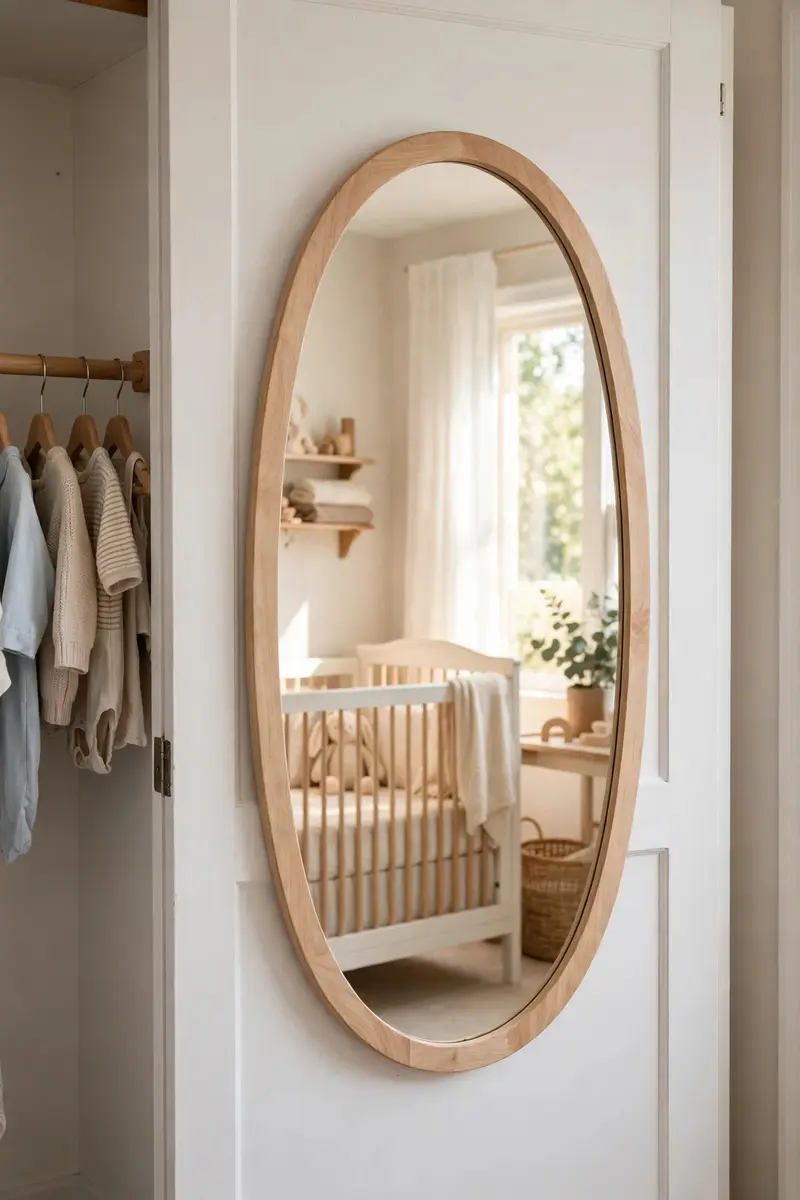
A mirror on the closet door is the finishing touch that makes the whole nursery feel bigger and brighter. It is one of the simplest nursery closet ideas, it costs less than a dinner out, and it bounces light around a small room in a way no other single change can match.
- Materials: 1 lightweight over-the-door mirror or adhesive mirror tiles, mounting hooks. Cost: $20–$40.
Hang a full-length mirror on the inside of the closet door so it reflects the room when the door is open and stays hidden when it is closed — or mount it on the outside if you want the light all the time. Either way, use shatterproof acrylic or a mirror made for kids’ rooms, and anchor it firmly so it can never slip.
The mirror also makes the closet itself feel less like a dark cave when you are choosing outfits, which matters more than it sounds at midnight. Pair it with the wallpaper from idea 10 and the closet becomes a spot you actually enjoy opening. For more ways to make the nursery walls work harder, our nursery accent wall ideas and woodland nursery ideas show how one wall can change the whole room.
Tip: If you prefer a softer look, use a small round mirror with a wooden frame instead of a full-length one — it still brightens the room and doubles as sweet nursery decor.
*Variation:* Stick adhesive mirror tiles in a row along the inside of the closet door for a playful, budget-friendly version that kids love to peek into as they grow.
Nursery Closet Ideas: Frequently Asked Questions
These nursery closet ideas raise the same questions again and again, so here are the straight answers — including the small-closet tricks that make the biggest difference.
How do I organize a small nursery closet?
Start by emptying it completely, then add a second hanging rod and a cube unit with labeled bins — those two moves alone usually double usable space. Sort clothes by size with dividers, use the back of the door for small items, and keep only the current size at easy reach. The Spruce’s small closet storage ideas show the same principles in real closets, and their IKEA closet hacks include nursery-friendly cart and cabinet ideas worth stealing.
What is the best way to store baby clothes by size?
Hang the current size on the lower rod with wooden dividers marking each size range, and keep the next size up on the top rod or shelf. Store larger sizes in labeled clear bins, one bin per size, stacked with the soonest size on top. When your baby outgrows a size, move those clothes to an “outgrown” or “donate” bin the same day so the closet never fills with clothes that no longer fit.
How can I maximize space in a nursery closet?
Use vertical space first: a second rod, tall cube shelving, and the top shelf with lidded boxes. Then claim the hidden spots — the back of the door, the floor under the rod, and the wall beside the rod for hooks. Slim velvet hangers and folded clothes stored upright in divided drawers squeeze even more out of the same footprint, and a rolling cart adds storage without needing a single new shelf.
Should I remove the closet doors in a nursery?
Usually, no — keeping the doors hides the clutter, keeps dust off the clothes, and is safer for rentals. Instead, reorganize inside the closet with a second rod, cubes, and door storage. If you love the open-closet look, remove only one sliding door panel, or hang a pretty curtain on a tension rod so you can close the closet when you want a calmer room.
What size bins work best in a nursery closet?
For cube shelves, 13-inch fabric bins fit standard cubes perfectly. For size rotation, clear bins of 56 to 65 quarts hold a full size range with room to spare. For the top shelf, matching lidded boxes about 12 inches tall stack neatly without wasting height. Always measure your shelf or cube opening first — bins that are one inch smaller than the opening slide in and out without a fight.
Start With Just One Nursery Closet Idea
You do not need a perfect closet to have a calmer nursery — you just need a starting point. Pick the one idea from this list that fixes your biggest frustration, whether that is the second rod, the size dividers, or the rolling cart, and do it this weekend. One finished change beats a whole Pinterest board of plans.
Then keep going, one idea at a time, as your baby grows. The system you build today will change with every size, every season, and every new favorite blanket — and that is exactly how it should work. A nursery closet that adapts is a nursery closet that stays organized, and that is the real promise behind all fourteen of these nursery closet ideas.
If this list helped you, save it to Pinterest so you can find it again when the next size swap comes around — and share it with a friend who is setting up a nursery of their own. Your future self, standing in front of a tidy closet at 3 a.m., will be glad you did.




Leave a Reply