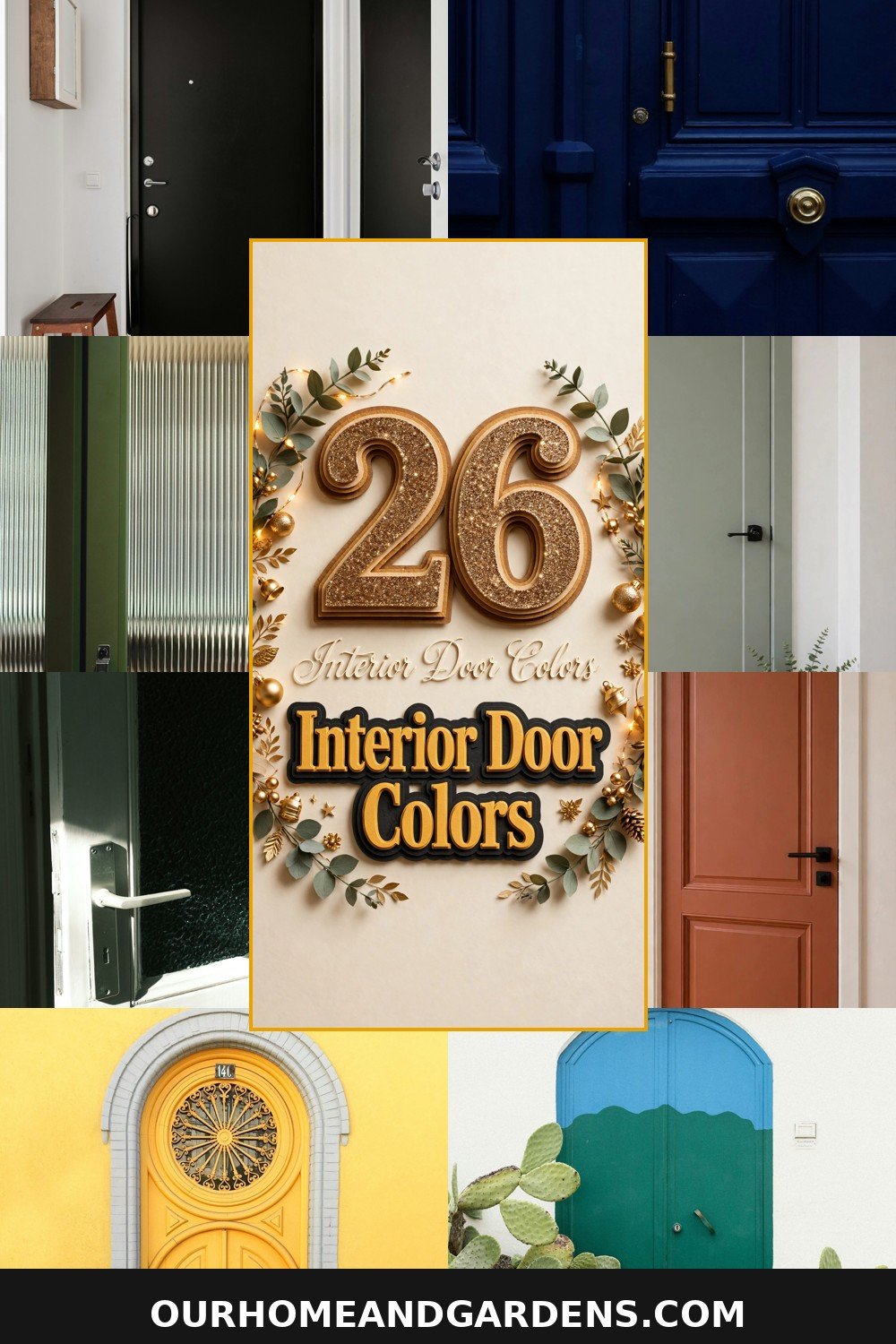
Your doors are the most overlooked surfaces in your home, and the right interior door colors can change a whole room for the price of one quart of paint. For years, the default was plain white, but 2026 is the year doors finally get to be part of the design.
This guide rounds up 26 interior door colors that actually work in real homes, from dramatic matte black to calm sage green and the color-drenching trend designers love right now. Every idea includes a real paint name you can ask for at the store, a realistic cost, and simple steps you can finish in a weekend.
You do not need new doors, a contractor, or a big budget. You just need a color you love and a free Saturday. Pick one door to start with, see how it feels, and let the rest of the house follow.
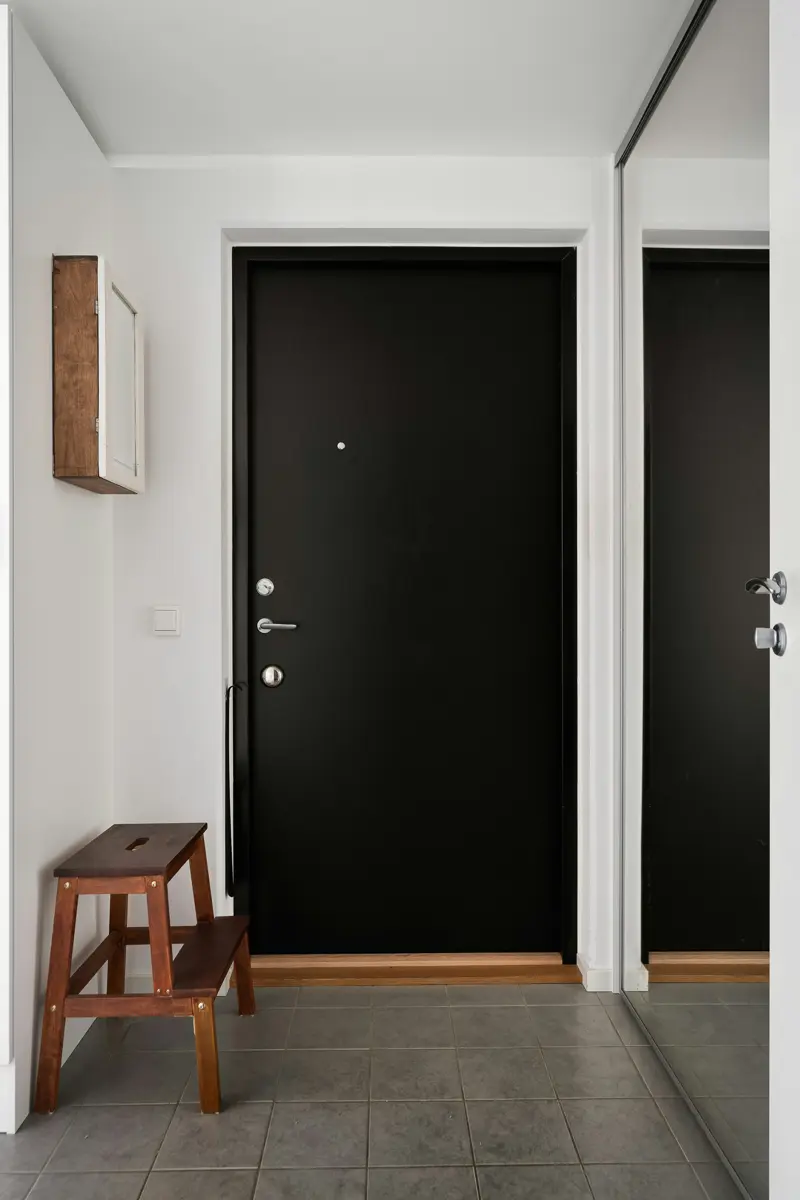
1. Matte Black Interior Door Colors for Instant Drama
A matte black door against white walls is the fastest way to make a plain hallway look designed. The contrast frames the doorway like a picture, and it instantly makes your trim, floors, and hardware look more intentional. These interior door colors work best in bright rooms with plenty of natural light, where the dark slab reads as architecture instead of a black hole.
Materials + cost: one quart of satin or matte black enamel paint ($25–$40), a quart of primer ($15), a 2.5-inch angled brush, a small foam roller, painter’s tape, and 220-grit sandpaper. Total: about $45–$65 for one door.
Start by removing the knob and hinges, then clean the door with a damp cloth and a little dish soap. Sand lightly, wipe away the dust, and roll on one coat of primer. Once it dries, paint the recessed panels first, then the flat rails and stiles, working top to bottom in thin coats.
Tip: Use a true neutral black like Sherwin-Williams Tricorn Black so it never pulls blue or green in different light.
Variation: Try the same black on a pantry or closet door for a small, low-risk test before committing to every door in the house.
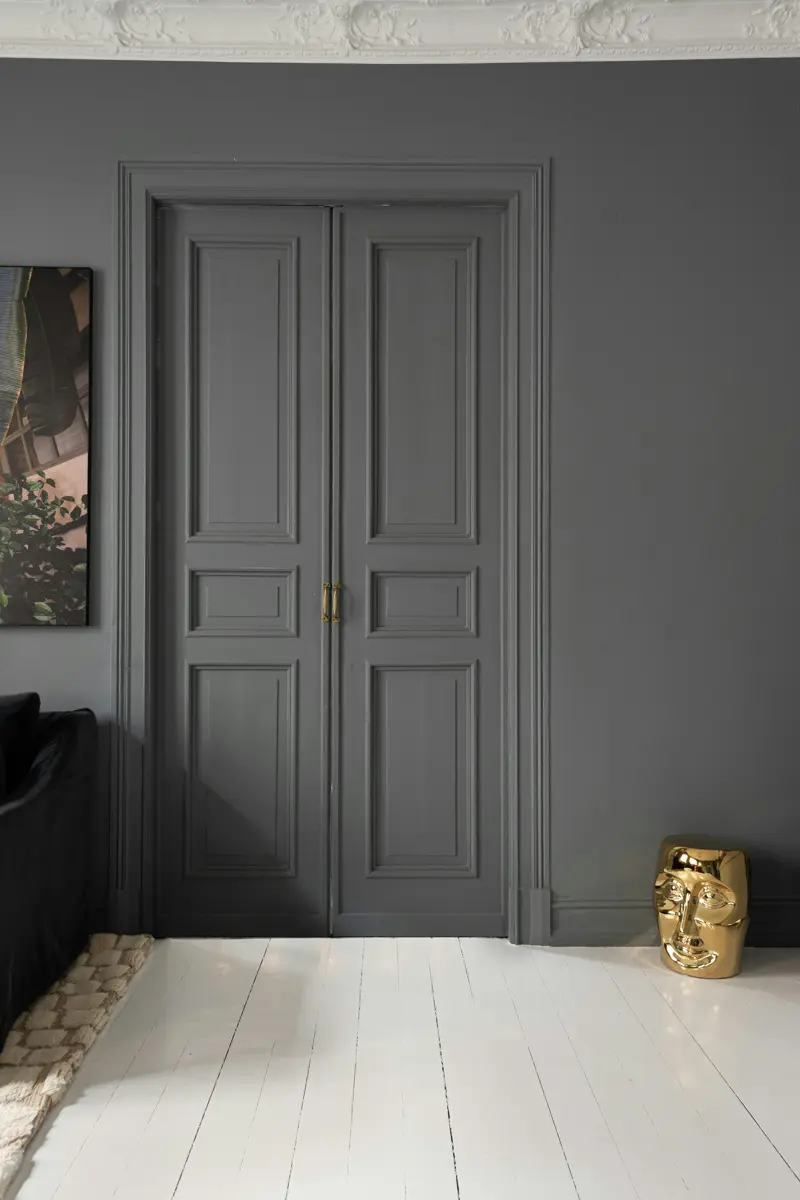
2. Soft Charcoal for a Gentler Dark Door
If pure black feels too harsh, soft charcoal gives you the same drama with a little more warmth. It is one of the most forgiving interior door colors because it hides fingerprints and scuffs far better than black, and it pairs beautifully with both cool grays and warm wood floors.
Materials + cost: one quart of charcoal enamel in a satin finish ($25–$40), primer ($15), brush, foam roller, tape, and sandpaper. Total: about $45–$65 per door.
Charcoal looks best when the walls stay light and the hardware is simple — matte black, brushed nickel, or aged brass all work. Paint in two thin coats and let the first coat dry fully before the second, since dark colors show every lap mark if you rush.
Tip: Test a swatch on the door itself and check it at night, because charcoal can read almost black under warm bulbs. Charcoal is one of the most forgiving interior door colors for busy family homes.
Variation: Use charcoal on French doors or a double-door opening, where the dark frames make the glass panels glow.
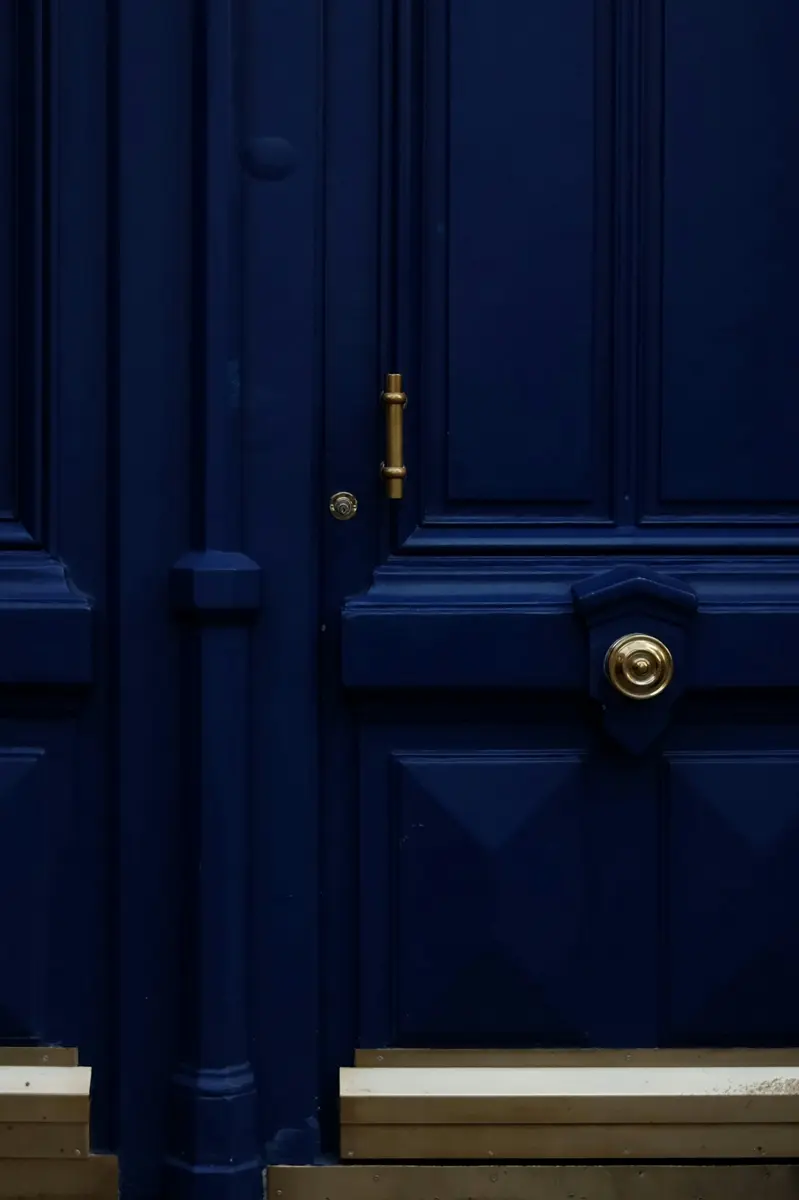
3. Navy Blue for Classic, Tailored Depth
Navy is the tailored suit of interior door colors — deep, rich, and impossible to get wrong. It brings a coastal-meets-classic feeling to living rooms and bedrooms, and it looks especially good with brass hardware and cream or warm white walls.
Materials + cost: one quart of navy enamel ($25–$40), primer ($15), angled brush, foam roller, tape, and sandpaper. Total: about $45–$65 per door.
Benjamin Moore Hale Navy is the designer favorite here: deep and rich with just a hint of blue-black in low light. Because navy is so saturated, a gray-tinted primer helps you reach full coverage in two coats instead of three.
Tip: Pair navy doors with unlacquered brass knobs — the warm metal keeps the cool blue from feeling cold. Navy is a classic among interior door colors because it works in almost any style of home.
Variation: Paint only the inside of your front door navy for a surprise pop of color every time you come home.
4. Sage Green for a Calm, Botanical Feel
Sage green has moved from cabinets to doors, and it is one of the most relaxing interior door colors you can choose. It adds a soft, botanical touch to bedrooms, bathrooms, and pantries without shouting for attention, and it connects your rooms to the outdoors in a quiet way.
Materials + cost: one quart of sage enamel ($25–$40), primer ($15), brush, foam roller, tape, and sandpaper. Total: about $45–$65 per door.
Try Benjamin Moore Saybrook Sage for a muted, earthy green-gray, or Farrow & Ball Lichen for something a touch softer. Sage looks lovely with white trim, natural wood floors, and woven baskets nearby — it loves texture.
Tip: If your room gets little sunlight, pick a sage with warm undertones so it reads green, not gray.
Variation: Use sage on a laundry room or mudroom door, where the color makes a hardworking space feel fresh. For more sage inspiration, see our sage green dining room ideas.
5. Old Money Olive, the 2026 Color of the Year
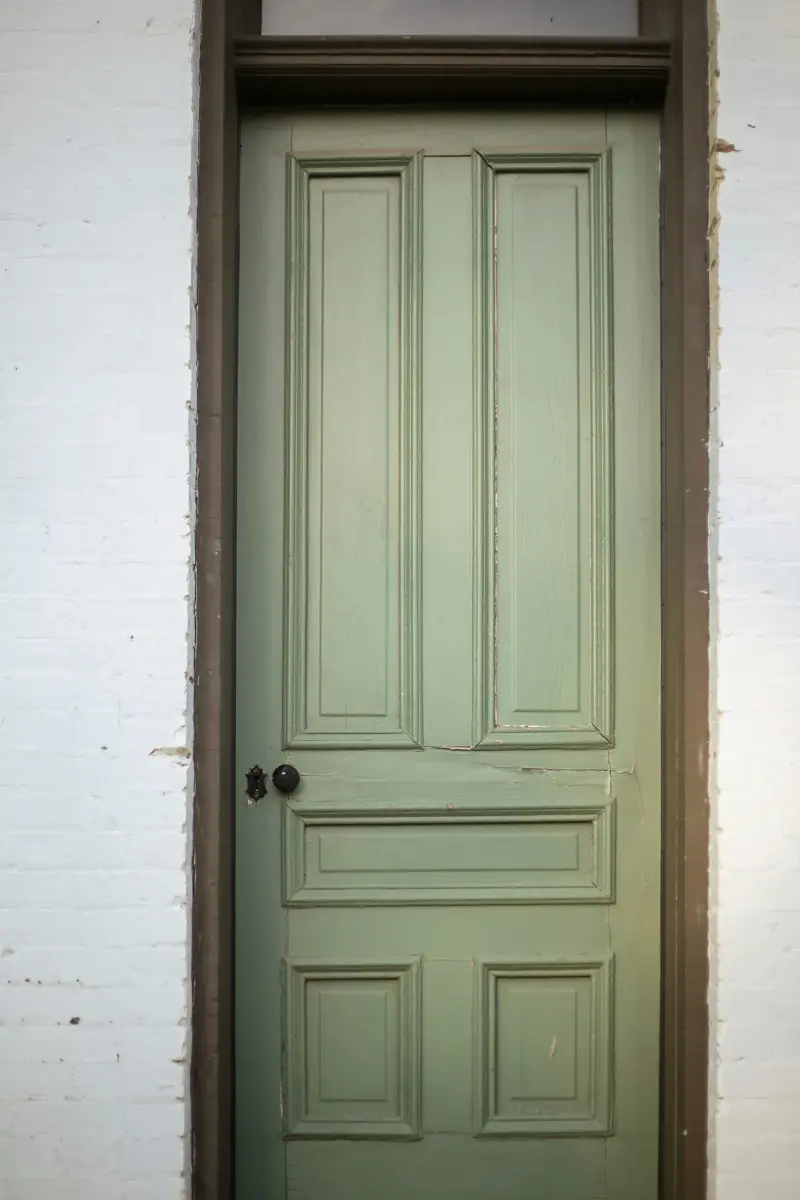
Deep, muddy olive green is the defining color of 2026, and on a door it feels historic and established even in a brand-new house. These rich interior door colors act almost like a neutral, pairing with oak, walnut, cream walls, and brass without ever clashing.
Materials + cost: one quart of olive enamel ($25–$40), primer ($15), brush, foam roller, tape, and sandpaper. Total: about $45–$65 per door.
Farrow & Ball Studio Green is the shade designers keep naming, while Benjamin Moore Backwoods gives a similar forest-olive feel for less. Because olive is a mid-tone, it covers well in two coats over a white primer — no gray primer needed.
Tip: Keep the walls warm white and the hardware aged brass to lean into the old-money, collected look.
Variation: Paint a built-in bookshelf or the back of a door the same olive for a layered, library feel.
6. Forest Green for Grounded, Organic Energy
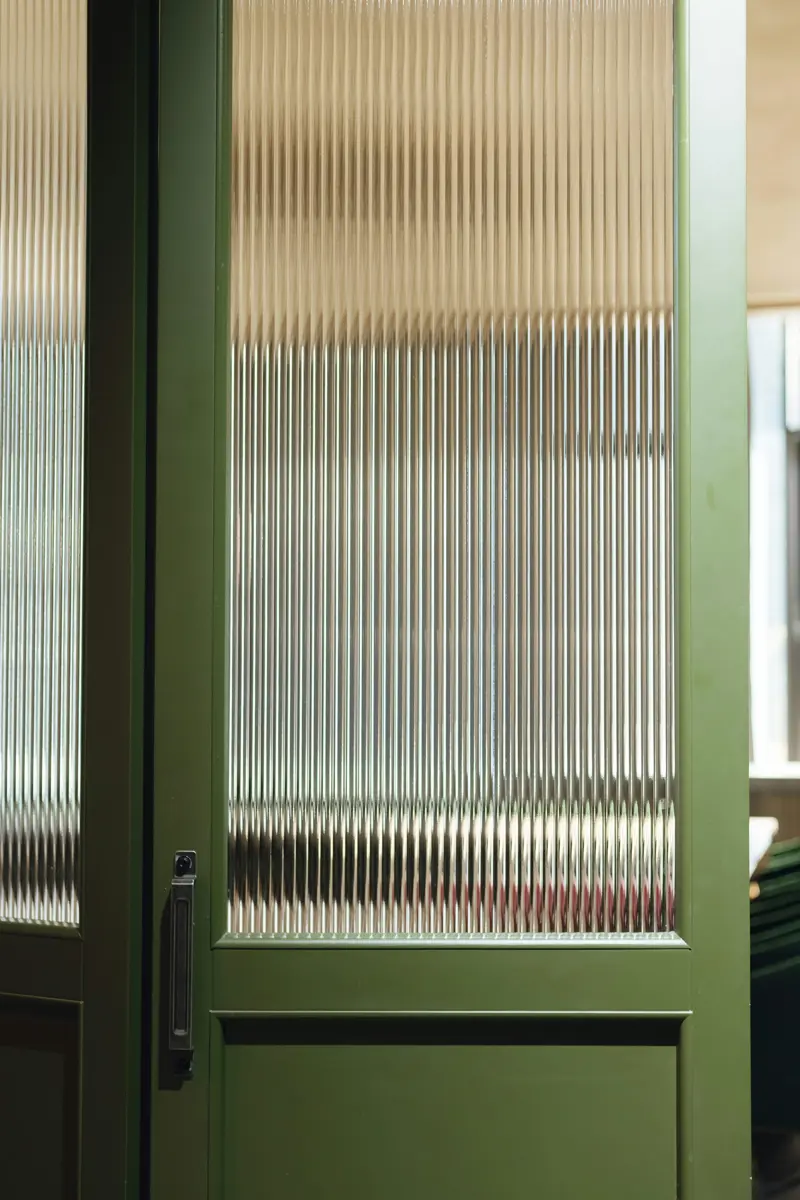
Forest green brings a deep, woodsy calm to any room, and it is a wonderful choice for a home office, library, or bedroom door. It feels grounded and grown-up, and it makes white trim look crisp by comparison.
Materials + cost: one quart of forest green enamel ($25–$40), primer ($15), brush, foam roller, tape, and sandpaper. Total: about $45–$65 per door.
This is a color that rewards good prep. Dark greens show brush marks, so roll the flat areas with a foam roller and use the brush only for panels and edges. Two thin coats beat one thick coat every time.
Tip: Add a small brass kick plate or a vintage-style knob — the warm metal against dark green looks like it came straight from a boutique hotel. Forest green is one of the richest interior door colors for a home office or library.
Variation: Use forest green on a pantry door and style the shelves behind it with matching green jars and plants.
7. Evergreen Fog for a Soft, Modern Sage
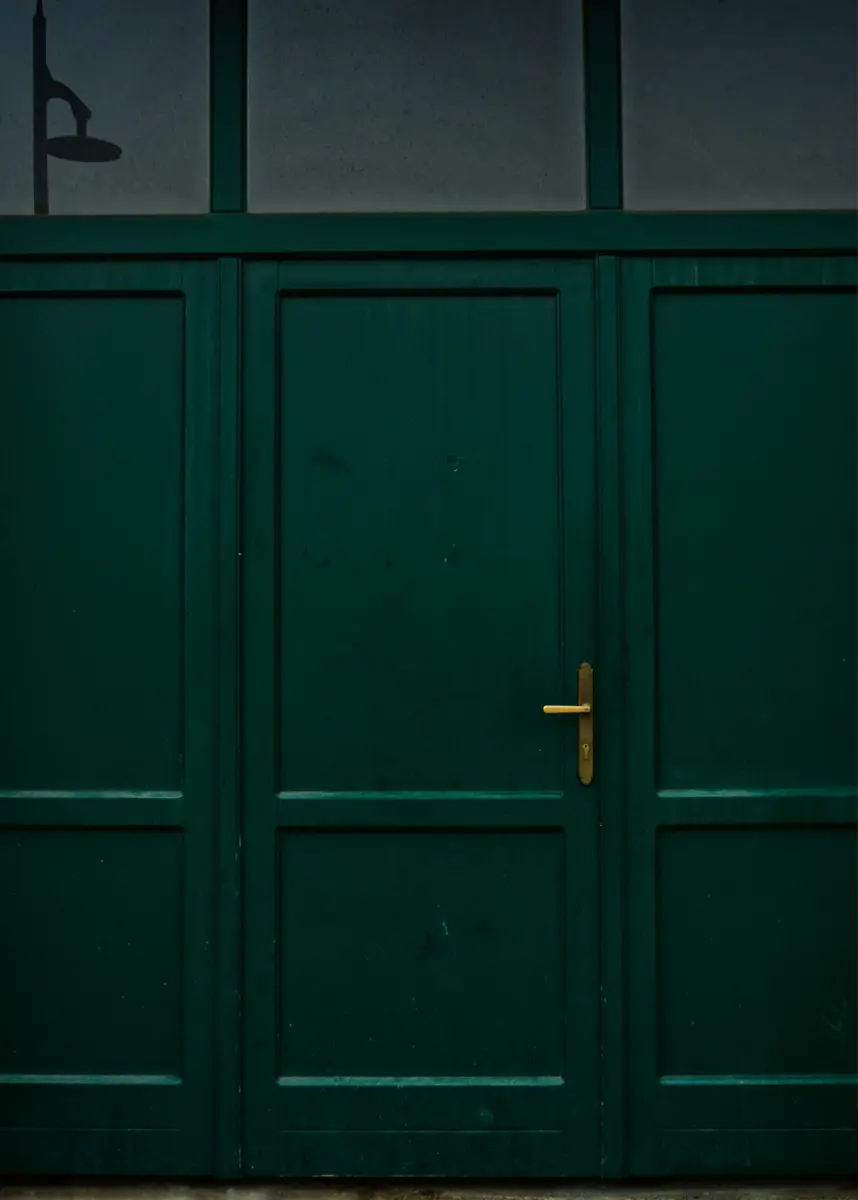
Evergreen Fog is a soft, organic sage with gray undertones, and it is one of the easiest interior door colors to live with. It reads as a gentle green in daylight and a quiet neutral in the evening, so it never fights with your furniture or art.
Materials + cost: one quart of Evergreen Fog enamel ($25–$40), primer ($15), brush, foam roller, tape, and sandpaper. Total: about $45–$65 per door.
Sherwin-Williams Evergreen Fog was a Color of the Year for a reason: it is calm without being boring. It works beautifully in bedrooms and bathrooms, and it flatters both light oak and dark walnut floors.
Tip: Pair it with matte black hardware for a modern edge, or brushed nickel for a softer, spa-like finish.
Variation: Paint the door and the trim the same soft green for a gentle version of the color-drenching trend.

8. Warm Greige for the Safest Beautiful Neutral
Greige — the blend of gray and beige — is the great neutralizer of interior design. If you want something more interesting than white but less bold than black, warm greige interior door colors are the answer. They add depth without competing with anything else in the room.
Materials + cost: one quart of greige enamel ($25–$40), primer ($15), brush, foam roller, tape, and sandpaper. Total: about $45–$65 per door.
Benjamin Moore Revere Pewter is the most-searched greige in the country for good reason: it bridges warm and cool tones and works in almost any room. It is also the safest choice for renters and for homes you may sell soon, since buyers love it.
Tip: If your walls are cool gray, choose a greige with warm beige undertones so the door adds warmth instead of doubling the gray.
Variation: Use greige on every door in a hallway for a calm, cohesive flow from room to room.
9. Warm White Interior Door Colors That Never Date
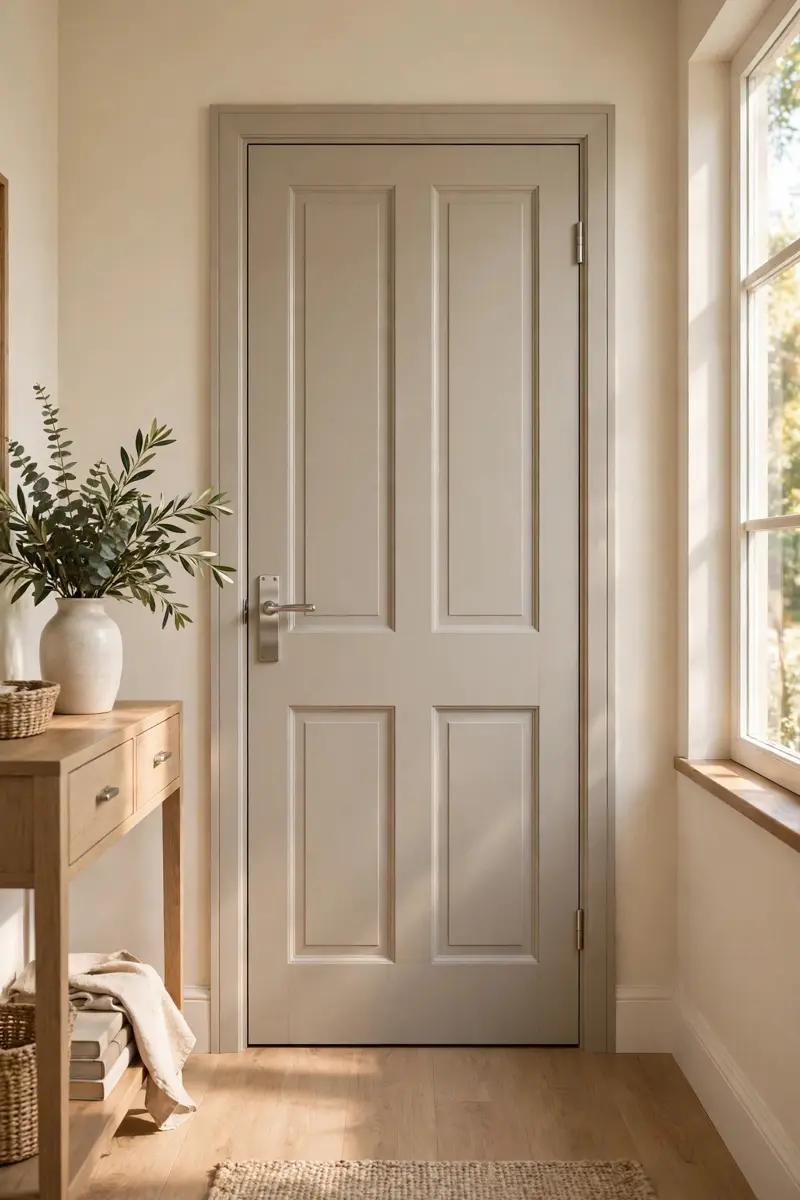
Classic white never goes out of style — but not all whites are equal. A warm white with a hint of cream looks soft and inviting, while a stark blue-white can feel cold and clinical. The trick is picking the right white for your light.
Materials + cost: one quart of warm white enamel ($25–$40), primer ($15), brush, foam roller, tape, and sandpaper. Total: about $45–$65 per door.
Benjamin Moore Chantilly Lace is the cleanest, crispest white, while Sherwin-Williams Pure White adds a whisper of warmth. Paint the door and trim the same white so the whole opening reads as one clean frame.
Tip: Always test white on the door itself — the same white looks different on a vertical door than on a paint chip.
Variation: If white feels plain, upgrade the hardware instead: a black or brass knob transforms a white door for under $20.

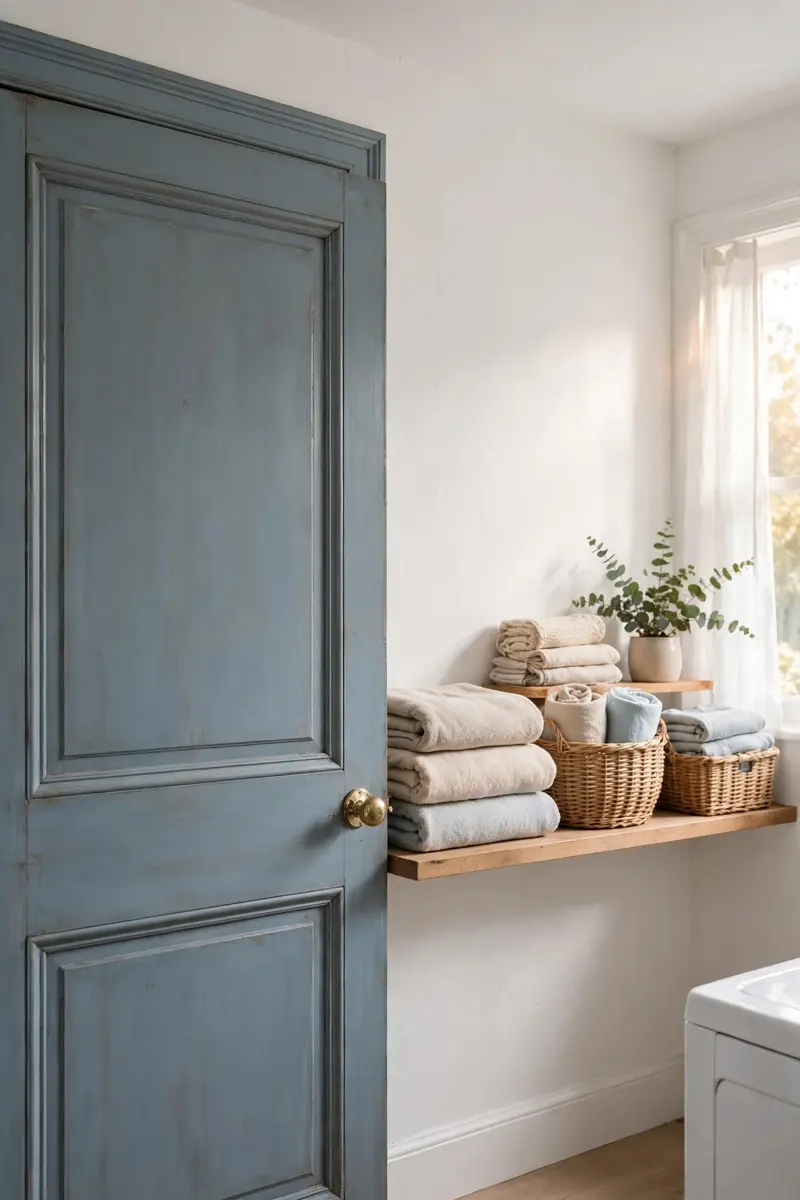
10. Heritage Blue for Pantries and Laundry Rooms
Dusty, heritage blues are the 2026 favorite for working rooms like pantries, mudrooms, and laundry rooms. They hide scuffs, feel clean and calm, and make a small utility space feel designed instead of forgotten.
Materials + cost: one quart of heritage blue enamel ($25–$40), primer ($15), brush, foam roller, tape, and sandpaper. Total: about $45–$65 per door.
Try Benjamin Moore Aegean Teal for a touch of calm energy, or Sherwin-Williams Languid Blue for a softer blue-gray. A satin or semi-gloss finish is the smart pick here because these doors get touched constantly.
Tip: Use a semi-gloss finish on pantry and laundry doors — it wipes clean with a damp cloth and resists sticky fingerprints. Heritage blue is one of the most practical interior door colors for hardworking rooms.
Variation: Paint the inside of the pantry door the same blue and add small hooks for measuring cups and aprons.
11. Terracotta Clay for Sun-Baked Warmth
Terracotta brings sun-baked, earthy warmth into a home, and on a door it feels like a hug. It works beautifully with woven rugs, leather, wood tones, and lots of plants, giving a curated, lived-in feel that white doors never can.
Materials + cost: one quart of terracotta enamel ($25–$40), primer ($15), brush, foam roller, tape, and sandpaper. Total: about $45–$65 per door.
Sherwin-Williams Cavern Clay is the go-to terracotta: warm and clay-like without turning orange. Because it is a mid-tone, two coats over white primer give full, even coverage.
Tip: Keep the walls warm white and add a terracotta pot or two nearby so the door color echoes through the room. Terracotta is one of the warmest interior door colors for homes with lots of wood and plants.
Variation: Use terracotta on a sliding barn door for a rustic focal point in a living room or kitchen.

12. Soft Blush Pink for Bedrooms and Nurseries
Soft blush pink is the secret weapon for bedrooms, nurseries, and bathrooms where you want a hint of color without overwhelming the senses. It feels gentle and grown-up, especially in a muted, dusty rose tone rather than a bubblegum pink.
Materials + cost: one quart of blush enamel ($25–$40), primer ($15), brush, foam roller, tape, and sandpaper. Total: about $45–$65 per door.
Farrow & Ball Calamine is the sophisticated pick: a dusty pink that reads almost neutral in soft light. Pair it with cream walls, light wood, and brass hardware for a calm, romantic feel.
Tip: If you worry pink will feel too sweet, choose a blush with gray or beige undertones — it reads as a warm neutral, not a pastel.
Variation: Use blush on a closet door in a dressing area, where it adds a boutique-like touch every time you open it.

13. Sunny Yellow for a Cheerful Accent Door
A sunny yellow door is pure happiness. It is the boldest of these interior door colors, and it works best as a single accent — one laundry room door, one pantry door, or the inside of a front door — where it makes you smile every time you walk by.
Materials + cost: one quart of yellow enamel ($25–$40), primer ($15), brush, foam roller, tape, and sandpaper. Total: about $45–$65 per door.
Benjamin Moore Banana Yellow or Sherwin-Williams Cheerful give a true, saturated yellow. Yellow is a notoriously sheer color, so plan on a gray-tinted primer and three thin coats for full, even coverage.
Tip: Balance a yellow door with calm, neutral walls — the door should be the star, not compete with everything else.
Variation: Paint a kids’ playroom door yellow and add a small chalkboard panel for doodles and notes.
14. Color Drenching: The Boldest Interior Door Colors Trend of 2026
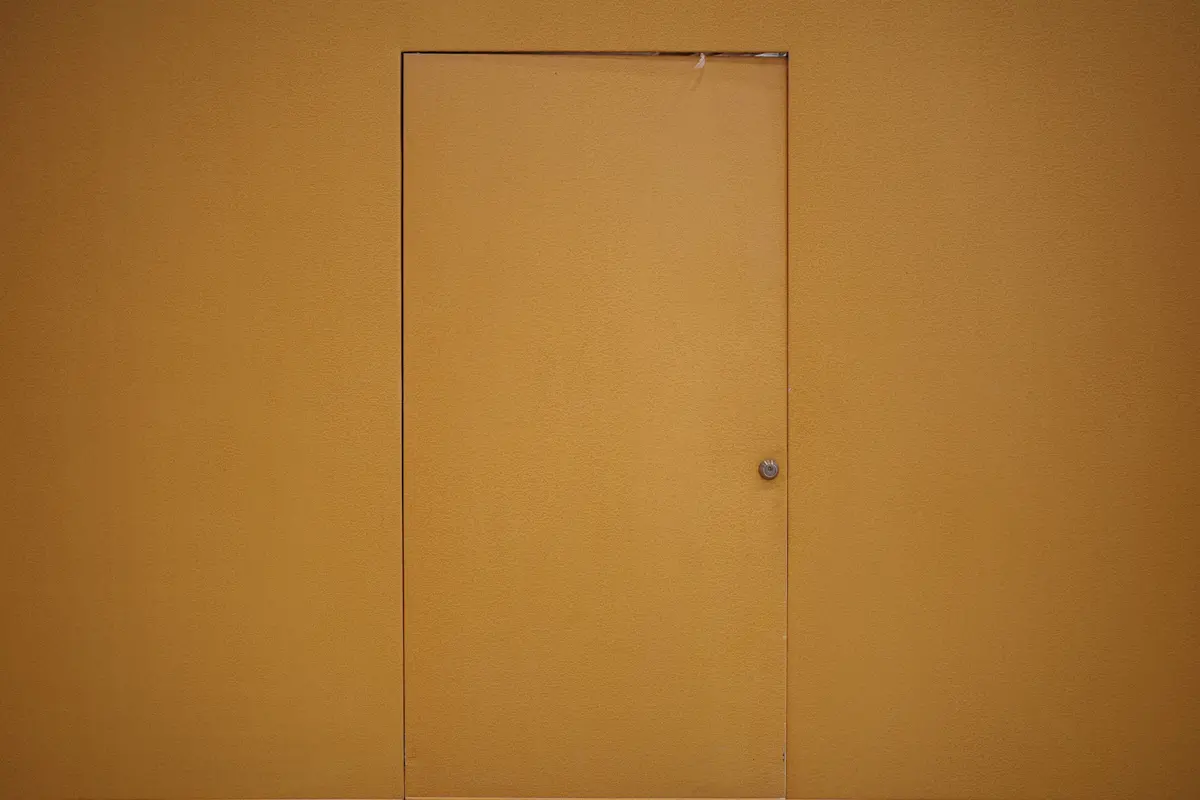
Color drenching is the biggest interior trend of 2026: paint the door, the trim, and the walls the exact same color. The door disappears into the wall, the room feels larger and more cohesive, and the whole space reads as intentional and high-end.
Materials + cost: one gallon of wall paint in your chosen color ($45–$65), one quart of the same color in enamel for the door ($25–$40), primer, brush, roller, tape, and sandpaper. Total: about $90–$130 for a small room.
This works best with mid-tone moody colors like a soft clay, a muted green, or a dusty blue. Use flat or eggshell on the walls and satin enamel on the door so the surfaces match in color but the door stays durable and wipeable.
Tip: Start with a small room like a powder room or reading nook — color drenching is easier to love when you can close the door and live with it first.
Variation: Drench just the door and trim in one color while the walls stay a shade lighter for a softer, two-tone version of the look.

15. Two-Tone Doors for an Artisan Look
Two-tone doors split the slab into two colors — usually along a panel line or a horizontal rail — and the result feels custom and artisan. It is a playful way to add personality to an entryway or bedroom without painting the whole room.
Materials + cost: two quarts of enamel in contrasting colors ($50–$80 total), primer ($15), brush, foam roller, tape, and sandpaper. Total: about $65–$95 per door.
The easiest version is a color on the bottom half and white or a lighter shade on top, divided by the door’s middle rail. Use painter’s tape along the rail line and paint the darker color first, letting it dry fully before taping over it.
Tip: Keep one of the two tones neutral — a bold color plus white is chic, while two bold colors can fight each other. Two-tone doors are among the most creative interior door colors for an entryway.
Variation: Try a vertical split on a double door, with one door in color and the other in white, for a modern, graphic look.

16. Natural Wood Stain for Warm, Honest Beauty
Sometimes the best door color is no paint at all. A natural wood stain shows off the grain, adds instant warmth, and never goes out of style. It is perfect for craftsman, farmhouse, and Scandinavian homes where wood is already the star.
Materials + cost: one quart of wood stain ($20–$35), a quart of clear polyurethane topcoat ($20), sandpaper in 120 and 220 grit, clean rags, and a foam brush. Total: about $45–$60 per door.
Sand the door smooth, wipe away every speck of dust, and apply the stain with the grain using a rag or foam brush. Wipe off the excess after a few minutes, let it dry, then seal with two thin coats of polyurethane for protection.
Tip: Always test the stain on the top edge of the door first — wood takes stain differently depending on its species and age. A natural wood finish is one of the most timeless interior door colors for a craftsman home.
Variation: Try a whitewash or pickling stain for a lighter, beachy wood tone that still shows the grain.

17. Warm Bronze-Black for Soft Noir Elegance
Soft noir is a warm black with bronze or brown undertones, and it is the sophisticated cousin of matte black. It feels rich and velvety rather than stark, and it is one of the most elegant interior door colors for living rooms and dining rooms.
Materials + cost: one quart of warm black enamel ($25–$40), primer ($15), brush, foam roller, tape, and sandpaper. Total: about $45–$65 per door.
Sherwin-Williams Urbane Bronze is the classic soft noir: a deep bronze-charcoal that shifts beautifully in different light. It pairs with warm white walls, brass hardware, and wood floors better than a true black does.
Tip: Use a satin finish rather than flat — the slight sheen keeps the warm undertones visible and the door wipeable.
Variation: Paint a pair of French doors soft noir and let the dark frames turn the glass into a focal point.
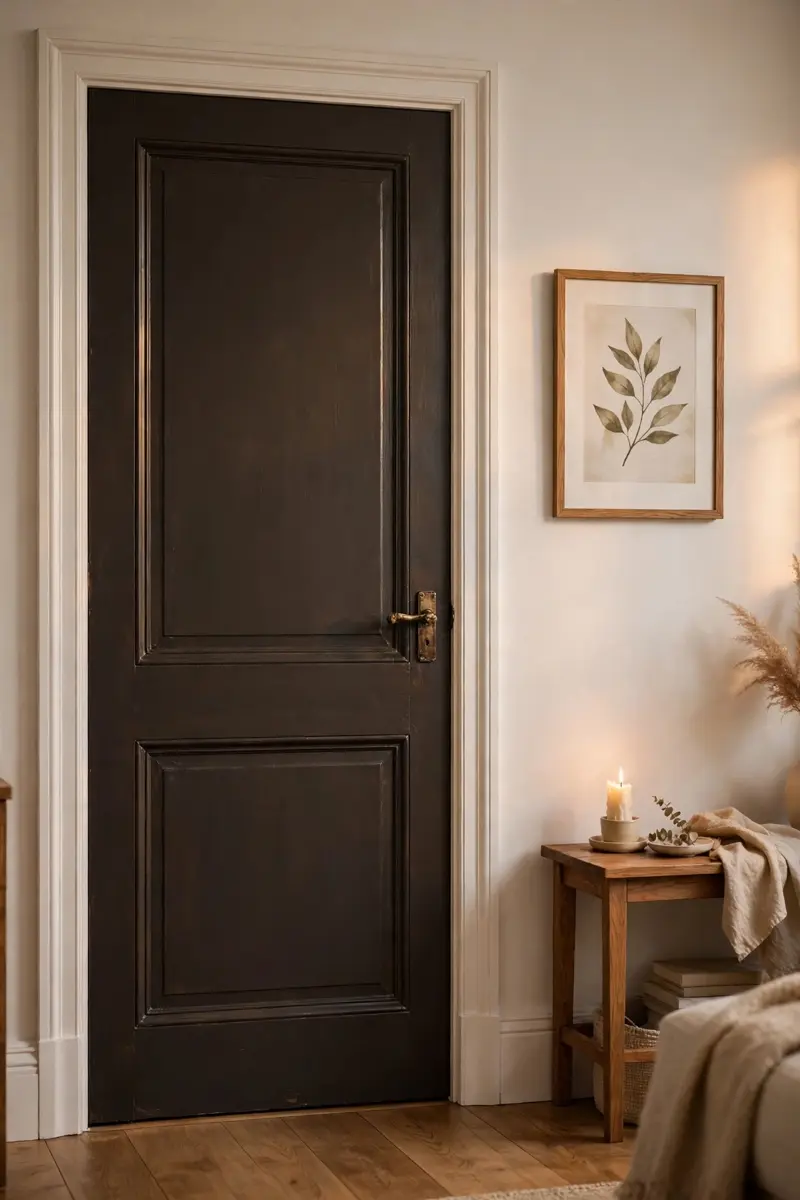
18. Moody Aubergine for a Luxe, Jewel-Box Feel
Deep aubergine — a blackened purple — is the most luxurious color on this list. It feels like a jewel box: rich, moody, and a little mysterious. It is stunning on a bedroom or dining room door, where it adds drama without the hardness of black.
Materials + cost: one quart of aubergine enamel ($25–$40), primer ($15), brush, foam roller, tape, and sandpaper. Total: about $45–$65 per door.
Because aubergine is so dark, use a gray-tinted primer to reach full coverage in two coats. Pair it with cream walls, gold or brass hardware, and warm lighting so the purple reads as plush, not cold.
Tip: Keep the rest of the room light and simple — aubergine needs breathing room to feel luxe instead of heavy.
Variation: Use aubergine on a closet door in a dressing room, where the deep color makes the space feel like a boutique.
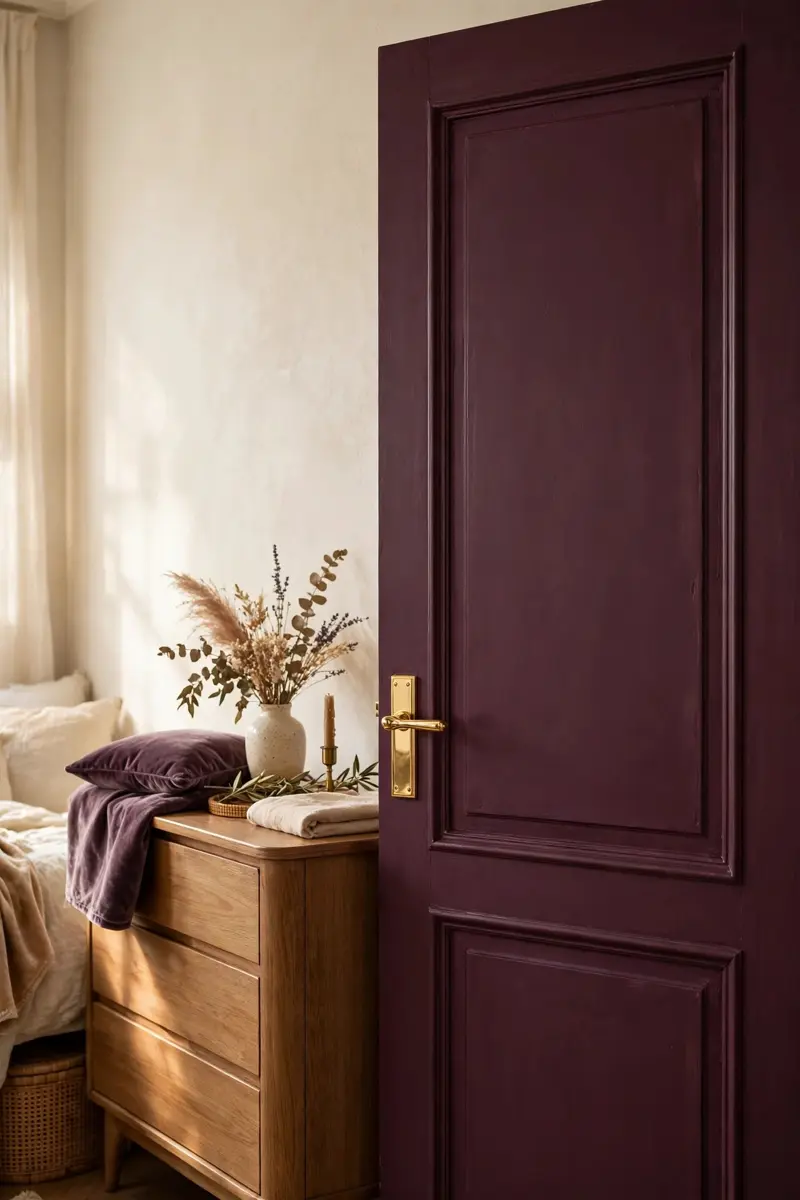
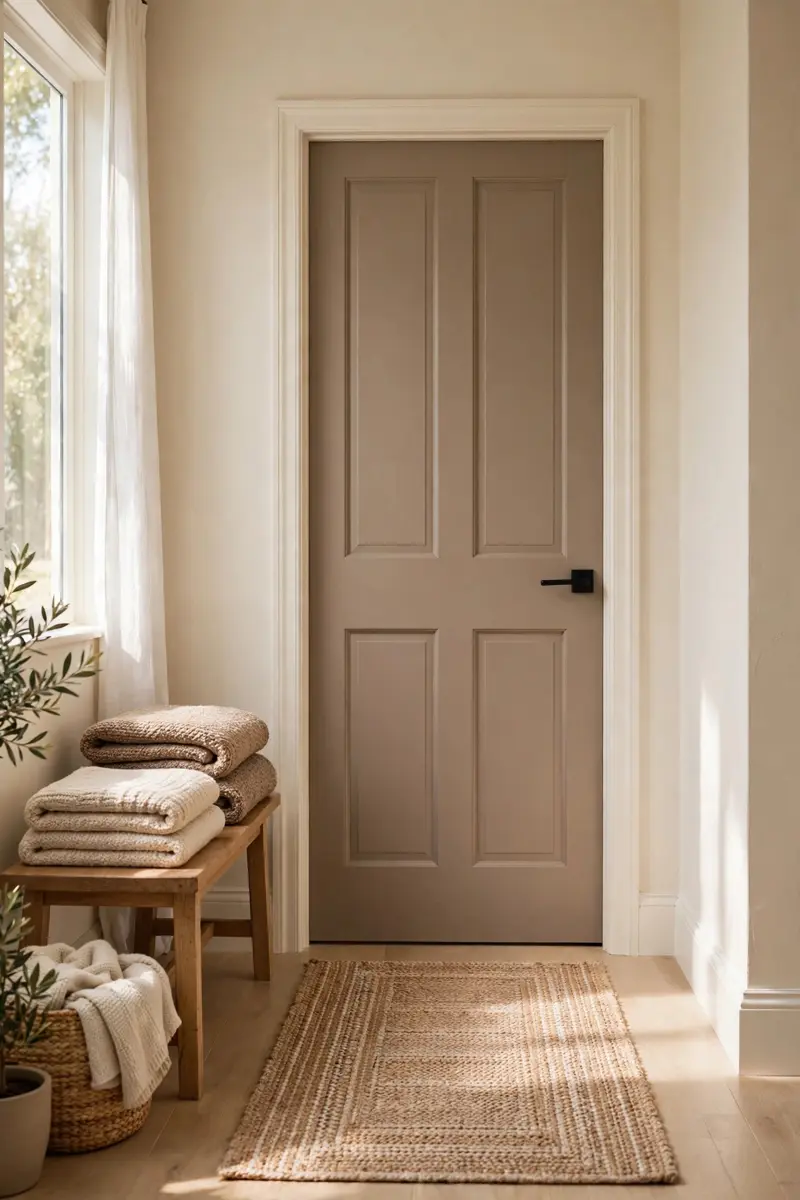
19. Warm Taupe Mushroom for Quiet Sophistication
Warm taupe and mushroom tones are the quiet luxury of door colors. They are soft, earthy, and endlessly versatile, working with gray sofas, beige rugs, and wood floors alike. If you want a door that looks expensive without trying hard, this is it.
Materials + cost: one quart of taupe enamel ($25–$40), primer ($15), brush, foam roller, tape, and sandpaper. Total: about $45–$65 per door.
Sherwin-Williams Accessible Beige is a beloved warm taupe that reads as a soft mushroom in most light. It is forgiving with coverage, usually needing just two coats over white primer.
Tip: Mushroom doors look best with matte black or oil-rubbed bronze hardware — the dark metal anchors the soft color. Warm taupe is one of the quietest, most elegant interior door colors you can choose.
Variation: Paint the door and the baseboards the same mushroom tone for a seamless, tailored finish along the whole wall.
20. Powder Blue for Airy, Coastal Calm
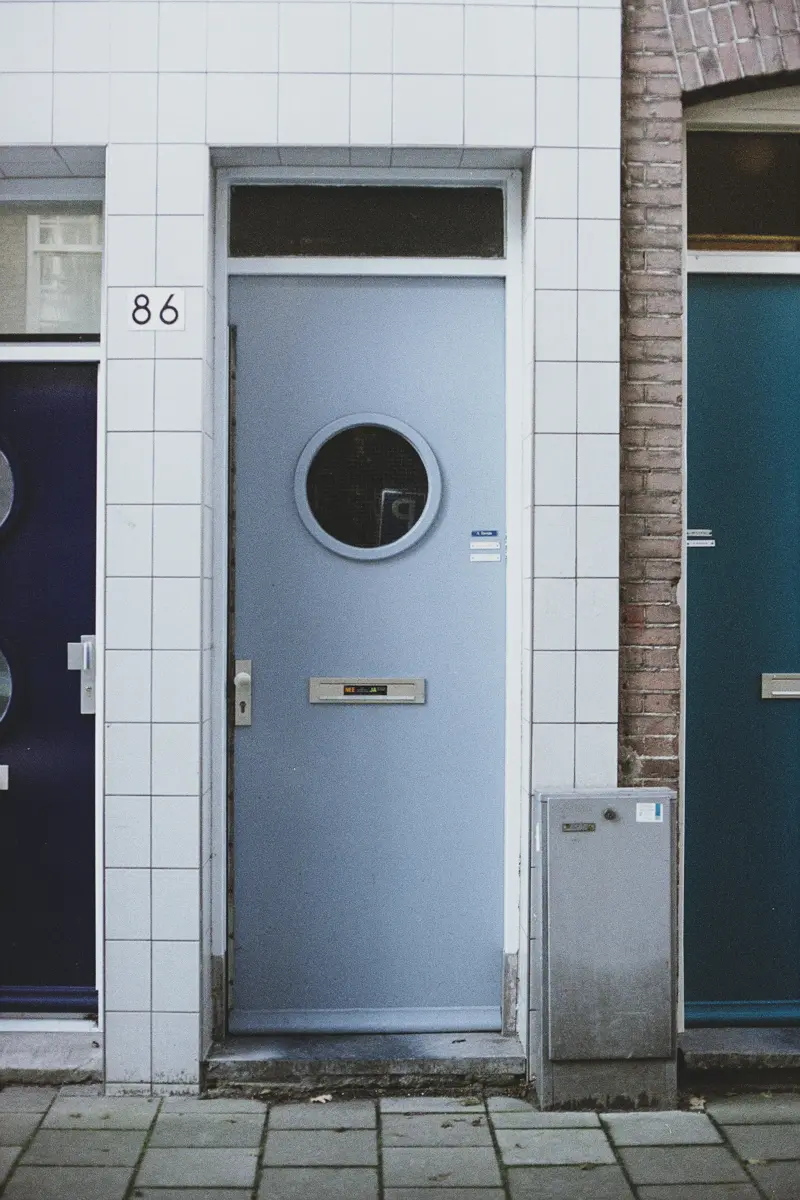
Powder blue is a pale, airy blue-gray that makes a room feel like a breath of fresh air. It is a lovely choice for bathrooms, guest rooms, and coastal-style homes, and it pairs beautifully with white trim and natural textures like linen and rattan.
Materials + cost: one quart of powder blue enamel ($25–$40), primer ($15), brush, foam roller, tape, and sandpaper. Total: about $45–$65 per door.
Because pale colors can look washed out, pick a powder blue with a little gray in it so it holds its color in bright light. Two coats over white primer are usually enough for full coverage.
Tip: In a small bathroom, a powder blue door plus a white shower curtain and a woven basket makes the whole room feel like a spa. Powder blue is one of the airiest interior door colors for small bathrooms and guest rooms.
Variation: Use powder blue on a linen closet door and add a small brass label holder for a cottage-style touch.
21. Chalkboard Door for Kids’ Rooms and Craft Spaces
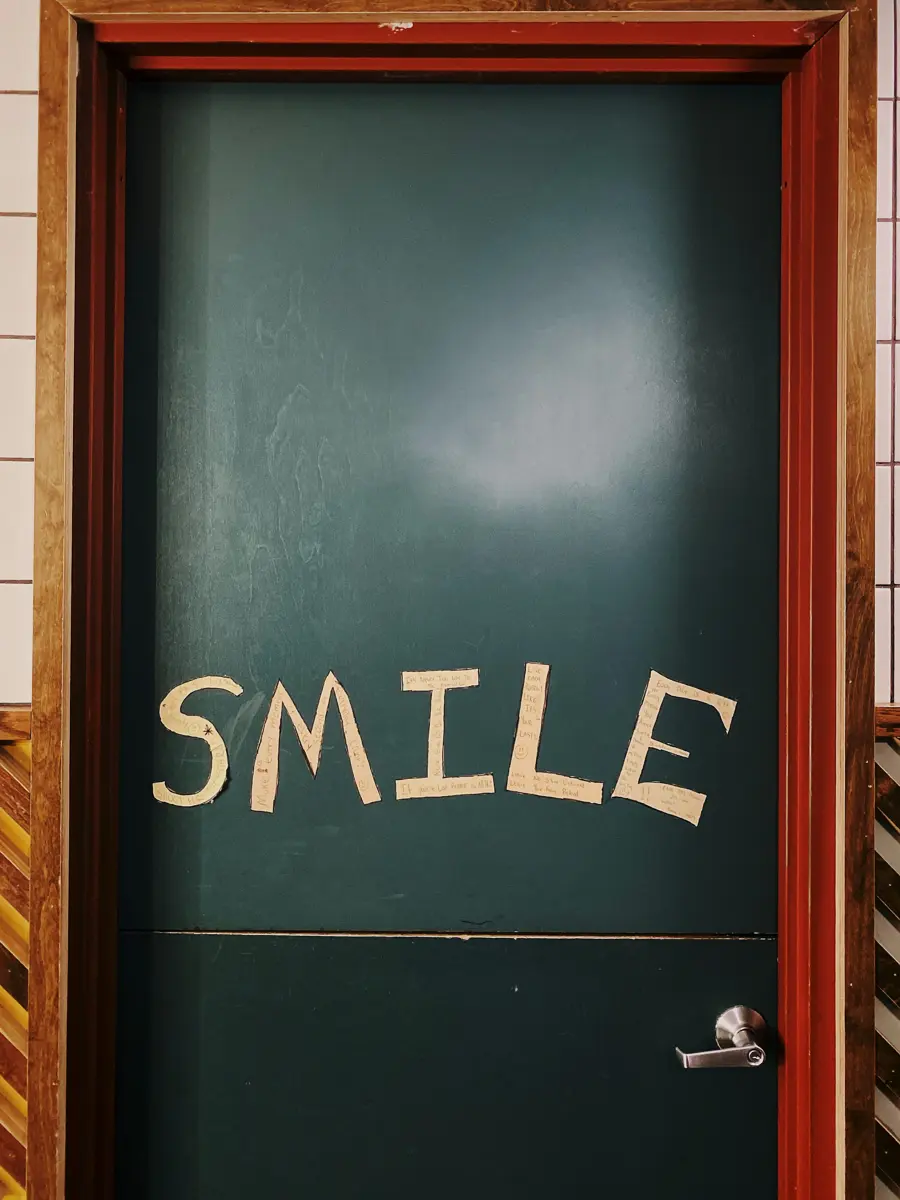
A chalkboard-painted door turns a plain slab into a drawing wall, a homework board, or a family message center. It is the most fun of all interior door colors, and kids absolutely love it.
Materials + cost: one quart of chalkboard paint ($20–$30), primer ($15), brush, foam roller, tape, sandpaper, and a box of chalk ($5). Total: about $45–$55 per door.
Apply two coats of chalkboard paint over primer, letting each coat dry fully. Before the first use, season the surface by rubbing chalk all over it and wiping it off — this fills the pores so your first drawings erase cleanly.
Tip: Use chalkboard paint on a flat, smooth door or the flat panels of a paneled door — heavy texture makes writing and erasing messy.
Variation: Paint only the top half with chalkboard paint and the bottom half a matching solid color for a cleaner look in a home office. If you are setting up a creative corner, our small home office ideas pair perfectly with this trick.
22. High-Gloss Lacquer for Ultra-Modern Shine
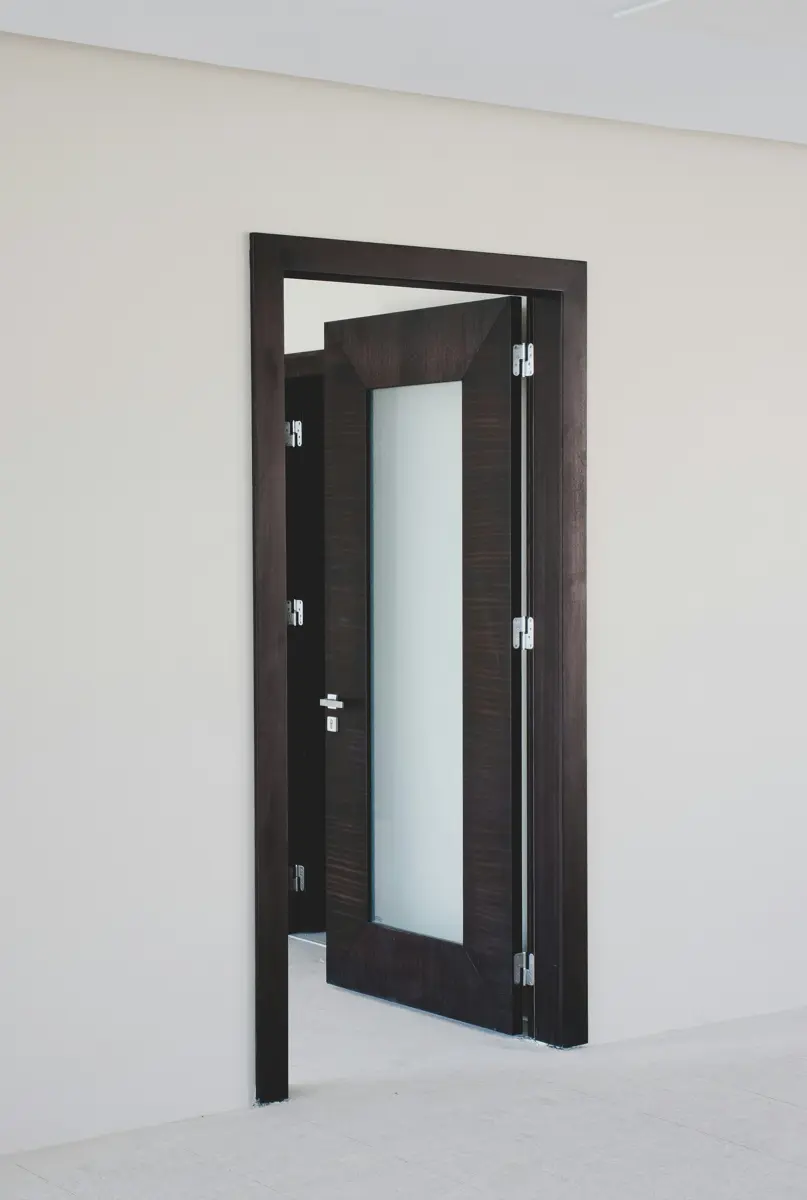
A high-gloss lacquered door is pure glamour. The mirror-like finish reflects light, makes small spaces feel bigger, and turns an ordinary door into a design statement. It is the go-to choice for ultra-modern and Art Deco-inspired homes.
Materials + cost: one quart of high-gloss enamel ($30–$45), primer ($15), a fine foam roller, a high-quality angled brush, tape, and 220-grit sandpaper. Total: about $50–$70 per door.
Gloss shows every flaw, so prep matters more here than anywhere else: fill every dent, sand the door glass-smooth, and prime it well. Apply three thin coats, sanding lightly between coats, and never paint on a humid day.
Tip: Work in a dust-free room and keep the door flat on sawhorses if you can — dust and drips are the enemies of a glassy finish.
Variation: Try high-gloss in a deep teal or emerald for a jewel-toned door that looks lacquered like a grand piano.
23. Muted Teal for a Calm Blue-Green Balance
Muted teal sits right between blue and green, and it is one of the most versatile interior door colors for modern homes. It adds color without committing to either side of the spectrum, and it works with gray, beige, white, and wood alike.
Materials + cost: one quart of muted teal enamel ($25–$40), primer ($15), brush, foam roller, tape, and sandpaper. Total: about $45–$65 per door.
Sherwin-Williams Oyster Bay is a soft, grayed teal that feels calm and coastal, while Comfort Gray leans a touch greener. Both cover well in two coats and look beautiful with brushed nickel or matte black hardware.
Tip: Teal doors love natural light — if the hallway is dark, pick a lighter, grayer teal so the color stays visible.
Variation: Use muted teal on a bathroom door and repeat the color in towels and a small plant for a pulled-together spa feel.

24. Warm Khaki for Sandy, Sun-Washed Neutrals
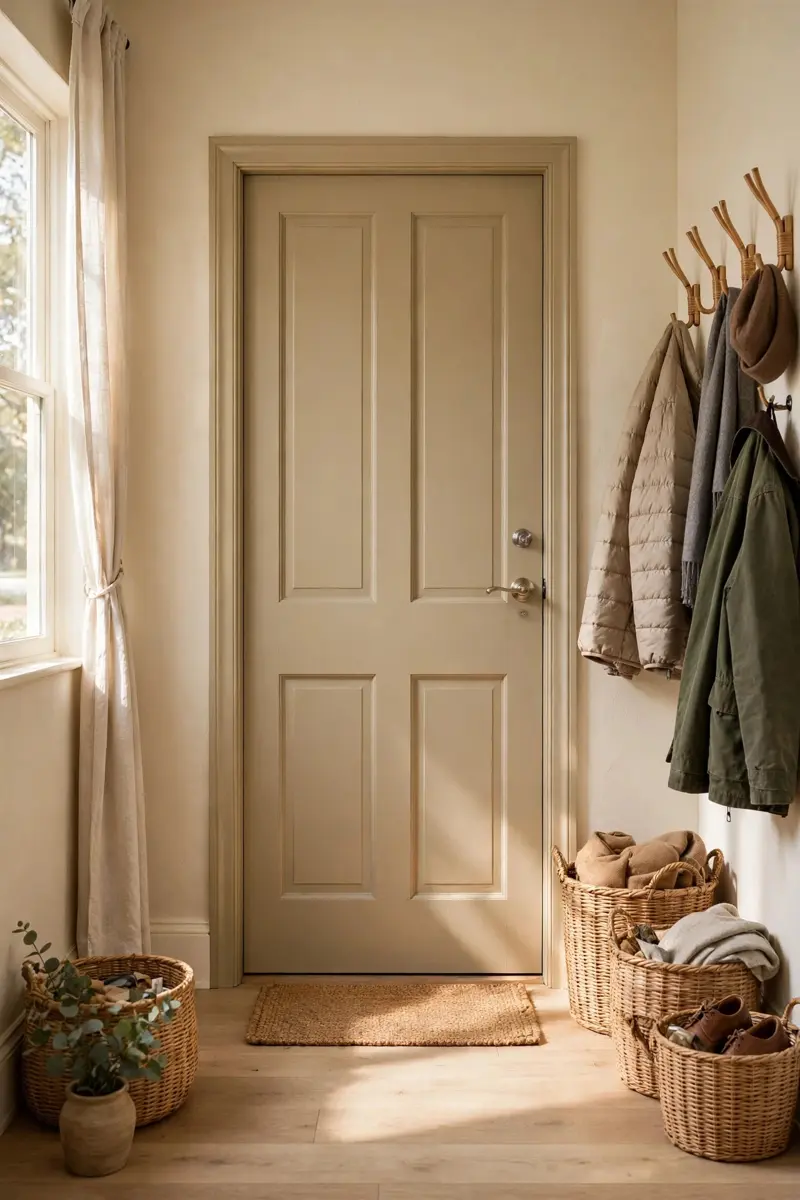
Warm khaki is replacing cool gray as the neutral of choice in 2026. It is sandy, sun-washed, and endlessly warm, and on a door it adds a relaxed, earthy feeling that works in farmhouse, coastal, and modern homes alike.
Materials + cost: one quart of khaki enamel ($25–$40), primer ($15), brush, foam roller, tape, and sandpaper. Total: about $45–$65 per door.
Farrow & Ball Jitney is a relaxing sandy neutral that designers love, while a warm khaki from any paint line gives a similar feel. Khaki pairs beautifully with cream walls, rattan, and light wood floors.
Tip: Khaki can go yellow in warm light, so test a swatch at midday and again in the evening before you commit.
Variation: Use khaki on a mudroom door, where the sandy tone hides dirt and scuffs from shoes and pets. For a mudroom that works as hard as it looks, pair it with our entryway shoe storage ideas.
25. Deep Burgundy Wine Red for Old-World Richness
A deep burgundy or wine-red door feels like old-world richness. It is warm, dramatic, and timeless, and it is stunning on the inside of a front door or a dining room door, where it sets a welcoming, elegant tone.
Materials + cost: one quart of burgundy enamel ($25–$40), primer ($15), brush, foam roller, tape, and sandpaper. Total: about $45–$65 per door.
Farrow & Ball Preference Red is the classic choice: a deep, true red that designers have used on doors for decades. Because reds are sheer, use a gray-tinted primer and plan on three thin coats.
Tip: Pair burgundy doors with warm brass hardware and cream walls — the combination feels like a classic English country house.
Variation: Paint a library or study door burgundy and add a brass kick plate for a look straight out of a gentleman’s club.

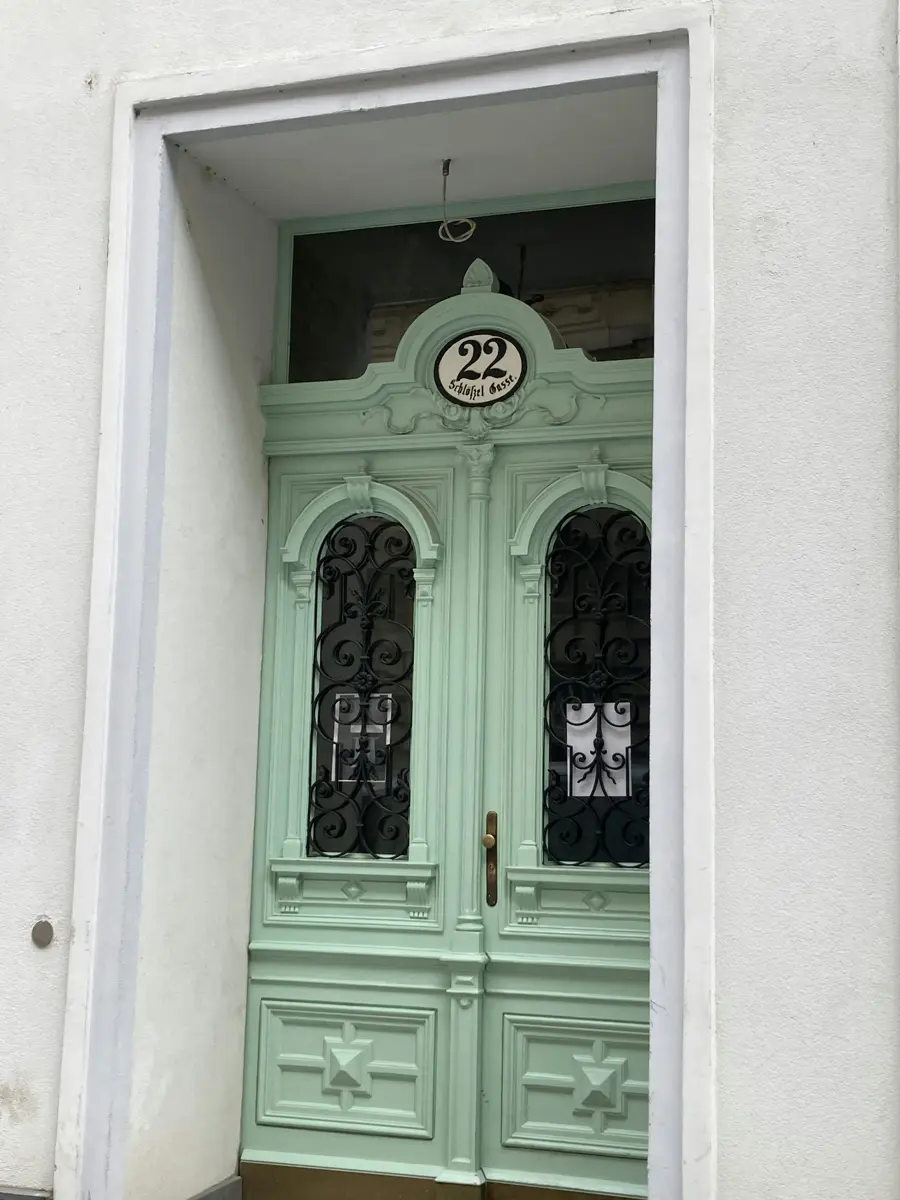
26. Pale Mint Green for a Fresh, Spa-Like Door
Pale mint green is the freshest finish on this list. It feels clean, cool, and spa-like, and it is a wonderful choice for bathroom and laundry room doors, where it makes everyday routines feel a little more special.
Materials + cost: one quart of pale mint enamel ($25–$40), primer ($15), brush, foam roller, tape, and sandpaper. Total: about $45–$65 per door.
Mint is a light color, so it covers easily in two coats over white primer. Pair it with white trim, chrome or brushed nickel hardware, and a fluffy white towel nearby for the full spa effect.
Tip: Keep the mint pale and grayed — a mint that is too saturated can look like toothpaste instead of a spa.
Variation: Use pale mint on a linen closet door and add a small wreath or a brass hook for a sweet, cottage touch.
Frequently Asked Questions
What color should I paint my interior doors?
Start with your room’s light and mood. For a safe, timeless choice, pick warm greige, soft charcoal, or a warm white. For drama, try matte black, navy, or forest green. If you want the 2026 look, try color drenching or an old-money olive. Test a swatch on the door itself and live with it for a day before you commit.
Should interior doors be white or a color?
White is classic and always safe, but a color is no longer unusual — designers have been painting interior doors for years. A color adds personality, frames your rooms, and can even make a space feel larger when you color-drench. If you are unsure, paint one door first and see how it feels.
Are black interior doors still in style in 2026?
Yes, black interior doors are still very much in style in 2026. Designers are using soft black and warm bronze-black as a gallery frame against white walls, and the look works in modern, farmhouse, and traditional homes alike. Keep it to one or two accent doors rather than every door in the house.
Should all interior doors in a house be the same color?
They do not have to be, but a consistent approach looks more intentional. Many designers paint all the main doors one color and use a different shade for one or two accent doors, like a pantry or a laundry room. If you mix colors, keep them in the same family — all warm tones or all cool tones — so the house still feels cohesive.
What paint finish is best for interior doors?
A satin or semi-gloss finish is best for most interior doors because it is durable, wipeable, and resists fingerprints. Flat paint marks easily and is hard to clean. High-gloss looks stunning but shows every flaw, so save it for doors you have prepped perfectly. For help estimating how much paint you need, try The Spruce’s paint calculator, and for more painted-door inspiration see HGTV’s painted trim ideas.
Conclusion
Your doors have been waiting patiently in plain white, and now you have 26 interior door colors to choose from. Whether you go bold with matte black, calm with sage green, or all-in with color drenching, one quart of paint and a free weekend is all it takes to transform a room.
Start small, test your swatch, and enjoy the process. And when your door is done, save this guide to Pinterest so you can find it again when the next door starts calling your name. Happy painting!

Leave a Reply