
You do not need a big room to give your baby a beautiful start. These small nursery ideas prove that a tiny space can still feel calm, organized, and completely adorable — you just have to let every inch work a little harder. With a smart layout, furniture that pulls double duty, and storage that climbs the walls instead of crowding the floor, even the smallest corner can become a nursery you love walking into at 3 a.m.
The secret to small nursery ideas that actually work is restraint. Choose a few pieces that matter, keep the palette light, and give everything a home before the baby arrives. You will spend a lot of time in this room, so it should feel peaceful for you too — not just pretty in a photo. The fourteen ideas below are practical, budget-friendly, and easy to adapt whether you have a spare bedroom, a shared room, or just one quiet corner.
1. Mini Crib That Fits Any Corner: Small Nursery Ideas
A standard crib can swallow a small room whole, but a mini crib gives your baby the same safe sleep space in a much smaller footprint. It tucks neatly into a corner or along a short wall, leaving you room to actually move around it. Many mini cribs also convert to a toddler bed, so you are not buying twice.
Materials + cost: a mini crib ($120–$250), a firm mini-crib mattress ($40–$80), and two fitted sheets ($20–$40). Keep bedding minimal — a fitted sheet is all a safe sleep space needs.
To set it up, measure your corner first and leave at least a few inches of clearance on the sides for airflow and for making the bed. Place the crib away from windows, cords, and shelves, and anchor any nearby furniture to the wall. Dress it with soft, washable bedding in your room’s palette so it blends in rather than shouting for attention.
Practical tip: Choose a mini crib with lockable wheels so you can roll it out for cleaning and roll it back without a second person. Among small nursery ideas, a mini crib is the easiest first swap when a standard crib overwhelms the room.
Variation: If your room is truly tiny, start with a bassinet for the first months and switch to the mini crib once your baby outgrows it.

2. Dresser That Doubles as a Changing Table
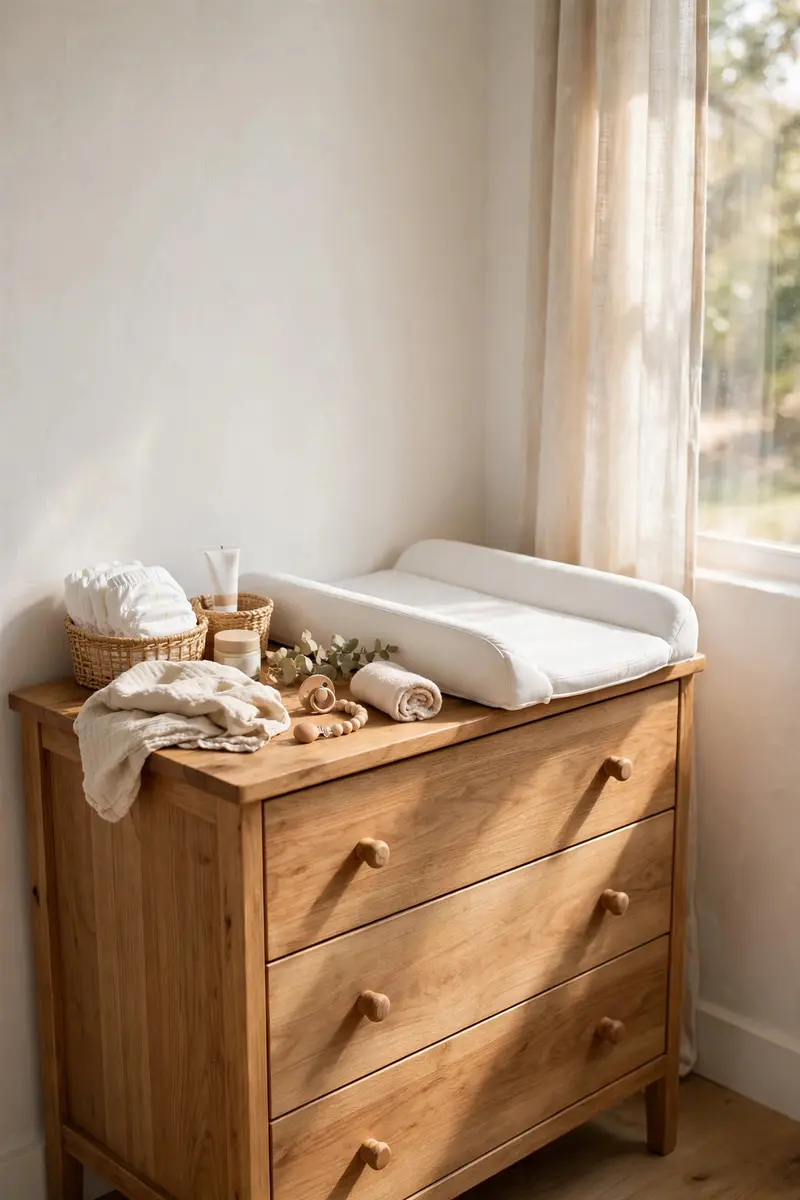
In a small nursery, every piece of furniture should earn its floor space twice. A sturdy dresser topped with a changing pad does exactly that — it stores clothes, blankets, and diapers, and it becomes your changing station without adding another bulky piece to the room.
Materials + cost: a three-drawer dresser ($150–$350), a contoured changing pad ($25–$45), and a washable pad cover ($10–$20). Add a small basket on top for wipes and cream.
To make it work, pick a dresser at a comfortable height for you — around waist height — and secure the changing pad with its safety straps. Keep diapers, wipes, and a change of clothes in the top drawer so everything is within arm’s reach. Anchor the dresser to the wall, always, since a climbing toddler will test it sooner than you think.
Practical tip: Put the changing supplies in the top drawer, not on top of the dresser, so the surface stays clear and calm. A dresser that doubles up is one of the smartest small nursery ideas, because it removes a whole piece of furniture from the plan.
Variation: If you already own a dresser, just add the pad and a pretty basket — no new furniture required.
3. Floating Shelves Up High: Small Nursery Ideas
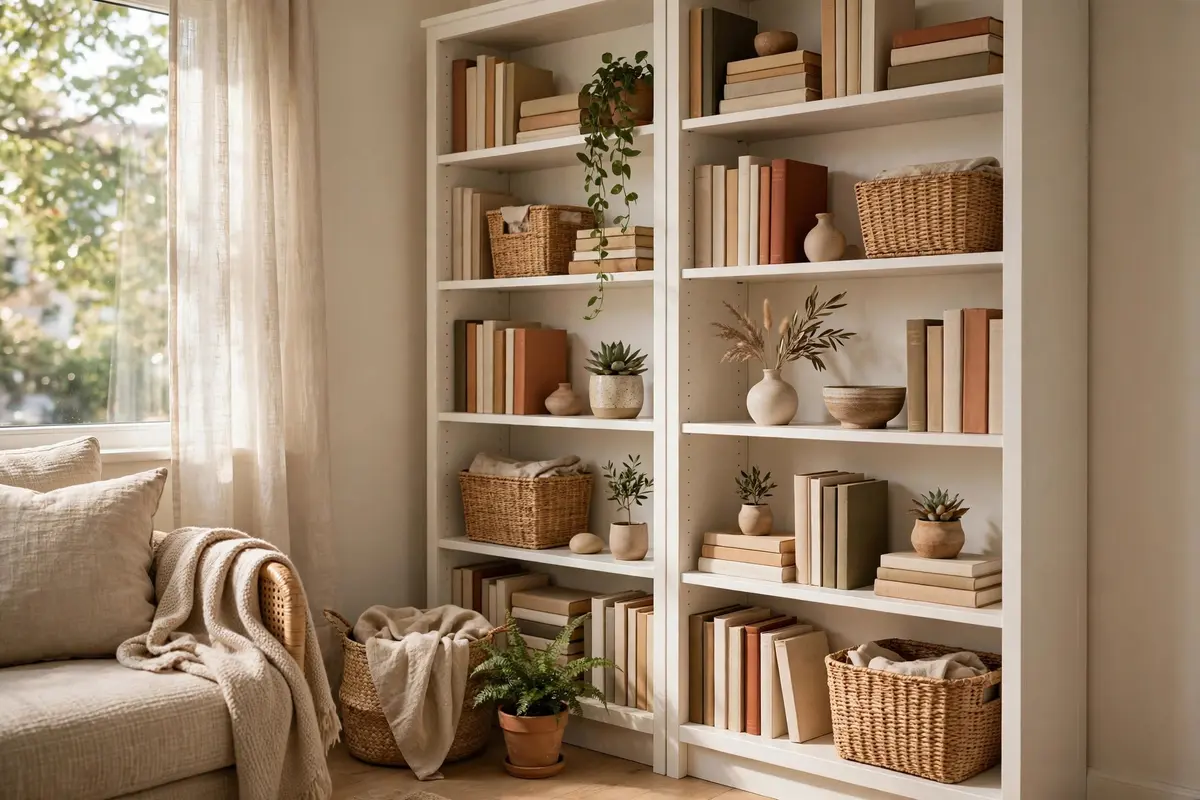
When the floor is full, the walls are your best friend. Floating shelves mounted high on the wall hold books, tiny shoes, and keepsakes without taking a single inch of floor space, and they draw the eye upward, which makes the whole room feel taller.
Materials + cost: two or three floating shelves ($15–$30 each), wall anchors ($5–$10), and small baskets or bookends ($10–$25). Install them well above crib height and never directly over the crib.
Hang the lowest shelf at least a few feet above the crib rail so nothing can be pulled down, and keep heavier items on the lowest shelf. Style them loosely — a row of board books, a soft toy, a framed print — and leave breathing room between objects so the wall never looks cluttered.
Practical tip: Install shelves on a wall away from the crib, not above it, so the sleep zone stays completely clear. Floating shelves are among the most practical small nursery ideas, using wall space that would otherwise stay empty.
Variation: Use one long picture ledge instead of separate shelves for a cleaner, gallery-style look.

4. A Cozy Corner Nursery Nook — Small Nursery Ideas
You do not need a whole room — a single corner can become a complete nursery. A corner nook works beautifully in a shared bedroom or a studio apartment, because it defines the baby’s zone without walls or dividers cutting the room in half.
Materials + cost: a mini crib or bassinet, a small rug ($30–$60), a wall decal or framed print ($15–$40), and a basket for supplies ($15–$25). Total: often under $150 if you already own the crib.
Start by picking the quietest corner, away from the main walkway and the door. Anchor the nook with a rug, then add one piece of wall decor that signals “this is the nursery.” Keep a basket of diapers and wipes right beside the crib so midnight changes do not require a trip across the room.
Practical tip: A rug is the easiest way to mark a nursery zone in a shared room — it visually separates the baby’s corner without any construction. A corner nook is one of the cosiest small nursery ideas for families who do not have a separate nursery room.
Variation: Add a sheer curtain on a ceiling track if you want the nook to feel a little more private at nap time.

5. Slim Glider That Doesn’t Eat the Room
You will spend hours feeding and rocking in this chair, so skipping it is not the answer — choosing a slim one is. A narrow glider with a small footprint gives you the comfort you need without blocking the walkway or crowding the crib.
Materials + cost: a slim glider or rocking chair ($180–$400), a small lumbar pillow ($15–$25), and a soft throw ($20–$35). Look for armless or narrow-arm styles if space is very tight.
Place the glider near the crib but with enough room to rock without hitting the wall, and add a tiny side table or a wall-mounted pocket for your water bottle and phone. A washable slipcover is worth its weight in gold during spit-up season.
Practical tip: Measure the chair’s full rocking arc, not just its footprint — a glider needs a few extra inches behind it to move. A slim glider is one of the small nursery ideas that keeps feeding comfortable without swallowing the floor.
Variation: A compact upholstered armchair with a separate footstool can work just as well and doubles as regular seating later.

6. Closet Turned Changing Station
That small closet you barely use might be the hardest-working spot in your nursery. Remove the doors, add a curtain if you like, and turn the closet into a changing station or a mini storage hub — it frees an entire wall of the room.
Materials + cost: a curtain rod and curtain ($20–$40), a second hanging rod at baby height ($10–$20), matching bins ($20–$35), and a small changing pad if the closet is deep enough ($25–$45).
Set it up by adding a low second rod — baby clothes are short, so two rods double your hanging space. Use labeled bins on the top shelf for the next size up, and keep a slim hamper on the closet floor for outgrown clothes. If the closet is wide enough, a small chest of drawers inside it can replace a whole piece of furniture in the room.
Practical tip: Take the closet doors off entirely — the swing space they need is precious in a small room, and a curtain looks softer anyway. Turning a closet into a changing station is among the cleverest small nursery ideas for tiny rooms.
Variation: No closet at all? A freestanding garment rack with a curtain behind it creates the same tucked-away feeling.

7. Under-Crib Storage Baskets
The space under the crib is free real estate — use it. Low, flat baskets slide underneath and hold extra sheets, sleep sacks, and outgrown clothes, keeping them out of sight but easy to grab.
Materials + cost: two or three low woven or fabric baskets ($12–$25 each) and labels if you like them ($5). Check your crib’s clearance before buying so the baskets slide in smoothly.
Sort by category — one basket for bedding, one for next-size clothes, one for spare blankets — and label them so anyone helping can find things at 2 a.m. Keep nothing under the crib that your baby could pull up through the slats, and keep the baskets shallow so they never become a climbing step.
Practical tip: Rotate the baskets seasonally so the under-crib space never becomes a forgotten dumping ground. Under-crib baskets are one of the simplest small nursery ideas, turning dead space into hidden storage.
Variation: A flat under-bed storage box with a lid works the same way and keeps dust off spare bedding.

8. Peg Rail and Wall Hooks by the Door
A simple peg rail by the door catches jackets, hats, the diaper bag, and tomorrow’s outfit — all without a single piece of furniture. It is one of the cheapest small nursery ideas, and it saves you from the “where did I put that?” scramble every single morning.
Materials + cost: a wooden peg rail ($15–$30), wall anchors ($5), and a few matching hooks if you prefer individual ones ($10–$20). Install it at adult height near the door, out of your baby’s reach.
Hang the diaper bag on one peg so it is always packed and ready, and reserve one peg for the next day’s outfit. Keep it to five or six pegs so the rail stays useful instead of turning into a cluttered catch-all.
Practical tip: Hang the diaper bag by the door, always packed — it turns leaving the house from a production into a two-minute job. A peg rail by the door is one of the small nursery ideas that makes leaving the house with a baby far less chaotic.
Variation: A row of animal-shaped wall hooks adds charm and works just as well for tiny jackets and bags.

9. Light, Airy Color Palette for a Small Nursery
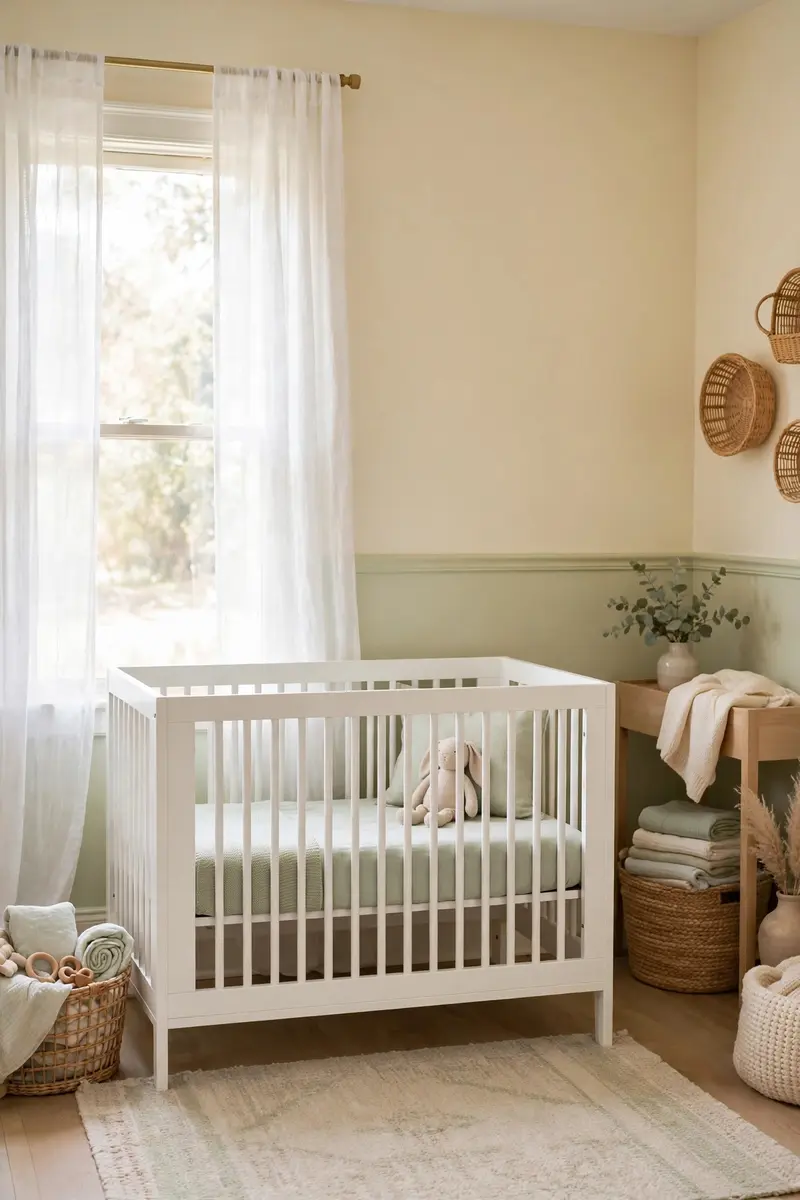
Color is the cheapest way to make a small nursery feel bigger. Light, warm neutrals — soft white, warm cream, pale sage — reflect light and blur the edges of the room, so the walls seem to recede instead of closing in.
Materials + cost: a gallon or two of paint ($35–$60 per gallon), painter’s tape ($8), and a roller set ($15). A two-tone wall — a soft color on the lower half and white above — adds interest for under $100 total.
Paint the ceiling the same color as the walls, or one shade lighter, to make the ceiling feel higher. Keep trim in a bright white so it frames the room crisply, and carry the same palette into bedding and curtains so nothing visually chops the room into pieces.
Practical tip: Paint the ceiling the same color as the walls — it erases the hard line where wall meets ceiling and the room instantly feels taller. A light palette is among the most effective small nursery ideas for making a small room feel larger.
Variation: If you rent and cannot paint, get the same effect with light curtains, a pale rug, and white or natural-wood furniture.
10. Sheers and a Mirror to Double the Light
In a small nursery, light is space. Sheer curtains soften daylight, make windows look larger, and add a dreamy feel — all while taking up zero floor space. A well-placed mirror then bounces that light around the room, doubling the effect.
Materials + cost: sheer curtain panels ($15–$30 per pair), a curtain rod ($10–$20), and a decorative mirror ($25–$60). Hang the rod high and wide so the window looks bigger than it is.
Mount the mirror on a wall opposite or beside the window, never above the crib, and secure it firmly. Choose a mirror with a soft frame — arched or round shapes feel gentler in a nursery than sharp rectangles. The combination of sheers and a mirror can make a dark corner feel like a completely different room.
Practical tip: Hang curtains high and wide, well past the window frame — the window instantly reads larger and the ceiling feels higher. Sheers and a mirror are one of the brightest small nursery ideas, doubling daylight without any building work.
Variation: A sunburst or arched mirror above the dresser doubles as decor and a light-bouncer in one piece.

11. Rolling Diaper Cart
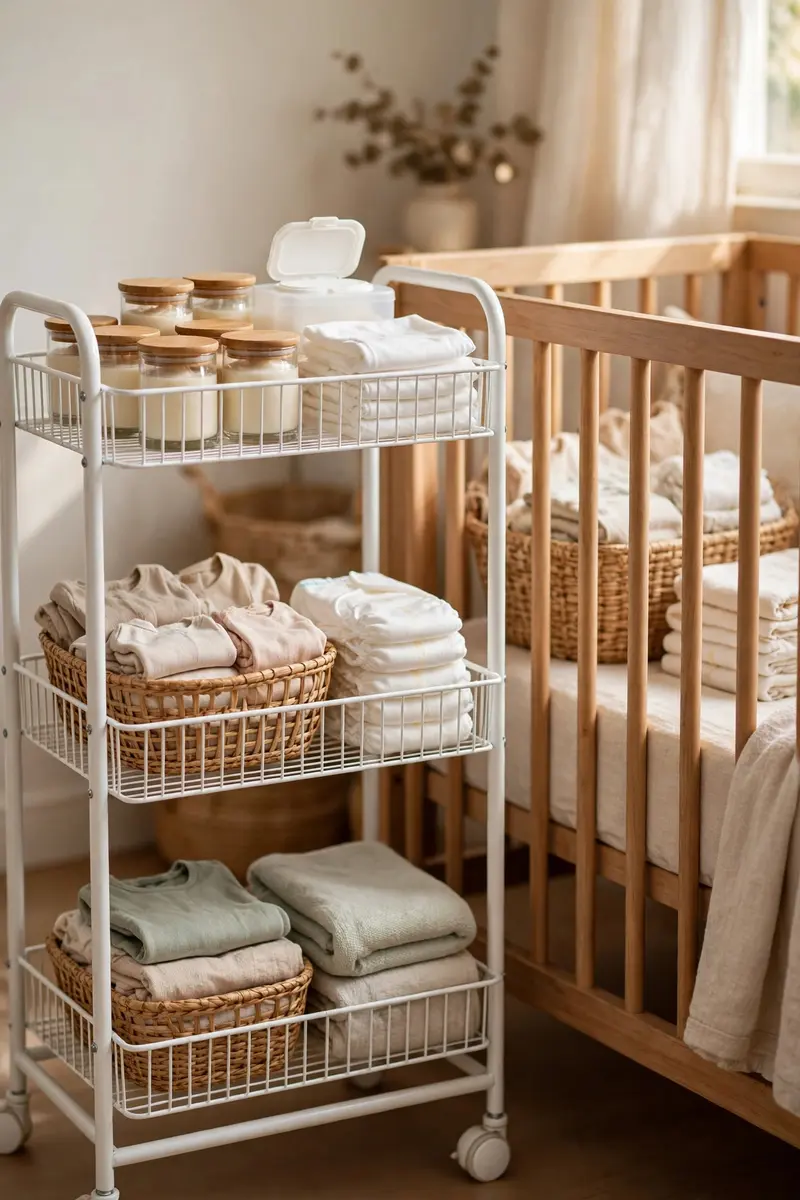
A rolling cart is a changing station that goes wherever you are. Stock it with diapers, wipes, creams, and a change of clothes, then roll it to the crib, the glider, or the corner nook — no more dedicated changing table taking up a whole wall.
Materials + cost: a three-tier rolling cart ($25–$45), small bins or cups for the tiers ($10–$20), and your usual diapering supplies. Label the tiers if more than one person does changes.
Organize top to bottom by frequency: diapers and wipes on top, creams and spare clothes in the middle, and backup stock below. Park the cart beside the crib at night and roll it out of the way during the day so the floor stays clear.
Practical tip: Restock the cart every evening during the bedtime routine — a fully stocked cart means no midnight supply hunts. A rolling cart is one of the most flexible small nursery ideas, moving the changing station to wherever you are.
Variation: Use the cart for feeding supplies instead — bottles, burp cloths, and a water bottle for you — if you already have a changing setup you love.
12. Forward-Facing Book Ledges
Babies choose books by their covers, and forward-facing ledges let them do exactly that — while using a fraction of the space a bookcase needs. A row of slim ledges turns a blank wall into a tiny library and a piece of decor at the same time.
Materials + cost: three or four picture ledges ($12–$25 each) and wall anchors ($5). Mount them at your baby’s eye level once they are toddling, or higher for display until then.
Space the ledges so books can stand upright without crowding, and rotate the books every week or two so the display stays fresh. Keep the ledges on a wall beside the glider to create a natural reading corner, and leave one ledge for a favorite stuffed friend.
Practical tip: Rotate the books weekly — five books on display feel new again when they come back after a break, and the shelf never overflows. Forward-facing book ledges are among the sweetest small nursery ideas, letting babies choose books by their covers.
Variation: Use the same ledges for framed prints and small art when your child outgrows board books.

13. Fold-Down Wall Changing Table
When floor space is truly gone, go up — and fold down. A wall-mounted fold-down changing table gives you a full changing surface when you need it and disappears flat against the wall when you do not, freeing the floor for play the rest of the day.
Materials + cost: a wall-mounted fold-down changing table ($90–$180), heavy-duty wall anchors or a stud finder ($10–$15), and a slim changing pad ($20–$30). Always mount into studs, never just drywall.
Install it at a comfortable height near your diaper storage, and keep supplies in a wall pocket or basket right beside it so you never leave your baby unattended to fetch a wipe. Fold it up after every change — the habit keeps the room feeling open all day.
Practical tip: Mount into wall studs and test the latch before the first use — a fold-down table must hold steady weight with zero wobble. A fold-down table is one of the boldest small nursery ideas for rooms where floor space is truly gone.
Variation: A wall-mounted fold-down desk can serve the same purpose in a pinch, topped with a contoured pad.

14. One Big Rug and Soft Layered Lighting
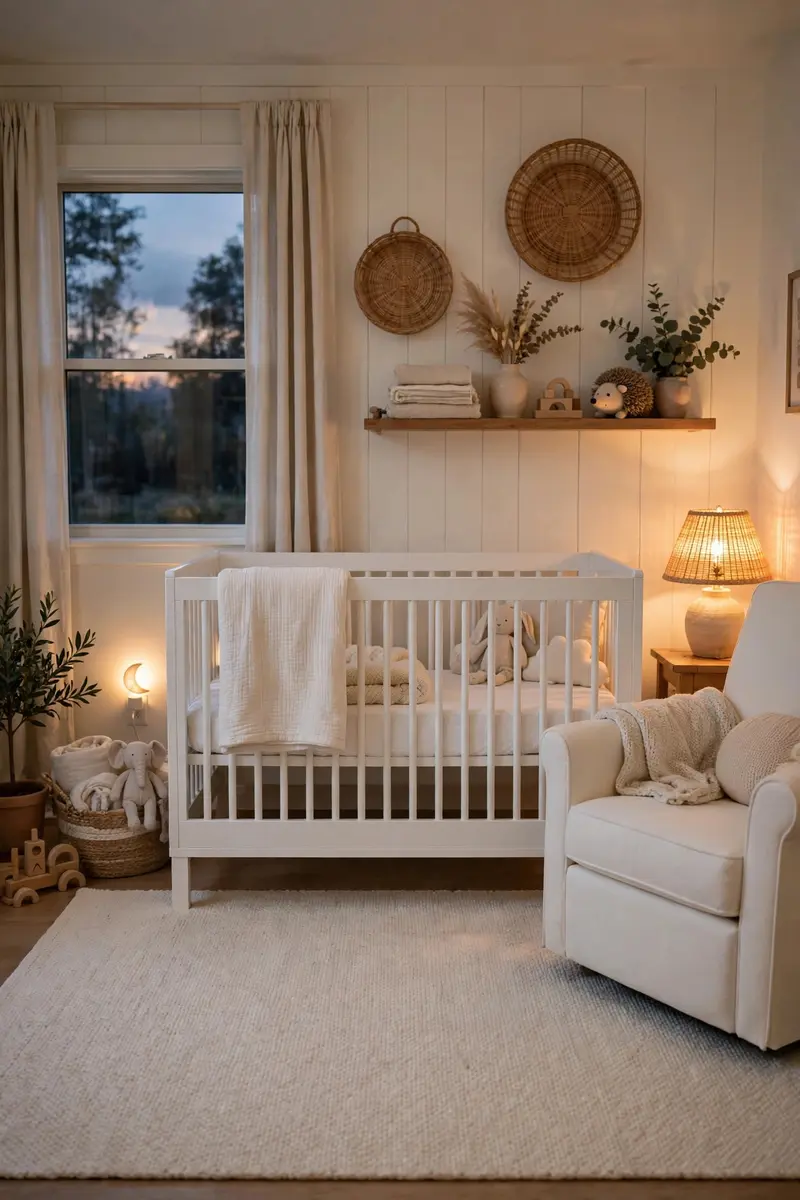
One oversized rug does more for a small nursery than three small ones ever could. It pulls the crib, dresser, and glider into a single calm zone, makes the floor read as one surface, and gives your baby a soft place to play. Pair it with layered, dimmable lighting and the whole room feels warm and restful.
Materials + cost: a large low-pile rug ($60–$150), a dimmable lamp or warm-bulb floor lamp ($30–$60), and a soft-glow nightlight ($10–$20). Choose a low pile so a glider rolls smoothly and cleanup is easy.
Size the rug so the front feet of the crib, dresser, and glider all sit on it, with a few inches of floor showing at the walls. Then layer the light: a warm overhead or lamp for daytime, a dim lamp for feeding, and a soft nightlight for overnight checks. Avoid harsh white bulbs — warm light helps everyone wind down.
Practical tip: Use warm bulbs (2700K) everywhere in the nursery — the same room feels cozy instead of clinical with one simple swap. One big rug is among the grounding small nursery ideas that pulls a whole tiny room together.
Variation: If a big rug is out of budget, a large washable play mat gives you the same grounded feeling and survives spills beautifully.
Frequently Asked Questions
How do you fit a nursery in a small room?
Start with just three pieces: a crib, a dresser that doubles as a changing table, and a place to sit. Then let the walls do the rest — shelves, hooks, and ledges add storage without adding furniture. Keep the palette light and the floor as clear as you can, and the room will feel far bigger than its measurements.
Is a mini crib good for a small nursery?
Yes, for most families it is an excellent fit. A mini crib is safe, takes up much less floor space, and many models convert to a toddler bed. Just check the size limits — most babies outgrow a mini crib between 12 and 18 months — and plan your next step when that time comes.
What colors make a small nursery look bigger?
Light, warm neutrals work best: soft white, warm cream, pale sage, and gentle beige. They reflect light and soften the edges of the room. If you love color, use it as an accent — a painted lower wall, colorful bedding, or bright art — while keeping the main walls light.
How do you store baby stuff in a tiny nursery?
Go vertical and hidden: floating shelves, peg rails, over-door organizers, under-crib baskets, and a closet with a second rod. Rotate clothes by size and keep only the current size in the room — outgrown and next-size items live in labeled bins elsewhere.
Can a nursery share a room with parents?
Absolutely. A corner nook with a rug, a mini crib, and a rolling cart creates a complete nursery zone inside a bedroom. Keep the baby’s area consistent — same spot for sleep, same spot for changes — and the shared room still feels organized for everyone.
Conclusion
A small nursery is not a compromise — it is an invitation to choose carefully, and the result is often calmer and cozier than a big, overstuffed room. Pick the small nursery ideas that fit your space and your life, start with the layout and the light, and add storage one wall at a time. Your baby will not remember the square footage; they will remember the warmth of the room you made for them.
If you loved these ideas, save this post to Pinterest so you can find it again when you are ready to decorate — and share it with a friend who is working with a small space too.
For more nursery inspiration, explore our Montessori nursery ideas for a calm, child-sized approach, our woodland nursery ideas for a cozy nature theme, and our ocean themed nursery ideas for a serene coastal feel. A designer’s small nursery layout guide is also worth a read before you start moving furniture.


Leave a Reply