There’s a reason your Pinterest feed is full of sage-and-cream kitchens right now — searches for this exact pairing jumped 410% in Pinterest’s 2026 Spring Trends Report, and designers keep calling sage the new neutral. These sage green and cream kitchen ideas work because the two colors do opposite jobs: sage brings calm, garden-soft color, and cream brings light and warmth. Together they make a kitchen that feels expensive without feeling formal, and cozy without feeling dark.
The secret is balance. Designers use the 60-30-10 rule here: about 60% cream (walls, uppers, countertops), 30% sage (cabinets, island, or one feature wall), and 10% warm brass and pale wood. Keep cream dominant and the room stays bright; let sage pass 40% and the calm tips into heaviness. Every idea below follows that balance, so you can mix and match without worrying about the room going muddy.
You also don’t need a full remodel. Some of these ideas are a weekend paint job, a $20 hardware swap, or a shelf restyle. Others are worth planning into a bigger renovation. Pick the ones that fit your budget and your kitchen, and save this post to Pinterest so you can find your favorites again when you’re ready to start.
1. Two-Tone Cabinets: Sage Lowers, Cream Uppers
The classic move — and the one all over Pinterest right now — is sage on the lower cabinets and cream up top. These sage green and cream kitchen ideas start here because the split does real work: sage grounds the room at eye level, while cream uppers bounce light around and keep the ceiling feeling high.
Paint your base cabinets in a soft, greyed sage like Sherwin-Williams Evergreen Fog SW 9130, and keep the wall cabinets in a warm cream like Alabaster SW 7008. Use the same hardware finish on every door so the two tones read as one intentional kitchen, not two kitchens that crashed into each other. For more two-tone inspiration, browse The Spruce’s two-tone kitchen cabinet ideas.
Materials: Cabinet paint + primer ($60–$90), new knobs or pulls ($3–$8 each), painter’s tape, drop cloths. Cost: about $150–$300 for a DIY repaint.
Tip: Always choose a warm cream, never a stark white — cool whites fight the sage and kill the warmth this combo is known for.
Variation: Flip it if your kitchen is dark: sage uppers and cream lowers make a small room feel taller, since the lighter color sits at eye level.
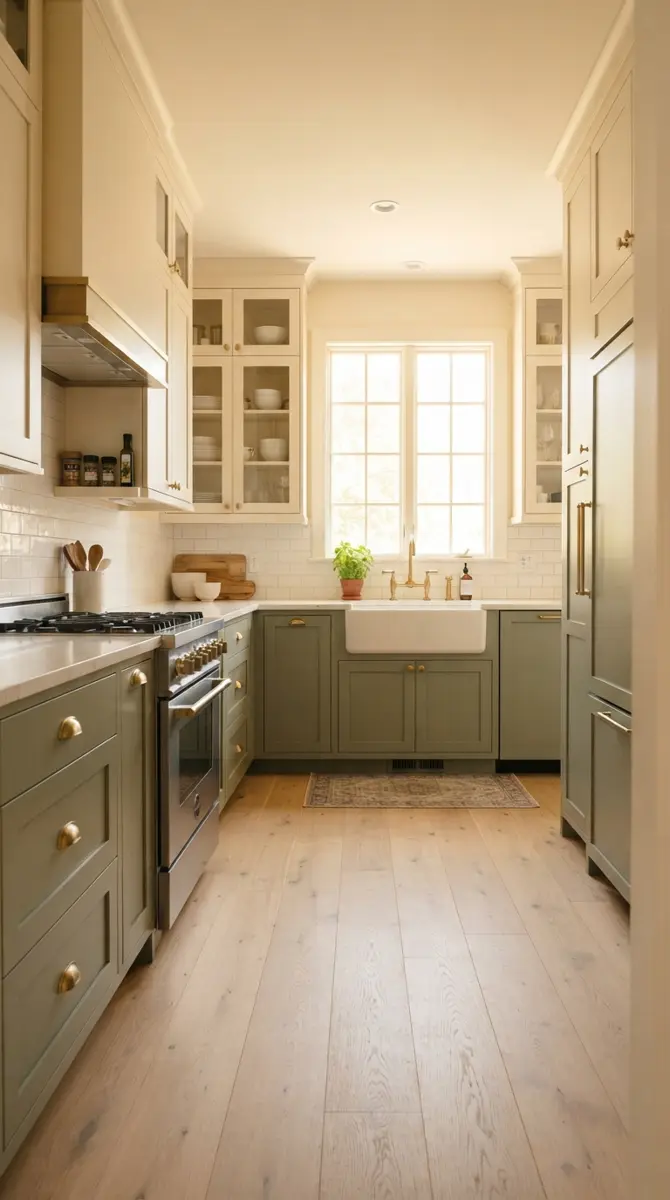
2. Sage Green Shaker Cabinets with Cream Walls
Shaker doors are the perfect partner for this palette because their clean frames look tailored, never fussy. These sage green and cream kitchen ideas lean on shaker cabinets when you want the color to feel classic rather than trendy, since the style has looked current for decades.
Choose a clear, garden-fresh sage such as Sherwin-Williams Clary Sage SW 6178 for the cabinets, and paint the walls a soft cream with warm undertones. A matte or satin finish lets the earthy tone breathe; glossy finishes can look clinical and dated on sage.
Materials: Shaker cabinet doors or full repaint ($150–$400 DIY), cream wall paint ($40–$60 per gallon). Cost: about $200–$500 depending on kitchen size.
Tip: Sample your sage on a large board and check it in morning and evening light — sage shifts a lot between grey, green, and blue depending on the light.
Variation: Add a beadboard backsplash in cream behind the range for a cottage touch that ties the walls and cabinets together.
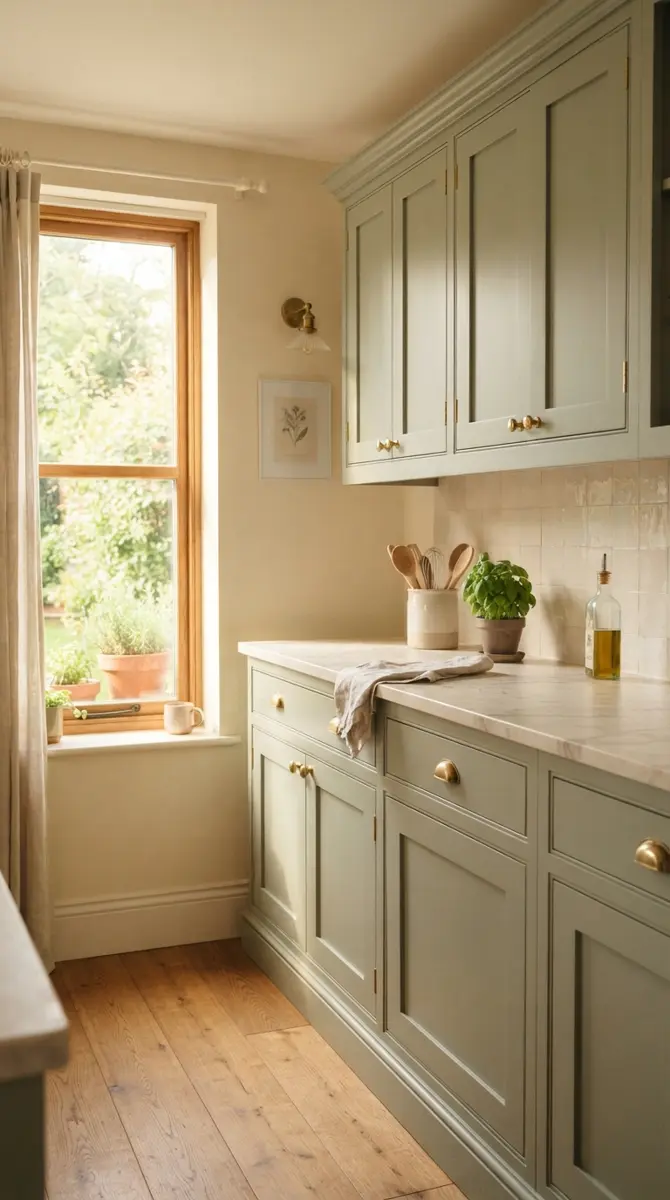
3. A Sage Island Anchoring a Cream Kitchen
If painting every cabinet feels like too much, paint just the island. These sage green and cream kitchen ideas often work best with one strong color moment, and a sage island gives you that hit exactly where your eyes land when you walk in.
Keep the perimeter cabinets cream, the countertops pale, and let the island carry the color. A chunky butcher-block top or cream marble slab on the island keeps it from feeling heavy, and two or three stools in pale oak finish the look.
Materials: Island paint + primer ($40–$60), new countertop slab if replacing ($200–$600), bar stools ($60–$150 each). Cost: about $100–$800.
Tip: Paint the island a shade deeper than your wall sage so it reads as a deliberate furniture piece, not a leftover cabinet run.
Variation: Add open shelving to one end of the island for cookbooks and cream ceramics — it softens the big block of color.
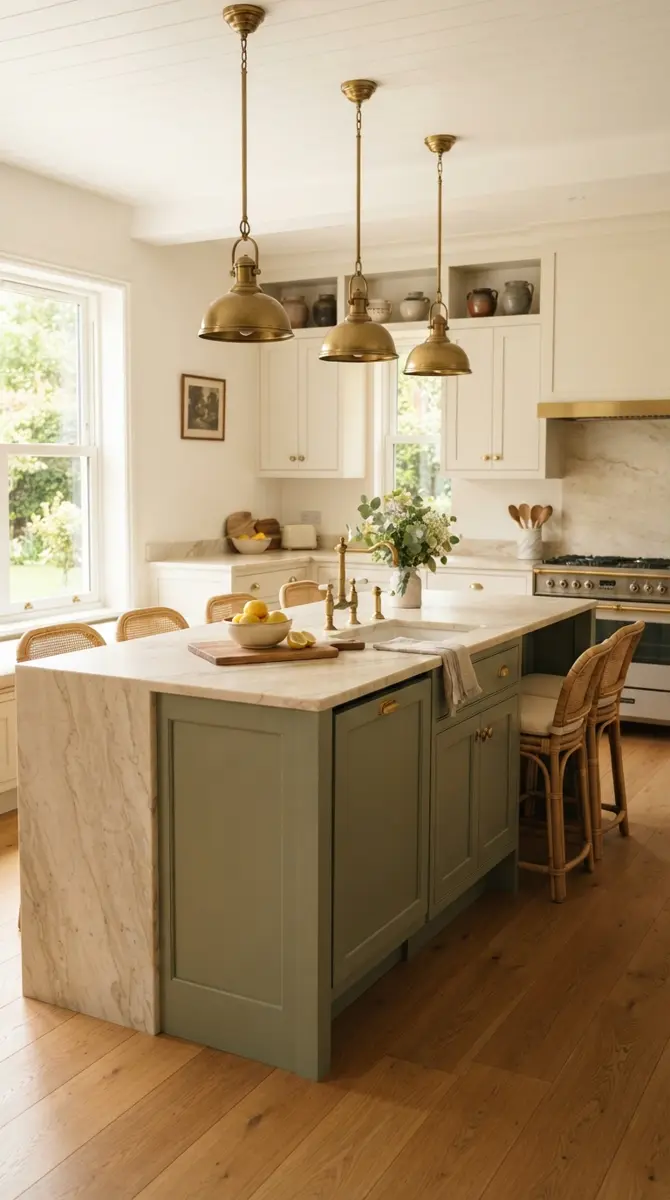
4. Brushed Brass Hardware on Soft Sage Doors
Hardware is the jewelry of the kitchen, and brushed brass is the metal this palette was made for. These sage green and cream kitchen ideas get an instant lift from warm brass pulls and knobs, which catch the light like tiny pieces of gold against the muted green.
Swap every knob and pull for aged or brushed brass in the same style — cup pulls on drawers, knobs on doors — and match the faucet finish to complete the look. The warmth of the brass keeps sage from reading cold or grey.
Materials: Brass knobs ($4–$9 each), cup pulls ($6–$12 each), screwdriver. Cost: about $80–$200 for a full kitchen swap.
Tip: Buy one knob and one pull first and live with them for a week — brass finishes range from pale gold to deep bronze, and the right one depends on your light.
Variation: Mix in a few leather tab pulls on the island drawers for a softer, collected feel that still works with brass.
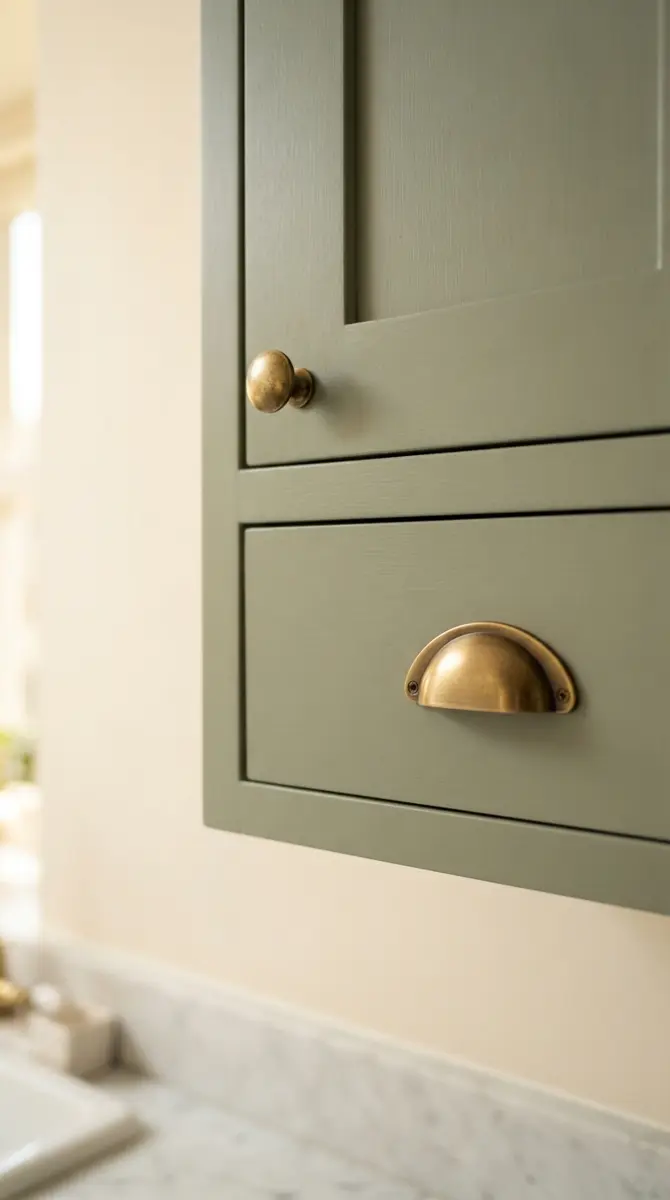
5. Cream Marble Countertops with Sage Cabinets
Cream marble is the countertop this palette dreams about. These sage green and cream kitchen ideas pair veined cream marble with sage cabinetry because the stone’s soft grey veins echo the sage, while its warm cream base keeps everything glowing.
Choose a honed or leathered finish rather than high polish — it looks more natural against matte sage cabinets and hides everyday smudges better. If real marble is out of budget, a cream quartz with soft grey veining gives you the same look with far less maintenance.
Materials: Cream marble or quartz slab ($60–$120 per sq ft installed), sealer for natural marble ($20–$30). Cost: about $1,500–$4,000 for an average kitchen.
Tip: Seal natural marble every six months and wipe up tomato sauce and citrus right away — the stone stains easily but rewards care with a gorgeous patina.
Variation: Use the same marble for a small backsplash shelf behind the range so the veining runs up the wall as a feature.

6. Sage Subway Tile Backsplash with Creamy Grout
A sage subway tile backsplash adds color at eye level without touching a single cabinet. These sage green and cream kitchen ideas use tile when you want the palette but rent or can’t repaint — a backsplash is one of the most renter-friendly ways to commit to color.
Lay classic 3×6 subway tiles in a soft sage with warm cream grout, and run them in a brick pattern up to the bottom of the upper cabinets. The creamy grout softens the grid lines and ties the tile straight into your cream walls.
Materials: Sage subway tile ($8–$15 per sq ft), cream grout, thinset, spacers. Cost: about $200–$500 for a standard backsplash.
Tip: Take the tile all the way to the ceiling behind the range hood — that one tall column of sage becomes the kitchen’s focal point for free.
Variation: Try a vertical stack pattern instead of brick bond for a more modern, tailored look in the same colors.

7. Cream Handmade Tiles Behind the Range
Handmade-look tiles bring the texture that flat paint can’t. These sage green and cream kitchen ideas shine with cream zellige-style tiles behind the range, where their uneven glaze catches the light and makes the whole wall shimmer.
Keep the field tile cream and let the sage live in the cabinets around it. The contrast is gentle, but the handmade texture gives the kitchen a collected, artisan feel that reads expensive even in a small space.
Materials: Handmade-look cream tile ($12–$25 per sq ft), grout, thinset. Cost: about $150–$400 for the range wall.
Tip: Order 10% extra tile — handmade-look tiles vary in size and shade, and you’ll want spares to pick the best pieces for the most visible spots.
Variation: Frame the range wall with a thin brass trim strip for a jewelry-box edge that echoes your hardware.
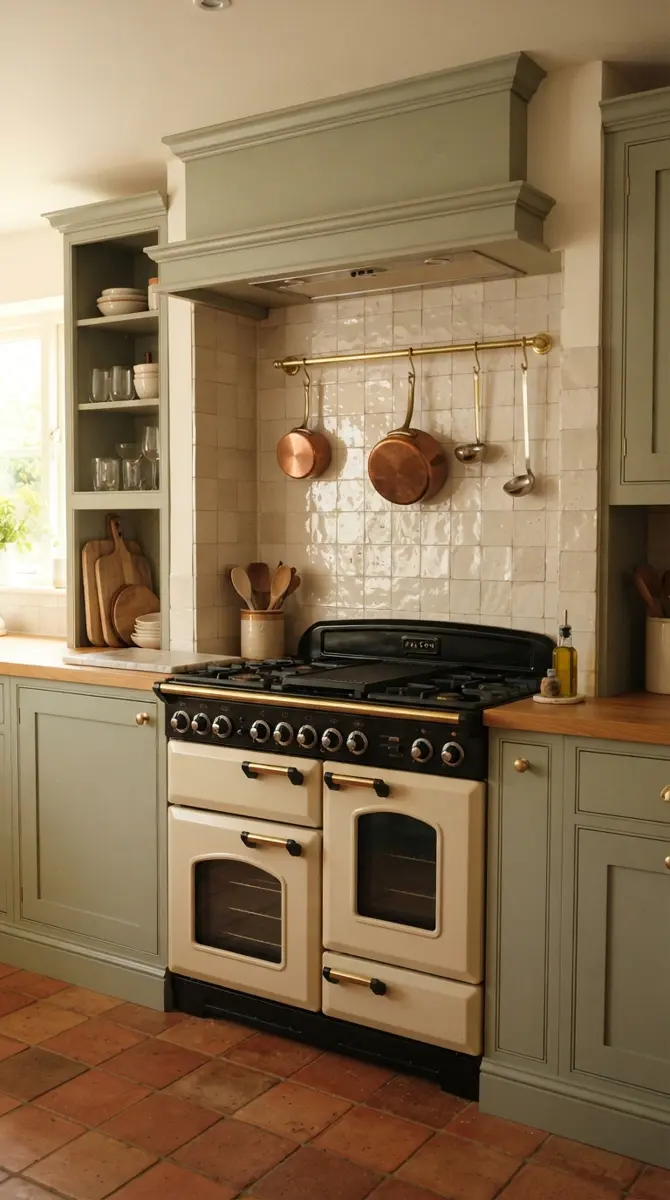
8. Pale Oak Floors Grounding Sage and Cream
Every great color story needs a quiet floor, and pale oak is the one for this palette. These sage green and cream kitchen ideas sit best on pale oak because the wood’s honey tones warm up both colors without competing with either of them.
Choose wide-plank oak in a natural or whitewashed finish, and run the boards in the longest direction of the room to stretch the space. The pale floor bounces light upward, which matters most in kitchens where sage covers a lot of cabinet area.
Materials: Pale oak flooring ($6–$12 per sq ft), underlayment, trim. Cost: about $1,200–$3,000 for an average kitchen.
Tip: Skip dark walnut stains here — dark floors fight the soft sage and make the room feel smaller and heavier than it is.
Variation: If new floors aren’t in the budget, a large pale jute or cream flatweave rug gives you the same warming effect for under $150.
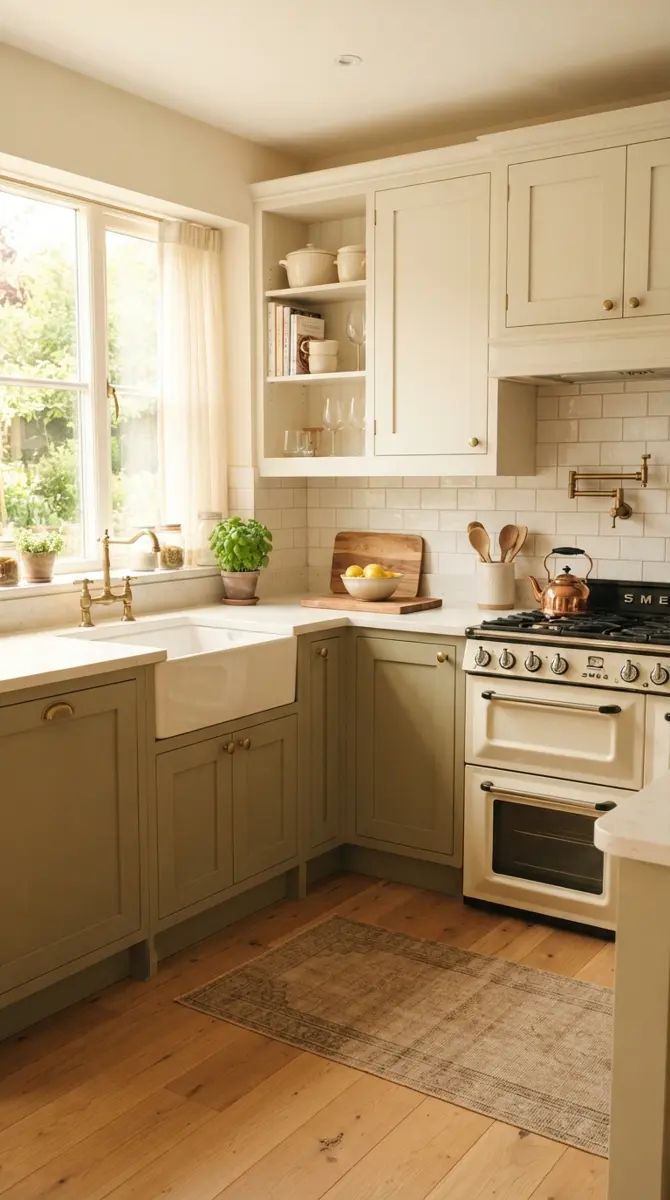
9. Open Wood Shelves Styled with Cream Ceramics
Swap one upper cabinet for two floating wood shelves and the whole kitchen breathes. These sage green and cream kitchen ideas love open shelving because it breaks up the wall of color and gives you a stage for cream ceramics, sage dishware, and a little greenery.
Style the shelves with restraint: stacks of cream bowls, a few sage mugs, one trailing plant, and a wooden board or two. Leave breathing room between objects so the shelves read calm, not cluttered.
Materials: Two floating wood shelves ($40–$90 each), brackets, cream ceramics you own. Cost: about $80–$200.
Tip: Keep everyday dishes on the lowest shelf and display-only pieces up high — open shelves work best when they’re used, not just decorated.
Variation: Paint the shelf brackets the same sage as your cabinets so the shelves feel built-in rather than added on.

10. A Sage Pantry Wall with Glass Doors
A pantry wall is a big block of cabinetry, and painting it sage turns storage into a feature. These sage green and cream kitchen ideas use a sage pantry wall with glass-fronted doors so the color stays light — you see through to cream shelves and pretty jars instead of a solid green wall.
Style the shelves behind the glass with cream canisters, clear jars of grains, and a few sage linen napkins. The glass keeps everything visible and tidy, which is half the charm.
Materials: Sage paint ($40–$60), glass-front door inserts ($30–$60 per door), cream canisters ($15–$30 each). Cost: about $150–$400.
Tip: Line the shelf backs in cream so the jars and canisters pop — a sage interior behind glass can go dark fast.
Variation: Use reeded or fluted glass instead of clear for a softer, more private look that still lets light through.
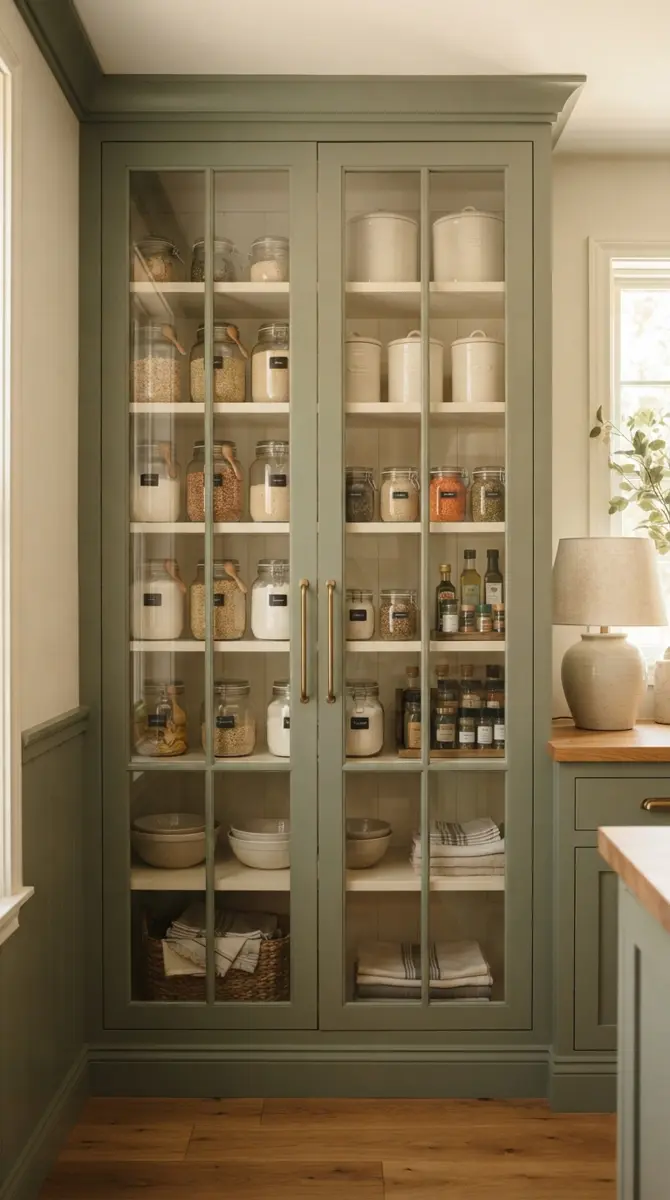
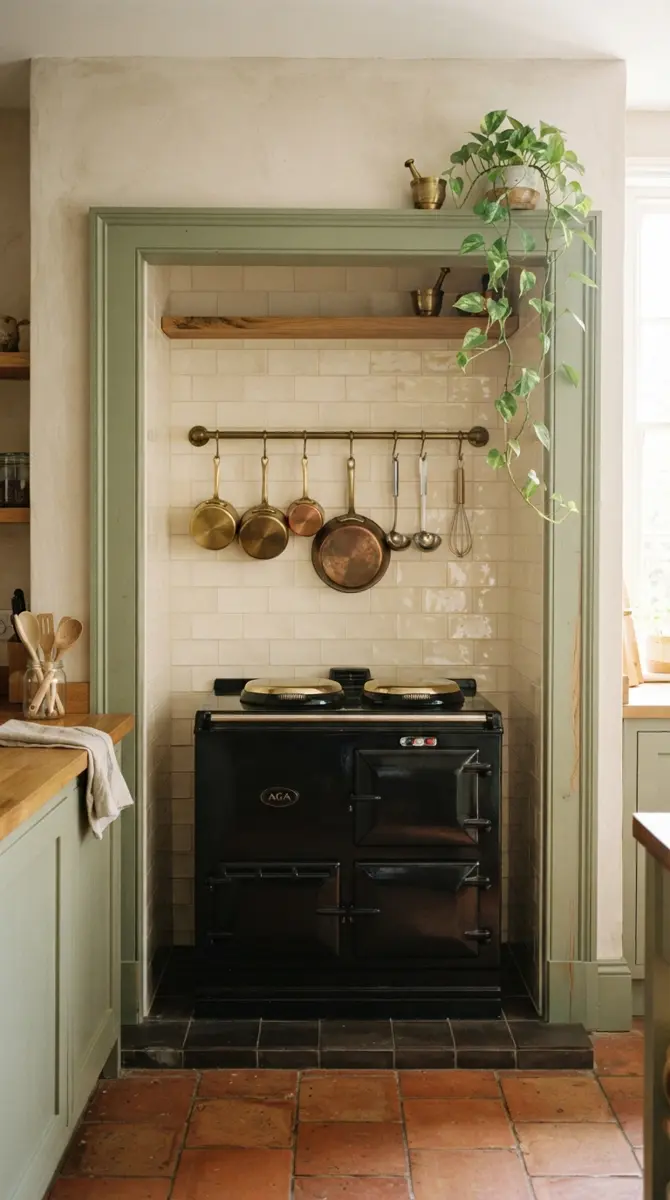
11. A Cream Range Alcove Framed in Sage
A range alcove is the kitchen’s fireplace moment, and framing it in sage makes it the star of the room. These sage green and cream kitchen ideas use the alcove trick when the range wall is plain — a sage frame around a cream tile or plaster inset gives the cooktop a tailored, built-in look.
Build the frame with simple trim or a shallow arch, paint it sage, and keep the inset cream. A brass pot rail or a small shelf inside the alcove adds function and a place for a trailing herb plant.
Materials: Trim boards + paint ($50–$100), cream tile or plaster inset ($40–$120), brass rail ($30–$60). Cost: about $120–$300.
Tip: Keep the alcove shallow — about 4 inches deep is enough for the framed look without stealing counter space.
Variation: Add a slim picture ledge inside the alcove for a small framed print or a row of spice jars.
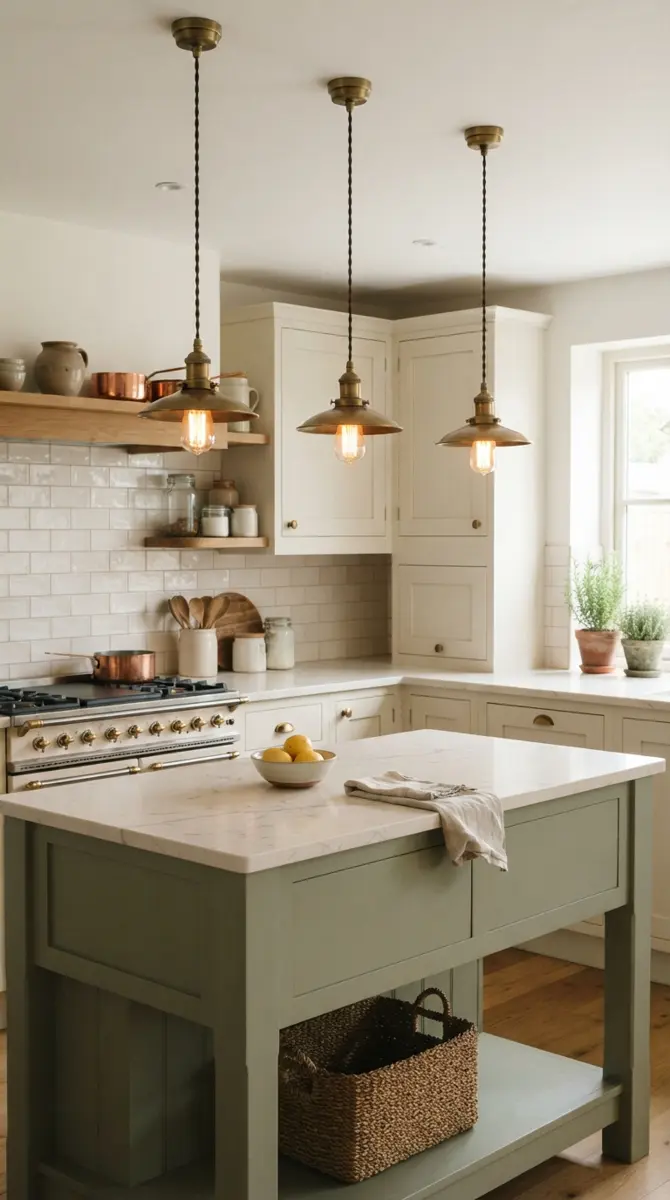
12. Aged Brass Pendants Over a Sage Island
Lighting is where the 10% brass in the 60-30-10 rule earns its keep. These sage green and cream kitchen ideas glow when aged brass pendants hang over the island, throwing warm light down onto the sage and making the whole room feel like golden hour.
Hang two or three pendants in a row, about 30 inches above the countertop, and choose warm-white bulbs around 2700K. The brass shades warm the light, and the sage below it turns rich instead of flat.
Materials: Brass pendant lights ($60–$150 each), warm-white bulbs, dimmer switch ($20–$40). Cost: about $150–$500.
Tip: Put the pendants on a dimmer — bright for cooking, low for dinner — and the same kitchen feels like two different rooms.
Variation: Mix one large brass dome pendant with two smaller ones for a collected look that still feels intentional.
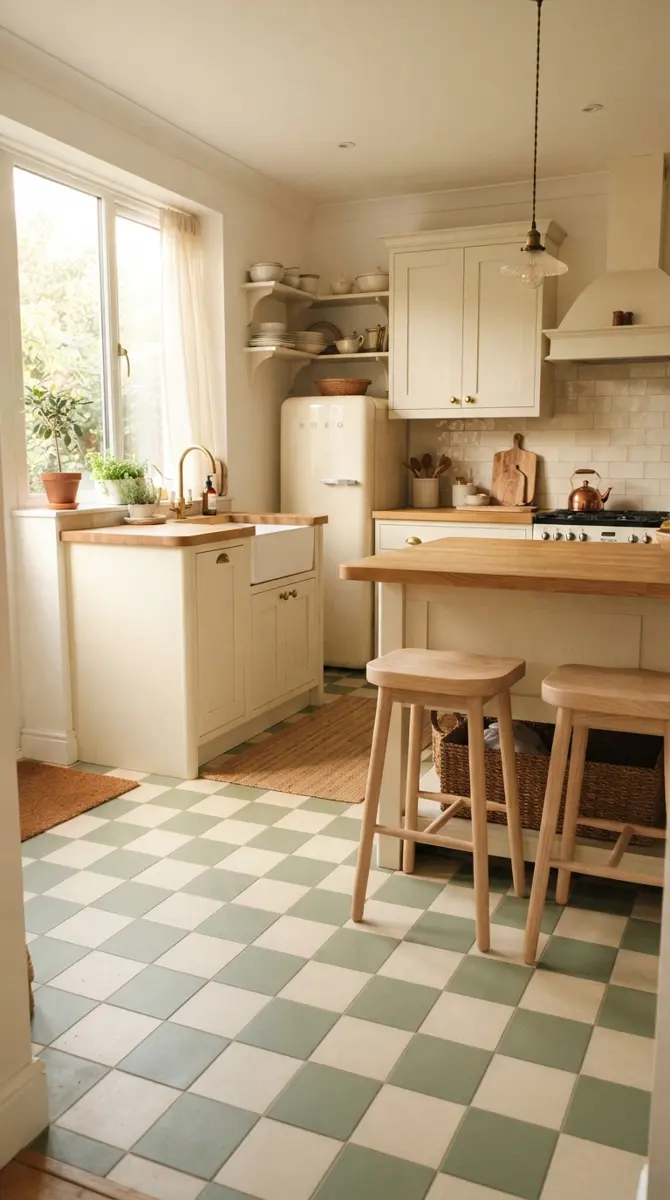
13. Sage and Cream Checkerboard Floor
Checkerboard floors are having a real moment, and the soft version was made for this palette. These sage green and cream kitchen ideas get a playful lift from sage squares against cream, which reads fresh and vintage at the same time without the harshness of black and white.
Use large 12-inch squares in a matte finish so the pattern feels calm, and keep the rest of the room quiet — plain cream cabinets, simple hardware — so the floor can be the star.
Materials: Sage and cream floor tile ($8–$14 per sq ft), grout, thinset. Cost: about $800–$2,000 for an average kitchen.
Tip: Lay the checkerboard on the diagonal in a small kitchen — the angled grid tricks the eye into seeing a bigger floor.
Variation: Try the checkerboard only in an entry nook or under the island as a rug-like inset if a full floor feels like too much pattern.
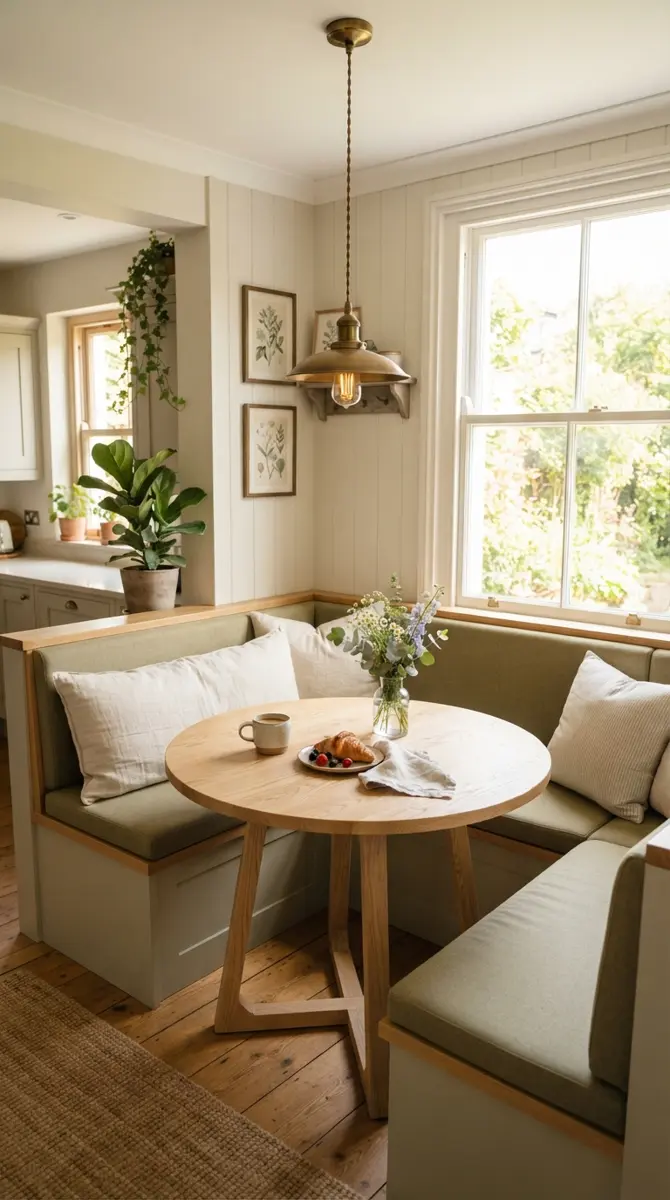
14. A Breakfast Nook Dressed in Sage and Cream
A breakfast nook is the coziest corner in the house, and this palette was made for it. These sage green and cream kitchen ideas turn a plain nook into a destination with a sage banquette, cream cushions, and a small round table in pale oak.
Paint the banquette sage, add cream seat cushions in a washable linen, and hang a single brass pendant above the table. A sage Roman shade on the window finishes the cocoon without blocking the morning light.
Materials: Banquette paint + cushions ($100–$250), round oak table ($150–$400), brass pendant ($60–$120). Cost: about $300–$800.
Tip: Choose outdoor-grade fabric for the cushions — breakfast nooks meet coffee spills daily, and washable covers save the look.
Variation: No built-in banquette? A sage-painted bench with cream cushions against the wall gives you the same nook feeling for under $200.
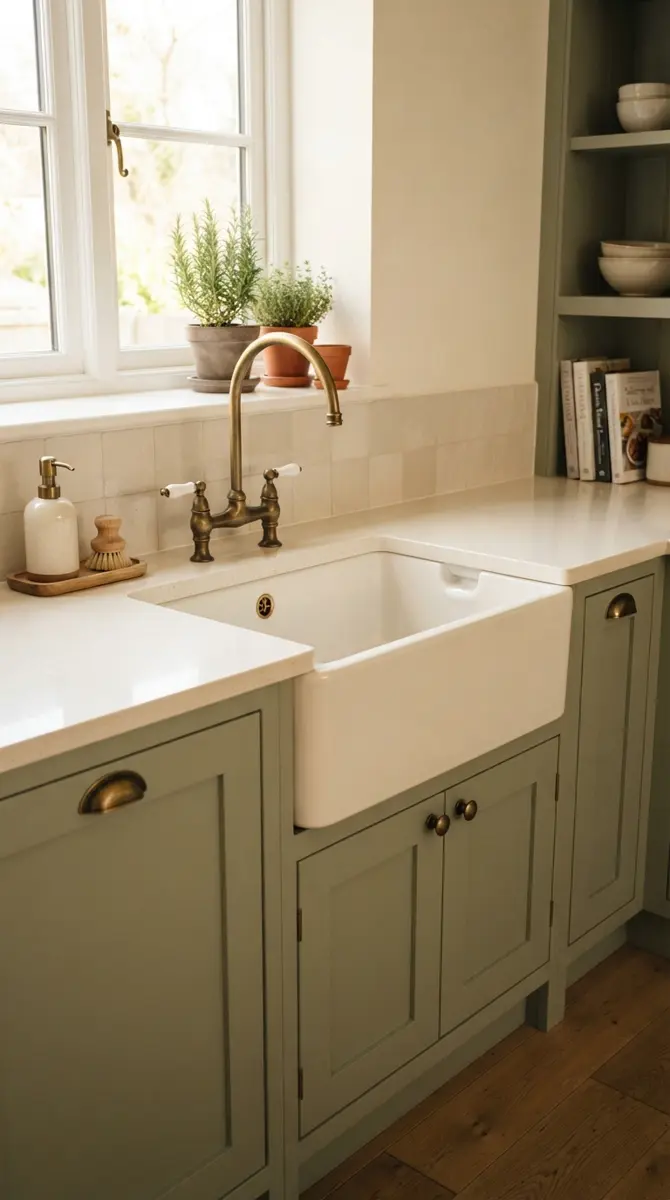
15. A Butler’s Sink Moment in Sage, Cream and Brass
A deep butler’s sink is the farmhouse heart of this palette. These sage green and cream kitchen ideas come alive around a cream ceramic apron sink set into sage cabinetry, with a tall aged-brass faucet arching over it like jewelry.
Keep the countertops cream and the faucet brass, and let the sink’s apron front show — that’s the detail that makes people stop and look. A sage cabinet run on either side frames it perfectly.
Materials: Cream apron-front sink ($250–$600), brass faucet ($150–$350), sage cabinet paint. Cost: about $500–$1,200.
Tip: Choose a single-bowl sink — the deep basin swallows stockpots and baking sheets that a divided sink can’t handle.
Variation: Add a small brass bridge faucet with side sprayers for a vintage look that still handles modern dish duty.
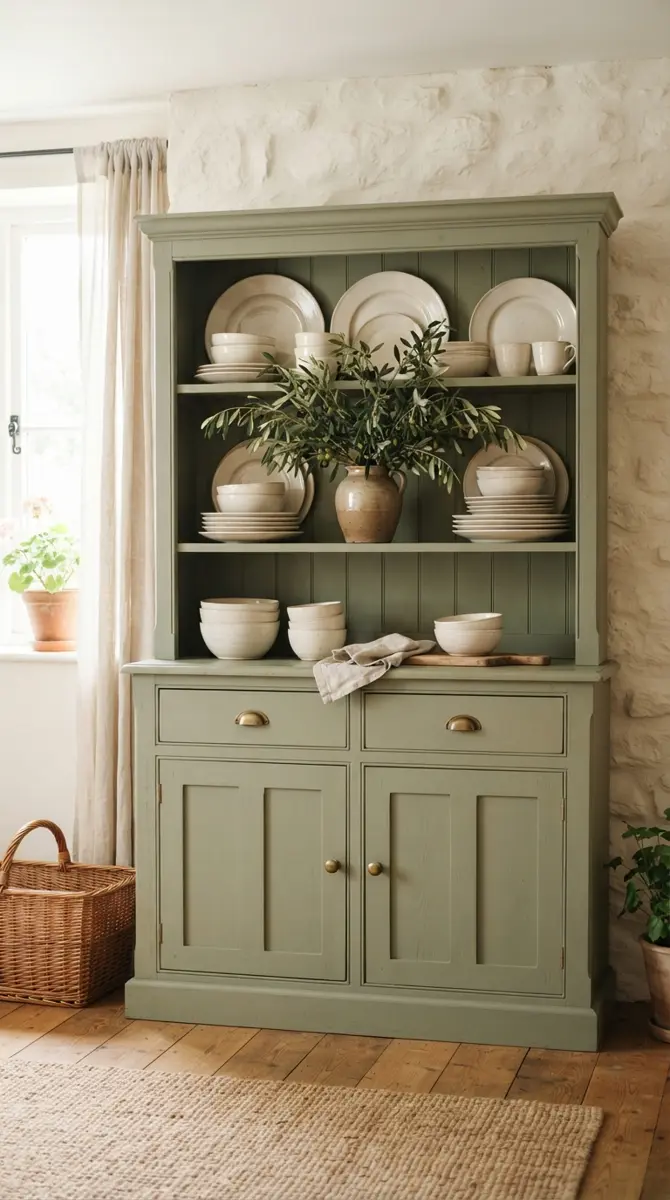
16. A Sage Dresser Styled with Cream Ceramics
Not every kitchen needs built-ins — a freestanding sage dresser brings the color in as furniture. These sage green and cream kitchen ideas borrow this trick from English cottage kitchens, where a painted dresser holds dishes and doubles as a serving station.
Paint a secondhand dresser or hutch sage, line the shelves with cream plates and bowls, and top it with a vase of olive branches. It adds storage and soul in one piece, and you can take it with you if you move.
Materials: Secondhand dresser ($50–$150), sage paint ($30–$50), cream ceramics. Cost: about $100–$250.
Tip: Anchor the dresser to the wall with furniture straps — a tall piece full of dishes is a tipping risk in a busy kitchen.
Variation: Remove the top doors and leave the shelves open for a Welsh-dresser look that shows off your prettiest cream ceramics.
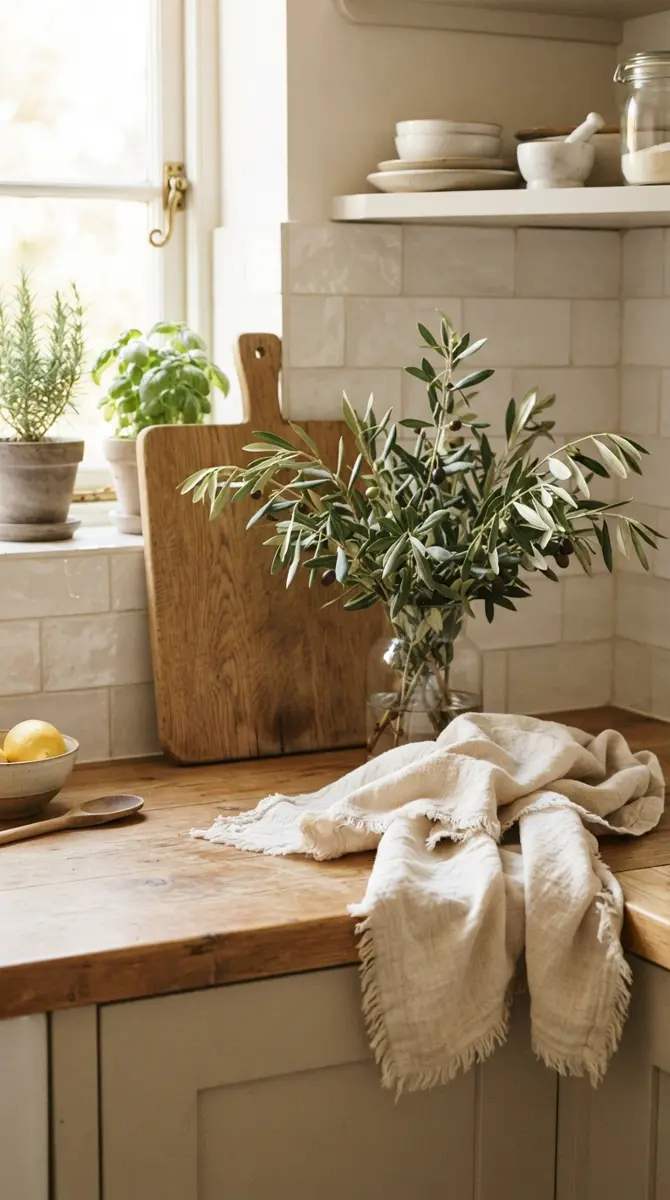
17. Cream Linen, Olive Stems and the Final Layer
The last 5% of styling is what makes a kitchen feel finished instead of just painted. These sage green and cream kitchen ideas finish with cream linen tea towels, olive stems in a glass vase, and a wooden board leaning against the backsplash.
This is the layer you change with the seasons: linen napkins in summer, a sprig of eucalyptus in winter, fresh herbs from the windowsill in spring. Small, cheap, and it makes the whole room feel styled.
Materials: Cream linen towels ($10–$20 each), glass vase ($10–$25), olive stems ($8–$15). Cost: under $50.
Tip: Keep the counters 80% clear — one vase, one board, one towel stack is enough. A styled kitchen still needs room to cook.
Variation: Swap the olive stems for a small potted herb trio on the windowsill so the styling is useful as well as pretty.
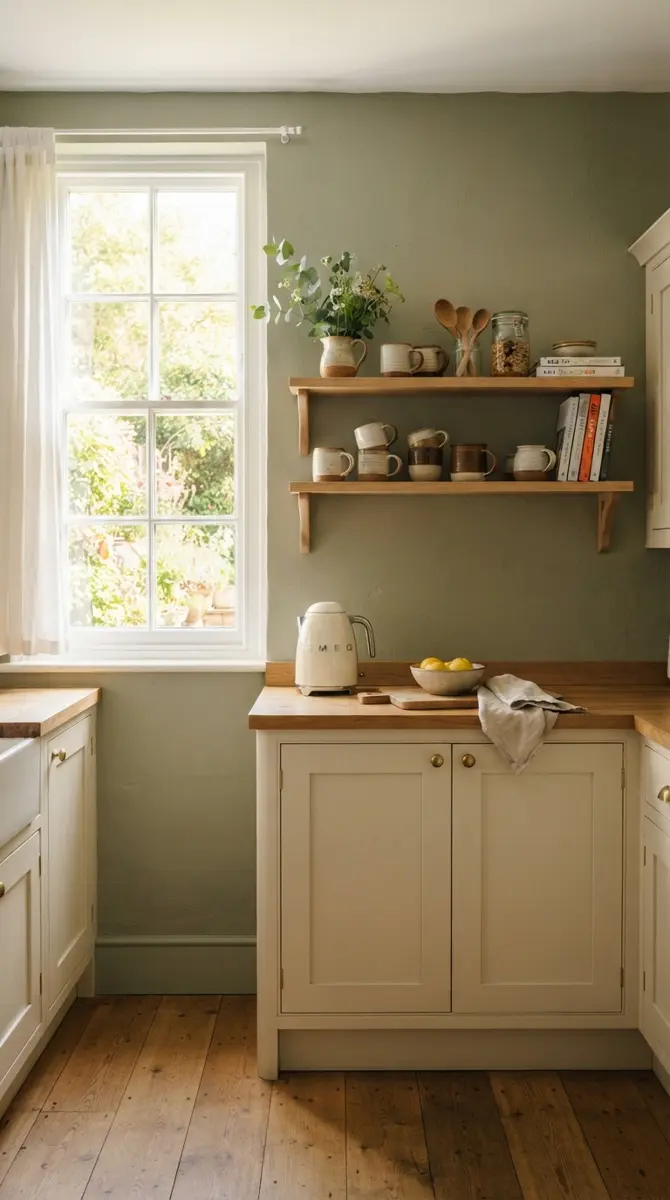
18. Sage Green Walls with Cream Cabinetry
If repainting cabinets feels like too big a job, flip the formula: sage on the walls, cream on the cabinets. These sage green and cream kitchen ideas work beautifully in reverse, especially in kitchens with great natural light where the walls can carry the color.
Paint the walls a soft sage like Benjamin Moore Healing Aloe 2037-40, keep the cabinets warm cream, and add pale oak open shelves to break up the green. The room feels wrapped in color without a single cabinet door being painted.
Materials: Sage wall paint ($40–$60 per gallon), cream cabinet paint if refreshing ($60–$90). Cost: about $100–$300.
Tip: Paint the ceiling cream, never sage — a green ceiling lowers the room and makes the light feel muddy.
Variation: Paint just one wall sage as a feature, and keep the other three cream, if a full green room feels too bold.
19. Warm Butcher Block with Sage Cabinets
Butcher block is the warm-wood note that keeps sage and cream from feeling too cool. These sage green and cream kitchen ideas pair a honey-toned butcher block countertop with sage cabinets because the wood’s warmth balances the green’s grey undertones.
Choose a natural maple or white oak block, seal it with food-safe oil, and let it age — the patina it develops over time is part of the charm. Pair it with cream walls and brass hardware for the full cottage-kitchen look.
Materials: Butcher block countertop ($40–$80 per sq ft), food-safe oil ($15–$25). Cost: about $800–$2,000 for an average kitchen.
Tip: Oil the block once a month for the first year, then every few months — a well-oiled top resists stains and stays golden instead of going grey.
Variation: Use butcher block only on the island and keep cream stone on the perimeter — you get the warmth where you chop and the durability where you cook.
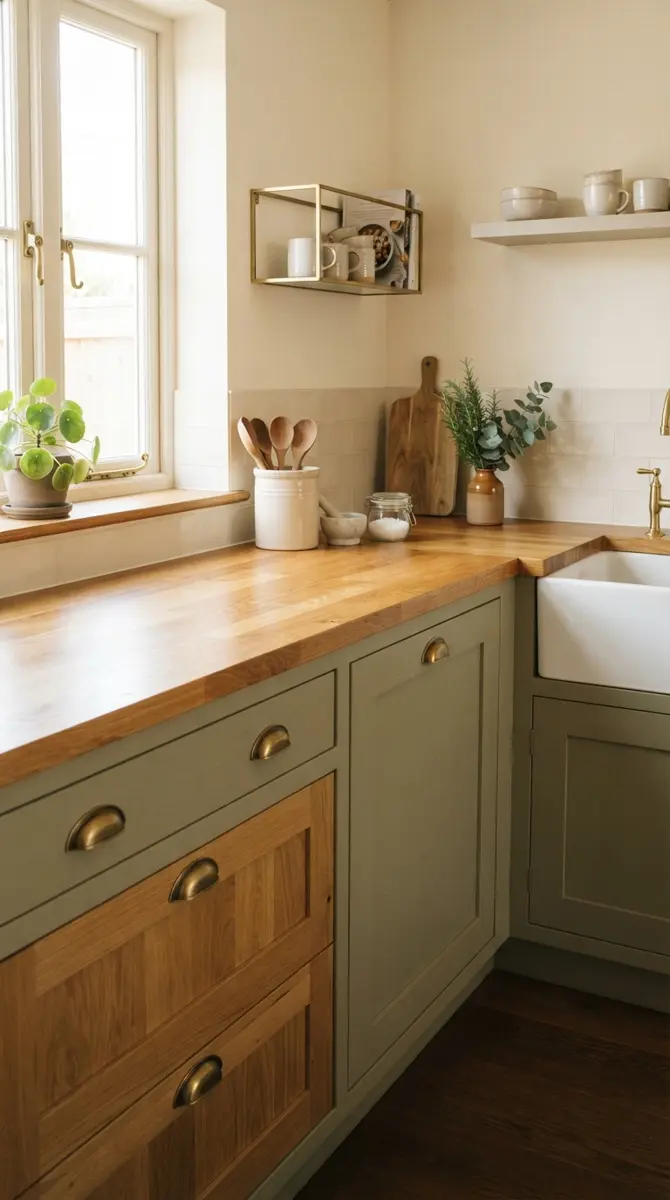
20. A Sage Coffee Station in a Cream Corner
A coffee station turns a dead corner into the most-used spot in the kitchen. These sage green and cream kitchen ideas carve out a coffee nook by painting a small cabinet run sage, adding cream open shelves above it, and lining up the machine, mugs, and beans like a tiny cafe.
Keep everything within arm’s reach: mugs on hooks under the shelf, beans in a clear jar, and a small tray to catch drips. The sage backdrop makes the cream mugs pop, and the whole station photographs beautifully.
Materials: Sage paint for the cabinet run ($30–$50), cream shelves ($30–$60), mug hooks ($10–$15). Cost: about $80–$200.
Tip: Add a small brass rail under the shelf for hanging mugs — it saves shelf space and turns your prettiest cups into decor.
Variation: Make it a tea station instead with a pretty kettle, a jar of loose-leaf tea, and a stack of cream cups.

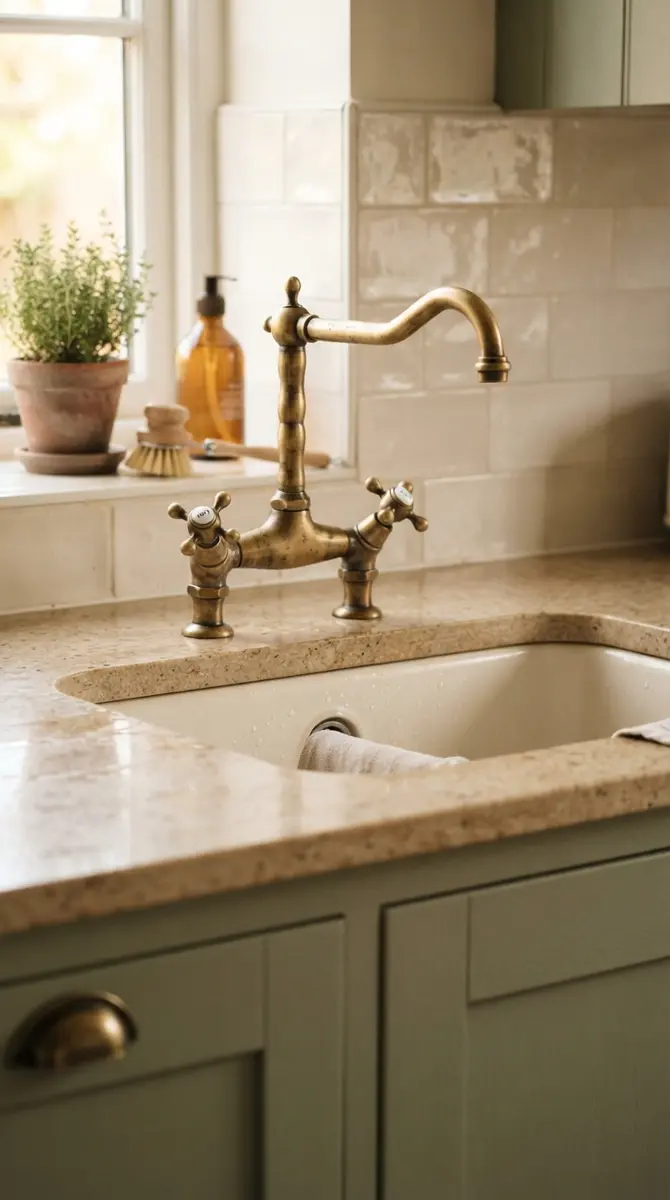
21. A Vintage Brass Faucet as Kitchen Jewelry
Sometimes one object carries the whole look. These sage green and cream kitchen ideas get their sparkle from a vintage-style brass faucet — a bridge faucet or a tall gooseneck with cross handles — set against sage cabinets and a cream sink.
The faucet is the one thing you touch a dozen times a day, so it should feel good as well as look good. Choose solid brass with a living finish that darkens gently over time, and match it to your cabinet pulls.
Materials: Brass bridge or gooseneck faucet ($180–$400), plumber’s install if needed ($100–$200). Cost: about $300–$600.
Tip: Pick the faucet before the sink — the faucet’s spread and height decide which sink and countertop cutouts you need.
Variation: Add matching brass soap dispensers and a small brass pot filler above the range for a fully coordinated metal story.
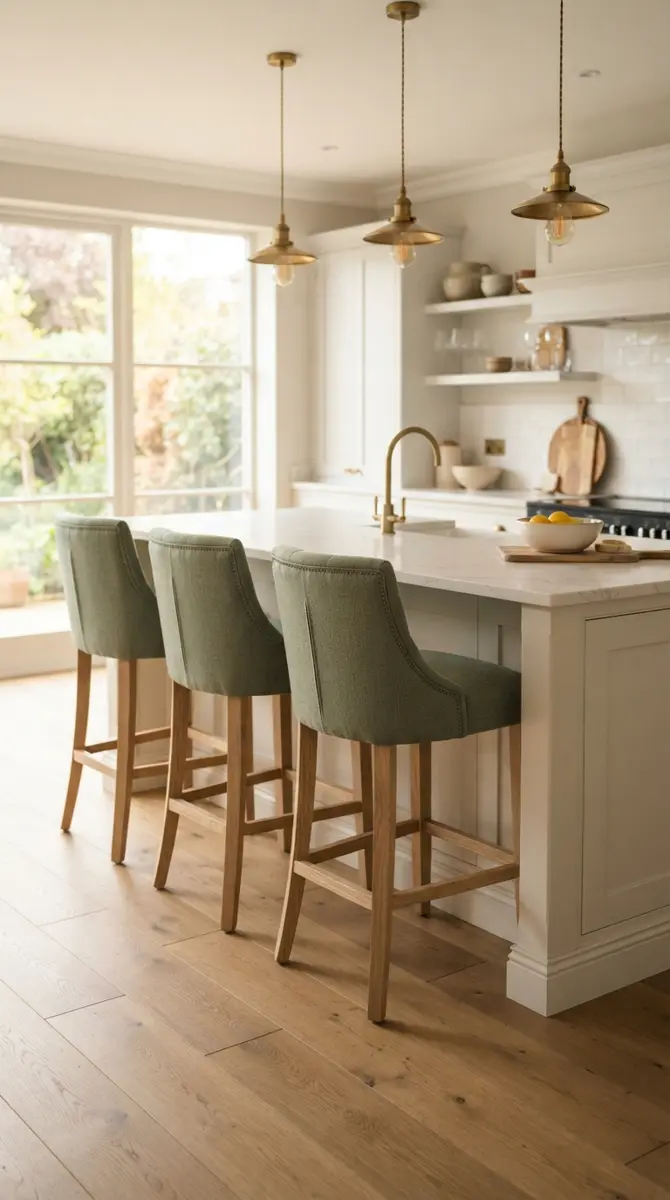
22. Sage Bar Stools at a Cream Island
Bar stools are the easiest way to add sage without paint. These sage green and cream kitchen ideas use upholstered sage stools at a cream island to pull the color up to seating height, where it softens the whole room.
Choose stools with a wipeable sage fabric or leather, pale oak legs, and a low back so they don’t block the view across the island. Three stools in a row create a rhythm that makes the island feel designed, not just functional.
Materials: Sage bar stools ($80–$180 each), felt pads for the legs ($5). Cost: about $250–$550 for three.
Tip: Measure twice: you need about 24 inches of counter width per stool, and 10 to 12 inches of knee space under the overhang.
Variation: Mix two sage stools with one pale oak stool at the end for a collected look that still reads intentional.
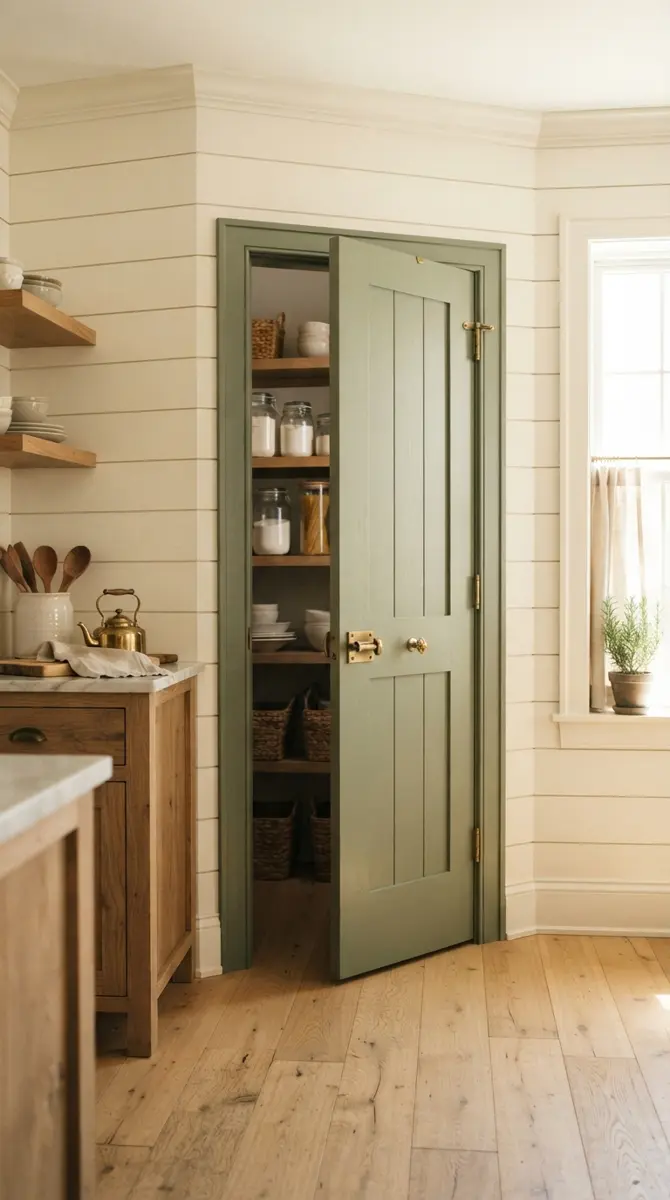
23. Cream Shiplap Walls with a Sage Accent
Shiplap adds the texture that makes a painted kitchen feel like a cottage, not a showroom. These sage green and cream kitchen ideas use cream shiplap on the walls with one sage accent — a pantry door, a window trim, or the island base — so the room has depth without going dark.
Run the shiplap horizontally to widen the room, and paint it a warm cream with a satin finish that wipes clean. The sage accent should be the smallest color moment in the room, which makes it feel special.
Materials: Shiplap boards ($2–$4 per sq ft), cream paint, sage paint for the accent. Cost: about $300–$800 for a feature wall.
Tip: Caulk every seam before painting — uncaulked shiplap shows shadow gaps that read as dirt lines once the paint dries.
Variation: Run the shiplap vertically on a narrow wall to make a low ceiling feel taller.
24. A Small Sage and Cream Kitchen That Feels Big
Small kitchens benefit most from this palette, because cream does the heavy lifting. These sage green and cream kitchen ideas work in a galley or a tiny apartment kitchen when you let cream dominate — cream walls, pale floor, light countertop — and keep sage to the lower cabinets or one run of tall units.
Add a mirror-backed shelf or a glossy cream tile to bounce light, and skip upper cabinets on one wall in favor of open shelves. For more small-space tricks, see our small galley kitchen ideas — the same layout rules make a sage kitchen feel twice its size.
Materials: Sage paint for lowers ($40–$60), cream paint for walls ($40–$60), open shelves ($40–$90 each). Cost: about $150–$400.
Tip: Keep the sage to one wall in a tiny kitchen — a full ring of green closes the room in, while one sage wall reads as a feature.
Variation: Use peel-and-stick sage tiles on the backsplash for a renter-friendly color hit you can remove when you move.
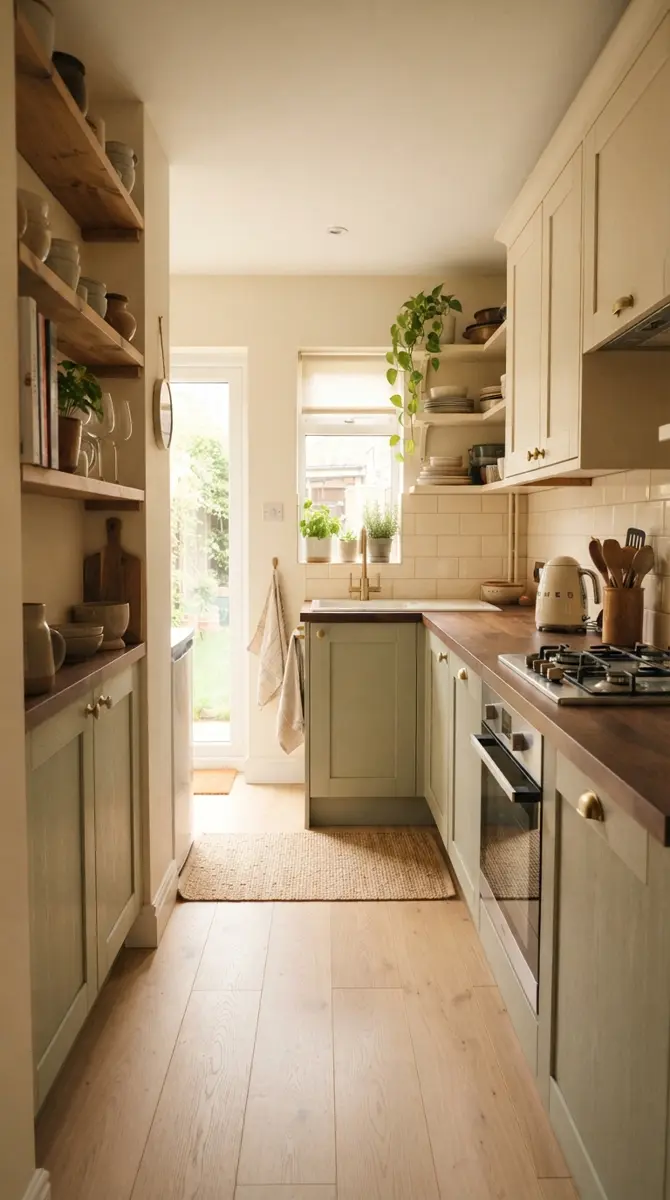
25. A Farmhouse Apron Sink with Sage Cabinetry
The farmhouse look and this palette were made for each other. These sage green and cream kitchen ideas lean farmhouse with a cream apron sink, sage Shaker cabinets, shiplap walls, and a big wooden board or two leaning by the range.
The trick is keeping the farmhouse details restrained: one apron sink, one set of cup pulls, one open shelf. Too many rustic touches and the calm palette turns cluttered, so let the sage and cream do most of the talking.
Materials: Cream apron sink ($250–$600), sage Shaker cabinets or repaint, cup pulls ($6–$12 each). Cost: about $600–$1,500.
Tip: Choose a fireclay sink over porcelain if you can — fireclay resists chips and stains far better in a hard-working farmhouse kitchen.
Variation: Add a vintage-look sage rug runner in front of the sink for softness underfoot and another hit of color at floor level.
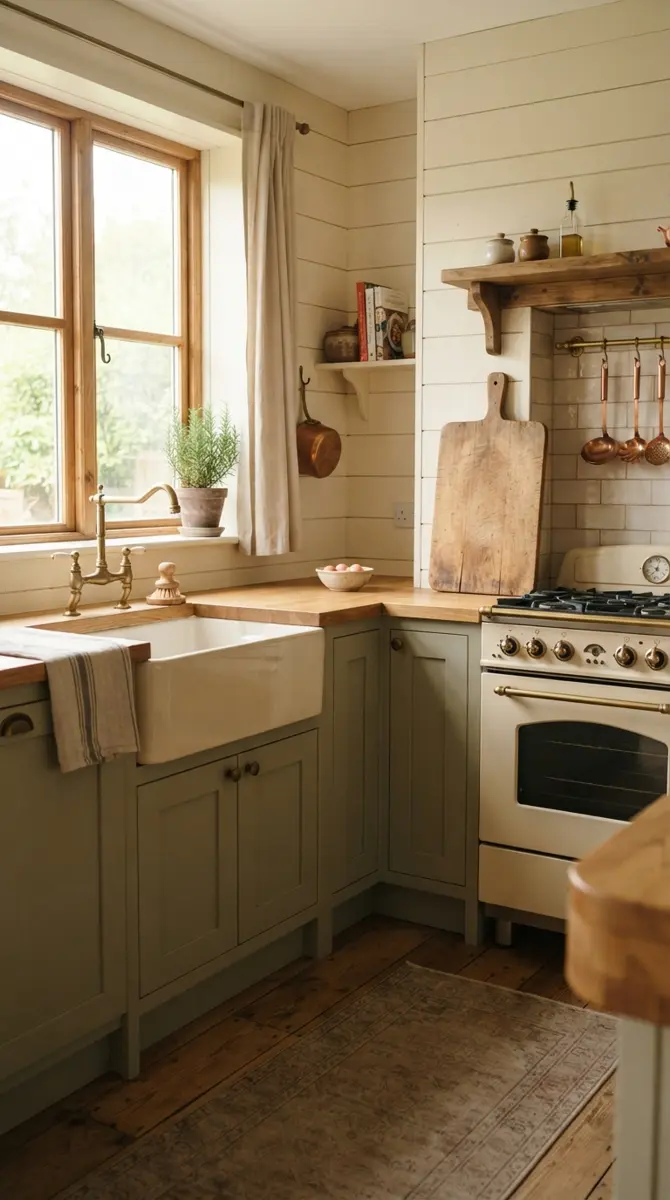
26. Panel-Ready Appliances in Sage and Cream
Nothing breaks a calm palette faster than a wall of stainless steel. These sage green and cream kitchen ideas hide the appliances behind panel-ready fronts — a sage panel on the dishwasher, a cream panel on the fridge — so the kitchen reads as furniture, not machinery.
Panel-ready appliances cost more upfront, but the visual payoff is huge in an open-plan home where the kitchen is always visible. If a full panel fridge is out of reach, panel just the dishwasher — it’s the cheapest win.
Materials: Panel-ready dishwasher ($800–$1,500), matching cabinet panels ($100–$300). Cost: about $900–$1,800.
Tip: Order the panels from your cabinet maker, not the appliance brand — the color match to your sage and cream will be far closer.
Variation: Paint a standard fridge with appliance-safe sage paint as a budget stand-in, and add brass handles for a retro Smeg-style look.
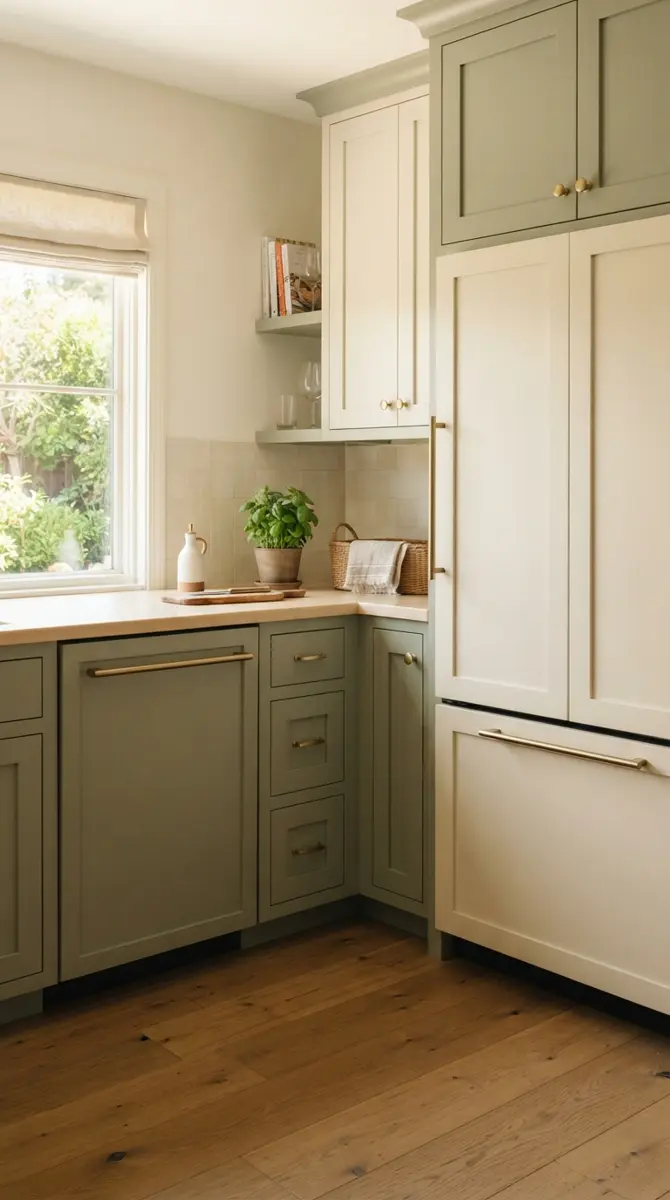
27. A Sage Herb Garden on the Cream Windowsill
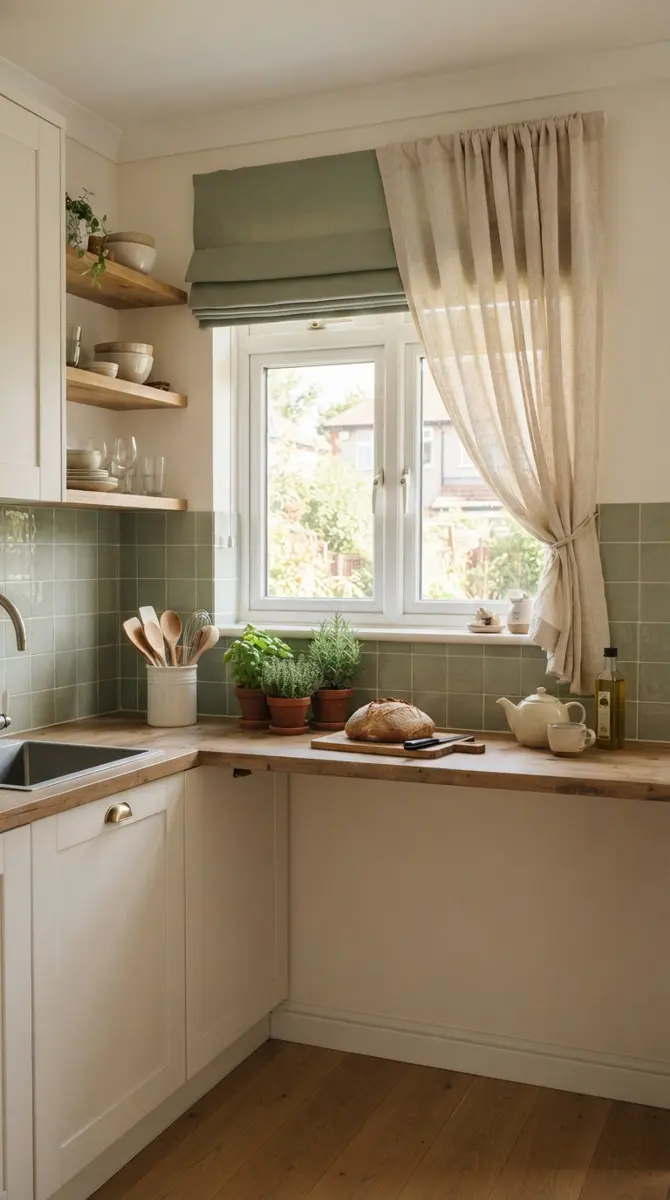
A living herb garden is the cheapest decor in this whole list, and the greenest. These sage green and cream kitchen ideas finish with pots of basil, mint, and rosemary on the cream windowsill, where the real greens echo the painted sage and the room smells like dinner before you start cooking.
Use matching cream pots so the plants read as a set, and keep a small pair of scissors nearby so you actually snip from them. Herbs you use stay alive; herbs you admire die quietly.
Materials: Three cream pots ($8–$15 each), herb plants ($3–$6 each), potting soil ($5). Cost: under $50.
Tip: Rotate the pots weekly so every side gets sun — herbs lean toward the light and go leggy if you forget.
Variation: Mount a slim sage-painted shelf across the window instead of crowding the sill, and hang the pots in macrame holders for a softer look.
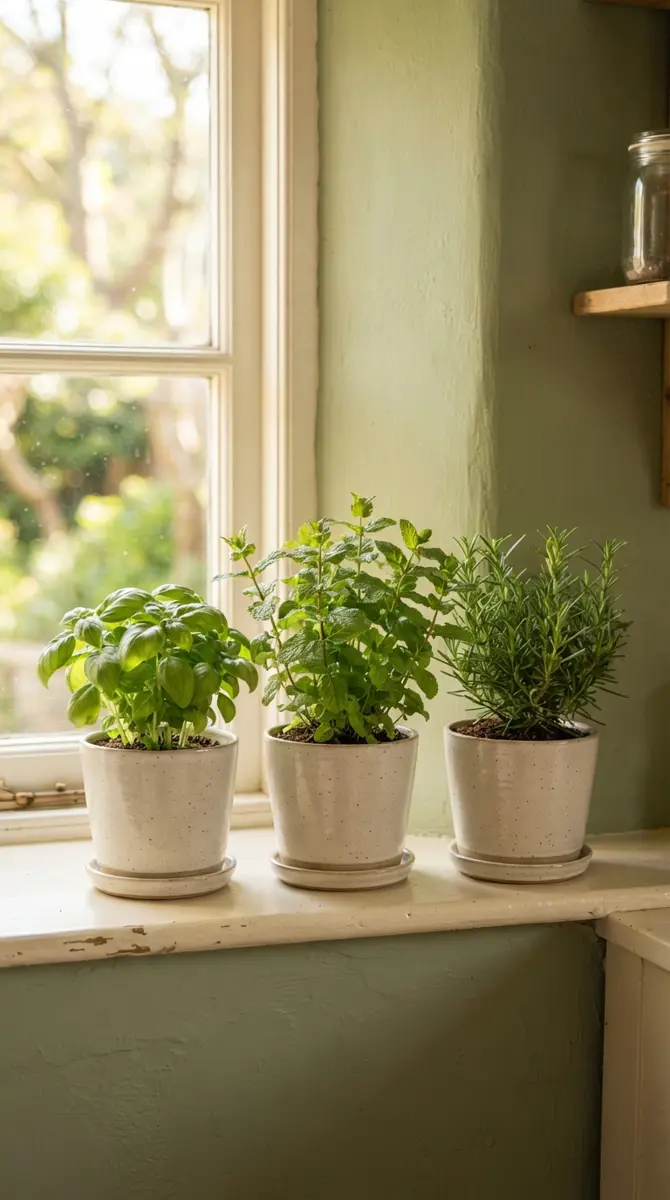
28. Renter-Friendly Sage and Cream Touches
You don’t need to own the kitchen to live in this palette. These sage green and cream kitchen ideas include a renter-friendly path: peel-and-stick sage tiles, a sage Roman shade, cream linen curtains, sage bar stools, and a sage-painted dresser you take with you.
None of it touches the landlord’s cabinets, and all of it comes out in an afternoon. The color still reads clearly in photos and in real life, because the palette is about the combination, not the square footage of paint.
Materials: Peel-and-stick tiles ($20–$40), sage Roman shade ($40–$80), cream curtains ($25–$50). Cost: about $100–$250.
Tip: Ask your landlord before painting anything, even one wall — a written yes for a sage accent wall is worth more than a deposit dispute later.
Variation: If tiles are a no, a sage tea towel collection, sage dish rack, and cream canisters give you the palette on the countertop alone.
Frequently Asked Questions
What color goes best with a sage green kitchen?
Cream is the number one partner — warm cream walls, countertops, and uppers keep sage from reading cold or grey. Aged brass hardware, pale oak floors, and soft white linen complete the palette. Avoid stark white trim and cool greys, which fight the warmth sage and cream create together.
Is sage green still trendy in 2026?
Very much so. Pinterest’s 2026 Spring Trends Report showed searches for “sage green and cream kitchen” up 410%, and designers now treat sage as a neutral rather than a trend color. Paint it once, style it with cream and wood, and it will still look current when the next few trend cycles have passed.
What paint color is sage green?
The most-used sage kitchen paints are Sherwin-Williams Evergreen Fog SW 9130, a soft greyed sage; Sherwin-Williams Clary Sage SW 6178, a clearer garden sage; and Benjamin Moore Healing Aloe 2037-40. Always sample on a large board first — sage shifts between grey, green, and blue depending on your light — and see The Spruce’s roundup of sage green kitchens for real-room examples of each shade.
What countertop goes with sage green cabinets?
Cream marble is the classic choice, with soft grey veining that echoes the sage. Butcher block adds warmth, and a warm cream quartz gives you the marble look with almost no maintenance. Avoid cool white or dark granite, which both fight the soft palette.
Does sage green work in a small kitchen?
Yes — as long as cream does the heavy lifting. Keep walls, uppers, and countertops cream, and put sage on the lower cabinets or one feature wall only. Pale floors and open shelving on one wall keep the room feeling open, and a mirror-backed shelf bounces light around.
Conclusion
Sage and cream is the rare palette that looks expensive, feels calm, and actually survives real life — sticky fingers, coffee spills, and all. Whether you repaint the whole kitchen or just swap the hardware and add a sage island, these 28 ideas give you a place to start at every budget.
Pick your favorite three, save this post to Pinterest so you can find them again, and start with the smallest one this weekend. A $20 hardware swap or a windowsill herb garden is all it takes to see the palette working in your own kitchen — and once you see it, you’ll wonder why you waited. For more kitchen color inspiration, explore our rustic sage green kitchen cabinets and sage green and black kitchen ideas next.




Leave a Reply