
If your kitchen feels dark, dated, or a little closed in, light wood may be the warmest fix you can make. A kitchen with light wood cabinets instantly feels brighter, calmer, and more welcoming, because pale maple, oak, birch, and ash reflect light instead of absorbing it. You do not need a full remodel to get the look either. Many of these ideas work with refacing, new doors, or a careful refresh of the cabinets you already own.
Below you will find 24 distinct ideas, from classic Shaker doors to coastal whitewash and bold two-tone pairings. Each one includes realistic materials, a budget range, and practical steps you can actually follow. Pick the look that fits your home, your light, and your budget, and save this guide to Pinterest so you can compare finishes side by side later.
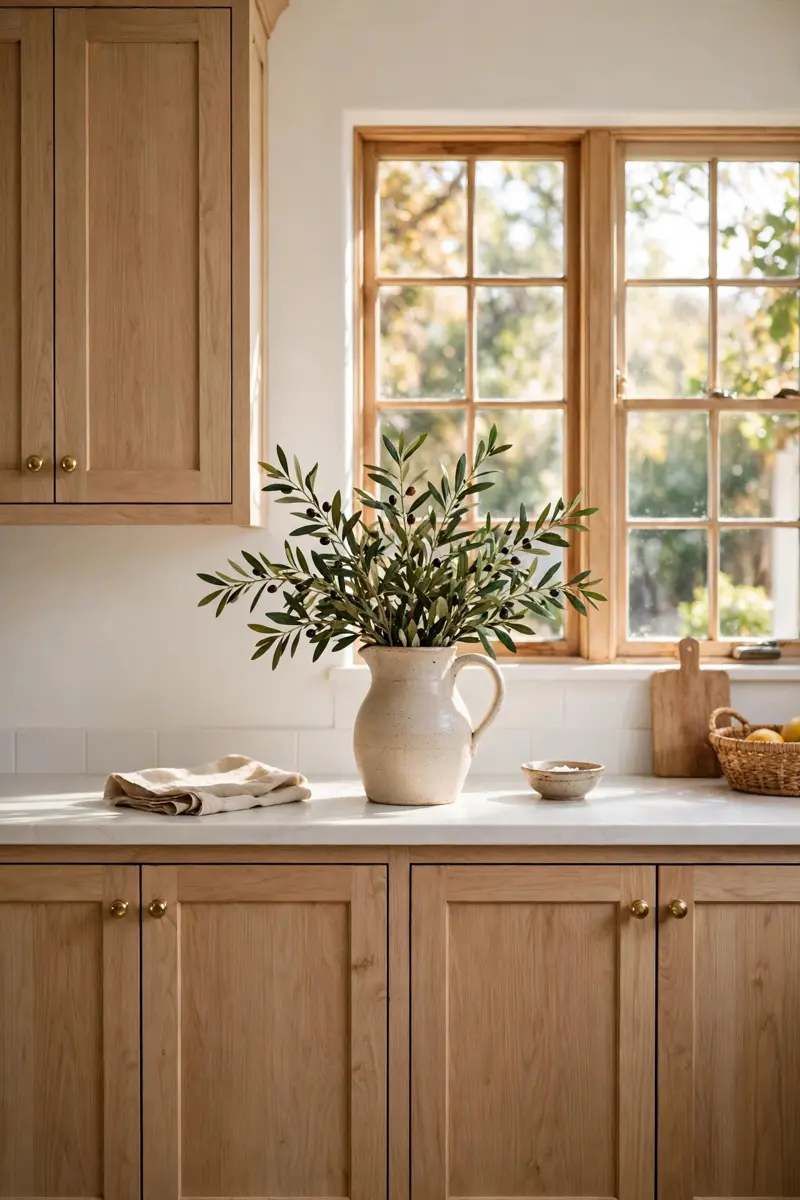
1. Classic White Oak Shaker Cabinets
White oak Shaker cabinets are the timeless starting point for this whole look. The clean five-piece door, soft grain, and honey-blonde tone suit almost any home, from a 1920s cottage to a brand-new build. A kitchen with light wood cabinets in white oak feels warm without feeling yellow, especially when the finish is a clear or lightly whitewashed sealer.
Materials: white oak Shaker doors, clear matte sealer, brass or brushed nickel knobs. Budget: $4,000–$9,000 for semi-custom doors and hardware in an average kitchen; $12,000+ for full custom cabinetry.
Start by ordering finish samples and viewing them in your own daylight, morning and evening. Pair the oak with warm white walls so the grain stays the star. Keep countertops simple so the room does not feel busy.
Tip: Ask for a white-tinted sealer sample too — it cools the tone and stops oak from turning orange over time.
Variation: Try rift-sawn white oak for a straighter, more modern grain pattern.
2. Light Maple Cabinets with White Quartz
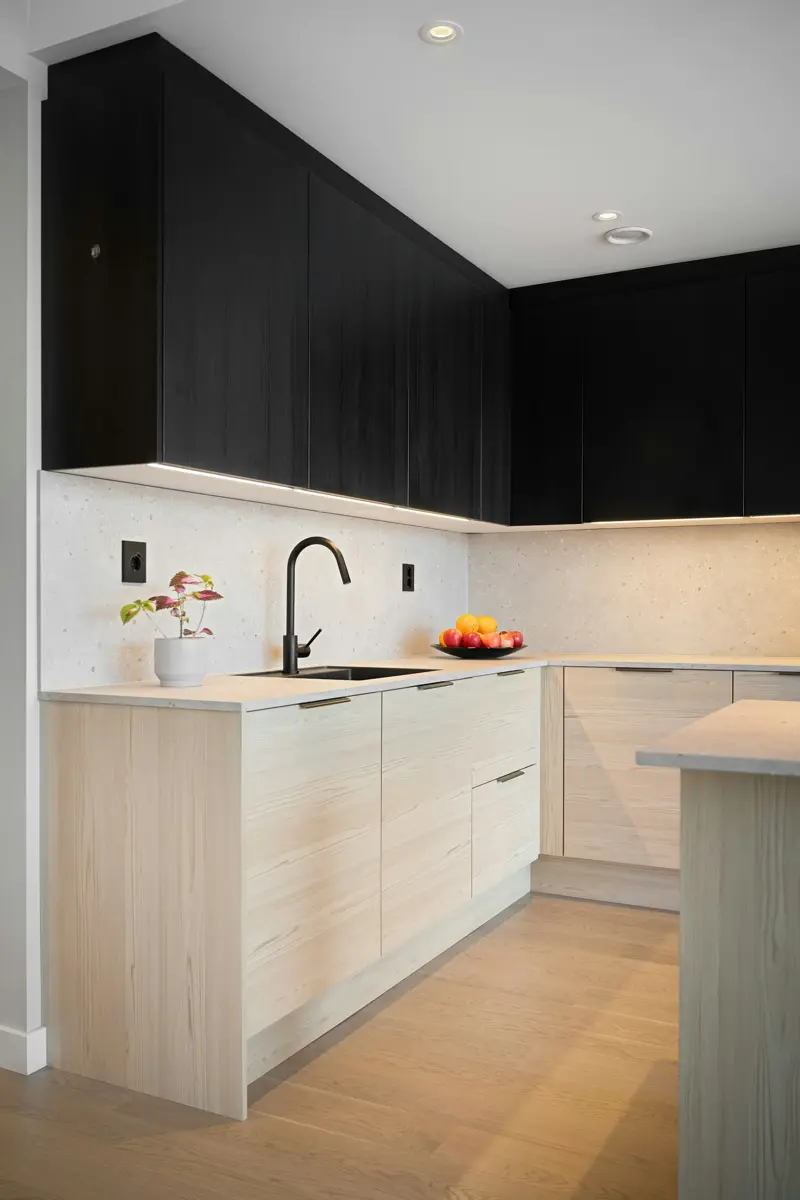
Light maple is one of the palest cabinet woods you can buy, which makes it perfect for small or north-facing kitchens. Paired with white quartz, it creates a bright, seamless look that still feels warmer than all-white painted cabinets. A kitchen with light wood cabinets in maple reads fresh and clean, yet never sterile.
Materials: light maple flat or Shaker doors, white quartz counters, slim bar pulls. Budget: $5,000–$11,000 for doors and counters in a mid-size kitchen.
Choose a quartz with soft grey veining rather than bold gold veining, so the maple stays calm. Run the same quartz up the backsplash for a polished, easy-to-clean finish. Add warm under-cabinet lighting to bring out the maple’s glow in the evening.
Tip: Seal maple with a non-yellowing topcoat and test it on a sample first — some finishes deepen maple noticeably.
Variation: Swap the quartz for honed white marble-look porcelain if you want the same brightness at a lower price.
3. Scandinavian Blonde Oak Cabinets
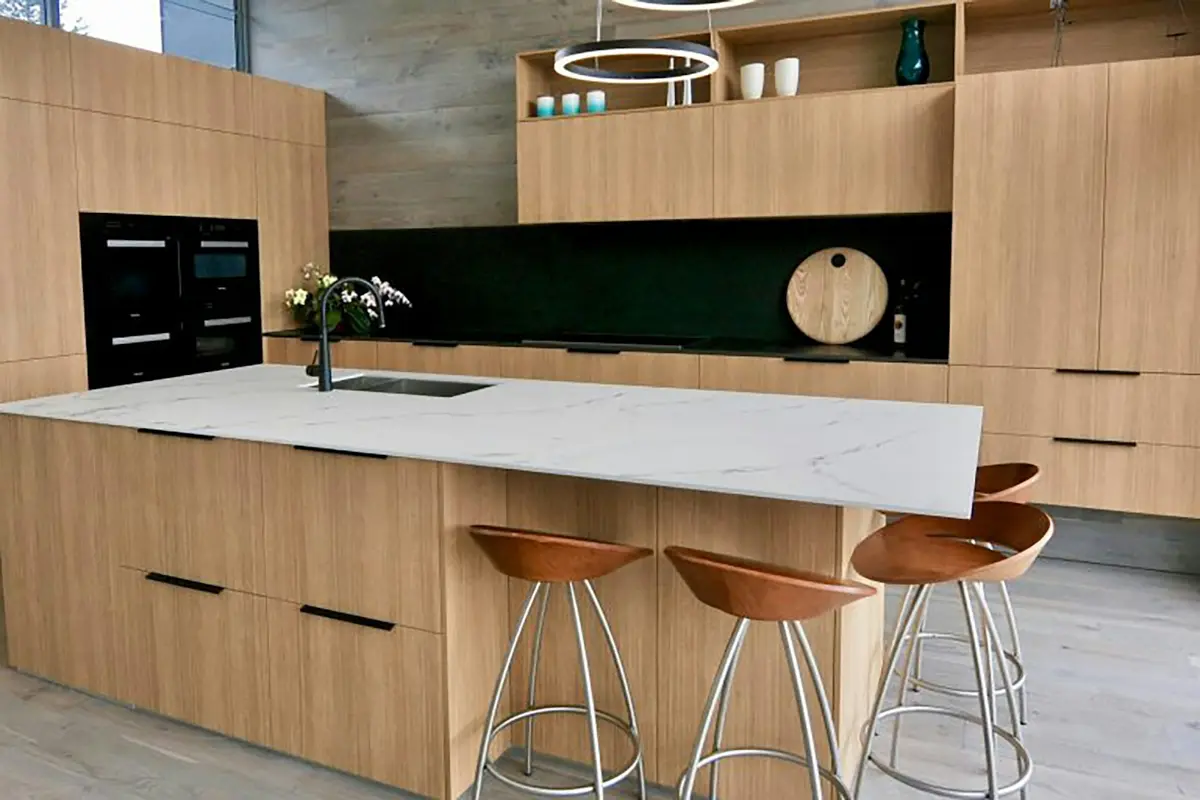
Scandinavian design proves that pale wood and very little else can carry a whole room. Blonde oak cabinets, handle-free fronts, and open breathing space create a kitchen that feels calm the moment you walk in. A kitchen with light wood cabinets in this blonde, matte finish is ideal if you love minimal style but still want natural warmth.
Materials: blonde oak slab doors, push-to-open hardware, white walls, light oak flooring. Budget: $3,500–$8,000 for slab fronts and hardware.
Keep upper cabinets minimal or skip a few in favor of open shelving. Style the counters with just a cutting board, a ceramic vase, and one plant. Let daylight do most of the decorating, and choose matte finishes so nothing glares.
Tip: Use integrated finger pulls instead of knobs to keep the clean Scandinavian lines uninterrupted.
Variation: Add a single black pendant light or black faucet for a quiet graphic contrast.
4. Two-Tone Light Wood Lowers with White Uppers
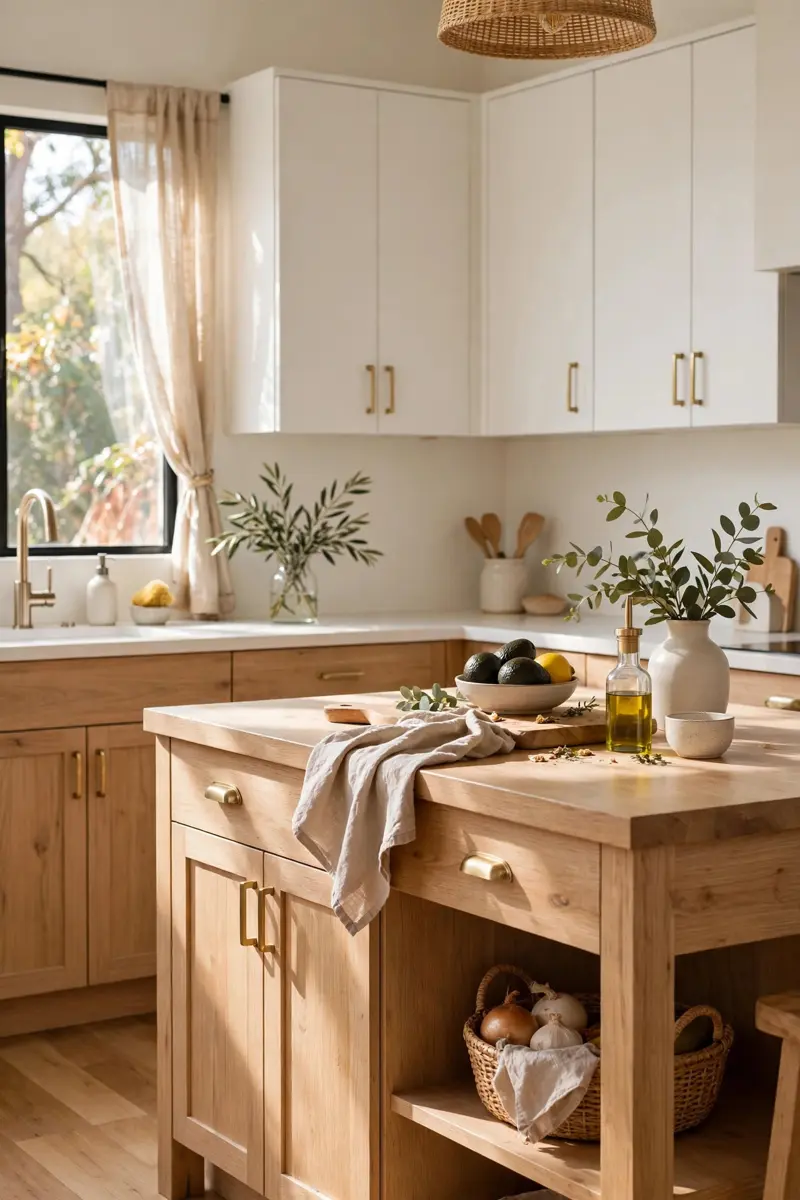
Two-tone kitchens are the most-saved light wood layout on Pinterest right now, and for good reason. Light wood lower cabinets ground the room with warmth, while white uppers keep it feeling open and tall. A kitchen with light wood cabinets on the bottom and white on top gives you the best of both worlds.
Materials: light oak or maple base cabinets, matte white wall cabinets, brushed brass pulls. Budget: $4,500–$10,000 for a mixed set of semi-custom cabinets.
Keep the wood tone consistent across all lowers, including the island, so the two-tone split looks intentional. Match the white uppers to your wall color closely to blur the line between cabinet and wall. Carry one metal finish through all hardware for cohesion.
Tip: Paint the uppers the same white as your trim, not a brighter appliance white, so the tones blend softly.
Variation: Flip the scheme — white lowers with light wood open shelving up top — in a very small kitchen.
5. Light Wood Cabinets with Marble Countertops
Few pairings feel as luxurious as pale wood and marble. The cool veining of marble balances the warmth of the wood, and the combination works in traditional, transitional, and modern kitchens alike. A kitchen with light wood cabinets topped with marble feels expensive without feeling formal or fussy.
Materials: light oak or maple cabinets, honed Carrara or Calacatta marble, simple edge profile. Budget: $6,000–$14,000 including stone fabrication for an average kitchen.
Choose honed marble over polished if you cook daily, since it hides etching better. Keep the backsplash simple — a matching marble slab or plain white tile — so the stone’s veining stays the focal point. Wipe spills promptly and seal the stone twice a year.
Tip: Ask your fabricator for a remnant piece for a windowsill or shelf, so the marble echoes through the room.
Variation: Use marble on the island only and a matching quartz on the perimeter to cut cost and upkeep.

6. Light Wood Cabinets with Butcher Block Counters
Butcher block counters double down on the natural warmth of light wood, creating a kitchen that feels like a bakery or a farmhouse at its best. The trick is contrast: keep the cabinets pale and the block a touch deeper, or vice versa. A kitchen with light wood cabinets and butcher block feels handmade, cozy, and wonderfully lived-in.
Materials: light maple or birch cabinets, maple or walnut butcher block, food-safe oil finish. Budget: $2,500–$6,000 for counters and cabinet refresh.
Sand and oil the block every few months to keep it water-resistant. Use a darker walnut block on the island as a focal point, with pale maple on the perimeter. Keep a dedicated cutting zone so the rest of the surface stays beautiful.
Tip: Oil the underside and edges too, not just the top, so moisture cannot warp the block from below.
Variation: Try end-grain butcher block on the island for a richer checkerboard pattern.

7. Flat-Panel Light Ash Cabinets
If Shaker doors feel too traditional for you, flat-panel ash is the modern answer. Ash has a straight, elegant grain and a pale tone that suits handle-free kitchens beautifully. A kitchen with light wood cabinets in flat-panel ash looks sleek, architectural, and quietly expensive.
Materials: light ash slab doors, edge pulls or push latches, matte lacquer sealer. Budget: $4,000–$9,500 for slab fronts and hardware.
Keep the palette restrained: pale ash, white walls, one stone surface, and one metal. Let the grain provide the pattern, and avoid busy backsplash tile that competes with it. A single row of open shelving can soften the flat fronts.
Tip: Order ash doors from one batch so the grain tone stays consistent across every front.
Variation: Add vertical fluted ash panels on the island for texture without changing the color story.

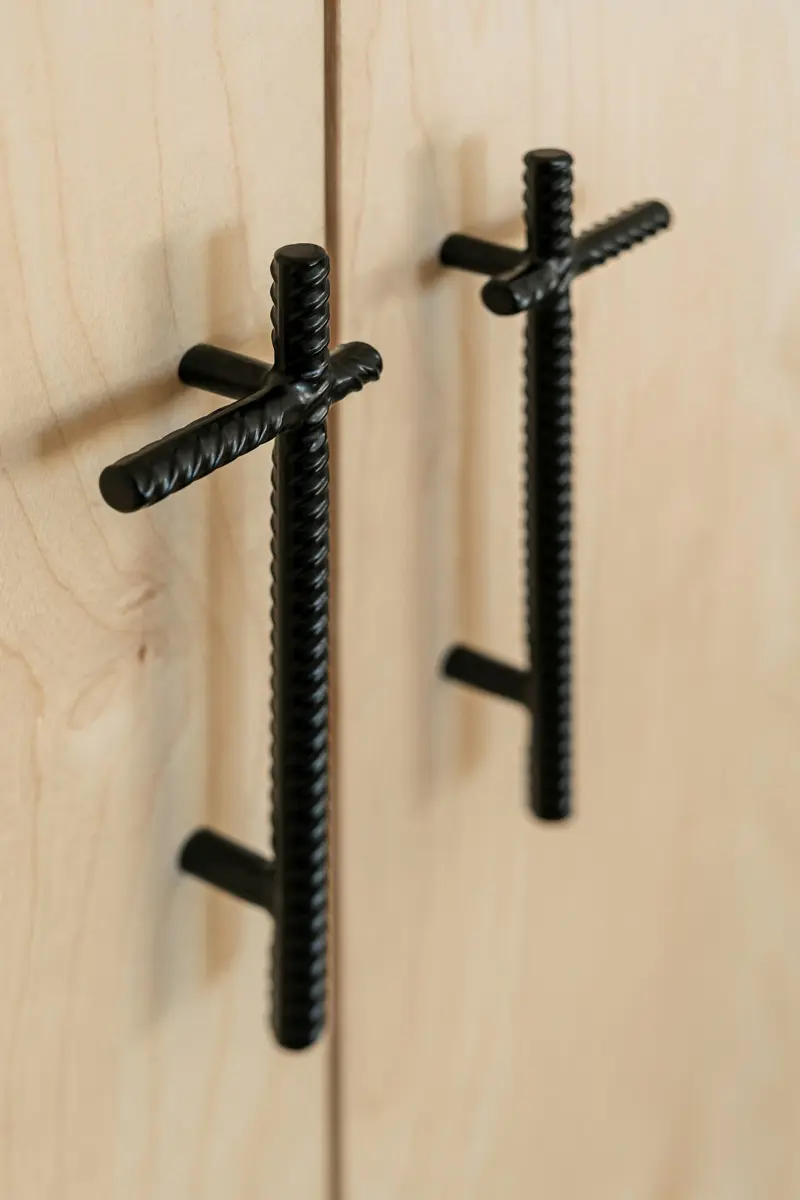
8. Light Wood Cabinets with Matte Black Hardware
Matte black hardware is the fastest way to make pale cabinets look intentional rather than plain. The dark pulls outline each door, add graphic contrast, and pair with black faucets, lighting, and appliances. A kitchen with light wood cabinets and black hardware feels modern and grounded at the same time.
Materials: light oak or maple cabinets, matte black bar pulls and knobs, black faucet. Budget: $300–$900 for hardware alone; $4,000–$9,000 with new doors.
Size your pulls to the doors — long bars on drawers, shorter bars on doors — for a custom look. Keep the finish truly matte, not glossy, so it reads soft against the wood. Repeat black in just two or three places so it feels like a thread, not a theme takeover.
Tip: Buy one pull first and test its weight and grip in your hand before ordering a full set.
Variation: Mix black knobs on doors with black cup pulls on drawers for a subtle traditional twist.
9. Light Wood Cabinets with Open Shelving
Replacing a few upper cabinets with open shelving instantly lightens a kitchen and gives your prettiest pieces a stage. The key is restraint: style shelves lightly and keep everyday clutter behind closed doors. A kitchen with light wood cabinets and open shelves feels airy, personal, and easy to live in.
Materials: matching light wood shelves, black or brass brackets, white dishes and glassware. Budget: $200–$800 for two to three shelves and brackets.
Hang shelves at a height you can reach comfortably, usually 18 inches above the counter. Group items in odd numbers and leave breathing room between groups. Keep the shelf wood the same tone as your cabinets for a built-in look.
Tip: Style the top shelf with tall, light items only — heavy stacks up high look top-heavy and stressful.
Variation: Use one open shelf as a display ledge for cookbooks and a trailing plant, and keep the rest closed.

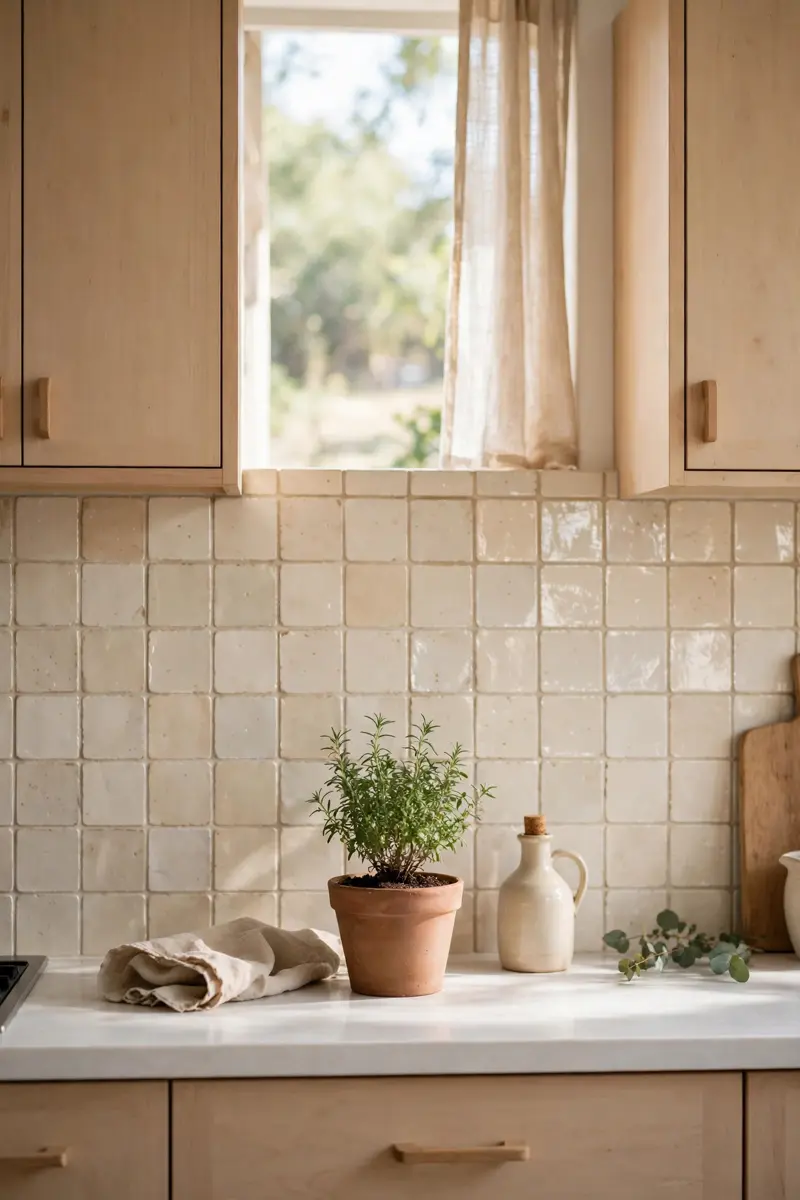
10. Light Wood Cabinets with a Zellige Tile Backsplash
Zellige tile is the Pinterest-favorite pairing for warm wood right now, and it is easy to see why. The handmade glaze catches light differently on every tile, adding shimmer and movement to a calm wood kitchen. A kitchen with light wood cabinets and a glossy zellige backsplash feels artisan and warm, never flat.
Materials: light oak cabinets, zellige tiles in cream or pale sage, warm white grout. Budget: $800–$2,500 for tile and installation on a standard backsplash run.
Choose a glaze one shade lighter or warmer than your wall color so the tile glows without shouting. Lay tiles in a stacked pattern for a modern feel, or brick pattern for a softer look. Seal the grout well, since handmade tile edges can trap grease near the stove.
Tip: Order 15 percent extra tile — handmade zellige varies, and you will want spares for cuts and chips.
Variation: Run the zellige all the way to the ceiling behind the range for a dramatic focal wall.
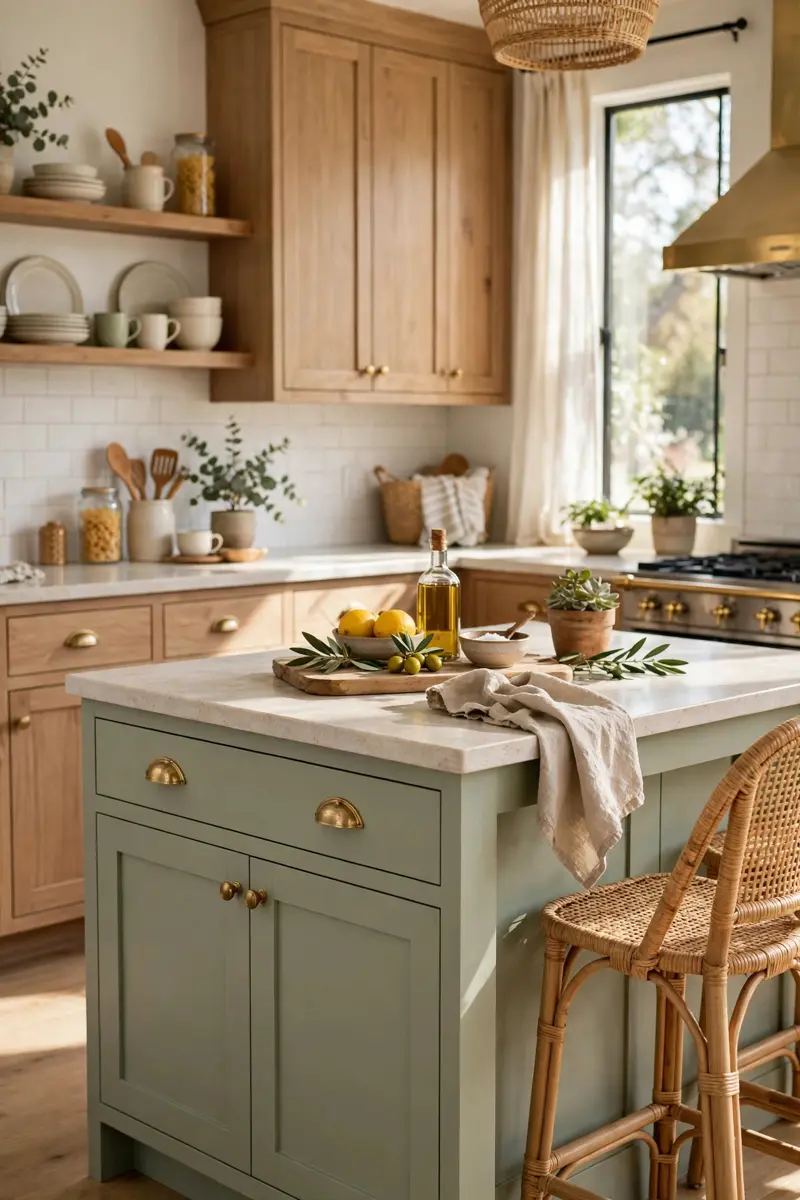
11. Light Wood Cabinets with a Sage Green Island
A sage green island is the gentlest way to add color to a pale wood kitchen. The soft green reads as a neutral, calms the room, and pairs beautifully with oak, maple, and brass. A kitchen with light wood cabinets around a sage island feels fresh, organic, and timeless rather than trendy.
Materials: light oak perimeter cabinets, sage green island paint, brass hardware, light stone top. Budget: $800–$2,000 to paint and restyle an existing island; $3,000+ for a new island unit.
Test sage samples next to your wood tone in daylight — some sages go grey, others go mint. Keep the island countertop the same as the perimeter for unity, and repeat sage in small touches like a vase or linen towels.
Tip: Paint the island in a satin finish, not flat, so it wipes clean after cooking and homework sessions.
Variation: Use sage on lower perimeter cabinets instead, with a light wood island as the warm centerpiece.
12. Light Wood Cabinets with Glass-Front Display Uppers
Glass-front uppers break up a wall of wood and let you show off dishes, glassware, and collected pieces. They work best when the interiors are painted a soft white or lined with the same pale wood. A kitchen with light wood cabinets and glass uppers feels lighter, more open, and a little more grown-up.
Materials: light wood cabinets with glass door inserts, interior LED strips, white or wood interiors. Budget: $600–$2,000 to convert existing uppers; more for new glass-front units.
Limit glass fronts to one bank of cabinets, not the whole kitchen, so the display feels special. Keep what is inside simple and color-coordinated, and add slim LED strips so the display glows in the evening. Store mismatched everyday items behind solid doors elsewhere.
Tip: Use clear glass, not seeded or frosted, if you want the display to read bright; frosted glass hides clutter better.
Variation: Try fluted or reeded glass for privacy with texture — it hides shapes while still glowing beautifully.

13. Farmhouse Light Pine Cabinets
Light pine brings a rustic, storybook warmth that polished hardwoods cannot quite match. Its knots and grain variation feel honest and handmade, especially with beadboard panels and black iron hardware. A kitchen with light wood cabinets in pine suits farmhouse, cottage, and country homes perfectly.
Materials: knotty or clear pine doors, beadboard panels, matte sealer, iron cup pulls. Budget: $3,000–$7,500 for pine doors and hardware.
Choose clear pine if knots feel too busy for your taste, and knotty pine if you love character. Keep walls warm white and add woven baskets, linen, and pottery to complete the farmhouse feel. Seal pine well, since it dents more easily than oak.
Tip: Ask for a hardwax oil finish on pine — it protects while keeping the wood’s soft, matte farmhouse look.
Variation: Paint just the island cream and keep the perimeter pine for a collected-over-time feel.

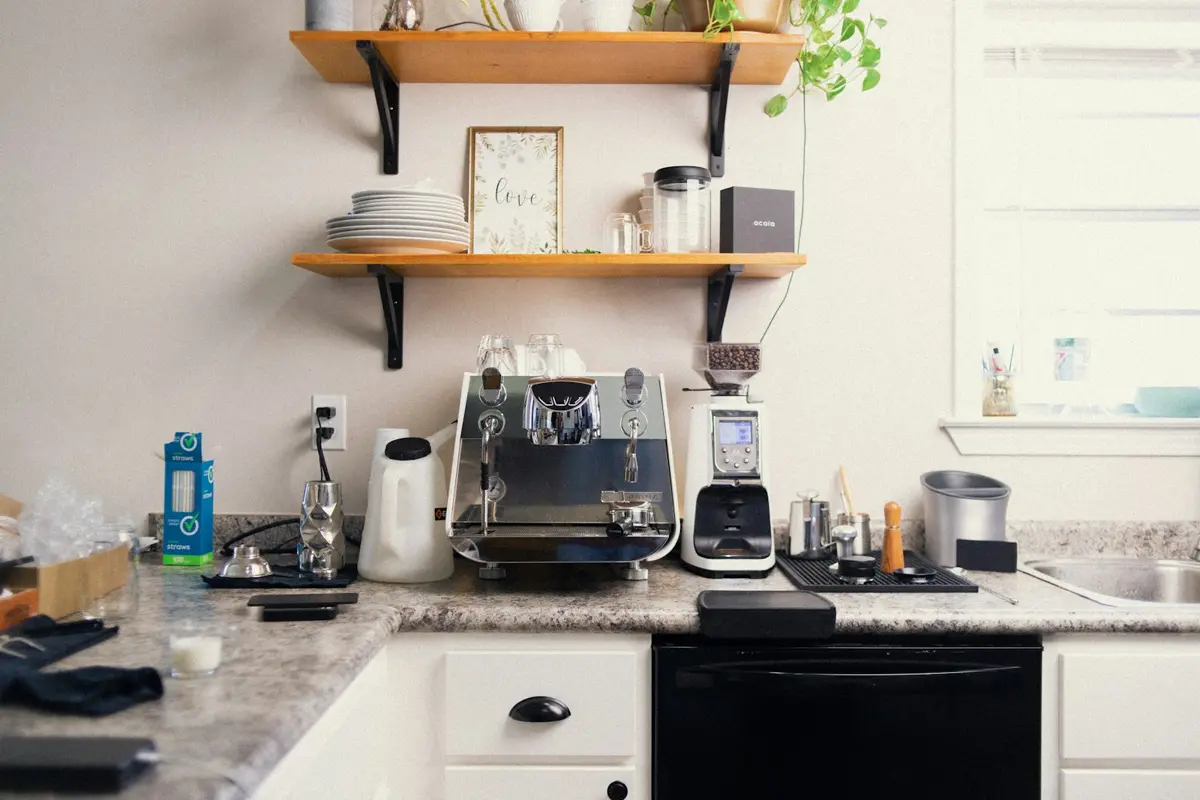
14. Light Wood Cabinets with a Coffee Bar Nook
A dedicated coffee bar turns one stretch of counter into the happiest corner of the house. Tuck it into light wood cabinetry with open shelving above, a small sink if you have plumbing nearby, and room for mugs and beans. A kitchen with light wood cabinets gains a café corner that makes mornings feel like a ritual.
Materials: light wood base cabinet, open shelf, mug hooks, small espresso machine, ceramic canisters. Budget: $400–$1,500 for the nook setup excluding appliances.
Keep the coffee zone near the fridge or water source for easy refills. Use a tray to corral syrups and spoons so the counter stays tidy. Hang mugs on hooks under the shelf to free up cabinet space.
Tip: Add a slim power strip inside the cabinet so cords stay hidden and the counter stays clean.
Variation: Build the same nook as a tea station with a kettle, teapot collection, and honey jar instead.
15. Light Wood Cabinets with Under-Cabinet LED Lighting
Lighting changes pale wood more than almost any other upgrade. Warm under-cabinet LEDs at 3000K make oak and maple glow, erase shadows on your work surface, and make the kitchen feel welcoming after dark. A kitchen with light wood cabinets looks twice as good once the lighting is right.
Materials: LED strip lights, dimmer switch, warm white 3000K bulbs, simple channel covers. Budget: $150–$600 for strips and a dimmer in an average kitchen.
Mount strips toward the front of the cabinet underside so light washes the counter, not the backsplash alone. Add a dimmer so you can shift from bright prep light to soft evening glow. Hide drivers inside a cabinet so no wires show.
Tip: Test one strip at night before buying the full set — color temperature looks very different after dark.
Variation: Add toe-kick lighting under base cabinets for a soft floating effect in the evening.
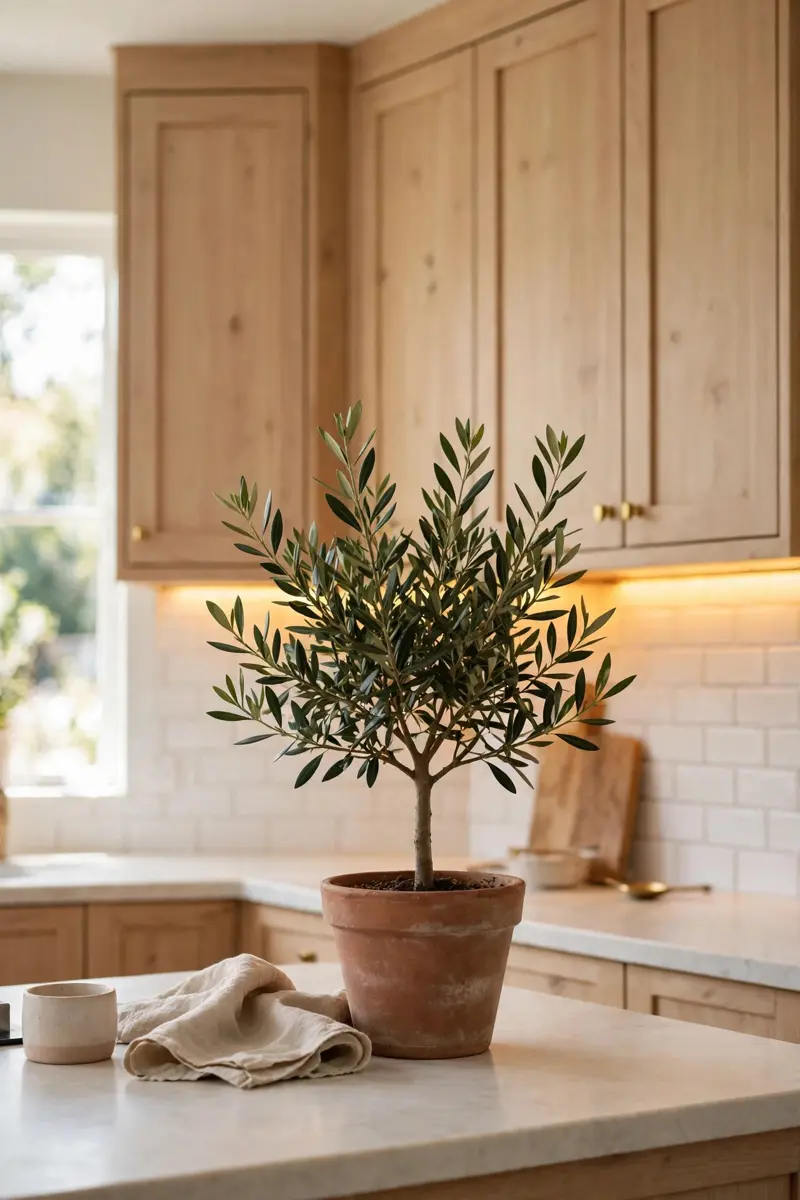
16. Light Wood Cabinets with a Breakfast Bar
A breakfast bar gives a light wood kitchen a social heart. Whether it is a raised counter on the island or a peninsula facing the living room, it invites people to sit, chat, and linger. A kitchen with light wood cabinets and a breakfast bar feels open and family-friendly without a full open-plan remodel.
Materials: light wood island or peninsula, matching countertop overhang, two to three counter stools. Budget: $800–$3,000 for the overhang, stools, and pendant lights.
Allow at least 12 inches of knee space and 24 inches of width per stool so seating feels comfortable. Choose stools with a light wood or woven seat to echo the cabinets. Hang one or two pendants above the bar to mark the zone.
Tip: Pick wipe-clean stool seats if kids eat at the bar — woven looks lovely but stains fast.
Variation: Build a narrow wall-mounted breakfast ledge instead if your kitchen has no room for an island.
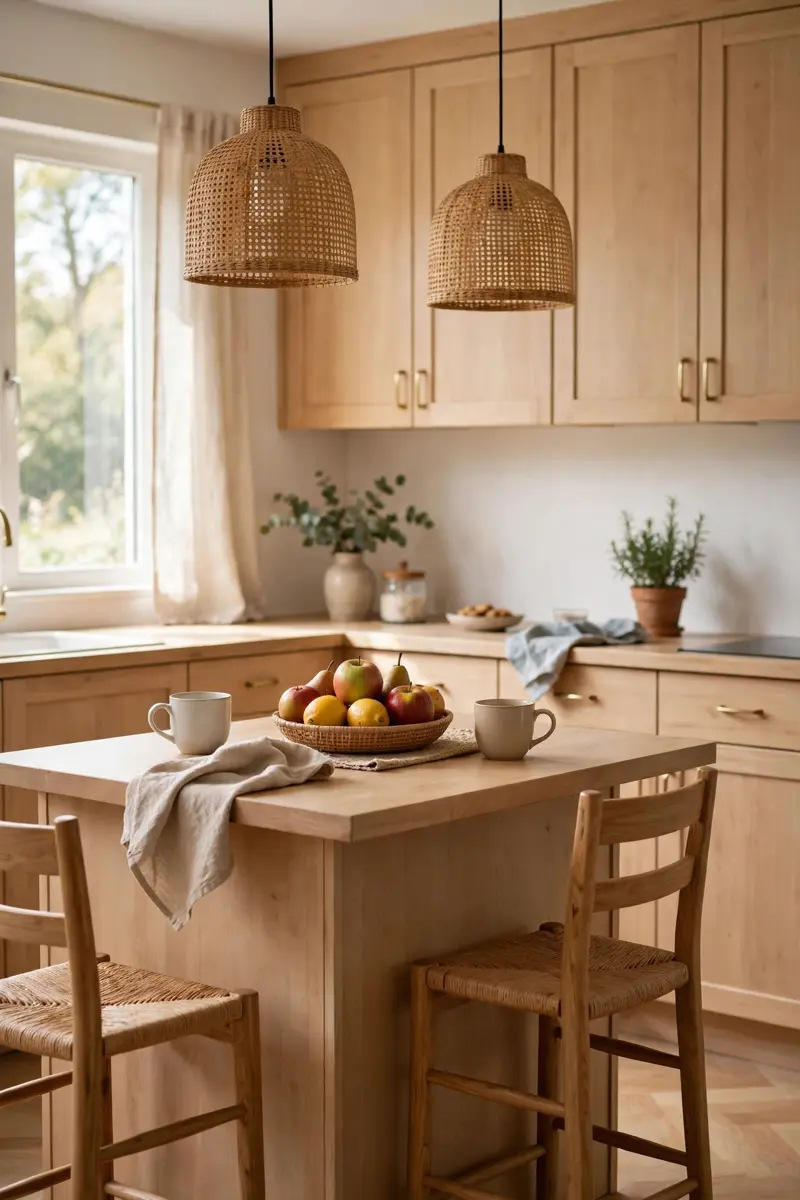
17. Light Wood Cabinets with a Pantry Wall
A full pantry wall solves the storage problem that open, airy kitchens often create. Floor-to-ceiling light wood cabinets hide food, appliances, and cleaning supplies behind calm, matching doors. A kitchen with light wood cabinets in a pantry wall stays serene even when life inside is busy.
Materials: tall light wood pantry cabinets, pull-out shelves, interior organizers, matching hardware. Budget: $2,000–$6,000 for a pantry wall with pull-outs.
Plan the interior before you order: pull-outs for heavy items, shallow shelves for cans, and one tall slot for the vacuum or broom. Label bins so the whole family can find things. Keep the pantry doors the same wood and finish as the rest of the kitchen.
Tip: Add interior lighting that switches on when the door opens — you will use the pantry far more happily.
Variation: Leave one open niche in the pantry wall for cookbooks and a small vase, so the wall does not feel like a monolith.
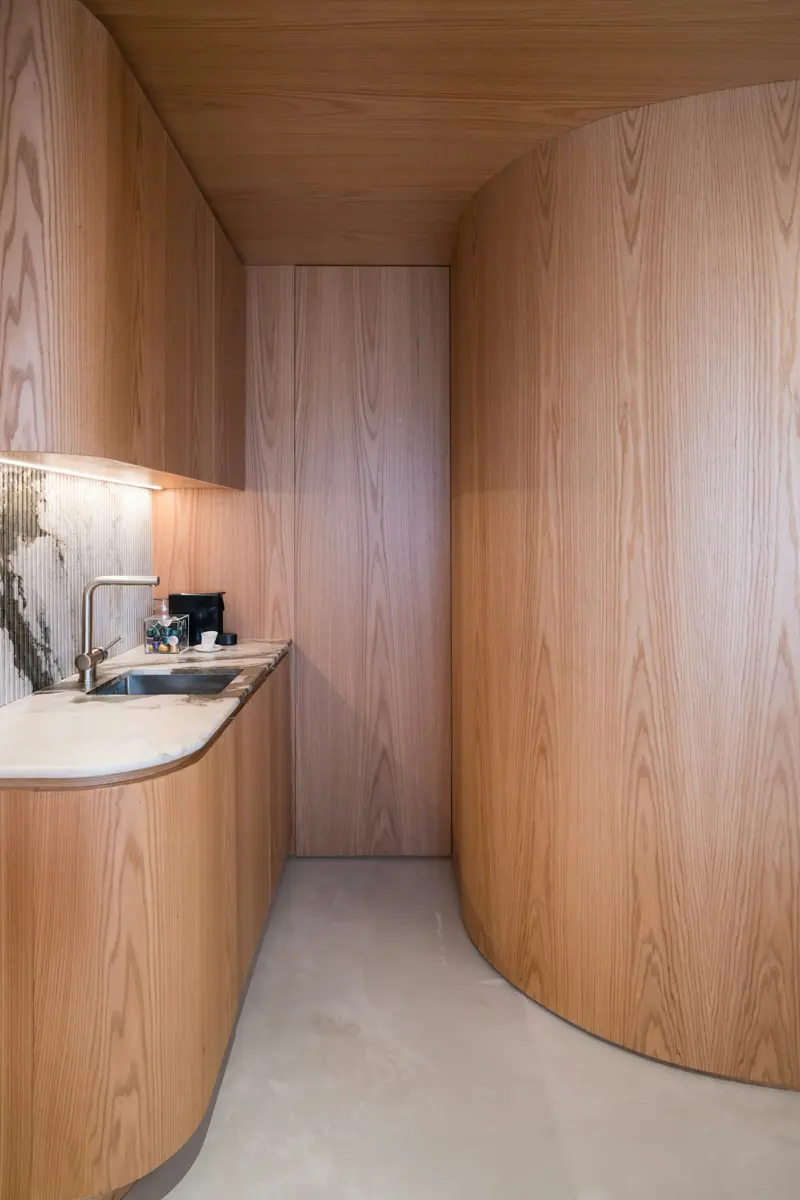
18. Coastal Whitewashed Oak Cabinets
Whitewash softens oak into a sun-bleached, beach-house pale that still shows the grain. It is the lightest, breeziest version of this look, perfect for coastal homes or anyone who wants maximum brightness. A kitchen with light wood cabinets in whitewashed oak feels like a holiday every single day.
Materials: whitewashed oak doors, white or pale blue accents, rattan and linen textures. Budget: $3,500–$8,500 for whitewashed doors and hardware.
Pair whitewash with sandy neutrals, sea-glass blue, and natural textures like rattan and jute. Keep metals soft — brushed nickel or light brass — rather than stark black. Let the grain show through; heavy whitewash that hides it defeats the purpose.
Tip: Test whitewash on an oak sample with your exact sealer, since topcoats can yellow the wash over time.
Variation: Whitewash only the uppers and keep the lowers natural oak for a layered coastal look.
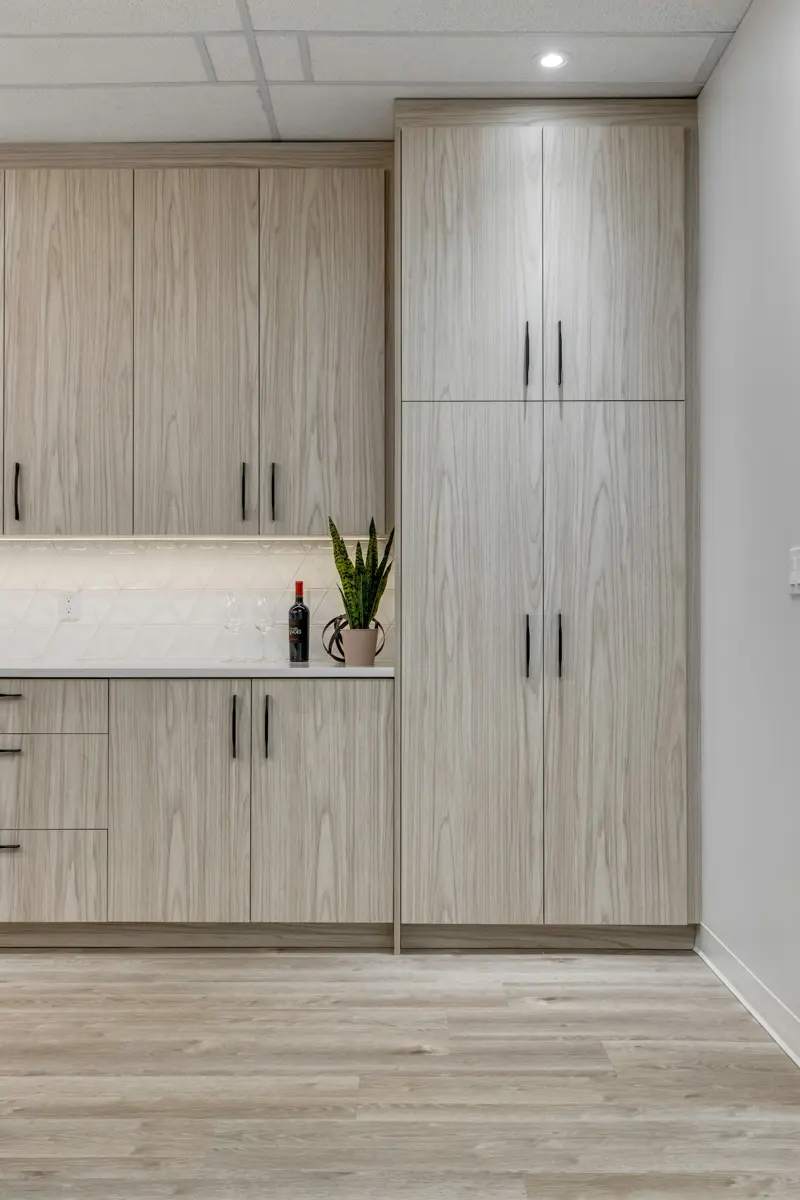
19. Light Wood Cabinets with Terracotta Accents
Terracotta is the warm, earthy accent that pale wood has been waiting for. A terracotta backsplash, floor tile, or pottery collection adds sunset warmth without darkening the room. A kitchen with light wood cabinets and terracotta accents feels Mediterranean, grounded, and full of life.
Materials: light oak cabinets, terracotta tiles or pottery, warm white walls, brass accents. Budget: $700–$2,500 for a terracotta backsplash or floor accent.
Use terracotta in one strong place — backsplash, floor border, or a shelf of pottery — rather than everywhere at once. Balance it with plenty of white and pale wood so the room stays bright. Seal terracotta tile well, since it is naturally porous.
Tip: Choose handmade-look terracotta with tone variation; perfectly uniform tiles can look flat and industrial.
Variation: Swap terracotta for warm clay-colored linen and pottery if you rent and cannot change tile.

20. Japandi Light Wood Cabinets
Japandi blends Japanese calm with Scandinavian warmth, and pale wood is its natural foundation. Think flat fronts, open space, natural textures, and nothing unnecessary. A kitchen with light wood cabinets in Japandi style feels peaceful, uncluttered, and deeply restful to cook in.
Materials: pale ash or oak slab doors, stone or wood counters, ceramic and linen accessories. Budget: $4,000–$9,000 for slab fronts and a simplified layout.
Remove one upper cabinet run if you can, and replace it with a single open shelf for a few beautiful bowls. Choose handmade ceramics, a wooden tray, and one branch in a vase as your only decoration. Keep colors to wood, white, stone grey, and one muted green.
Tip: Give every item a home inside closed storage first, then style only what is left — Japandi fails when clutter has nowhere to go.
Variation: Add a low wooden stool and a paper lantern pendant for a gentle Japanese touch.

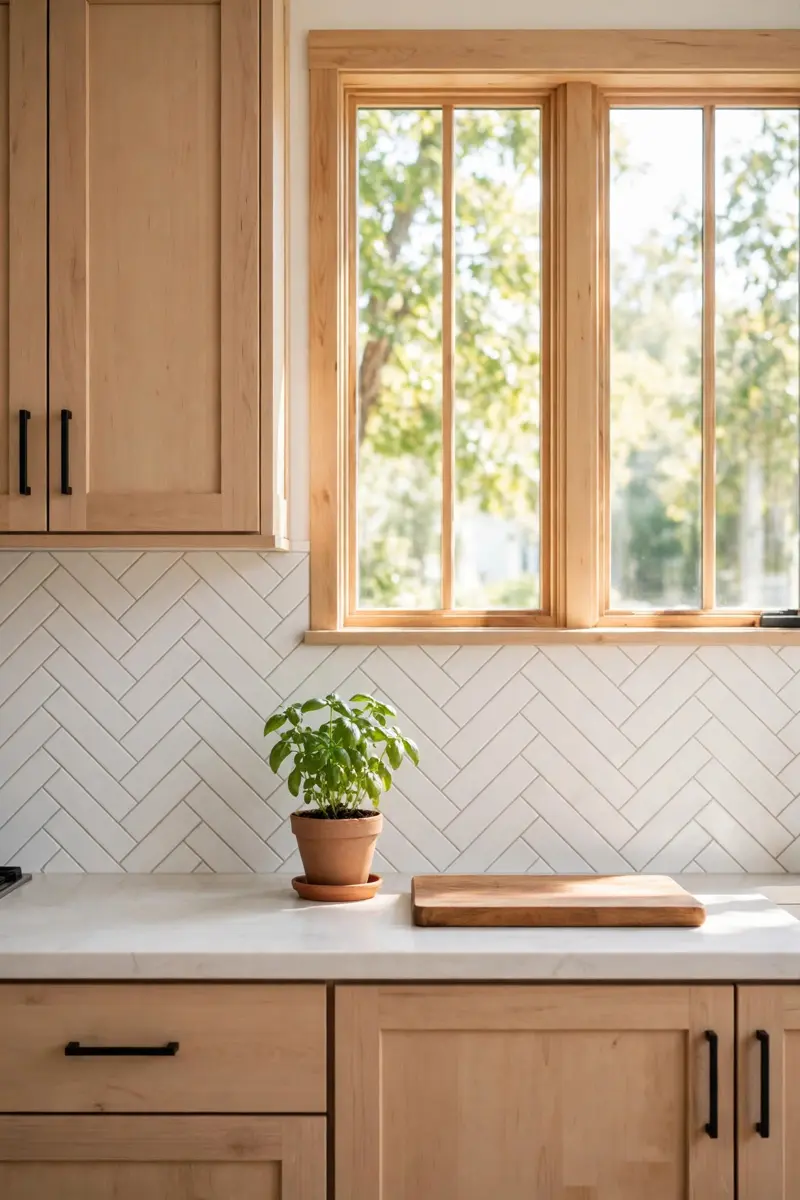
21. Light Wood Cabinets with a Herringbone Backsplash
Herringbone tile turns a simple backsplash into a quiet work of art. The zigzag pattern adds movement and craftsmanship, and it pairs beautifully with the straight grain of pale wood. A kitchen with light wood cabinets and a herringbone backsplash feels tailored and thoughtful, even when everything else is simple.
Materials: light oak cabinets, white or cream subway tile, warm white grout. Budget: $900–$2,800 for tile and installation.
Hire an experienced tiler for herringbone — the pattern wastes more tile and takes longer to set than straight tile. Keep the tile color close to your wall color so the pattern reads as texture, not contrast. Use a matching grout to keep the look soft.
Tip: Order 20 percent extra tile for herringbone cuts, especially around outlets and corners.
Variation: Lay herringbone in pale sage or soft grey tile if you want a whisper of color.
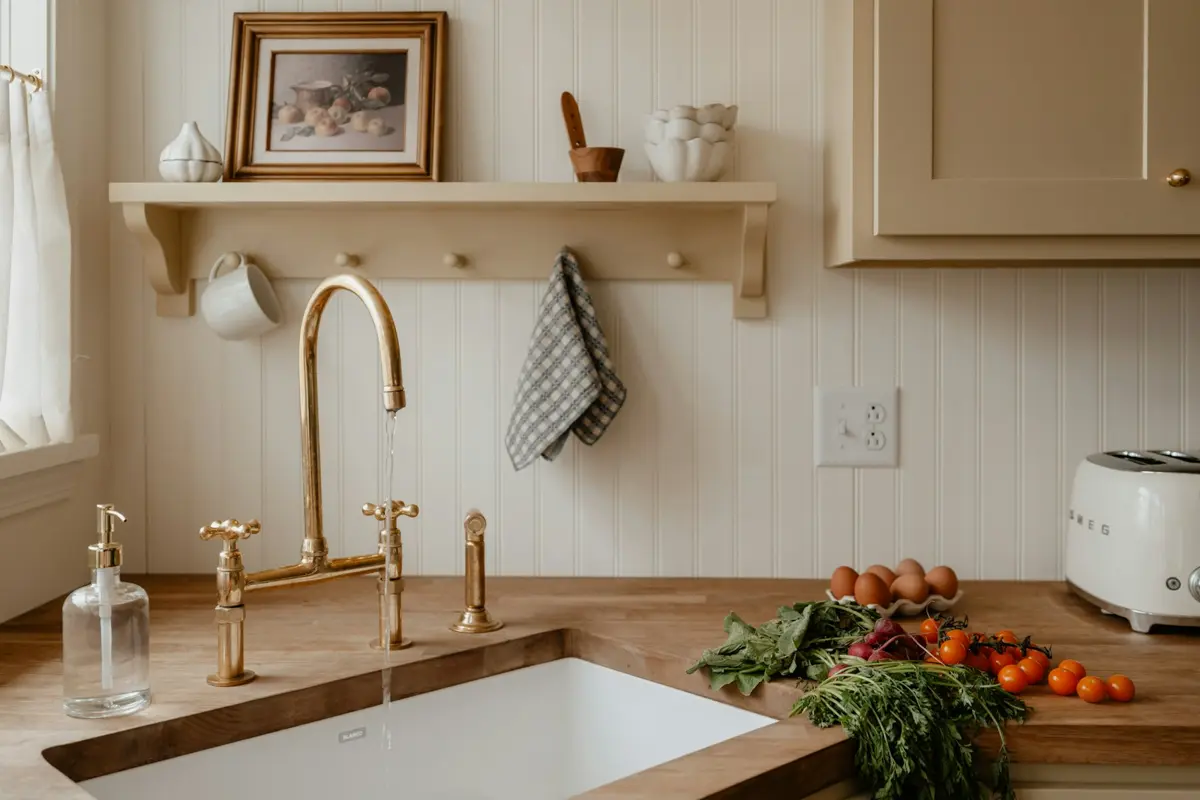
22. Light Wood Cabinets with a Farmhouse Sink
A deep farmhouse sink is both a practical upgrade and a style statement in a pale wood kitchen. The apron front breaks up a run of cabinets and invites a more relaxed, hardworking feel. A kitchen with light wood cabinets and a farmhouse sink feels welcoming, sturdy, and ready for real cooking.
Materials: light wood cabinets, fireclay or cast-iron apron sink, bridge or single-lever faucet. Budget: $600–$1,800 for the sink and faucet, plus cabinet modification.
Check that your base cabinet can support the sink’s weight — fireclay is heavy — and that your countertop can be cut for the apron. Choose a faucet finish that matches your hardware for a finished look. Keep a drying mat nearby, since apron sinks invite big pots and baking trays.
Tip: Measure your tallest pot before choosing sink depth; extra-deep sinks can strain your back over time.
Variation: Try a smaller prep farmhouse sink on the island if a full-size one does not fit your layout.
23. Light Wood Cabinets with a Matching Wood Range Hood
A wood range hood that matches your cabinets turns the stove wall into a custom focal point. It hides the vent, frames the range, and makes the whole kitchen feel designed rather than assembled. A kitchen with light wood cabinets and a matching hood feels high-end and cohesive.
Materials: light oak hood cover, matching sealer, range vent insert, trim molding. Budget: $1,200–$3,500 for the hood cover and insert.
Match the hood wood, grain direction, and finish to your cabinets exactly — order them together if possible. Keep the hood simple: a clean box or gentle taper suits pale wood better than heavy corbels. Vent properly to the outside for the best air quality.
Tip: Add a slim shelf or brass rail to the hood front for a cookbook or utensils, if the design allows.
Variation: Use a plaster or white hood with light wood cabinets if you want the stove wall to feel softer.

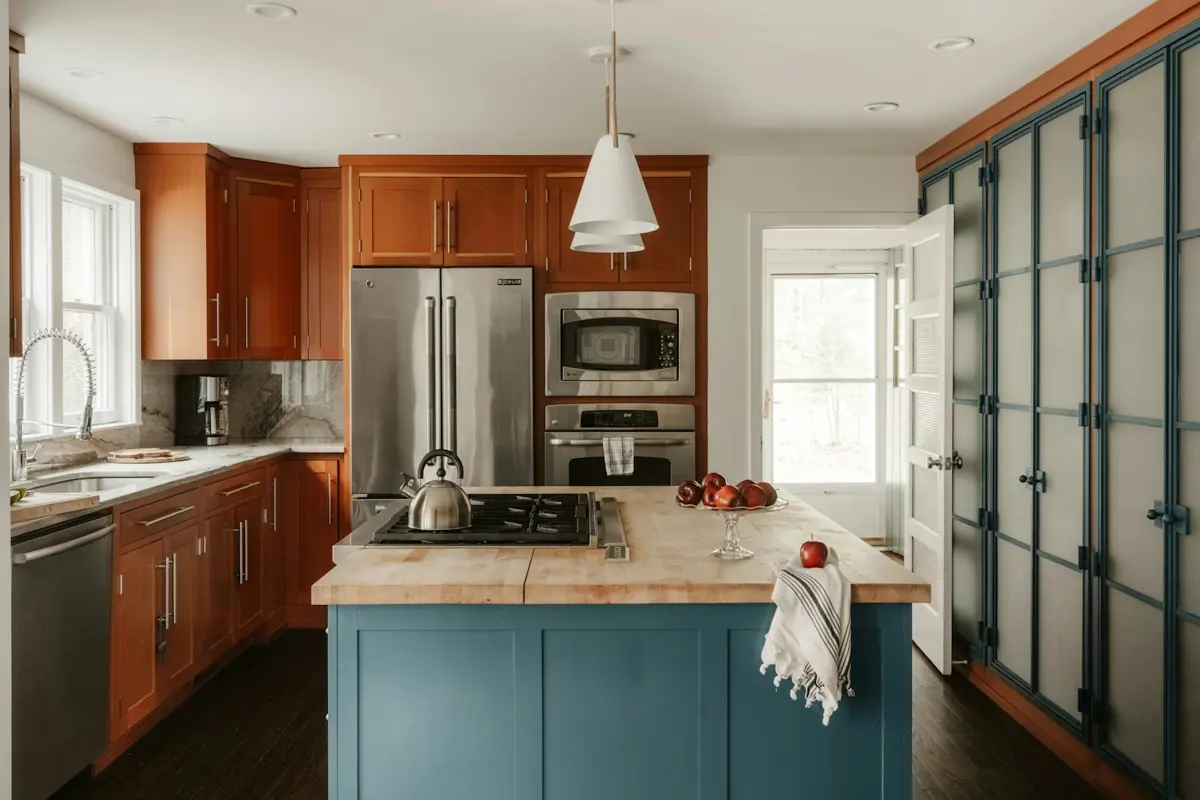
24. Light Wood Cabinets with a Bold Blue Island
If you love pale wood but fear it could feel too quiet, a bold blue island is the answer. Navy or deep cobalt adds drama and depth, while the surrounding light wood keeps the room bright and balanced. A kitchen with light wood cabinets around a blue island feels confident, classic, and full of personality.
Materials: light oak perimeter cabinets, navy or cobalt island paint, brass hardware, white stone top. Budget: $800–$2,000 to paint an existing island; $3,000+ for a new island.
Test the blue next to your wood in daylight and lamplight — some navies go purple, others go teal. Repeat the blue in small touches, like a rug or pottery, so the island does not feel isolated. Keep the island top light to maintain the bright feel.
Tip: Paint the island in a durable satin or semi-gloss finish so scuffs from stools wipe away easily.
Variation: Use deep green instead of blue if your home leans more organic than coastal.
Frequently Asked Questions
Are light wood cabinets in style for 2026?
Yes, absolutely. Wood cabinets have overtaken white as the most popular choice in recent kitchen trend studies, and light woods like white oak, maple, and birch lead the shift. They feel warm and organic without the heaviness of dark wood, and they pair with nearly every style from Scandinavian to farmhouse. Choose a matte, natural finish rather than a glossy orange-toned stain to keep the look current.
What wood is best for light wood kitchen cabinets?
White oak is the favorite for its tight grain and durability, while maple is the palest and most affordable option. Birch offers a fine, subtle grain at a friendly price, and ash gives a straight, modern grain that suits flat-panel doors. Ask for finished samples of each wood in your own kitchen light before deciding, since the same wood can look very different under warm and cool lighting.
What countertop goes best with light wood cabinets?
White quartz is the safest all-rounder: bright, durable, and easy to maintain. Marble adds luxury and veining, butcher block adds farmhouse warmth, and leathered quartzite pairs beautifully with white oak for an organic-modern look. Keep the countertop lighter than the cabinets if your kitchen is small, and save bold stone patterns for the island where they can shine.
Do light wood cabinets make a kitchen look bigger?
Yes, in most kitchens they do. Pale wood reflects more light than dark cabinets, which makes walls feel farther apart and ceilings feel higher. The effect is strongest when you pair light cabinets with light counters, good lighting, and minimal upper cabinets. In a very small kitchen, combine light wood lowers with white uppers or open shelving to maximize the sense of space.
How do you keep light wood cabinets from looking yellow or orange?
Choose a clear or white-tinted sealer instead of an amber-toned varnish, and test finishes on samples in your own light. Avoid pairing pale wood with very warm yellow wall paint, which amplifies orange tones. Matte finishes also read cooler than glossy ones. If existing cabinets have already yellowed, a light sanding and a non-yellowing topcoat can often restore their fresh pale tone.
Conclusion
Light wood cabinets are one of those rare choices that are both timeless and right on trend. A kitchen with light wood cabinets suits almost any home, because pale wood works with both warm and cool accents. Whether you love the clean lines of Scandinavian oak, the warmth of butcher block, or the drama of a bold blue island, there is a version of this look that fits your home and your budget. Start with samples, test them in your own light, and build the kitchen around the tone you love most.
If this guide helped you picture your new kitchen, save it to Pinterest so you can compare finishes later — and share it with anyone planning a kitchen refresh. Your brightest, warmest kitchen may be just one pale wood decision away.
For more kitchen inspiration, see our guides to beige kitchen cabinets and rustic sage green kitchen cabinets, plus the classic contrast of white kitchen with black backsplash ideas. For expert advice on styling pale wood, see The Spruce’s light wood cabinet ideas.


Leave a Reply